Category: blind faith

  • Milkshake tears

    Milkshake tears

    Isha Karki interrogates white tears, milkshake victimisation, and how to resist apathy in the age of Anything Can Happen and Things Will Get Worse


    A few days ago, I watched Theresa May’s resignation video. Nothing she said particularly resonated with me; what struck me were her unexpected tears. I turned to my sister and said, ‘She seems like somebody’s grandma.’ As soon as the words were out, I knew something was off about them. As the day wore on, I thought about conversations around white feminism, its myopia and elitism, about the weaponisation of white women’s tears, eliciting sympathy and avoiding accountability. I thought about May’s legacy. As I write, I am thinking about how I’ve begun this essay by focusing on May’s tears – and how telling that is.

    I can’t say I started off from a place of hope when May came into power. Despite proclaiming herself a feminist, she was never, and will never be, a feminist to me, even as I acknowledge the gender discrimination she faced whilst in power: the gross scrutiny of her body and her clothes, the ‘Maybot’ moniker, and the hyper-focus on her lack of emotions. Yet, she held the most powerful position in this country. She will have a cushy life, and will no doubt go on to do more damage.

    The focus on May’s tears, and by extension her ‘humanity’, diverts from her legacy of violence and austerity.

    When we demand sympathy for her, we are centring a white woman’s tears in a conversation that  should instead focus on her legacy of harmful immigration and detention policies, the Windrush scandal, the Grenfell tragedy, the dehumanising conditions of Yarl’s Wood, the funding cuts that continue to target the poor, working-class, and the differently abled. May’s co-option of the most superficial language of feminism – highlighting her position as the second female Prime Minister – asks for sisterhood by paying lip-service to the idea of feminism. May’s policies did systemic anti-feminist work and showed an utter disregard for the dignity and lives of the most vulnerable. Her elite white version of feminism is not my feminism.

    The focus on May’s tears is like the milkshake discourse all over again. The constant focus on The Wrongs of the Milkshake is draining and demoralising. It seems more attention is paid to the decency and humanity of those who spout hate speech than there is to the real violence of their fascist ideologies.

    The Wrongs of the Milkshake narrative detracts from the structural oppression of the marginalised, from the normalising of white supremacist rhetoric.

    Instead, this narrative confers a badge of victimhood to the ‘injured’ party and offers them a platform to speak on that victimhood – after all, their freedom of speech must be protected at all costs. So, the likes of Nigel Farage get their own prime time radio shows, and a whole Newsnight feature is devoted to Tommy Robinson in his favourite guise of victim. Meanwhile, ‘funny-tinged’ black and brown bodies are, as tokens, invited on stage to Question Time and Good Morning Britain debates to prove the existence of racism or the personhood of immigrants. Media bastions like the BBC and Sky continue to evade criticisms of legitimising abusive atmospheres, even when claimed by figures like Diane Abbott, whilst still expecting the Afua Hirsches of this world to, once again, take on the burden of explaining racism. How to nurture hope when the loudest voices in the country, with the largest platforms, financial backing, and political clout, wilfully appropriate and perpetuate the Milkshake narrative?

    May’s resignation has led to yet another liminal space of uncertainty – and dread. While we’re waiting at the cusp of change, I can’t help thinking of my upcoming trip to the States. I have the privileges that come with a British passport – all I had to do was apply for an ESTA that costs $14 – and yet I am conscious that I will be entering Trump country for the first time. We all know that border spaces are notorious for racialised profiling. To not be nervous that Something Could Happen is a privilege that, as a brown woman, I can’t afford. The political limbo we’re in, in which we wait for a new Prime Minister and for the exact terms of Brexit to seal our own borders, evokes the same deep unease.

    Who will be the next ‘leader’? A huge part of me does not care. One of the leading options is a man who thinks Africa would fare better under colonial rule and calls Muslim women in burkas letterboxes.

    With the Brexit vote, Trump’s election, Farage winning more than 30% of the vote in the EU elections, we have seen that Anything Can Happen and Things Will Get Worse.

    I write from the same place of Not-Hope as when Theresa May became the second female Prime Minister. Having seen the establishment launch a divisive campaign fuelled by racist propaganda in the service of party interests, I am filled only with contempt and disillusionment. Before I cast my vote for the EU elections, I thought: what does it matter? Now as we wait for the next leader, I think: what does it matter? The conversations happening in mainstream politics are so removed from my everyday life that it is easy to ask that question and concede to apathy.

    And yet I want to resist apathy. I know it is important. Apathy, too, is a privilege – though I appreciate that for some it is survival.

    How to then contain that sense of helplessness and hopelessness? I believe it is important to hold on to anger. To think about our everyday impact. To focus on the little things. I will continue writing, dissecting politics and popular culture with my sister, having difficult conversations with family about right-wing views. I will consciously support loved ones – and myself – through mental health struggles. I will amplify marginalised voices, support alternative media outlets, ask others what they need, read critically, and always say This is Not Good Enough.

    I write from a place of Not-Hope and disillusionment with the establishment, but I also write from a place of hope for the rest of us in our everyday lives.


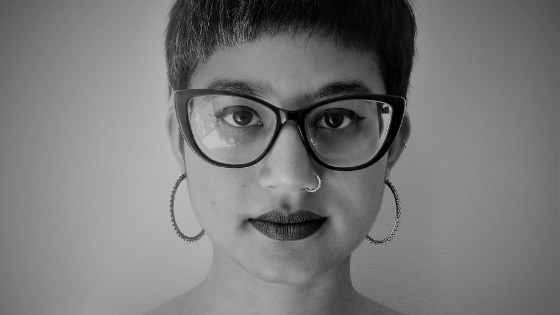
    Isha Karki is a writer and freelance editor living in London. Her short fiction has appeared in Lightspeed Magazine, Mslexia and The Good Journal, and is forthcoming in On Relationships, Rosalind’s Siblings and Sunspot Jungle. Her work interrogates the politics of race, cultural identity and sexual violence, and is informed by her Nepali immigrant experience. Her story ‘Love’ is forthcoming in the anthology On Relationships. Support the Kickstarter here. She can be found on Twitter @IshaKarki11.
  • Ghosts

    Ghosts

    As she reflects on the current political situation in her home, Claudia Durastanti elegantly dispatches with the idea of the ‘ghost of fascism’ that supposedly haunts Italy


    I’ve just landed in Fiumicino when I see a video for the forthcoming European elections play on a loop. Matteo Salvini, Deputy Prime Minister, is advising me to ‘eat Italian, drink Italian, buy Italian’. As I stare at him, I feel transported back to a place I visited in primary school, Italia in miniature: a theme park near Rimini, where you can walk around a country made of tiny replicas of important cities. You can jump from Florence to Pisa to Venice in a matter of a few steps, you can pretend to crush iconic landmarks. It used to be fun and creepy. The miniatures retained the same melancholy of Luigi Ghirri’s photos. I would discover his photographs very much later – faded commercials, deserted playgrounds, scattered atlases –, but I would feel the same uneasiness:  the artificial proportions, a fairground version of a homeland. What we lose with a loss of scale.

    Silvio Berlusconi won the elections that year. I didn’t know much about politics at ten, but I felt echoes of it, in that park. A shrunk governable country, to be sold as an attraction.

    Twenty-five years later, in the airport back home, I stare at Matteo Salvini and I ask myself what he reminds me of.  I know he should remind me of someone like Mussolini, but he doesn’t. Behind the despotic aura, the fetishization of para-fascist gear, and his close ties with far-right movements, he reminds me of what it felt like to be a child, then a teenager and then a young woman under Silvio Berlusconi’s rule and influence. He reminds me of how Berlusconi used to sell products all the time, all those broke anchormen who moved to commercial TV channels where they promoted bikes and pans and polishing products. He, Salvini, is trying to sell me my country as a brand. Add the crucifix and rosary he’s been kissing in front of the cameras for a while now, and it’s really hard to separate him from a preacher or a tarot reader. If we were in America he’d be wearing a purple tuxedo in a parking lot full of junk cars, screaming in a bullhorn. That’s how cheap it feels, and, still, dangerous.

    For most of my life, I’ve heard the same thing about Italy: there’s something tragically unhip in the Italian approach to contemporaneity, a quick falling in love and reluctance to discard it when contemporaneity reveals its brokenness.

    Italy turns everything into ruins that cannot be replaced, for fear that replacing them would mean identity loss. The fear of identity loss plagues far-right movements, but not only them: I’ve seen it in the Left I belong to as well. I came to see it as an extended disease, a reluctant nostalgia seeping through our pores even when we are disgusted by it.

    It takes a specific kind of faith to believe in the past. We are encouraged to believe that certain processes, ideas and forms of violence are constant in time, that their core is preserved under very different circumstances. As I consider this, I try to go back to the practice of translation: should we carry the past into the present, or translate the memory of it into another language, based on different metaphors?

    Over time, I’ve grown resentful of metaphors tying fascism to spectres. The ghosts of fascism. Il fantasma del fascismo. I hate the immateriality and elegance ghosts suggest, the haunted house charm, the starkness of period videos, where blood is always expressionist black and never what it should be, a vivid and squalid red. I hate the contrast between the involuntary aristocracy of these ghosts and the brutality and suffering fascism has caused.

    So to make things really ugly, I say we live in the age of zombies, immersed in a sickly liminality. ‘You mean zombies ‘cause fascists never died. They are undead so they can’t be ghosts,’ people say when I suggest this figurative switch. But that’s not what I mean: a zombie is not dead, but it’s not exactly alive either. Unless we feed it morsels of our skin and conscience.

    The zombies of fascism are in our streets, neighbourhoods, and public spaces; they are colonising our lives more and more. They are not an army; instead they have become a banal daily sight.  

    We need to remember how it was, we’ve always been told, but memory can’t just be long term, can’t just be about the worst thing to ever happen to the country. If we need to have faith in history, we also need to have faith in a more recent past. Twenty years of Berlusconi were not a much better enemy. He facilitated and encouraged the national craving for a new strong leader.  This has led us to where we are today. Salvini might be wearing black clothes soon, but his darkness comes from somewhere very close in time, much closer than the 1920s. It originates in a time when power became laughable and, falsely, belonged to everyone.

    When I was a child I believed that power was hidden. I believed authority was strictly dependent on invisibility, rulers had to be opaque. Politics was a land of dark rooms, crowded with men behind the curtains. But then Silvio Berlusconi made everything visible through the TV channels he owned, and now Matteo Salvini is making everything visible through the social media we think we own, when we actually don’t.

    The invisible power I believed in as a child never really existed. Power was never a series of dark rooms, but a house made of mirrors: we walk blindly in it, we hurt ourselves and we wonder where the cut came from. As I walk away from Salvini’s video in the airport I feel the same uneasiness I felt in Rimini when all I wanted was to step out of the miniature park, where everything was so ready to be crushed.


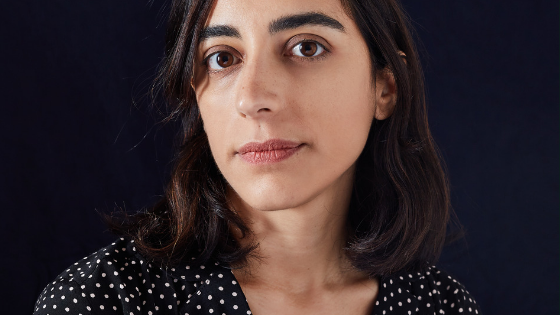
    Claudia Durastanti (Brooklyn, 1984) is a writer and literary translator, and author of four prize-winning novels. Her novel Cleopatra va in prigione (Cleopatra Goes to Prison) will be published in the UK by Dedalus in July 2019. The translation of her latest book, La straniera (The Stranger), will be published by Fitzcarraldo in the UK and Riverhead Books in the United States. In 2017 she started the Festival of Italian Literature in London with fellow writers and journalists based in the UK. She lives in London.

    Image credit: Sarah Lucas Agutoli

  • But where, and to whom?

    But where, and to whom?

    In Croatia, Olja Savičević writes, ‘WWII crimes are being relativized, and history is distorted in the name of religion and patriotism’.


    It has been a fresh, cold and rainy spring, when it is more customary to be bathing in the sea by this time of the year. There has been so much rain in the last month that it has been impossible to even walk the dog and stay dry. The rain chucked it down, the dog and I dried ourselves near the stove, but in the end it wasn’t altogether bad: I ended up with a completed collection of poems and finally got some pending paperwork sorted. Among the newspapers, magazines, postcards and letters, I found an anonymous piece of writing in a box of chocolates, dry with age and written in a rough, childish hand. I remembered some of the letters from the box, but not this one, without even a signature.

    The paper had lost its moisture long ago, but the tone of the letter remained decisive, while the content was naïve; the attributes of a young high school student. This letter written almost thirty years ago, before the war, tells me that if I ever find myself in trouble, all I have to do is dress in something red and this guy – the guy writing the letter – this guy will take care of it; the problem will be resolved. Later on, I remember that in high school, I had suspected the author to be a guy who played the guitar and used to tease me. He had disappeared at the beginning of the war, shortly after the letter arrived, without a word and without trace, just like so many others of the ‘wrong nationality’ – even though they had nothing to do with the war. I’ve heard that this self-conscious, potential  superhero is now a doctor in Belgrade. So he is still saving lives. I returned the anonymous, forgotten letter to the box, with the others that I’m not going to throw away: I’ll leave it for my kids to one day consign them to the recycling.

    On the internet I read a report on the site Are You Syrious?. It is aimed at volunteers trying to help migrants, by raising awareness of what is happening, by informing the public. The text says that in Korenica, a small town in the region of Lika, police officers had beaten Syrian migrants before taking away their food and clothes, and smashing their mobile phones. This happened in a garage, the news says, behind a blue door. The colour of that door attracts my attention: why was it important for anyone writing down such a story to note the colour of the door? The blue door of the garage make this horrible story even more horrible – behind the blue door the horror creeps closer to us. Nevertheless, I find nothing more about this incident on the other (rare) independent media sites.

    I talk about the report to the first person I meet: a neighbour with whom I sometimes walk the dog. She claims that people are not able to understand anything that they do not feel on their own skin. She gives me examples from real life.

    I mention empathy, but I’m no longer convinced of what I’m talking about. Most people are not really empathetic, not capable of standing back even a metre from their own experience.

    Some of the volunteers who have worked for years with vulnerable groups of people have told me that in practice empathy is sometimes a disorder; people with too much empathy are easily broken and mostly useless in crisis situations.

    On the other hand, the masses are blind, which is why we have these closed borders, these populist leaders all over the world, and the countries of the former Yugoslavia, the country where I was born, can be a stand-out example of this sorry situation. We have politicians who are guilty of stealing, beating, even murdering, of causing mass emigration from their homeland and leading their country to the brink of disaster, and yet many people still love them. Fearful people love those who have caused them misfortune, the mighty, from whom they might one day draw some benefit. This will always result in a hatred of the weak. Such people feel secure in hatred, a desirable hatred, at first quite weak, but then ever stronger, as the desire of the mighty grows. Have we not seen it before? Even great men were blind. Eugene Ionesco, the author of the play Rhinoceros, described precisely the process from which a little hatred and fear grows into terrible fascism that consumes humanity until it has swallowed up the last man. Yet even he was blind to the suffering of his Jewish friend and colleague, Mikhail Sebastian.

    I see the blindness around me growing again, I notice how women’s rights are being taken away from them, how Ustasha and Chetnik crimes from WWII are being relativized, how history is distorted in the name of religion and patriotism, so that people in Split and Zagreb, it has been said, have more empathy towards uprooted trees than towards those migrants behind the blue garage door.

    Sometimes I feel a sense of panic and the need to do something. I feel like shouting. But where and to whom? Even if I had a place to voice my thoughts, I think people would simply turn away from me.

    In the book of selected poems by the Chinese poet Jidi Majia that I am currently reading, there is a poem titled I Will Always Love the Small and the Weak which reads: ‘But when we have to deal with the cries and screams of the innocent / We cannot manage to save them from hell on earth.’ And really, what use is our empathy for ‘the small and the weak’, what can it do outside the text, in real life?

    We cannot fix things; just as that boy who sent me the anonymous letter couldn’t take care of himself, let alone me. We are at best chroniclers of the absurd, those who write of suffering and pain in the hope that they will not happen again. Maybe we are those who will continue to celebrate freedom and the joy of living and the right to freedom of choice, for as long as there are readers, an audience, spectators, who will feel encouraged or even think for a moment about another’s misfortune. The world is self-satisfied, turns its head, sees with one eye closed and the other half-open. But when we close that half-open eye, too, it will be the end, the beginning of darkness. Every day you have to wake up and see the colours: the red shirt, the blue door. We can always choose whether to see or not.


    Olja Savičević is a prize-winning Croatian author who works across many different genres, including fiction, theatre, poetry and children’s books. Her books have been translated into multiple languagues. Her best-selling novel, Farewell, Cowboy (translated by Celia Hakesworth), achieved great success in the region and was adapted into a stage play. Her latest novel translated into English, Singer in the Night, received a PEN Translates award.

    Translated by Susan Curtis.

  • Editorial: blind faith

    Editorial: blind faith

    Do you ever feel that the things you used to believe in are disintegrating before your very eyes? That belief systems turn out to be fake, or flawed? Do you ever feel as if you are living in a world where people put blind faith into ideas that are bound to disappoint them?
    Of course you do. That’s why this issue of Transmissions investigates belief systems that deserve to come under scrutiny: white feminism, for example, and charismatic religion, or our supposed eternal victories over fascism.

    Whenever I think of blind faith I think of two things: early Christianity and late-stage fascism. Both combined an absence of reliable information with an absolute belief in a system (a system that usually revolved around a single man), and the refusal to accept other sources of truth. It is tempting to see us return to that space, a space ruled by overpowering belief systems. It can hard not to be overwhelmed, not to retreat into apathy. But then I think of how, in late antiquity, some would-be-saints chose to retreat from the world in order to cultivate their intellectual and spiritual purity. I think of Paulinus of Nola, a 4th century poet-politician-bishop, who, having retreated from the world, wrote to a friend, ‘your wilderness is not a desert, but a place set apart, untouched by the world’s darkness and avoided by the waiting demons.’ And I think of how tempting that is, how privileged, and how wrong. Turns out that you can only avoid the world’s darkness if you’re a rich man with a massive Roman estate.

    In the absence of that, we’ll keep our eyes open. As Olja Savičević writes in her brilliant piece on Croatia, ‘The world is self-satisfied, turns its head, sees with one eye closed and the other half-open. But when we close that half-open eye, too, it will be the end, the beginning of darkness.’

    Elsewhere, Isha Karki reflects on how difficult it is not to sink into apathy when confronted with the ongoing catastrophe of UK politics – from milkshake discourse to May’s tears.

    Claudia Durastanti elegantly dispatches with the idea of the ‘ghost of fascism’ that supposedly haunts Italy, and suggest that we call them zombies instead, zombies that have overtaken our lives: ‘a zombie is not dead, but it’s not exactly alive either. Unless we feed it morsels of our skin and conscience.’

    And finally, we spoke to Argentinian author Selva Almada about religion, charisma, and power, all topics at the heart of her novel The Wind that Lays Waste

    This issue of Transmissions reports to you live from Italy, the UK, Argentina and Croatia. We hope you enjoy it as much as we do. 

    – Theodora Danek, editor, PEN Transmissions

  • Not permanent, but real: a conversation with Selva Almada

    Not permanent, but real: a conversation with Selva Almada

    Selva Almada is considered one of the most powerful writers working in Argentina today. We spoke to her about religion, charisma, and power, all topics at the heart of her novel The Wind that Lays Waste.


    Reading The Wind that Lays Waste made me think about the role of honesty in religion – and other belief systems – and what role objective truth has when confronted with personal belief. There is a conflict between those who believe that religion is a job that pays the bills, a cynical ploy, or a true calling. Do you think of honesty and truth as something subjective?

    I find it very hard to think about religion – any religion, but particularly Christianity – as an exercise in honesty. But in constructing the novel’s universe, I found it interesting for Pearson – a priest with a lot of charisma, and as such suspicious because we’ve got used to seeing religion as a money-making endeavour– to be a contradictory character. Is he an honest man, a liar, a fanatic, a great pretender? Is he a bit of all those things? I like the fact he’s an awkward character who challenges people who, like me, have little faith. And I like that, at the same time, he can generate conflict in those who do believe, making them wonder: what if I’m surrendering to a madman like that myself? We know he’s done some pretty murky things in his past, that he’s abandoned his wife to pursue his preaching, and other things that aren’t mentioned but that continue to haunt him. Can a man change? I think so. That’s something I do believe in. I believe in people’s capacity to transform themselves, to become more humane and more empathetic with the rest of the world. And I believe, or I only believe, in that when there’s no divine or magical intervention. Only when it’s a purely personal transformation, with all the limitations that we have as humans, do I think it’s real. Maybe not permanent, but real.


    Your protagonist Pearson is a preacher who has power over his followers like the Pied Piper over his flock. What connection do you see between men like Pearson, and charismatic religion? 

    In countries like mine, very large and with many social and economic inequalities, churches like this serve a social function that the state leaves unoccupied. They set up in the poorest regions and have a lot of influence in the community, directing people spiritually, looking after drug addicts and alcoholics, calming violent tendencies. Of course, it’s all in exchange for an addiction to God. They serve a paternalistic function in that sense too, meaning that, as you say, there’s a strong relationship between religion and fatherhood. In the novel, the notion of fatherhood is heavily questioned, in the relationship between Leni and Pearson. She hates her father, and – as I think most girls do when they’re teenagers – thinks he’s an idiot, and yet at the same time she respects the preacher, as if they weren’t one and the same person. Meanwhile, probably because they haven’t fully come to terms with it, the relationship between Brauer and Tapioca is very different, a lot freer. Brauer doesn’t try to change his son’s fate, even though letting him choose may mean ending up alone and abandoned. There’s an idea of horizontality in Brauer: my son is not my son; more than anything else he’s a person who can make his own decisions. I didn’t have children because I didn’t want to, it didn’t seem like the right plan for me. It weighed on me, the idea of having to be responsible for someone I’d then have to be generous enough to let go of. If I’d had a child, I think Brauer would have been my model.  

    What role do (or should) charismatic, powerful men have in society today?

    Charismatic and powerful men, at least in our societies, see their role as looking after their own interests rather than serving others. That’s how it is, and more and more so as neoliberalism takes hold of our governments. In Argentina, Evangelical Christianity hasn’t yet reached the spheres of political power (at least not as powerfully as it has in Brazil), but the Catholic Church is embedded in the state and constantly interferes in the state’s decisions, blocking laws that are fundamental to women’s health, such as the right to abortion or sex education in schools.

    In this book, you expose the hypocrisy of religion, but also the egocentrism of fathers. I’ve read about one of your other books, Chicas muertas, which chronicles three femicides from the 80s. I’m interested how you feel about the intersection between politics, power, activism and literature. Where do you see yourself in the square?

    I think the role of writers and artists in general is always to be on the opposite side of the road from power. Even if we sympathise with some governments more than others, we always need to keep a critical and careful eye on what’s going on around us. More than the rest of my books, Chicas muertas (Dead Girls, forthcoming by Charco Press, 2020) somehow drew me out of the comfort of my home and made me take a public stand alongside it. I owe my activism to it, my continuous involvement in speaking out and reflecting on issues like gender violence, hate crime, abortion rights. I think I was already a feminist before this book, but writing, publishing and promoting it was a way of reaffirming my feminism. I’m not interested in writing literature that’s didactic or propagandist, but I’m sure anyone can read between the lines of any of my books and see what I think about certain things, where I stand in relation to the world we live in.


    Selva Almada (Entre Ríos, Argentina, 1973) is considered one of the most powerful voices of contemporary Argentinian and Latin American literature and one of the most influential feminist intellectuals of the region. Including her debut The Wind that Lays Waste, she has published two novels, a book of short stories, a book of journalistic fiction and a kind of film diary (written in the set of Lucrecia Martel’s most recent film Zama,
    based on Antonio di Benedetto’s novel). She has been finalist of the Rodolfo Walsh Award and of the Tigre Juan Award (both in Spain). Her work has been translated into French, Italian, Portuguese, German, Dutch, Swedish and Turkish. The Wind that Lays Waste is her first book to appear in English (published in collaboration with Graywolf Press, US).

    Interview translated by Annie McDermott & Carolina Orloff