Category: metamorphosis

  • The otherness

    The otherness

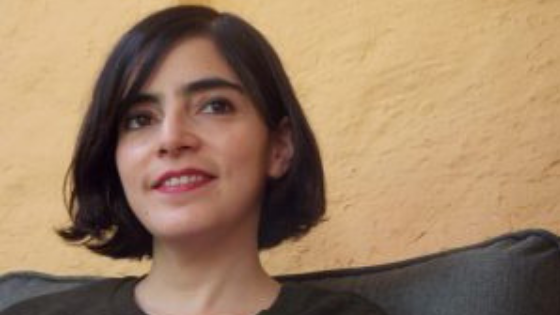
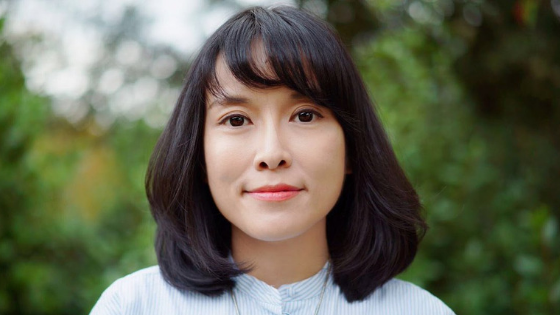
    Yan Ge cultivates multiple selves, some more terrifying than others.


    I was born into a family whose members were by and large literary people and who all expected me to be a writer when I grew up. My first article was published in the city newspaper when I was nine or ten years old and my first book came out when I was seventeen. I’ve published thirteen books since. I write one to twelve hours a day. When I don’t write, I read books. On top of that, I studied literature at university and later completed a creative writing MFA.

    In other words, I’m entirely disconnected from the real world where real people live and work different jobs. I am, according to my cousin, a weirdo.

    I take her remark as a compliment, a hard-boiled reality I have to live with. Having written fiction for many years, I’ve grown slightly eccentric. Most evidently, my world has been dominated, for a long time now, by a third person narrator. I’m never ‘I’ in my head, I am a ‘she’: she is writing again, in the student canteen. She hits the keyboard with one hand while popping almonds into her mouth with the other. Last week a girl from her workshop whose flatmate is a nutritionist told her that almonds are superfood for the brain and could potentially postpone dementia for two to five years. She’s been eating almonds aggressively since. 

    She is working on an article. It’s supposed to be about metamorphosis. Whenever she sees this word she thinks of her father. He is the person who read the Kafka short story to her when she was eleven or twelve. He read and reread the first sentence quite a few times with great enthusiasm and explained to her that this was one of the greatest opening sentences of modern fiction, and why. He also said something about allegorical fiction or fictional allegory. She can’t remember.

    She doesn’t speak with her father much these days. She lives in a foreign county. There is eight hours’ time difference between them. She is busy with the course and occupied by her eighteen month old when she’s home. But none of those are the real reason; the real reason is that she finds it increasingly difficult to speak Chinese. To be clear: she speaks Chinese perfectly. It’s just that to speak Chinese makes her sad.

    She becomes heightened in her mother tongue. It makes her vulnerable and tender, sensitive and irritable; less herself.

    She is settled with the current image of herself, resting in a second language, watching the world through fresh lenses. It’s hard to know why she came all this way. She always enjoys doing difficult things, possibly a consequence of her over-exposure to Greek mythology as a child. But it’s more than that. She thrives when there’s a struggle and believes life is ultimately about endurance – but neither matters here. Ah, yes: a second language interrupts her, reflects her constantly as a stranger, and as a fiction writer, a compulsive observer she enjoys meeting strangers. Slowly and imperceptibly, she discovers who she really is.

    It occurred to her earlier today, the most plausible approach to the theme of metamorphosis was to write about the change of her literary language. But she doesn’t feel like doing it.

    She consulted her husband. ‘What am I going to write about metamorphosis?’

    He replied: ‘What did you think of the other day when you looked at the photo of you as a six months old?’

    ‘My Mama.’

    ‘And now you’re a Mama.’

    ‘I don’t want to write about motherhood. I’m still traumatized.’

    ‘Fair enough,’ he texted.

    She is left with nothing to write about so she tears open the pack of almonds, hoping the little vitamin E fortified angels will stimulate her through her daily, hourly writer’s block. Nothing happens. She eats more almonds.

    Or maybe, she speculates, it has nothing to do with choosing a sensible approach; she just doesn’t like the idea of metamorphosis. After all, she has always been scared of insects. It terrifies her to picture that some unforeseeable change could take place in her body abruptly and she’d wake up a foreign object. She would be trapped, in the shell of a beetle, the bark of a laurel tree, as a non-native English writer, a mother, and she could never go back again.

    No no no she hasn’t metamorphosed. There hasn’t been any irreversible conversion. Nobody has suspended her from practicing as a Chinese writer, and motherhood is not a terminal disease. Take a deep breath. Things will improve. It does get easier.

    When she was a teenage girl she always felt lonely. So she imagined there was another girl living inside her. She talked to her, she wrote letters to her. The idea of having someone else in her body consoled her. She was content that there was this otherness in her: strange, changeable, undefinable things which would puzzle her perpetually. It was the otherness that made her feel like herself, free and vigorous—and it was from there everything started.

    As a result, she is still in me. Or I am still in her. Because nothing is certain and I question myself all the time. This is, again, part of the occupational hazard of being a fiction writer. On the other hand, there are privileges. One of the best privileges, aside from having the licence to be a weirdo, is to be able to cultivate multiple selves, to live a life of polyphony. In this sense, I’m coexisting with memories of my family and ancestors, my imaginary friends, the characters in my fiction and all of my past and forthcoming identities.

    Sometimes, when I sit by myself I can hear them talk: negotiating, squabbling, and laughing together. The loudness of them settles me. It makes me feel that I am always accompanied in my solitude.


    Yan Ge was born in 1984 in Sichuan in the People’s Republic of China, and currently lives in Dublin. She has published a dozen books and has won multiple awards. Her novels The Chilli Bean Paste Clan (translated by Nicky Harman) and Strange Beasts (translated by Jeremy Tiang) received PEN Translates awards.
  • Metamorphosis

    Metamorphosis

    At the time of writing these words, the year is drawing to an end. It is a season to reflect on what has occured. It is a season to think about change and transformation, a season to think about metamorphosis. So that’s what we asked our writers to do. You may think of Kafka; you may think of Ovid; you may think of Transformers, of cars turning into terrifying robots. They thought about language, motherhood, multiple selves, and – of course – politics.

    Alia Trabucco Zerán explores recent changes in language: can the transformation of Castillian Spanish kickstart a wider change in society? Are new words what we need right now, when the power of words is in the spotlight every day – as Alia puts it, ‘new words to imagine a new reality’?

    Yan Ge tackles metamorphosis from a more personal perspective: they are the changes that take place when writing and working in a second language, and the freedom of being a writer, able to ‘cultivate multiple selves, to live a life of polyphony’.

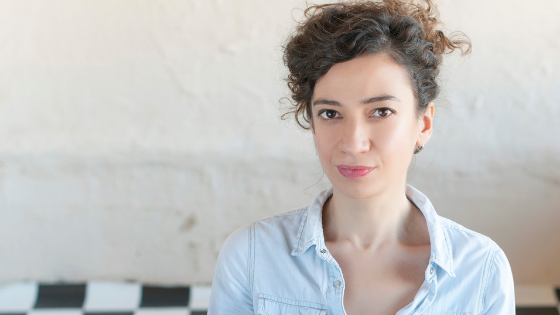
    Pınar Öğünç left her home in Turkey for eleven months. When she opened the door to her flat again, she was a different person than the one that had left. The country had changed as well, profoundly – as it had been for years. In her essay for Transmissions, Pınar reflects on the political and personal metamorphosis that she has witnessed during that time.

    During her time away from Turkey, Pınar was a writer in residence with English PEN’s Writer’s at Risk programme in London. (You can read more about how she explored the city via its libraries here.) Pınar’s essay is a reminder that writers in Turkey and around the world are at risk for speaking their mind, and that it is a luxury to think that writing isn’t political. Let’s keep this in mind as we shake of the skins of our old selves at the end of another year.

    – Theodora Danek, Writers in Translation Manager, English PEN

  • Darker, longer, tougher, stronger

    Darker, longer, tougher, stronger

    ‘Not everyone should have one, but 2017 was my annus horribilis.’ Pınar Öğünç reflects on Turkey, political change, and Sansevierias.


    It was alive and there. How was this possible, I thought when I first opened the door? I never exactly knew why I liked it – being nobody’s favourite might be one of the reasons. I had adopted it from the streets. There was something that made you feel respect for it; a kind of spiky beauty seemed to spring from its dark green dignity. No motley flowers to delude anyone, only long, chest high stiff leaves that feel like leather, like the skin of a living thing rather than a plant. I learned that they are called Sansevieria: otherwise known as snake plants, or, in Turkish, ’sword plant’, a term I dislike.

    I had turned the key to open the door of my flat eleven months after I had left it. First, the scent of having waited too long splashed my face. Then I saw my Sansevieria. It had somehow been forgotten in a corner while the rest of the plants were under the protection of a kindly neighbour. Though it had been deprived of water, fresh air and any kind of contact with the rest of the planet for almost a year, it had resisted dying. The Sansevieria knew the truth about itself.

    The things we see most tend to turn invisible after a while. Is that painting really good above that armchair, what is an acceptable height for a pile of books next to the sofa – we only have the first days of moving into a new house, the first moments when a change occurs, to see things clearly, and then the changes start fading away. You just don’t see them any longer. That long time away from home had given me a sharp look unique to strangers; while I remembered the stories of how this anthill, my flat filled with things, was created over the years, how that beautiful pillow, those funny magnets and little stones from different countries kilometres away found themselves in my living room. I also saw everything as if for the first time: with a lost-and-found fresh perception that was only to last for a few minutes.

    If this were a novel, the writer might have preferred an epiphany to occur right here; but in reality, it took some more time to realise how I had changed in the four seasons I had been away, while my Sansevieria survived with the water stored up in its roots and was content with the light that leaked in from the curtains.

    I spent almost a year in three different countries. For six months of that year I stayed in London, thanks to the warm welcome of English PEN. But I had better start this story in 2015, when things began to change.

    We always knew that Turkey was never a heaven for democracy. Each of us was the grand-grandchild of people who were exiled, imprisoned or killed because of their ethnic or religious identities – unless they were one of the perpetrators of these crimes. The history of Turkey is built with bricks made of tragedies that haven’t been confronted yet. I was a student in the ’90s, the darkest and bloodiest era of ‘the Kurdish issue’. Perhaps the most viable lesson I learned at university came from a professor who was supposed to teach us the constitutional history of Turkey, but instead did something he shouldn’t have done at all: he told us about what the Kurds had been going through, told us about real appeals to the European Court of Human Rights at a time when silence was compulsory. He had seen these appeals because he used to be a government lawyer at the ECHR for a period until one day he resigned, filled with disgust at what he had witnessed. Generally, it was a hard time for Kurdish classmates, who clearly realised that there was nothing they could learn about politics from sterile books. They decided they’d rather be the politics, and left school.

    We were not strangers to where we lived and what Turkey was like, and maybe knowing all this provided us with a better perspective on what happened at the Gezi Park protests in 2013. Millions of people came out into the streets demanding a more democratic, secular government; though opinions differed in the politically heterogeneous crowd, and although it was not everybody’s priority, there was generally a will to confront the past and build something new: a more equal society. The government today, almost six years later, is still in search of the organiser and the financier of the protest, is still sentencing people in the courts. They would have preferred it to have been planned by a single person.

    The results of the election in June 2015 were a turning point. The AKP lost full power, dependent on a coalition. The opposition achieved a sort of victory, possibly in connection to the tide of the Gezi protests. But with political hocus-pocus that election result was simply done away with. The government not only toppled the table that was set for peace with the Kurds, they shattered it into pieces with axes, sending politicians once part of that process to prison, demolishing everything that had been gained.

    The bombings began in several spots just before the following election. Hundreds of people were torn to pieces. We lost our friends. By that time the ugly corridors of the courtrooms had begun to be our meeting places; now there were funerals where we met to embrace each other. There were times when I found myself crying at the side of graves of young people I didn’t know. I went into their rooms to write their stories, their pyjamas were still on the bed, I saw the last books they had read.

    As a journalist, my recorder had always been full of stories of human right violations but suddenly, with no exception, there were only tragedies to listen to.

    The academics who had signed a petition for peace; the journalists who had only done their jobs to report on reality; lawyers, doctors, all kinds of opponents were under threat. Thousands of people lost their jobs and social rights, and were sentenced to a ‘civil death’. In a country where a record number of more than 120 journalists are in prison, there was no reason I couldn’t become one of them; there still is not.

    Not everyone should have one, but 2017 was my annus horribilis. On top of everything else, I was tested with several personal issues, as if life wanted me to deal with everything – death, health, love, hate, freedom, struggle, hope and despair – at once. The animal that lived inside me, desperate to survive, accompanied me as for some time we wandered around streets we didn’t know, sat down under the shades of trees of London to take a deep long breath. We wrote letters to the colleagues in prison, and we sent them although we felt a bit guilty because of the foreign stamp on the envelope.

    My first short story collection was published at the beginning of 2015. Since then, caught up in the swamp in which I had found myself, I hadn’t written a single sentence and what was more, had stopped seeing the meaning in it. In the distance, away from home, I found a reason, a possibility to bring it back before I returned home. Being able to write stories again was my revenge for what was taken from our lives. I, like many people here, know that the history of humanity is built with such bricks. We discovered our Sansevierias inside: being spiky made our leaves darker, longer and tougher.


    Pınar Öğünç is a journalist and writer based in Istanbul. She has worked as a reporter, editor, and columnist for several national newspapers and magazines in Turkey since 1997 and was a guest lecturer in journalism for three years. She has published four books—three non-fiction and one short-story collection—and contributed to many others, and she has written scripts for short films. She spent six months in London with English PEN’s Writers at Risk Programme to work on her new short stories and her first children’s book, which will be published in 2019. Find her on Twitter and Instagram @pinarbihter.

  • Just words

    Just words

    ‘Could feminism transform language? And could a transformed language transform reality in turn?’ Alia Trabucco Zerán reports on recent changes in Spanish-language feminism.


    This year, amid alarming reports on the rise of fascism in Brazil, the extreme right’s in Europe, and the catastrophic extent of global warming, one news story went almost unnoticed. In the United States, a twenty-year-old woman, Michelle Carter, was convicted of manslaughter of her boyfriend. The strange thing about it? He was alone when he died. From her house, phone in hand, Michelle sent messages goading him to commit suicide. No more thinking, she told him. You just need to do it.

    These words eventually led to her conviction. It was an unprecedented sentence. The Massachusetts jury determined that Carter was guilty of the suicide of Conrad Roy; that her messages and several phone calls had been the cause, albeit indirectly, of his death. For the jury there was no reasonable doubt: words can kill.

    Beyond the questionable logic that put Michelle Carter behind bars, this case is representative of a wider, fascinating and recently resurgent debate about the relationship between language and power. Words and their corrosive power have been at the heart of several controversies around Donald Trump’s racism and Jair Bolsonaro’s homophobia. The violent reverberations of certain words have been brought up again and again by the #metoo movement. And it is words and their transformative power, their utopian potential that have played a central role in a particularly heated politico-linguistic dispute in the Spanish-speaking world.

    On the 8th March 2018, thousands of women in Spain participated in a general strike against gender violence and austerity; in Argentina, millions of protesters waving green handkerchiefs rallied in the streets demanding the legalisation of abortion; and in Chile, my home country, dozens of universities suspended classes calling for the end of an inherently sexist education system and of sexual harassment in the classroom. In all three cases, a critical, organized feminist movement used a rotation of different spokespeople when communicating with the press. Eschewing hierarchical and ‘personality-driven’ leadership, the women chose to present themselves to the public as a collective body; and from that body came words nobody had heard before: ‘nosotres’, instead of ‘nosotros’ or ‘nosotras’; ‘todes’ instead of ‘todos’ or ‘todas’; ‘chiques’ instead of ‘chicos’ or ‘chicas’. An ‘e’ that displaced the round and equivocal masculine ‘o’ and the exclusive and excluding ‘a’ which are the basis of Castilian’s strict binary grammatical gender; an ‘e’ which elicited both bafflement and resounding laughter.

    These reactions were met in turn with questions from the movements’ various spokespeople: Why should we use ‘nosotros’ or ‘nosotras’ if what feminism opposed was precisely the male/female dichotomy that had generated so much violence and inequality? Was Castilian in some way reinforcing these hierarchies? And what about those who refuse to be defined as either men or women – grammatically speaking, where do they stand? The questions asked by the movement were uncomfortable and prompted intense debates around the power of language and the language of power.

    Was Castilian an inherently macho language? Could feminism transform the language? And could a transformed language transform reality in turn?

    No one expected quite the virulent response that this so-called ‘inclusive language’ provoked. In Spain, the writer Arturo Pérez-Reverte declared that ‘necessary feminism was one thing, but radical Talibanism which bases itself on twisting words is quite another’. The Nobel Prize laureate Mario Vargas Llosa wrote a diatribe drawing curious comparisons between feminism and authoritarianism, calling certain currents ‘anti-literary’ and ‘anti-cultural’. And at The Royal Spanish Academy the long-suffering guardians of linguistic purism are still sticking to their story: ‘The masculine grammatical form functions as an inclusive term to refer to mixed collectives.’ And yet, the months pass and this ‘e’ continues to make itself heard over the din, as do more questions prompted by this genuine metamorphosis of language: Was the use of the generic masculine form ever appropriate? Why did human rights declarations add ‘niñas’ alongside ‘niños’ and replace ‘men’ with ‘people’? Has the ‘o’ ever represented the whole of humanity?

    Over a hundred years ago, a now forgotten revolt against the feminine noun ending ‘a’ caused similar shockwaves. For decades, ingenieraabogada and doctora had been nouns that described the engineer’s wife, the lawyer’s wife, and the doctor’s wife. When the first women joined these professions, many scoffed that it was petty and confusing to adapt the trade names to the feminine form. Those women could simply call themselves an abogado, ingeniero or doctor – without changing from the masculine form – if they didn’t want to be confused with ‘the wife of’. And, for many women, calling themselves abogado, ingeniero or doctor felt like a real victory. Men and women alike resisted the letter ‘a’, and this opposition went on for more than a century. But what is one century in the long history of a language? Indeed, what is the history of language if not a history of transformation? Today, abogada, ingeniera and doctora form part of not only the Spanish language, but also our imaginations as Spanish speakers. And the capacity to imagine has always been the driving force behind feminism; a radical, stubborn, luminous imagination which has allowed women, again and again, to move beyond the narrow confines of the possible: imagining ourselves in schools and universities, in libraries and factories, in parliaments, laboratories, and even in spacecrafts.

    All of feminism’s triumphs have called for imagination; some have required women to utter words that do not even exist.

    I don’t know if, a hundred years from now, the vilified ‘e’ will form part of the Castilian language. I don’t know if, in the future, I will be able to utter that letter without it feeling somehow imported and scandalous. But if words can kill, if they can generate hate and violence, and if they are capable of conveying love, then they are never just words. And perhaps that it precisely what we need: new words to imagine a new reality.


    Alia Trabucco Zerán is the author of The Remainder, translated into English by Sophie Hughes, and published by And Other Stories and Coffee House Press. It was awarded an English PEN award, won the prize for Best Unpublished Literary Work awarded by the Chilean Council for the Arts in 2014, and was chosen by El País as one of its top ten debuts of 2015.

    Translated by Sophie Hughes.