Category: past futures

  • When Utopia Becomes Tangible

    When Utopia Becomes Tangible

    Jen Calleja discusses practical responses to sexual harassment and assault in (literary) spaces, and how utopian hope can inspire and inform tactics for real change 


    I inhabit distinct but clearly connected fields of artistic practice – writing, translation, music. There are many things that join them; they are areas of creativity and collaboration where working with peers and trust are key; they are where I often feel among like-minded people who share my values and motivations; they offer platforms where I can express myself fully; and where my (net)working and social lives often crossover and intermingle. There is also one thing that is far less positive but very real that connects these fields for me: I have been sexually harassed and assaulted while participating in all of them.

    Harassment and assault happens in creative spaces not because of the nature of those particular spaces, but because they happen everywhere, in every workplace, in the street, in public places, in homes, on campuses. It happens because we live in a patriarchal society, and misogyny and discrimination against the LGBTQ+ community are at pandemic levels. Time and time again, anecdotal and statistical evidence, as well as media reporting, shows us that this is a vast – and often minimised – problem.

    So, if the problem is so enormous, how could literary spaces help to end it? What would be the point in even trying?

    Five years ago I felt hopeless about the state of things and my – or anyone’s – power to change how they were. On top of having been harassed in different places and situations since childhood, I had also been groped while playing and attending gigs, been forcibly kissed at literary events and even during a meeting with another translator, and been creeped out to the point of deep discomfort by messages and with people in person – that is, I had been made to feel objectified, dehumanised, gaslighted and disrespected in spaces I wanted to be in the most. And I had witnessed or heard from close friends who were experiencing the same or other vile things.

    These instances made me feel a nagging shame and permanently changed my behaviour in spaces I’d previously felt were both a sanctuary and where I could thrive. It made and can still make me feel numbing anger, nausea and depression, and I am always on high alert. But something has helped me channel some of this fury and hopelessness into something positive and productive – the Good Night Out Campaign.

    Good Night Out is a grassroots organisation founded in London in 2014 by sexual violence activists and training facilitators Bryony Beynon and Julia Gray. Through their work as the voluntary co-directors of the London chapter of anti-street harassment organisation Hollaback!, they established that many people experienced harassment and assault in licensed premises, and that as it wasn’t a legal requirement for these spaces to have specialist training in how to handle reports, this often resulted in poor responses from staff. At around the same time, they were contacted by the club Fabric asking if Hollaback! would offer training for their staff in how to respond to disclosures. They decided that a dedicated organisation was needed. Though the street was still a somewhat difficult place to wrangle, physical night-time spaces had infrastructures, and existing policies and legislation that could be worked with. This is how Good Night Out came to be.

    Good Night Out trains all staff in licensed venues like bars, clubs and pubs how to respond to and deal with disclosures of sexual harassment and assault through a one-and-a-half-hour workshop and pre- and post-training consultancy. Once trained, the space will put up Good Night Out posters and receive accreditation, as well as promotion via GNO social media channels and the website’s map of trained spaces. The workshop entails open conversations about what harassment and assault is, how these intersect with other forms of harassment like racism, ableism, homophobia and transphobia, and includes practical ways for staff to respond in the first instance.

    The ultimate takeaways intended are to promote a culture of belief and to encourage venues to respond empathetically, professionally and consistently to disclosures moving forward. 

    Once a venue has been trained it doesn’t mean that harassment won’t happen there ever again – but it does mean that staff will know what to do and perpetrators will be discouraged and dealt with appropriately.

    I knew both Julia and Bryony from the DIY music scene in London, and admired their proactive and DIY approach to trying to raise awareness about and help end harassment. Though the prospect of getting involved directly terrified me – how could I, an introverted writer-translator with no experience in facilitation, be useful? –, they were both incredibly encouraging and empowered me enough that I trained as a workshop trainer. I’ve gone on to train dozens of venues and represent GNO at council and pub watch meetings, in print media, and in radio and TV interviews. This direct involvement, though at times challenging, has made my personal wellbeing and my sense of hope skyrocket.

    I truly believe we have improved things, including changing people’s attitudes – or at least planted a seed of change. I’ve seen it with my own eyes; that flash of potential transformation on someone’s face.

    We’d trained student unions, music festivals, club venues – but what about the literary scene? The spaces where literary events happen can be disparate. Bookshops, arts spaces, galleries, literary festivals, someone’s house, all these pleasant, polite spaces – they’re rarely as raucous as clubs, but harassment and assault aren’t about losing control, or sex, or flirting, or alcohol, or how dark the place is, or how seemingly wild; it’s about power and intimidation. And it absolutely happens in these spaces.

    The GNO training has recently been adapted for event organisers like promoters and other individuals or groups who often move around and put on events in different venues and spaces. With this training, they can take Good Night Out wherever they go. Having experienced what I have, and knowing others’ experiences, I was keen to bring this training into scenes other than music that I care about and participate in.

    I contacted the London-based literary journal The White Review to see if they would be interested in taking part in a pilot form of this training and help open up this discussion. I felt like they were a likeminded group of people, and would share our impulse to challenge discriminatory behaviour and support change in the literary scene from their dedication to diverse voices and intersectional feminist art and writing. Along with a co-facilitator, I trained The White Review’s and publishing house Fitzcarraldo Editions’ editorial teams a couple of months ago. 

    We opened up the workshop by discussing how they would like people attending their events to feel, and ways to create spaces that are welcoming and accessible to all. We discussed the unique challenges of running literary events, such as the blurring of the social and the work space, how certain behaviours had become normalised, what was appropriate and inappropriate behaviour, and the different reasons people might not speak up about harassment. We covered a range of scenarios and suggested ways of dealing with them, and offered advice on challenging someone’s behaviour safely, as well as how to follow-up with those involved. 

    Leading on from the workshop, we’ll be helping The White Review write a code of best practice. The workshops are always intended as an initial beginning to longer and more detailed conversations that have to take place internally within organisations, and we hope that these initial steps in the literary scene will be the start of wider skill-sharing, networking and organising among journals and literary promoters around these issues. We’ve already had interest from book shops and festivals who also want to receive training and accreditation, and hope that word will spread as much as it has in music and nightlife spaces.

    Though it might seem extreme and conversely even pessimistic to prepare for these eventualities, the reality is that these incidents are already happening and have been happening for a very long time.

    Instead of hoping we might not have to deal with them, it’s so much more positive to create an environment where no one has to worry they won’t be believed or taken seriously or that there will be dire ramifications when reporting an incident – which can all be just as traumatic as the harassment itself. No one on the receiving end of harassment or assault should have to feel that they are the ones who have to leave an event, or any event where a harasser is present, or that they are being made to leave literary circles all together and for good.

    Initially run solely by Bryony and Julia, then alongside a small group of volunteers, Good Night Out became a community interest company just over a year ago, and I was proud to be one of the five founding directors. After being awarded ninety-nine thousand pounds funding to cover the next three years from ROSA – The UK Fund For Women and Girls, GNO is now run by three part-time staff, a small team of freelance trainers, and additionally by volunteers. One of the most exciting things I’ve been part of with GNO is also one of the most promising things for the future: co-writing this toolkit with the Mayor of London’s Office based on the GNO training, so organisations and spaces in London can proactively transform themselves into welcoming and safer spaces.

    If we want things to change, everyone has to make it happen. At times it can seem impossible to change the world, but we do have the power to change the little slice of it we have, and to set an utopian example that could become the new normal. We just have to have hope, and act.


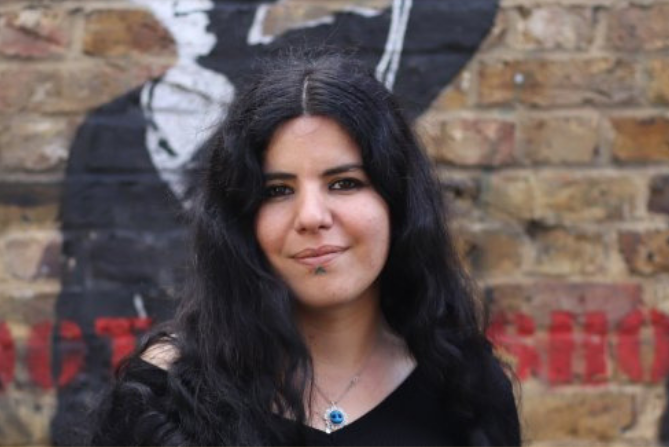
    Jen Calleja is a writer, literary translator and senior trainer for the Good Night Out Campaign. Follow her on Twitter.

  • Editorial: past futures

    Editorial: past futures

    In one of his most well-known, quotable declarations, Franz Kafka said that ‘(a) book must be the axe for the frozen sea within us.’ This comes at the end of a letter to a school friend, in which Kafka responds to the idea that books should make us happy. ‘If the book we’re reading doesn’t wake us up with a blow to the head, what are we reading for? Good Lord, we would be happy precisely if we had no books, and the kind of books that make us happy are the kind we could write ourselves if we had to.’

    The longer I have been working on Transmissions, the more I have thought about Kafka. From the start, the idea behind PEN Transmissions was to showcase writers as thinkers. Literature is a form of entertainment, sure, and yes, it can and perhaps should make us happy (even if Kafka wasn’t a fan). But it is also a tool for challenging our thinking, for waking us up. Good literature makes us think about more than just ourselves, and how we see ourselves reflected in the pages of a book; it gets us out of the relatability trap and holds a mirror up to society.

    These are very PEN-ish thoughts. A large part of what English PEN, along with its sister organisations around the world, does, it to campaign for writers who are being persecuted for their art, and to highlight and celebrate an international community of writers. As a PEN project, PEN Transmissions reflects these values: of showcasing international writing, of giving a platform to writers from different countries, languages and backgrounds, and of foregrounding their thinking about and their engagement with the world at large. Looking back on the last fourteen months of Transmissions, what becomes apparent is that the idea that art could not be political is born out of immense privilege.

    This is the last issue of Transmissions in its current form, and in it we return one last time to a theme that has haunted this zine since its inception: how the past shapes the present, and how we ourselves can shape the future. The four contributions in this issue range from concrete steps to achieve a utopia without sexual harassment and assault, to dystopian visions that are anchored in the more nightmarish aspects of our present, to reflections on how past ideologies have an impact – even when we believe them to be mostly forgotten.

    Ho Sok Fong and Zehra Doğan both imagine futures that are dystopian – yet clearly recognisable from things we see happen today. They invite us to linger over their texts for a little, to reflect whether what they describe is really the future, or rather a heightened aspect of the present, or even an aspect of the present we refuse to see.

    Jen Calleja discusses how utopian hope can inspire and inform tactics for real change. In this case, the utopia is a world without sexual harassment and assault. As Jen points out, making practical changes, however small, can have a big, lasting impact.

    Finally, I spoke to Kapka Kassabova, author of the acclaimed Border, about how versions of the past linger on and affect the present, about how to avoid clichés and othering when writing about the Balkans, and about psychogeography.

    This is my final issue as commissioning editor of PEN Transmissions. I hope you dig through the archive to read pieces you might have missed, and I hope you subscribe to get updates on future pieces and news. It’s been a total pleasure to work with the 51 writers and translators who have contributed their words and thoughts during my time here. Here’s to them for keeping it real (and political, always). Here’s to the axe shattering the frozen sea.

    – Theodora Danek, Commissioning Editor, PEN Transmissions

  • Moth Eyes

    Moth Eyes

    Ho Sok Fong imagines the future in a country where houses have warped into funnels, the horizon has tilted, and talking openly about what is happening has become taboo. 


    We all know this is a wounded country. People bear wounds like moth faces on their backs. They see everyone else’s but not their own. My mother tells me not to go on about faces on backs; my paternal grandmother used to say this too. I know why my mother says it: if other people’s backs have those kinds of faces, then so do ours. 

    When we don’t feel like talking, we look at the stars. We can relax a little like that. For a few moments, we can break away from our strange, tilted horizon.

    Many years ago, my grandfather beat my grandmother. For decades after, he ate all his meals seated to her right, because from her right he could not see the hollow his fist had smashed into her left cheek. Seeing that hollow made him uneasy. 

    My grandmother does not remember how she got here. She thinks she might have fallen from a violently rocking house. The house flew past rubber plantations, raging fires, massacres; horrifying scenes like that. During the journey she lost a child. The child had been playing in the house but when the shaking started the child fell out of the window.

    My grandmother, mother and I do not think our house will ever be good again. The house began as a rectangular pigeon loft, but over the years has warped into a funnel. Now, the floor is crooked. Living inside the funnel, we have had to adapt to feeling unbalanced. We have had to learn to stand and sit crooked, whether we are bathing or cooking dinner. Time has passed and our bones have twisted, pulled and folded over, re-organising themselves, and now we feel that living this way is fine. We’re used to it. I have to survive, and so do my mother and grandmother. So does everyone. In order to survive together, we made an agreement: forget the past. But it was when we made the agreement that the house began to change.

    All things will be forgotten and we’ll all be more comfortable for it. In the air as things depart, jasmine is left to soothe us. In July, at seven o’clock every evening, the flowers on my grandmother’s jasmine plants open. The scent fills the kitchen, the living room, the bedroom, piles of folded clothes. Everywhere the faintly tart scent of jasmine.

    It’s not bad, living all together like this, because my grandmother, my mother, and everyone else are all good people. It’s not bad aside from the worry about the crookedness, which grows worse every year. The horizon tilts. Wherever I walk I feel unsteady. But most people claim they feel fine, and what can I say to that? Sometimes, on the bus, or clocking in at work, I have the strong sensation that my body is falling through the nothingness of the air, into a deep chasm. But I cannot confirm it. It’s as though, below the horizon, there’s a monster pulling out the ground and swallowing it up. It’s the kind of monster that only appears in dreams.

    The monster doesn’t come out in daylight. Everyone is fine during the day, so long as everyone keeps their worries to themselves. 

    For example, worries about the strange horizon. ‘Tilted’ has become a taboo word. So have ‘crooked’ and ‘askew’. But you see them often on the backs of toilet doors. Sometimes I notice clocks, photos, paintings that are hung crookedly on other people’s walls. Then I think, Our house is just the same! There is not a single house without a skewed axis.

    There’s no point in leaving. People who have left say that the horizon is strange in other places too, maybe even stranger than here. 

    Inside our house we have to hunch over to move and it keeps getting smaller. The sunken part of the floor dips more sharply, grows more fragile. Our beds stand on the crooked floor. The beds stand firm but for some reason I feel like all the furniture is collapsing and the floor is growing weaker. Sometimes my dreams conjure another conical shape, this one upside down, to balance out our increasingly challenging funnel. Sometimes my dreams conjure nothing at all. We open the door and there is nothing outside.

    In our sharp cone of a house, each year flies by faster than the last. My grandmother no longer knows the names of things. She does not remember the place by the stove for salt, sugar and tea leaves, the smell of fruit, or the way to the local clinic and pasar. She can’t say brush teeth, climb stairs, comb hair. She has forgotten verbs.

    Whenever Grandma tries to recall something and her words clump and stick, I feel unwell. It’s as if a snake is coiled inside my stomach, exhaling its icy, rancid breath to block my breathing.

    I often see people gathered inside their houses, talking heatedly. What they say cannot be heard by the tenants in the house next door. A person can talk as loudly as they like, and not even the other people in the room will hear them. They may as well be speaking into holes in a tree. Or, maybe everyone can hear perfectly well but they don’t dare respond. They do not dare say, I hear you’. They are scared that hearing will be like a needle in their open chests, and it will hurt them. 

    I’m scared too. Each sentence could be wrong and fall like a giant knife, sticking into the ground like a giant wall. No one will be able to cross it. The only way to heal all these wounds is with magic words. But what words are those?

    When my heart aches for no discernible reason, I do what my grandmother and mother do, and look at the stars. My grandmother and mother rarely use calendars; they can tell the day by the moon. 

    My back has a moth face just like yours, says my mother.

    She talks as if she has understood the face on her own back.  

    Right now the face on my back must mask a trembling child. All day long, I have been upset by what’s outside. I have understood that I am maybe just a weed, unworthy of nurture. All day, I leaned out of my tiny window and looked down at the street, where a crowd demonstrated against racial equality. They yelled a sea of slogans and it sounded like someone frantically whirling a sack of nightmares, words falling through the holes and smacking onto the ground like clods of cow shit. But at the back, behind the ranks of marchers, moth faces flickered and flapped, flowing silently beneath the window like a separate tide of panic. Then evening came and the state television channel said, At the end of the day, this is still a fine and harmonious country. We must all work to keep it that way. 

    I am used to feeling disappointed. There’s nothing strange about that. My mother and I lean back and look up and the night sky looks full of pinpricks. A bitter feeling has been collecting beneath my jaw and seeping into my cheeks; now it vanishes. 

    Ma, I say. If you’re tired, go to sleep. 

    But she says, The sky looks like a watermelon.

    Eventually we will find the language to listen to the moth faces. Then the noise and silences will finally reach the monster beneath the horizon.

    Beneath the stars, the moth eyes on my mother’s back gaze back at me, for a long, long time.


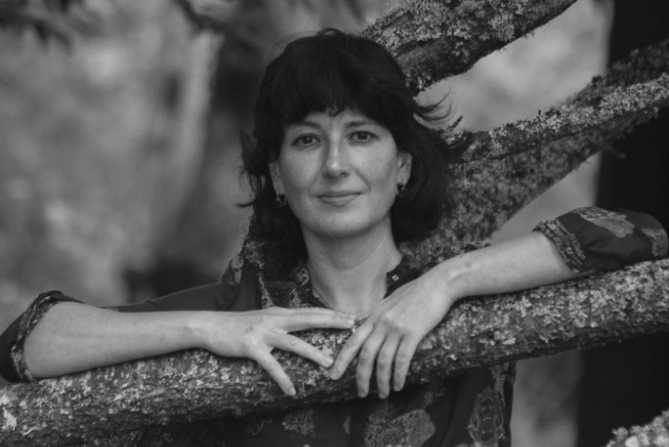
    Ho Sok Fong is the author of two story collections, Maze Carpet and Lake Like a Mirror, a portrait of Malaysian society in nine stories. It won a PEN Presents and a PEN Translates award, and will be published in English by Granta Books in 2019, translated by Natascha Bruce. She is the 2016 recipient of a Taiwan National Culture & Arts Foundation grant, to support the completion of her first novel, The Forest in Full Bloom.

    This text was translated by Natascha Bruce.

  • Faces Afraid of the Mirror

    Faces Afraid of the Mirror

    Zehra Doğan imagines the future: it is 3219 and art is a crime. Mirrors are banned. States who provide welfare to their citizens are brought before the European Court of Human Rights. And a country that imprisons its artists makes more and more money from tourists…


    The footsteps were approaching. Every step shook the ground. It sounded like they were really close. She had to finish her task before they came. 

    A foggy sky, hard to see; an unknown place, an unknown language, an unknown identity. No one understood one another. But everyone was speaking. Everyone way trying to impose their values on one another, even though they didn’t understand each other.

    Some gave up, stopped being themselves and stepped into different bodies. Others rejected what was being imposed. But really, everyone was small, weak, controlled by an unknown force. Occasionally, one person dominated another and celebrated this victory in a bloody way but in reality, they were all just toys. Now and then they forgot that they were toys and dreamt of another life but soon enough those dreams were stopped with a click on the most cruel button of the control panel. Their rage grew each time their dreams were interrupted, and they attacked those weaker than them. So they could forget about reality.

    The year is 3219. In an unknown country, the sun is high in the sky, scorching even in the winter time. Here, it is always very hot in winter, so that it is hard to even breathe. Like every other country, this one is known for its beautiful sights. With its bombed buildings, destroyed museums, imprisoned artists, mass graves and nonstop shelling, it looks particularly heavenly.

    This particular country gets more beautiful every year by killing, and by being killed. Although it attracts many refugees – thanks to its unbearable living conditions –, it still manages to remain unsafe. Even as the smell of corpses on the ground burns people’s throats, the country attracts more tourists. More tourists bring more money. And thus the person who holds the controller becomes more powerful.

    The footsteps don’t stop. Scorpions are hissing in every corner. A timid heart is beating under the rubble. It beats faster as the footsteps approach. She’s covered in sweat –  a result of fear. No one knows how long she’s been hiding there, in this dark well. A scorching sun above, sun on the ground, and scorpions, with their ugly feet, leave their marks on the snow. With every footstep she hears, she works faster: She is desperate to finish what’s in her hand before they arrive. She is a tiny woman; her hair sweeps over her breasts with every move. The fear of being caught is clear in her eyes. Blood is dripping from between her legs. This is how she paints: she rubs her hand against her vagina, drawing what’s born out of her onto paper and thus giving birth. Her life would be over if she was caught. 

    In this unknown world that she lives in, art is the biggest crime. It destroys the order of the world. It is annoying, it scares people, it kills tourism. People are afraid of going to places where there’s art; the ones who go there don’t ever come back. As a result, whenever there’s an art alarm somewhere, countries issue travel warnings for their citizens. The most dangerous country in this regard is a small country with unknown lands and unknown peoples. Although it has a high level of prosperity compared to many others, it just can’t get rid of art actions. It is frequently criticised for its wealth, it has lost many cases in the European Court of Human Rights for providing welfare to its citizens; the politicians who argue that their country is anti-democratic just continue  providing wealth to their citizens, they don’t feel any shame. But, for an unknown reason, the unknown people in this country revolt all the time and stubbornly make art whatever the price. The tiny scared women is one of them. She obtains illegal paints, and despite the home raids and her police record she keeps on painting, using turmeric, tomato paste, coffee, ash, fruits, vegetables and rubbish.

    ‘She fouls the world with every painting, someone must stop her. Look, she’s even using her menstrual blood. She puts her hand between her legs and paints with her fingers, nonstop. This woman tells us that we’re beautiful! Without shame! No, she’s beautiful, she’s doing the worst thing by making the world more beautiful, this must be stopped. Or else the world will become a more beautiful place.‘

    It was an era when art was destroyed because it was dangerous. People didn’t recognise themselves or each other: they led the murky lives of people who don’t know themselves. No one wanted to hold a mirror up to one another. They were afraid of scaring each other. They were so much in the mud that if someone objected, that person would be regarded as criminals. The ones who protested reminded them of their own dirt. Because mirrors were the most dangerous invention of all times. If someone was found to have a mirror at home, they’d be killed on the spot. No one wanted to see themselves in the mirror; they had a dangerous magic, and the ones who looked went mad and started to protest against the system. That was why all the states regarded mirrors as the most dangerous weapons.

    But one day, the tiny woman had found the only mirror in the world. She hid and started drawing what she saw with her blood. She gave birth from her blood and mirrored life. She painted her hope, so that maybe, one day, people would wake up.


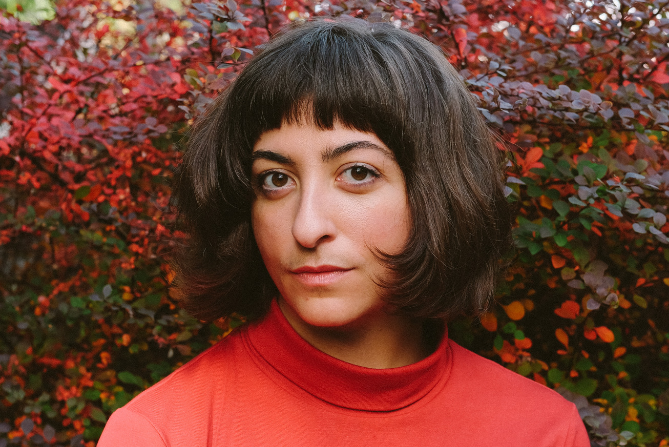
    Zehra Doğan (born 1989) is a Kurdish artist and journalist from Diyarbakir, Turkey. She is a founder and the editor of Jinha, a feminist Kurdish news agency with an all-female staff. In 2017, she was sentenced to 2 years, 9 months and 22 days in prison for ‘terrorist propaganda’ because of her news coverage, social media posts, and sharing a painting of hers on social media. Her imprisonment prompted international outcry, including a 2018 mural by street artist Banksy in New York. She was released from prison in Tarsus on 24 February 2019. She has recently taken part in exhibitions and performances in the Tate Modern, London, and the Pergamon Museum, Berlin. Follow her on Twitter.

    This text was translated by Onur Erem.

  • Living History: a Conversation with Kapka Kassabova

    Living History: a Conversation with Kapka Kassabova

    Kapka Kassabova explores the intersection between past, present and future in her work, and in particular how ancestral legacies and ideologies linger on. We spoke to her about the Balkans, belonging and how to avoid clichés.


    Let me start by asking you about the past. In writing about Bulgaria, Greece and Turkey, but also about Macedonia and Albania, you write about countries with official versions of history and state, nation and language, people and religion. Do you think these versions of history still exercise the same power that they used to? Does the romanticised past still have the same pull as it did before decentralisation, before the internet? Or do you feel that it never held much power anyway?

    Things are always different on the ground. And often surprising. That’s why I am an experiential writer and not an academic one. Encounter – with people and place – is central in my writing. My encounters with the people of the border region showed me just how ideology can be in turns powerless and powerful. The ideology of a single national, religious, ethnic identity tends to be counterbalanced, often, by the reality of people and communities having poly-valent, multi-faceted, messy and interesting pasts and presents. 
    So for instance, many of the Turks of Thrace are descended from Balkan Muslims expelled from Greece, Bulgaria and Bosnia some 100 years ago and some speak remnants of Slavic dialects. My friend and translator in Turkey, the photographer I call Nevzat in the book, is one such person – and it was thanks to his Bulgarian language, passed down by his grandmother, that I was able to access the people of Turkish Thrace at all. Despite the savage and stupid border imposed on this region during the Cold War, it is very much a ‘Thrace without borders’, as a Bulgarian Orthodox priests in Edirne put it. 
    On the other hand, the iron curtain and its legacy is a powerful reminder of how ideology can cast a lasting spell over a region. Part of that legacy is a spirit of paranoia, fear, and a choking sense of the unspeakable – this is some of what I tried to capture in Border. It is also symbolic that the iron curtain was recycled and sold as scrap by locals. The scrap of history: this is the future of all inhumane borders and walls, because they go against the flow of time and understanding. On the whole, I feel that ideology of any kind takes greater hold over the minds of those without much variety of life experience, those with sheltered lives. The more varied your life experience, the more sharply you can see through the facade of an ideology. This is why it’s so vital for all of us to cross various borders and see how things are on the other side. That way, the human principle always wins over dogma.  

    Increasingly it seems to me that separating past, present and future is a futile task, they inform each other so much. I’ve read in another interview that you’re interested in ancestral legacies, and I was wondering if you could expand on that a little bit. (For me, personally, my ancestral legacy is something that drives me to make up for past shortcomings and crimes.)

    Your take on it sounds intriguing! A futile task indeed – because the real task is to truly understand these connections and change the groove of repetition. William Faulker nailed it: ‘The past is not over yet. It’s not even past.’ 
    I’m interested in how small acts of kindness or cruelty can impact generational and collective fate. There are many such cases in Border. For instance the nice man in The Village Where You Lived Forever, locally known as Indiana Jones, whose shepherd-father back in 1984 saw a young East German fugitive trying to cross into Greece, eating some apples in what he thought was Greece but was still Bulgaria, and duly handed him over to the border police who beat him to death. The whole village lives with that memory. If you spend time there and listen to people, it’s as if that young man is still there, eating his last apples.  

    My interest in legacies from the past began during the journeying for Border, and went on to become a new book, To The Lake. I explore how ancestral legacies (emigration, exile, war, tyranny, perfectionism, idealism, nationalism) travel down generational lines to each of us. None of us is spared, we all carry the past, whether conscious of it or not. Through the landscape of the Ohrid-Prespa Lakes in the south-western Balkans, I explore how we each carry psychic, emotional, political, and cultural legacies from our families and nations. Families are microcosms of nations. I start with myself and my maternally inherited fear of loss.

    I wanted to ask you about belonging. In Border, you frequently touch on the idea that you could be at home anywhere, a notion that you question throughout the book. I wonder what you think about belonging now, years after your trips to the border. And in a more general sense, I wonder if you think it’s possible to feel at home everywhere, growing up, as we have, in states that indoctrinate us with the idea of ‘the nation’ as the ultimate indicator of where we belong.

    ‘Home is where they understand you,’ said the German writer Christian Morgenstern. And ‘Home is where they can pronounce your name’, in an Irish proverb. Where do we feel understood, and where do we bring the light of our own understanding? That’s a good indication of where we belong, at least for a time. Ultimately, we all belong in love – love is our true home. Wherever we are engaged with something that we truly love, and whoever we share genuine love with – that is our home. I grasped this through my encounters with the people of the Border – the last shepherds, lighthouse keepers, voluntary workers, gardeners, story-tellers, border people like Marina in Strandja Mountain who live in a plundered humanscape, but who continue to nurture what is left and infuse it with meaning and even magic. 
    Nationally shared markers can be powerful in terms of cultural community (where they can spell your name…). As for me, these days I feel at home wherever there is unspoilt nature. I don’t miss living in Bulgaria, but I do miss speaking Bulgarian. Language is a powerful home and a powerful psychological glue. It is Bulgarian – and by extension other Slavic – languages that has made books like Border and To The Lake possible at all. Even if English is my literary language and therefore also my home. 
    But artists should never be too comfortable anywhere, and good art by its very nature crosses all borders. 

    Tell me about your next book. I’ve read that it’s a psychogeography of two lakes in Albania and Macedonia. I’m assuming that one of these is Lake Ohrid, where your grandmother (is that right?) is from. Like the border you writer about in Border, this is a region of religious syncretism, mixed languages and cultures, but it was also less of a periphery, at least in Yugoslavian times. What has been different about this book project, compared to the previous one? What has been similar?

    Yes, To The Lake is a journey around the Ohrid-Prespa basin – one of the world’s most ancient lake basins. Like Border, the lakes today sit on a triple national border (North Macedonia, Albania, and Greece) and are very much a periphery. But they were shaped by successive civilisations, starting in antiquity with the Illyrians and the Macedons. The more personal journey into family dynamics is my way into the broader exploration of the southern Balkans with their extraordinarily stubborn legacies of trauma and survival. 
    While the border with its masculine militarism was the central metaphor in my previous book, the lake is the central image here –  a feminine, gathering place, but of course the deeper truth turns out to be more ambiguous and uneasy. Because lakes are also places of secrets and death.  

    Writing about South Eastern Europe is very often shaped by a curious mixture of exoticising and negative stereotypes. (Or Balkanism, as Maria Todorova called it.) Border has had great success, and I wonder what that has felt like. Have you felt like an unofficial and perhaps unwanted ambassador?

    Balkanism is a cousin to Orientalism, and both are caused by the fact that often, we the natives of the Balkans or the Middle East, with our extraordinarily polyphonic histories and hurts, are narrated by others – usually others from the dominant colonising cultures. We resent that, of course, but passively. The curious result is that over time, we have become others in our own eyes – a strangely self-obscuring syndrome whereby we struggle to narrate ourselves to the outside world and are then extra resentful that the only times we are ‘noticed’ is when there is a war or some other negative event. This is changing, though. Contemporary Balkan writers are being translated into more languages, and there are also more of us Balkan natives who write through a double or even multiple cultural perspective, thanks to the free movement of people after the Cold War. Thanks to the removal of various walls. 
    I’m a poet and storyteller. The artist’s job and destiny is to be subversive – very different from the role of a spokesperson. My focus is on capturing the essence of place and human experience. That is where my loyalty is: to the truth of the human historio-geographies I explore, because I love them so. If anything, I am an ambassador for the powerless, those who live history instead of writing it safely from behind a desk. So that history is not always written by the victors.   


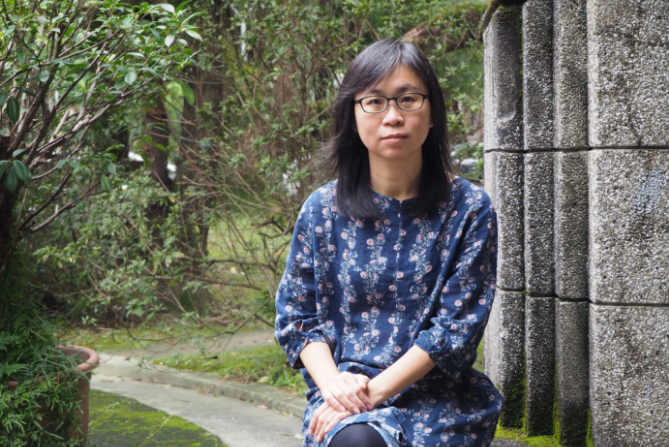
    Kapka Kassabova is a cross-genre writer with a special interest in human geographies and the hidden narratives of places, people, and peripheries. She has published several works of narrative non-fiction, as well as poetry and fiction. Border: a journey to the edge of Europe was shortlisted for, and won, multiple awards, including the British Academy Al-Rodhan Prize for Global Cultural Understanding, the Saltire Scottish Book of the Year, the Edward Stanford-Dolman Travel Book of the Year, and the inaugural Highlands Book Prize. Born in Sofia, Bulgaria, she is now based in the Scottish Highlands. Her forthcoming book is To The Lake: a Balkan journey of war and peace (Granta/ Graywolf 2020).

    Author portrait by TD.

    Interview by Theodora Danek.