Category: PEN Transmissions x British Museum x Edmund de Waal

  • Exils

    Exils

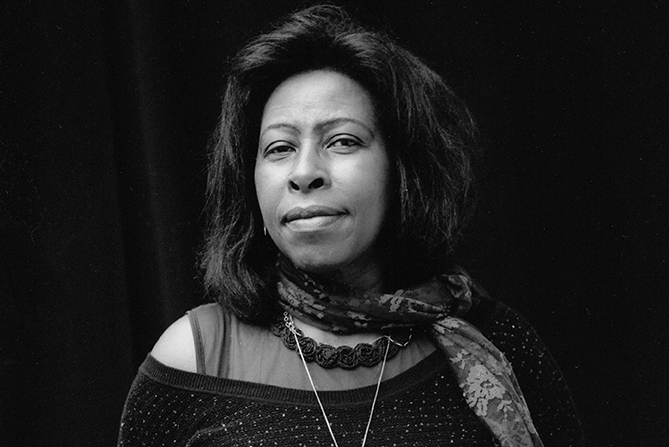
    To close our series on exile with the British Museum and Edmund de Waal, Scholastique Mukasonga writes a personal experience of exile as a Rwandan Tutsi

    PEN Transmissions is English PEN’s magazine for international and translated voices. PEN’s members are the backbone of our work, helping us to support international literature, campaign for writers at risk, and advocate for the freedom to write and read. If you are able, please consider becoming an English PEN member and joining our community of over 1,000 readers and writers. Join now.

    Across June, PEN Transmissions, in collaboration with the British Museum and Edmund de Waal, is publishing a series of essays on the theme of exile. This series speaks to Edmund de Waal’s library of exile, currently housed at the Museum. English PEN’s event series for the exhibition has been postponed due to COVID-19, and these essays – from writers in the events programme, or with books in the library – touch on issues that will be discussed at the rescheduled events.

    ~

    Translated by Melanie Mauthner

    I was three years old when I first experienced exile.

    It was 1959. The first pogroms against the Tutsi erupted that year; many massacres later, they would lead to the genocide of the Tutsi in 1994. If I close my eyes, I can see those images again unfurling as if they were fast-forwarding in a film.

    I am in a field. My mother is bending over her hoe and I am scampering behind her. Suddenly, there’s a hum rumbling and rising from the hills. Smoke plumes curl above neat waves of banana groves. My mother grabs me. We climb the hill to the track along the ridge. There’s a crowd in a panic, calling out, jostling and shouting; children crying; cows bellowing. My mother is searching for my brothers and sisters. And, in the distance, those screams that I don’t want to hear…

    Our house should be by the track. I can see a large hut on fire. I don’t want to believe it’s our house burning. I can hear crackling flames and calves lowing in the cowshed. I close my eyes, or maybe it is Maman covering my face with some of her wrapper.

    I won’t be sleeping at home tonight.

    I feel these tears of exile are still rolling down my cheeks, the same cheeks I had as a child.

    The first place I was exiled to was the mission in Mugombwa where the Tutsi found refuge. In my book Inyenzi or Cockroaches, I described that stay as something of a strange holiday.

    Obviously, I had no idea what a holiday might be. But it was very strange: my brothers and sisters weren’t going to school anymore; all the children played together in the square by the mission church; and I was eating something I’d never eaten before – rice. I wasn’t old enough to worry about might happen. I slept next to Maman. I kept the small milk pot that never left me. Maman managed to salvage what was considered our family treasure: a metal cooking pot that Papa had bought from a hawker who apparently came from Zanzibar, which we gave the pompous name of Isafuriya ndende – the marmite with the long neck.

    But it all ends abruptly one evening, at dusk. There are trucks ablaze with shining headlights, soldiers and white people shoving and urging us to climb in: Hurry, quick, get in! I lose Maman, my brothers and my sisters. My little pot slips out of my hands, rolling under the feet of people being pushed into the lorries. I’m crying – completely alone and lost forever. I feel these tears of exile are still rolling down my cheeks, the same cheeks I had as a child.

    Tutsi families were piled into trucks that drove all through the night over rough earthen roads. At dawn, they were set down in Nyamata, that dismal far-flung spot that, from then on, would be their place of banishment.

    For thirty-four years, after they were resettled in villages surrounding Nyamata on the border with Burundi, these ‘internal refugees’ were taunted, persecuted and massacred, again and again. All the people deported there in 1960, and their children, were massacred in 1994.

    Yes, thank you, fear, you who were the Tutsi of Nyamata’s most loyal companion, their shadow, never abandoning them, even in the depths of night.

    The fact that I can conjure up, here, in a few words, all the people who were assassinated is because, in 1994, I was no longer living in Rwanda. I don’t know why, but I was among the few rare Tutsi pupils who managed to get into secondary school. A strict quota limited their number: ten per cent. In 1973, I was at college in Butare, in my second year, training to be a social worker. That was the year that determined my life’s path; I dare not say its destiny.

    In 1973, Grégoire Kayibanda’s government believed they could address the Rwandan people’s general discontent by means of an old scapegoating tactic. They targeted those rare Tutsi who were still employed in teaching and the civil service, and they targeted the ten per cent quota pupils. Girls’ schools were not spared.

    It happened one afternoon – was it during a maths class? A classmate suddenly opened the door: Mukasonga, Mukasonga, hurry, quick! she cried. In the school corridors, I heard a large crash and yelling. I didn’t stop to think. We knew it was the boys from the nearby lycée,who were throwing themselves into hunting Tutsi. Our Hutu classmates acted as guides and encouraged them.

    It’s fear that saved me, fear that let me flee and run down the corridors as fast as I could, leap over the barbed-wire fence without getting scratched, and hide in a eucalyptus copse until night fell. Yes, thank you, fear, you who were the Tutsi of Nyamata’s most loyal companion, their shadow, never abandoning them, even in the depths of night.

    I finally got home by hiding in the boot of a Hutu politician’s car. That’s when my parents took the decision that my brother André and I – we had both been able to study, and discover that another world existed beyond Rwanda – would have to follow the road into exile in neighbouring Burundi.

    Nor can the shore where the exiled will at long last land ever be the promised land.

    Did my parents have a premonition? Some of us, at least, needed to survive, if only to preserve the memory of those who knew they would not be spared from extermination. I would remember them from then on.

    Could humans be defined as banished-beings? Some religious texts would seem to suggest so. And human banishment lies at the heart of the biblical myth: it is God who chases Adam and Eve from the Garden of Eden. And it is that same divinity who orders Abraham thus: Leave your land, your family and your father’s house for the land that I will show you. It is during their exile in Egypt that the Hebrews come together as a people.

    For migrants, refugees, the displaced and the deported, exodus – whether chosen or under duress – certainly does not result from divine will, nor wrath, deciding upon their fate as individuals or peoples; rather, it is the chaotic convulsions of history: war, persecution, famine and economic crises, natural disasters, drought and inexorable climate change. Nor can the shore where the exiled will at long last land ever be the promised land: gnawed by nostalgia, they will remain strangers there for a long while, and even if they do manage to integrate and build a new life, will they like Ulysses, who did return to Ithaca, sigh: What use is the wealthiest dwelling among strangers when you’re far from home?

    A beautiful word once described the welcome given to a stranger who knocks on your door, a word bound to shame those who build walls and put up barbed wire around – chacun chez soi, chacun pour soi, everyone where they belong, everyone for themselves. This word was Hospitality. Is it utopian, an illusion? Once upon a time, in societies we used to call primitive or archaic, the host was a sacred being. No one asked, Where do you come from, where are you going, why are you on the road, and how long do you intend to stay? At last, the stranger could be adopted as a member of the family. Did this tradition of hospitality ever exist? Or is it just a myth? At least, it was an ideal.

    My mother, Stéfania, who, like my whole family, was condemned to a life in exile, always kept two spare mats ready for the unexpected traveller who might seek shelter. May each of us always have a small mat, with which to welcome a stranger.


    Born in Rwanda in 1956, Scholastique Mukasonga experienced from childhood the violence and humiliation of the ethnic conflicts that shook her country. In 1960, her family was displaced to the polluted and under-developed Bugesera district of Rwanda. Mukasonga was later forced to leave the school of social work in Butare and flee to Burundi. She settled in France in 1992, only two years before the brutal genocide of the Tutsi swept through Rwanda. In the aftermath, Mukasonga learned that 27 of her family members had been massacred. Twelve years later, Gallimard published her autobiographical account Inyenzi ou les Cafards, which marked Mukasonga’s entry into literature. This was followed by the publication of La femme aux pieds nus in 2008 and L’Iguifou in 2010, both widely praised. Her first novel, Notre-Dame du Nil, won the Ahmadou Kourouma prize and the Renaudot prize in 2012, as well as the 2013 Océans France Ô prize, and the 2013 French Voices Award, and was shortlisted for the 2016 International Dublin Literary award.

    Melanie Mauthner‘s translation of Scholatique Mukasonga’s novel Our Lady of the Nile was awarded the French Voices Grand Prize 2013. After she received a Hawthornden Fellowship to translate Mukasonga’s short stories, some of these appeared in the New Yorker, the New England Review, the Stinging Fly and the White Review.

    Created as a ‘space to sit and read and be’, library of exile is an installation at the British Museum by British artist and writer, Edmund de Waal, housing more than 2,000 books in translation, written by exiled authors.
  • Remembering Partition

    Remembering Partition

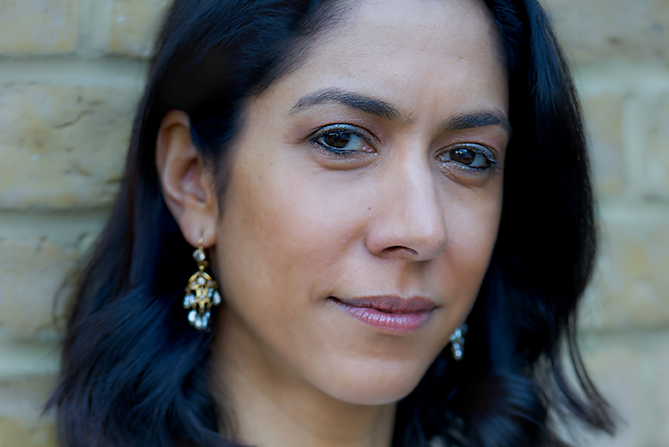
    For our series on exile with the British Museum and Edmund de Waal, Kavita Puri writes on partition, memory and exile.

    PEN Transmissions is English PEN’s magazine for international and translated voices. PEN’s members are the backbone of our work, helping us to support international literature, campaign for writers at risk, and advocate for the freedom to write and read. If you are able, please consider becoming an English PEN member and joining our community of over 1,000 readers and writers. Join now.

    Across June, PEN Transmissions, in collaboration with the British Museum and Edmund de Waal, is publishing a series of essays on the theme of exile. This series speaks to Edmund de Waal’s library of exile, currently housed at the Museum. English PEN’s event series for the exhibition has been postponed due to COVID-19, and these essays – from writers in the events programme, or with books in the library – touch on issues that will be discussed at the rescheduled events.

    ~

    There is a jam jar that sits on a shelf in a study in a suburb of North London. It contains stones. They are the colour of earth; smooth and round. Raj Daswani takes them out and holds them in the palms of his hands. He brings them to his lips and kisses them. ‘I keep these stones’, he says, ‘to feel connected to my soil’.

    Soil, earth, land – Raj means Karachi. He feels a profound connection to it, yet he hasn’t lived there since September 1947.

    Raj, then thirteen, was one of the many millions of people who were part of the largest migration ever to occur outside war and famine: the partition of the Indian subcontinent into Hindu-majority India and Muslim-majority Pakistan in August 1947. Fearing being a minority in a new land, Hindus and Sikhs went to India, and many Muslims to Pakistan. An estimated 12 million people left land that generations of their family had lived on for a new country. It was accompanied by horrific violence as people of the “other” religion turned against one another. All sides were victims and perpetrators.

    Karachi, in Sindh Province, became part of Pakistan. Raj’s family were Hindu. They didn’t want to leave, but felt it was no longer safe for them. Their Muslim neighbours all came out on the day they left, in tears. They begged the Daswanis not to go, saying they would protect them. Raj’s parents felt there was no choice. They left by boat for India. The only items they were allowed to take from that life were a large tin of wheat flour and ghee.

    Raj arrived in Bombay, now Mumbai, never having spoken Hindi. His mother-tongue was Sindhi. He lived in an old British military barracks with many hundreds of other Sindhis, where they slept in a large room with hanging bed sheets as walls to divide families. There was one toilet between five hundred people. Things improved, eventually, in the refugee camp and Raj ended up staying there for twelve years. India never welcomed him he says, and it certainly never felt like home. He then came to Britain, where he has lived for many decades with his wife Geeta. He has four children and grandchildren. He still speaks Sindhi to them.

    Yet, after all these years, it is Karachi that feels like home. ‘This is not my soil, England or Bombay or India’, he says. Raj has been back to visit Pakistan three times. The first time he arrived in Karachi, he took dust from the earth, and put it to his forehead, and said ‘Mother, I have come home’. On his final visit, he wrote a poem. The first verse reads:

    In the end have realised this.

    In exile or forced to leave you

    Imagine the agony suffered by me

    Our flesh and blood, our kith and kin

    Suffering, in the name of religion

    I’ve spoken to many people who lived through the tumultuous events of partition and subsequently came to Britain – who lived through a dual migration. Many had been forced to flee – first as refugees around 1947 – and later chose to migrate to Britain, their former colonial ruler. Yet the deep connection to the land of their birth has remained, despite the decades.

    For the generation who lived through 1947, they do not think of borders, division, partition. Of course they recall the horror and bloodshed when the subcontinent was divided. But they remember another time, too, before that. A time when people of different religions largely got along, and could live side by side, in places like Lahore, Amritsar and Karachi. That is now relegated to the history books. One man, who grew up in West Punjab in a mixed village in British India, told me that, when his Sikh aunt died, her best friend, a Muslim, became a wet-nurse for her baby. What could be more intimate?

    That visceral attachment to the land long-left – where your parents were born, and your grandparents too – largely exists in memories. Unlike Raj, many never went back. Those I spoke to now say they want to return, before they die, to see their family home, or a tree they played in as a child; to find out if the best friend they left in a hurry, without goodbyes, is still alive. And if they cannot go in life, they want the journey made to have their ashes scattered where they were born. Officially, they do not belong in that so-called “enemy” country, but that is not how they see it. Bureaucrats may draw borders and politicians create new national narratives, but they cannot erase that generation’s stories and history. That generation does not forget.

    ~

    Iftakhr Ahmed was seventeen when he travelled from Delhi to Lahore. It was no longer safe for him to be a Muslim in India. ‘India is mine too’, he says emphatically. He can recall the smells of his childhood in the streets of Gangoh, where he played with best friends who were Hindu. His mother is still buried in India’s earth, as are his grandparents. But will future generations feel that way too about the land left behind?

    So many partition memories are shrouded in silence and have not been knowingly passed on. Those that came to post-war Britain were getting on with life in a new country where they faced hostility. Looking back on the past was an indulgence they did not have. There is an institutional silence in Britain, not only to partition, but also empire. It’s not taught widely in schools; there are no museums to it, or memorials to those that died as the British left India; for so long, there wasn’t the public space to talk about those times; and so many partition memories are bound up in dishonour and shame that they are easier not to discuss. The next generations, born here, may not have known much about the Indian subcontinent (or even have any knowledge of partition), and may not have asked.  

    Veena is a retired GP now living in the Scottish Borders. She always believed her family were from India. It wasn’t until she found essays and poems written by her recently deceased mother that she learnt her family were originally from Pakistan. She wants to go back there and stand on the earth that generations of her family are from. Her parents’ escape story was so traumatic that they couldn’t share their family history while alive. But Veena could always feel the trauma – she just did not know what it was.

    Anindya is third generation. His family moved from East to West Bengal. He says that, though partition may not always have been spoken of directly, it was always there. His grandparents had first-hand trauma of having to leave; they had the memories of the house, the place they left. But his parents had an inherited trauma: ‘I don’t think they got over the memory of the suffering that their parents had to go through’. Anindya’s parents had, however, a connection to their desh, the place they were from – even though it was only part of the family’s mythology,. Anindya, too, says that this sense has carried on to him: ‘I am very conscious … of the importance of roots, of the importance of feeling that you belong somewhere that you have a place that you can call your home’. He admits that, over time, if he has children and grandchildren, there may be a diminished attachment to East Bengal – ‘But the longer the attachment survives’, he says, ‘the better’.

    ~

    It is not just an attachment to a place that can persist through the generations, but also the sense that the place you thought of as permanent – your desh, your home – can be taken away. If it happened to family members in living memory, perhaps it could take place again. It’s compounded when your family uproot twice – first as refugees and then in migration to Britain, where your tie to the land is fragile. The imaginary suitcase at the top of the wardrobe is always there, just in case you have to move once more.   

    The consequences of political decisions taken so long ago are threaded through families long after, muddling notions of belonging. Home can be the place you are originally from, but to which you can never return. Can be the place you moved to on the Indian subcontinent. Can be the place to which you chose to migrate.

    As long as people remember the time before 1947 – and tell their stories and pass them on – then they exist too, in all their complexity. Yes, terrible things happened in the name of religion in the fight over land. But so too was there love, friendships, shared culture and language, a history on the very land on which the border was later drawn. Though that generation have now long fled, ties remain deep. So next time you ask someone with South Asian heritage where they are from, and you note a hesitation before they answer, get the long response. It may be an extraordinary story of migration across countries and continents.


    Kavita Puri is author of Partition Voices: Untold British Stories (Bloomsbury). She works in BBC Current Affairs and is an award-winning TV executive producer and radio broadcaster. Her landmark three-part series Partition Voices for BBC Radio 4 won the Royal Historical Society’s Radio and Podcast Award and its overall Public History Prize. Her critically acclaimed Radio 4 series, Three Pounds in My Pocket, charts the social history of British South Asians from the post-war years. She is currently making the third series. She worked for many years at Newsnight and studied Law at Cambridge University.

    Created as a ‘space to sit and read and be’, library of exile is an installation at the British Museum by British artist and writer, Edmund de Waal, housing more than 2,000 books in translation, written by exiled authors.
  • Exile, One Step Beyond

    Exile, One Step Beyond

    For our series on exile with the British Museum and Edmund de Waal, Selma Dabbagh writes on Palestine, desire, place and the future.

    PEN Transmissions is English PEN’s magazine for international and translated voices. PEN’s members are the backbone of our work, helping us to support international literature, campaign for writers at risk, and advocate for the freedom to write and read. If you are able, please consider becoming an English PEN member and joining our community of over 1,000 readers and writers. Join now.

    Across June, PEN Transmissions, in collaboration with the British Museum and Edmund de Waal, is publishing a series of essays on the theme of exile. This series speaks to Edmund de Waal’s library of exile, currently housed at the Museum. English PEN’s event series for the exhibition has been postponed due to COVID-19, and these essays – from writers in the events programme, or with books in the library – touch on issues that will be discussed at the rescheduled events.

    ~

    I grew up between places, many of which were non-places – construction sites in deserts, flyovers made from twisted wire and concrete blocks, pot-holed tracks and wide highways strewn with crushed American cars, some erected on plinths as a warning. There were five-star hotels, and malls with gilt fountains, abayas and mink stoles. Freshly made states where interactions between strangers were purely commercial in nature. I wobbled down the aisles of planes as a toddler, lived out of a suitcase for many years, boarded at six form colleges as a teenager, visited grandparents in an English town on the south coast dedicated to retirees. I’ve regularly visited a house bought in 1975 by my parents in a Chiltern valley, where I know no one except them to this day.

    I’ve never believed that exile has much to do with me. Being in a state of exile seemed a noble status reserved for philosophical men who wore hats – Dante banished to Ravenna being the prime example. To my mind, exiles grew up in places where their cousins lived on the same street; where they were on first-name terms with the local stall keepers and petty criminals; savoured the seasonal fruits and vegetables; and were savvy with the vernacular. A rupture then came about when these (predominantly) Easterners fled West to sour bedsits to spend their days yearning for the flaky almond pastries found in the wood-panelled cafés of their capitals, the tang of its morning pollution and the innuendo of a compatriot’s joke.

    My mother studied natural science at Newnham College, Cambridge. She had a scholarship and developed a particular interest in fungi. Her mother also was a scholarship student, at University College London, where she studied French and German. She lived with a Jewish family in Berlin for a time in 1933 My English grandfather was an officer in the Royal Marines, and my mother’s upbringing was one of multiple moves and boarding schools where everything was prohibited – more oppressively than any Arab regime was capable of at the time. The legacy of puritanism and the military prevailed on the English side. My great grandmother believed mirrors were wicked. At my grandparents’ house, lunch was served always at 1 pm, even if it was ready at five to, and a lie-in for teenagers was until 8 am. Baths were shallow and not particularly warm. My memories of staying with my English grandparents remain sacrosanct, despite the listlessness felt at the time. It was a caring environment devoid of vocalised emotions.

    My father is from the Ajami district of Jaffa, a city whose population went down from 100,000 to 4,000 within days in 1948 and became, according to Ibtisam Azem’s narrator in The Book of Disappearance, unrecognisable after ‘that year’. My father is more fitted to the category of the exile than I am, for his is a refugee tale. One May morning, when he was a boy of 10, a grenade was thrown at him and the children with whom he was playing. We knew this story as children, but memory can revive like a lamp bulb swinging more vigorously in a crypt. Details come through with age: the French doctor who sewed the wounds badly with shaking hands; the penicillin injections with a needle as thick as a pencil; the hospital windows rattling with the bombing; the family’s failed attempt to get on a boat with the stretcher; the departure on a truck, his dog chasing them for as long as it could.

    The family went on to Nablus, then Damascus, Kuwait, Jordan. From Kuwait, my father insisted on moving to London to study. There he saw a picture of my mother smiling on the top of Ben Nevis in a mutual friend’s photograph album. My parents have been together for nearly 60 years, and my teenage daughter views their relationship as the happiest one she knows (albeit she does not know as much about it as I do). The notion in my psyche that I must bridge distance and difference to create a harmonious romantic form evidently has its roots here.

    Would my life choices have been the same were it not for the story of the boy, the grenade, the truck, the stretcher, the dog? I worked with human rights organisations, went on demonstrations, signed petitions, agitated. I wrote short stories where there were characters who betrayed the revolution or felt the revolution had betrayed them. This led to a novel, Out of It, where the characters were poised between political engagement and opting out, between being geographically in Palestine and far from it, between being off their heads and stone-cold sober.

    As an adult, I was drawn to cities with older identities: the Quartier Arabe of an Alpine city in France; the colonial districts of Cairo; a domed house on the Nablus road in Jerusalem, since taken over by Israeli settlers. In London, I’ve moved from West, to North, to East. I’m now in the North West, in a flat that a friend remarked combines all aspects of my life: the Palestinian, the English, and the gated community living of the Gulf. My books and diaries have moved with me and, in each place, I grow plants, decorate walls, and buy lamps. I have come to know that objects can vanish – through invasion (Kuwait, 1990), being denied re-entry (Palestine, 1992) and upon marital separation (Bahrain, 2009). I try to be Zen about property ownership, but my attachment to my flat is paranoid, obsessive.

    From time to time, I hanker for the next place, the next life. The destination to come is a cushion I embroider around my daily consciousness that will explode into feathers if it were ever to become a reality, only then to be substituted by another ‘elsewhere’ where an imagined life is.

    Attachment theory, developed by the psychiatrist John Bowlby, divides human relationships into categories: the secure, anxious or avoidant. These are determined by upbringing – primarily the consistency of care by a parent or carer – and are said to influence relationship patterns for life. I wonder if Bowlby’s theories can be transferred onto a connection to place? Does a process of repeated disorientation lead to permanent distrust of being settled? Bowlby’s mid-twentieth century ideas are finding new life in self-help books for romantic relationships. And, on that front, flicking through the piles of diaries starting in the 80s , I see another pattern of desire being connected to distance: boys and men in Czechoslovakia, Sweden and Canada, when I was in Kuwait, France or Egypt, at times when airline flights were as out of my budget as private space flight is now, when email connections weren’t invented (or barely existed), when letters got lost and I’d have to spend an hour teaching English in a penthouse by the Nile to cover the cost of a fifteen minute call to Montreal from a Tahrir Square call box.

    There could, however, be no connection at all between my nomadic upbringing and the association of travel with desire. It could be that I just find cultural difference, romantic obstacles, and travel sexy in and of themselves. Catherine Millet, in The Sexual Life of Catherine M, writes that her ‘sexual experiences were intimately linked with the need to escape’, an impulse that occurs again and again in erotica, often in Orientalist depictions of interactions with the ‘other’ (Anaïs Nin being a case-in-point). The idea of movement to new terrains, freeing up inhibitions and enabling the recreation of self, recurs frequently in erotic writing. An impulse to upturn the status quo and create a new world based on an imagined one has propelled me throughout my life, although my personal background and experiences could not be more different from Millet’s.

    I have often placed myself in personal and physical situations that I have thought would make me braver and stronger. Yet I still view myself as cowardly. It could be a sense of masochism – the hard chairs of my puritanical forebearers – or due to the years spent in British prisons by my Palestinian grandfather for acting in line with his conscience. ‘Whatever our personal weaknesses may be, the nobility of our craft will always be rooted in two commitments, difficult to maintain’, Albert Camus said in his Nobel speech: ‘the refusal to lie about what one knows and the resistance to oppression’. He was more of a writer than I am, more of an exile (he even had the hat), but with time I’ve found it possible to pull the microphone towards myself, a female voice from the middle ground between East and West – the mezzaterra,as Ahdaf Soueif calls it – and describe what I know is possible from my own globalised perspective, where the vernacular is absent.

    Last year, I was asked to write a short story for the first collection of Palestinian science fiction – with the exception of the Old Testament, as a friend pointed out. I couldn’t bring myself to articulate what a historian had once advised me to say when asked about the prospects for Palestine, ‘tell them we have no future, only a past’, for what future can we have if not even artists can imagine one? Yet Camus’s demand not to lie about what one knows made it hard to lift writing from a responsibility towards the unconscionable present: the forced expulsions and house demolitions, the walls, land grabs, the siege, bombings, shootings, child detentions, mass incarceration, torture. The imagined future provided a space where anything could be possible. I had an Israeli scientist fall in love with a Palestinian professor in a secular scientific enclave towering out of Gaza in 2048. It wasn’t all utopian, but it cast a light on some of the absurdities of religious nationalisms, in a way that only fiction can.

    I was struck while editing an anthology of writing on love and lust by Arab women, from the pre-Islamic era to the present day, by the forthright way some of the early poets asserted a desire for sexual satisfaction. It could make 21st century readers blush. I also found an academic article that explained how, despite the numerous words to describe various specific sexualities, there was no medieval Arabic word for bisexuality that was considered the ‘as the unmarked, most common form of sexual practice, for heterosexuality, or even for sexuality’. I believe we can imagine futures by looking into unexpected details of the past and develop to our fullest by escaping into what is not familiar to us at all.


    Selma Dabbagh is a British Palestinian writer of fiction who lives in London. Born in Scotland, she has lived in Saudi Arabia, Kuwait, Bahrain, France, Egypt and the West Bank. Her first novel, Out of It, (Bloomsbury, 2011) set between London, Gaza and the Gulf, was listed as a Guardian Book of the Year and won the Premio Opera prize in Spoleto,  Italy, 2019. Her radio plays have been produced for BBC Radio 4 and WDR in Germany. Her short stories have won or been nominated for various awards and been published by Granta, Comma Press and International PEN. She has also written for film and stage. Her non-fiction has appeared in the Guardian, London Review of Books, GQ and other publications. She is currently editing an anthology ‘We Wrote In Symbols; Love and Lust by Arab Women Writers (Saqi Books, forthcoming, 2021). www.selmadabbagh.com

    Photo credit: Francesca Leonardi

    Created as a ‘space to sit and read and be’, library of exile is an installation at the British Museum by British artist and writer, Edmund de Waal, housing more than 2,000 books in translation, written by exiled authors.
  • How Do I Reconcile these Irreconcilable Things?

    How Do I Reconcile these Irreconcilable Things?

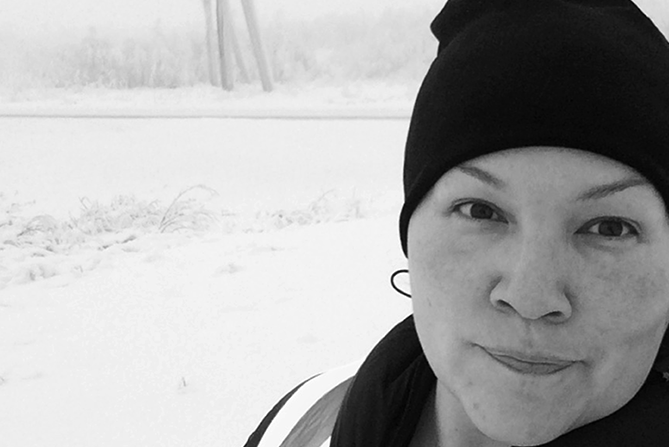
    For our series on exile with the British Museum and Edmund de Waal, Taqralik Partridge writes on Scotland, Canada, and language loss

    PEN Transmissions is English PEN’s magazine for international and translated voices. PEN’s members are the backbone of our work, helping us to support international literature, campaign for writers at risk, and advocate for the freedom to write and read. If you are able, please consider becoming an English PEN member and joining our community of over 1,000 readers and writers. Join now.

    Across June, PEN Transmissions, in collaboration with the British Museum and Edmund de Waal, is publishing a series of essays on the theme of exile. This series speaks to Edmund de Waal’s library of exile, currently housed at the Museum. English PEN’s event series for the exhibition has been postponed due to COVID-19, and these essays – from writers in the events programme, or with books in the library – touch on issues that will be discussed at the rescheduled events.

    ~

    I had hesitated about the expense for another night at a bed and breakfast. Assuming there would be something nearby, I put off booking; and when my last day in Lochinver arrived, I was disappointed. The closest place with any vacancy was two hours away in Gairloch.

    Not that I mind driving. The North Coast 500 is as beautiful a route to travel as they say it is. And the roads, often single-track and veering precariously around steep slopes, demand a kind of alertness that carries a person through fatigue.

    And I have been tired. This is generally not something to admit to, at least publicly – as a writer and artist always looking for more work, I want to be ready to say ‘yes’ to the next thing, and the next.

    This tired is an accumulation of experiences, big and small, that came into fullness around the time my mother died. Among these is a sense of collective grief, held with some of my fellow Inuit and other Indigenous people about the state of a world that has allowed and still allows so much destruction. There is also anticipatory grief about where this destruction will end. And, of course, there is my personal grief for personal things. Others have written eloquently about these things. I will not list all here.

    Here is one kind of accessory to my personal grief: the loss of Scottish Gaelic. It is an accessory because it feels so foreign that I cannot know its size, but it is a loss that my mother felt so keenly that she spent her life looking for its remedy.

    In 2019, artist-producers Emilie Monnet and Patti Shaughnessy led the co-production of Indigenous Contemporary Scene. This was a summer of programming with various festivals and venues in Edinburgh that brought Indigenous artists from Canada to Scotland. The production commissioned research and works by some of these artists to explore histories and connections between Scotland and Indigenous communities in Canada. This brought me to Assynt, where my mother’s parents came from.

    I went with the promise to myself that I would not be disappointed by whatever happened.

    The Scotland of my childhood was postcard-sized pictures of my mother, in the sheen of her youth, sitting atop a low stone wall. It was memorising the colour-codes of tartans, and her highland dance paraphernalia, and all the trinkets she collected on tour with her Scottish dance Tattoo. It was the drone of bagpipes on her old records and a resolute scorn for all things English – paired with an insistence on British over American spellings. We’re Highland Scots, my mother would say, like that could mean anything to her children.

    My grandparents were Gaelic-speaking. A story my mother liked to repeat was that my grandmother had come to Canada on a boat on which she was so sick that when a concerned woman asked her if she spoke English, her only reply was ‘sometimes’.  I like to repeat this story, too. True or not, it brings out a low laugh every time I think about it.

    Like many settlers, in Canada my grandparents only spoke their language with other newcomers of their generation. And so the story goes that my mother only knew a handful of Gaelic words. And so the story goes that her children, like so many other Canadians, are people with Scottish ancestry and no Scottish language. But reclaiming Gaelic has not been at the top of my list of things to do.

    My mother’s narrative was that her family had endured the loss of place and language directly and indirectly at the hands of the English. Her mother was punished in school for speaking Gaelic, and left one kind of poverty in Assynt for another in Vancouver.

    My own narrative is something more complicated. Canada is full of reference to Scottish heritage: street names, awards, libraries, arenas, universities, towns, counties – a whole province. From an Indigenous perspective, these references are no different from other colonial naming and erasure of Indigenous names for places and things. It is a hard proposition for me to think that I could claim any pride in Canada’s Scottish heritage, when I know that the racism prevalent in all corners of Canada goes hand-in-hand with a history that is very much tied up with Scotland and people of Scottish heritage.

    There is this reality that Scots played a role in colonisation, and this other aspect that Scotland is very much a part of many Inuit communities. In my homeland, Nunavik, the Inuit region of northern Quebec, the ties with Scotland are old and recent, happy and unhappy, intended and coincidental. Family names in my home community ring out like a list of Scottish clans. Inuit know and love Scottish fiddle music (played on the accordion), country dancing, and wool tartans. A symbol of my childhood is a Peterhead boat. And today, there are well-loved Scots who have been part of Inuit communities for decades.

    How do I reconcile these irreconcilable things? For me, as a person from two very different cultures that have experienced language-loss or the threat of it, it is curious to consider that people like my mother – who were affected directly or indirectly by the imposition of English – have also been involved in the imposition of English on Indigenous people; including my father’s people – my people.

    Inuit kinship terminologies and understanding of relations are vast networks that keep one grounded in a sense of belonging to family and community – even if there are family or community members with whom we want no relation; there are always others who claim us. Inuktitut terminology for kinship relations is complex, but logical and specific. This way of relating to other Inuit is linked with oral histories about where our parents and ancestors were born and lived; how we relate to others through birth, customary adoption, marriage and naming; and, importantly, how we relate to the land. To be Inuk is not simply to be of an ethnicity, but to be from or to come from people who come from a specific community or region. Even where Inuit are working to reclaim language from the beginning, people still maintain these family and community ties.

    An Inuit sense of family is one that runs through all the rivulets of possibility to discover connections. An everyday occurrence for young Inuit visiting new communities is to have older people they have never met tell them in great detail how they are related. Some would say this was all so that Inuit of the past could maintain genetic diversity in small groups of people, by ensuring that close relatives did not marry. However, this way of thinking about family is about proximity, not distance.

    I might say that the loss of Gaelic in my mother’s family created an irreparable rift that disintegrated the family structure. This is not to say that there was not love or connection. I have known and love(d) several of my mother’s siblings. But in their lifetimes, some cut relations off with others in ways that read like a typical drama of Anglo-Canadian literature. When these breaks occur in Inuit families, other relations fill in the spaces. But in an English-speaking world of individuals, it is possible to have no relatives whatsoever.

    I wrote a performance piece for Indigenous Contemporary Scene, a part of which reads:

    and if she could not give Gaelic to her children

    she could give her resentment of everything English

    so they despised their own tongues

    and refused to speak to one another

    for days, or years, or forever

    In Assynt, I was surprised to find that there is a sense of loss of language and culture, and historical trauma around people being severed from their ancestral homes. Treatments of this Scottish subject-matter abound in film and other media, but I was taken aback by how it seemed to weigh on some people’s minds as relatively recent family history. This weight of loss felt something like the one I know from people from my own community.

    This experience underscored for me that the project of colonisation is to divide people from their connection to the land and to each other. Indigenous languages that have grown up around specific places roll out in names, descriptions, and modes of communication that reflect ways of living with care and respect for the land and waters. This is not a mystical, ‘native’ connection, but a practical knowing of the earth as a living entity with which we all – as human beings – are in relation.

    I do not have a nuanced understanding of Scottish Gaelic and Scottish history. I do however know what role language loss and reclamation play in the life of a community. If people are deprived of their ability to speak, dream, rant, mourn and rejoice in the language of their ancestors, this can be a wound that runs very deep, through many generations. My mother sought to reclaim her language because she wanted a connection with her relations – past and present.

    Assynt is one breathtaking sight after another. In places, the coast looks much like Inuit Nunangat (Inuit homelands including arctic Canada). In others, it is as other-worldly as Iceland. On my last night in the highlands, I stayed in a hotel in Gairloch, right on the blowing sea. I arrived to a large front atrium full of Americans having a good time and being vocal about it.

    The day after, on the road back to Inverness, I popped a tire and, and as luck would have it, the driver of the tow truck volunteered to drive me the whole seventy miles back to the car rental. This meant more than an hour of conversation about Inuit and Inuit art, and Scotland, and Gaelic, and what kind of fish we catch in northern Canada. When I volunteered that I was visiting for research because some of my family was from a small village near Lochinver, he made a point of stopping so I could take pictures.

    Take a look around, he said. This is your heritage. If he was joking, I couldn’t have guessed.


    Taqralik Partridge is a writer and artist originally from Kuujjuaq, Nunavik (Quebec) and now based in Kautokeino, Sápmi (Norway) and Ottawa, Ontario. She was recently appointed director of the Nordic Lab at SAW Gallery in Ottawa. Some of Taqralik’s work is currently on exhibition as part of NIRIN the Biennale of Sydney.

    Created as a ‘space to sit and read and be’, library of exile is an installation at the British Museum by British artist and writer, Edmund de Waal, housing more than 2,000 books in translation, written by exiled authors.

  • This Library Is Not an Artwork: An Interview with Edmund de Waal

    This Library Is Not an Artwork: An Interview with Edmund de Waal

    To open our series with the British Museum and Edmund de Waal, Edmund speaks to us about his library of exile

    PEN Transmissions is English PEN’s magazine for international and translated voices. PEN’s members are the backbone of our work, helping us to support international literature, campaign for writers at risk, and advocate for the freedom to write and read. If you are able, please consider becoming an English PEN member and joining our community of over 1,000 readers and writers. Join now.

    Over the next five weeks, PEN Transmissions, in collaboration with the British Museum and Edmund de Waal, is publishing a series of essays on the theme of exile. This series speaks to Edmund de Waal’s library of exile, currently housed at the Museum. English PEN’s event series for the exhibition has been postponed due to COVID-19, and these essays – from writers in the events programme, or with books in the library – touch on issues that will be discussed at the rescheduled events. Here, to introduce the series, Edmund de Waal speaks to Hannah Trevarthen (English PEN’s Events and Partnerships Manager) about his library of exile.

    ~

    HANNAH TREVARTHEN: Edmund, your library of exile has moved between three locations. It was in Venice (with its connection to the ghetto, and Jewish experience), then in Dresden (which has its own resonances with porcelain, and also with atrocity and reconciliation), and then in London (in a space connected to the King’s Library). What effects has that movement had?

    EDMUND DE WAAL: Something that matters to me, as an artist, is seeing how a work has different resonances in different places. That’s at the heart of what I do: putting something down in different places, and then looking at what happens as it moves. As you say, this library has had three homes, and it has accreted significance in each.

    In Venice, it came out of thinking about the Ghetto as a place of aggregation – a place where languages and cultures were put under huge pressure, and where there was a huge amount of creativity as a consequence. It has a particular resonance with exile, and a particular connection for the Jewish community. And it’s also absolutely about translation.

    Dresden, as you say, not only has a connection to porcelain, but is a place whose destruction continues to resonate. It’s also a place where the book burnings began in the 1930s – where the fragility of libraries was laid bare.

    And London – well, in London, the library is located in an extraordinary place. It’s in a museum of polyphonic nature, where the objects of the world are talking profoundly about the state of exile. It’s in a museum that was created with a library – a museum and a library which are co-inherent. The original British Library is the centre of exilic literature – not least for Marx, and now as a place which is tidal for people from different communities. The people of London speak more languages than the people of any other city. So to have a library which has 90 countries and 60 languages represented gives it a certain strength, I think.

    It’s very special indeed. I want to pick up on the point about translation, something very much at the core of English PEN’s work. A number of the titles PEN has supported are in the library, and that’s been very profound for us. When you were building the library, did you expect to represent so many languages? How did you go about selecting the titles that were included?

    It’s a sort of non-programmatic library. It began with passion, and very much continues with passion. It began when I scanned my shelves and realised that a vast majority of my books were exilic. It began with the books I had. That turned into conversations with writers, in which I asked them who the voices were and what the books were that mattered to them. Then it involved academics and translators and publishers – growing incrementally and naturally. We weren’t crossing countries off a list.

    Then a very powerful thing that happened. On the first night in Venice, we put up a sign asking people to tell us if they thought a book should be in the library. We said we’d find it and buy it and put it in. The moment of transition – from it being my library to being a library – was when someone came up to me in tears and said, ‘You don’t have this book, this community, this language – how can you not have this literature in your library’, to which the answer was, ‘Well, we will now’. It was that synapse of energy, in which it goes from being a curated space to being something owned by other people, that was most significant.

    How have you found that process – giving over an artwork for people to contribute to it? It strikes me that you do your making in isolation, but that your practice then becomes very collaborative. How do you find balancing those ways of working?

    Well, for me, they are absolutely yin and yang. If I didn’t spend time entirely by myself, with clay, there would be no installation. If I didn’t spend time entirely by myself, with a pen and a blank piece of paper, there would be a no book. But putting something into the world – working with people to animate it – is the completely fabulous part. Collaboration is the expanding landscape of creativity. You get so much back. It isn’t a costive thing – a take it or leave it. It’s much more generative. The handing over of this library is the most positive and creative thing I’ve done in my life.

    It’s been a career highlight for me, too, to work with you and the British Museum on this project. It is a project fundamentally about dialogue; about how to start conversations, and how take them beyond the walls of the library and the Museum. The library of exile is a piece that compels you to respond.

    It’s what books do. They don’t stay still; they converse. Literature is a migrant art in itself. And the power of passing on a book into someone else’s hands is palpable. One of the great things about this project is that I’m endlessly being introduced to new writers. The people in the events series, and in this series on PEN Transmissions, are people I’m desperate to listen to. It’s a beautifully generative project.

    And, of course, the library is going to Mosul.

    Yes – there’s something very straightforward about that, actually. It’s about saying what matters: about standing next to people who have been through something so traumatic, and saying that you have heard them and are in solidarity with them. Recognising a community – and their literature and art and history – seems to me a powerful, political and beautiful action.

    Solidarity is hugely important. It’s a funny state, solidarity: it’s about this moment, but also history and future. The history of destroyed libraries and burned books, which is inscribed on the outside of the library of exile, is very important to me. Memory is a powerful, contingent, fissile thing. You keep remembering: it’s not just about the past; these losses are contemporary, and potential, and we should mark them and have solidarity with those who suffer them. Solidarity is the right word: it goes back, it goes forward, but it’s at once completely of the moment.

    I want to ask you about physicality and touch. A book, by appearance, is a single object, but it is an object that contains multitudes. There’s something very special, in your piece, about being encouraged to pick up a book that means something to us and write our names in it – something we’re not used to doing with library books. Was the conception of the library of exile always that people would be able be in dialogue through touch and inscription?

    A very innate thing about being in a library is a strange relationship with time. Your focus goes. You can explore and be led in all kinds of different directions. It’s a very dynamic space in terms of time. It’s also dynamic physically, because all books have very different feelings in your hands.

    To have the opportunity to touch a book, and then find all the names of people who have held this book before you, from different countries and in different languages, struck me as a way of actualising the way in which texts are inhabited by the people who wrote them, but also the people who read them. Of actualising this extraordinary inhabitation, re-inhabitation, invocation and iterative reading of all those readers who precede you. That felt like a profoundly humane way of marking how the presence of books talks to us as human beings.

    This library is not an artwork. I’m fed up with contemporary artists who make libraries where you can’t touch the books – where it’s all about the ‘idea of the book’. This is about the ‘idea of the book’ but – my god! – the best idea of a book is to pick it up and read it.

    I want to finish by asking about psalms. The vitrines in the library are named for psalms – things that are very much in praise. The library of exile feels like a very personal work – for you, in praising clay and writing, and for a wider public, in praising their relationships to books. How important is it, now, that we sing the praises of libraries?

    Psalms are complicated. They have a lot of agony and despair in them, but they also have extraordinary happiness and exaltation in them. Underneath both is a huge amount of exile. That matters to me. As does the fact that they exist in all three Abrahamic traditions.

    Libraries are threatened – they are so threatened. There is never a bad time to stand up publicly for the significance of libraries as an extraordinary private-social space. There’s something quite profoundly political about that. And making a new library – well, that’s cool.


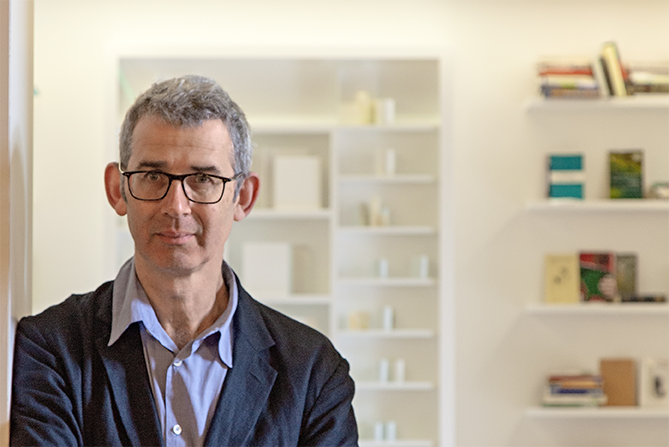
    Edmund de Waal is an internationally acclaimed artist and writer, best known for his large-scale installations of porcelain vessels, often created in response to collections and archives. His interventions have been made for diverse spaces worldwide, including The British Museum, London; The Frick Collection, New York; Ateneo Veneto, Venice; Schindler House, Los Angeles; Kunsthistorisches Museum, Vienna and V&A Museum, London. De Waal is also renowned for his bestselling family memoir, The Hare with Amber Eyes (2010), and The White Road (2015). He was made an OBE for his services to art in 2011 and awarded the Windham-Campbell Prize for non-fiction by Yale University in 2015. 

    Created as a ‘space to sit and read and be’, library of exile is an installation at the British Museum by British artist and writer, Edmund de Waal, housing more than 2,000 books in translation, written by exiled authors.

    Interview by Hannah Trevarthen, Events and Partnerships Manager.