Category: women 2018

  • Unpredictable transgression: a conversation with Ariana Harwicz

    Unpredictable transgression: a conversation with Ariana Harwicz

    Ariana Harwicz’s novel Die, My Love (translated by Sarah Moses and Carolina Orloff) was longlisted for the Man Booker International Prize 2018. We spoke to her about the female voice and how to stay true to yourself as a writer.

    How conscious are you of the label ‘woman writer’, and what expectations do you feel this places on you and your work? Do you think this has had an impact on the way your work is received?

    I am conscious of the context, of the era, of the current political situation, and of how the current political situation – with movements such as ‘NiUnaMenos’ (Not One Less) in Latin America, and all the different movements that emerged in the US – affects the artistic market, in this case, the literature market, and what that, in turn, generates. It goes without saying that it would be naïve of me, it would be clumsy and even hypocritical, to say that I don’t see this, that this plays no role whatsoever. There is clearly a greater interest in women writers (literary agents can vouch for that), there is increased visibility in literary supplements, there are more anthologies by women, and so forth. There is, without doubt, a growing prevalence. However, having said that, I don’t think that this should have any effect whatsoever when it comes to writing. In my case, writing is not influenced by anything. I truly believe that the ethics of writing, the ethics of a writer, the Decalogue of a writer’s ethics, should not be affected by anything. The influence comes a posteriori, in the form of an exegesis that comes after the text, after its reception, its readers, the expectations, the market, the editors and so forth.

    The writing exercise has to be rigorous, and it has to be anarchist. That is to say, it cannot answer to any favouritism, any condescension from a given era; otherwise, I would be taking advantage of the spotlight, of what is fashionable there and then. And we all know what happens with fashion, with certain social movements. Today you are up there, and tomorrow you’ve been forgotten about, you are dust. When I write, I don’t place myself in the women writers’ genre, nor do I think about it. I don’t write from a position of struggle or recognition, I don’t write with a certain cause or certain expectations in mind. I think that the writing exercise has to be an exercise of cutting yourself off from the world, an exercise of autism, of amorality; above all, it has to be that: an amoral practice.

    Die-My-Love-front-MBI

    I really disapprove of the intellectual exploitation of an era, by male as well as female writers. To write feminist novels or books that deal with fashionable topics – such as the rejection of motherhood, women’s struggles, sexism – , to write thinking of their reception and anticipating that they will be of interest, is an idea of hell, a betrayal. The writer’s motivation needs to be linked to the notion of being outside the world, above it. There is, of course, a certain dialectic and a given tension with history, with the historical moment and the times we live in. Yet the writer should never take advantage of that. Yes, they should interpret the present, the era. And yes, in the best of cases, a writer should re-design it, re-signify it, re-semantise, but always safeguarding the freedom of being able to take distance from the historical moment we are immersed in.

    Why is it important to you to give voice to female experience, and in particular experience of motherhood?

    The theme of motherhood and of the female voice is not important a priori. As I was saying before, for me there is no construction that exists before the text. My starting point is never the idea that I am going to verse, to examine, to write about a certain transcendent human experience because it is important to me. I’d say that the genesis is the other way round. My characters are born from a spiritual, philosophical and even existential desperation. They are rooted in the existential angst, for instance, intrinsically related to the

    experience of being an immigrant, of being isolated, of not being understood, of speaking a different language to the one being spoken by the others (and the multiple meanings implied by that). For my foreign protagonist in Die, My Love, not being able to speak French properly implies also not being listened to, not being read, not belonging; not belonging to the community, to the town, to the neighbourhood. It also means being left outside another community which is her family. She is expelled. She is in the margins, she is, in fact, a pariah. That transcendental experience per se is interesting to me when it comes to writing because it is born from a feeling of profound angst. And then, there is motherhood, as something else, as another form of living that feeling of existential angst. My characters embody the complexities of having to figure out how to go through the experience of motherhood, which can be so painful, so enslaving.

    When approaching the topic of motherhood in your work, do you feel that attitudes are changing towards women writers – both in the publishing industry and for readers?

    Yes, I believe they are. The space has opened up; there is a now a predisposition to listen to women, to hear them say that they don’t want to be mothers, to watch them reveal the negative, grim aspects of maternity, even to witness them defend the more extreme positions, in moral or ethical terms, of claiming that they wish they had not been mothers (like those movements in Israel and other countries that had women marching regretting their being mothers). Yes, I believe there is a relationship between all these and women that are finding the space to write novels, articles, essays, non-fiction on these topics. And I think that this, in turn, makes readers open their minds. All this is true, and it is legitimate. It’s legitimate because it is part of a malaise, of a cultural malaise and of women’s malaise. Now I think that some publishers, be it indie or big corporate ones, exploit this and use it to their advantage. Based on the fact that these are trendy topics which sell, at least now, they push their authors to write on certain topics, or on certain transgressions that are convenient for the system. The transgression of giving your two fingers up to the camera, the predictable transgression, is part of the system. Because the system gobbles up those fashionable transgressors, those who last a brief moment. I insist on the idea that the writer has to position themselves outside of all these coordinates, away from all these ‘must be’ and ‘must do’ dictated by the times, be impervious to the mandates and tyrannies of publishers and write like a UFO, like all the great poets did. That is the only thing that matters. The voice that stands alone, the style that is unique. The unique style of Allan Poe, of Arlt, of Borges, of Céline. Even if that means risking being imprisoned, being forbidden, being silenced; risking the burning of their books, not selling anything at all, becoming a poète maudit. Even if that means being out of fashion. All this happens, but we can only see a century or two later which literature remains and which has been forgotten.


    Ariana Harwicz‘s first novel, Die, My Love received rave reviews and was named best novel of 2012 by the Argentinian daily La Nación. The English translation by Sarah Moses and Carolina Orloff (Charco Press 2017) was longlisted for the Man Booker International Prize 2018 and shortlisted for the Republic of Consciousness Prize 2018. She is considered to be at the forefront of the so-called new Argentinian fiction, together with other female writers such as Selva Almada, Samanta Schweblin, Mariana Enríquez and Gabriela Cabezón Cámara.

    With thanks to Carolina Orloff for facilitating and translating this interview.

    Photo credit: Ariana Harwicz
  • A murky thing

    A murky thing

    ‘One place can be many, many things. I’d like to convey an image of Singapore that deviates from Western-centric cultural explanation.’ Where do we write from? Sharlene Teo, author of the hotly anticipated Ponti, responds.

    Words often fail me. If I admit that and call myself a writer, is that tantamount to a swimmer stating that they often almost drown? Or is this simply an acceptance of the limits of language, of the written word being inextricably enmeshed with cultural, political and representational complexities? If we read and write to comprehend each other more fully, why is the execution of this rarely as simple as our impulse to be understood?

    For a Chinese Singaporean like me, language is a murky thing. To write in English is to wade directly or indirectly into a state of cogitation and occasional conflict with my linguistic and cultural inheritances. My grandmother came from Fujian, China. But my standard of written Chinese is a shambles; my spoken Chinese is functional at best. English is the language of instruction in Singapore; from primary school onwards I’ve felt like a cultural traitor, estranged from my Chineseness. To write in English as a Singaporean is a privilege but not always an easy pleasure. My first language is one that was effectively enforced upon my syllabus by the forces and floes of colonialism and the global economy. This is further complicated by the fact that I have lived in the United Kingdom for the past twelve years, having moved there for university; it is in England that I have developed my adult consciousness.

    I experience a double estrangement writing in English and residing in the UK, the site of imperialist, colonizing power, yet I can’t escape that I am estranged of my own volition. The choice and hard-fought right behind this circles the sense of blame back to myself.

    The English vocabulary I use to articulate my innermost thoughts is a concession to the tangled, mangled roots of my identity. If I live in England, why do I keep returning to Singapore in my fiction? Frankly I feel freer imagining and remembering this space that has so definitively shaped my emotional education. Even the act of remembering is its own form of constant fictionalization. To me, the past is a well-known country. I edit and embellish bits of it to fit the narrative of who I’ve become, or what I’m becoming. When I write stories set in London, where I’ve lived for the past nine years, it feels stilted, less elastic. Like reportage, or bad travel writing. Perhaps familiarity mars or dulls my voice. Geographical distance from the site of my description makes it easier to pick out the strangeness in the mundane.

    I don’t write to fight or make a forceful claim. I’m constantly trying to get words out, strung together into a story, because I want to make connections with other people. Place to me is a framing structure rather than a shorthand or shortcut to such connections. Kazuo Ishiguro phrases this impulse much more eloquently: ’Stories can entertain, sometimes teach or argue a point. But for me the essential thing is that they communicate feelings…one person saying to another: This is the way it feels to me. Can you understand what I’m feeling? Does it also feel this way to you?’

    The role of place in my writing, then, is as a way of conveying this emotional topography, a way of externalizing feeling to the reader. Place to me is an inner landscape externalized through observation or the shock of the weather. I love cities for reasons of obvious dramatic tension. I feel like characters can feel so incredibly, unbearably alienated amidst the hubbub and chatter of those they know best. My debut novel Ponti was set almost entirely in my home country, that is also my home city, that is also my home island. The Singapore I write about is its very own sometimes-unwieldy character. It is complex, protean, with jagged edges and pockets of decay. William Gibson famously condemned Singapore as ‘Disneyland with the Death Penalty’, a staid neoliberal metropolis deprived of democracy and spontaneity. Flawed as Singaporean technocratic governance may be, we shouldn’t let disparagement dominate all conversations or depictions of the country.

    One place can be many, many things. I’d like to convey an image of Singapore that deviates from Western-centric cultural explanation.

    I’m concerned with the mood of the space, its beauty and bad temper and contradictions. The way that certain neighborhoods are teeming with stray cats, old furniture, and a gentle sense of mystery. How does one convey this carefully, without romanticizing? Yet other spaces can seem so oppressive and cloying in intensely niggling and personal ways. How does one convey this carefully, without ranting? My concerns are intensely emotional and aesthetic.

    For the foreseeable future I can only imagine writing fiction fixated upon my own particular Singaporean perspective on the world. One that is diasporic, sometimes shamefully Westernised, and hopefully opened up rather than foreclosed to the narrative possibilities of having one foot in a different culture, another back home. What is home anyway? This hackneyed but essential question comes up time and again in discussions of migrant literature, in an increasingly globalised and connected world. The Internet with its memes and connectivity facilitates cultural osmosis. Our influences bleed into one another. Yet the corporeal cartography of Singapore the city is highly specific, despite its veritable hodgepodge of cultural influences. For a small country with neoliberal and global concerns, there really is a distinctively Singaporean way of seeing the world.

    Last week Singapore’s last polar bear died. His name was Inuka and my timelines were flooded with his picture. Born and raised in the Singapore Zoo, his off-white coat was stained by algae. In every image he looked unbearably sad and painfully out of place. Polar bears don’t belong in tropical Singapore, much less in captivity. The last time I saw a polar bear on a humid island was more than a decade ago, in the TV series Lost. A big bear in tropical confines is wildly implausible, but he survived for quite a long time. So this is what happens when you take a creature from far away and put it somewhere familiar. Its coat gets stained green. That’s my fear when I try to write about Singapore from a position of remove: that the telling might come across as grotesque novelty, unrecognizably tamed. This uncertainty and unsettlement both animates and haunts my process; the ambivalence outlives the animal a long, long way.


    Sharlene Teo was born in Singapore in 1987. She has an LLB in Law from the University of Warwick and an MA in Creative Writing from the University of East Anglia, where she received the Booker Prize Foundation Scholarship and the David TK Wong Creative Writing award. She holds fellowships from the Elizabeth Kostova Foundation and the University of Iowa International Writing Program. In 2016, she won the inaugural Deborah Rogers Writer’s Award for Ponti, her first novel.

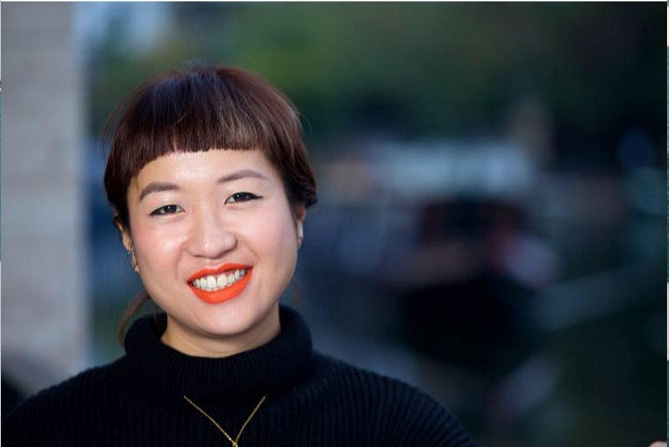
    Photograph: Barney Poole

  • The unusual: a manifesto

    The unusual: a manifesto

    Cristina Rivera Garza is one of the authors published during And Other Stories‘ year of publishing women. Which leads her to ask: is publishing only women unusual?

    The decision to only publish men, and to do so for entire eras, has never taken any editor to the headlines of newspapers. It’s usual, after all. It’s expected. But when Stefan and Tara Tobler from And Other Stories decided to publish exclusively women authors, and to do so for only a year, all of a sudden they became a curious object of scrutiny—a treatment frequently reserved for the love lives of pop-stars or the scandalous behaviors of corrupt politicians. What a freak decision. How unusual.

    In the wake of the #MeToo movement, as new generations of women worldwide forcibly expose the cruel nature of the gender hierarchies (and binaries) that structure our daily lives, while many reject the possibility of being either physically disappeared or culturally erased, the decision to only publish women authors may appear unusual, but it is urgent. I am convinced that writing is a critical practice: true, bold, brave, formally adventurous writing should have the ability to change perceptions and experience; the disordering of the senses talked about by Rimbaud, inextricably linked with the disordering of everyday life as we know it. Producing unusualness, writing expands our sense of what is possible. Imaginable. Livable. Publishing women authors is not a minor component in this process.

    The usual

    Writing is an embodied practice. While romantic notions of authorship still represent the creative act as mysterious and inexplicable—if not altogether ineffable—I believe writing to be a practice connected to situated bodies in contexts shaped by uneven power relations. Conflict. Contestation. These power relations include, of course, gender, but also class and race, national origin and—as has become painfully clear in the Trump and Brexit eras—immigration status.

    Those benefiting the most from existing hierarchies may not require an explanation for the disproportionate number of men in power, of heterosexual characters in movies and books, of white people in colleges and offices, of women murdered both in fairytales and on the streets of our cities. They may not even need to comment on the disproportionate number of books published by male authors, not in the nineteenth century but right now, in the early years of the twenty first century.

    They may be able to go on with their lives as usual, because the usual does not trigger rage or anxiety, sentiments of powerlessness or the desire to radically alter the state of affairs.

    The usual, in other words, is not an obstacle that looks into their eyes every morning, reminding them that they are out of place. Skewed. At fault. The usual does not place them on the tip of the abyss, inciting them to leap forward. Because the usual does not interrogate their place in the world, but rather confirms it, they may accept these situations as normal, even natural, reflections of mere biological and/or geopolitical differences that generate destinies some may find sad, or undeserved, but that are otherwise inevitable.

    The unusual

    Our bodies are keys that only open certain doors. And when the doors we approach remain closed, blocking desires and promises, blocking even the view of both past and present, questions emerge. Relentlessly. Inevitably. Awareness is not optional but compulsory. Feminist thinking from the 60s and beyond has taught us that the personal is political, and vice versa. Critical thinkers and activists alike have shown us that it is relevant to create space in our writing and in our conversations, in our practice as dwellers on this planet; to introduce the question of accumulation, the question of labour, the question of the materiality of our bodies as we approach the usual.

    While some may prefer to keep the body of the author and the work of the author in different files, claiming that good art does not distinguish between genders or classes or races, I am reminded that this is an operation as cruel as it is, frankly, impossible.

    Interconnected as we are, affected by human and non-human life in their myriad layering, bodies are history embedded. Our bodies are time. Practice. In Giving an Account of Oneself, Judith Butler argued that the tale of the ‘I’ inevitably takes us to the space of the ‘you’ and, I´d add, to the terrain of the ‘we’. Once these connections are established as both material and constitutive, discussion about the embodied nature of writing has to lead to the denormalization of the usual, transforming it into what it actually is: a historical, contingent condition we can change. Unusualness is the site of our potency. Unusualness is writing.

    Indebtedness

    Writing is a community-making practice. If we write, we write with others. Inescapably. If we write, we write about others, even when we write about ourselves in small diaries that remain hidden in locked drawers. Constantly borrowing from the language we share with entire and varied communities at once, when we write we acquire a debt—a real, material debt—with the practitioners of such languages. It’s an immense debt. It is, as Fred Moten and Stefano Harney argued in The Undercommons, a debt that is or will become unpayable. We cannot hide it or deny it. The only thing left to do is increase it. We should render it visible, in any case. Palpable. Far away from notions of social responsibility—which are often depicted as optional decisions depending on the ideology of each author—the debt I am talking about here is both undeniable and inescapable.

    If we write, we are in debt. If we write, we owe. This debt transverses all writing; it shapes it. It gives it life. Legitimacy.

    This debt is connected to bodies at work: gendered bodies, material bodies, bodies in conflict.

    Producing present

    I agree with the Argentinian writer Josefina Ludmer in that I believe literature now exists in a cultural phase we can describe as post-autonomous. Literature’s cultural capital guaranteed its status as an autonomous field of inquiry and practice throughout the twentieth century. However, it had declined precipitously by the end of the millennium, changing too its sphere of influence and the accessibility of its resources. As Josefina Ludmer says, instead of discreet units wrapped in clearly delineated genres that presented themselves as imaginary worlds with a fragile connection to community, today’s writings ‘do not admit literary readings. That is to say, it does not matter whether they are literature or not. We don’t know either whether they are reality or fiction. They inscribe themselves locally and in everyday reality in order to “produce the present”, and this is precisely their relevance.’

    I could have translated that last sentence of Ludmer’s as follows: Today’s writings inscribe themselves locally and in everyday reality in order to ‘produce the present’, and this is precisely how they make sense.

    Making sense and becoming relevant are not opposing values here. Sense-making related to an alternative present may be as relevant as literature is going to get these days. Or ever.


    Cristina Rivera Garza is an award-winning author, translator and critic, and the only two-time winner of the International Sor Juana Inés de la Cruz Prize (2001; 2009). She is currently Distinguished Professor in Hispanic Studies at the University of Houston. Her novel The Iliac Crest, translated by Sarah Booker, is out with And Other Stories in June 2018.

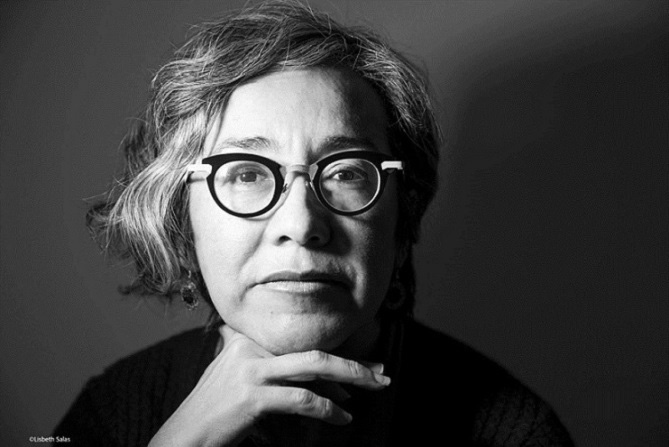
    Image credit: Lisbeth Salas

  • Who gets to be a woman writer?

    Who gets to be a woman writer?

    In the Year of Publishing Women, we ask: who does the idea of ‘woman writer’ include? Writer and activist Juliet Jacques responds.

    Growing up as a trans person who aspired to be a writer, I was often told two things. Firstly, that writing was not a viable way to make a living, and that I should pursue something more remunerative; and secondly, that coming out as trans would lead to social exclusion and a loss of job prospects, and that I could never “really” be a woman anyway.

    Now, four years after Time magazine’s famous ‘Transgender Tipping Point’ cover of May 2014, which suggested that a historically marginalised community had established a level of visibility that could never be rolled back, English PEN have asked my opinion on who the idea of ‘a woman writer’ includes or excludes.

    A decade ago, having internalised the trans-exclusionary position on our identities, I didn’t think of trans-liberatory writing as part of a feminist discourse, even though the latter responded directly to the former.

    Indeed, the trans-liberatory text that launched Transgender Studies as a discipline in 1987 – The Empire Strikes Back: A Post-Transsexual Manifesto by artist/theorist Sandy Stone – was a direct reply to Janice G. Raymond’s infamous feminist text The Transsexual Empire: The Making of the Modern She-Male (1979), which was itself prompted by Stone’s employment as a sound engineer at the women-only music collective Olivia Records.

    Transgender History author Susan Stryker suggests that The Transsexual Empire ‘did not invent anti-transsexual prejudice, but did more to justify and perpetrate it than perhaps any other book’. Raymond argued – contrary to the 1970s slogan – that biology is destiny, and that transsexual women could never be anything other than men; and furthermore, that their transitions were part of a plot to infiltrate the feminist movement, and that they should be excluded from women-only spaces. (Trans men and anyone who did not identify within the male-female binary did not fit her theoretical framework and so were almost entirely ignored.) Stone’s response did not open by replying directly to Raymond, but instead with a critique of transsexual memoirs, and their reluctance to explore space between (or beyond) male and female. If trans authors did this, said Stone, it would break down the stereotype of the gender-conforming transsexual woman on which anti-trans prejudice relied, and create a new genre of writing that would lead to a far more productive conversation about what gender-variant living actually involved.

    It was through reading those who followed Stone’s imperative – Kate Bornstein, Leslie Feinberg, Julia Serano, Roz Kaveney and others – that I began to think differently about the connection between trans writing and feminism. I knew there were many feminisms, but through their writing, I discovered a vibrant trans feminism, angry about discrimination and violence wherever they saw it, aware of how transphobia intersected with other prejudices, discussing the ways in which sexism, homophobia and transphobia were all manifestations of misogyny. (It’s interesting that in The Laugh of the Medusa, her essay about how women could create new writing through engaging with their physical and sexual experiences, Hélène Cixous reinforced this point by naming a gay man, Jean Genet in her list of those who enacted her principles of écriture féminin.)

    The writers I read raised questions about the essentialism that reduces experiences of oppression solely to biology without losing sight of the fact that reproductive rights, the right to abortion, the fight against sexual violence and for people to determine their gender identities share a common concern: the right to bodily autonomy.

    Considering the ways in which trans and non-binary people are affected by misogyny does not mean opening the category of ‘woman writer’ until it becomes meaningless: the straw-man argument that ‘any male writer could put on a dress and call himself a woman writer’ ignores the fact that the risks of being a trans woman anywhere in the world are huge, with transphobia intensifying the misogyny that all women face.

    Coming out and living as trans is not something that anyone, least of all an author, does on a whim – especially in countries where speaking out about prejudice against LGBTQI people, or just being an LGBTQI person, could mean a prison sentence, or even death.

    Rather, I think the category of ‘woman writer’ can include anyone who covers gender-based oppression and violence from a position of lived experience, but only – and most importantly – if they want or need for the category to contain them. In any case, ‘woman writer’ has endless sub-categories within it – of gender identity, nationality, family history, political affiliation and many more. But that’s not to say someone can only be a woman writer if she documents these issues, or that a woman writer should only document these issues. The operative word here is writer, and the crucial thing in the Year of Publishing Women is to get as many female voices out into the world as possible: ones that range not just in background but also style, form and content.


    Juliet Jacques is a writer and filmmaker based in London. She is the author of two books: Rayner Heppenstall: A Critical Study (Dalkey Archive Press, 2007), and Trans: A Memoir (Verso, 2015). She writes short fiction, as well as journalism on literature, film, art, music, politics, gender, sexuality and football.

    Image credit: Joanna Walsh

  • Editorial: women 2018

    Editorial: women 2018

    Welcome to the first issue of PEN Transmissions, our new home for writers from around the world.  Our aim is to provide a venue for conversations that can move across continents and borders, mixing new and established voices and uniting writers with their readers, wherever they might be.

    Each issue will be themed. This being the Year of Publishing Women, we are dedicating our first issue to women’s writing, bringing together voices from Mexico by way of the US, Argentina, Singapore, and the UK.

    We begin with an interview with Ariana Harwicz, who was longlisted for this year’s Man Booker International Prize for Die, My Love, and has much to say about writing and womanhood. We then hear from Juliet Jacques, the acclaimed writer of Trans: A Memoir, who asks us to think about who is and is not permitted to be a woman writer. Sharlene Teo, author of the debut novel Ponti, describes how her writing is shaped by language and place. And Cristina Rivera Garza, whose genderbending novel The Illiac Crest is soon to be published by And Other Stories, offers her thoughts on how publishing women authors expands our sense of what is possible.

    So read on, and enjoy! And do join the conversation.

    – Maureen Freely, chair of English PEN, introduces PEN Transmissions.