Tag: and other stories

  • A Cake Full of Knives: An Interview with Elisa Victoria

    A Cake Full of Knives: An Interview with Elisa Victoria

    Elisa Victoria on child narrators, comics, and post-Franco Spain. Translated by Charlotte Whittle.

    PEN Transmissions is English PEN’s magazine for international and translated voices. PEN’s members are the backbone of our work, helping us to support international literature, campaign for writers at risk, and advocate for the freedom to write and read. If you are able, please consider becoming an English PEN member and joining our community of over 1,000 readers and writers. Join now.

    Elisa – thank you for talking to me. In your novel Oldladyvoice, we follow Marina, an anxious but hilariously discerning 9-year-old girl spending the summer with her grandma while silently battling life’s miscellany of demons: her mother is sick with an unspecified illness; she’s having to endure the humiliation of a late baptism; and her debilitating shyness prevents her from making friends, or kissing them. I’d like to start by asking how the character of Marina came to you.

    I wanted to portray a responsible girl, who does what she ought to but also has a strong will, who’s fun and a little bit naughty but also touching, who is in a complicated situation but finds balance through things she can rely on – comics, dolls, her relationship with her grandmother. I wanted her to have a particular idea of religion in which the Christian God served as a mediator for her worship of her mother as a higher deity; I wanted to show how communication problems occur from such a young age – how she relates to her grandmother, for example, and how she falls out with some of the children around her because she can’t grasp their social codes. My idea was to create a composite character – like a cake full of knives, or a knife stained with a red liquid that turns out to be strawberry jam – and work with these mixed feelings that exist simultaneously, because, to me, childhood is a period of extremes, with many contradictory, coexistent layers.

    Marina has such a unique voice; it is both hilarious and incredibly moving in its profundity. How did you and your translator, Charlotte Whittle, work together to capture this voice in English?

    Charlotte was very respectful, asking me about historical context and local expressions – she gave me total confidence, and I was fascinated by what her questions were. She also showed me a draft of the first chapter, to see if I thought the tone was right, and I loved it right from the beginning. I thought it was a fantastic translation, where non-literal equivalencies made for a shared effect.

    Oldladyvoice is your first book translated into English. You’ve spoken elsewhere about the satisfaction this brings you, but specifically that ‘it feels . . . as though the words have more value now that they’ve been translated by Charlotte than they did when I wrote them.’ Could I ask you to speak about this, and what you feel happened to your words in the process of translation?

    I think that has to do with it being the first time I saw myself translated, and also with prejudices around the English language. I was so used to my own words that they had lost their meaning; seeing them transformed gave them back their value. There’s also the concrete value of English, a language I’ve known since I was a child and that, for different cultural reasons, I’ve deeply respected and even idealised. It’s silly, but seeing myself translated by Charlotte made me feel like a “real writer” for the first time. My main source for finding the book’s style was the writing of John Fante, something I had discussed with Charlotte and that she had taken into account, and it was fascinating to see myself in his language.

    The story takes place over a summer in 1993, at what feels like a pivotal moment in Spain’s history: Franco’s brutal dictatorship is still a recent memory for many, but there’s a sense of hope for the future. As Marina remarks, ‘the nineties are all that stands between us and what’s next.’ You were also a child of the 1990s. In what way did coming of age in this decade influence you and your writing? And what impact does it have on Marina?

    I was interested in several aspects of the nineties, and I drew confidence from knowing first-hand and in depth what they were like, what it was like to be there. It is true that numbers have the power to influence us, and the millennium had an air of conclusion about it – an ending before the beginning of something else. In Spain in particular, there was a certain mood of triumph in the air after all the suffering the civil war and the long dictatorship brought, with the Seville Expo ’92 and the Barcelona Olympics happening around the same time. It was superficial, but it made a huge impression on children, who are so sensitive to advertising campaigns and who truly hoped for a bright future thanks to that vibe. I chose 1993 because it coincided with the hangover of these big events, which left the atmosphere of a burst bubble behind them, and a terrible drought that summer, which seemed an appropriate accompaniment to the protagonist’s psychology. And because of the re-election of Felipe González, a president beloved by many women at the time, which offered the counterpoint of a social phenomenon with a dose of humour.

    Marina is obsessed with El Víbora, a subversive cult comic for adults published in Spain between 1979 and 2004, subtitled ‘Comix for Survivors’ (in reference to those who lived through Spain’s 40-year dictatorship). There are several concurrent stories of survival in the novel: Marina’s attempt to survive childhood; her mother’s battle to survive illness; and the survival of national trauma throughout the twentieth century. In what way are these stories of survival linked?

    The characters in Marina’s comics are all transgressive in some way: they’re sex workers, addicts and troublemakers, but, to Marina, they’re ‘a formidable army backing her up’ who ‘fill her with hope’ and show her the ‘path to salvation’. Why is it that Marina is drawn to these characters and their creators? Do you yourself find comfort and courage in the outsiders of literature?

    These characters shed light on forbidden topics that tend to awaken a magnetic curiosity in children precisely because they’re issues swathed in mystery and secrecy. They’re marginal characters who face a lot of obstacles, and so Marina identifies with their difficulties, seeing them as heroic figures who can handle major (and often unfair) pressures. She also finds inspiration in the comics because of the quality of the stories and the style in which their authors present them: the idea that such a job exists – of telling complicated, beautiful, raw stories that are entertaining and spine-chilling, full of contrasts – gives her hope. It’s an artistic job to which she can aspire; it means that there are people earning a living from this work underground, earning money from telling those stories. That’s the path to salvation I ended up taking myself, the one walked by outsider creators in all disciplines, because when I could no longer stick to academic study, that path was there for me and for anyone who needed it; comics taught me a way to tell stories that I was at ease with, and taught me that there were alternatives to official career paths. Showing both the distress and enlightenment they brought to that generation was an affectionate tribute.

    I think people are often dismissive of child narrators in the same way they’re dismissive of children in real life, assuming they lack perspective on the world, a notion that Marina subverts with endearing effect. Was this a consideration for you when writing the book, and why did you choose to write from this perspective?

    The perspectives of children and young people have always interested me because they give voice to an excruciating tenderness that makes you laugh and bleed at the same time. Childhood and youth are periods so rich in nuance that I never tire of stories about these stages of life. There’s also a certain vindication of the complexity of those experiences and psychological phases, an urge to demand respect and dignity for people going through them and not being taken very seriously. I realised I was obsessed with these issues, and that I tended to write stories about younger people, so I decided to delve into that as much as I could in the novel form, where I could fully embrace the voice of a child, get it out of my system and put it into words, in case I forgot what it had been like to be a child. I wanted to take advantage of that information and leave myself a kind of handbook for the future, to prevent myself from turning into one of those adults who seem not to remember anything of youth.

    In a similar way, I think some readers may be shocked to read about a 9-year-old girl who is so compelled by sex and violence, often conflating the two in her mind and making herself the protagonist in her fantasies. I found this aspect of the book so interesting, and I feel more and more writers are exploring the complexities of children’s interior lives. Did you have any apprehension when tackling this aspect of the novel? Did the freedom required to write this story come to you easily?

    I was convinced that thoughts like these take place in the minds of many children, but I knew those passages would be somewhat troubling. I had published a couple of experimental books where I’d written with ferocious freedom, and so I had practice and confidence in addressing those themes that made it come easily. But, at times, I tried not to go so far in this book, toning things down slightly in some parts so they wouldn’t be as brutal. Even so, I know some readers find them shocking. My Spanish publisher asked me if I was sure about the passages, but I was certain that I had already toned it down quite a bit. I’m not the first to have portrayed this kind of complexity and I won’t be the last, and I’m happy to belong to that tribe.

    It feels like what Marina wants most is to be seen and understood – by her peers, but also by the adults in her life. Is there something we can learn from the novel about how we relate to and treat children?

    Well, I suppose a nice conclusion would be that it’s possible to communicate deeply with children if they’re treated considerately and spoken to naturally and with interest, taking into account their points of view, their circumstances, and the fact that they’re human beings with enormous ability for perception and reflection. We can take people seriously without being tactless.

    Marina is an impossible character to forget. Has she stayed with you since you finished writing the book, and has she changed you in any way?

    When I was writing the book, I had a huge catalogue of scenes with her at different points in her development: looking at the cutlery drawer from above and below, sitting and watching TV with her grandmother, tossing and turning in bed unable to sleep – endless reels of images that I visualised. With time, one of these has remained with particular force, and when I think of Marina, I always picture her sitting alone on the kerb, eating an ice-cream, with the slightly strained expression of someone pondering difficult matters but at the same time concentrating on enjoying the ice-cream’s flavour and refreshment. Now that you ask, I think the way she’s changed me has to do with her giving me the chance to let go of all the information I gathered from working in such depth on her character. I spent years taking notes on childhood, my own and that of others, and I stored up that information against the clock, fearing that it might get blurry as time went by. Publishing this book, and the fact that it worked as a kind of essay on childhood, has lightened my load – she has lightened my load.

    Finally, speak to me about your friend, the author Andrea Abreu. While different in tone, Abreu’s debut novel Dogs of Summer can be read as an interesting companion piece to Oldladyvoice. Do you see your and Abreu’s novels as belonging to a new literary tradition?

    I don’t know if it’s new, since we both have sources in the past that have shown us the way, many of them shared. But I do think there’s a shared spirit when it comes to our interest in exploring the raw and the beautiful, the broken and the tender in all their richness. I do feel that our works communicate in some way, and not just because they tackle similar periods in terms of the protagonists’ ages. Andrea told me, at some point, that Oldladyvoice was an inspiration to her. And for me, reading Dogs of Summer gave me back the purity of creative energy that at the time I felt had slipped through my hands. It filled me with courage and set me on the path to my next book.


    Elisa Victoria was born in Seville in 1985. She has published two books of short stories, Porn & Pains in 2013, and La sombra de los pinos in 2018, and has contributed to several anthologies. Her debut novel, Oldladyvoice, was published in Spanish in 2019 to great critical acclaim and was selected as Book of the Week by El País. It hs been translated into English, Italian and Portuguese. Her latest works are the novel El Evangelio, and El quicio, an illustrated book in collaboration with the artist Mireia Pérez, both published in 2021.

    Charlotte Whittle’s work has appeared in The Literary ReviewLos Angeles TimesGuernica, BOMB, the Paris Review, and elsewhere. Her translations include novels by Jorge Comensal, Elisa Victoria, and Norah Lange; her most recent translation is Papyrus, the international bestseller by Irene Vallejo. She lives in England and New York.

    Interview by Zoe Sadler, English PEN.

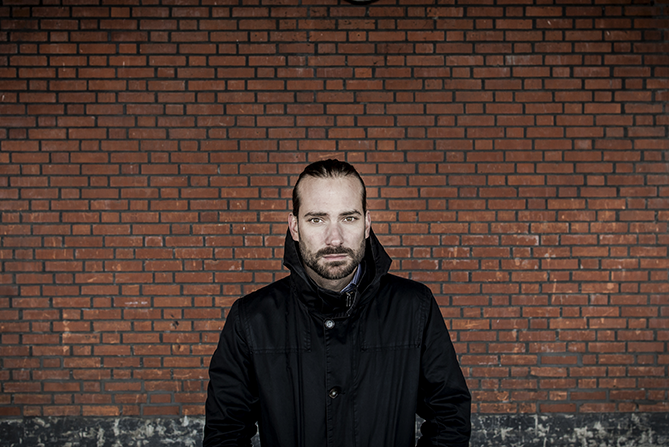
    Photo credit: Joaquín León.

  • When a Country’s Soul Succumbs: Laws, Migration and Culture

    When a Country’s Soul Succumbs: Laws, Migration and Culture

    The 2022 StAnza Lecture by Mona Arshi.

    PEN Transmissions is English PEN’s magazine for international and translated voices. PEN’s members are the backbone of our work, helping us to support international literature, campaign for writers at risk, and advocate for the freedom to write and read. If you are able, please consider becoming an English PEN member and joining our community of over 1,000 readers and writers. Join now.

    This piece was delivered as the 2022 StAnza Lecture on 11 March 2022 at StAnza, Scotland’s annual international poetry festival.

    ~

    This lecture is about issues I’ve been exploring for many years – as a writer and poet, and as a human rights lawyer. But as we watch the destruction and horror of events in Ukraine, I am very aware of the moment in our history in which I’m sharing these words. There is a word in Hindi, sangam, which refers to the confluence of three rivers – a sacred place, a starting point, a location of rebirth. It feels very much as though, today, we stand soberly at the tip of the angle of the river’s edge.

    I want to explore the texture of the idea of the migrant in 2022 – how we have got here, and what the framing of the migrant has meant for our culture, our literature, and our imaginations. Before I do, I’d like to thank two people who have helped me develop some of the thinking around these complex issues over the last few months. One is George Szirtes, a Hungarian poet who arrived in the UK as a child refugee in the 1950s. He was my teacher, and is a writer whose work keenly speaks to ideas of uprootedness and unbelonging – ‘I’ve always felt that my work is like a Budapest tenement on the edge of a British town’, he said once. The other is a lawyer, Raza Hussain QC, for his expertise and guidance on law relating to the Nationality and Borders Bill, which I will discuss in the hope of illuminating the idea of the migrant.

    But this is not a lesson in law. It’s more of an enquiry – or, to borrow Ursula K. Le Guin’s phrase, an attempt ‘to learn which questions are unanswerable and not to answer them’, a skill ‘most needed in times of stress and darkness’.

    How did we get here?

    Some of the provisions in the Nationality and Borders Bill would dismantle refugee rights and erode principles that we have taken for granted for decades. The 1951 Refugee Convention replaced previous regimes with a new system. (It’s not difficult to understand why, of course. In May 1939, more than 900 Jewish refugees fled Germany on the SS St. Louis, heading to Cuba. They were refused entry there, and in the US and Canada, because that they didn’t have visas or prior authorisation. They sailed back to Europe, and some 250 people were later killed in concentration camps.) This new piece of legislation effectively reverses the principle that pre-authorisation visas are not necessary. And so I want to ask how we got here – to discuss migration in all its complexities and contradictions, to pick at what Edward Said called its ‘potent even enriching motif of modern culture’, to ask us as writers and poets about the role we play and to look back at that which we have played in the past.

    This is not a lecture in law. But linking the law and literature forces us to think about our culture in a different way: if stories are important, then the legislation that is passed expresses the basic values of our nation and culture and it too gives us narratives through which we live our lives; if those legal narrations are out of step with social change, they still communicate a state’s values. A good example is Section 28 of the Local Government Act 1988, finally repealed in June 2000, which prohibited “promoting the teaching of homosexuality”. These egregious provisions were, in effect, state-sanctioned homophobia, which stigmatised and caused harm to communities. But let’s not forget the narratives that the state was consciously writing at the same time.

    ~

    In 2003, I was involved in a case representing several refugee and child welfare NGOs. The Home Secretary, David Blunkett, had just passed the grizzliest piece of legislation I’d seen, the Nationality, Immigration and Asylum Act 2002. Section 55 of the Act prevented any government organisation assisting people who had arrived in the UK by irregular means, effectively destituting asylum seekers who failed to claim asylum upon arrival. The Court of Appeal heard the evidence and quickly overturned the legislation, noting that the Secretary of State couldn’t possibly have intended ‘that genuine refugees should be faced with the bleak alternatives of returning to persecution or of destitution’. Blunkett clarified his position the next morning in an interview: ‘no’, he corrected the judgement, he did indeed intend to do so; in other words, the aim of the legislation was to starve out refugees, and the courts were attempting to subvert the will of Parliament. If any of this sounds familiar, it’s because we are in all-too-familiar territory.

    History has taught us that language can be deployed to otherise people and groups; a poem is not a human rights instrument or the pleadings in a court case, nor should it seek to be, but one activity that the human rights lawyer and the poet share is the restless interrogation of language. So what happens as the language of politics becomes untethered from critical reason – from the facts? One thing is that alongside the degradation of language comes a further degradation: the rupture of empathy, which leads us to the bleak realisation that the inviolable dignity of the human is loosening ever more from the table.

    And the other thing up for grabs – though it was never really securely fastened to the table in the first place – is migrant rights.

    The 2002 Act was the grizzliest piece of legislation I’d seen at the time. But it has been displaced by the Nationality and Borders Bill, currently bouncing between the House of Commons and the House of Lords, as the most pernicious I’ve seen. The provisions in clause 11 will, for the first time, criminalise a refugee’s irregular entry into the UK; it will mean that anyone arriving in the UK by an illegal route, such as by a small boat across the Channel, will have their claim ruled as inadmissible. They will be liable to be prosecuted and receive a jail sentence of up to four years; they will have no recourse to public funds; they will no longer have access to family reunion. This legislation will effectively create a two-tier refugee system: “good” people who apply for asylum in the proper way will receive benefits and right to be joined by their family; those “bad” ones will be penalised, criminalised, and – even if they are allowed to stay – not permitted to have family join them. You will have been told that one of the reasons for the Act is to stem the flow of illegal immigration – to create safer passages, thus cutting the supply to people smugglers and those who exploit vulnerable displaced people. You will have also been told that it will be fairer for “genuine asylum seekers” who patiently wait for their turn. What you might not know is that there is no asylum queue. No such queue exists; no such plans for such a queue exist. You may also not know that 70% of asylum seekers are ultimately successful in their claims.

    The other important point to make is that refugee status is a recognition, not a grant. Government lawyers are currently arguing that family reunion is not a fundamental part of the fabric of the UN Refugee Convention. Anyone working in the refugee sector will tell you that the reason this wasn’t explicitly articulated in that document is that the drafters could not contemplate any civilised nation not conferring this basic right to recognised refugees.

    ~

    Movement is the basic condition of humanity. It’s how we’re fundamentally wired. We are human, therefore we move and migrate. We migrate on a cellular and molecular level, even; Dr Pontus Nordenfelt, an expert in infection biology, has observed that T cells are able to migrate to imperilled cells by attaching themselves to a surface, using their fronts to push to exert the force needed to release their rears from the surface, allowing themselves to roll forwards. And this microscopic movement is a part of the movements that are our condition, the condition and idea of movement with which we have been constantly fixated in our language, and which form the very backbone of our literature, the marrow of the bones of our ancient texts.

    The Stoic philosopher Seneca wrote the following passage on the condition of exile in which he found himself:

    There is a sort of inborn restlessness in the human spirit and an urge to change one’s abode; for man is endowed with a mind which is changeable and unsettled: nowhere at rest, it darts about and directs its thoughts to all places known and unknown, a wanderer who cannot endure repose and delights.

    Czesław Miłosz, in his Poetics, articulates the permeable boundaries in which we operate as poets:

    The purpose of poetry is to remind us how difficult it is to remain just one person
    For our house is open there are no keys in the doors and invisible guests come in and out at will

    Every text we read has a journey inside it; every culture has stories that contain the motif of the stranger or the loneliest exile arriving and encountering the host. Our fairy tales and mythmaking are often used to communicate customs to the tribe. And how often they envisage a stranger’s entrance: Hansel and Gretel, starving kids crossing the threshold of the witch’s house; the Cyclops eating at Odysseus’s men when they seek respite from a storm. Will the host hoodwink the arrivant with his odd, tilted hat and that accent, or will they, like Telemachus, fail to recognise their father in rags but still offer comfort and food? The Mahabharata, too, is steeped in rituals of welcome. The Sikh texts are replete with the idea of giving hospitality to the stranger, and it’s manifested in the offer of warmth and food of the langar hall. Jews, strangers in the land of Egypt, the ‘world’s archetypal strangers’, employ the language of hospitality in the Torah and Talmud.

    Edmond Jabès, a Jewish poet of Egyptian origin forced into exile by the Suez Crisis, was haunted by the question of place and its loss. In le livre de l’hospitalite,he says:

    One day I recognise that what was more important to me than anything else was how I define myself to the degree that I was a stranger I then realised that in his vulnerability stranger could only count on the hospitality that others could offer him just at work just as words benefit in the hospitality the white page offers them all the birds from the unconditional space of the sky.

    ~

    In many ways, the migrant represents everything that a right-wing ideology despises. It celebrates the ambiguous, a hyphenated identity that’s complex and subject to mutation. Migration cannot be simply reduced to a familiar, banal script of itineraries, maps and attendant tourism. Thought travels; thought leaps. When we empathise for the human we exercise a muscle, a movement. The old adage there but for the grace of God go I perhaps articulates something basic in us that can be triggered – a pull of the imagination that makes us put ourselves in the stranger’s shoes, sometimes heeded as a warning to our children, more often a recognition that we are vulnerable to fate and illness and sheer bad luck.

    Looking back at what went before is an ethical position. And we also need to remind ourselves that most narratives prior to the Enlightenment were not linear. The Palestinian writer Adania Shibli elucidates this when she talks the linear narrative as ‘a dictatorship which causes blindness’. Shibli’s novel Minor Detail centres on an event that takes place in 1949: a young Bedouin girl is discovered by an Israeli officer, who brutally rapes and then murders her. The book is in two parts: the first leads us into the mind of the officer, its cool, restrained, sharp narration at counterpoint to the sheer horror of the events; in the second, we meet a modern-day researcher carefully attempting to excavate and make sense of this ‘minor detail’ in history. Why does linearity cause blindness? Because it is beholden to a forward progression that refuses to look back and historicise. But if the present is always haunted by the past, then surely we have an obligation to put that past in this present; if we seek to tell the truth in our poems and in our stories, the past should not be erased.

    I thought about this when I was writing my novel Somebody Loves You. The narrator is a young mute girl, Ruby, who has lived under the weather of her mother’s severe mental illness, and who has developed strategies – her wry sense of humour, her sensitive antennae – to help her navigate the world around her. Her story had to be told truthfully, and I could only do so by using different forms of writing. Memories – particularly traumatic or unresolved ones – often act like tripwires in our days; they can be triggered by the smallest, most banal things, and can pursue us like dogs in alleyways. We are so used to writing tidily, with certainty, but life is not this, is it? And Ruby’s life was not this either. If, when we write, we are striving to tell the truth, we may need to leave untidier endings – leave the live cables on the floor for the reader to choose to inspect or leave undisturbed. The Eastern European poets knew this, of course – the poets who deliberately refused to earth the cables because what they had witnessed had made them be left there.

    ~

    When movement and migration are not desired but imposed, traumatic estrangement haunts the psyche. When I was working as a lawyer, a young teenager came to see me. He was an unaccompanied minor from Iraq who had become separated from his family en route. However hard we tried, we could not trace his parents. ‘I exist here’, he had said. ‘Technically I am breathing and my heart, here, under my shirt, is beating. But I exist only, I do not live’. This almost poetic utterance echoes Said’s painful observations of how estrangement affected his friends exiled and adrift: ‘To see a poet in exile – as opposed to reading the poetry of exile – is to see exile’s antimonies embodied and endured with a unique intensity’. Moving can hurt. Home is a contested term; even if the home you’ve left behind is burning to the ground, even if you are cast off and rejected and exiled like Said’s friend, the poet Faiz Ahmed Faiz, that doesn’t mean it isn’t home. Perhaps, as we begin to criminalise the desperate, we should think about the costs of the stories that begin in the gap, or in the rip of a journey.

    The writer Ian Chambers says that ‘the stranger is the ghost that shadows every discourse, is the disturbing interrogation, the estrangement, that potentially exists within us all. It is a presence that persists but cannot be effaced that draws me out of myself towards another’. The émigré, the nomad, the pilgrim, the traveller, the sojourner, the exiled, the refugee, the displaced, the migrant in all its configurations has always belonged, but these versions of stranger are in all of us, and necessarily arouse in us tensions between being at home and being at the point of departure .The stranger that is the ghost makes us plumb our own depths and look at the dark-blue matter in our souls. It also confirms that the migrant-stranger has always belonged somewhere.

    All the terms I’ve referred to elicit a different response, and mirror our current narrations about who we allow on our shores for protection, and who we believe is here to benefit economically. The new narration of our so-called “migrant crises” doesn’t tell the truth of our histories – even our most recent ones. The term ‘refugee’ is under severe pressure from new tragedies that were never discussed in the 1950s, when the Refugee Convention was drafted. – environmental damage, the breakdown of regimes that trigger simultaneous political and economic collapse, and so on. Asylum visas are not possible; asylum queues do not exist; carriers will not fly travellers without visas: the whole complex maelstrom of human suffering is put through the tiny funnel named the ‘Refugee Process.’ The chilling reality is that nation-states have put people in impossible situations: in order to exercise a legal right, you must break the law. Persecution and hunger are a deadly cocktail. Would you want your children to drink it? Or, as Warsan Shire says in her poem ‘Home’:

    no one leaves home unless
    home is in the mouth of a shark
    you only run for the border
    when you see the whole city running as well

    ~

    In August 2021, the government airlifted 15,000 Afghan citizens they described as friends of the UK: interpreters, teachers, army personnel, their families. It was genuinely moving watching these images. But six months later the window has jammed shut. The world and the language has moved on, and the same ‘friends’ we welcomed will be criminalised from May this year.

    It’s easy for us to empathise with those people that resemble us and our children. How seamlessly we can extend our empathy and compassion to the suffering of Ukrainian families. It hasn’t surprised me that these families are within our orbit of empathy because they are ‘just like us’, ‘resemble us and could be us’ – phrases I’ve lifted from mainstream journalists and commentators. Fundamentally, a failure in our imagination is at stake: it’s a different type of work that’s necessary to empathise with the unknowable human, the stranger; a different sort of activity is required from us, to bring our imaginations to something that feels other. That’s why populations have looked away when rights are eroded from stigmatised communities – why Nuremburg Race Laws and Apartheid legislation are accepted in so-called “educated, civil populations” – because, when a state sets a narrative and passes the laws that criminalise, vilify and attempt to penalise human beings, half the work of rupturing empathy is already done.

    What is happening in Ukraine is horrific. And the paucity of our government’s response in refugee assistance is depressingly inevitable: just look at the narrative that has been written by successive governments over the last 30 years.

    ‘History does not repeat, but it does instruct’, says Timothy Snyder. ‘History does not repeat, but it does rhyme’, say words attributed to Mark Twain. ‘We cannot understand [Fascism], but we can and must understand from where it springs. The difference between knowledge and understanding is key’, says Primo Levi. At the beginning The Book of Dialogue,Edmond Jabès also instructs:

    ‘The book does not begin’ he replied.
    ‘All beginnings are already in the book’.
    A priori doubtful, interpretation of the book, because, at every turn, it is challenged by the opaque light of some word that might well be the key,
    The text is rich where it shares this darkness.
    ‘To know that we can only penetrate the book after it has been taken from us.
    ‘That we inhabit only our losses’, he said

    ~

    Language can do magic. We know this from history. If language can make people disappear, it can make citizenship and our claims to it disappear too. One minute we are citizens, the next our citizenship is conditional and contingent, strings attached. When she was Prime Minister, Theresa May gave a speech in which she threw down the gauntlet: there is no such thing as a citizen of the world, she said; ‘if you believe you are a citizen of the world, you are a citizen of nowhere’.

    In my hands I hold three documents: the British passport I acquired at birth by the virtue of the fact that I was born in the UK before 1981; a document issued by the Indian High Commission that gives me overseas citizenship of India and allows me to travel into India without a visa, which I was able to obtain by virtue of the fact that my parents were born in India and were previously citizens of that country; a small pale-blue document called the Universal Declaration of Human Rights, the rights within which all of us are technically entitled to by virtue of our humanity. This last document is small but mighty.

    Clause 9 of the Nationality and Borders Bill, though, which was slipped in as late amendment, has something else up its sleeve. This clause seeks to expand the Secretary of State’s powers under the British Nationality Act 1981 to make an order stripping a person of British citizenship. In effect, the clause confers upon the Secretary of State wide and ill-defined powers to make a deprivation order without notice. The Secretary of State would have to be satisfied that deprivation is ‘conducive to the public good’, provided they are satisfied that they have a reasonable belief that the person is able to become a national of another country. It’s been estimated that 6 million people in the UK could potentially be caught in the provisions. We have been told that “good citizens” need not worry, but these vague and wide powers will remain on the statute books. The people affected are people like me – second-generation British citizens whose parents arrived from on ships with names like Windrush Empire or, in my father’s case, Laureline; children of those immigrants who still remember the packed suitcases on tops of wardrobes ‘just in case’.

    Just in case suitcases were in nearly all the immigrant houses I visited growing up. When Enoch Powell made speeches or when the National Front announced their intention to march a few streets away from us, I am sure my mother brought it down and repacked it, just in case. The government has told us that clause 9 will be used only in exceptional circumstances, but trust on issues relating to documentation and citizenship is at rightly low levels after the Windrush scandal, when 83 British citizens were wrongly deported and thousands more denied medical care. Now, in age of uncertainty, following Brexit and a pandemic that has widened and sharpened inequalities, the state has chosen to impose precarity that discriminates. All citizens are equal, but some are more equal than others.

    Citizenship ‘is a right to have rights’, says Hannah Arendt, who so often spoke about the fragility of human rights documents. In world where over 4 million people are stateless, her scepticism of this little blue UN document is well-founded; these high-and-mighty rights are meaningless without them being underpinned by citizenship itself. Rights are simply abstract ideals unless they adhere to state backed-systems – how else can they be enforced?

    For those without state protections, the future will be even more uncertain, because the government has pronounced their intention to repeal the Human Rights Act. Barely 20 years old, its protections to human beings irrespective of citizenship are vulnerable. The narrative we are told is that the Act, with its distinctly European provenance, is a charter for prisoners, asylum seekers and vagrants. It has nothing to do with you and I – “ordinary people”. There is a call to replace it with a homemade, British, ‘modern Bill of Rights’. But the Human Rights Act is precious and hard-won, giving us rights in step with the European Convention of Human Rights, which was born of the atrocities of World War Two, when it drafted by UK lawyers, with the UK as its first signatory.

    ~

    In an age of reinvigorated nationalism, what do citizenship and belonging now mean? History’s mouth is dry from all its attempts to say that stories are a form of action, that they are, in Hannah Arendt’s words, the way ‘we insert ourselves in the human world’. Stories are the way we become historical because, as she says, ‘one man will always be left alive to tell the story’.

    I was recently stood in front several Francis Bacon paintings in an exhibition called Man and Beast when it suddenly struck me that painters are attempting to do the same thing as poets. A constant tug and pull at the light veil that separates us from the animal; the contradictions that dwell in all of us. That thin flap is almost visible in Bacon’s paintings, but you can hear the rustle of its movement; that rustle is also found in the work of poets who show us that ‘art is spirit seeking flesh’, a phrase coined by the Russian poet Joseph Brodsky, an exile. And just as the poets translate the world into language, the painters give us a rare gift of knowledge: human dignity is a value that we can’t take for granted; it must be something asserted on a daily basis, something we choose, a flap we smooth down that centres the dignity of the human; it requires movement, a form of commitment to that story.

    Poetry needs to continue to strive to make space for itself, to think the unthinkable, put the unimaginable on the page. Poets who have witnessed the degradation of civil society can instruct us in these toxic waters because poems are capable of thinking for themselves.

    Democracies are not inevitable. In many ways, we have only just begun to scratch the surface of what a democracy might be. It requires something from us; language requires from us an extra vigilance. The story of the migrant is an ancient story, and numbness and indifference to history are how democratic principles fall away. If our poems and stories reveal one singular pattern, it is this.


    Mona Arshi worked as a human rights lawyer at Liberty before she started writing poetry. Her debut collection, Small Hands, won the Forward Prize for Best First Collection in 2015. Mona’s second collection, Dear Big Gods, was published in 2019 (both books appearing with Liverpool University Press’s Pavilion Poetry list). Her poems and interviews have been published in the Times, GuardianTimes of India and Granta, as well as on the London Underground. She was recently writer in residence at Cley Marshes in Norfolk. In 2020 she was appointed honorary professor at the University of Liverpool. Her debut novel Somebody Loves You was published by And Other Stories in autumn 2021, and is longlisted for the 2022 Republic of Consciousness Prize, Jhalak Prize and Desmond Elliot Prize.

    StAnza is Scotland’s annual international poetry festival, bringing poetry in all its forms and many languages to Scottish audiences and worldwide. Since the festival was founded by three local poets in 1998, StAnza has gained an international reputation. In 2021, its achievements were recognised with the Saboteur Award for Best Literary Festival in the UK. 2023’s festival will be StAnza’s 25th anniversary.

    The title of this piece is taken from Ingeborg Bachman’s poem ‘Departure from England’.

    Photo credit: Karolina Heller

  • Everyone’s In, Everyone’s Out: A Conversation with Tice Cin

    Everyone’s In, Everyone’s Out: A Conversation with Tice Cin

    Tice Cin on North London, North Cyprus, and sensitivity reads.

    PEN Transmissions is English PEN’s magazine for international and translated voices. PEN’s members are the backbone of our work, helping us to support international literature, campaign for writers at risk, and advocate for the freedom to write and read. If you are able, please consider becoming an English PEN member and joining our community of over 1,000 readers and writers. Join now.

    Tice – why are we here [in Capital, a Turkish restaurant in Wood Green]?

    There’s some distance here for me. Wood Green is a portal, a strange vacuum where nothing ever really changes. Even though the restaurant we’re now in used to have plastic tables and all you could smell was lamb, whereas now there’s glitter on the walls and Europop playing in the background, nothing has really changed. And where the wealth is coming from – I find that interesting.

    Something strange always happens when I’m here. A couple of months ago, a clown and a leaflet-salesman got into a fight and were rolling around on the street. I love the fact that I come from areas that are quite bizarre. As much as other people would clutch their collars and run away, for me there’s a steadiness in knowing that things are always at a certain level of chaos.

    How important is place to you as a writer? Is that where a lot of your artistic resource comes from?

    I like the way that the lines of a road project a certain mood; how spaces are designed to give us certain routines, structures, feelings. But there are locations that have their own languages and codes; you can run up stairways that only residents know about and slip away.

    Tottenham is an area with so much history – to do with police brutality, but also with resistance. I grew up with this feeling that the area could always swallow things up – could swallow up corporations and spit them out. As much as people try to reduce the area’s identity through gentrification, or the way it’s represented in the media, it always resists. The media tried to represent Bernie Grant as an inflammatory man who encouraged the community to be volatile. But the man and the community were never those things.

    There’s a great sense of collective knowledge, and purpose, and creativity in the community – which is why so many artists have come from it. I really wanted to showcase that with people like Shireen Ramezani on my upcoming EP, and with my book cover, shot by my friend and local artist Richard Dixon.

    How have things been for you since Keeping the House was published?

    I’ve been returning to my creativity. I feel like I have worked with focus on the book’s publicity – writing essays, doing events. And I will still go on to do that, but now I feel I can also hop onto my new projects. I’m shooting two short films, preparing a treatment for Keeping the House, and writing book two.

    Did you enjoy the publicity essays and that sort of thing? Did you feel a sense of creativity in writing them?

    Yeah – I think I tried to repurpose what the publicity essay could be, pitching towards turning them into creative criticism or something like that. I like it when the genres blur a bit, you know.

    We’ll talk about that in a bit! And what’s the second book?

    Well one of the short films was going to be the second book. So I suppose the third book has become the second. The short film looks at domestic labour – what it’s like for a cleaner to enter a private space, interrogating the ideas of privacy and safe spaces; what it’s like to clean somebody’s house, going in and recognising the person because you’ve been in that house before.

    The book – and people have discouraged me from writing this – is from the perspective of a young man who is sectioned. It looks at how he got there, and how he got out. I’m really interested in toxic masculinity, vulnerability, and writing from a queer femme perspective about it. Throughout my life, I’ve always had people confide in me. Perhaps I didn’t give off the vibe that a straight woman would give off to a straight man. I wanted to think about how I could play with that, with form and language. I love writing men.

    Why do you enjoy it?

    Well – I don’t feel I ‘write women’. I write characters; I write what makes them who they are. Because my thinking comes from outside the gender binary anyway, ‘writing women’ or ‘writing men’ or ‘writing nonbinary people’ feels more like an exercise of leaning into who they are and how they got there.

    I do like writing really macho cishet men, though, where I feel there’s a campness at work. They’re characters so open to stereotype, and I like subverting that – characters who walk in with jackets over their shoulders, exuding power, but who aren’t really very powerful at all.

    When you talk about stereotypes, I think about the ‘Who’s in’ cast-list at the start of Keeping the House. It’s like a Tarantino film. There’s something very human and rich about the little one-line descriptions of these characters, but there’s also a sense of stereotyping bound up in them, which is then deconstructed in the following 200 pages. What was your intention with that?

    Max [Porter – Keeping the House’s editor] encouraged me to put in the dramatis personae. He thought I could have fun with it as a poet. There’s a sense that, to write something experimental, you have to position a piece of information very firmly at the beginning – give the reader enough information to go on – and then push it. And we wanted to consider that.

    That you can only push an envelope if you have an envelope in the first place.

    Exactly. I decided to run with the idea of a cast; there are people in ‘Who’s in?’ who don’t then really appear in the book. But they still have their story, and I’m interested in how stories emerge from how people interact.

    I felt like Keeping the House was a book of glances – of looking in and catching people at things.

    Is that something you gravitate towards as a reader?

    I think I do – there’s something in reading that’s fundamentally voyeuristic. And you catch your reader in the act with this book.

    I wanted to ask about how you inhabited all these characters. None of them are you and none of them are people you know, but they’re all you and all people you know.

    I think it was my biggest challenge. Most of the publishers who had issues with the book wanted me to sort out my characters. They thought there were too many, or that some were too similar to each other. But people repeat themselves; in a group, everyone becomes closer in character to each other. Üzüm üzüme baka baka kararır– two grapes on a grapevine ripen each other.

    I think also that, coming from a poetry background, writing huge swathes of extended prose without getting distracted was difficult. And with Complex PTSD, you find that your mind gets glitched quite often. You need to give yourself a prop – when writing, literary tools, to help your focus. I interviewed a lot of people for this book, and would flip what they said backwards and try to find a character in that.

    How did you find that interviewing process?

    Well, you have to have full consent – people knew what those interviews were for. It was harder with archival transcripts, though. That was where I was worried most about having consent in using research into individuals and their stories in my characters.

    Could you talk about Cyprus a little, in relation to that?

    I’m glad I’m Turkish Cypriot. But being from an island where there’s a sense that conflict might bubble up at any moment – that’s painful. I found that, when people there discovered I was a writer, they wanted their stories to be told. When I was writing the novel, I was walking around the village and people – particularly older people – would stop me and want to tell me stories. I remember sitting in the sea and an old man – a very round, little old man – swam towards me and said ‘You alright darling’, and I said, ‘Yeah I’m alright, abi’, and he said ‘I heard you’re a writer’. I said ‘Yeah’ and he said ‘My wife – she’s got amazing stories’. And I said ‘Oh really?’ and he said ‘You must come round my house sometime’ and I said ‘Well I’m actually flying back tomorrow so I can’t’. He said ‘Well, I’ll tell you: she found the bones of her brother in seven different places across this island’. There’s this discordance: we’re sitting in the sea, and it’s quite merry, and he’s got his bucket hat on. And he’s telling me about this.

    He said, ‘You’ve got to find a way to put this in your book’. And I did. I’ve since spoken to them about that and they’re really happy about it. People feel seen. When you’re interviewing people for something like a novel, you find a lot more people come to you than you go to. And those are the people whose stories I feel most comfortable sharing.

    It’s interesting. Context – obviously – is important, with storytelling. There are contexts where there’s a guardedness about stories, for different reasons. And then there are contexts where bearing witness to stories that might otherwise go untold is important. I think it’s often out of contexts of conflict, and other forms of collective and cultural trauma, that people most want their stories to be told.

    You’ve mentioned cPTSD. Would you like to talk about that?

    I was never under any illusion that I’d be published and suddenly my life would be sorted. Trauma ricochets. When I go towards art or sharing conversation – which I think is art – I see it as an opportunity to communally find solutions and escape routes, to build and reach places of safety. I think poetry is a good solution for some people. I find it a nice place to be. It’s part of a solution.

    One of the refrains of Keeping the House is damla damla göl olur– drop by drop makes a lake. Some people would see the lake as something that will overfill and knock down skyscrapers. But I see the lake as a bountiful place, which creates something that can become a source of information, or comfort.

    Do you worry that people will read you into the book?

    They have! It was called a memoir. And that’s dangerous – I’m still in the area, and it’s not exactly a book about roses (there are lots of roses in it, actually, but you know what I mean). I have felt unsafe in certain spaces since, but I have friends from ends who look out for me. I’ve gone to such lengths to hide myself from the book, so I’m always surprised when people think they read me in it.

    I think there’s a pervasive critical problem of reading writers into their fiction – and it happens particularly, I think, when writers have identities routinely underrepresented in fiction publishing. What you’ve just said throws into contrast for me that there’s an artistic danger in that, but also, in some instances, a very real danger.

    I think about that a lot – the difference between artistic annoyance and real-world threat. In theory the conflation of writer and writing works great – I’d have a feature in a magazine where I’d be positioned as an omniscient heroin babe. But it’s not straightforward. As a debut novelist, there’s a lot that you would do to get in the eye of the media. You give a lot away, but return isn’t guaranteed.

    I’m very mindful about how I present myself. I know that if I were to put myself out there more it would probably accelerate things for me. But putting yourself out there is challenging and so I want to do that with ownership over my message and image. I’m still here. This book has outed me in various ways to a lot of people in the community.

    Do you feel guarded as we talk now?

    No – not as much. I also think there’s inherent safety in literary publishing, and knowing that things like this have a particular audience helps. It’s a part of why I chose to write a literary novel. I pushed myself hard to write in a different register – in the hope of getting a publisher who would safely and communicatively publish me, while still trying to be as accessible to readers as possible.

    Could you talk a little about relationships between the individual and the community?

    I grew up in a very sheltered way you know. I wanted access to the community, which – for various reasons – I couldn’t have when I was young. We moved a lot. But I was always there, wanting to play out. And I write, I suppose, from a place of isolation – of people who want to be part of a community, and who both are a part of it, and yet are at once separated from it.

    Everyone’s in but everyone’s out.

    Exactly. And that’s something I was circling around a lot as I was writing: there’s something about me that I don’t understand, and I want to put a finger on why a character has that; is struggling to get societal rules; things aren’t clicking.

    Can I ask a bit about translation? Some words and phrases are translated in the margins of Keeping the House – from Turkish, Kurmanji, Turkish Cypriot idiom. Why translate?

    I sometimes love resisting translation – resisting the sharing of community secrets through it. I saw translation in the book as an opportunity to toy with that. I wanted the translation to feel like a character.

    Whispering.

    Whispering, sometimes heckling. Joining in on the fun. Sometimes we reduce translation to a linguistic arrangement, but it’s so much more than that. I do often think that translators are the best writers. Something liminal is happening when translation does or doesn’t occur. In Keeping the House, I translated some things myself, and others I asked friends to translate in their way.

    And that relates interestingly to the ideas of individual and collective identity; who translates, how, and why.

    100%. I very much wanted the process of translation to be the same process we undertake daily as multilingual communities and individuals. I had a lot of fun trying to translate mainland Turkish. It’s very different to Turkish Cypriot. Turkish Cypriot is very cheeky and fragmented. We say things in the quickest way possible and the naughtiest way possible. If someone comes into the kitchen wearing a bikini and a sarong we don’t say, Why are you dressed so skimpily? we say, Why have you come out dressed like a whore in the sun? If you said that in the mainland, they’d be horrified. And with the increasing Turkification of North Cyprus, I wanted to use the book in some small way to preserve Turkish Cypriot identity. I’ve had a lot of Turkish Cypriot writers message me and say that they felt they had to change their writing to catch the mainland market – and that’s a great loss.

    You had a lot of sensitivity readers. Could you talk about that – the value of sensitivity reads, the different kinds that were commissioned for the book?

    I would have had more if I could! Having sensitivity reads was a necessity for me when signing with my publisher. I’m dismayed by the number of people who need a sensitivity read and don’t want one, or get one provided by their publisher by someone who reads across infinite different cultures for a living. That makes no sense.

    It’s not very sensitive.

    Yeah. The people who read your work and don’t feel represented by it, or who feel wounded by it – those were the people I wanted. And, often, those are people outside the publishing space. It means they read in a much more immersed way.

    I’ve been in the publishing industry, so I do understand that there are economic concerns involved (not just for the publisher, in commissioning them; but for career sensitivity readers, whose comments and recommendations and pushbacks are understandably shaped by the fact that they need to get future jobs). But they’re so essential. My sensitivity readers were, really, collaborators. And that’s something I think we need to consider: the creative potential of sensitivity reads. I think we need to reduce the shame about this collaboration – your editors, your translators, your sensitivity readers are all collaborators.

    I think there’s value in reconsidering sensitivity reads as part of the natural and collaborative process that we do as writers. People would never say they don’t need a first reader; people would never say they don’t need an editor. And it should be the same for sensitivity reads.

    I think there’s still a hangover of the way they were seen previously by the industry: as something Penguin paid for because they had loads of expendable income.

    Yeah – and we don’t say that publishers only have editors because they have expendable income.

    Finally, could I ask: What are you?

    I’m a kraken. I’m trying to get at something with as many different tentacles as possible. Gobble it up. I consume a lot of different forms of creativity, and that takes form in the different ways I’ll try to get to a story. I’d call myself an interdisciplinary artist. I hope there will be a point where the writing and the music and the film all come together. It’s not to be controlling; I just love moving between forms.


    Tice Cin is an interdisciplinary artist from north London. A London Writers Award-winner, her work has been published by Extra Teeth, Lit Hub and Skin Deep and commissioned by places like Battersea Arts Centre and St Paul’s Cathedral. She creates digital art as part of Design Yourself – a collective based at the Barbican Centre – exploring what it means to be human when technology is changing everything.  A producer and DJ, she is releasing an EP, Keeping the House, to accompany her debut novel of the same name. 

    Interview by Will Forrester, Editor.

    Photo credit: Eric Aydin-Barberini.

  • Mario Levrero in Conversation with Mario Levrero

    Mario Levrero in Conversation with Mario Levrero

    An imaginary interview with Mario Levrero and Mario Levrero, translated and introduced by Annie McDermott.

    PEN Transmissions is English PEN’s magazine for international and translated voices. PEN’s members are the backbone of our work, helping us to support international literature, campaign for writers at risk, and advocate for the freedom to write and read. If you are able, please consider becoming an English PEN member and joining our community of over 1,000 readers and writers. Join now.

    Mario Levrero – bookseller, cartoonist, crossword setter, leader of creative writing workshops, tango fanatic, and amateur mystic – was also the author of some of the strangest and most astonishing works in the Latin American literary canon.

    He published his first novel, La ciudad (The City) in 1966, at the age of 26, describing it as ‘almost an attempt to translate Kafka into Uruguayan’. This novel is part of his hallucinatory ‘involuntary trilogy’: books set in tunnels, houses, and cities bound by unfathomable rules, which are Kafkaesque less because they’re something Kafka might have written and more because they’re something Kafka might have dreamed. As well as this trilogy, Levrero wrote rollicking detective-novel parodies with such titles as Nick Carter Enjoys Himself While the Reader Is Murdered and I Expire, and, in later years, several autobiographical works, among them Empty Words and The Luminous Novel. This last, a book with a 450-page prologue explaining why it was impossible to write the book itself, is his masterpiece, and widely regarded as a classic of Latin American literature.

    The Luminous Novel, posthumously published in Spanish in 2005 and now available in English, is an anti-novel: the testament to a monumental failure which, as Adam Thirlwell writes in the New York Times, somehow still succeeds. In the words of the Argentinian author Mauro Libertella: ‘If Roberto Bolaño showed us it was still possible to write the great Latin American novel, Levrero told us it wasn’t necessary’.

    The imaginary interview below dates back to the end of the 1980s, when Levrero was living in Buenos Aires, working in an office and struggling to write. Here, he is a writer pining for inspiration and resolute that, without it, no writing is possible. His later autobiographical works, however, which culminate in The Luminous Novel, show him exploring what happens to his writing when the inspiration isn’t there. This interview, then, is a kind of Luminous Novel in miniature: although it is about not being able to write, the writing takes on a life of its own.

    – Annie McDermott

    Imaginary Interview with Mario Levrero

    To Lisa Block de Behar, who brought this about

    – M.L.

    Mario Levrero was born in Montevideo, on 23 January 1940. He began keeping the things he wrote in 1966, on the advice and encouragement of Tola Invernizzi. He has published a number of books (mainly fiction) and, under various pseudonyms, some mostly humorous journalism, as well as comic strips and puzzles. In 1985 he moved to Buenos Aires, where he is currently the editor-in-chief of a crossword magazine.

    He receives us, with obvious irritation, in his apartment near the Congress building, and shows us into a spacious room almost entirely lacking in furniture and with nothing on the walls. The only features are a hi-fi, a small desk with a large typewriter on top, and the sofa bed, at this moment functioning as a sofa, where he invites us to sit while he makes us a coffee.

    He seems tired, and though he gives his age as almost 48, he could easily be ten years older. As we prepare our tape recorder, he puts a cassette into his own and adjusts the volume so that the music – some excellent jazz – doesn’t disturb the conversation. We begin:

    MARIO LEVRERO: What, for you, is literature?

    MARIO LEVRERO: It’s the art that’s expressed by means of the written word.

    And what, then, is art?

    In my view, it’s the attempt to communicate a spiritual experience.

    You’ll have to explain, then, what you mean by a ‘spiritual experience’.

    Any experience, provided you can sense within it the presence of the spirit, or of my spirit, if you prefer. And before you jump in with another of your questions, let me expand on that: the spirit is something living and ineffable, something which forms part of the dimensions of reality that lie, on the whole, beyond sensory perception and even usual states of consciousness.

    Meaning that literature is one possible way of communicating to other beings a personal experience that lies beyond the usual forms of perception.

    I’d say you’ve grasped my meaning exactly; almost with the same words.

    But this definition of yours, wouldn’t it rule out plenty of works that are considered to be literature?

    Quite possibly.

    So you’re denying the literary quality of such works as…

    Not at all. You asked what literature was for me; at no point did I think about other people’s literature. And besides, I also said any experience. I think there’s artistic material in the most trivial, mundane experiences; the one requirement is that the artist’s spirit is present. For example, I could be standing on a street corner and looking at the traffic lights, waiting for them to change before I cross. In fact, I’m in that situation several times a day. And there could be a spiritual experience there; it depends what goes on with me while I’m standing on that corner. Or I could explain it in the exact opposite way, just as I remember reading it many years ago in Charles Baudouin, in a book that seems to have been unfairly underrated: The Psychoanalysis of Art. What we perceive in a work of art is the artist’s soul, in its entirety, through the phenomenon of soul-to-soul communication between the author of the work and the recipient. A work of art, then, is a hypnotic mechanism, which momentarily frees the soul of the person perceiving it and allows them to capture the soul of the author. It doesn’t matter what the work is about.

    So the essence of art is communication.

    Yes.

    But there are other forms of communication besides art.

    Of course. Art can communicate on particular levels – the very deepest. However, those levels can also be reached in other ways, for example through conversation, as long as there’s ‘hypnosis’, i.e., a kind of enchantment (which is not the case in this conversation of ours).

    And that would be the art of conversation.

    It hadn’t occurred to me. I suppose so.

    Is this interview bothering you?

    No more than others. But I’m getting a bit bored.

    What would you ask if you had to interview yourself?

    Well…. There are three kinds of interviewers: the journalistic sort, the academic sort, and the sort that mix the two. The first ones are always after the new, the remarkable, some detail they think will catch ordinary readers’ attention. They’re the ones who insist on the business of ‘los raros’, the strange ones, in literature: why critics have considered me a ‘strange’ writer, etc. It would be far more interesting for them if, instead of writing, I had, for example, committed a murder. The second sort always want to know exactly where I’d place myself on some sociohistorical diagram, as if that were my job and not theirs. But once, curiously, I was interviewed by a man who had read my books, and who took a great interest in my personal life and creative mechanisms, and the relationship between the two. Unfortunately I still haven’t seen the magazine where it was published, so I don’t know about the final product; but I thought the intention was good, and original, at least. If I had to do an interview, I think I’d try and keep to the formula of that man, who, what’s more, doesn’t fit into any of the three categories I was mentioning just now.

    Maybe we could have a go with the mechanisms of creation.

    Sure, though it’s a rather unfortunate expression. Perhaps I should have said ‘the alchemy’ of creation.

    Fine. How, then, does this alchemy work in your case?

    Well, by definition these are secret, hidden processes. It’s not that I’m trying to hide anything, but I don’t have direct access to them. It’s like digesting food: I “do” it, but I don’t know how.

    I imagine you begin by choosing a topic…

    No, the topic, or rather the subject, normally chooses me. At some point, without me necessarily thinking in terms of literature, I notice that something is bothering me: an image, a series of words, or simply a mood, an atmosphere, an environment. The clearest example would be an image or mood from a dream, after waking up in the morning; sometimes you spend a long time almost tangled up in that dream-fragment; sometimes it fades in the end and sometimes it doesn’t. It can come back, whether spontaneously or evoked by something else, at other points in the day. When this goes on for several days, I take it as a sign that there’s something there that I need to deal with, and the way to deal with it is to recreate it. For example: I have a story, ‘The Crucified Man’, which stemmed from this kind of disruption, although it didn’t come from a dream. I noticed that for some days I’d had a crucified man in my head, someone whose arms were permanently outstretched. In fact, I didn’t realise the man had been crucified until I stopped to examine that disruptive image, because he was dressed; you could clearly see that he was wearing an old jacket. Looking more closely, I discovered that under the jacket he was nailed to the remains of a wooden cross, and right away I began work on that story. Another story, ‘The Sunshades’, arose from a phrase overheard in a dream: ‘Nohaymar’ [‘No hay mar’, or ‘There is no sea’]. In the dream, a girl was jumping on a bed and saying something like ‘nohaymar’, or rather I was hearing ‘noaimar’. While I was in the shower, that image and that phrase came back to me and I decided it meant ‘no hay mar’, and by the time I got out of the shower I already had a fairly well-structured story. My novel Displacements also arose from a brief scene from a dream: a woman in her underwear washing dishes in a kitchen. It took me about two years to unearth the whole little world contained in that image. And in case you take an interest in parapsychological phenomena, I’ll tell you something else that happened with ‘no hay mar’: a few days after the story was written, I ran into a friend who told me that he’d been writing a story himself at more or less the same time, and a character had infiltrated it with a kind of obsessive force. This character was called Mariano. As you may have noticed, ‘Mariano’ is a perfect anagram of ‘no hay mar’.

    When you talk about ‘examining’ an image, or whatever else, what exactly do you mean?

    Paying attention to it, or allowing it to live its life. And trying to become aware of that life. When, like now, I don’t have time to write, I try to recreate the dream-fragment, or whatever it is, by closing my eyes, calling up that image or mood and leaving my mind free for associations to arise. Then a kind of splitting occurs, a reflexive state, meaning that on the one hand I can make associations and on the other I can pay conscious attention to those associations. By doing that, it’s possible to free yourself from something that might otherwise keep bothering or obsessing you.

    […]

    Are you addressing someone specific, or are you thinking of a public more generally?

    I’ve found that all my texts are aimed at a particular recipient, though I’m not always aware of it. There’s always someone I want to tell something to; when I’m writing, I have a specific person in mind.

    Is it always the same one?

    No, almost never, or never, the same person twice.

    And doesn’t that affect the language you use?

    Certainly. You don’t address everyone the same way. And probably not only the language, but also the images, everything.

    You were talking about a kind of relationship between your texts and your personal life. Should this be understood as an autobiographical form of writing?

    It depends what you mean by ‘autobiographical’. I’m talking about things I’ve experienced, but generally I haven’t experienced them on the plane of reality that biographies tend to make use of.

    Isn’t that a slightly convoluted way of describing your writing as ‘imaginary’?

    The imagination is an instrument; an instrument of knowledge, despite what Sartre says. I use imagination to translate into images certain impulses – let’s call these impulses experiences, emotions or spiritual encounters. For me these impulses form part of reality, or of my ‘biography’, if you will. The images could easily be different; what matters is passing on, by means of images, which in turn are represented by words, an idea of that intimate experience for which no precise language exists.

    For example, are your characters taken from real life?

    Sometimes I borrow them from what you’re calling ‘real life’ but in fragments, like in a collage. For the most part, my characters are made up of various people I’ve known. But when they appear in my texts they’re not themselves; they’re no more than images, as I’ve been saying. I don’t want them to come across as flesh and blood; it’s more as if they’re made of cardboard.

    Some people see your texts as versions of a reality that’s deformed, exaggerated, cruel, absurd, nightmarish, suffocating…

    I can accept all of those adjectives except one: ‘deformed’. That’s usually a tool of science fiction. I wouldn’t talk about ‘deforming reality’ in my texts, but rather about subjectivism…. Think about shoes in a shop window and shoes ‘deformed’ by wear. Would you describe the shoes you wear as ‘deformed’? Are the ones in the shop window more “real”?

    […]

    Where would you place your work in the panorama of contemporary Uruguayan li…?

    Oh, oh. Et tu, Brute.

    Sorry. I just wanted to shake you out of your narcissistic monologue for a moment.

    Why?

    Well… I… I mean…

    You want to shake me out of my personal perspective; and put me in a perspective we might call academic. I’m surprised you’d make the same mistake as other journalists; I thought you knew me better.

    Really I was provoking you, to make you confess once again to the weakness of your cultural education.

    That doesn’t bother me. I’ll confess. I could also confess to the weakness of my education in a whole host of other areas. But it’s true: my total unfamiliarity with literature is, or should be, a disgrace. I think it’s down to lack of discipline; I’m too hedonistic, perhaps, and tend to read what I want to read and not what I should read; I also prefer to read people who write and not people who write about people who write. I loathe catalogues, lists, analyses, interpretations; what’s more, it feels like the critical perspective distances me from a work of art, instead of bringing me closer; it makes me read with only one eye, you might say.

    And what about the other eye?

    With the other eye I’m reading between the lines: here, where it says this, what the author is really saying is…. And that prevents me from falling into a trance. It prevents me from receiving the author’s soul, to use the language of Baudouin. What’s more, I think that’s the true function of criticism: preventing the craziness contained in a work of art from spreading through the whole of society like a plague. It’s a repressive function, a kind of policing, and I’m not saying it’s wrong; I think it’s necessary. But personally I find it irritating, because it happens to be repressing me, or at least what I write. It’s fencing me in, putting barriers between the reader and the writer. This, of course, actually ends up benefiting literature, allowing it to grow, to find new ways of saying what it wants to say – in the same way that policing allows different forms of crime to evolve.

    There are other ways of putting an end to literature….

    Yes. The publishing industry. But that doesn’t worry me. Books in themselves don’t worry me, and nor does literature in itself. What worries me is communication, but since it’s a vital necessity I’m sure it will always find a way of existing.

    So, essentially, you’re not a man of letters.

    No: I cultivate images, not letters; and the images are very close to the raw materials, which are experiences. But now we’re back to the ‘narcissistic monologue’, though I wouldn’t call it that. If you ask me, it’s an ‘introverted monologue’, which is something quite different. When I step into myself, I find that the outside world is there as well, only transmuted into a language that means I can see it better.

    Why don’t we return to the topic of Uruguayan literature, from this new angle. Have you read any Uruguayan authors recently?

    I’ve been reading Onetti and Leo Maslíah. The two extremes, you might say.

    And?

    Well, I find Onetti always takes a lot of effort. He’s one of those authors with whom there’s no ‘enchantment’, who don’t hypnotise you or let you fall into a trance; Onetti comes complete with his own literary critic; he knows how to create an almost insurmountable distance for the reader. He makes you read him with only one eye.

    Then I’m surprised you read him at all.

    There’s a reason: I’m not sure why, but every so often, when I go through a ‘literary crisis’, I have a dream that features the ‘Writer’, an imposing figure, a kind of large, shadowy master, whom I approach; we don’t speak, he’s simply there, looking contemplative or self-absorbed, and I keep a respectful distance, observing him. Nothing else happens, but those dreams have an enormous power and I know that through them I resolve something that enables me to keep going. And although it’s not made explicit in the dream, when I wake up I know that the man is Onetti. And there’s another reason, too: much as I’m usually lazy when it comes to reading, I’m not always. Sometimes I want to read something that takes effort, or attention. And with Onetti it’s worth it.

    And Maslíah?

    I see Leo as a violinist playing a violin that has only one string. I’m amazed by everything he can do with a single string. That said, reading him also takes effort, and I find myself wishing that he’d done this differently here, or that differently there, but I suppose that goes with the territory if you’re a writer. Still, reading him is also a lot of fun, as entertaining as a detective novel, or more so. I experience something similar with Beckett. I don’t know, I think Leo is trying to make literature explode, and that’s healthy, part of a process of renewal. But then I think that this acceptance of mine isn’t very natural or spontaneous; that him making literature explode is painful to me and I’m too old feel any different.

    […]

    In more than one interview, you’ve argued that your literature is ‘realist’. Is this part of that game, of taking the exact opposite stance to whoever you’re talking to?

    Naturally, I place myself in ‘realism’ when people try to put me in science fiction or fantasy.

    Where would you put yourself, then?

    Why are you trying to pigeonhole me?

    How would you explain, without any pigeonholing, what your work is like, to readers of this interview who aren’t familiar with it?

    I think this interview forms part of what you’re calling my ‘work’. If you read it properly, you’ll find me here, in my entirety.

    Do you like your books? What’s your self-assessment as a writer?

    I like some of my books, sometimes part of my books, and sometimes I like them more and sometimes less. I don’t read myself very often, and when I’m not reading myself I tend not to think I’m very good. When I read other writers – good writers, I mean – I think I’m even worse. However, sometimes I pick up something I’ve written and find myself engrossed, excited, even amazed. I can’t believe that it’s come from me, come through me. The fact is, outside my inspired periods, I’m completely incapable of writing, and during my inspired periods I’m not exactly myself. When I read something I’ve written, except for a few things that seem systematically abhorrent, I feel as if I’m reading something by someone else, and when I become aware that it’s ‘mine’ (that it came through me, I mean), I’m usually astonished. But even when I’m astonished, I’m not deceived. I know my writing is a minor art. But I also know it’s an art. I value it as something authentic.

    Speaking of all this, a priest friend once told me: ‘What matters isn’t that your cup is bigger than other people’s, but that your cup is full’. There are cathedral buildings that I admire and revere; but personally I look after a little garden, or a few plants in pots, if you prefer. But then, even plants that grow in pots have their ways of astonishing you.

    Will you ever write again?

    If it’s up to me, definitely. For the time being, it’s not up to me.

    What advice would you give to young writers?

    Look…

    At this point, Levrero abruptly breaks off the interview and hurls his heavy IBM 82C typewriter in the direction of my head. Fortunately, it misses.


    A full version of this piece is published in The Believer.

    Mario Levrero was born in Montevideo, Uruguay, in 1940 and died there in 2004. He wrote twelve novels and several short story collections and it was not long before he gained cult status amongst readers in Uruguay and Argentina, despite keeping a low profile. He has inspired Latin American writers such as Rodolfo Fogwill, César Aira and Alejandro Zambra. In 2000 he was awarded the Guggenheim grant that allowed him to complete work on The Luminous Novel, which was published posthumously.

    Annie McDermott’s published and forthcoming translations include Mario Levrero’s Empty Words and The Luminous Novel (And Other Stories and Coffee House Press), Feebleminded by Ariana Harwicz (co-translation with Carolina Orloff, Charco Press) and City of Ulysses by Teolinda Gersão (co-translation with Jethro Soutar, Dalkey Archive Press).  She has previously lived in Mexico City and São Paulo, Brazil, and is now based in London.

    Photo credit: Eduardo Abel Gimenez

  • Memories of the Fires

    Memories of the Fires

    El Salvador’s Claudia Hernández on war, women, and burning. Translated by Julia Sanches.

    PEN Transmissions is English PEN’s magazine for international and translated voices. PEN’s members are the backbone of our work, helping us to support international literature, campaign for writers at risk, and advocate for the freedom to write and read. If you are able, please consider becoming an English PEN member and joining our community of over 1,000 readers and writers. Join now.

    The volcano that can be seen from my house has been dormant for more than a hundred years. For a time, parts of its face were often dotted with fiery birthmarks. Just like much of the land in the country. Since before the day I was born. Since before colonial times.

    My first memory of this burning – a farming method whose purpose is to enrich the soil – is not the heat but the ashes that used to rain down on us, wafting through the doors and wandering around the house until they settled on the basket filled with clean laundry, or on the plates set out on the dining table. I asked the girl who looked after me what the black threads that kept falling on my toys were. She answered by gesturing with her lips toward the various plots of land being set on fire. And silence. Even when I asked if we should call the firefighters. All she did was shake her head.

    As someone who’d grown up in the countryside and understood that this death was a part of life, she helped me understand the importance of this process and our powerlessness against the flames. Seeing the distress and alarm on my face, she murmured that the vegetation would grow again, in due time.

    Our mothers once had a similar exchange. After learning that some of the woman’s children planned to engage actively in the war, my mother asked what would happen if they were killed. All the woman said in response was Yes. And nothing else. No matter how much my mother urged her to talk them out of it. It was clear from the gentle but firm expression on her face that she would not be moved, nor would she explain herself to someone who could never understand the motivations behind it or the outcomes it would produce.

    From a hiding place, I eavesdropped on the end of that conversation, and many other conversations I wasn’t supposed to overhear. This was grown-up talk. And little girls were not meant to listen. It’s bad manners, my mother used to say. And it was dangerous, too. Though she never put it in words, my mother lived in fear that a piece of information we’d hear might innocently slip into a conversation with the wrong people – at great cost to my parents, our guests, and those we didn’t know. She never explained it outright, but it was clear that the war could swallow up even those of us who hadn’t joined the battling factions, regardless of whether we were of age. She’d call us children out to say hello to the señoras who’d come from towns, and from a time when she’d experienced many difficulties. She said she wanted them to see how much we’d grown, but the truth is she wanted us to meet them and learn how we were related, so that we could help them when needed, and, if luck turned against us, so that they could lend us a hand, just like my mother was doing right then. That’s why they had come. From all over a country that was burning. Like ash.

    My mother used to keep us in the living room until it became impossible not to touch on  the sensitive subject. Then she’d send us away. I could tell it was time to go before she said so because both she and her guest would start looking at one another differently, lowering their voices, changing their postures, and filling the room with tension and pain.

    It was the silence that erased their smiles, and compelled my mother to rush to grab her car keys so she and the guests could immediately leave, that made me disobediently listen to the whispers surrounding these women, who sometimes spent the night at our house or stayed with us for a little while.

    When the war ended and my mother felt comfortable talking about the subject, I asked after several of the people I’d seen throughout those years. She was surprised to find out about all the conversations I’d overheard, and filled me in on what had happened in the same low voice she’d used with the women back in the day. As she spoke, I understood the ways in which women who were never on the battlefields still took part in the war. When they offered each other comfort or went looking for the disappeared. When they – who seemed so harmless – ferried messages from one city to another, or cooked large quantities of tortillas near a trail they knew the combatants would take. When they warned other women to stock up before an imminent attack. When they gave each other shelter or helped someone flee. When they stood on the frontline of their houses so that others could go to the frontline of war. 

    I don’t remember the men ever asking for favours at the house. If they were present at all, it was still the women who advocated on their behalf. In the intimacy of the home, they were the ones who spoke, who stood up in favour of life. And not to the ‘man of the house’, but to his wife. Woman to woman. Like communicating vessels.

    Unlike the men I interviewed once I began collecting memories of war, the women, even the ones who’d enlisted, often spoke of emotional connections; instead of referring to concrete facts or particular battles in terms of victories won and strategies used, they lingered on gestures of generosity and networks of solidarity. There were historical records of the things the men spoke about. But the stories the women told were shrouded in a silence inversely proportional to the printed matter. So I started asking questions. Memories of the fires that once lit up the country were rekindled and their ashes brought back to life – and they blew all the way to the farthest reaches of the house, from where I am writing this piece, with my back to the volcano, in the hope that life will grow again where there was once destruction.


    Claudia Hernández is the highly acclaimed author of five short-story collections and two novels, the first of which was Slash and Burn, published in Spanish in 2017 and now in English in 2021. Born in El Salvador, she was named in the Hay Festival’s Bogotá39 list of important Latin American authors.

    Julia Sanches translates from Portuguese, Spanish, and Catalan. Her most recent translation is Slash and Burn by Claudia Hernández, for which she won a PEN/Heim award. A founding member of the Cedilla & Co. translators’ collective, Julia currently lives in Providence, Rhode Island.

  • Disturbing the Comfortable and Comforting the Disturbed

    Disturbing the Comfortable and Comforting the Disturbed

    Andrzej Tichý writes on music and migrant experience

    PEN Transmissions is English PEN’s magazine for international and translated voices. PEN’s members are the backbone of our work, helping us to support international literature, campaign for writers at risk, and advocate for the freedom to write and read. If you are able, please consider becoming an English PEN member and joining our community of over 1,000 readers and writers. Join now.

    Translated from the Swedish by Nichola Smalley.

    ~

    Come on people now / smile on your brother / everybody get together / try to love one another, right now

    It was probably early spring, 1992. I was hanging out by the skate ramp by school with a few friends. We were smoking, chatting, doing a bit of graffiti, setting light to stuff. We weren’t skating.

    A friend turned up. He’d been to the shopping centre and bought a pirated tape from the Polish guys who sold their things outside, spread out on blankets on the floor.

    Listen to this, he said. It’s totally awesome.

    He handed me his Walkman; I took out the tape and read the label. Nirvana, it said. I put it back again – Side B – rewound it all the way, and pressed play.

    Imagine you’re thirteen. You’ve come to realise that, in the eyes of the world, you’re nothing but a poor immigrant, which means your world is poor too. You’ve felt alone for a long time, but you’ve started to realise that many people share that feeling. You’re angry, but, to be honest, you’re not exactly sure what about. Life hurts, and it’s confusing – you know that, but you also know it can feel good too, even if the rush hasn’t really come into the picture yet. You don’t get it, but that’s normal. That’s natural.  

    The material want. The sublimating violence of society’s class structures. The racism and xenophobia around you. The substance abuse around you. The physical and mental illness. It all seems so ingrained.

    Gotta find a way, find a way, when I’m there / Gotta find a way, a better way, I’d better wait

    Two or three minutes of distilled pain – two, three, four words that hit the target and show you that something else exists, that something else is possible. A smile, the warmth of joy within you.

    The raw, violent music that came flowing out of the headphones spoke to me directly. There were a bunch of us who’d been getting into music, together. Hard rock, metal, commercial hip hop, old punk. But this felt urgent in a different way. It broke all boundaries. It was so acute. It was happening now and it was important. In some people’s eyes, it was nothing but youthful nihilism. Base and destructive. Actually, it was the opposite. 

    Music offered a context, an opportunity to do something, to make use of all your experiences – even the negative and destructive ones. To break the isolation and approach the world.

    A wonderfully concise depiction of this process can be found in Duke Ellington and Don George’s I Ain’t Got Nothing but the Blues, which contains these lines:

    Ain’t got the change of a nickel

    Ain’t got no bounce in my shoes

    Ain’t go no fancy to tickle

    I ain’t got nothing but the blues

    Ain’t got no coffee that’s perking

    Ain’t got no winnings to lose

    Ain’t got a dream that is working

    I ain’t got nothing but the blues

    […]

    Ain’t got no rest in my slumbers

    Ain’t got no feelings to bruise

    Ain’t got no telephone numbers

    I ain’t got nothing but the blues

    Song – the act of singing itself – turns nothing into something. And under the right conditions, that something opens doors to a whole world of human creativity. It’s a slow process, and it wasn’t always obvious, but eventually we discovered that Nirvana’s post-punk on Territorial Pissings was just a node in an enormous, far-reaching network of musical, literary and artistic expression. If you followed the threads, you quickly became overwhelmed. The 90s US alternative rock scene was rooted in punk, which in turn was tied to Situationism, which led to Dada, which led to Symbolism, which, in its critique of Naturalism, expressed an ancient philosophical and aesthetic problem: How should we portray the world around us? And what do we do with these portrayals?

    A few years later, another friend played me Mobb Deep and Wu Tang Clan, and yet another world opened up. Hip hop wasn’t just a voice from below (in a way few other art forms could claim to be); it was also a lesson in creative quotation, paraphrasing and sampling. Granting the powerless a fleeting power of agency, you could perhaps say. Just like the Blues, it sprang from, and was specifically bound to, the US and black people’s lives and struggles there. But it was so powerful, multifaceted and complex, that it also functioned as inspiration for the poor and disenfranchised more or less throughout the world, including the immigrants and the underclass of Sweden’s post-war housing estates. So there was a place in the world for those who had ‘nothing’. Apparently, the world was rich, and the hunger that existed around you said more about the social structures you lived within than it did about you.    

    The kids who spit bars about Glocks and cocaine in pretty much every city in the world can sometimes appear destructive, problematic and uninformed. But those kids are also achieving something important. To disturb the comfortable and comfort the disturbed, as they say. This music is also a part of that far-reaching network that offers up knowledge and agency, a potential door to something great: a welcoming fire of possibility for many people in an ever colder, harder – ever more impossible – world.


    Andrzej Tichý was born in Prague to a Polish mother and a Czech father. He has lived in Sweden since 1981. The author of five novels, two short story collections and a wide range of non-fiction and criticism, Tichý is widely recognised as one of the most important novelists of his generation. Wretchedness (Eländet) was shortlisted for the 2016 August Prize and won the 2018 Eyvind Johnson Prize.

    A translator and lover of Swedish and Norwegian literature, Nichola Smalley is also publicist at And Other Stories and an escaped academic – in 2014 she finished her PhD exploring the use of contemporary urban vernaculars in Swedish and UK rap and literature at UCL. Her translations range from Jogo Bonito by Henrik Brandão Jönsson (Yellow Jersey Press), a Swedish book about Brazilian football, to the latest novel by Norwegian superstar Jostein Gaarder, An Unreliable Man (Weidenfeld & Nicolson).

  • Fragments

    *

    A man stops me in the street. It’s late, he’s trying to get into his friend’s flat, but he hasn’t got the right code. He could call his friend but his battery’s flat. He asks if I can lend him my phone: he’s written his friend’s number on a piece of paper. He reads the numbers out and, as I’m typing them in, the name of the man I thought I’d finally managed to forget pops up on my screen. I’ve kept his number all these years, not daring to call him, not knowing where he’d moved to after he left me.

    *

    I met her in a hall of mirrors that had been put there for a festival. It was the last evening and everyone was on the circular parquet dancefloor. The look was art deco, 1920s, the sound was pop, 21st
    -century. Inside the recess draped in red velvet where she’d retreated in a little moment of sadness, mirrors built into the carved wood multiplied the reflection of her face. She thought no one could see her, so far from the crystal chandeliers and the packed bodies, a long way from the bar. But she was the only one in there: she was all you could see.

    *

    The day before we split up it was as though I had a premonition. I wanted to get photos taken with him in the booth at the station. We adjusted the stool to the right height for him and I sat on his knee. For once, he didn’t make fun of my sentimental side, and we tried out different poses, even one where he was kissing me. I waited several long minutes, which turned into hours, but the photos never came out of the little slot.

    *

    On the shelf above the worktop sits his file of recipes, which he hardly uses any more. It’s a battered thing, all blistered and warped, and stained, of course. It’s full of articles cut out of women’s magazines, some no longer even in circulation, photocopies of pages from cookbooks too glossy to be consulted at the critical moment, home-made recipes, hand-written, improved-on plagiarisms of his mother’s and grandmother’s recipes, recipes scribbled down while listening to cookery programmes on the radio. All the recipes are filed in some kind of order in see-through slips or glued onto cardboard pages, holes done with a pastry-cutter. Every one of them is annotated, corrected, amended, commented on, even coloured in, some made practically illegible by stage directions as highly flavoured as the dishes he used to create. He’d even include comments from our guests and – pointless these days – prices for the ingredients. Intending to tidy up the kitchen, I took the file down from the shelf this morning. I wasn’t sure whether it would be right to put it back there or somewhere less accessible, perhaps in a cardboard box, that is to store it right away as it’s been years since he last opened it and that bulk makes it a real dust trap. Undecided, I began to leaf through the file, first standing where I was then sitting at the table. I turned the pages one by one, carefully and lovingly, as if the folder were a photo album. It held all his life’s meals, from his first culinary experiments while still a student dashing around, before my time, almost up to the birth of our grandchildren. Rediscovering the improbable omelettes from when we met, the dried spatters from his slips, the phase of the multi-coloured soups, I couldn’t help smiling. I had forgotten all the doodles that used to embellish his favourite dishes, delicate, hilarious miniatures, somewhere between illuminations and comic strips. I recognised his handwriting, changing slightly through the years, hesitant, firmer and then shakier, and my own hand now and then seconding his.

    *

    The years have passed, and she hasn’t always the strength to put on a bra. She doesn’t want me to help her but she looks at me, smiling, and says: ‘It’s a shame, a little support can make a body beautiful’.

    *

    He slept in the spare room at my house after an impromptu party. When he’d gone I changed the sheets: I put the ones he’d used on my own bed, to see, or rather smell, whether I liked his smell as much as I liked him.

    jennifer-higgins-picJennifer Higgins is an editor and translator from French and Italian. She has translated several works of fiction, including short stories from another collection by Emmanuelle Pagano, Un renard à mains nues, and has written a book about English translations of French poetry.


    sophie-lewis-picSophie Lewis is an editor and translator from French and Portuguese into English. She has translated Stendhal, Verne, Noll, Aymé and Leduc, among others. Her latest translation, of Noémi Lefebvre’s novel about Schoenberg, shame and the weight of history, Blue Self-Portrait, will be published by Les Fugitives in 2017. She is also co-founder and workshop leader at Shadow Heroes translation workshops for GCSE students (www.shadowheroes.net).

  • Far from Pompeii

    A narrow yellow bridge shines across the hills. The road is in perfect condition, perhaps too well kept. I haven’t seen other cars for a while. A few kilometres behind the hills there is a discreet crossing, and from there a winding and steep road leads down the valley to a small village.

    In the summer, sometimes fires blaze on the hills, surrounding the village. In the winter, it is cold, sometimes it snows, sometimes it doesn’t, but the ice builds invisible traps on the road making travelling outside difficult.

    The village has only a couple of streets and there are no shops or services to be seen. The one café there has recently closed. Only eight of the houses are inhabited all year round. The rest belong mainly to emigrants who come back to their birthplace once a year, usually in the summer.

    I’m here to speak with the youngest couple living in the village: they are around 60 years old. The husband is a strong and tall man. He looks confident, yet timid. He uses words sparely and doesn’t say much about how he became unemployed before retirement age. The wife is a small woman and fragile but wears a smile on her face and is immediately warm. She has cancer and is recovering from an operation. We sit at the dining table talking in circles, chatting around what isn’t said: loneliness, fear, death. What is said: the practical problems of being sick and living far away from hospitals, the pain and the physical limitations of her daily life, the longing for her lost routine, the hope for getting stronger, the love of the children who live in the city and come for visits, the kindness of strangers who have helped her. They drive me in their tractor to their small plot of land, where they tend their vegetables and fruit trees every day. There, we watch the sun setting behind the hill and we drive back lowering our heads to avoid the shadowy tree branches in the magical hour. The night will be longer here, I think.

    I was following a home palliative care team caring for people at the end of their lives in villages in the northern interior of Portugal, perhaps the most remote region of the country. As I travelled and recorded the deaths – and the lives, since one cannot be done without the other – of people there, I was aware of how much everything around me alerted me to forgetfulness. It wasn’t only the cherries falling from the trees, or the eagles circling above the roads looking for their prey, or the stream of the river Douro, ceaselessly running. I was witnessing the end of a way of life and a way of perceiving the world that is dying with these people, not only in Trás-os-Montes but also all over the deserted interior of a country that has changed very rapidly from a rural society to a mainly urban one, in very few decades.

    In that village, particularly, I felt like it could all disappear without a trace, that a from-dust-to-dust process would soon happen and it would be as if it had never existed.

    Now, after having written about it in Now and at the Hour of Our Death, I remember it as a place of beauty, albeit painful beauty. I remember the isolation of its inhabitants, but also the way they seemed to come together, baking bread or meat in the village’s communal oven.

    This choice of verb, ‘remember’: its repetition is intentional. I want to keep remembering, even if a little distanced, a little distorted, tainted or romanticized. In my book, I described this one village as a Pompeii that has suffered no such natural disaster, the sentence implying the action or lack of action by people, but I have come to think since, that it was not the best description, because Pompeii stands as a memory of itself and has become almost a symbol for memory itself. We like to look at monuments and think that something lasts beyond the span of its time, yet monuments are almost always exclusive to extraordinary moments or lives. Common life is unimportant. That’s how it should be. That’s the best we’ve got.

    Since writing my book, I have gone back to Trás-os-Montes for brief visits. One of the joys of being a non-fiction writer is being able to meet again, and in the flesh, my characters.

    Some of the people featured in the book have since passed away. Some relatives were still grieving intensely. Others had remade their lives. A widow and widower had met each other, fallen in love, remarried. The children I had seen, a precious sight in the region, were growing fast.

    For some reason I did not return to the village in the valley. Later, I heard that the husband had died, suddenly, death always finding a way of making itself unpredictable and uncontrollable, and that the wife had survived. I often think of visiting again, writing some more. In that village, very far from Pompeii, words had seemed like the only thing I could really put my hands to. They still do.

  • Finding the sworn virgin

    This article is part of the English PEN Between EU and Me project, supported by the European Commission

    Translated by Clarissa Botsford

    I started thinking up Hana, the protagonist of Sworn Virgin, when I was still at high school in Tirana, under the Albanian communist regime. Perhaps because she was a reminder of those archaic traditions that the Party – in its infinite wisdom and foresight – claimed it had totally eradicated. Despite such claims, however, rumours abounded at the time about these bizarre creatures. It was said they were still eking out their existence in the valleys of the north, wedged into the peaks known as the Accursed Mountains, a name that seemed specially coined to attract the attention of a nosy adolescent. These women dressed as men and carried rifles, it was whispered. They shared the fiercest grappa with men, in the men’s dives, and chain smoked cigarettes like men. These women had the same rights as men, and were respected by other men as equals, or even as superiors. All this, rumour had it, happened in those Accursed Mountains, where life was still regulated by the Kanun, a set of ancient Albanian laws passed down through the generations, which somewhere stated that, ‘a woman is a sack, made to endure.

    All you had to do in order to take control of your own destiny, rather than be considered ‘a sack’, was to take a vow of chastity before the elders of the village. At that point you could do whatever you wanted: sell clan land, refuse an arranged marriage, shoot your enemies, give orders and have the last word.

    One day, by chance, I saw a photograph. It was a portrait of a sworn virgin: she was a man.

    The Party continued to skirt the existence of these unlikely figures. And yet, many years later I discovered that one sworn virgin – a man in every important respect – had served the world proletariat faithfully for years as secretary of a local committee of the Albanian Workers’ Party, to everyone’s satisfaction.

    I left Albania without saying goodbye – but that is another story. I took with me extravagant dreams, anguish, anger and nostalgia. Deeply buried in a dark corner of my memory, I also took Hana. How many sworn virgins were left? Forty? Sixty? Not very many, but they existed alright. And in my writer’s imagination there was Hana: young, beautiful, brilliant, with poetry in her soul and an insatiable appetite for the life which was just beginning to unfurl in front of her eyes, but, at the same time, a daughter of the accursed destiny of the Accursed Mountains in a beleaguered country. My Hana was going to be a rebel, not a sack-like product of the Kanun. She was going to sign up for university down in the capital city. She was going to be emancipated and studious, a writer even. Until the laws of the mountain and of family love dictated the direction of her life and made her become – like others before her – a sworn virgin by the name of Mark.

    That was when I tried to imagine what the people of the Accursed Mountains had never witnessed and would never deem possible: a sworn virgin who betrays her vows. A woman turned man who becomes a woman again. A little atom bomb dropped on the Kanun, on the harsh valleys where for centuries an undisputed patriarchal tradition had reigned. Because this is the power a novelist wields: to write the unspeakable.

    When I had finished writing the novel, Hana didn’t want to leave me alone. Creating her had not been enough. I went to look for her up in the Accursed Mountains, where I filmed a documentary on sworn virgins for Swiss television. I met several of them: they were men, smoking and drinking, carrying their rifles, totally relaxed, at ease in themselves, expressing no regrets or complaints about their life. In one town I met the former Party secretary, who was still respected as if the regime had never collapsed. And then I found a car mechanic in a tiny village who confided her impossible dream, her unspeakable anguish. I had finally found her.

    Elvira Dones will be in the UK for the following events:

    Monday 19th May, 7 for 7:30pm, The Library at Hardy’s Brasserie, 53 Dorset Street, London, W1U 7NH

    This is the first in a regular dinner party we will be hosting throughout the year, in which a small group of people get to join us for dinner with one of our authors, their translator.

    We will all be around one large table and people shall be rotated after each course to give everyone a chance to talk to Elvira, her translator Clarissa Botsford and at least one person from And Other Stories.

    Space is limited and booking is essential.

    £30 per head for a 3-course dinner and aperitif (excl. wine). A £10 deposit is required.

    To Book, contact: nicci@andotherstories.org

    Tuesday 20th May, 7 – 8:30pm, The Italian Bookshop (in The European Bookshop), 5 Warwick Street, London, W1B 5LU.

    An evening of readings and discussion between Elvira Dones and Clarissa Botsford in both English and Italian. Wine and snacks provided.

    FREE event

    Wednesday 21 May, 7:00pm, Working Men’s College Library, 44 Crowndale Road, London, NW1 1TR – (Nearest tubes Camden, Mornington Crescent)

    An evening of readings with five exciting international authors at this popular literary salon.

    Entry is FREE but reservations are essential.

    Cash bar available.

  • The translator as literary activist

    Jethro Soutar writes for PEN Atlas on the urgent case of Juan Tomás Ávila Laurel, the PEN-award-winning author whom he translates and whom he is now trying to help protect, as Juan faces persecution from the regime in Equatorial Guinea

    Traduttore, traditore, they say. But far from being a traitor, the translator is often a writer’s closest ally. US soldier Matthew Zeller was in the midst of a fierce gun battle in Afghanistan when he was outflanked by two Taliban fighters: as they moved in for the kill, Zeller’s Afghan interpreter saw the danger and shot the insurgents dead. Zeller had to campaign for several years to secure a US visa for Janis Shinwari, his translator and saviour.The life of a literary translator is thankfully a lot less gory. Nevertheless, we are occasionally called upon to offer our authors a lifeline. This week, news reached me that Juan Tomás Ávila Laurel, an Equatorial Guinean author whose novel By Night the Mountain Burns I translated for And Other Stories, was being pursued by his country’s dictatorial regime. Ávila Laurel and five others, including Salvador Ebang Ela, founder of Elefante y la Palmera, the Elephant and Palm Tree, a political party known for conducting peaceful protests against police brutality, had requested permission from the Provincial Government of Bioko Norte to hold a demonstration in Plaza Ewaiso E’pola on 23 February. The request was refused and followed by an announcement that Ebang El and his sympathisers were to be rounded up.When writers come under threat in their own countries, translators can act as a bridge to the outside world. Sometimes publicising what’s happening can make a real difference, letting writer and tormentor know that the rest of the world is watching. When Orhan Pamuk was formally charged with insulting Turkishness, Maureen Freely, his English-language translator, published as many articles as she could about the case in the international press.Shirley Lee translates from Korean and has focused her attention on exiled North Korean writers. She provides them with a lifeline simply by being interested in what they have to say, but she also has to coax and encourage them: it’s not easy expressing yourself freely if you’ve been conditioned to writing under the scrutiny of a repressive regime.Becoming a translator is not a political act in itself – Lee says she was drawn to North Korea by the peculiarities of the country’s language and literature, not its politics – but it’s hard not to be politicised by such exposure to tyrannical regimes.Pietro Zveteremich was political. He withdrew his membership from the Italian Communist Party after translating Boris Pasternak’s Doctor Zhivago, which was published in translation before it was ever published in Russian. The Soviet Union went to great lengths to try and prevent publication, even forcing Pasternak to sign a telegram sent to Zveteremich, asking him to withhold his translation. But Pasternak also sent Zveteremich a handwritten note saying precisely the opposite; Zveteremich licensed publication of his translation and the book was launched to great fanfare and acclaim.Pasternak and Pamuk were both given the Nobel Prize and the international prestige that goes with such awards can be vital in protecting writers from persecution at home. In the UK, the Independent Foreign Fiction Prize provides prestige and some media coverage, while doing a sterling job in recognising the contribution of translators and championing translated works from distant lands.They don’t come much more distant than Annóbon Island, the setting for By Night the Mountain Burns. Annóbon is a remote island off the west coast of Africa, administered by Equatorial Guinea but periodically cut-off by the regime, for reasons of power and control.I first met Ávila Laurel in 2012 in Barcelona, where he’d fled after going on hunger strike in Equatorial Guinea, a protest against government oppression. We went for a drink in a bar in the Raval area that was run by another Guinean exile. It was a friendly place, but there was a sadness to it. As Ávila Laurel explained: ‘Barcelona’s a lovely city, but we’re not here out of choice.’ Critics of President Obiang’s regime are bullied into leaving as a matter of course, and Ávila Laurel had been proud of the fact that he’d stuck it out, that he was an outspoken writer living in Equatorial Guinea.I asked him whether he was working on anything in Barcelona and he said that he was: he was writing his memoirs, he said, to leave them in Barcelona when he flew back to Guinea, por si acaso… just in case.It was a chilling thing to be told: here was a man calmly preparing for the worst, yet determined to go home.And go home he did. He’s at home now in fact, literally so, for although he’s been advised to go into hiding, he refuses to do so: he’s done nothing wrong, so why should he hide? All the same, he’s been forced into keeping a low profile, to being confined to the neighbourhood and suspending his public work. He’s safe for now, but there’s no telling whether the danger has passed: Equatorial Guinea’s regime creates a climate of fear by making threats, real and veiled, and by following up on some of them.So it’s left to myself and David Shook, Ávila Laurel’s poetry translator, to stay alert and watch our author’s back: to act as his bridge and keep the world informed, por si acasoAbout the authorJethro Soutar is a translator of Spanish and Portuguese. His translation of Hotel Brasil by Frei Betto will be published by Bitter Lemon Press, while By Night the Mountain Burns by Juan Tomás Ávila Laurel will be published by And Other Stories in the autumn. Both books were awarded a PEN Writers in Translation award. Soutar is currently editing a book of translated football-themed writing from Latin America, The Football Crónicas.About Juan Tomás Ávila Laurel Juan Tomas Avila LaurelJuan Tomás Ávila Laurel was born in 1966 in Equatorial Guinea, Africa’s only Spanish-speaking country. His parents were from the remote Annobón Island, off the African coast. His books include the novel Avión de Ricos, Ladrón De Cerdos(The Pig Thief And The Rich Man’s Aeroplane) and the short story collection Cuentos Crudos (Raw Tales). Ávila Laurel has been a constant thorn in the side of his country’s long-standing dictatorial government. A nurse by profession, for many years he was one of the best known Equatorial Guinean writers not to have opted to live in exile. But, in 2011, after a week-long hunger strike in protest against Obiang’s regime, timed to coincide with the President of Spain’s visit to Equatorial Guinea, Ávila Laurel moved to Barcelona. He writes across all media, in particular as a blogger, essayist and novelist.Additional information By Night the Mountain Burns was awarded an English PEN translation grant. To further support the book’s publication, visit the And Other Stories website.Set on Annobón, a remote island off the West African coast governed by Equatorial Guinea but completely neglected by the government, By Night The Mountain Burns recounts the narrator’s childhood, growing up among countless siblings, several mothers, ever absent fathers and an unusual grandfather. We learn of the dark realities of island life: bush fires that destroy crops and threaten homesteads, cholera outbreaks, the sometimes uneasy marriage between folklore and religion and the imposition of an official language that is not their own and, which has very little context within their isolated world.By Night the Mountain Burns by Juan Tomás Ávila Laurel is translated from Spanish by Jethro Soutar and will be published in November 2014. To support the publication of this book, subscribe by 5 March.Jethro Soutar wrote about Juan Tomás for the Guardian Books blog.David Shook, Juan Tomás’s poetry translator, writes about the current situation in the Los Angeles Review of Books.A panel of translators and human rights activists will be considering the role of the translator as ‘literary activist’ at this year’s London Book Fair. The discussion will take place on 10 April at 1pm.