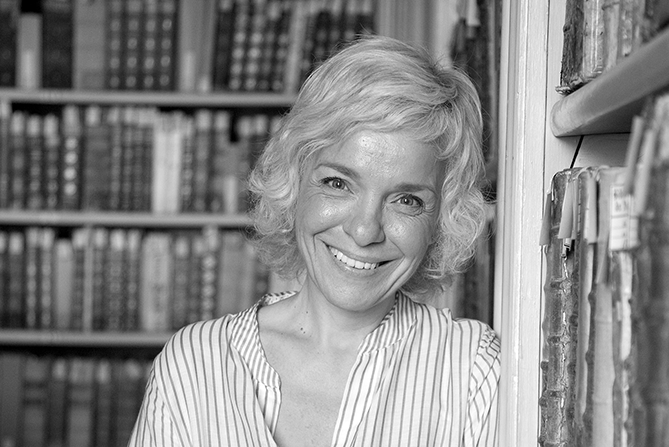
Dulce Maria Cardoso on ageing. Translated by Ángel Gurría-Quintana.
PEN Transmissions is English PEN’s magazine for international and translated voices. PEN’s members are the backbone of our work, helping us to support international literature, campaign for writers at risk, and advocate for the freedom to write and read. If you are able, please consider becoming an English PEN member and joining our community of over 1,000 readers and writers. Join now.
6 April
I moved into my mother’s house three days ago. I’m afraid of the virus, she said in despair over the phone. She added, It’s not only the virus, I don’t feel well, I don’t want to live alone any more, your father died so long ago, I’m tired. I packed a small suitcase with clothes, put my laptop in my rucksack, locked the doors of my home, and went back to the place I left almost thirty years ago.
The only thing I remember my mother ever asking of me and my sister was that we did not put her in a care home – I wouldn’t want my life to end in one of those places, she said. Other than that, she gave us everything she could and asked for nothing in return.
At the age of 80, my mother’s heart – twice-operated already – seems to be failing again. I keep telling her to eat; Food gets stuck in my throat, she replies. She has lost a lot of weight recently. She weighs 45kg – She is depressed, many old people have the same complaints, the psychiatrist explained to my sister. In the division of labour regarding my mother’s care, my sister is in charge of doctors’ appointments. Until February this year, my mother attended fitness sessions twice a week at the day centre, looked after the house and the garden, travelled by public transport from Cascais to Benfica to look after her great grandchildren, Tomás and Vicente. Despite the loss of appetite, the tiredness, the sadness, the indifference towards life in general, I don’t believe my mother is depressed.
7 April
This morning, I called Luís to confess that I am afraid. Of not being able to look after the person who always looked after me, of the work that lies ahead and that I cannot yet fathom, of not feeling I belong in this house, of having to stop doing what I want, of discovering that I am too selfish, of being a bad daughter. You mustn’t think like that, he said, but you do have a Herculean task ahead and you need to find someone to help you do it. Over the past three years, a large part of Luís’ worries have focused on ensuring his mother’s wellbeing. Almost all my friends who still have parents and are roughly the same age as I am face the same problem – what to do when the ones we love are unable to look after themselves?
Good Friday. It was never Easter without my mother’s home-baked folares. At her request, I ordered some yeast from the baker and bought eggs and dry-cured sausages. We were both in the kitchen, my mother was kneading the dough in the huge blue-glazed bowl, everything seemed to be as it had always been. I suddenly noticed the sugar mixed into the savoury dough with the cured meats, the eggs forgotten in some container, the liquor spilt over the kitchen workbench. In an unfamiliar voice, eyes suddenly extinguished, my mother said, I don’t know what I’m doing, help me. She sat on a dining room chair with flour-covered hands, an old doll tossed into the corner. And I stood there unable to help, fixed in place by the certainty that something inside her head had broken down.
I cannot sleep at night, and in my mind I write, I am losing my mother, pages and pages where there is space for nothing more.
10 April
Pope Francis prayed alone in front of the vast emptiness of Saint Peter’s Square. It’s like the end of the world, my mother said as she watched him on television, May God have mercy on our souls.
She is right: it feels like the world has been turned off. I record the passing days as if they were not passing. To avoid forgetting them? To exhaust them? We all record them, humanity once again in its adolescence, writing diaries, no longer child-like enough to ignore the fact that days are passing us by, not yet grown up enough to acknowledge that days mostly repeat themselves.
17 April
I need you to learn these three words by heart, madam, and repeat them when I ask you to, says the neurologist. My mother fails the test. She does not fail completely, but she fails enough. At the end of the appointment, the doctor says to my sister, Your mother has Alzheimer’s. I read so much about the disease to create the character of Eliete’s grandmother and I never imagined I would go through this myself. Irony does not sit well with me.
22 April
Yesterday my mother asked me to turn off the television when the number of Covid deaths was being announced on the news, All the old people are going to die, they put us into homes to kills us, she said to herself.
At night I dreamt of Jean-Louis Trintignant choking Emmanuelle Riva in the film Amour, and all day today I felt queasy.
Besides writing these scattered and clumsy notes, I have made sound- and video-recordings of my mother telling the stories she always told, the trip to Brazil aged eleven, her escape from my grandparents’ house with my father, the journey to Luanda, the struggles and the happiness of rural life. After lunch, I asked her to tell me some of the proverbs she knew. She refused. When I insisted, she laughed mischievously, Ask me no questions, and I’ll tell you no lies.
We picked loquats in the garden. I held the ladder while Pedro climbed it. My mother arranged fig leaves in a wicker tray on which I placed the loquats. Thank you, darling, my mother said unexpectedly.
28 April
It is my mother’s birthday. I never thought I’d make it to this age, she said, my parents died in their sixties, old people were younger in the past, even if they seemed older. Because of the pandemic we set up a table in the garden, beneath the fig tree, and kept our distance from one another. It was a perfect spring day. Tomas and Vicente ran around on the lawn before we sang happy birthday for my mother. Judas hanged himself from a fig tree after betraying Christ, my mother remembered, since then the shade of a fig tree has been the shadow of death. And she added quietly, I don’t want to die.
When everyone left, I looked over the photographs I had taken on my phone. It looked like a birthday lunch from earlier years. Images lie. Or is it our bodies that do? They repeat the same grammar of gestures, indifferent to what happens, and I am as equally surprised by how bodies appear to deteriorate so visibly when nothing has changed inside as I am by their determination to remain the same even when they are now other. Even so, of all the differences I tried to spot, the ones inflicted on us by the pandemic were the least conspicuous. We carry out the tasks that were once my mother’s, we do it with some difficulties, some arguments, some scolding. We carry them out poorly. My mother’s sickness is making our idea of the family sick.
1 May
My mother asked me to let her spend more time in the bathroom and started singing a song from her youth; We used to sing this at the grape harvests, she explained. I had never seen her take her time in the bathroom. Much less sing. She does not realise today is a holiday. Days are hardly distinguishable to her.
Over 1,000 dead from Covid in Portugal. The Directorate-General of Health announced that close to 90% are elderly. I don’t like the word elderly. It sounds like a euphemism for old and there is nothing wrong with being old.
27 May
My mother’s new neurologist believes my mother does not have Alzheimer’s – It’s a type of dementia, but it isn’t Alzheimer’s. He cannot find a reason for my mother losing so much weight. He proposes that we seek advice from a cardiologist and an internist. In any case, she says, your mother has a very serious illness; to be 81 is a serious illness in itself.
I ask myself why we are so much better at looking after bodies than we are at looking after minds. Minds and happiness. We cannot easily treat what we cannot see. Or what we choose not to see. The old were shoved off the stages on which modern life happens. Like the stray cats we no longer see on the streets because they are discreetly and secretly sick in some back alley. Nobody wants to know about them.
We only manage to get appointments with private consultants.
8 June
Bárbara calls to ask if I know when the new novel will be finished, I have no idea when I’ll be able to get back to it, I reply, I don’t have the time or the energy to dive into such a big project. Barbara, who is also caring for her grandmother, understands. To the inglorious domestic tasks that always took up so much of my time I now add my mother’s, looking after her nutrition, paying attention to signs of her illness, registering the changes in her memory, the walks around the neighbourhood, the gameshows we watch together, and so on. It is as if I am collecting many jobs. And I feel I cannot do any one of them properly.
20 June
When I entered the living room, my mother, seated on the sofa, was gazing attentively at the television, Are you watching the adverts, mother? I asked. Yes, she replied calmly. Rather than on the television screen, her gaze seemed to be fixed somewhere beyond, on an undefined point that her thoughts flowed towards. There were ads for a mobile phone network, a face cream, an electric goods store, a summer festival, a bank, a detergent, a travel agency. It was only when the reality show theme-tune started that I heard her mutter, I’m only good for dying.
Tomorrow is the beginning of summer.
14 July
In light of my mother’s overall weakness, the National Health Service Contact Centre referred her to the emergency services at the Cascais hospital. Even so, when we arrived the staff asked, discomfited, why we were bringing her in. They told us we should not have done it. After many hours, and various tests, they sent her home. Apparently there is nothing seriously wrong with her. But she is withering. Can the confused mind of someone who is so keen to live make her body so fragile?
17 August
My mother is quieter and less mobile every day. Lately, when I wake up, I go to her bed and lie down by her side until she calls for me. Today she embraced me, So lovely and warm, she said, it’s so sad to always sleep alone.
The ECG she had in a private hospital showed a clot on the surface of her prosthetic heart valve.
27 August
After we got the results from the raft of exams prescribed by the internist and cardiologist, they both advised that my mother would need a treatment that required her to be admitted to hospital. It was a long and expensive treatment, many thousands of euros, in the private clinic. We curse the health system, the pandemic, the unfairness of bodies. Exhausted, I ask my sister to take mother once again to the emergency services in Cascais. I wait for them at home. My sister calls shortly after. This time she was hospitalised, they will finally be treating her, she says, triumphant.
30 August
We cannot visit my mother because of Covid-19. We buy a tablet that we leave at the hospital so that we can speak to her and so that she can see us. Except that to make it work she needs the help of a nurse or a nursing assistant. We are allowed one video-call per day.
My mother’s house without my mother is violently sad. Everything in here hurts, her place at the table, the trees she planted, her immaculately made bed. But at least I have her one hour a day on my computer screen. Safe in our distance, I slowly caress her face, without the embarrassment that physical presence inflicts. She doesn’t feel anything. Words are more difficult. I don’t know what to say to her. Or how to say it.
28 September
My mother has been in hospital for a month. In layman’s language, she has a malignancy in her blood and an infection in her heart. Myeloma and endocarditis, in clinical language. In both languages she is seriously ill.
7 October
Suddenly, I realise how alone I am. Not because my mother is still in hospital, with death lurking, while Pedro has cycled out to Guincho beach. I understand, without properly understanding, that the neglect of our old is the mirror that disfigures the loneliness to which we are fated. Long before the virus, we were already confined: by our social class, our jobs, by the things we like, by the things in which we believe, by the things we buy. Everything serves to divide, to compartmentalise, to disengage. If we could only find ways to reengage, we would not age like that.
29 October
My mother is home again. She spent almost two months in hospital but managed to recover from her endocarditis. It is rare to see a patient with such a will to live, the doctor said. She came back high-spirited, chatty, wanting to do this and that. Once again she was our tireless mother. Until this morning she looked out at the garden and said, You see, darling, I had been so lost in the world for so long and then I ended up moving into the first house that I lived in with your father. When I managed to situate her in time and space, as recommended by the psychiatrist, her grey eyes welled up, Oh, darling, pay no attention, my mind is not good for much.
13 November
One of the carers who responded to my ad on OLX confessed, over the phone, that she does not much like the elderly. Until a few months ago she was employed in a hostel. We have to get work wherever we can, she said. The cancer charity Amor e Esperança told me how much it would cost to cover my mother’s basic needs, cleaning the room, bathing her, keeping her company, physiotherapy as optional: 1,800 euros per month including the relevant discounts. They were kind enough to let me know that, as I am an informal carer, I am entitled to a monthly 150-euro allowance.
30 November
One of Vicente’s classmates tested positive. All his classmates and their families have had to go into quarantine. As people said during the first wave, everything will be alright. In two weeks’ time the nursery children will all be back as if nothing had happened. Meanwhile, old people are still dying in care homes. All children are alike, the old are all old in their own way.
12 December
My father died 19 years ago. My mother did not remember the date. Ordering a mass on the anniversary of my father’s death was one of her most cherished tasks. I play down the forgetfulness and try to dispel the question that burns in me like a red hot iron, What if she forgets about us?
17 December
It is Pedro’s birthday and his parents come to have lunch with us. They are almost as old as my mother, but they can still look after themselves. I got my mother ready for the lunch, bathed her, dabbed her with perfume, fixed her hair, chose a nice dress, dressed her, and kissed her face, We’re ready.
18 December
In the living room, I am once again reviewing these notes. My mother is watching a daytime television show. She interrupts me frequently, forgetting I am working. I’ve been worrying about something, darling, she says, who is going to look after you when you get old? My mother has not given up on looking after me. But she lets me look after her. We are both happy like this.
By arrangement with Literarische Agentur Mertin, Inh. Nicole Witt, Frankfurt am Main.
Dulce Maria Cardoso, born in Trás-os-Montes in 1964, is one of the most important literary voices in Portugal. She spent her childhood in Angola and returned to Portugal in 1975, shortly after Portugal’s Carnation Revolution and Angola’s independence. She studied law, worked as a lawyer and wrote scripts for the cinema. The author has received numerous prizes for her literary work, such as the European Union Prize for Literature 2009 for Os Meus Sentimentos and the Portuguese PEN Prize 2011 for O Chão dos Pardais. The Return was awarded the Special Prize of the Critics 2011 in Portugal, and was selected as Book of the Year 2011. It has also been voted as number 4 of the 10 favourite books 2014 of the French financial newspaper Les Échos. Her most recent novel, Eliete – The Normal Life, was named Book of the Year by various Portuguese newspapers and shortlisted for the 2020 Prix Femina. In 2012 she was made Chevalier of the French Order of Arts and Letters.
Ángel Gurría-Quintana is a historian, journalist and literary translator from Spanish and Portuguese. He writes regularly for the books pages of the Financial Times. His translations include Other Carnivals: Short Stories from Brazil (Full Circle Editions, 2013) and The Return, by Dulce Maria Cardoso (Maclehose Press, 2016). His translation of Os Meus Sentimentos will be published by Maclehose Press in June 2021 as Violeta among the Stars.
Photo credit: Tiago Miranda
