Tag: archive

  • #PICTURE MY LIFE

    #PICTURE MY LIFE

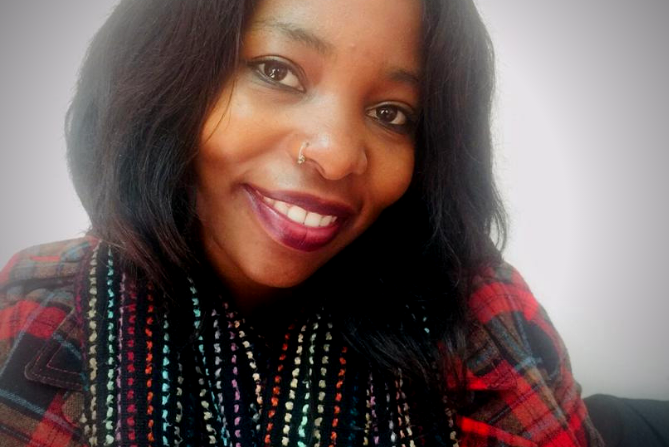
    In Zimbabwe, sexual harrassment and assault are rife. A group of women filmmakers is responding with a project to give victims a voice. Yandani Mlilo reports.

    A friend of mine used to say being born a woman is hard, and being born an African woman is an assigned curse in itself. With time and experience, I now look at the plight of women in my country and I wonder whether her statement was completely accurate.

    #PICTURE MY LIFE: a woman in a country where poverty has married unemployment and birthed a shrinking economy and hyper-inflation. Where the streets are filled with women with toddlers, selling goods on the side streets for their daily bread, playing cat and mouse with the authorities just to secure the few dimes they make. When the cat (always a man in power) catches the mouse, he will demand sexual favours from the mouse. If the mouse says no, she will either be forced to pay a bribe or get arrested – for they both know the undesignated trade, and the area the mouse was selling from, are illegal.

    Now when we look at this picture let’s take note that this is not only the fate of the women vendors but also of women entrepreneurs, women in media, in the film and arts industry and other social sectors. They are all facing this abuse, complemented by the downturn of the economy.

    In this chaotic misery, a breeding ground to abuse and take advantage of women is strategically created. These cases go unreported and ignored as if it’s all a fallacy.

    We, a group of women filmmakers of Zimbabwe developed a project that will help to generate conversations about the magnitude of sexual violence perpetrated against women in the public space, with the aim of challenging all forms of sexual harassment. We call these films #PICTUREMYLIFE – ME TOO SPOTS. They are recorded and screened in different places.
    There is a need to acknowledge and address the abuse of women rights and how it has been normalized in Zimbabwe. It is heart-wrenching that women and men of all ages still find it difficult to open up and actually start talking about sexual abuse… a depressing reality.

    During one of the talks we organised, one woman pointed out that ‘it’s hard to report rape cases because at the police station they will probe you with questions like, what were you wearing, why were you there, are you sure you were raped because you do not look like the type that can be raped, and that in itself causes one to internalise these cases.’

    The interrogations are taunting and dehumanising: as if to say that when someone is sexually abused, it’s something they go looking for.
    This is what happened to Tabetha, who fell prey to the same perpetrator twice. Only now that her children are grown and only through this project has she found her voice. One wonders how many souls like Tabetha take their trauma to the grave, how many perpetrators walk scot-free. It is about time to build a community of advocates, driven by survivors, in order to create solutions which actually fight sexual violence in their communities and work spaces.

    Whilst it’s important to create conversations and disrupt systems that allow for the global proliferation of sexual violence, we must not forget the survivors who are still finding their pathways to healing. Having gotten the stories straight from the horse’s mouth, I can say that it takes so much courage to speak out in such a challenging society. Imagine, having had to carry and suppress pain for a long time, to then have an opportunity present itself, a platform where one just unloads all that’s within. The feeling is therapeutic. Although most are reluctant to retell their story after the first release out of fear of stigma and discrimination, and also in order to avoid the ordeal of re-narrating the story which evokes the trauma all over again, still a profound impact on the victims mental health is evident from finally voicing their ordeal.

    As Tarana Burke, the originator of #metoo, stated, ‘On one side, it’s a bold declarative statement that “I’m not ashamed” and “I’m not alone.” On the other side, it’s a statement from survivor to survivor that says, “I see you, I hear you, I understand you and I’m here for you or I get it.”‘

    We have a rather oppressive proverb in African culture which says that a child is to be seen and not to be heard. In Zimbabwe, this also applies to the cases of women: in this patriarchal society women are still equated to children. The sacredness of rape culture is a notion that needs to be shattered. We need to stop beating about the bush and labelling it a female problem. Within our society we have a pride of lions known as the ‘gatekeepers’ who go to extreme lengths to bury the truth under the guise of social preservation. But what preservation is there when an 11-year-old gets raped and the system supposedly protecting her takes ages to deliver justice to her… if ever? What about the psychological scars on her and her mother which have no guarantee of healing? The whispers on every street wall spotlighting her as the ‘child raped in the year xxxx’? These are the walls we are working on breaking down.

    We are in the process of creating a ripple effect where as Zimbabwean women our voices echo as one to STOP sexual abuse against women. We might not be at a place of privilege compared to the rest of the women in the world, but we have tolerated being victims long enough. Now I can confidently go back to my friend and say ‘I guess it’s not a bad thing being born an African female because we have the ability to create and influence change around us.’


    Yandani Mlilo is an artist, creative writer, feminist and LGBT activist from Zimbabwe. She has published a number of articles of note. She published a short story anthology titled Family Portrait. She also holds a Diploma in Social Work from the Women’s University in Africa (WUA). Her journey has inspired her to form a trust known as VUTIVI (knowledge) initiative Trust which uses art as a human rights advocacy tool.

    For more information on on Picture My Life – #metoo Zimbabwe, log on to
    www.icapatrust.org and leave us a message.
  • From Despair to Consciousness

    From Despair to Consciousness

    In April 2019, #metoo took hold of social media in Mexico. In response, a collective of women working in publishing released a statement with specific demands for harassment-free spaces, workplace protocols against sexual and emotional violence, and equal representation and pay in their diverse professional spaces and activities. Gabriela Jauregui reflects on #MujeresJuntasMarabunta.


    I write to you from this side of the screen, from this side of the page, from the despair of having lived in fear and having at the same time broken with that fear. I write to you with a radical tenderness for others and also for myself, which in my body and my mind implies ‘not to collapse when faced with our contradictions’ and also ‘not to allow our existential demons to become permanent cynicism’ (from the Radical Tenderness Manifesto). 

    Each word I write every single day, each word which you are now reading on this page, implies time stolen back from fear.

    That fear stole my peace, my health, my writing time and my time for thinking – for I am a woman who, like many others, has survived the physical, psychological and economical violence of an ex-partner. Amongst many other things, that fear silenced me. But, as my mother used to tell me when I was a child: ‘Do not fear fear.’ Now I am taking this and more back from fear. 

    So here I go, stealing these words from fear and silence, on my own time recovered, echoing what Argentinean anthropologist Rita Segato has written in a speech regarding feminism, literature and #metoo movements in Latin America, where we are moved from the feeling of ‘despair to one of consciousness’, and where ‘our logic must be tragic, in the sense that it can coexist alongside inconsistencies, with incompatible truths, with the equation a and non-a, both opposite and true and simultaneous. And therefore always, always equipped with the vital intensity of disobedience.’ 

    What I can disobey now, what we all disobey in our tragic and inconsistent and collective logic, is patriarchy’s pact of silence.

    We can also disobey the rush of social media, which demands that we act quickly and sometimes in ways that are neglectful of ourselves and others; and we continue to disobey those who say ‘what women should be doing is’, those who say ‘go file a lawsuit with Papa State so He may defend you.’ 

    In the months since the #metoo movement started in Mexico, several writers, many (older) (famous) (male) writers have written articles saying we should all move on to the post-#metoo era (reminding me of those who insist that we should ‘just get over it’ and move into the post-racial era, right?); or that now that women have power they don’t know what to do with it; or that instead of burning men at the stake women should go file proper legal suits within the official judicial system. 

    (They often fail to note that in Mexico, impunity for crimes in the justice system is estimated at 95% by the most conservative studies, sometimes up to 99% – and when women are involved this is especially the case.) 

    Many, if not all, of these male writers who want to ‘move on’ have argued that quotas to achieve parity are absurd, that women do not need these ‘humiliating’, ‘useless’ measures (even though in literature, most prizes and publications are overwhelmingly male-dominated, still, today, in the 21st century, yes). But they stress that we can count on their solidarity with regards to femicide.

    Well thank goodness for that, dear colleagues, we are grateful for your moral support at the very least in that regard – especially in Mexico where the femicide rate is currently at 9 women per day.

    The questions I ask these writers is this: do you honestly think that radical violence against women remains completely isolated and unlinked from the privileged culture of literature? Does the world of culture not reflect and mirror what happens on the streets? Does our writing not generate narratives and uphold certain world views? Or is it actively fighting this reality? Is it any surprise then, really, that abuses of all sorts are committed by men in positions of power in the literary field, too?

    And despite everything, no, our logic cannot be that of the punitive State, cannot be that of the voraciously capitalist social media. Women cannot speed up the process (as much as we might sometimes like to, for this is a painful process for everyone). And so, if #metoo speaks to the State, as Segato says, but also to the voluble abstraction of Public Opinion, in Mexico, a sister hashtag was created almost simultaneously: #MujeresJuntasMarabunta. This hashtag does not only speak to the State or Public Opinion, it speaks to us, men and women and gender non-conforming people, and interpellates us in a horizontal, ineluctable and intimate way.

    (The hashtag’s name is derived from a well-known expression in Spanish stating, Mujeres juntas, ni difuntas – loosely translated as women together, not even dead – and mutates it to Mujeres juntas, marabunta – women together are marabunta, or legion).

    Referring to both sister hashtags, but, and also, to the enormous amount of organizing and community involvement behind both, in The End of Women’s Silence, Cristina Rivera Garza asks,

    Did we know these stories? Of course we did, sometimes by word of mouth, sometimes in our own flesh […] Were the rest aware? Of course they were, sometimes by word of mouth, sometimes in their own flesh. […] Thus amplifying voices and extending the echoes of other shouts, all these stories dressed in sounds and letters with proper and improper names, in the public sphere, including twitter, took on a weight that in many ways felt like horror. […] It was a world founded on women’s silence. It was a world that required the most intimate silence from women, there where they are fatally wounded, in order to keep functioning. 

    Ergo we disobey.

    To me, and I am sure to most of us, everything that has happened with the #metoo writer’s movement and beyond, does not have the aim to destroy anyone’s lives – neither women’s nor men’s – but rather to help make visible a structural violence and to build a world where, as the Zapatistas would say, many worlds can coexist.

    A world in which the coupling of fear/power is not what mediates our relationships, but rather desire, openness, vulnerability, curiosity, imagination. 

    Indeed, if ‘in the beginning was the word’ and it is from and with words that we create and reflect upon the world we inhabit, that we imagine other possible worlds, then what has been made clear is that we do so in the midst of violence that reflects the general murderous macho violence of our countries. But it is also clear that, despite that violence, women keep writing. And how do we keep writing? Together.

    As Cristina Rivera Garza continues in her text, ‘Our stories, jumbled. Our voices, all at the same time. It was so difficult to distinguish between what was your own and what was everyone’s, we will say with that great smile on our lips inspired by the community.’ This diverse, plural community of women writers, translators, editors, festival directors, press and media managers, and all women working with words that make up the #MujeresJuntasMarabunta, seemed unheard of until now. Now this community unites its voices and lifts its communal pen to change the structures that kill us, disappear us, mutilate us, silence us, invisibilize us. As the Collective Words of the #MujeresJuntasMarabunta state, ‘We are generating a counternarrative for gender equality. We are rewriting the future.’ 


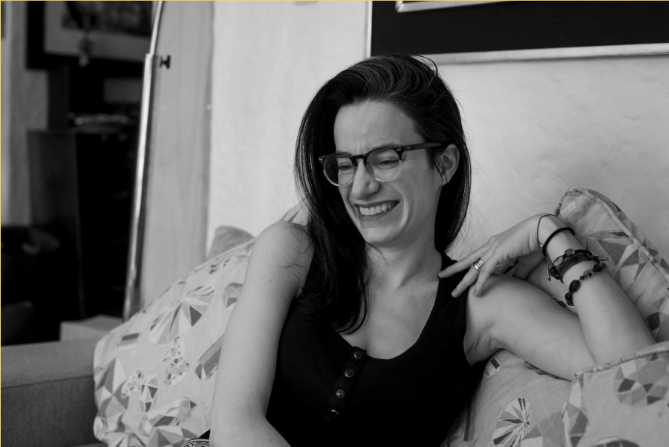
    Gabriela Jauregui (Mexico City, 1979) is the author of the short story collection, La Memoria de las cosas (Sexto Piso), the hybrid books ManyFiestas (Gato Negro), Leash Seeks Lost Bitch (Song Cave), and the poetry collection Controlled Decay (Akashic Books/Black Goat Press). She is also coauthor and editor of the feminist anthology Tsunami (Sexto Piso) and Taller de Taquimecanografía (Tumbona). She holds a PhD in Comparative Literature from the University of Southern California and and MFA from the University of California Riverside. In 2017, she was selected as one of the best writers in Latin America as part of the Hay Festival’s Bogotá39 list. She currently lives in Mexico City.

    For more about the women writer’s collective actions, please check out #mujeresjuntasmarabunta and read the statement.

    Photo credit: Víctor Benítez

  • Editorial: women together are legion

    Editorial: women together are legion

    This issue of PEN Transmissions has been a long time coming. It takes its name from the #MujeresJuntasMarabunta movement in Mexico, a group of women working in publishing who, in the wake of #metoo, are pushing for specific changes, from harassment-free spaces to workplace protocols against sexual and emotional violence and equal representation and pay.

    In the UK, a 2017 Bookseller survey found that over half of the respondents had experienced harassment. A code of conduct for the book industry, as promised by trade bodies, was slow to materialise and finally published in December 2018.

    Over the past few years, I’ve had many, many conversations with women who experienced harassment in the workplace: there was the translator who sent harassing emails, or the other translator who wouldn’t stop calling your office number; the men who kiss you against your will at work dinners, the men who ‘take advantage’. And so I am left with questions. Will a code of conduct be enough to support freelancers, who are not protected by HR departments or even a network of office colleagues, and are at the same time dependent on others for employment opportunities? Will a code of conduct published by and for the trade bodies for publishers, agents, booksellers and authors be taken on by other organisations working in the literary sphere, such as charities or events spaces? Is a code of conduct enough? Who enforces it?

    I don’t have any answers, but I do have regrets. There is always more to be done, there are always missed opportunities. At last year’s conference of the American Literary Translator’s Association, Corine Tachtiris and Susan Bernofsky organised and moderated a panel entitled Us Too: Sexism and Sexual Harassment in the Translation Profession. There is enormous value in building solidarity and community in a public space, especially for freelancers.

    As I was working on this issue, I realised that what all the pieces had in common was not only #metoo: all the writers featured are part of a community that aims to amplify the voices of those not heard by wider society. They call out power structures, whether they be sexist, racist, imperialist or – all of those things. Nina Leger, Yandani Mlilo and Gabriela Jauregui discuss how writers, filmmakers and other artists have responded to #metoo in France, Zimbabwe and Mexico: by building community, giving voice to victims, and challenging traditional gender roles.

    In this month’s interview, Meena Kandasamy, feminist activist and author of When I Hit You: Or, A Portrait of the Writer as a Young Wife, points out how translation can be a means of challenging Western notions of feminism, assumptions that ‘all of us [Indian women] are in need of rescuing’. Her recent work on Desires Become Demons, a chapbook showcasing poetry and essays by four Tamil writers, showcases voices – and feminisms – that are ‘not amplified or picked up easily within the Anglophone discourse’.

    I hope you find this issue of PEN Transmissions thought-provoking.

    – Theodora Danek, editor

  • Milkshake tears

    Milkshake tears

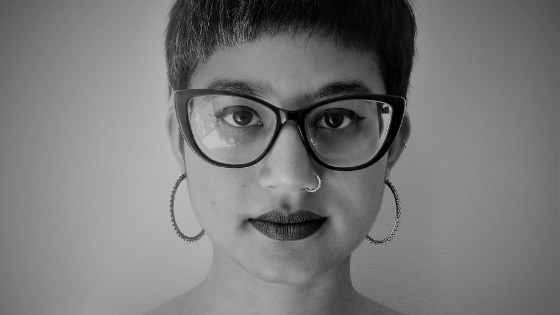
    Isha Karki interrogates white tears, milkshake victimisation, and how to resist apathy in the age of Anything Can Happen and Things Will Get Worse


    A few days ago, I watched Theresa May’s resignation video. Nothing she said particularly resonated with me; what struck me were her unexpected tears. I turned to my sister and said, ‘She seems like somebody’s grandma.’ As soon as the words were out, I knew something was off about them. As the day wore on, I thought about conversations around white feminism, its myopia and elitism, about the weaponisation of white women’s tears, eliciting sympathy and avoiding accountability. I thought about May’s legacy. As I write, I am thinking about how I’ve begun this essay by focusing on May’s tears – and how telling that is.

    I can’t say I started off from a place of hope when May came into power. Despite proclaiming herself a feminist, she was never, and will never be, a feminist to me, even as I acknowledge the gender discrimination she faced whilst in power: the gross scrutiny of her body and her clothes, the ‘Maybot’ moniker, and the hyper-focus on her lack of emotions. Yet, she held the most powerful position in this country. She will have a cushy life, and will no doubt go on to do more damage.

    The focus on May’s tears, and by extension her ‘humanity’, diverts from her legacy of violence and austerity.

    When we demand sympathy for her, we are centring a white woman’s tears in a conversation that  should instead focus on her legacy of harmful immigration and detention policies, the Windrush scandal, the Grenfell tragedy, the dehumanising conditions of Yarl’s Wood, the funding cuts that continue to target the poor, working-class, and the differently abled. May’s co-option of the most superficial language of feminism – highlighting her position as the second female Prime Minister – asks for sisterhood by paying lip-service to the idea of feminism. May’s policies did systemic anti-feminist work and showed an utter disregard for the dignity and lives of the most vulnerable. Her elite white version of feminism is not my feminism.

    The focus on May’s tears is like the milkshake discourse all over again. The constant focus on The Wrongs of the Milkshake is draining and demoralising. It seems more attention is paid to the decency and humanity of those who spout hate speech than there is to the real violence of their fascist ideologies.

    The Wrongs of the Milkshake narrative detracts from the structural oppression of the marginalised, from the normalising of white supremacist rhetoric.

    Instead, this narrative confers a badge of victimhood to the ‘injured’ party and offers them a platform to speak on that victimhood – after all, their freedom of speech must be protected at all costs. So, the likes of Nigel Farage get their own prime time radio shows, and a whole Newsnight feature is devoted to Tommy Robinson in his favourite guise of victim. Meanwhile, ‘funny-tinged’ black and brown bodies are, as tokens, invited on stage to Question Time and Good Morning Britain debates to prove the existence of racism or the personhood of immigrants. Media bastions like the BBC and Sky continue to evade criticisms of legitimising abusive atmospheres, even when claimed by figures like Diane Abbott, whilst still expecting the Afua Hirsches of this world to, once again, take on the burden of explaining racism. How to nurture hope when the loudest voices in the country, with the largest platforms, financial backing, and political clout, wilfully appropriate and perpetuate the Milkshake narrative?

    May’s resignation has led to yet another liminal space of uncertainty – and dread. While we’re waiting at the cusp of change, I can’t help thinking of my upcoming trip to the States. I have the privileges that come with a British passport – all I had to do was apply for an ESTA that costs $14 – and yet I am conscious that I will be entering Trump country for the first time. We all know that border spaces are notorious for racialised profiling. To not be nervous that Something Could Happen is a privilege that, as a brown woman, I can’t afford. The political limbo we’re in, in which we wait for a new Prime Minister and for the exact terms of Brexit to seal our own borders, evokes the same deep unease.

    Who will be the next ‘leader’? A huge part of me does not care. One of the leading options is a man who thinks Africa would fare better under colonial rule and calls Muslim women in burkas letterboxes.

    With the Brexit vote, Trump’s election, Farage winning more than 30% of the vote in the EU elections, we have seen that Anything Can Happen and Things Will Get Worse.

    I write from the same place of Not-Hope as when Theresa May became the second female Prime Minister. Having seen the establishment launch a divisive campaign fuelled by racist propaganda in the service of party interests, I am filled only with contempt and disillusionment. Before I cast my vote for the EU elections, I thought: what does it matter? Now as we wait for the next leader, I think: what does it matter? The conversations happening in mainstream politics are so removed from my everyday life that it is easy to ask that question and concede to apathy.

    And yet I want to resist apathy. I know it is important. Apathy, too, is a privilege – though I appreciate that for some it is survival.

    How to then contain that sense of helplessness and hopelessness? I believe it is important to hold on to anger. To think about our everyday impact. To focus on the little things. I will continue writing, dissecting politics and popular culture with my sister, having difficult conversations with family about right-wing views. I will consciously support loved ones – and myself – through mental health struggles. I will amplify marginalised voices, support alternative media outlets, ask others what they need, read critically, and always say This is Not Good Enough.

    I write from a place of Not-Hope and disillusionment with the establishment, but I also write from a place of hope for the rest of us in our everyday lives.


    Isha Karki is a writer and freelance editor living in London. Her short fiction has appeared in Lightspeed Magazine, Mslexia and The Good Journal, and is forthcoming in On Relationships, Rosalind’s Siblings and Sunspot Jungle. Her work interrogates the politics of race, cultural identity and sexual violence, and is informed by her Nepali immigrant experience. Her story ‘Love’ is forthcoming in the anthology On Relationships. Support the Kickstarter here. She can be found on Twitter @IshaKarki11.