Olivia Laing discusses the power of art in an emergency, the role of bad art, and our current weather.
PEN Transmissions is English PEN’s magazine for international and translated voices. PEN’s members are the backbone of our work, helping us to support international literature, campaign for writers at risk, and advocate for the freedom to write and read. If you are able, please consider becoming an English PEN member and joining our community of over 1,000 readers and writers. Join now.
Olivia, how would you describe the weather right now?
Sunny but cool/terrifying.
Could you talk a little more about the individual, emotional, social and political changes art can effect? Your view on this, which frames Funny Weather, is very compelling.
Art is a tool for thinking with. It forms how we view the world, and it’s capable of enlarging our sense of reality and expanding our knowledge of other ways of thinking and being. It’s political in the sense of being available as a tool for protest and activism, and I write a lot in the book about how it was used in that way during the Aids crisis in particular. But it’s also political in that it continually offers new perspectives, new ways of seeing, other consciousnesses with which to view reality. A painting can’t stop a war or end climate change, but a people who are engaged with art, and with all the thinking art engenders – I don’t think there’s any limit to what they might achieve.
What does bad art (maybe such valuations are unhelpful) do for us? Are portraits of dogs political?
If they’re by George Bush, yes! I love this question. I kind of love bad art. If you want to make anything – and especially anything really new and original – then you always risk making bad art. And the idea of bad art is political in itself. Think of the Nazis and the concept of degenerate art. But also what looks to one culture or generation like terrible art might emerge later as fascinating, complex, artful in a way that was invisible at the time. Philip Guston’s cartoonish, scrappy, overwhelmingly pink paintings of the Ku Klux Klan were met with ridicule at first; now they’re regarded as a touchstone of a kind of political art that isn’t about reportage, but about uncovering the emotional forces driving racism and hatred.
Much of your critical work operates through biography (though also, in short form, often resembles something of a short story). What draws you to biography? And how does it relate to Sedgwick’s idea of paranoid and reparative readings of an artist’s work?
I’m interested in how the work of art emerges, and what questions the artist is trying to solve. I’m interested in the work itself, of course, as an aesthetic object, but much more in how it exists within somebody’s real life. That’s what excites me. I’m not a biographer, but I do use biography as a way of exploring how different kinds of forces – alcoholism, loneliness, homophobia – operate on a very intimate level, and how people have managed to resist or create in inimical circumstances. That’s Sedgwick’s argument in a nutshell, and I think understanding those forces and how to resist them is what most engages me as a writer.
You talk about going ‘scouting’ back into work from, say, the late twentieth century, to ‘hunt for resources’ that might be useful now. Are there particular works of your own that you find yourself often returning to?
I don’t really reread my own books. It’s a bit like looking in the mirror, and it makes me feel slightly queasy. Sometimes I might revisit an idea – when lockdown started, I went back to The Lonely City because I wanted to see what I’d written about Aids and apocalyptic art. But mostly I’m more inclined to look outward. I want my work to move on, not repeat itself. That’s the worst thing for me – the idea of churning out the same book again and again. I deliberately wrote Crudo to smash the idea that you might know what to expect from my books – a slightly sad narrator, maundering around thinking about dead artists. I felt a savage impulse to destroy it, to open up new ground to travel into.
If Crudo is raw, Funny Weather is a well-aged platter. What does seeing a politically and culturally extraordinary decade traced through a curation of your writings allow us to do? Was there a strangeness in reflecting on your own work in this way? I suppose this is also a question about looking back and looking forward through writing/reading, and how that relates to existing in a difficult-to-process moment through writing/reading.
A platter of lovely smelly cheese, thank you. Funny Weather arose very spontaneously, and in a way it’s a partner to Crudo. I felt like Crudo was a way of capturing intense anxiety and paranoia about a political moment, and, after it came out, I found myself reflecting on what art could do to help with that anxiety. When I looked back through my old essays, I realised the idea of art as an antidote to chaos, despair and malign political realities was an animating impulse in much of my writing, and I liked the idea of putting it together in one place – as an introduction to artists I love, but also to possibilities. New ways of living; new ways of thinking; people who’d lived with remarkable waywardness or vision. It felt good to gather together all these people who’d inspired me, and especially to share them.
‘Drink, drink, drink’ – a wonderful essay on women writers and alcoholism – is included in this collection. After The Trip to Echo Spring, your book on men writers and alcohol dependency, did you feel you had to write this?
When I toured Echo Spring, I was constantly asked why I hadn’t written about women. I grew up with a female alcoholic, and the subject was too close to home at the time. I couldn’t bear it. But a few years later, when I decided that I’d start looking at some of the stories, it was electrifying. I do kind of wish now that I’d written that book instead. These women – Jean Rhys, Patricia Highsmith, Marguerite Duras, Jean Stafford, Jane Bowles – were drinking for very different reasons to the men. They were drinking because of their pasts, yes, but also because of the impossible constrictions demanded by twentieth century misogyny, the mutilations that their artistic and emotional lives were forced to undergo.
In an interview with Hilary Mantel, included in Funny Weather, you ask her if her success has changed things. I want to ask you the same question, particularly after the successes of Crudo and The Lonely City. Though this book gathers what we might call your ‘journalistic’ writing from the last decade, would you ever want to leave short-form arts and culture criticism/journalism behind?
I’m not successful on a Mantel level! But I do feel extremely grateful to have a readership that is so passionate and engaged. As for short-form writing, it’s such a brilliant antidote and counterweight to book writing, where you might be slogging away at the same project for years. I love writing shorter essays, especially catalogue essays for art shows – the energy and tone is different, and the sense of shaping something and bringing it to completion is so satisfying that it almost drives or fuels the longer projects too. Essays are also a space to test out ideas. For example, I started writing the Funny Weather Frieze columns as I began my new book, Everybody (which, btw, I just finished on Friday!). They served as a space for thinking through some of the issues and characters in a more informal, exploratory way.
Funny Weather is remarkably hopeful, hospitable and collegial. How important is artistic friendship in this political era, and how much hope do you have at the moment?
For me it’s crucial. This is a book that’s so much about conversation and collaboration – both person-to-person with other living artists, and with works from people who are no longer alive. Somebody said to me that it’s like I’m assembling a community, and I think that’s true, but it’s very much one that’s also open for the reader to participate in. I want to share the things that sustain me. It’s a very frightening moment, but I am hopeful. In fact, I’m just about to start a new book on utopia, to explore the possibilities of hope and reinvention. I’ve been terrified about the oncoming catastrophe of climate change since I was a teenager, living on road protest camps, and though this spring is a very bleak moment, the one sliver of hope I have is that it’s shown us all, globally, that the kind of drastic changes needed to halt or slow climate change are not impossible. That’s a huge thing, with immense potential for the lives of humans and the natural world. So yes, I’m anxious and cynical, but I’m not without hope.
Is there any sort of emergency – any sort of weather – in which you think art couldn’t be a palliative (if we wanted it to be)?
Well: art is above all a tool for thinking, and I can’t think of any situation that doesn’t require us to think deeply and to use our imaginations. I think art is always necessary and always valuable. It’s not a luxury, it’s a vitality.
Olivia Laing is a widely acclaimed writer and critic. She writes for the Guardian, The New York Times and Frieze among many other publications. Her first book, To the River, was shortlisted for the Ondaatje Prize and the Dolman Travel Book of the Year. The Trip to Echo Spring was shortlisted for the 2013 Costa Biography Award and the 2014 Gordon Burn Prize. The Lonely City was shortlisted for the 2016 Gordon Burn Prize and the National Book Critics Circle Award for Criticism and has been translated into fourteen languages. She lives in Cambridge.
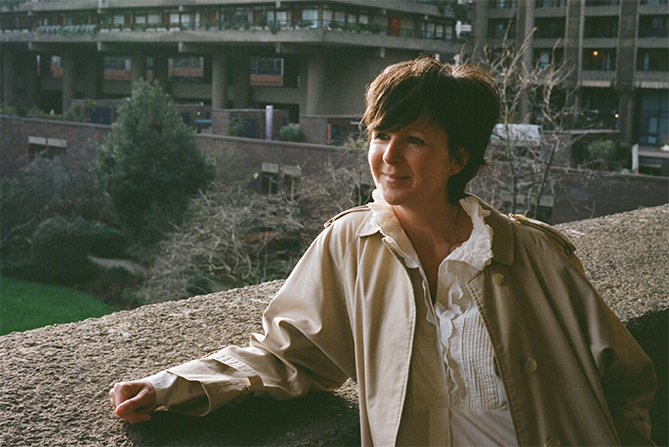
Photo credit: Sophie Davidson
Interview by Will Forrester, Editor.