Tag: Austria

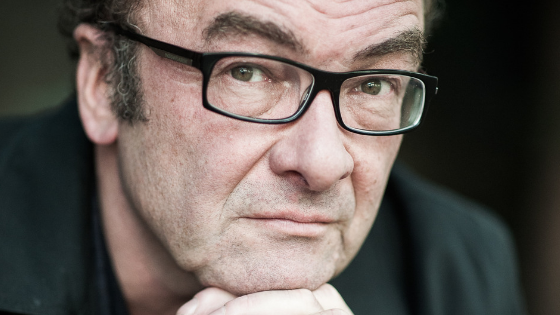
  • Blood on its hands: a conversation with Robert Menasse

    Blood on its hands: a conversation with Robert Menasse

    Austrian writer Robert Menasse’s The Capital (translated from German by Jamie Bulloch) has been called ‘the first EU novel’. We talked to him about political writing and his belief in the EU as a transnational project.


    What do you think about the relationship between politics and literature? Is literature political?

    At the moment when literature does justice to what it claims for itself, even the literature of apolitical authors is political. And for a simple reason: literature, like art in general, is one of the possible pathways to truth. And the truth is always revolutionary – because we live in ideologically complex systems of perception and have, consciously or unconsciously, veiled reality around us. To that extent the search for truth alone is a political project. There are people, artists, writers who do this consciously, and there are artists who do it unconsciously, with an incomprehensible and inexplicable instinct. That is the difference between Kafka and Brecht.

    Give me an example from contemporary literature.

    Let me answer that metaphorically. There are artists who build their art like bees build their honeycombs. The bees have no plan, but they build in infinite perfection. And then there are artists who are architects. Everything already exists in their heads. They can reflect on what they do, they can plan it. Of course, there are also mixed forms. There are people who already know what they are doing, but leave a lot of room for instinctive things. In contemporary literature I’m observing an interesting phenomenon. Many authors started their careers with certain political commitments. And they have all now become silent. There is almost an unspoken consensus in this generation: that there is no point. One of the last politically committed authors was Günter Grass. When he died I said that a literary epoch had come to an end.

    For my part, I was influenced by authors like Dickens, Èmile Zola, Balzac and Victor Hugo; later also by Latin American literature, which is a great narrative literature, always in opposition to a multitude of dictatorships. So it’s no surprise that I am who I am now. However, I am not at all interested in turning myself into a schizophrenic person: I don’t want anyone to think that I’m an artist one day and an activist the next. When I get politically involved, I do so as an artist. That’s important to me.

    It sometimes feels to me as if certain contemporary ‘national’ literatures are more political than others. 

    Well, let me give you an example of political literature from the UK where there is no obvious political intention, but where there clearly are political and analytical implications: Kazuo Ishiguro’s The Remains of the Day, which in a way tells the story of the fall of a political empire through a single character.

    But Ishiguro wrote this novel twenty years ago. His work has changed since then.

    I think that this mood (of not engaging politically via your art) is really getting stronger and stronger – to my great regret. It’s as if people think, ‘When everything is going down the drain, then at least I want to create something beautiful, but there is no point in getting involved in anything.’ On the one hand that is regrettable. On the other hand I’m actually quite happy when certain artists don’t say anything anymore because I have noticed that they are simply not very well-informed. When you talk about the EU with writers, you notice that they simply have no idea what’s going on. Then again, I am very grateful for Elfriede Jelinek – for either putting her finger on the wound or, in an ingenious double stroke, for throwing salt into the wound.

    Jelinek and you are of a certain generation of politically engaged writers. For me that begs the question of what comes next – in my generation, for example.

    Don’t take this the wrong way, but that is irrelevant. In the end, we have to judge the artistic and aesthetic quality of a work – and its implications, no matter what the author thought. I always like to remember what the Hungarian philosopher Georg Lukács said: that a work of art is only a work of art if it is smarter than the author.

    Let’s talk about the nation state. If the nation state really dies, and this is the ideological goal, then many hurdles must be overcome that have to do with the indoctrination of the people. What must happen for that to happen? I am thinking above all of the media, sport, etc., all of which are in tune with the fact that the nation state is important.

    One thing must be said in advance, you cannot abolish the nation state. You can’t sit down and dismantle it. It is a process that operates, just like all historical processes, with many small steps. At the moment when the nation state can no longer do what we expect it to do, it will also stop functioning as a source of identity. Because it’s not simply down to the idea that I need a national identity, because otherwise I wouldn’t know who I am. We expect the nation state to fulfil certain tasks. There will indeed be desperate attempts to equip it radically with everything we expect from it – a brief flourishing of nationalism. But it is clear that it will die in the long run because it can no longer solve many problems: finance, the internet, ecological problems, they are transnational. What we need instead is an upgraded, functional European parliament.

    We must also bear in mind how young the idea of the nation is. My grandparents lived in a state and society that had no national idea, but that worked on the basis of a common market, a common currency, a common bureaucracy: the Habsburg Empire. It was destroyed by nationalism. Nationalism as an idea has blood on its hands.


    Robert Menasse was born in Vienna in 1954 and studied there before moving to Brazil, where he lived for six years as a professor of literature at the University of São Paulo. He is the author of several novels translated into English, including Wings of Stone and Reverse Thrust, and of a work of non-fiction, Enraged Citizens, European Peace and Democratic Deficits: Or Why the Democracy Given to Us Must Become One We Fight for (2016). In 2017 he was awarded the German Book Prize for Die Hauptstadt (The Capital), which is out in English now, translated by Jamie Bulloch.

    Interview conducted and translated by Theodora Danek. With thanks to Corinna Zifko for participating in the conversation.

  • The Mussel Feast

    Birgit Vanderbeke introduces PEN Atlas readers to her book The Mussel Feast – a subtly political work that is steeped in metaphor – and her experience of penning her first novel at such a poignant moment in German history

    Translated from the German by Jamie Bulloch

    In the beginning there was a discussion between the future author of The Mussel Feast and her friend Christiane. It was one of those discussions which used to take place around the kitchen table with a bottle of Italian red wine.

    The question being debated was whether the ‘mussel’ was a suitable feminist symbol for genital womanhood, as Christiane thought, or just a poor, vulgar image, as the future author said.

    Their discussion ended with the words, ‘Just you watch, I’ll show you how a mussel metaphor works.’

    All harmless stuff so far.

    That was in summer 1989.

    In August, the East started to collapse. The people did a runner, gathering in the embassies in Prague and Budapest. Demonstrations were held on Mondays, these demonstrations got larger and larger, and during that month I wrote The Mussel Feast with the television on all the time.

    The book that resulted belongs to the genre of German ‘Wendeliteratur’, and it has an outsider status within the genre because it is the only book on the subject of ‘reunification’ which was written before the fall of the Wall.

    At the time it was not difficult to speculate on what the future of the GDR might be, as there were only few options. Either the Central Committee would decide to act against the demonstrators as the Chinese had shortly before on Tiananmen Square, and the whole thing would turn bloody – which, given the global political climate was hard to imagine, although it could not be ruled out altogether – or the outcome would be what the poet Volker Braun described succinctly and conclusively a year later (i.e. after it had all happened) in his poem ‘Property’: ‘My country is going to the West’.  

    I must have sensed that this is what would happen. Of course I didn’t know what it would feel like when this country went to the West, but I could remember very precisely what it had felt like when I had come to the West (I didn’t go, I was brought along, aged five at the time). So, without having an exact idea of what form the impending political developments would take, I was about as sceptical of them as Volker Braun would be sad a year later.

    In March 1990, with the final election of the East German parliament, which was also the first democratic one, the history of the two Germanies took its course. Also in March – parallel to the momentous events – the history of The Mussel Feast took its course. The book found a small, but classy publishing collective in Berlin, which immediately sent it, without the author’s knowledge and only just in time, to a member of the jury for the Ingeborg Bachmann competition.

    I was invited to the competition in Klagenfurt, but didn’t want to go, because although I had the courage to write, I lacked it to appear in front of a television audience. In five minutes I learned what PR is and also that small, but classy publishing houses need it, too.

    I won the prize by accident because the favourite was disqualified, upsetting the balance of the jury. In such cases they like to get behind outsiders. I was a no name. A joker.

    On 31 July 1990, the day of the currency reform, the unknown Birgit Vanderbeke became, at a stroke, a well-known author in the German-speaking world.

    The Mussel Feast appeared at the end of August and was immediately pulled to pieces by everyone – furiously, sometimes angrily, sometimes polemically and spitefully, too. Even in Germany, where reviews can often be vicious, such an onslaught is rare for a debut novel. On the verge of reunification, German euphoria was at its zenith. Although my book was read and butchered as a family story, there was something else in there, something which wasn’t just private, but political. And in no way euphoric.

    I was not the only one to be attacked; that same summer the German literary critics did all in their power – and with some success – to destroy the ‘grand old lady’ of East German literature, Christa Wolf. In her novella, What Remains, Christa Wolf had tried to look back and reassess the past carefully and seriously, instead of joining in with the German–German rejoicing and wooing her readers with the idea of ‘blooming landscapes’, which Chancellor Helmut Kohl had promised his brothers and sisters in the East.

    On 3 October 1990, reunification day, the Frankfurt Book Fair was taking place. The first print run of The Mussel Feast had been fairly modest and sold out quickly. In that year this sort of thing was a catastrophe for literary publishers, for all the printers in the country had huge contracts. The new German Länder needed new school text books, and these had to be printed in a hurry. I missed the Christmas market, and in the first of many annual royalty statements I saw the figure, inked in by hand, of 8,028 copies sold.

    But the booksellers loved this book; I was invited to hundreds of readings. The readers loved it. After some years in which the German landscape didn’t bloom at all (my financial situation did, however, and splendidly) and the initial enthusiasm had given away to a severe hangover, the critics forgot that they had torn the book to shreds. In the meantime it had become a great success in Spain and Italy, and I had left Germany. The Mussel Feast helped me buy a little house in France, and one day my little book, the outsider, which had been born in a historical no man’s land, became a classic and appeared on school reading lists.

    By the way, no one knows exactly how this mussel metaphor works, because I haven’t told anyone. 

    And isn’t it normal for pupils to hate the authors whose books they have to read?

    About the Author

    Birgit Vanderbeke, born in 1956, is one of Germany’s most successful literary authors. She has written 17 novels. The Mussel Feast – Das Muschelessen-  was her first publication and won the most prestigious German language literature award, The Ingeborg Bachmann Prize. The book was published in 1990 and has never been out of print since. It has been translated into all major European languages, including French, Spanish and Italian.

    About the Translator

    Jamie Bulloch has already translated Portrait of the Mother as a Young Woman by FC Delius (Peirene No 3) and Sea of Ink by Richard Weihe (Peirene No 9) for Peirene. He has worked as a professional translator from German since 2001. He is also the author of A Short History of Tuscany and Karl Renner: Austria.

    Additional Information

    Birgit Vanderbeke is one of a stellar line-up of writers who have been selected to read at this year’s European Literature Night in London on 15th May. European Literature Night London takes place on 15 May 2013 at the British Library, for more information  please visit the British Library website and the Eunic website.

    Jachym Topol will also be part of the ELN delegation, you can read his PEN Atlas piece online.

    The Mussel Feast by Birgit Vanderbeke, translated by Jamie Bulloch is published by Peirene Press.