Tag: bodies

  • After Saartjie: The Persistence of Prejudice

    After Saartjie: The Persistence of Prejudice

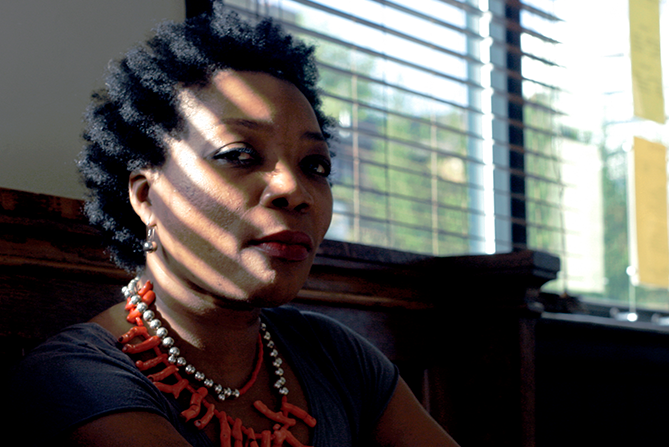
    Dzifa Benson writes on contemporary and historical perceptions of black women’s bodies

    PEN Transmissions is English PEN’s magazine for international and translated voices. PEN’s members are the backbone of our work, helping us to support international literature, campaign for writers at risk, and advocate for the freedom to write and read. If you are able, please consider becoming an English PEN member and joining our community of over 1,000 readers and writers. Join now.

    I was 17 when I first experienced racially charged body-shaming.

    Your bottom is too big! Emma, hurled these words at me, seemingly out of nowhere. Blonde, outspoken and supremely confident, Emma was everything that I – newly arrived from Ghana and wrestling with culture-shock – was not. At the time, she was the closest thing I had to a best friend, and I suppose I took my cues from her when it came to navigating the unfamiliar new world I found myself thrust into.

    Although I was born in London, I grew up in West Africa – Nigeria, Ghana and Togo – between the ages of 6 and 17. So, unlike the experience of many other British black people, I had spent my formative years in societies where black people like me were represented at all strata of society. My body-type had never been questioned, and I had never experienced direct racism. Although I couldn’t fully articulate why Emma’s statement disturbed me, and whilst I couldn’t deliver a suitable retort at the time, the disquiet of what she said niggled away in the back of my brain. Several months later, as Whitney’s Houston’s self-titled debut album was topping the music charts, Emma and I were strolling to the shops near our sixth-form college during our lunch break.

    ‘Whitney Houston is so beautiful!’ I said. ‘Don’t you think so?’

    Emma casually responded: ‘I suppose she’s alright for a black woman’.

    Again, I was so taken aback by what Emma had said that I didn’t respond in the moment. But the microaggression afforded me a moment of epiphany, putting her pronouncement about my bottom into perspective. I realised that Emma thought I was inferior to her simply because I was black and she was white. Having been brought up in West Africa, where the colour of my skin was the norm, this was my first true inkling that, as a black woman, the world-at-large considered me to be less attractive than women of other races.

    I distanced myself from Emma after that.

    But her words – your bottom is too big – stayed with me for years. Too big for what? I would wondered. To sit on? To power a jog? To be human? An opportunity to unpack the thorny issue presented itself when I decided to pitch an article about black women and body-image to Trace, a new lifestyle magazine with the tagline ‘transcultural styles and ideas’ that, unusually, centred black people and their artistic achievements. For my article, I set out to identify synonyms for ‘bottom’ for each letter of the alphabet. This is how I discovered the story of Sara ‘Saartjie’ Baartman – AKA the Hottentot Venus.

    Saartjie Baartmann was a Khoikhoi woman who was brought to Britain in 1810. She was displayed in human zoos here and in Paris. The distinguishing feature that made her such a crowd-pulling attraction was her steatopygic bottom. When she died in Paris, in 1815, George Cuvier – who is considered the father of palaeontology and established the science of comparative anatomy – managed to get hold of her body. He dissected the cadaver, pickled her brain and pudenda in formaldehyde, and made a life-sized cast of her body for people to go and gawk at in the Musée de l’Homme until 1972. Some years after Baartman died, Cuvier would go on to publish a book purporting to catalogue the mammals of the world. Baartman was the only human being featured in the book, in which Cuvier concluded that Baartmann was only just above an orangutan on the Great Chain of Being, a pernicious totem pole of comparative anatomy that placed white people at the top of humanity and only below God and the angels. By portraying Baartman as animalistic, Cuvier reinforced notions of white supremacy, and helped give legitimacy to pseudo-scientific ideas of race propagated by eugenicists in the 19th, 20th and 21st Centuries.

    Baartman’s remains would have stayed in Paris if Nelson Mandela hadn’t instigated the process of their repatriation to South Africa with Francois Mitterand. Her remains were finally returned and laid to rest in 2002 on a hilltop in the small town of Hankey, close to where she was born. Her story inspired ‘Bottom Power’, the second poem I ever wrote, which has become something of a manifesto or mission statement for me. It’s a witty, defiant and incisive poem that I fully intended to use as a means of skewering the notion that has persisted since Cuvier’s time that black people, and black women especially, are sub-human. When I perform it in public, women tell me afterwards that it makes them feel empowered, and that they will never again think of their bodies in negative terms. When I performed the poem in Cape Town (where Baartman lived before her fateful trip to Europe), during a British Council tour in 2010, a woman in the audience asked me what I thought that Baartman’s response would be if she could hear the poem. Regretfully, I had never before considered that question. But it has since inspired me to make her the subject of the poetry collection I am currently working on. Since her death, Baartman, in the guise of the Hottentot Venus, has been many things: a subject for scientific study, a feminist agenda, and a symbol of South Africa’s quest for racial parity – but never just as herself, Saartjie Baartman. Reams and reams of articles and academic papers have been written about her, but I have never read anything that is in her own words. There is almost nothing in the historical records to indicate who she might have been as a person. My poetry aims to counteract that – it attempts to restore her humanity.

    The most striking thing that I discovered while researching Baartman’s story is how greatly pejorative ideas about black womanhood have persisted in the 200 years since she died. Black women are supposedly sexually voracious, domineering; they can supposedly bear any burden, and feel less pain during childbirth than white women. The stereotypical way that black women are portrayed in the media further embeds these erroneous ideas. For me, those ideas have manifested themselves in myriad microaggressive ways. They did so when a friend of a friend who I thought was becoming my friend recoiled in revulsion when I tried to dance with him at his party. They did so when white men told me they had jungle fever, speculated about how curvaceous I must be, or referred to me using references to food. Given this deep history of prejudice, it’s no coincidence that black women are statistically considered to be the least attractive group of women to date, both online and offline, by all races.

    George Floyd’s murder and the protests that have followed have helped to push inequality based on race to the top of the global agenda. But many anti-racist strategies inevitably tend to centre black men.  Black women have a double minority status, and that is what I hope to use the power of literary prowess to resist and counteract.


    Dzifa Benson is a poet, dramatist, journalist and Ledbury Poetry critic who is currently studying for an MA in Text and Performance at the Royal Academy of Dramatic Art and Birkbeck University. The intersections between art, science, the body, ritual and digital technologies animate her practice, which she explores through poetry, theatre, opera, performance, storytelling and journalism.

    Her poetry and literary and arts journalism have appeared in a number of publications and she was an artist-in-residence at the Courtauld Institute of Art, a core artist in BBC Africa Beyond’s multimedia collaborative project, Translations, and a director on Shrinking Space’s The Wonder Project in association with Kew Gardens. She is currently developing a transmedia project, The Spit of Me, an artistic, social, biological and digital exploration of the body’s relationship with time, culture, identity, memory and migration.
  • Interrogating Bodies: Irenosen Okojie in Conversation with Aki Schilz

    Interrogating Bodies: Irenosen Okojie in Conversation with Aki Schilz

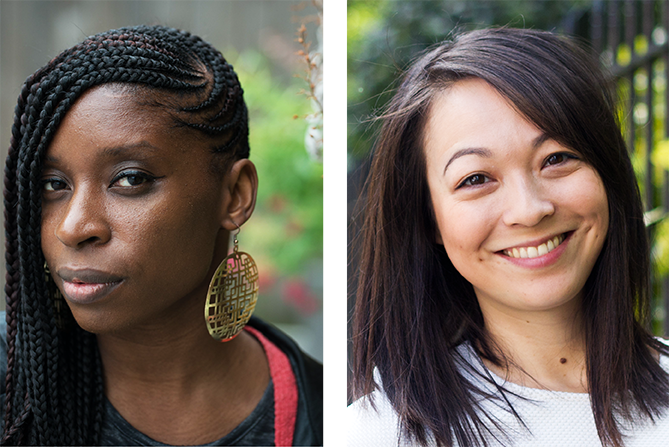
    As part of our Digital Literary Salon, Irenosen Okojie speaks to Aki Schilz about bodies, musicality, and placing black women at the centre.

    PEN Transmissions is English PEN’s magazine for international and translated voices. PEN’s members are the backbone of our work, helping us to support international literature, campaign for writers at risk, and advocate for the freedom to write and read. If you are able, please consider becoming an English PEN member and joining our community of over 1,000 readers and writers. Join now.

    AKI SCHILZ: Nudibranch is full of glorious weirdness. It is visceral; full of collisions, strangeness, familiar things twisted through several degrees until we cannot be sure about what we are seeing. There is music in these pages, but much is also done with silence. The characters (among whom a Grace Jones lookalike is haunted by the past and present, an albino man in Mozambique becomes obsessed with the idea of gifting a lost town water, a goddess plucks hearts from the chests of eunuchs) live on the edge in worlds where the edges bleed into the middle. The language delights in itself, words and sentences performing leaps and tumbles, rushing at the speed of the imagination.

    I’d like to start with a question about writing in general. Your debut novel, Butterfly Fish, is a book about ancestry. In this collection, the stories are wonderfully varied in theme – at once tight and loose – but there are certain hauntings throughout its pages. In terms of your own literary inheritance, can you share with us some of your writing inspirations for Nudibranch?

    IRENOSEN OKOJIE: I love Jamaica Kincaid’s visionary, often confounding stories, where the idea of narrative – or what the Western canon deems to be rules of narrative structure – completely goes out of the window. It’s like falling through a series of wormholes with the light at the end seductively pulling you in then eluding you all over again. Kincaid writes about the Caribbean landscape, specifically Antigua, in a poetic style that give her pieces an ethereal, prophetic power. It’s the Caribbean, but not as you know it. Sometimes her pieces feel like a series of paintings, mirages or elliptical vignettes. You’re not sure where what you’re reading will take you and, by the end, you wonder if the pieces themselves will shimmer away. While I was writing Nudibranch, I re-read Kincaid to give me courage. During those tricky days when I questioned whether I belonged in the writing space (I’m sure every writer has those days), Kincaid absolutely gave me permission to write the collection; to be completely uncompromising in terms of my ideas and the intentions behind the stories. The point for me is to have total freedom on the page and to revel in my love of weirdness. Maggie Nelson’s Bluets, a series of profound musings on the colour blue, stunned me. Maggie’s a poet and author, although I wouldn’t define the pieces as solely poetry. They’re like meditations, really. Sometimes there’s so much meaning in just three sentences that you can sit with that inside you for a while. You don’t even have to comprehend its meaning immediately; you feel like it can be slowly revealed to you throughout the day, or maybe even a week later. You’re drunk on it in the moment, then have delayed reactions later. It’s full of wisdom, melancholy and beauty, but there’s also a nakedness there about the internal injuries women carry around, which threaten to rupture at inopportune moments but also give us a quiet power, if we claim it. I really embraced that. I feel like Maggie is a writing descendant of Gertrude Stein. This makes me smile, to think of literary ancestors and descendants. I carried Bluets around in my handbag for a year. The book kept speaking to me long after I finished it.

    Musically, I was listening to Zap Mama a lot. I think she’s genius. Her albums are hybrid offerings, and at the centre is the celebration of her African ancestry, which is marvellous. I’m intrigued by her use of sound too. I walk around with my dog making odd noises all the time because playing with sound is fun. Zap Mama incorporates these strange sounds into her tracks, taking you somewhere else. One moment you’re on a certain plane, then you’re on another, ushered there by what can on first listen seem disruptive but somehow makes sense in the zany ecosystems of tracks she creates. Also, Young Fathers. I love them. There isn’t another band like them right now. Deliciously dark and modern with African ancestral rhythms shapeshifting through their tracks in subtle and overt ways. Their stuff has a mythic feel to it – like the process of listening to them is somehow giving offerings to gods.

    I would be remiss to not mention the incredible work of author and playwright Ntozake Shange. We lost her last year. Here was a writer who straddled multiple forms so excellently. For Colored Girls isn’t just a play; it’s poetry, it’s a mapping of Shange’s experiences, a blueprint that will ripple through the ages. Lastly, when I’m working on any writing project, I read one June Jordan poem a day. She was just a bad-ass – an astonishing artist, a deeply intelligent thinker. It’s like having an apple a day.

    It’s interesting that, when you describe music that has influenced you, you use terms that could very well be taken straight from a review of your own work: ‘strange sounds’, ‘shapeshifting’. The musicality and poetry of your writing can really be felt. Incidentally, I too am in love with Bluets!

    You’ve talked about the fact that this collection was written at a difficult time in your life. Without making the connection that these are the only conditions in which art might be created (an at-times dangerous untruth), do you feel that the difficulty created some of the necessary friction or impetus for these stories specifically? They feel particularly charged to me, and almost physical.

    I’m speaking here about my specific circumstances at the time of writing when I made that comment. Of course, art can be produced when that’s not the case, but the writing was a survival mechanism through a very hard period. A bit like splaying your arms out to cushion a fall. Alongside that, it’s my response to navigating the world as a black woman, where lots of spaces can be hostile or limiting or not acknowledging of the full spectrum of our humanity. The default setting is to be innovative as a response – at least mine is. One of my favourite video artists, Arthur Jafa articulates this aspect really well. He talks about the connection between Avant-gardism and blackness – that for black people to be avant-garde is the difference between life and death, a perpetual state of freefall. It’s not an indulgence for us. That really struck a chord with me. When I thought about it on a deep level, it actually makes a lot sense. When there are systems in place actively working against you, you have to get creative about how you survive that shit. I’m talking about blackness in particular here. If you look at black artistry over the ages, there are reasons why the work is often so charged and affecting. That’s not a coincidence to me. If you listen to Nina Simone’s ‘How It Feels to Be Free’, Billy Holiday, Sun Ra’s ‘Nuclear’ War or read a James Baldwin novel, there are reasons why the work is so powerful: they carry multitudes within them. The true cost of writing for each writer is different. There are hidden difficulties which sometimes don’t come to the fore. The process of translating my lived experiences, and those of other black women and marginalised voices – writing them into the centre in these fantastical stories – felt liberating yet urgent. As though the window of time to write them wouldn’t come again. So much complicated stuff was happening in my life at that point. That’s the reason why the stories feel so charged. Writing them was like presenting a series of dances. Moving on the page without the restrictions I sometimes feel navigating the world.

    Speaking of dancing, the body figures heavily in this collection, in particular the body in motion and the body dismantled: there are severed tongues; there is the liquorice body of a Black woman collapsing and consumed by strangers; a too-sentient automaton of whom there is eventually nothing left, as intended; a body bending backwards through time. Then there are the more subtle references: a silver pulse physically manifest at a mans throat, a womans body filled with visions that spill as beads, a mans chest filled with a single conversation about atoms, a woman imagining herself covered in chicken skin, naked on a chopping board. Were you consciously playing with ideas of the body, and if so, what was the pull and significance for you?

    Sometimes I’m actively doing it, other times it’s subconscious. With ‘Kookaburra Sweet’ (the story about a woman becoming liquorice), I’m deliberately making a commentary here about the way the Western world treats black women and their bodies. The dichotomy of a fascination with the black female form juxtaposed against the cruelties imposed on those bodies has happened for centuries. Black women prop up their communities; they carry the burdens of the world on their shoulders – which needs to stop, since there’s really no real reward to this ‘strong’ archetype. So, yes, in one sense, it’s a story about a woman becoming what she eats. In another, there are other things going on. I don’t hide any of this. It’s there in the text. The wonderful thing about writing is that, to me, there’s no right or wrong way of interpreting a piece. There are just different takes, varied perspectives which expands the discourse around the work. Some months back, I met another black woman at a party who’d read the collection. She highlighted that piece. She said, ‘We need to talk about that story. I understand what you’re saying. There are levels there we should unpack, we need to have a conversation about it’. It just intrigued me that we were meeting for the first time yet here was this shorthand about what a story means. I think I’m in interested in interrogating the body. The body dismantled if you will, then reconfigured. The body in decline; its incredible ability to heal and regenerate. I have a sister with difficult health conditions, I’ve seen her body oscillate between good and bad states. Exploration in my work is probably one way of making sense of that.

    Exploration is a brilliant way to imagine what writing is, and what your writing is setting out to do. In another interview, you stated that you believed art should come from a place of curiosity rather than authority’, which I think chimes with this. You have also said that great writing should cause a shift, a reaction, a response. Can you tell us a little more about this?

    A place of curiosity leaves room to embrace ideas or seeds you may not have expected to come your way. It makes the experience feel elastic rather than rigid. This approach lends itself to my writing style, but it applies generally too. If you think you already have all the answers, what is there to learn? Writing is a process of investigation. If you keep yourself open, and you do the work, the joy of the craft shows on the page. You gain so much more. All work has its value. Great art can move you deeply. It can cause you to change your stance on a particular subject or interrogate years of insidious indoctrination. At its heart, great art is about developing more empathy for each other, I feel. Like a lot of teenagers, I thought my mother was there to antagonise me, but then I read Buchi Emecheta’s In The Ditch; what that taught me about the immigrant experience for women like my mother made me understand her more. It made me love her even more. I gave the book to her to read and then we had conversations about it. This seemingly simple act carried a lot of weight at the time. Equally, you can’t read Toni Morrison’s work and not be moved the way she charts the histories of African Americans, or Margaret Atwood’s Cat’s Eye and her uncanny depiction of how feral young girls can be at certain age, how dangerously they toy with each other.

    It feels very much like, in a sense, you are also saying writing is an act of love. And that love can be difficult, and brutal, but that it is essential. We cannot be in the world and imagine that by force of will it will change around us. But we can do what you have done here, and reach out with loving arms and ears; lend our curiosity to the world, and create something from what we observe, hear, feel in our bones and bodies. Thank you for doing that with your work, and helping us to do the same.

    As a final question, can you tell us which of the stories in Nudibranch you most enjoyed writing, and which you found the most challenging to write?

    I really enjoyed writing ‘Grace Jones’, ‘Nudibranch’, ‘Cornutopia’, ‘Mangata’, ‘Komza Bright Morning’, ‘Daishuku’ and ‘Synsepalum’. I’ve always wanted to write about monks, so ‘Filamo’ posed an interesting challenge just in terms of which direction I’d take the story. ‘Saudade Minus One’ was challenging because I’d never written something sci-fi-ish. I was really passionate about telling that story though, so my excitement surpassed any anxieties I had. Every single story felt like a risk in some way. When that’s the case, I know writing it is the right thing.


    Irenosen Okojie is a Nigerian British writer. Her debut novel Butterfly Fish won a Betty Trask award and was shortlisted for an Edinburgh International First Book Award. Her work has been featured in The New York Times, The Observer,The Guardian, the BBC and the Huffington Post amongst other publications. Her short stories have been published internationally including Salt’s Best British Short Stories 2017, Kwani? and The Year’s Best Weird Fiction. She was presented at the London Short Story Festival by Booker Prize winning author Ben Okri as a dynamic writing talent to watch and featured in the Evening Standard Magazine as one of London’s exciting new authors. Her short story collection Speak Gigantular, published by Jacaranda Books was shortlisted for the Edgehill Short Story Prize, the Jhalak Prize, the Saboteur Awards and nominated for a Shirley Jackson Award. She is a fellow of the Royal Society of Literature. Her new collection of stories, Nudibranch is published by Little Brown’s Dialogue Books.  www.irenosenokojie.com @IrenosenOkojie  

    Aki Schilz is the Director of The Literary Consultancy, the UK’s longest-running editorial consultancy for writers, providing editing services, mentoring and literary events. She is a Trustee of Poetry London, and sits on the advisory board for the award-winning publisher Penned in the Margins. Aki is a judge for the Bridport First Novel Award and the Creative Future Literary Awards. In 2018 Aki was named as one of the FutureBook 40 (a list of the top 40 innovators in UK publishing), and nominated for an h100 Award for her #BookJobTransparency campaign and her work to improve representation and accessibility in the literature sector. In 2019 she was shortlisted for the Kim Scott Walwyn Prize, which recognises the contributions and achievements of women in publishing. Aki is the founder of the Rebecca Swift Foundation, in memory of TLC’s founder. The Foundation runs the Women Poets’ Prize, a free-to-enter award offering year-long support and cash prizes to women poets, supported by industry partners including RADA, Faber and Faber, Verve Festival, and CityLit. @TLCUK @AkiSchilz 

    This series features voices from the 2020 programme of the English PEN Literary Salon at the London Book Fair (LBF). LBF is the global marketplace for rights negotiation and the sale and distribution of content across print, audio, TV, film and digital channels. Taking place every spring in the world’s premier publishing and cultural capital, it is a unique opportunity to explore, understand and capitalise on the innovations shaping the publishing world of the future. LBF brings you direct access to customers, content and emerging markets. LBF 2021, the 50th Fair, will take place from 9-11 March 2021, Olympia London. LBF’s London Book and Screen Week will run for the fourth year, with the book fair as the pivotal three-day event within a seven-day programme. For further information, please visit: www.londonbookfair.co.uk