Tag: China

  • My Crime, Being Born Illegal: Shen Yang in Conversation with Nicky Harman

    My Crime, Being Born Illegal: Shen Yang in Conversation with Nicky Harman

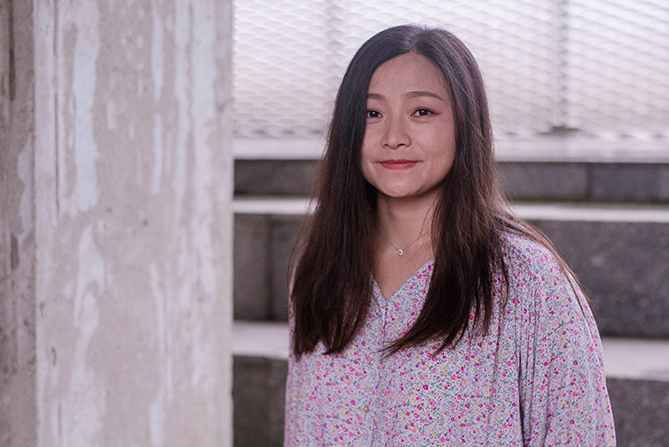
    Shen Yang speaks to Nicky Harman about the One Child policy, “excess-birth daughters”, and her memoir, More Than One Child.

    PEN Transmissions is English PEN’s magazine for international and translated voices. PEN’s members are the backbone of our work, helping us to support international literature, campaign for writers at risk, and advocate for the freedom to write and read. If you are able, please consider becoming an English PEN member and joining our community of over 1,000 readers and writers. Join now.

    NICKY HARMAN: Women’s reproduction has always been a heavily politicised issue in China. In simple terms, women’s bodies (and permission to give birth or not) are under state control. Can you tell us how national policy has changed since the one-child-per-family policy?

    SHEN YANG: In 1971, the Chinese government launched a family-planning campaign which by 1982 had become a fundamental national policy. Its goal was to address poverty and the exhaustion of natural resources by slowing population growth; couples were limited to a single child, and any further babies were considered ‘illegal’, ‘excess-birth’ children.

    The policy continued well into the new millennium, before being slightly relaxed in 2011, and again in 2013. In 2015, all married couples in China were told they could have two children. The following year, the ‘People’s Republic of China Population and Family Planning Law’ Article 18, paragraph 1, was amended to read: ‘The state encourages any couple to have two children’. And most recently, on 31 May 2021, it was announced that every couple is henceforth allowed to have up to three children. After more than thirty years, the One Child policy has been scrapped. (Not that there is much sign of enthusiasm to have more than one child, let alone three, at least among urban couples. Decades of the One Child policy have changed people’s ideas about family, and some have decided not to have children at all.)

    NH: What made you decide to write your life story, and the story of the lives of other excess children?

    SY: When people talk about the One Child policy, the one-child generation is always the focus: the loneliness they suffered as they grew up, the burden they have had to bear as adults, and the challenges they face now. By contrast, those, like me, who grew up shrouded in silence and secrecy, have been largely ignored. We broke the law the moment we were born simply because we were not the legitimate first child. We escaped abortion, but we couldn’t escape being abandoned. Sadly, 90% of us were baby girls.

    Although the One Child era is being consigned to history, the wounds it inflicted over three decades have not healed. People lost their jobs and families were fined, women were injured, and baby girls were aborted or abandoned. Time only heals surface scratches, and there are still women with hearts full of pain.

    According to official statistics, there are thirteen million ‘illegals’. But this is hard to believe – with China’s population of 1.4 billion, there must be more than that. Someone must be made responsible, because history cannot simply be erased. China must not forget its recent past as it develops and goes forward.

    Yet there is a paucity of literature about excess-birth children. At this rate, when we depart this life in the natural course of things, our entire generation will disappear without a trace, and excess-births will become no more than a folk memory. Some of us must stand up bravely and make our voices heard. If we excess-birth children don’t take the initiative and record our own history, then who else will? And that’s exactly why I wanted to come out of the fog and write about us – the hidden generation, the illegal daughters.

    NH: Behind every news sensation, there is the story of a human being. In your memoir, you have written about other excess-birth children whom you knew as a child or met through the publication of this book. Would you like to tell us about some of them?

    SY: My childhood friend Wanjun was born prematurely with hydrocephalus as a result of the trauma her mother suffered during pregnancy: she spent much of it on the run from family-planning officers, to the point that she was overwhelmed by stress and unable to eat or sleep properly. Today, Wanjun is disabled and living with her parents. If there had been no One Child policy – if her mother had been treated with respect during her pregnancy – things might have been different.

    Since my book was published, I have received emails from other excess-birth children sharing their stories with me. One girl, who, like me, was the second illegal daughter and brought up by relatives, told me that when she was young she felt very much alone. She thought she was the only one who was living like a ghost, with the feeling of abandonment haunting her constantly. Though she survived being aborted as an excess-birth child, she didn’t feel lucky at all. She felt ashamed that she was a burden to her family, and she hated herself for being a girl. She is still struggling to cope with the consequences of her turbulent childhood, although she has found solace in writing down her emotions and sharing them with other excess-birth girls.

    Another young woman (I first met her at my book launch on 13 November 2021) has become a good friend. As the third illegal daughter, she was given away immediately after she was born, to a family who had been unable to conceive. Ironically, a year after her arrival, her adoptive mother became pregnant and had a boy. The family could not give her back to her biological parents and felt it would be cruel to abandon her a second time, so kept her, but treated her with indifference, lavishing all their love on the boy. She was nothing but an extra mouth to feed. This young woman has been permanently scarred by growing up unwanted, and still struggles, at 33, to find a sense of identity, and the meaning of her existence.

    All of us excess-birth girls feel a natural connection with each other. We can share without feeling judged. Growing up as illegal daughters has not been easy for any of us, but we have all managed, in one way or another. In fact, in writing and publishing this book, I have come across many other excess-birth girls who have shared their stories with the world, through art, documentaries, photo books or podcasts. We are never alone; there is an army of us out there. And I look forward to the day when more and more invisible girls will stand up bravely and make their voices heard.

    NH: Forgiveness: one of the most moving parts of your memoir is when you talk about growing up and coming to terms with the abuse you suffered. In particular, you write about a letter from your uncle. Could you tell us about that, and about how you feel about forgiveness and what it has meant to you to forgive your family members?

    SY: The aunt and uncle who fostered me were an unhappy couple. My aunt had gone to primary school but could scarcely read and write. My uncle graduated from high school and used to read poetry. These two people with absolutely nothing in common had been thrown together and were fettered to their marriage by politics and old customs. It was a union typical of those times. They quarrelled constantly over the slightest thing, and even came to blows, but neither would give way to the other. So by the time I arrived, things could not have been more dramatic: a man, victim of the Cultural Revolution, a woman, victim of an unhappy marriage, and a five-year-old girl, victim of the One Child policy, all living under the same roof.

    There was a time when I hated my aunt and uncle for taking me in and making me suffer – hated them for ruining my happy early years with my grandparents. I used to long to go home and leave that loveless family.

    However, as I grew up, I began to understand how they had suffered, and I came to terms with the past. One policy can really change one’s life. It was only many years later that I learned that my uncle had lost his mother at the age of three, and had had a loveless childhood too. A top student in high school, he dreamed of going to university, but was forced to drop out of school and work in the fields because of his family’s ‘bad’ political background. He was a depressed and frustrated man when he married my aunt, a near-illiterate woman with a vile temper. But eventually, after many years, he finally recognised her contribution to their family and acknowledged the sacrifices she had made.

    He wrote in his letter:

    Yangyang, please forgive the mistakes we made. Our generation finds it hard to talk about everything we suffered. The misfortunes of our family, the lack of affection, the hardships, and our resentment of the injustices of those times deprived us of love and we never learnt how to express it. This was true for our children, and the same is true for you. When you get to my age, you see things clearly. As you said, one’s personality determines one’s fate, and my timidity and weakness made me passive, so that I ended up in this small village. And your aunt, the woman I rejected in my innermost being from the word go, has stayed with me all these years, brought up my children and helped me keep the family going. If it were not for her, I would have stayed a bachelor, I am sure of that.

    Personally, I came to realise that, no matter how much I hated those who hurt me, the hurt could not be erased. The only result of hate would be to trap me in pain that would only get worse. There was no point in resenting my aunt, or even society in general. What did help me was to cut myself off from that harm, and not to let those feelings control my life.

    I don’t want to encourage people to forgive their abusers too easily; everyone has their own way of dealing with trauma. If you can forgive, that’s great, but if you can’t, just focus on doing things that make you feel positive about your life.

    NH: My final question is about a scandal that has filled social media in China recently: the trafficking and forced marriage of women. While I understand that this is not a problem you touch on in your memoir, would you like to say something about this?

    SY: It has to do with an age-old preference for male offspring. City-dwellers may decide to stop at one child, whatever its gender, or have none at all, but in rural areas, traditional social attitudes prevail. It is deeply rooted in people’s minds that boys are ‘better’ than girls. Sons are the pillars of the family and the bearers of the family name, while daughters are ‘the water that will be poured out of the house’. Under the One Child policy, in order to have a son at all costs, people aborted millions of baby girls. This led to a marked gender inequality: there are now 30 million more men than women in China.

    Many villages are now denuded of women. They get jobs in nearby towns, where the work is better-paid and less arduous; the more courageous ones have made the move to study or work in big cities or even abroad. The result has been a dramatic increase in the trafficking of young women – especially from remote areas of Yunnan and Sichuan provinces, or from Southeast Asian countries like Vietnam or Cambodia – who are then forced into marriages with village men (like the ‘chained woman’ in Fengxian, Jiangsu Province, the case you’re referring to).

    China has been working for years (without much success) to put a stop to human trafficking – not that this is widely known. If it weren’t for the latest TikTok videos of the battered, dishevelled chained woman in Fengxian, who was trafficked, given a false identity, and forced to live with a man for whom she bore one son after another, people would never have realised how serious the situation is for all women in China. Yes, all Chinese women. It could happen to any one of us. There are many cases of young girls who have been seized from city streets, even in broad daylight. They are smuggled to isolated villages, forced to marry bachelors who treat them as their property, and become slaves and tools for reproduction. They have no means of escape and are never respected as human beings, even if they manage to give birth to a son.

    As an excess-birth child, an illegal daughter who used to hide in the shadows, I got a chance to make my voice heard in the end, as have many other excess-birth children. By contrast, most trafficked women are trapped in the villages and silenced. Those who have managed to speak out about their plight have been accused of being mentally ill, or are otherwise stigmatised and threatened by the local government, with social media posts about them immediately deleted. It is said that the TikTok video of the chained-up woman was originally uploaded by a young villager to raise money for the large family (she has given birth to eight sons). Instead, it provoked public fury and put her buyer in jail. The chain on the neck of the woman is clearly visible, but what about the invisible chains around the necks of other trafficked women in China? The Fengxian victim is now being cared for in hospital, but who is going to rescue all the others who are still living through this hell?

    What is even more depressing is the legal void around this crime. If you buy illegal plants in China you have to serve seven years in prison; if you buy endangered animals you can incur life imprisonment or even the death penalty. But if you buy a trafficked woman, the maximum is three years in jail! It is ridiculous that national law fails to protect women’s rights, and yet is now putting pressure on them to make more babies for their country. It is time that Chinese women took control of their own bodies.


    Born in Shandong, Shen Yang came to the world as an excess child and does not legally exist. As one of the millions of China’s ‘invisible children’, she was forced to live in the shadows of the Chinese society. Amidst a troubled childhood, Shen Yang found solace in literature and graduated in Applied English. She has since completed a scriptwriting course in Beijing Film Academy and now lives in Shanghai, where she crafts her latest works.

    Nicky Harman is a UK-based prize-winning literary translator, working from Chinese to English and focusing on contemporary fiction, literary nonfiction, and occasionally poetry, by a wide variety of authors. When not translating, she spends time promoting contemporary Chinese fiction to English-language readers. She volunteers for Paper Republic, a nonprofit registered in the UK, where she is also a trustee. She writes blogs (for instance, the Asian Books Blog), gives talks and lectures, and takes part in literary events and festivals, especially with the Leeds Centre for New Chinese Writing. She also mentors new translators, teaches summer schools (Norwich, London, Warwick, and Bristol), and judges translation competitions. She tweets, with Helen Wang, as the China Fiction Bookclub @cfbcuk. She taught on the MSc in Translation at Imperial College until 2011 and was co-Chair of the Translators Association (Society of Authors) 2014–2017.7.
  • The Librarian Would Give You a Lock-down Extension: An Interview with Chen Qiufan

    The Librarian Would Give You a Lock-down Extension: An Interview with Chen Qiufan

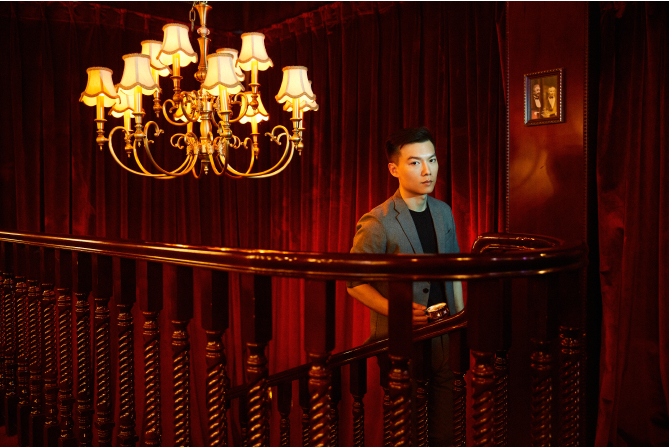
    Chen Qiufan – also known as Stanley Chan – discusses Shanghai, speculative fiction, AI, and threats to humanity.

    PEN Transmissions is English PEN’s magazine for international and translated voices. PEN’s members are the backbone of our work, helping us to support international literature, campaign for writers at risk, and advocate for the freedom to write and read. If you are able, please consider becoming an English PEN member and joining our community of over 1,000 readers and writers. Join now.

    Stan, your story, ‘State of Trance’, is featured in The Book of Shanghai – a wide-view, yet highly focused collection of contemporary literature from the city. What is it that makes Shanghai literature Shanghai literature?

    Shanghai is one of the most international, inclusive and diverse cities in China. It’s been so for a long time: a hundred years ago, it was the centre of culture and finance in the Far East. So I wouldn’t simplify the characteristics of Shanghai literature down to the linguistic or landmark level, but rather, much deeper, to the spirit of Shanghai. This spirit is reflected in Chinese character ‘海’ in the name of the city, which means, at once, the ocean, fullness of possibilities, inclusiveness, wide openness. I think that’s what makes Shanghai literature Shanghai literature.

    Is there something inherent to Shanghai that lends itself to sci-fi or speculative fiction? Does its particular reality allow you to imagine unrealities that might in the future become truths?

    Shanghai has all the elements we usually expect in speculative fiction: mega-sized metropolitanism, LED screens growing skywards into the air, skyscrapers co-existing with mean back-streets, natives and foreigners living side-by-side. But deep down I think it’s the collision and mixture of culture from the West and the East that makes it so imaginary. Just as Bladerunner, in 1982, imagined Los Angeles in 2019, full of geisha simulacra, when I walk the streets of Shanghai I wonder what it could be like in 2149. The city might be under the water, or it might be totally, autonomously governed by AI. All is possible, and all has something to do with the collision of the West and the East.

    You have said you haven’t been particularly touched by censorship. Do you think this is related to what you write about, and how you write about it, or is it more to do with fortune?

    If we don’t know why and how we are censored – if its logic remains unclear and silent – then we cannot know why and how we aren’t censored. It’s not only happening in China; as I’ve always said, impingement on freedom of expression is universal and, more and more often, it blurs the line between the protection and invasion of people’s value systems – which is greatly harmful.

    There are AI-generated passages in ‘State of Trance’, created by a machine that has learnt your style and crafted work from it. I want to ask what the results make you consider/question more: the capacity of AI to write, or your own capacity in writing?

    It’s both. As computation power grows, AI approaches the ability of humans on all levels, including creativity. Now it might sound fanciful or surrendering, but the real question is how to leverage AI for  our own self-improvement. I’ve been greatly inspired by AI-writing, and I don’t think this relationship will be one of mastery and subservience; more likely it will be one of partnership.

    ‘The most lethal threats often come from the self’ is a line that stayed with me. Perhaps I am wresting this phrase from its framing but, how do you think this idea relates to our current context?

    Well, our current context isn’t War of the Worlds. COVID-19 doesn’t come from a world external to ours to beat us; coronaviruses are always there, co-existing with us, and all the species of the earth. It’s our system, our beliefs, our lifestyles, our arrogance, our human-centrism that beat us. If not this time, in the future, when this happens again, we may be beaten if we do not change. Self-reflection is crucial for everyone – that’s what that line means. And so, yes, it’s of great relevance to our moment, and what might follow it.

    More broadly, what role does literature have to play in this moment and its aftermath – both in China and globally?

    Literature resonates and connects – connects people to history and to each other. It connects us to those who are living in totally different conditions, cultural contexts, faded dynasties, exotic planets, but all the while holds on to belief in humanity. It allows us to gain love and strength when we need it, and to give it away to others when they do. 

    Your protagonist spends their (we only know this character as ‘you’) apocalyptic time trying to return a book. Do you think they would have the same urge if they were under lock-down at the moment?

    Ha – I think for us who live in reality, the urge should be to stay safe and keep on distancing, while we read the books that comfort our anxieties and release our depression. I guess, though, that the librarian would give you a ‘lock-down extension’.


    Chen Qiufan (born 1981), also known as Stanley Chan, is a science fiction writer, columnist, and scriptwriter. His first novel The Waste Tide, (originally published in 2013) has been translated into English by Ken Liu and published by Tor & Head of Zeus in 2019. His short stories have won three Galaxy Awards for Chinese Science Fiction, and twelve Nebula Awards for Science Fiction and Fantasy in Chinese. “The Fish of Lijiang” received the Best Short Form Award for the 2012 Science Fiction & Fantasy Translation Awards. His stories have been published in Fantasy & Science Fiction, MIT Technology Review, Clarkesworld, Year’s Best SF, Interzone, and Lightspeed, as well as influential Chinese science fiction magazine Science Fiction World.

    Interview by Will Forrester, Editor.

  • Amid a sea of red flags

    Translated from Chinese by Nicky Harman and Natascha Bruce.

    I was born into a family of intellectuals, descended from a long line of scholars. My father was a very honest, kind-hearted man. He was well-educated and became, at the age of 29, the youngest Assistant Professor at Jiaotong University. I was his favourite child, and the one he worried most about. I began painting at two or three years old; at the age of seven, I wrote my first poem in Chinese classical metre. My outstanding academic results won me all sorts of prizes at primary school and made my father very proud. When I completed primary school, my teacher came to tell my parents that he was putting my name forward for admission to an elite secondary school. Only just then, the Cultural Revolution broke out and everything ground to a halt.

    To start with, I was intensely curious and rode my bicycle from campus to campus reading the big-character posters. My natural scepticism made me wary of the official newspapers, and I wanted to know the truth. However, I soon lost interest in the slanging matches between the warring factions, and steered well clear of the bloody violence. When I witnessed our elders and betters being paraded through the streets in dunces’ caps, the nursery school head being put on a stage in the searing summer heat and spattered all over with paste and ink, the adults around me committing suicide, my father working day and night without a break, my mother being forced to learn the ‘loyalty dance’, it dawned on me just what the truth was…

    Both my parents were engineers and, although they loved to read literature in their spare time, literary studies in those days were not held in high regard. The watchword was ‘maths, physics and chemistry will get you anywhere’. Even though the schools were closed during the Cultural Revolution, I often got together with school friends on the university campus and we amused ourselves by conducting physics and chemistry experiments, for instance, boiling water in paper cups over a candle flame, and engraving designs on eggshells. Maths was my chief love, and I dreamed of becoming a scientist when I grew up; reading was just something I liked doing in my spare time. But the Cultural Revolution shattered all our hopes and dreams. Looking back on those days, I realized that my father was intensely anxious about what might happen to me; it was for this reason that, cleverly playing on my love of reading, he brought out the collections of books we had at home (we were fortunate in that they had not been confiscated by the Red Guards) and added to them works translated from western writers, such as Anna Karenina, War and Peace, Resurrection, the complete Comédie Humaine by Balzac, and works by Dostoevsky, Turgenev, Mérimée, Zweig, and Stendhal borrowed from the university library. Imagine how bizarre: outside the windows, loudspeakers blared amid a sea of red flags, while behind closed doors, a young girl, bent over those then-prohibited works, was drawn into a whole new world, completely at odds with the spirit of the times. The fantasy world I lived in then is the subject of a novel I wrote years later called Sunshine on Judgement Day.

    In using books to keep me out of trouble, my father could hardly have imagined that literature would lead me on a secret inner journey; nor did he know that this inner world would prove even more dangerous than the tumultuous world outside. At 13 years old, a girl is on the threshold of adolescence, getting her periods, beginning to notice subtle changes in her body, feeling the first stirrings of love. An encounter with literature can make her restless for the rest of her life.

    *

    I had to laugh when, a number of years ago, a completely unrealistic story about Heilongjiang [the province where Xu Xiaobin was sent to work during the Cultural Revolution] appeared. I found out later that the writer had never done a day’s labour in the countryside, having been a cadre for his entire life. He is still a favourite in literary circles today; true, he has made a few comments apparently critical of the system in order to make himself popular with the reading public, but he has also been careful to protect his personal interests. The truth is that in any society, he would be among the elite. He is one among many chameleon-writers in China: loftily apolitical to the general public, while behind closed doors they scrabble for power and influence, smoothing their career paths with gifts and letters. These people are clever; they are also the kind of freaks that the system produces. Writers ought to maintain a tension with society, see themselves in confrontation with it, but those who flourish here have done so because they have learnt how to tell lies and make people laugh, how to say what people want to hear, how to win over all and sundry, young and old, men and women, high-ups and humble…

    In my novel Feathered Serpent [English edition 2009], the hero says: ‘The past ten years have allowed the genie out of the bottle; the devil has slipped out and can never be put back. The country will rise, economic material will be gained, and we will catch up with advanced countries; but what about the realms of the spiritual and metaphysical? Will they ever be restored? This is a quandary that is more frightening than being poor.’ Sadly, all my predictions in Feathered Serpent have come true.

    As a young woman writing Feathered Serpent, I felt acute grief for my beloved country but powerless to change the situation. Along with this pain, I was suffering personal heartache, so every word was written in blood and tears. Crystal Wedding, on the other hand, is a simple record of what happened between 1984 and 1999. When I wrote Feathered Serpent, I still had tears to cry, whereas now I am dry-eyed. If anything, hurting and not being able to cry runs even deeper and is even harder to cure.

    Xu Xiaobin piece Nicky Harman photoNicky Harman’s translations include Crystal Wedding by Xu Xiaobin, Snow and Shadow by Dorothy Tse (Muse), The Unbearable Dream World of Champa the Driver by Chan Koonchung (Doubleday) and The Book of Sins by Chen Xiwo (Make-Do). In 2011, she was Translator-in-Residence at London’s Free Word Centre and she has led the Chinese-English workshop at City University Translation Summer School (2015 and 2016). She tweets as China Fiction Book Club (@cfbcuk), and co-runs the Read Paper Republic weekly short story series.

    Xu Xiaobin piece Natascha Bruce photoNatascha Bruce is a Chinese-to-English translator from the UK, newly based in Hong Kong. She has translated short stories by writers including Dorothy Tse, Dai Lai, Ye Zhou and Xu Xiaobin, appearing in places such as Structo, Pathlight, The Bellingham Review and Paper Republic. She won joint first prize in the Bai Meigui Translation Competition, Writing Chinese, Leeds University 2015.

    Find out more about PEN-supported novel Crystal Wedding on the World Bookshelf.

    Read Snow, a complete novella, free online at Read Paper Republic from March 24 2016.

    Read more about Xu Xiaobin’s previous books available in English: Feathered Serpent and Dunhuang Dream.

  • The five stereotypes of Tibet

    The main protagonist of my new novel, Champa, is a young, modern, Chinese-speaking Tibetan man. He grew up in the cosmopolitan city of Lhasa, the capital of the Tibet Autonomous Region of China. The novel in this sense is about Tibetan and Han relationships, but it will defy easy stereotyping. It is one of the intentions of the novel to be as uncompromisingly realistic and anti-romantic as possible. 

    Aside from the Han Chinese, the only Chinese ethnic group that I have some familiarity with is the Tibetans. I knew very little about Tibet until 1989, when I was commissioned by an American company to produce a movie based on the life of the 13th Dalai Lama and an Englishman called Charles Bell. The movie never got to production stage, but during pre-production, I met my Buddhist teacher Dzongsar Rinpoche, and that led me to visit different diasporic Tibetan communities in India, Nepal, Bhutan, Europe and North America. Since 1992 I also started visiting Lhasa and other Tibetan areas in China and over the years developed friendships with Tibetans in Lhasa and Beijing. I always wanted to write about Tibet and the Tibetan-Han relationship – a poignant and sometimes difficult co-dependent relationship seldom reflected realistically in literature.

    My last novel, The Fat Years, was a dystopian political novel about present-day China, a genre that allows discussion of big issues. But I didn’t touch the ethnic issue in China at all in The Fat Years, because I wanted to save it for another novel. Right after I finished The Fat Years, I started working on a saga entitled The Conformist. It was about an idealist-turned-cynic Han Chinese cadre stationed in Tibet for 30 years who witnessed all the vicissitudes of relationships there.

    I dropped The Conformist and by 2012, I started to work on a new story, Luo Ming or ‘Naked Life’, renamed for its English edition as The Unbearable Dreamworld of Champa the Driver. The year 2012 was difficult for Tibetans in China, and I wanted a raw and pungent way to express my feelings, and the main protagonist needed to be a Tibetan.

    Champa, the main protagonist, has two very different but equally bumpy relationships with Han women (over 90% of Chinese are Hans; Tibetans belong to one of the 55 official minority groups in China). He was a tourist driver before he became the ‘kept man’ of an attractive, affluent middle-aged Han businesswoman in Lhasa. Life was good for Champa until he fell for an enigmatic young woman, an event which made him give up on his cushy Lhasa life and drive to Beijing, his dream city. Nothing in Beijing turned out as expected.

    I intended to capture at least a fraction of the complicated relationships between the Han Chinese and Tibetans and cut across five kinds of stereotypes when it comes to Tibet and Tibetans:

    The romantic stereotype –Tibet as Shangri La, an exotic, timeless touristy region of simple, peaceful folks.

    The spiritual stereotype – Tibet as the spiritual Buddhist holy land. Tibetan Buddhist gurus have many followers in other parts of China.

    The patronising stereotype – Tibet is pre-modern, China is modern. The Communist Party liberated Tibet from medieval backwardness. Tibet depends on aid from the Chinese state. China’s affirmative action policies are beneficial to the Tibetans, maybe too generously so.

    The statist stereotype – Tibet has always been a part of China from time immemorial. Foreign imperialists are always there trying to encourage Tibetan separatists to divide the Chinese motherland.

    The victim stereotype – Tibetan culture is under threat, all because of the Chinese rule: non-Tibetan migrants, ‘Han-ification’, assimilation policies, bureaucratic nepotism and state violence. But traditional culture is also changing inside Tibet because many Tibetans want modernisation and welcome economic growth. Many Tibetan families urge their children to learn Chinese and young Tibetans love hybridised popular culture. (Though, of course, I am not unsympathetic to this victim stereotyping because Tibetans are now indeed a minority culture under stress.)

    It was one of my wishes to write a novel that defies and examines stereotyping about Tibet, Tibetans and Tibetan-Han relationship and I hope that through Champa and his complicated adventures, I managed to shed some light on this difficult issue.

    Chan Koonchung was born in Shanghai and raised in Hong Kong. He was a reporter at an English newspaper in Hong Kong before he founded the influential magazine ‘City’ in 1976, where he was the chief editor and then publisher for 23 years. He is also a screenwriter and film producer of both Chinese and English-language films. Chung is a co-founder of the Hong Kong environmental group Green Power and was a board member of Greenpeace International from 2008 to 2011. He recently founded the NGO, Minjian International, which connects Chinese public intellectuals with their counterparts in East Asia, Southeast Asia, South Asia and Africa. His google account is often blocked. He is fluent in English, and now lives in Beijing. Chan Koonchung’s novel The Fat Years, set in a China of the near-future where a dark moment of history has been erased from public memory, has never been published on the mainland. The book released in 2009 presents a dystopian vision of 2013 in which China’s rise coincides with the economic weakening of the West.  The Unbearable Dreamworld of Champa the Driver has just been published in the UK by Doubleday.

    The Unbearable Dreamworld of Champa is translated by Nicky Harman.

    You can buy The Unbearable Dreamworld of Champa at our partner, Foyles Bookshop.

    You can also buy Chan Koonchung’s previous novel, The Fat Years.

    Chan Koonchung appeared, alongside Bi Feiyu, at ‘Chinese Fables’ at the Free Word Centre, London. You can read about the event at the English PEN website.


  • Past Events Disperse like Smoke

    PEN Atlas contributor Gregor Benton looks at revolution, resistance and the Beijing University literature class that harboured three of China’s best-known intellectual and political adversaries, in light of his forthcoming translation of Mei Zhi’s prison memoirs F: Hu Feng’s Prison Years

    Probably all revolutions in modern times have fallen out, sooner or later, with their intellectuals. Critical thinkers have been both the begetters of revolution, by articulating its ideologies, and its victims, for the same righteous indignation that fired them up enough to join it in the first place led many to denounce its abuses once the new freedoms vanished.

    Hu Feng is an example. He became a revolutionary at Beijing University in the 1920s, secretly joined the Japanese Communist Party in Tokyo, worked for the resistance in wartime China, and led movements of leftwing writers in cities controlled by Chiang Kai-shek. He was one of China’s best-known leftwing editors before 1949 and a pupil of Lu Xun, the giant of China’s twentieth-century literature and its George Orwell. After Mao’s victory in 1949, Hu Feng worked for a while on the fringes of the Beijing regime, but after a couple of years he got into trouble with the literary and political establishment. This was partly because he belonged to a wrong faction, but mainly because of his liberal view of literature. He implicitly criticized Mao’s proposal that creative writing should serve the party, by extolling the masses and reflecting the ‘bright side’ of life rather than ‘exposing the darkness’. So he was denounced for ‘subjectivism’, i.e., exaggerating the role played by what he called the inner energy of the active subject. He was also a belligerent man. His short fuse made enemies, and he was not a party member, unlike his opponents. He had joined its youth section in 1923, lost touch during the civil war, and tried to rejoin after returning from Japan, but failed.

    Hu Feng spent twenty-five years as a political prisoner starting in 1955, a record surpassed only by the Chinese Trotskyists’ thirty-odd years in gaol. After his death in 1985, his wife Mei Zhi wrote her memoir of the prison years she shared with him. Mei Zhi too was a revolutionary, but by profession she was a children’s author, so her writing is clear and jargon-free. Initially gaoled as Hu Feng’s accomplice, she was freed under supervision in 1961. The nuances of Hu Feng’s literary theory didn’t really interest her, but she stayed true to him despite the troubles he brought on her and their children and despite her milder views. She returned to prison voluntarily after her release, to care for him in his sickness and old age.

    Mei Zhi was engagingly honest about her feelings. She was a stoic, capable of astonishing self-sacrifice for her family, but unlike Hu Feng she could be cynical about politics. Hers is one of China’s best prison-memoirs. It is a gripping story, climaxing in Hu’s madness and a redemption of sorts. It differs from similar accounts in that despite their calvary, Mei and Hu remained supporters of the revolution. It is also a love story – of her love for him, even in the years of his madness.

    The book was first published in instalments, starting with Past Events Disperse like Smoke. I picked this up in Beijing in 1987 for Wang Fanxi, the exiled elderly Trotskyist leader who shared my house for several years. On my trips to China, I used to buy books I thought he’d like. It turned out he and Hu Feng had been class-mates at Beijing University, along with Wang Shiwei, Chinese communism’s first real dissident, murdered by the party near Yan’an in 1947 after arguing publicly that writing should be free to criticise party abuses and to talk about the soul. So one literature class harboured three of the party’s best-known future trouble-makers. Wang Fanxi pressed me to translate Past Events and told me some interesting facts about Hu Feng, which might have got him into trouble even sooner had his inquisitors known about them.

    They concerned Hu Feng’s relations with Lu Xun and Lu Xun’s affinity with Leon Trotsky, Stalin’s exiled rival. As a literary liberal, Trotsky had attacked ‘proletarian literature’, a futurist Soviet style, in his book Literature and Revolution, arguing that the arts should be a sphere unto themselves rather than a product of official decrees. This was also more or less Lu Xun’s view.

    In notes written after 1979, Hu Feng recalled a postscript Lu Xun had written in 1926 for a translation of Alexander Blok’s enigmatic poem The Twelve. According to Hu, reading the postscript freed him ‘from a vulgar sociological understanding of the creative process.’ In it, Lu Xun had used Trotsky’s Literature and Revolution to illuminate the literary genius of the ‘bourgeois’ Blok. He also sponsored a Chinese translation of Trotsky’s book. He stopped referring to Trotsky after 1929, probably for diplomatic reasons. After reading Lu Xun’s postscript, Hu Feng realised that not all Marxists believed that everything in the creative process had a ‘material’ or ‘economic’ base. So Trotsky’s style of literary appreciation was a wellspring of Hu Feng’s fateful opposition to party-decreed ‘mechanicalism’, though he never said so directly.

    Stalin’s demonizing of Trotsky was copied by the Chinese communists in their attacks on Chen Duxiu, the independent-minded founder of Chinese communism, expelled as an oppositionist in 1929. Similarly, Stalin’s posthumous cult of Maxim Gorki was mirrored by the cult of Lu Xun, hailed as ‘China’s Gorki’, also after his politically convenient death in 1936 (the same year Gorki died). Like Gorki, Lu Xun was made into a cult so the party could cloak itself in his reputation for integrity. But first they had to expurgate his embarrassing antecedents, especially the fact that he was influenced by Trotsky, for the link made his enshrinement laughable. So the affinity between Trotsky, demonized in both China and Russia, and Lu Xun was richly ironic. And so was the fact that Hu Feng’s ‘thought crimes’ were in reality a faithful echo of Lu Xun, who had persuaded him that revolutionary writing did not have to be clichéd and uniform or to toe a party line and should be free to treat questions of the human spirit.

    About the Author

    Gregor Benton is professor emeritus at Cardiff University. He has published books on Chinese Communism, dissent in China, and Chinese communities outside China. His Mountain Fires (University of California Press, 1992) and New Fourth Army (University of California Press, 1999) won several awards, including the Association of Asian Studies’ best book on modern China. He has translated scholarly books from German, Dutch, Italian, Spanish, French, and Chinese. He has taught Chinese Studies in Leeds, Amsterdam, Cardiff, Kuala Lumpur, and Barcelona.

     F: Hu Feng’s Prison Years by Mei Zhi, translated by Gregor Benton received a Writers in Translation award for 2013 and will be published by Verso in April 2013. 

  • Chinese literature – where are we now?

    The second PEN Atlas despatch in this week’s two-part sequence is by one of China’s most important writers and avant-garde poets, Han Dong, who looks into two very significant periods in China’s literary history. 

    Translated by Nicky Harman 

    When Chinese literature is mentioned, most people think of China’s long history, a long tradition, which can be traced back about 3,000 years. But one cannot ignore two periods of 30 years. These 60 years make a very short tradition, but this ‘mini-tradition’ has had a far more direct and profound impact on Chinese literature today than the preceding 3,000 years.

    The first 30 years (from 1949 to 1979) started with Mao Zedong and finished with Deng Xiaoping. In those days, there was only one kind of literature – one which served politics. Any piece of writing at odds with the official ideology was criticized or banned, and regarded as flouting the law. The smallest slip-up on the part of the author and he or she would be ousted from the Writers Association, and sent to prison or to a Labour camp. The vigilance of Party functionaries and the whims and fancies of certain leaders meant that there were no fixed rules even for writers who were willing to toe the Party line. Writing was a dangerous business. You were required to court disaster, but you had no idea when or where or why it would strike. Could you just write and remain unpublished? No way. Someone would be sure to report you, and very likely it would be your sleeping partner, your wife, husband or children, or a friend you’d known for years. There was a crime then known as counter-revolutionary thinking. It was an age when you did not dare reveal anything about yourself even in your private diary: literature was chopped off at the root and became just another object.

    The most extreme point was reached during the Cultural Revolution, when anything considered feudal, capitalist or revisionist was prohibited and destroyed. That 3,000-year-old literary tradition fell into the category ‘feudal’. ‘Capitalism’ meant western capitalism, and ‘revisionism’, the ideology of the former Soviet Union. Before the Cultural Revolution, and especially in the 1950s, Russian literature had been practically the only foreign writing which Chinese authors had access to, but after the break between the two countries, Soviet literature was regarded as unsafe and was gradually banned.

    In the 30 years from 1949-79, 3,000 years of literary tradition simply evaporated, turning literature into something completely different. Its practitioners faced external political pressures – and internalised them to the extent that they were transformed into an inner need and self-discipline. It was all part and parcel of an adaptive process without which writers could not have survived.

    Luckily, from the end of the 1970s and throughout the 80s, as China opened up to the outside world, there was an accompanying liberation in people’s thinking. In the literary domain, an enormous numbers of books by Western authors flooded into China in translation. A new generation of writers fell on them and devoured them. Inevitably, the choice of books to translate and read was made unsystematically and indiscriminately. Anything Western must be good – the very fact that it was from the West was a mark of its worth, in other words ‘The foreign moon was rounder than the Chinese moon…’ 1980s writing was filled with enthusiasm and excitement, forming an eclectic, crude mixture. There was a mad rush to write new experiences down, but there was little real desire to examine the underlying ideas and writing techniques, or find new ways to deal with reality. Still, it was an amazing time to live through. I miss the atmosphere of the literary world of the 1980s even though I don’t rate its achievements very highly.

     In 1979, the genesis of the unofficial publication Today, edited by the poet, Bei Dao, was enormously significant, especially when you consider that even now publications by private individuals are still in principle illegal. It was the first in a series of what the poet Xi Chuan has called the ‘small journals’. In the decade following the first issue of Today, unofficial journals published by groups of like-minded individuals took off and became the normal outlet for poetry, in particular. In Xi Chuan’s opinion, the experience of writers who have had their work published in these ‘small journals’ is quite different from those who have not. They provided a space for free expression and –marked out their writers as people who set themselves apart from official literature. You were an independent spirit, you did not have to depend on official favour. This tradition of ‘small journals’ has now spread to the internet, where poets and writers have set up their own websites and chat rooms.

    In the 1990s, almost every aspect of Chinese society underwent a radical shake-up as the process of what we call ‘marketisation’ intensified. The writing environment has been completely transformed. As the novelist Zhu Wen put it, China may not be the world’s poorest country any more, but the Chinese are definitely the people who are driven craziest by poverty. There is a difference between the two – poverty is a lack of material goods, whereas being driven crazy by poverty is a state of mind, greed. This pursuit of riches has become the new Chinese world view, the new dream. In my opinion, greed has become the motive force for material modernisation, and not only in China Literature has largely been abandoned by Chinese readers, because it is of no practical use. Guides to making money, playing the stock market, dealing in real estate, business management, social skills and so on top the list now, followed by books on health, collecting antiques, feel-good books – ‘chicken soup for the soul’ – and memoirs of famous people.

    There’s something else happening too: the literary world is fragmenting in the face of huge pressures. Some writers are just following market trends and turning out best-sellers which satisfy the readers’ needs for emotional release or a quick stimulus. Other authors write for the Party-controlled ‘system’. That way they get the right to be heard. With official backing, they do well in market terms too… China is unique in the power and legitimacy of officially-approved literature, which carries on the tradition of the first 30-year period, 1949-79, although there have been some changes in tactics and the latitude allowed to such writing. But however harmful the marketisation of literature has been, it has a positive aspect too: only the market is powerful enough to stand up to the system. Every aspect of China today is full of paradoxes, and literature is no different. On the one hand, the system conspires with the market to the detriment of idealism in writing. But on the other, these two forces hold each other in check. A rift has developed between them, giving independent writers space to eke out an existence. The hope for Chinese literature can only lie with the small number of authors who work away quietly on their own – even if they are almost unknown. The second 30-year period is now over. Chinese authors now have access to information, means of communication, stores of knowledge, all benefits we have enjoyed during 30 years of reforms, 1979-2009 – and we have open access to our 3,000 year-old tradition too. We can’t retreat from reality any longer. In terms of the drama of life and themes for our work, this period beats any other. The responsibility falls on each one of us as an individual to make use of all this in our own writing.

    © Han Dong 2012. Not to be reproduced on any other website or publication without prior permission. If you would like to request permission then please get in touch.

     About the Author

    Han Dong was born 17 May, 1961 in Nanjing. Han Dong’s parents were banished to the countryside during the Cultural Revolution, taking him with them. When the Cultural Revolution ended, he studied philosophy at Shandong University, graduating in 1982. He subsequently taught philosophy in colleges in Xi’an and Nanjing, finally relinquishing teaching in 1993 and going free-lance as a writer. Han Dong began writing in 1980, and has been a major player on the modern Chinese literary scene since the 1990s. He is well-known as one of China’s most important avant-garde poets, and is becoming increasingly influential as an essayist, short story writer and novelist.

    About the Translator

    Nicky Harman lives in the UK. She has worked as a literary translator for a dozen years and, until the spring of 2011, also lectured at Imperial College London. Now, in addition to translating, she organizes translation-focused events and mentors new translators from Chinese. She led the Chinese English group at the British Centre for Literary Translation Summer School from 2009 to 2011 and in 2011 was Translator–in–Residence at the London Free Word Centre. Authors she has translated include Zhang Ling (Gold Mountain Blues); Yan Geling (Flowers of War), Han Dong (A Phone Call from Dalian: Collected Poems, and Banished! A Novel), Hong Ying (K – The Art of Love) and Xinran.

  • Performing in Chains

    The PEN Atlas continues this week with a two-part blog sequence. The first despatch comes from one of China’s most established writers, Yan Lianke, who reflects on mechanisms of censorship.

    Translated by Carlos Rojas

    In ancient China, castration was an extreme method used by the imperial court to deal with people in which it had lost faith. After the removal of your male member, you would thereby lose the ability to have sexual relations, and consequently would become unable to bear offspring. The literature of contemporary China, meanwhile, similarly finds itself in the process of being gradually castrated. Hard power controls the spaces within which all art can circulate and be imagined, and anything beyond this will be regarded as illicit and subject to strict censorship. Unlike during the Maoist period, a contemporary author does not risk actual imprisonment or death as a result of challenging these conventions, though these strict censorship practices do condemn many “problematic works” to a premature death, just as modern medical technology has made it possible to have a painless abortion. You can write this, but can’t write that; imagine this sort of historical space, but not that one. . . . These censorship mechanisms specify the limits of what can be imagined, just as sidelines on a soccer field demarcate the limits beyond which players cannot cross without being penalized. Under this absurd reality, if you praise brightness you will be rewarded with brightness, while if you (artistically) reveal darkness you will be rewarded with darkness. Because things have been like this for a long time, literature has therefore learned how to perform in chains. It has learned how to obtain glory, acclaim, reward, and audiences, while gradually forgetting that it needs open space and autonomy, forgetting that it needs more freedom of imagination and a spirit of artistic exploration. This is like someone who, after being castrated, forgets that he needs great love and great life. Would a castrated official still be a man? How could he not be considered a man? Yet, what kind of official would he be? Is not a literature that can only dance within a tightly constrained space also a castrated literature? Can a castrated literature still be considered literature? And, if it is not literature, then what would it be?

    © Yan Lianke 2012. Not to be reproduced on any other website or publication without prior permission. If you would like to request permission then please get in touch.

    About the Author

    Yan Lianke was born in 1958 and is one of China’s most established literary writers. His many novels and story collections have won several of China’s most prestigious literary prizes. Dream of Ding Village (translated by Cindy Carter) deals with blood contamination in the province where he was brought up in China.  He has received many literary prizes, the most prestigious: the Lu Xun in 2000 and the Lao She in 2004.  

     The film adaptation of DREAM OF DING VILLAGE, renamed TIL DEATH DO US PART, was released in China on May 10 2011, starring Zhang Ziyi and Aaron Kwok. From acclaimed director, Changwei Gu, it was promoted at the Hong Kong International Film Festival and was the recipient of excellent reviews. 

    DREAM OF DING VILLAGE has been shortlisted for the Independent Foreign Fiction Prize, won in the past by W G Sebald and Milan Kundera.

    About the Translator

    Carlos Rojas is Associate Professor of Chinese Cultural Studies, Women’s Studies, and Arts of the Moving Image at Duke University. He is author, co-editor, and translator or co-translator of seven books, including the forthcoming English-language edition of Yan Lianke’s novel Lenin’s Kisses.