Tag: comma press

  • For the Stories, or for the Visa Delays?

    For the Stories, or for the Visa Delays?

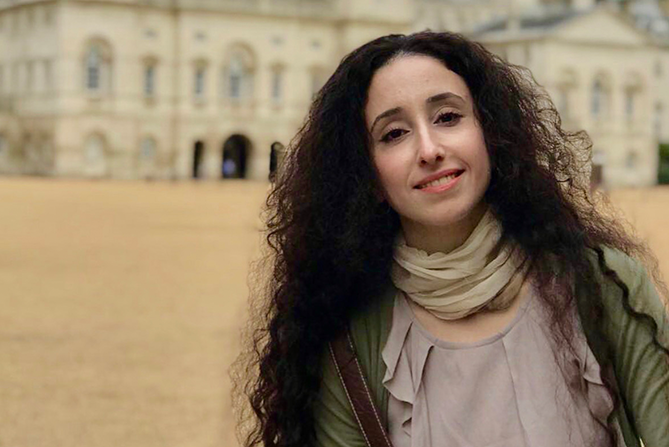
    Nayrouz Qarmout writes about Edinburgh, Gaza, short stories, and packing a bag.

    PEN Transmissions is English PEN’s magazine for international and translated voices. PEN’s members are the backbone of our work, helping us to support international literature, campaign for writers at risk, and advocate for the freedom to write and read. If you are able, please consider becoming an English PEN member and joining our community of over 1,000 readers and writers. Join now.

    The bag carries a heavy load. I had bought it in 2015, arranged my things inside it very carefully, sat next to it, organised my clothes, lined up their colours in a quiet rainbow. The bag barely tolerated colour.

    We will go back to a year before this bag was filled with dreams, and I will talk to the girl who is sitting by the window, writing ‘The Story of Al-Yarmouk’ after sailing her cloak in The Book of Gaza. Troubled serenity is turning to memory as she tries to write the story of that camp.

    Melodies in her ears, she yearns for a soft childhood crossing the streets between the shops; the bean and chickpea shop; the photos of Arab artists hanging on its walls. Ideas are packed within her, between places, between times, between the possible and the impossible.

    Did she leave or not? Come back or not? Does she still cross the memory? Or has she crossed it into a reality that wasn’t hoped for?

    ~

    Explosions shake the region, vibrating imaginations, thoughts and emotions. The melodies disappear, and though the thunder of planes and incendiary balloons remains, she doesn’t fear those planes or their missiles.

    An email catches her: Why don’t you write under the bombardment? She starts to write – politics at times, literature at others. The first time with English PEN: she publishes her diaries of the conflict on their site – ‘Life in War’, she calls it – and a short story, ‘Umm Ahmed: Newsflash’. She wrote the story in record time while the planes were destroyed; that steadfast mother in her kitchen had become a window of news, having watched it all for weeks from her tiny screen.

    A great flame drowns the house with a haze of glass and wood. And the pressure in her ears – she didn’t hear the explosion, but it hit the air in her body, hit everything.

    Language can no longer bear this in literature. Literature preceded language’s grammar, came back and struck its meaning. Metaphor withers, punctuation marks cry, chopping up sentences. The spaces disappear.

    ~

    She doesn’t complete the Al-Yarmouk story. She leaves at dawn every day to regain the blue space between the sky and the sea. The waves are angry while the air hits her face. Her body has swelled to the extent that she collides with all the building of the city. Please, tell me: Who am I? What happened?

    Months pass, then she writes ‘Pen and Notebook’ while watching the workers reconstruct a building. It had been levelled to the ground, the stones surrounding her house in every direction. The story started with the cart of the children who collected the stones.

    Then comes ‘Our Milk’ – the milk that sprinkled the walls of The King David Hotel in Jerusalem in the forties, mixing with blood when the guitar strings are played. Then the Israeli soldier buying flowers from a Palestinian worker in ‘White Lilies’. ‘Black Grapes’ – a mother crosses bypasses to cross the separation wall and harvest her grapes in the West Bank. ‘Mirror’, where refugees from Palestine and Golan Heights go to places where refugees go. Intransigence and openness in ‘A Summerland Moon’. ‘The Long Braid’ – a girl curls up all the strings of melodies as she searches for a lost homeland. ‘Breastfeeding’ – religion and society punish the milk. The magic eye above the door, the fire from the stove, the anxious mother and daughters, and the uncle’s boots painting scenes: ‘June 14th’.

    She doesn’t stop writing – goes back and completes the Al-Yarmouk story, then writes longer pieces. She no longer spends time with her family. For years, she rarely sees her siblings. She chooses a space and time parallel to the presence of everyone around her, begins to disassemble and synthesise.

    ~

    A lengthy discussion with Charis Bryden about translating metaphor – about how the English language captures the eloquence of the imagination of the Arabic language. Every scene is a painting, which a musical melody stands behind, which moves its characters, when their creator sits afar from them and sees what they will tell them.

    ~

    The wheels of the car drive her, carrying her alongside her father to the British Consulate, where she receives the first visa printed in her passport, dated 2015, in order to attend Durham Book Festival. Her eyes fill with doubt while her heart burns for the lost ease of opening or closing a door. She tries to exit through the Beit Hanoun Erez crossing, then the Egyptian Rafah crossing, but she doesn’t succeed.

    With a smile refusing to reveal her sadness on her lips, the bag is unloaded.

    It was emptied after ‘The Sea Cloak’, where that cloak swells the girl’s senses, exhausted from rowing, while the tufts of her hair confuse her vision. It was emptied after ‘Umm Ahmad: Newsflash’ and ‘Life in War’, where women make Qatayef with rose water, pistachios, and a little butter.

    ~

    It is 2018. She has followed all the necessary procedures to get a visa for the UK, but she has been rejected once, twice, three times – she can’t count anymore. She no longer wants to despair at the rejection.

    It is the media – the solidarity of those voices that support her cause – that prompt her visa to be granted. There’s only one day left before she has to be at the Festival. Two weeks ago, she had informed the crossing of her intention to travel, and had submitted the papers and her invitation. It’s three o’clock, and she finally has the visa in her possession. Then it’s half past three, and her phone rings: Your name, now, at the crossing. The bag isn’t ready.

    Her brother’s leg is broken (he had been trying to repair a broken motor causing power cuts at a health facility) and he is at home. Her sister is taking a day off – for the first time in many years. They come to pack the bag with her while she empties her closet. She doesn’t know what the weather is like there. She fears for her ability to return to Gaza.

    She calls a taxi and goes to the crossing. She’s the last passenger. She answers the questions of the Hamas security, then the National Authority, then sleeps a night in the Rafah hall. She will be granted a pass to cross at dawn. She’s the last traveller in the hall.

    She crosses a desert road, the sun devouring her eyes. How many times has this bag been emptied of its belongings? At every checkpoint along the road.

    Getting the bus won’t guarantee that she catches the plane. That Al-Araishi who makes coffee and tea looks at her and asks, ‘Why are you still standing? Everyone is sleeping. You must be thirsty – you didn’t drink anything’. ‘I don’t want to sleep’, she replies. ‘I’m waiting for approval to pass’. He tells her he will drive her for 250 dollars; she is worried about the risk, but nevertheless offers him 150. They agree, and that is the way.

    A day on a very difficult road, and she reaches a hotel close to the airport. She knows nothing about Egypt and its hotels. She books a room, and everyone looks at her dirty clothes and the chaos of her hair. There were two children in the car, eating and pouring milk and chocolate on her. She smells foul.

    What a beautiful bath. Allergy medicine relieves the redness in her eyes caused by the salt of the air in the Sinai desert. Another car for the airport.

    ~

    For the first time, she sees the electronic boards that guide passengers at the airport. No one is waiting for her at Heathrow; she takes another plane up to Edinburgh.

    There, the coldness of the air sweeps through her, shrinking every part of her body, the frost after the desert flame bringing her back to her birthplace.

    In the taxi, she looks at each and every tree on the sides of the roads. How she longs for nature that isn’t eaten by borders.

    She arrives at the hotel and steals some of its warmth. The Festival celebrates her arrival, a crowded lounge listening to what she says. She is on her own, a human regardless of the place. She isn’t begging for support and solidarity; she has just wanted to say: We still live and endure, through our dignity.

    ~

    The crossing is closed. She is forced to postpone things for ten days. She was meant to return to Gaza two days after arriving for the Festival – the same time it took her to get to Edinburgh. She catches a train for the first time on her own. She doesn’t know how to book it – doesn’t have an electronic payment card, only carries dollars. She recalls entering a store to buy something and being told ‘We only take pounds, our country’s currency’. ‘What pride’, she thinks to herself. ‘This is independence. How I long for a currency for our country’.

    She arrives at the home of a Palestinian writer, where his Hungarian wife receives her with deep passion and devotion to Palestine. She is tired – she gave a lot of media interviews in Edinburgh.

    She walks the streets of London. How precious it is to walk freely.

    ~

    She returns to Gaza. At El-Arish again, she spends the night on the sidewalk; people sleep in the open air, exchanges of fire sound, and the barking of stray dogs fill the night in the Sinai desert. But she insists on standing. A soldier fires bullets next to her to force her to sleep or sit down. On the contrary, the sound of this bullet awakens her reassurance, and she keeps standing. The children are lying under the feet of the elderly on pieces of worn cloth; a wildfire of glass surrounds them; others try to relieve themselves behind car doors, but the moonlight reveals the secrets of darkness, no matter how much its walls turn around their breath.

    ~

    The surprise of 2019: Edinburgh International Book Festival wants to host the launch of The Sea Cloak and Other Stories.

    She gets a visa, but her name at the crossing is crossed out (more than once). She pays to be able to travel.

    Ali Smith tells her: ‘I know that many voices such as yours exist in the Middle East, and that we haven’t yet heard most of them’. She smiles and points with her fingers: ‘“Black Grape”, “White Lily”; small details, big events. While I was on the train, I tried hard to catch my breath reading your stories’.

    In turn, she asks her, ‘What should I add to my writing?’

    ‘Nothing, just keep writing’.

    Val McDermid embraces her firmly – ‘You’re Brave’.

    At successive events, there are Kurdish refugees from Syria.

    I am reminded of my name – ‘Newroz’ – and what it means for the Kurds. I read my stories to them, and my heart weeps bitterly for the Arab world, and then I silence my grief.

    I book a train to London, without saying to the hotel receptionist – who helped me carry my bag last time – ‘How do you book a train?’. My bag is lighter this time; I came more aware of the weather.

    ~

    There are many who are still like that girl, their bags overloaded with everything you can’t imagine.

    Finally, I forward a question that I didn’t answer, asked by a senior New York Times staffer in London, when I met him in Edinburgh: ‘Why all this media attention? Is it because of the visa delay, or are they interested in your stories? I am still drawing this answer.


    Nayrouz Qarmout is a journalist, author and women’s rights campaigner. Born in Yarmouk Refugee Camp, Damascus, in 1984, as a Palestinian refugee, she was ‘returned’ to the Gaza Strip at the age of 11 as part of the 1994 Oslo Peace Accord, where she now lives. She has worked in the Ministry of Women’s Affairs, raising awareness of gender issues and promoting the political and economic role of women in policy, law, and the media. She has won a number of prizes including the Creative Women’s Award for her debut collection The Sea Cloak, which was the bestseller at Edinburgh International Book Festival 2019.

    This PEN Transmissions commission is supported by the British Council.

    About the British Council

    The British Council is the UK’s international organisation for cultural relations and educational opportunities. We work with over 100 countries in the fields of arts and culture, English language, education and civil society. Last year we reached over 80 million people directly and 791 million people overall including online, broadcasts and publications. We make a positive contribution to the countries we work with – changing lives by creating opportunities, building connections and engendering trust. Founded in 1934 we are a UK charity governed by Royal Charter and a UK public body. We receive a 15 per cent core funding grant from the UK government. britishcouncil.org
  • The Librarian Would Give You a Lock-down Extension: An Interview with Chen Qiufan

    The Librarian Would Give You a Lock-down Extension: An Interview with Chen Qiufan

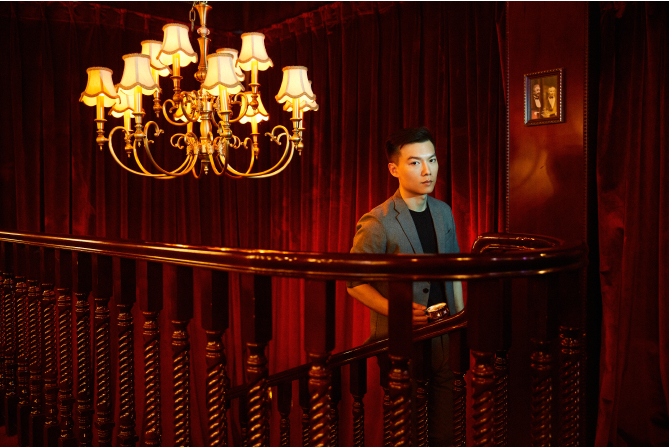
    Chen Qiufan – also known as Stanley Chan – discusses Shanghai, speculative fiction, AI, and threats to humanity.

    PEN Transmissions is English PEN’s magazine for international and translated voices. PEN’s members are the backbone of our work, helping us to support international literature, campaign for writers at risk, and advocate for the freedom to write and read. If you are able, please consider becoming an English PEN member and joining our community of over 1,000 readers and writers. Join now.

    Stan, your story, ‘State of Trance’, is featured in The Book of Shanghai – a wide-view, yet highly focused collection of contemporary literature from the city. What is it that makes Shanghai literature Shanghai literature?

    Shanghai is one of the most international, inclusive and diverse cities in China. It’s been so for a long time: a hundred years ago, it was the centre of culture and finance in the Far East. So I wouldn’t simplify the characteristics of Shanghai literature down to the linguistic or landmark level, but rather, much deeper, to the spirit of Shanghai. This spirit is reflected in Chinese character ‘海’ in the name of the city, which means, at once, the ocean, fullness of possibilities, inclusiveness, wide openness. I think that’s what makes Shanghai literature Shanghai literature.

    Is there something inherent to Shanghai that lends itself to sci-fi or speculative fiction? Does its particular reality allow you to imagine unrealities that might in the future become truths?

    Shanghai has all the elements we usually expect in speculative fiction: mega-sized metropolitanism, LED screens growing skywards into the air, skyscrapers co-existing with mean back-streets, natives and foreigners living side-by-side. But deep down I think it’s the collision and mixture of culture from the West and the East that makes it so imaginary. Just as Bladerunner, in 1982, imagined Los Angeles in 2019, full of geisha simulacra, when I walk the streets of Shanghai I wonder what it could be like in 2149. The city might be under the water, or it might be totally, autonomously governed by AI. All is possible, and all has something to do with the collision of the West and the East.

    You have said you haven’t been particularly touched by censorship. Do you think this is related to what you write about, and how you write about it, or is it more to do with fortune?

    If we don’t know why and how we are censored – if its logic remains unclear and silent – then we cannot know why and how we aren’t censored. It’s not only happening in China; as I’ve always said, impingement on freedom of expression is universal and, more and more often, it blurs the line between the protection and invasion of people’s value systems – which is greatly harmful.

    There are AI-generated passages in ‘State of Trance’, created by a machine that has learnt your style and crafted work from it. I want to ask what the results make you consider/question more: the capacity of AI to write, or your own capacity in writing?

    It’s both. As computation power grows, AI approaches the ability of humans on all levels, including creativity. Now it might sound fanciful or surrendering, but the real question is how to leverage AI for  our own self-improvement. I’ve been greatly inspired by AI-writing, and I don’t think this relationship will be one of mastery and subservience; more likely it will be one of partnership.

    ‘The most lethal threats often come from the self’ is a line that stayed with me. Perhaps I am wresting this phrase from its framing but, how do you think this idea relates to our current context?

    Well, our current context isn’t War of the Worlds. COVID-19 doesn’t come from a world external to ours to beat us; coronaviruses are always there, co-existing with us, and all the species of the earth. It’s our system, our beliefs, our lifestyles, our arrogance, our human-centrism that beat us. If not this time, in the future, when this happens again, we may be beaten if we do not change. Self-reflection is crucial for everyone – that’s what that line means. And so, yes, it’s of great relevance to our moment, and what might follow it.

    More broadly, what role does literature have to play in this moment and its aftermath – both in China and globally?

    Literature resonates and connects – connects people to history and to each other. It connects us to those who are living in totally different conditions, cultural contexts, faded dynasties, exotic planets, but all the while holds on to belief in humanity. It allows us to gain love and strength when we need it, and to give it away to others when they do. 

    Your protagonist spends their (we only know this character as ‘you’) apocalyptic time trying to return a book. Do you think they would have the same urge if they were under lock-down at the moment?

    Ha – I think for us who live in reality, the urge should be to stay safe and keep on distancing, while we read the books that comfort our anxieties and release our depression. I guess, though, that the librarian would give you a ‘lock-down extension’.


    Chen Qiufan (born 1981), also known as Stanley Chan, is a science fiction writer, columnist, and scriptwriter. His first novel The Waste Tide, (originally published in 2013) has been translated into English by Ken Liu and published by Tor & Head of Zeus in 2019. His short stories have won three Galaxy Awards for Chinese Science Fiction, and twelve Nebula Awards for Science Fiction and Fantasy in Chinese. “The Fish of Lijiang” received the Best Short Form Award for the 2012 Science Fiction & Fantasy Translation Awards. His stories have been published in Fantasy & Science Fiction, MIT Technology Review, Clarkesworld, Year’s Best SF, Interzone, and Lightspeed, as well as influential Chinese science fiction magazine Science Fiction World.

    Interview by Will Forrester, Editor.

  • The story of The Book of Dhaka

    What better occasion could one have imagined for the launch of The Book of Dhaka – all the stories in which are set in Dhaka, the capital of Bangladesh, each bringing out a unique aspect of the bustling city with high-rise buildings and sleek cars on one hand, and slums and the ubiquitous presence of rickshaws on the other? The perspectives in them differ, to the point of clashing at times, but they complement each other too. This is a Dhaka seen through the fictional lens of writers who have lived through the city’s ugliness as well as its sheer beauties.

    It was 19 November, the closing day of the Dhaka Literary Festival 2016 at Bangla Academy in Dhaka, Bangladesh. As anticipated, the crowd was bigger and thicker around the KK Tea Stage a little before a quarter past four when the programme was scheduled to begin.

    The last panel on the same stage, ‘Words under Seige’, saw Hamid Ismailov, an Uzbek writer in exile, and Kanak Mani Dixit, editor of Himal, among others, speaking about the overt state mechanisms and the covert ideological pressures through which voices of dissidence are silenced. Enthused students, readers and journalists were streaming out of the room where the stage was set, while new batches, mostly young, were going in.

    As I walked towards the entrance of the room, I came across Arunava Sinha, one of the editors of The Book of Dhaka and a prolific translator of Bengali fiction and poetry. Before I could congratulate him properly, he took the stage with Kaiser Haq, a Bangladeshi-English language poet; Syed Manzoorul Islam, a famous bilingual fiction writer; Pushpita Alam, the other editor of the book; and Daniel Hahn, a British author and translator who moderated the session marking the launch.

    Right from the beginning, Hahn brought a vibrant touch to the session and his witty quips created an ambience for a lively discussion. After a quick introduction of the speakers on stage and a short description of the book, he passed the mantle on to Kaiser Haq. An illustrious translator himself, Kaiser traced the somewhat sinuous route of what appeared as a remarkable instance of creative collaboration between writers’ organisations, publishers and quite a good number of creative individuals from Bangladesh, India and the UK.

    Kazi Anis Ahmed, a fiction writer and co-director of the DLF, formed Bengal Lights Books and Dhaka Translation Centre (DTC) with the aim of giving a boost to English translation of Bengali fiction in Bangladesh. Haq became the director of DTC and the first translated book of the centre was launched at the 2013 Hay Festival Dhaka (now known as DLF), which was attended by Emma D’Costa of Commonwealth Writers. Emma then approached Haq and Khademul Islam, director of Bengal Lights Books, with the idea that they should collaborate on a workshop where the participants would dissect a story in the presence of the author.

    Soon English PEN and the British Centre for Literary Translation (BCLT) came on board. The first workshop was conducted in 2014 by Arunava Sinha and the author selected for it was Shaheen Akhtar. Most importantly, the participants each were assigned to a story and the workshop the next year took the translators up with their assignments, working diligently to improve their craft. The much-needed funding and organisational support to hold the workshops in Dhaka were provided by English PEN and Commonwealth Writers, a cultural initiative of Commonwealth Foundation. That’s how, according to Haq, The Book of Dhaka was born.

    Hahn soon moved on to Pushpita. Pushpita shared the pleasure and sheer excitement of the editing process, of how meticulously she and Arunava went over every line and how they debated over matters of style. In answer to Hahn’s question about annotating every story, some of them copiously so, Pushpita said, ‘If you translate certain expressions and phrases, you risk putting the cultural references out of context. So, it’s better to keep them unchanged and explain them in end notes.’

    When it was emphasised by Hahn that this book was a translation project to train up translators from Bengali into English, Arunava chipped in with a comment that garnered much applause from the audience: ‘That certainly makes it one of the most unique books of translation in the world, I imagine … I think it’s fantastic for workshop participants to know that this work is actually going to be a part of a printed book so early in their career. It’s really a great incentive to carry on working, as you know, without money or real fame and glory, other than only for the love of it.’

    Syed Manzoorul Islam reflected on his storytelling and self-reflexive narrator. A professor of English, he always borrows his stories from newspaper reports, or from his students. He then digs them out, he explained. His story, ‘Weapon’, selected in this collection, was borrowed from a student. His narrators, he went on to say, never claim to have represented reality as it is. The narrator in them rather makes it clear, by incessantly talking to readers, that he is no omniscient narrator and knows as much as is revealed to him.

    Towards the end of the hour-long programme, the story writers were invited on stage. Only Shaheen Akhtar joined the panel and shared her excitement about the book. The other writers whose stories have been selected include Akhtaruzzaman Elias, Anwara Syed Haq, Parvez Hossain, Rashida Sultana and Wasi Ahmed.

    The programme ended with a note of high hopes that such collaborative projects should continue to train up more of local translators and bring out the best of Bengali literature in English translation.

    As someone closely involved in the ongoing campaign for promoting Bengali literature in the international arena, I found the launch a pure literary delight. This, I believe, is the first time a translated collection with such a wide range of literary collaboration came through, presenting us not only with a collection of wonderfully translated stories but also with an apt opportunity to reach readers in the west. Publishers bringing out English translations of Bengali literature have often failed to make their books available to readers of other languages, whether in the east or in the west. But this book stands to reason that collaborative efforts can actually make a difference and bridge the gap between cultures and languages, between the east and the west.

    Watch the full The Book of Dhaka panel at Dhaka Literary Festival here.

    Find out more about The Book of Dhaka, published by Comma Press in the UK and by Bengal Lights Books in Bangladesh, on the World Bookshelf.

    Read about PEN’s work with emerging translators around the world, including the 2014/15 Bangla translation project and the 2016/17 Swahili translation project both in partnership with Commonwealth Writers.

    Catch up on the first English PEN/Commonwealth Writers translation workshop with emerging translators in Dar Es Salaam, Tanzania – ‘Something lost, something gained’.


  • Why Kahramana?

    Kahramana fascinates me. She is a character in the tale ‘Ali Baba and the Forty Thieves’ from A Thousand And One Nights. Kahramana, Ali Baba’s slave girl, is the scheming one who protects Ali Baba from the band of 40 thieves and their leader. She moves the story along, takes action while life just happens to happy-go-lucky Ali Baba. It was Ali Baba’s luck that drew him to the treasure, it was luck that savvy Kahramana managed to hide his trace from the thieves and it was his luck again that Kahramana killed the 40 thieves and their leader in one night to save Ali Baba’s life. (I know, she’s cold blooded and brutal.)

    What does Kahramana get in return for her loyalty? Well for starters the story is not called ‘Kahramana and the Forty Thieves’. As for her fate, Ali Baba rewards her for rescuing him by marrying her off to his son. Kahramana stays in Ali Baba’s household and so does the secret of the treasure.

    So I’ve always viewed Kahramana a badass underdog. She’s smart, cruel and undermined.

    When an immigration officer at Heathrow Airport waved a finger at me, called me a liar and told me I was to be deported, naturally I thought of Kahramana. I woke up the next morning in my room in London, after they released me with a throbbing headache, dry mouth, lump in my throat from holding back my tears all night. I was angry and humiliated when I wrote ‘Kahramana’. My Kahramana story was a sort of a ‘Fuck You’ to everyone. I had never been so angry in my life and I had never felt so small.

    Comma Press had been waiting for over a year for me to contribute to the anthology but every time I sat down trying to write something I struggled. I’ve never written anything futuristic or science fiction, certainly not comedy. But that morning I got out of bed, sat to my laptop and feverishly typed away before I even got up to wash my face. When I was done with it I emailed it to Ra at Comma Press thinking ‘surely he’s going to hate it’, and ‘it’s going to offend him’. Ra was expecting Hitchcock and I gave him South Park. But for once in my life, I didn’t care. I was astonished when Ra wrote back telling me he loved ‘Kahramana’ and asked me to expand and tell him more.

    In the story, I wanted to mock the way the humanitarian world handles migration. I’ve seen it often; the disillusioned European or American 20-something aid workers who are annoyed that refugees don’t appreciate the sacrifices they made to leave their ‘civilized’ homes and be in those camps and war zones; the aid workers who’ve become irreversibly desensitized to human suffering; the ones who think every Syrian, Iraqi or Afghan refugee – and even a non-refugee – is a saint, a victim who needs to be cuddled. ‘Kahramana’ exposes and exploits that.

    I also wanted to joke about political propaganda, something every Iraqi was force-fed since infanthood. When I listen to ISIS babble on their radio station or when I follow their statements on social media, I am struck by the resemblance to war statements on Iraq’s national television station during the Iraq-Iran war in the 1980s. By the end of the long stretches of pompous rhetoric, I could never tell if they were winning or losing. And as in all totalitarian systems, everything in Wadi Hashish, Kahramana’s birthplace, was mandatory. It’s mandatory to cheer in support of the government’s decision to wage wars, to march to your doom when you don’t understand or don’t believe in what you’re fighting for, and to sing and dance and throw rose petals at a dictator even if he’s sent your entire family to the gallows. Every Arab country, to some degree, has an element of this.

    Human life and suffering was as insignificant a side-effect during the 1980s Iraq-Iran war as it is in Iraq and the region today – all for the greater cause, of course! Kahramana is casual about other people’s lives. To her they’re ants behind the T-walls, waves of migrants trying to get in on the sunny side. Mullah Hashish (the leader of the radical Wadi Hashish people), NATO (in trying to obliterate Wadi Hashish and its leader) and the aid workers (shaving heads and tagging the people fleeing Wadi Hashish) all have as little regard for human life as Kahramana. The only people who do care are the ‘Kuchan Sulemani’ activists – and they are burnt out and frazzled the whole time.

    So to sum up, Kahramana is my way of giving people in the gutter a chance to laugh at their do-gooders, clergy and oppressors. Kahramana is evil and manipulative, and I just wanted to unleash her onto the UN employee who pointed at Syrian aid workers, asked them to stand up while we all sat down, and said ‘let’s clap for the refugees’; onto babbling buffoons who insist that if I am ‘good’, then poof! wars will end and there will be unicorns with wings. I wanted to unleash her as I sat there at Heathrow Airport, resenting people speeding away and resenting myself for being there, confined, stripped of my passport, angrily and anxiously waiting to be deported. Kahramana is all of my pent-up frustrations. If not for her I’d burst in anger all over my keyboard.

    To the Kahramanas of the world: cheers!

    Iraq+100 will be published on 27 October 2016.

    Award-winning author and Iraq+100 editor Hassan Blasim and a number of the book’s contributors will appear at an event at Southbank Centre as part of the London Literature Festival on Saturday 15 October. Find out more and book tickets.

    Photo: Kahramana Statue, Baghdad, UNAMI/Sarmad Al-Safy on the United Nations Information Centre Flickr stream, creative commons licence.

  • Over the sound of the drone

    Gaza is a city that has grown up at war. Conflict seems to be the natural state of affairs here. People are born in wars and die in wars. Many never really free themselves from it at any point in between.

    Growing up in this kind of environment, you cling to anything that offers continuity, or suggests stability; anything that seems to have the power to outlive these endless wars. Something that can outlive them, I learned, is stories. I was always fascinated by the anecdotes and legends my grandmother, Eisha, told us as children. Many of them were stories about her early life, before the Naqba. I would hear similar stories from neighbours in the refugee camp where I grew up (and still live). As an aspiring writer, I always felt it was my duty to keep telling and re-telling these stories, to weave them into my own, and to make them public. Stories of love, adventure, anger, estrangement, nostalgia, social dynamics…

    Sometimes, when we’re caught in the middle of momentous events, I also feel a duty to write about what’s happening right now, right this second. So I have this habit of keeping a kind of a diary whenever war breaks out. Every morning, before attempting to go about a normal day, I handwrite an account of the day before. Sometimes these notes provide raw materials for my fiction, weeks, months, even years later. I regard them like first-hand, eye-witness accounts, almost as if they weren’t written by me. I kept this kind of diary during the previous two assaults on Gaza, in 2008 and 2012. Indeed, I have handwritten pieces dating all the way back to the late 1980s: the eye-witness accounts of a teenager!

    The last Israeli assault took place just a few days after my return from a book tour in the UK. My publisher, Ra Page, at Comma Press, wrote to me to ask if my family and I were safe. By that point I was well into my routine of handwriting diary entries. I believe it was about the fifth day. For a change, I typed one out directly into English, rather than Arabic. He posted part of it on Facebook, then sent all of it to a website in the States. He kept posting my new diary entries from that day onwards, to newspapers and websites around the world. Eventually they started appearing in major international newspapers. The diaries have now all been collected into a single book entitled, The Drone Eats with Me.

    I was not writing news reports about the situation in Gaza. I was trying to talk about my personal life, and the lives of my relatives and friends in these circumstances. War turns you into numbers. I was trying to counteract this, to show that we are human beings. That we have to carry on living, despite the war, in these situations. That the human soul isn’t lost, necessarily, under the rubble, nor are its memories or dreams. I was trying to humanize what war tries to dehumanize.

    I was also trying to reassure myself that I wasn’t actually dead already. Sometimes in the insane smoke of war, you do begin to wonder what’s a hallucination and what’s not. Through writing these pieces and then seeing them appear in international newspapers, I felt that I must be still alive. More importantly, I felt that I was doing something. I was telling these stories of the present, in my own way.

    So The Drone Eats with Me should be read against this backdrop. It strives to counteract the media presentation of Gaza as a city occupied only by numbers. Without knowing they would one day appear in a book, my diary entries were presenting another Gaza. A forgotten Gaza. An unseen Gaza.

    In the media, Gaza is just a victim. It is a city of war, of destruction, of assassination and of poverty. All of which it is, of course. But besides this, it is also a city full of life. A city where there are cafés, artists, fishermen, farmers, beaches, children. Gaza produces literature like anywhere else – but because of the Israeli siege and the difficulty of movement into and out of the Strip, the writing it produces doesn’t reach wider audiences. There is a vibrant cultural life in Gaza but it is hidden behind the curtain of the news. Young authors, female and male, meet regularly to read their work and listen to each other’s. But they struggle to ever get it published as there is no specialized publishing house in Gaza and their communication with publishers outside is limited. Often they receive invitations to read their work outside of the Strip, through festivals like PALFEST which takes place in other Palestinian territories, but they fail to get permits to leave.

    It is important that these authors are given a chance to speak and to have their works read and discussed. It is important that this other Gaza has a chance to be heard over the sound of the drone’s constant buzzing.

    ‘Witnessed, lived, and recorded page by page. A searing account of living through the 2014 bombardment of Gaza. We who report it can never capture the true scale of individual and collective suffering. As a Gaza resident, Atef Abu Saif’s diary provides an insight no outsider could ever have achieved.’ – Jon Snow, Channel 4 News

    Find out more about The Drone Eats with Me.

    Read an interview with Sarah Irving, who translated one of the short stories in The Book of Gaza (2014).

  • Umm Ahmed: Newsflash

    A rare and incredibly moving piece of fiction from Gaza, from writer and activist Nayrouz Qarmout. In this short story, Nayrouz communicates the everyday experience of life in Gaza; where fear and horror collide with moments so full of life and love. Nayrouz also contributed to the PEN award-winning anthology The Book of Gaza, published by Comma Press in June.

    Translated from the Arabic by Sarah Irving

    As dawn breaks with the twittering of birds, she stands by the kitchen windowsill. Every day she greets the sunrise, absorbing through the window the radiance of the new day, the scents of the morning. But despite the mingling perfumes, fear invades the heart of Umm Ahmed.

    Umm Ahmed stands by the window, meticulously washing her dishes, glasses and cutlery, escaping from the noises of aircraft and raids and bombs into the sound of water flowing from the tap. She contemplates the soap-bubbles on the glasses. The sunlight on the water droplets shimmers in her eyes, but her mind and heart are filled with images, with pictures of children consumed by shrapnel and fire. Tears run down Umm Ahmed’s cheeks and mingle with the sound of the water on the dishes.

    She looks to the sky and sees far-off smoke, burning buildings. She jumps at the sound of an ambulance speeding, its tyres fighting the asphalt of the road, the paramedics inside. The radios in the street sing for the resistance. She talks to herself:

    – See who died, you sons-of-bitches, hunting our children like birds…

    The phone rings. Umm Ahmed dashes to it; her sister answers

    – Hello.

    – Hello. Are you OK?

    – We’re good. Tell me how you’re doing?

    – They’re bombing our neighbourhood, Umm Ahmed. I’m scared for the children.

    – What are you waiting for? Get the children and bring them here. Our house is safe.

    – OK. I’ll get the kids dressed and find a car to take us all.

    – Take care, we’re waiting for you. God keep you.

    Umm Ahmed looks at her son, Ahmed, and her daughters, Jenin and Jaffa. They’re sleeping deeply, after a month of the long days of war. She hasn’t closed the windows all night, for fear of explosions and shattering glass. They are sleeping on mattresses which she has dragged into the middle of the house, abandoning their rooms and beds to avoid some of the danger. But danger is everywhere, no matter where they go.

    She switches on the UPS battery, which gives the house a little electricity during the continuous power cuts, so that she can watch the tragedies unfold on the TV. She flicks from channel to channel, watching not just the news bulletins but also savouring the experts, analysts and reporters guessing what the date might mark the end of the war. She mutters to herself:

    – What’s the use in telling people they’re going to die? We know that.

    Ahmed wakes up and rushes to his computer and mobile, checking his messages before he’s even wiped the sleep from his eyes. He, too, is talking to himself:

    – Oh my God… they shelled such-and-such a building, so-and-so was martyred, fuck your fathers you sons-of-bitches. You’ll get what’s coming to you. Mum!

    – Yes?

    – Tell me the news!

    – I heard you, you don’t need me to tell you. Now – your face – to the bathroom! You smell foul. Go and get washed before the water gets cut off, there’s a little bit of hot water.

    Her sister arrives with her two small children, their eyes puzzled, their voices broken and hesitant, breathing shakily, terrified by the death-missiles. They enter the house:

    – Oh! Umm Ahmed, such terrifying scenes – bodies sprawled, blood in the streets, they don’t fear God, the Lord take them…

    – The main thing is that you’re here safely, but you need to be strong for the kids.

    – God help us!

    – Wake up Jenin…

    She looks at her sister next to her, calling on God: Let Jaffa be OK, it’s not a problem if I die, but she’s only little…

    Her Jawwal mobile rings, and it’s one of the children’s aunts, then another…

    – Hello? Salaam Aleikum.

    – Sister, they’re shelling around us…

    – Our house is safe, come to us.

    – Aleikum as-Salaam.

    – There’s something happening everywhere…

    – Come soon, it’s a long way…

    Umm Ahmed’s house was in the middle of Gaza City, not far from the sea, filled with the scent of the waves and the sand. Umm Ahmed’s sister lived in the north, in Beit Lahia, while her husband’s sister was way down in the south, in al-Qararah. It was an area of burning, shelled by Israeli tanks and artillery, and bombed by warplanes, where Palestinian fighters resisted and planned their retaliation from a network of tunnels.

    The house was shaking from shells being fired by the warships out at sea. The walls and windows were rattling, along with the beds, chairs and dishes. But it was safer than the other houses.

    Jenin runs to her mother and kisses her, Umm Ahmed clings to her daughter, praying to God to protect her and keep her safe.

    – Mum, is Auntie coming to stay?

    – Look Jenin, the house is cramped but it is big enough to hold a thousand friends. Insh’allah they’ll get here safely.

    Abu Ahmed, fighter and martyr, was killed seven years ago in another painful war, but still his memory and the sound of his voice live on with his wife and children. It was a fine memory of a fierce fighter, one who did not give up his land or his principles. He believed in freedom and in a free people, he loved the Palestinians. He wasn’t extreme in his attitudes for the sake of an idea, he understood life and navigated it gently, like a soft stream.

    One sister arrives with her three children and is greeted. Dripping with sweat, she takes off her headscarf:

    – Aah, Umm Ahmed! Where are you Abu Ahmed? See what they’re doing to Palestine, destroying hospitals and schools full of people. What do the Red Cross do? How did it come to this? A new exodus of people leaving their homes for the schools, the occupation forces us from our homes, and the world sits back. Where are the Arabs? Where are the United Nations? Where is Ban Ki-moon?

    – Be patient, sister. We must be steadfast. God is with us, and right is with us.

    The Gaza Strip has a high population density. The buildings are crammed together, with cement roofs. Chatter from every apartment entangles itself with the conversation at the next window. Water is scarce and the electricity gets cut off incessantly. Very few people can travel or leave. But the Palestinians love this patch, they say, and say that it is a land blessed by God.

    Everyone gathers in the house, cowering at the thought of still being within the enemy’s sights. It is the month of Ramadan, and summertime too, so the high temperatures inflame everyone’s moods. Bodies dry out in the long hours of fasting. Perhaps there will be a great reward from God. Most people venerate God, believe and pray to Him. Some are stubborn and reject the idea, through suspicion or uncertainty. But everyone agrees on one reality: they are Palestinians.

    Umm Ahmed goes into the kitchen with the other women to prepare the iftar meal to break the day’s long fast. It has intensified their appetite for food and they search for foreign tastes amongst beautiful fantasies in hidden stories of love, in sea-shells which carry the echoes of far-off memories. They talk, giggle, belly-laugh, swap pots and pans, and Umm Ahmed says to her sister:

    – When the Athan calls out for the maghreb prayers, I want a coffee and a cigarette to settle my head. My head aches from sleeplessness and the sound of missiles. Leave what you’re doing and get a cup of coffee ready.

    In the centre of the house the girls gather together with Jenin and Jaffa, who have woken up late, to lay out a dish of their favourite sweets – qatayef, beloved of the Arabs during the month of Ramadan. They flinch at every missile, crouching as the earth shakes, then carry on chatting, smiling, trying to ignore the uproar of war. Now and again they flick through the TV channels looking for soap operas, a satirical comedy or a romantic drama to steal a few moments away from the horrors of war.

    Like grown-ups, the boys discuss military matters, deconstructing, analysing and each competing to assert his point of view, then getting angry, supporting the resistance, swearing oaths, offering to sacrifice themselves at any moment. Feelings and thoughts clash and collide, veering between accepting their fate, or resisting, standing up to an enemy that possesses weapons they don’t have. Ultimately they are happy with the dignity of combat, even if it is with meagre weapons. And yet they also dream of a leadership that knows when to start and when to end a war.

    The boys grow up too young, aged prematurely by the successive rounds of war. They forget the joy of life and its heedlessness and take on the mantle of manhood and a wise head.

    – Mama, get the coals ready for us, we want to smoke a nargilah!

    – For God’s sake, I wish that nargilah would break! The house is full of smoke and soot, I’m tired of cleaning all the time!

    – Mama, how many Ahmeds do you have?

    – Ah… you!…You are not so innocent are you? You always remind me of your father. You’re so like him.

    They arrange the table, bringing bowls and plates, putting each dish in front of the person who likes it most.

    Ahmed steals a bowl of his favourite salad and, along with his aunt’s son, goes running around the house, his cousin chasing him:

    –  Bring that back, it’s not yours! I asked them for it!

    Wrestling and laughing, Ahmed brings the bowl for his cousin.

    The Athan rings out with great humility, the prayer of the poor, a deep calm. But it also stands as a warning that there should be no-one out in the street right now, nothing to be heard except the sound of the drones and of dishes being passed around, strange smells, the first morsel of bread in the mouth of each person after extreme hunger and thirst.

    Blood floods over the table, mixing with the food and drink, as each of them are fragmented. The laughter disappears, the family make no sound, there are no walls to offer safety anymore. Smoke and dust coat everything, the windows topple inwards, the glass shatters.

    There’s a newsflash on the TV screen: the world watches Umm Ahmed’s windows as a bird flies up from the windowsill. But Umm Ahmed can’t see her house from the world’s point of view, she can’t see the broadcast.

    The rocket surprised everyone. There was a morsel of food and a cry of life, a cry that was stifled. The aunts couldn’t rescue their children, the missile was too fast for them.

    Umm Ahmed’s house was safe, that is what she told everyone. Her sisters fled from death, but met a different one. She had preserved the memory of her husband well, and protected his connection to the land, but she couldn’t protect everyone.

    Ambulance crews and civil defence services rush to Umm Ahmed’s house, begin to wade through the rubble and body parts, their shoes becoming coated with blood. The coal for Ahmed’s nargilah is still burning red. Umm Ahmed had been heating the coal for her son when the missile struck. Her little girl had been carrying a glass of water to quench her mother’s thirst after the evening call to prayer. After years of standing strong, Umm Ahmed’s kitchen still houses her family: Umm is still there under the window, holding Jaffa. There is no longer any glass in it; her window is the whole sky. But Jaffa didn’t die. Her eyes are wet and dazed. She doesn’t speak. She holds onto her mother. Everyone is martyred and Umm Ahmed is dead. But Jaffa didn’t die.

    The Book of Gaza, edited by Atef Abu Saif, and published by Comma Press, brings together some of the pioneers of the Gazan short story from that era, as well as younger exponents of the form, with ten stories that offer glimpses of life in the Strip that go beyond the global media headlines; stories of anxiety, oppression, and violence, but also of resilience and hope, of what it means to be a Palestinian, and how that identity is continually being reforged; stories of ordinary characters struggling to live with dignity in what many have called ‘the largest prison in the world’.

    Another testimony from Nayrouz Qarmout has been published in The Electronic Intifada.