Tag: Denmark

  • Breaking Lines: An Interview with Tine Høeg

    Breaking Lines: An Interview with Tine Høeg

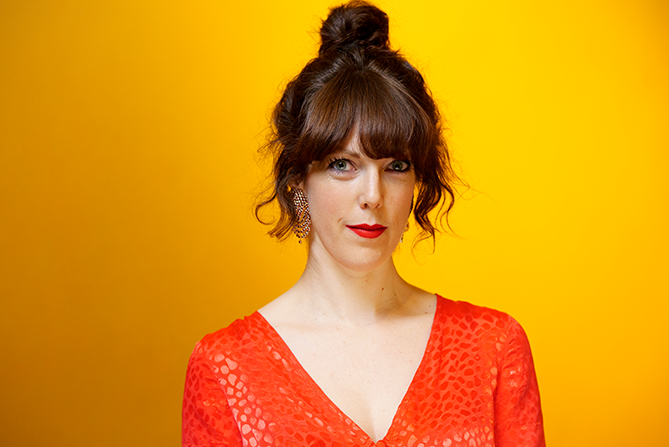
    Danish writer Tine Høeg discusses line breaks, desire and and narrative puzzles.

    PEN Transmissions is English PEN’s magazine for international and translated voices. PEN’s members are the backbone of our work, helping us to support international literature, campaign for writers at risk, and advocate for the freedom to write and read. If you are able, please consider becoming an English PEN member and joining our community of over 1,000 readers and writers. Join now.

    Tine – I love New Passengers. It’s such a rich book. It takes the kind of novel-in-verse form that publicists might call ‘experimental’, but I don’t think it’s that at all (I hope you take that in a good way). Narrative told through broken lines of thought and action and speech, unpunctuated, feels true-to-life. And whilst it might not be the norm of what we’ve been told over the last few centuries that a ‘novel’ looks like, it is a mode of storytelling that has been used since time immemorial. Could you talk to me about your use of form? I think it’s utterly compelling.

    I perceive of my book as a series of images or scenes that are put together into a narrative. A kind of hybrid between prose, poetry and drama. I’m very happy to be able to challenge people’s expectations of what a ‘real’ novel looks like, but I hadn’t planned that before I started writing. The shape was determined by the content. I try to let individual elements stand out, give them space, and shed several meanings. The use of the break is absolutely essential, too. The empty spaces on the pages are in a way part of my vocabulary. There can be just as much meaning hidden in the spaces as in the words themselves.

    I sense that you are meticulous with your line breaks – at times meticulous in making them almost disingenuous. Perspectives shift, times shift, places shift, voices shift between lines. We are suddenly in and out of dreams and projections. I’d like to hear you speak a bit about those line breaks, and what they achieve.

    I like to let the individual lines stand vibrating a little before they ‘land’. Is it an answer, an observation, a dream? And to what or whom is the line connected? I like that one has to read a little further down the page to put the pieces of the puzzle together. In that way, I demand something from the reader – the scene doesn’t unfold until it reaches the reader’s mind and develops there. At the same time, I hope and believe that it feels intuitive. The puzzle is also a rhythmic or melodic one; I read everything aloud to myself many times, and the words have to feel right to me in my mouth. It has to feel like a kind of music when speaking them aloud – and here the line breaks are very important.

    This feels like a very bodily book – full of lust but repulsion, and arresting images of spit. Talk to me about bodily fluids and bodies.

    Desire plays an important role in New Passengers, and the relationship between the narrator and the married man is primarily physical. An immediate, overwhelming attraction – almost like a hunger. I want the reader to feel that hunger. There’s also a paradox in the main character: she is extremely much so inside her own head, and at the same time has to follow the strong physical signals of her body. She is inhibited and uninhibited.

    How closely did you work with Misha Hoekstra during his (consummate) translation of the book? You speak and read English, and I’m always interested in how author-translator collaborations proceed when both individuals share both languages.

    Misha and I collaborated closely, and I had the opportunity to read everything through and comment. I am deeply impressed with his sensitive, beautiful translation, and for the gifted choices he has made along the way. Not everything can be translated directly. For example, there are a lot of specifically Danish expressions and concepts from the school system, and a lot of humour related to Danish grammar and classic spelling mistakes. Here, he really has had to be creative in order to preserve the humour and ambiguity of the original. It was very touching for me to read his translation the first time. As mentioned earlier, I work a lot with rhythm and musicality in every line of text, and it has been a great satisfaction for me to see that he has been able to preserve those elements in his translation.

    Your second book – Tour de chambre – isn’t yet translated into English. But I understand that it shares some of New Travellers’ interests: places of ‘education’ (a college dormitory in the former, and a school in the latter), heavy drinking, a young woman working through multiple complexities in life. What draws you to these shared interests?

    I have written two novels about young women in some kind of transition or existential crisis, and both books deal with a feeling of inadequacy in ‘adult life’. But, really, the central content is far more archetypal: to covet someone you do not have access to, or the right to approach, and the moral dilemmas connected to that. It is detached from age, and I think this is also why my books have gained so many readers. Everyone can relate to this narrative in one way or another. Intense desire is a key concept for me. Not only the physical desire or lust as in New Passengers, but also the desire to write and create – the artistic desire – which plays a big role in Tour de chambre. Desire for motherhood also occupies me a lot. Desire in all its guises – and perhaps especially those attached to the female body.

    Finally, why is our narrator in New Passengers a teacher?

    Taking on the role of a teacher requires an enormous amount of personal authority. You must be in command and take control of things. It created a fruitful contrast for me to place the narrator in that frame when, in many ways, she feels out of control. Like a body in a mental free-fall. It’s a fun or interesting clash. She is a teacher, but in many ways she feels more akin to her students. She is in a limbo between adulthood and youth, free-floating, and not a part of any community.


    Tine Høeg (b. 1985) is a Danish author. Her novel New Passengers won Bogforum’s Debutantpris, the prize awarded each year for the best literary debut published in Denmark. Høeg’s own adaptation of the novel has been staged at the Royal Danish Theatre. In 2020 she published the bestseller Tour de chambre and was awarded with the Edvard P Prize for her authorship. The film rights to Tour de chambre have just been sold.

    Interview by Will Forrester, Editor.

    Photo credit: Lærke Posselt

  • Am I a European writer?

    I’m a Danish writer. I’m not a Danish writer.

    Two statements equally true. How can it be? I was born and grew up in Denmark, have a Danish passport, and write my books in Danish. So de facto in terms of national definitions: I’m a Danish writer. Yet I don’t feel Danish. My mother is Austrian, my father half-German. Language emerging from culture, my more dramatic Slavic temper has never resided well within the limits of Danish laid-back wordings. And since the age of 23 I’ve mainly resided outside of Denmark.

    As we didn’t speak German at home, I didn’t grow up bilingual. Rather than German, English became my second language, and when I was a teenager, through the books I read in their original language, through the films, the music, it became my emotional language. The lack of sensual breadth in the Danish usage of language pushed me to choose another. And though until recently I still wrote all my fiction in Danish, I’ve felt the Danish language to be a constant challenge for the hot-bloodedness of my heart. My pen has had to make sentence structure-loops and grammatical twists which would be correct in the eyes of no Danish teacher, but which were necessary to express the stories of my mind in this straightforward Scandinavian tongue, not fit for Alpine crevices and ravines.

    From early on I was continuously told by my editors that my books are ‘so un-Danish’ – something I’m not sure was meant as a compliment, but which a bit defiantly (or perhaps purely out of necessity) I decided to take as such. Not only did I write in a tempestuous language, my subjects were often far from the Danish mainstream agenda (genocide in the Balkans, or ethics in modern contemporary art and life), and even my characters had far-flung (from Danish) origins. Realizing that this ‘un-Danishness’ would always undermine any attempt I might make at being ‘a Danish writer’, I finally – after my fourth novel or so – accepted it.

    But then what identifying label should I use?

    Originally educated a macro-economist, I became a full-time writer in 1995. I have worked for the EU and United Nations across the globe, from Dar es Salaam, Maputo and Dhaka to Brussels, Milan and New York. Thus, I would prefer to say simply ‘writer’, with ‘citizen of the world’ implicitly understood. But for those who wish to put my books on a regional shelf, ‘European’ at least feels much less wrong than Danish. After all, the conglomerate that is Europe today carries an almost endless range within it.

    The literature which has formed me is no more Danish than I am: my inspirations come from as far afield as Faulkner and Gogol, Achebe and Laxness, Cortazar and Hamsun, from Cervantes to Camus, Mahfouz to Woolf. I have taken advantage of the writer’s privilege of choosing my favourite teachers across the centuries, spanning Shakespeare and Dickinson, over Hardy to Jeannette Winterson, Dante over Canetti to Calvino.

    To the question ‘What is my Heimat?’ I have no answer. New York is my favourite city, that most multicultural place of all, with room for everyone. Yet, the Atlantic being too wide for comfortable commutes, I’ve recently moved back to Europe, this time choosing an all new home-base in Elsinore, at the edge of Scandinavia where the North Sea meets the Sound headed for the Baltic Sea. A corner of Denmark that breathes the very universe, echoing the secret truth which is that the contents of my bookcases are probably my true Heimat.

    Having always worked closely with all my translators, and occasionally making culture- and language-specific adjustments, it’s perhaps no surprise that a few years ago I started a process which would become a major ongoing work: fully adapting one of my books to the history, culture and geographic specifics of each country where it is published. War – what if it were here tells an imagined reversal of the refugee crisis (centred on a family fleeing their war-torn European country), and depends upon its readers being able to identify with the characters. When the book had its first translation in 2011, into German, I knew an entire rewrite would be required; I’ve now done 12 country-specific adaptations with more to come. Some of my editors have told me that this has never before been done in the history of literature. Yet, I simply did it because it felt right, because the story demanded this level of adaptation, of empathy. Perhaps it is also a reflection of the fact which is the essence of being multicultural: to be understood you have to always be ready to adapt yourself to whatever culture you navigate within at any given moment. You are, always and everywhere, your own interpreter.

    By now we are so many millions who have more than one culture – bi-, tri, quatro-or more – that it feels increasingly nonsensical to use the limited national labels of human identity. This is particularly true in a field such as literature, where all writers in their souls essentially belong to universal humanity over and above any nationality. Yet, it’s how the world of literature is still organized: how bookshelves are categorized in the bookshops, how prizes and awards are given, how invitations to panels at book festivals are classified. How you will find us listed in the encyclopaedias, the Wikipedias.

    Danish being an incongruity for me, even an impossibility – I do embrace the wider river of the regional. I am a European. I am a writer.

    Am I a European writer?

    You be the judge.

    Janne Teller CREDIT Anita Schiffer-FuchsJanne Teller is a critically acclaimed and best-selling Danish novelist and essayist of Austrian-German family background. She has received numerous literary grants and awards, including the prestigious American Michael L. Printz Honor Award for Literary excellency. Her literature, that circles around existential questions of life and civilization and often sparks controversial debate, is today translated into more than 25 languages. Janne Teller has published six novels, including the existential Nothing that, after initially being banned, is today considered a new classic by many critics. Janne Teller is also a human rights activist, and was one of the initiators of the 2013 Writers Against Mass Surveillance campaign. She is a member of the Jury of the German Peace Prize.

    Photo credit: Anita Schiffer-Fuchs

  • A form close to home

    When a Danish colleague claimed about ten years ago that he thought I’d make a good short story writer, I shook my head and went: No way! But he insisted, and said that there was something in the precision and the forcefulness of the way that I spoke that might match the short form perfectly. I repeated: No way!

    My resistance had its origin in fear and lack of experience, I guess. I was afraid that I wasn’t a good enough writer, and I considered the short story the hardest form of them all. Why? Well, because you can’t screw up in a short story. You must be aware of what you’re doing every second. Almost each sentence has to have the ability to build a character and burn down a village – and make it look easy. Only writers with a certain talent for precision master that, and I was afraid to fail.

    I published my first novel, a long one, right after I finished university. I had studied Swedish literature, and my thesis was on the writer Kerstin Ekman. She writes big existential novels and Swedish literary history is full of writers like her. Selma Lagerlöf is another heroine of mine. I found them courageous. They were like Ingmar Bergman: unafraid of the material you find when you dig deep into the soul, and always exploring the more painful and unseen realms of civilisation. These writers taught me how to write. Or they gave me the courage to try, and because they wrote big books I thought I should write big books too.

    Then came this Danish writer who claimed that I would marvel in a short form. No way! Forget it I frowned.

    Unlike our beloved siblings in Sweden, we Danes don’t have a particular wish to dig deep into the darkness of humanity. Oh yes, we might murder a few people in a Nordic Noir TV show, but in literature we’re more into irony and style. On top of that the Danish language is cursed – or perhaps blessed – with a lack of words. Compared to, for instance, English, we only have about half the words to do something good with. That calls for creativity. Some words mean a number of different things. The meaning of the word depends on its context. I’m told that the Swedes envy us for the way we have to make ends meet. It forces us to be playful with our language.

    So here’s the deal: the Swedes have that big, fearless, existential approach to literature. The Danes have an elastic, playful, anarchistic and ironic way of using language. And here was this dude telling me – the closet Swede – that I should make use of the strengths of my own language.

    I said: No way! Never!

    But then I heard of a short story contest. There was money in it and I needed money. So I wrote a story. It didn’t win, no. But it got a second prize and a lot of praise, and even though I was still struggling with writing fat books, the fear of the short form started to let go. In 2008 I wrote the story collection Karate Chop. Writing it was wonderful, because I finally got it! The material was deep, dark and Swedish. But the language and the style were Danish. I finally understood how I could combine the big epic with an aesthetic form closer to home. It’s a kind of minimalism under attack from within by something bigger, and I think I know what it is: it’s a Swede expressing herself as a Dane, or a Dane exploring Swedish material.

    On second thought: my professors at the university literary department always stressed that we should NEVER believe what a writer had to say about his or her own work. Writers were not to be trusted.

    So maybe I’m not to be trusted.

    I know this, though: since writing Karate Chop I have written two very tight novellas – the newest of them being Minna Needs Rehearsal Space. It’s a book about a composer who has lost her voice (and her rehearsal space). I wrote it using only headlines – yep, only headlines. Karate Chop and Minna Needs Rehearsal Space have been translated into other languages, and they have given me an international name for the short form. And yes, I know. I ought to call that writer who claimed I would be good at it. I ought to tell him: Sorry I frowned. You were right.

    Find out more about Dorthe Nors’s novellas Karate Chop and Minna Needs Rehearsal Space, published in a special joint edition by Pushkin Press in February 2015.

    Readers in the UK can buy the book from Foyles.

  • PEN Atlas Q&A: Helle Helle, author of 'This Should Be Written in the Present Tense'

    Interview with Tasja Dorkofikis, PEN Atlas editor

    Dorte Hansen lives on her own, on the way to somewhere else. Everything looks ordinary on the surface even though the reader detects that something is wrong.  One has a sense that Dorte moves through life, letting chance make her choices, without getting too engaged in anything. Are all your heroines a bit like Dorte? Are you concerned about young women nowadays and their sense of purpose in life?

    I have a weakness for writing about women who allow themselves to be dragged along by events. All of a sudden they’re in Hamburg with an electrician or getting on the wrong train because the conductor waves his arm. They plan on having omelette, and end up with a pastry snail from the baker’s.  I find that my expressive energy is best generated if my characters fail to do what anyone else can plainly see would be good for them. This is true equally of men and women in my novels, though mostly I have written about young women aged about twenty like Dorte Hansen. At that age you’re at an exceptional stage in life: you leave school and leave home, and must find direction, forge your own path, discover who you are. The smallest, most accidental occurrences shape the rest of our lives. You run into a guy called Per Finland on a country lane and end up a teacher. Or you have a beer with an aspiring young poet and become a writer yourself.

    Readers often ask me why my characters can’t just pull themselves together: complete their education, find a job, move on, at the very least start eating properly. But it doesn’t make sense for me to write about people who are sorted out, people with well-defined aims in life. I sit and stare at the empty page, the words won’t come. Allowing one’s characters to drift aimlessly about may of course be a literary device to encourage the reader to read on, in the hope that someone eventually might do something sensible.

    ‘I didn’t know what to do with myself… I felt like I ought be doing something .’ For me, it was ambiguous whether Dorte is mentally ill or she is just drifting disillusioned and without plans. Are the boundaries between the two ever clear to you?

    Yes, they are, completely. I see no indication of any kind of mental disturbance. But certainly there is paralysis, an inability to do something about one’s own condition, but I consider that to be quite normal.

    Dorte’s aunt, also called Dorte Hansen, has a very important emotional role in the novel. Why do you give them the same name?

    The simple reason is I wanted the name on the door to say “Dorte Hansen X 2”. The two Dortes resemble each other, and yet they don’t. Aunt Dorte has a sandwich shop in a provincial town, she works hard and moves in with a new man every year. Dorte too drifts from one relationship to another. But at the same time she’s moving away from where she’s from. Maybe she becomes a writer. Maybe she ends up writing books about women with an incapacity to do something about their own condition. But this novel, This Should Be Written in the Present Tense, is not so much about moving from one environment to another as about making that transition without feeling you’re betraying where you’ve come from, I suppose.

    Most of your sentences are seemingly simple, pared down, inviting readers to read between the lines. The play between what you have chosen to say and to omit contains a whole story in itself forcing the reader to be very attentive, and giving this very intense reading experience, full of subtext. Can you let the reader know a bit more about this process of writing/selecting?

    Every time I start writing a new novel I make the same mistake. I imagine this will be the one that does it all. It will tell everything like it is and be a brilliantly perfect construction. Then a long time passes during which I gradually become despondent. I can’t find my language. I can’t put into words what I’m trying to say. Eventually, I’m completely broken down and have to admit to myself that the plan is no good. This is fortunate, because it’s such a good place to start writing. From there I inch myself forward, sentence by sentence. I consider every word, and the meanings they draw along with them.

    One of the most interesting things about writing is that changing one word can transform a book entirely. I’m not really that concerned with what’s between the lines, more with what’s on them. What’s essential for me is that each word has to convey something. There has to be a reason for its inclusion. Commas and full-stops are just as important, for the rhythm and music of the paragraph, the telling pauses.

    I do think of my novels as eventful stories, even if it’s easy to think that nothing much happens in them. But what I mainly write about is what my characters do and say, what goes on, and not so much about what they feel and think. Their movements and utterances are like peepholes on their feelings and thoughts. In that respect, of course, you’re right when you talk about reading between the lines.

    Your prose is full of ordinary, minute details of everyday life. Why this attraction to the pattern of daily realities?

    I have a weakness for the objects of day-to-day living, they make up a framework in all my novels. When I start to write I have a long list next to the computer that says, e.g. waterbed, suitcase, beef burger, bedsit, pastry snail. The tangible stuff of everyday life, things that for me have meaning and which I intuitively sense can impart something to the novel I want to write. The waterbed, the suitcase and the beef burger have to be significant for the main character as well.

    Do you have any stylistic heroes?

    I have a number of stylistic heroes. Norway’s Kjell Askildsen and Per Petterson are two, Beckett a third. And then there’s Hemingway, whom I envy for a lot of things, not least his vast practical knowledge. He knew so much about war and Paris and bull-fighting and grenades and fishing and hunting. Not much in the way of pastry snails and day-to-day living there.

    You make the reader doubt the reliability of the text from the beginning: ‘This is how it might have been’; you often negate what you wrote or suggest a different alternative; the timescale of the novel is not very clear and the final message is that the novel should really have been written in the present tense. Do you want the reader to see the reality as confusing and unreliable too?

    Personally I’m fond of reading novels that point to the fact that they are just that: novels. Books that do more than just tell a story in which the reader can indulge without thinking. That doesn’t really do anything for me. But if you can go from being totally absorbed in your reading to suddenly pausing and thinking this isn’t real, then literature is doing what I think it’s supposed to.

    When you write fiction, the language you use is the only thing that’s real. Words, like ‘waterbed’ and ‘suitcase’, commas and full-stops, a sentence such as ‘This is how it might have been’. But if it’s well written you may end up believing it anyway. Even if it is only printer’s ink.

    Your novel has been translated into English by Martin Aitken. Do you work closely with your translators?

    Translators should be allowed to work without the author interfering. Translation is writing the book again, and the translator is the best person to do that. Martin Aitken had a few small queries for me along the way, which I tried to answer. Language isn’t just information that can be transferred. It’s the myriad of small meanings that come with it. I really don’t understand how it can be done.

    Fortunately, Martin Aitken is even better at Danish than I am. And now that This Should Be Written in the Present Tense is on the desk here in front of me, I think of it as belonging to both of us.

    About the editor

    Tasja Dorkofikis is  editor of PEN Atlas and a freelance editor and publicist. She has previously worked as a publicity director at Random House and Associate Publisher and Commissioning Editor for Portobello Books. Tasja divides her time between London and a small village in Vaud in Switzerland.

    Helle Helle is arguably Denmark’s foremost modern novelist and its most popular. She has been awarded many prizes, including the Danish Critics’ Prize, the Danish Academy’s Beatrice Prize, and the P.O. Enquist Award. She was recently given the Lifetime Award of the Danish Arts Council.

    Her work has been translated into thirteen languages. This is her first novel to be translated into English.

    This Should Be Written in the Present Tense has just been published by Harvill Secker.

    You can buy This Should Be Written in the Present Tense through our book partner Foyles.

  • PEN Atlas Q&A: Helle Helle, author of ‘This Should Be Written in the Present Tense’

    Interview with Tasja Dorkofikis, PEN Atlas editor

    Dorte Hansen lives on her own, on the way to somewhere else. Everything looks ordinary on the surface even though the reader detects that something is wrong.  One has a sense that Dorte moves through life, letting chance make her choices, without getting too engaged in anything. Are all your heroines a bit like Dorte? Are you concerned about young women nowadays and their sense of purpose in life?

    I have a weakness for writing about women who allow themselves to be dragged along by events. All of a sudden they’re in Hamburg with an electrician or getting on the wrong train because the conductor waves his arm. They plan on having omelette, and end up with a pastry snail from the baker’s.  I find that my expressive energy is best generated if my characters fail to do what anyone else can plainly see would be good for them. This is true equally of men and women in my novels, though mostly I have written about young women aged about twenty like Dorte Hansen. At that age you’re at an exceptional stage in life: you leave school and leave home, and must find direction, forge your own path, discover who you are. The smallest, most accidental occurrences shape the rest of our lives. You run into a guy called Per Finland on a country lane and end up a teacher. Or you have a beer with an aspiring young poet and become a writer yourself.

    Readers often ask me why my characters can’t just pull themselves together: complete their education, find a job, move on, at the very least start eating properly. But it doesn’t make sense for me to write about people who are sorted out, people with well-defined aims in life. I sit and stare at the empty page, the words won’t come. Allowing one’s characters to drift aimlessly about may of course be a literary device to encourage the reader to read on, in the hope that someone eventually might do something sensible.

    ‘I didn’t know what to do with myself… I felt like I ought be doing something .’ For me, it was ambiguous whether Dorte is mentally ill or she is just drifting disillusioned and without plans. Are the boundaries between the two ever clear to you?

    Yes, they are, completely. I see no indication of any kind of mental disturbance. But certainly there is paralysis, an inability to do something about one’s own condition, but I consider that to be quite normal.

    Dorte’s aunt, also called Dorte Hansen, has a very important emotional role in the novel. Why do you give them the same name?

    The simple reason is I wanted the name on the door to say “Dorte Hansen X 2”. The two Dortes resemble each other, and yet they don’t. Aunt Dorte has a sandwich shop in a provincial town, she works hard and moves in with a new man every year. Dorte too drifts from one relationship to another. But at the same time she’s moving away from where she’s from. Maybe she becomes a writer. Maybe she ends up writing books about women with an incapacity to do something about their own condition. But this novel, This Should Be Written in the Present Tense, is not so much about moving from one environment to another as about making that transition without feeling you’re betraying where you’ve come from, I suppose.

    Most of your sentences are seemingly simple, pared down, inviting readers to read between the lines. The play between what you have chosen to say and to omit contains a whole story in itself forcing the reader to be very attentive, and giving this very intense reading experience, full of subtext. Can you let the reader know a bit more about this process of writing/selecting?

    Every time I start writing a new novel I make the same mistake. I imagine this will be the one that does it all. It will tell everything like it is and be a brilliantly perfect construction. Then a long time passes during which I gradually become despondent. I can’t find my language. I can’t put into words what I’m trying to say. Eventually, I’m completely broken down and have to admit to myself that the plan is no good. This is fortunate, because it’s such a good place to start writing. From there I inch myself forward, sentence by sentence. I consider every word, and the meanings they draw along with them.

    One of the most interesting things about writing is that changing one word can transform a book entirely. I’m not really that concerned with what’s between the lines, more with what’s on them. What’s essential for me is that each word has to convey something. There has to be a reason for its inclusion. Commas and full-stops are just as important, for the rhythm and music of the paragraph, the telling pauses.

    I do think of my novels as eventful stories, even if it’s easy to think that nothing much happens in them. But what I mainly write about is what my characters do and say, what goes on, and not so much about what they feel and think. Their movements and utterances are like peepholes on their feelings and thoughts. In that respect, of course, you’re right when you talk about reading between the lines.

    Your prose is full of ordinary, minute details of everyday life. Why this attraction to the pattern of daily realities?

    I have a weakness for the objects of day-to-day living, they make up a framework in all my novels. When I start to write I have a long list next to the computer that says, e.g. waterbed, suitcase, beef burger, bedsit, pastry snail. The tangible stuff of everyday life, things that for me have meaning and which I intuitively sense can impart something to the novel I want to write. The waterbed, the suitcase and the beef burger have to be significant for the main character as well.

    Do you have any stylistic heroes?

    I have a number of stylistic heroes. Norway’s Kjell Askildsen and Per Petterson are two, Beckett a third. And then there’s Hemingway, whom I envy for a lot of things, not least his vast practical knowledge. He knew so much about war and Paris and bull-fighting and grenades and fishing and hunting. Not much in the way of pastry snails and day-to-day living there.

    You make the reader doubt the reliability of the text from the beginning: ‘This is how it might have been’; you often negate what you wrote or suggest a different alternative; the timescale of the novel is not very clear and the final message is that the novel should really have been written in the present tense. Do you want the reader to see the reality as confusing and unreliable too?

    Personally I’m fond of reading novels that point to the fact that they are just that: novels. Books that do more than just tell a story in which the reader can indulge without thinking. That doesn’t really do anything for me. But if you can go from being totally absorbed in your reading to suddenly pausing and thinking this isn’t real, then literature is doing what I think it’s supposed to.

    When you write fiction, the language you use is the only thing that’s real. Words, like ‘waterbed’ and ‘suitcase’, commas and full-stops, a sentence such as ‘This is how it might have been’. But if it’s well written you may end up believing it anyway. Even if it is only printer’s ink.

    Your novel has been translated into English by Martin Aitken. Do you work closely with your translators?

    Translators should be allowed to work without the author interfering. Translation is writing the book again, and the translator is the best person to do that. Martin Aitken had a few small queries for me along the way, which I tried to answer. Language isn’t just information that can be transferred. It’s the myriad of small meanings that come with it. I really don’t understand how it can be done.

    Fortunately, Martin Aitken is even better at Danish than I am. And now that This Should Be Written in the Present Tense is on the desk here in front of me, I think of it as belonging to both of us.

    About the editor

    Tasja Dorkofikis is  editor of PEN Atlas and a freelance editor and publicist. She has previously worked as a publicity director at Random House and Associate Publisher and Commissioning Editor for Portobello Books. Tasja divides her time between London and a small village in Vaud in Switzerland.

    Helle Helle is arguably Denmark’s foremost modern novelist and its most popular. She has been awarded many prizes, including the Danish Critics’ Prize, the Danish Academy’s Beatrice Prize, and the P.O. Enquist Award. She was recently given the Lifetime Award of the Danish Arts Council.

    Her work has been translated into thirteen languages. This is her first novel to be translated into English.

    This Should Be Written in the Present Tense has just been published by Harvill Secker.

    You can buy This Should Be Written in the Present Tense through our book partner Foyles.