Tag: english

  • All My Languages

    All My Languages

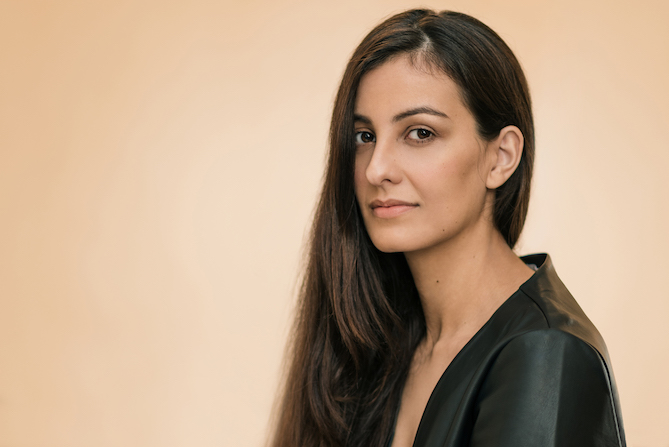
    Ariel Saramandi on Mauritius, identity, and the languages in which she writes, thinks and dreams.

    PEN Transmissions is English PEN’s magazine for international and translated voices. PEN’s members are the backbone of our work, helping us to support international literature, campaign for writers at risk, and advocate for the freedom to write and read. If you are able, please consider becoming an English PEN member and joining our community of over 1,000 readers and writers. Join now.

    I used to think that it could have gone either way. If choosing a language to write and think in is primarily a matter of exposure – that, in the end, we pick the tongue in which we’re comfortable, the language by which we’re surrounded – then I would have chosen French. Or, at the very least, I would have also written in French.

    I was brought up in English, French and Kreol. I spoke English with my English father; French and English with my mother; French with my aunt, who took care of me and my sister while my mother worked; French, Kreol and a smattering of Hindi with the women and men who cared for me alongside my aunt; French and Kreol outside of our home.

    All the leading newspapers and media outlets are in French, a postcolonial particularity that stems from the British administration’s decision not to impose English on the island’s (mostly Francophone) residents when they colonised the country in 1810. I’d read the papers after watching cartoons early in the morning on national TV: Babar, Petit Potam, Cat’s Eye and Sailor Moon were all either in French or French dubbed. When I was around seven, our island was introduced to satellite television, and no provider to my knowledge offered a mix of both English and French channels. My father made sure we alternated between English and French satellites every year, to balance out our tongues.  

    I spoke English at my international primary school. Later, when I joined a Catholic secondary school run by the Diocese, our textbook education was in English but everyone spoke French. It was there that I learned the intricate ways in which language is linked to ethnicity in Mauritius.

    The school was in the same town as the private French lycées, whose fees most of my classmates’ families wouldn’t have been able to afford. It was considered to be a better institution than the other public schools in the area. Within the school there was a separate building dedicated to prevocational education. The students attending these classes were often darker skinned with unstraightened hair, and spoke Kreol outside of the classroom. This was untenable to many of the schoolgirls I knew who would only speak French: Kreol was used sparingly, in jest, never spoken earnestly. These girls spent hours polishing their accent by watching French satellite television; lusted over the white boys of the lycée and the light-skinned boys in the school next door; straightened their hair, wore green contact lenses. When I won a place at a prestigious state school, the languages around me changed again: French was rarely heard, English, Kreol and Hindi were dominant. Like the Catholic school, many of the girls were middle and lower-middle class; unlike my previous school, my classmates were now mostly Indo-Mauritian. The obsession with whiteness didn’t change: some of the girls would buy bleaching creams advertised by Bollywood stars.

    But one mustn’t be quick to sketch out an order of things. It’s often believed that light skin and wealth are associated with languages of power; darker skin and lower incomes with the Kreol language. Besides and beyond Kreol, it’s assumed that Indo-Mauritians generally prefer to speak English, whereas Creoles and Franco-Mauritians choose French.

    These linguistic schemata are blasted apart every day. None of them hold. A wealthy Indo-Mauritian child attending one of the lycées would probably speak French at home. And Kreol is spoken by over 90% of us, across all spectrums of wealth and ethnicity.

    A conversation with my friend Marek Ahnee, a researcher at the EHESS, also complicates this idea of linguistic correlative order. Both of us – and our families and friends in our Creole milieu – speak in a mix of French-English-Kreol every day without thinking about it. I’ve just said ‘Allume l’aircon s’il te plait mo pe mor’, for instance.

    I’ve seen our parents and our friends be questioned for their supposed ‘allegiance’ to French, when they speak and write in English and Kreol just as perfectly. Marek tells me that when Creoles speak French it’s often seen as French colonial mimicry. English, incongruously, is seen as a somewhat ‘liberated’ language ­– this whole line of thinking is another example of how colonial empires always exist in relation to other colonial empires. He adds that French, which has been used (and is still used, in certain settings) as a tool of colonial power, is also a refuge for many Mauritian Creoles and marginalised Indo-Mauritian communities; it even serves as an instrument of social mobility to these people.

    ~

    There are rancid ideas that are, hopefully, in the last stages of putrescence before they die out. There are tough, complex systems of caste and white supremacy that will take the efforts of a nation to dismantle.

    There is also money. It chose my tongue. I’ve spent a few months thinking about this essay and it allows for no other conclusion: if it weren’t for my father – his excellent position, his English nationality that I inherited, my private primary school, the English bookshops to which I travelled, the English books I amassed – I would probably be writing in French. And perhaps I’d never be a writer at all.

    Mauritius in the mid 1990s: you could count the number of bookstores on one hand. They sold an excessive number of self-help books, as well as copies of classics in strange fonts, reprinted by local publishers with or without permission.  The municipal libraries were (and still are) pathetically stocked. The British Council’s library perhaps existed back then – it closed in 2016; English officials didn’t think there’d be much interest in keeping it open –  but I don’t remember my parents taking me there. The Institut Francais de Maurice’s gorgeous mediatheque only opened in 2010. I don’t know where their first library was and wasn’t brought there, in any case. As for Kreol – the only book I had in Kreol was a poetry pamphlet. There were no Kreol books for children back then.

    I had books in French: picture books of Disney movies, the Martine series, Hector le Castor and friends. These French books, bought in Mauritius, couldn’t rival the number of books I had in English from abroad. My father travelled several times a year, and there was often a book or magazine packed inside his suitcase for me when he returned. Once a year, we’d all go to England. My parents would leave me alone in one of the bookshops in Canterbury and I’d leave with ten to fifteen books. I would depend on that bookshop well into my teenage years, when it seemed that everyone abroad was able to buy books online except for me: Mauritius didn’t exist in the ‘choose your country’ drop-down menu. There was also a book catalogue that my primary school sent out once or twice a year: I’d circle the ones I wanted most to read, the school would order them, and they’d arrive a few months later. 

    ~

    I was cushioned in English children’s literature, and then PG 13 classics like Little Women.

    When I’d finished rereading my books I searched for others around the house. My father mostly read tomes on the world wars, biographies of athletes. My mother, however, had a proper, literary, adult collection of novels.

    I was nine when I stumbled on the first volume of Henri Troyat’s Les Eygletière. The volumes were furrowed under piles of Cosmopolitans and Anaïs Nin, stored away in a broken cream drawer. They weren’t especially hidden. As I started reading the novel – I didn’t know there were two more books in the trilogy, and in any case I never sought them out – I felt, acutely and for the first time, very young and stupid and scared. The Eygletière family live in Paris in the 1960s. Philippe, the patriarch, has married his second much younger wife, Carole, whom he cheats on. Carole, in turn, begins to have an affair with Philippe’s son Jean Marc. Daniel, the youngest son, sets upon discovering himself in ‘pure’ Africa (of course!)

    I don’t remember finishing the book, but I do remember putting it back in the exact place I found it, never telling my mother. I was cautious around her other books in French, and French literature in general. Given that I didn’t have that many French books anyway, it wasn’t difficult to read exclusively in English.

    As I grew up, I turned to French literature again, but always with a certain apprehension. I prepare myself to be disquieted, thrilled. Some of the greatest reading experiences of my life have been in French: Madame Bovary, L’Étranger, Vipere au poing, Bonjour Tristesse,Proust, Zola, Ernaux, Énard, NDiaye, Colette, Blanchot, Bachelard, Levinas. Sometimes, I wonder whether I hold the language as sacrosanct, the language of the sublime ­– my sublime – that I won’t tamper with, won’t attempt.

    That may change. I think and dream in French. Over the past few years in Mauritius, it has become rare for me to talk in English for more than a few sentences at a time. My son is bilingual but chooses to speak mostly in French. Sometimes he will surprise me by repeating to me a sentence I’ve just said in the other language. Bookshops now are filled with French offerings, and though he knows and loves the classics – the animals of Eric Carle, Margaret Wise Brown’s rabbits – it is the adventures of Timoté that he picks up again and again. He has books in Kreol, too, like the translations of Tintin by Shenaz Patel. I wonder if he’ll end up choosing one language over another, or if he won’t feel like he has to make a choice. Whatever happens, I’ll keep a steady supply of age-appropriate books in all the languages he knows.


    Ariel Saramandi is an Anglo-Mauritian writer living in Mauritius. Her fiction and essays have been published by GrantaLA Review of Books and Brooklyn Rail, among other places. She is represented by Lisa Baker at Aitken Alexander Associates.

  • An 'archival identity'

    This week PEN Atlas hears from Carmen Bugan, daughter of Romanian dissident Ion Bugan,  on the discovery of previously classified files about her family that were kept by secret police during the 1980s in Romania. A fascinating and moving account about dissidence, family and identity.

    Sometime after the Romanian Revolution of 1989 the new government opened the files kept by the secret police (Securitate) and made them available to families who were the subject of such files. What you actually get is the cleaned up – readable, publicly digestible, indeed, publishable – version of the dossiers, not the whole of them. But still this is enough to make you reconsider your personal identity and sense of your own family and friends. I wrote to the Consiliul National Pentru Studierea Arhivelor Securitatii (CNSAS) asking for my own files and instead, thanks to a lot of bureaucratic confusion, in July 2010 I received access to my father’s.  My mother asked for hers and in September 2012 she received them, almost exactly twice as many as my father’s.  At the time of preparing this essay for publication we received news that CNSAS found three more dossiers (eight more volumes) on my father; I have set up an appointment to consult them this autumn.To my surprise, all of the details of my own adolescence, complete with love notes I wrote to boys thinking only they would read them, have been faithfully recorded in my mother’s archives. My yearly letter to my father in prison, his postcards to us, and the conversations my father had with the men in his cell, are all recorded, sometimes paraphrased, as are the transcripts of our dreams that we used to share with each other in the mornings. There are notes with further instructions for monitoring us written on the side of the pages as well as glosses about our state of mind or feelings when we made certain remarks that they interpreted from our tone of voice, as well as transcripts of all of our telephone conversations.  To top it off, there are also records of when we couldn’t be recorded because there were regular power cuts affecting the village.Now, of course, as my father correctly states, I don’t need to read the files of the Securitate to find out who he is, by now I know who he is.  But in light of having begun to read through these documents I am beginning to disagree. I am now developing a notion of his ‘archival identity’ and while this is happening, I am also going through a revolution of my own sense of identity as a member of a family with ‘archival past’.  I am beginning to make space in my own sense of identity for an ‘official’ version of myself, in other words, for a diary of my adolescence written by someone else.For one thing, in these files I meet my young father – some nine years before he married my mother and she gave birth to me. It’s strange to have a ‘documented’ narrative of your young parent, indeed even younger than you are when you are reading about it.  It’s like reading a story about someone else entirely. I meet the man who survived horrendous prison interrogations and torture, even though the torture is not explicitly mentioned in these files: only the periods of solitary confinement are documented with dates and places. You find out about the beatings by reading between the lines. In my own experience my father is the man who told me to eat my tomato salad and dress well to avoid getting a cold.  He taught me to change light bulbs, car tires, build shelves, and made me cry every time he won at chess. In these files he is the man who attempted to hijack an aeroplane to escape from Romania following his public expression of anticommunist sentiments, the man who hiked all the way to cross the Iron Curtain with a backpack filled with lemons, chocolate, cognac and antibiotics, and slept in haystacks and coal piles to hide from armed police, the man who always did everything to ‘take the chain from around my neck’, as he still says. So it’s a bit like having two different men for one father.How did he manage to survive it all? Today he is a man for whom there exists the ‘official narrative’ of his life as a dangerous political ‘criminal’, as well as his own personal identity as someone who sacrificed his best years for the benefit of everyone else. Yet at the same time he is a man who still struggles with his own identity, that of an old immigrant planting his tomatoes in a garden far from his birthplace, forgotten by everyone.burying_the_typrwriter_fc_1 (3)In September 2012 I took my little children, husband, and mother-in-law to the United States for a publicity tour of Burying the Typewriter, my memoir about growing up in Romania, and to see my family in Michigan.  As we walked through the door to my parents’ house one night, my mother was bent over a stack of folders containing no fewer than 3000 pages of informative material on her and on us, then children.  Think of all of the things that we said for the microphones, precisely because we knew they were there! And think of all the things we said because we could no longer hold them inside ourselves however hard we tried. After one of the prison visits at Aiud, we went to visit my mother’s brother at the Black Sea for ten days. The files contain the transcripts of all of the conversations we had at my uncle’s house, including details such as the money he gave to us and the one kilogram of coffee, without the knowledge of his wife, since money was tight for him too!  It turns out that not only our house was bugged, but also his house, all the way across Romania, as were the houses of all of our friends, where we went to talk ‘freely’. We stood around the living-room chair where my mother piled all of those files, facing the hard evidence of what it meant to be the wife and the children of a political dissident in Romania in the 1980s.I am reading strange things about myself in my mother’s secret files.  It turns out that I also had a dossier, I was followed and monitored closely. One of the pages in my file says that ‘certain international organisations and radio entities solicit freeing of Ion Bugan from prison’ and that the only people who could give these outsiders information about my father’s situation would be my mother and me.  So I am reading about the food I ate in 1985, the boy I kissed in the park in 1987 and about his parents going to my mother at work to raise hell about me getting their son in trouble by my association with him. There is my letter in which I reproach him for his parents’ harassment of my mother.  I was a feisty teenager and certainly one who was not easily intimidated: how did I manage to put that face on? But the ultimate figure of ‘Carmen’ that emerges from these files is of ‘a woman with troubles’ someone who tries to articulate some kind of personal independence out of the mess created by the Securitate, resulting in a string of fights with everyone about everything.This literature written by the secret police is exacting, detailed, and also, in significant ways, a lie.  What is true is that we were normal people caught in the destiny of my father’s dissent and we were isolated, intimidated, hungry, and ultimately very tired.  It is not true that we constituted a danger for the people of Romania. We behaved the way the secret police dictated to us: my mother was forced to divorce my father, she had to ‘disagree’ with his politics of opposition, and I applied to be a member of the young communists league, only to be publically shamed because I was ‘unfit’ for membership. The language of the files, including notes and instructions for further monitoring of our family, highlighted paragraphs, and paragraphs blotted out in black ink constitute the language of the oppressor. The details that the oppressor selected to report, the particular gaps he selected to keep in our conversations, the specific meaning he wanted to give to what we were saying for their purposes of finding reasons to further intimidate and observe us aggregate into a specialized language that needs to be properly accounted for.And then
    there is the language of the oppressed – of us – oscillating between showing solidarity (in conversations we had when we thought we were out of the range of microphones) and condemnation of my father’s dissidence (in the house) and his heroic act which he committed at our expense.  For me, reading these files and understanding them requires a supreme act of imagination: in one file, just three pages long, they say that the dialogue transcribed is ‘based on listening to ten audio cassettes’. This means that someone more or less wrote the dialogue pretending it was our own words.  No wonder that, in these files, I address my parents with the informal tu and my parents use technical secret police language, words such as filaj (to follow very closely) which they certainly didn’t know!  That is to say, our language is a mixture of ours and theirs so my fight now is to rescue our own words from the files with the help of memory. Even our speech had been stained by the way we were objectified.Some 20 years after our exile, having received ‘official’ evidence that what we experienced as a family was in fact far worse than we ourselves understood at the time, I feel betrayed once again. I am reading a three-line transcript where they recorded: ‘At 1:32am someone is trying to open the door to the room equipped with listening devices.  The door doesn’t open, after which we record footsteps of someone going away and the insistent barking of the dog, as if to a person who is a stranger to the house.’  The transcript refers to the fact that the secret police were coming into our house at night in order to change their audio/video tapes. I wrote about it in my memoir Burying the Typewriter but there is something quite heartbreaking about reading the Securitate’s self-recording, whilst recording us.For some, a sense of personal identity is a matter of evolution: you wake up in the morning, look in the mirror and know who you are.  Experience, family, friends, and the society in which you live shape you but in a manner which is cumulative – you build on who you know you are.  For me, as I read through an ‘official’ version of my parents’ identities, my own sense of self is changed again, into what exactly, it is too early to know. For 23 years now I have been working on overcoming the sense that we were victims of totalitarianism.  I have tried to blend into western society, living a life with all the normal joys and anxieties: I told myself I must start anew and succeed in a free world, am I not so very lucky I can do this? Think of all of those who died next to my father in the forced labour camps and think of all of those who died in the prisons where he sacrificed 12 years of his life. At least we could start all over again, like all the other immigrants; we could buy into the American dream. But now I read about myself as a two-year old child whom, according to an ‘informative note’, my father loves very much. Just what ghosts of beatings in a prison courtyard in the dead of winter were haunting him as he was making the colourful lights to place above my pram so I can enjoy a little bit of beauty? Here is a medical report file that says ‘the x-ray shows a fractured rib’ and below, ‘application of hammer to fingers.’ The past is the same and is not the same after reading this.The Romanian poet Lucian Blaga said that literature is the tears of those who could not cry—and that is what I am after here, an acknowledgment of suffering, of feeling that somehow does not seem to fit into all of this mess. This is the transformative quality that my writing will need to impose upon the reality of these files. That we woke up at 5 every morning, that my mother came from work everyday exactly at 15:40, me at 18:20, and that we went to bed after eating our sour soup and polenta from the day before at 22hrs is a record of our flesh and blood struggle to live.  During the last spring that we lived in Romania, after we had applied for passports, we were recorded turning over the soil of our garden and planting vegetables.  I am moved by how much we still wanted our garden to blossom and bloom back then, to produce a harvest that we didn’t hope to, and did not in the end, eat. For better or for worse, this biography of my family written by the secret police is testimony to the fact that we existed then – we are a record of hope and dissent that was thought not to exist in my native country at that time.

    About the author

    Carmen Bugan was born in Romania in 1970 and emigrated to the US with her family in 1989 as political dissidents.  She has a doctorate in English literature from Balliol College, Oxford. Her publications include two collections of poems, The House of Straw (due out shortly from Shearsman) and Crossing the Carpathians (Oxford Poets/Carcanet), a critical study on Seamus Heaney and East European Poetry in Translation: Poetics of Exile (Legenda, Oxford /Maney Publishing), and the internationally acclaimed memoir Burying the Typewriter: Childhood Under the Eye of the Secret Police (Picador, UK; Graywolf, USA, 2012).  The American edition of this book has won the Bread Loaf Conference Bakeless Prize for Nonfiction and the English edition was BBC Radio 4 Book of the Week and shortlisted for the George Orwell Prize for Political Writing. Carmen Bugan was a Creative Arts Fellow in Literature at Wolfson College, Oxford and a Fellow at the Hawthornden International Retreat for Writers in Scotland.  She is currently researching the secret files that the Romanian Secret Police had kept on her and her family and is writing a book about having lived on both sides of the Iron Curtain.  She is also working with the BBC on a documentary about her family.  Bugan lives in France with her husband and children.

    Additional Information

    Burying the Typewriter: Childhood Under the Eye of the Secret Police Carmen Bugan will be talking during Le livre sur les quais, a literary festival in Morges in Switzerland, on the 7th and 8th of September. 

  • An ‘archival identity’

    This week PEN Atlas hears from Carmen Bugan, daughter of Romanian dissident Ion Bugan,  on the discovery of previously classified files about her family that were kept by secret police during the 1980s in Romania. A fascinating and moving account about dissidence, family and identity.

    Sometime after the Romanian Revolution of 1989 the new government opened the files kept by the secret police (Securitate) and made them available to families who were the subject of such files. What you actually get is the cleaned up – readable, publicly digestible, indeed, publishable – version of the dossiers, not the whole of them. But still this is enough to make you reconsider your personal identity and sense of your own family and friends. I wrote to the Consiliul National Pentru Studierea Arhivelor Securitatii (CNSAS) asking for my own files and instead, thanks to a lot of bureaucratic confusion, in July 2010 I received access to my father’s.  My mother asked for hers and in September 2012 she received them, almost exactly twice as many as my father’s.  At the time of preparing this essay for publication we received news that CNSAS found three more dossiers (eight more volumes) on my father; I have set up an appointment to consult them this autumn.To my surprise, all of the details of my own adolescence, complete with love notes I wrote to boys thinking only they would read them, have been faithfully recorded in my mother’s archives. My yearly letter to my father in prison, his postcards to us, and the conversations my father had with the men in his cell, are all recorded, sometimes paraphrased, as are the transcripts of our dreams that we used to share with each other in the mornings. There are notes with further instructions for monitoring us written on the side of the pages as well as glosses about our state of mind or feelings when we made certain remarks that they interpreted from our tone of voice, as well as transcripts of all of our telephone conversations.  To top it off, there are also records of when we couldn’t be recorded because there were regular power cuts affecting the village.Now, of course, as my father correctly states, I don’t need to read the files of the Securitate to find out who he is, by now I know who he is.  But in light of having begun to read through these documents I am beginning to disagree. I am now developing a notion of his ‘archival identity’ and while this is happening, I am also going through a revolution of my own sense of identity as a member of a family with ‘archival past’.  I am beginning to make space in my own sense of identity for an ‘official’ version of myself, in other words, for a diary of my adolescence written by someone else.For one thing, in these files I meet my young father – some nine years before he married my mother and she gave birth to me. It’s strange to have a ‘documented’ narrative of your young parent, indeed even younger than you are when you are reading about it.  It’s like reading a story about someone else entirely. I meet the man who survived horrendous prison interrogations and torture, even though the torture is not explicitly mentioned in these files: only the periods of solitary confinement are documented with dates and places. You find out about the beatings by reading between the lines. In my own experience my father is the man who told me to eat my tomato salad and dress well to avoid getting a cold.  He taught me to change light bulbs, car tires, build shelves, and made me cry every time he won at chess. In these files he is the man who attempted to hijack an aeroplane to escape from Romania following his public expression of anticommunist sentiments, the man who hiked all the way to cross the Iron Curtain with a backpack filled with lemons, chocolate, cognac and antibiotics, and slept in haystacks and coal piles to hide from armed police, the man who always did everything to ‘take the chain from around my neck’, as he still says. So it’s a bit like having two different men for one father.How did he manage to survive it all? Today he is a man for whom there exists the ‘official narrative’ of his life as a dangerous political ‘criminal’, as well as his own personal identity as someone who sacrificed his best years for the benefit of everyone else. Yet at the same time he is a man who still struggles with his own identity, that of an old immigrant planting his tomatoes in a garden far from his birthplace, forgotten by everyone.burying_the_typrwriter_fc_1 (3)In September 2012 I took my little children, husband, and mother-in-law to the United States for a publicity tour of Burying the Typewriter, my memoir about growing up in Romania, and to see my family in Michigan.  As we walked through the door to my parents’ house one night, my mother was bent over a stack of folders containing no fewer than 3000 pages of informative material on her and on us, then children.  Think of all of the things that we said for the microphones, precisely because we knew they were there! And think of all the things we said because we could no longer hold them inside ourselves however hard we tried. After one of the prison visits at Aiud, we went to visit my mother’s brother at the Black Sea for ten days. The files contain the transcripts of all of the conversations we had at my uncle’s house, including details such as the money he gave to us and the one kilogram of coffee, without the knowledge of his wife, since money was tight for him too!  It turns out that not only our house was bugged, but also his house, all the way across Romania, as were the houses of all of our friends, where we went to talk ‘freely’. We stood around the living-room chair where my mother piled all of those files, facing the hard evidence of what it meant to be the wife and the children of a political dissident in Romania in the 1980s.I am reading strange things about myself in my mother’s secret files.  It turns out that I also had a dossier, I was followed and monitored closely. One of the pages in my file says that ‘certain international organisations and radio entities solicit freeing of Ion Bugan from prison’ and that the only people who could give these outsiders information about my father’s situation would be my mother and me.  So I am reading about the food I ate in 1985, the boy I kissed in the park in 1987 and about his parents going to my mother at work to raise hell about me getting their son in trouble by my association with him. There is my letter in which I reproach him for his parents’ harassment of my mother.  I was a feisty teenager and certainly one who was not easily intimidated: how did I manage to put that face on? But the ultimate figure of ‘Carmen’ that emerges from these files is of ‘a woman with troubles’ someone who tries to articulate some kind of personal independence out of the mess created by the Securitate, resulting in a string of fights with everyone about everything.This literature written by the secret police is exacting, detailed, and also, in significant ways, a lie.  What is true is that we were normal people caught in the destiny of my father’s dissent and we were isolated, intimidated, hungry, and ultimately very tired.  It is not true that we constituted a danger for the people of Romania. We behaved the way the secret police dictated to us: my mother was forced to divorce my father, she had to ‘disagree’ with his politics of opposition, and I applied to be a member of the young communists league, only to be publically shamed because I was ‘unfit’ for membership. The language of the files, including notes and instructions for further monitoring of our family, highlighted paragraphs, and paragraphs blotted out in black ink constitute the language of the oppressor. The details that the oppressor selected to report, the particular gaps he selected to keep in our conversations, the specific meaning he wanted to give to what we were saying for their purposes of finding reasons to further intimidate and observe us aggregate into a specialized language that needs to be properly accounted for.And then
    there is the language of the oppressed – of us – oscillating between showing solidarity (in conversations we had when we thought we were out of the range of microphones) and condemnation of my father’s dissidence (in the house) and his heroic act which he committed at our expense.  For me, reading these files and understanding them requires a supreme act of imagination: in one file, just three pages long, they say that the dialogue transcribed is ‘based on listening to ten audio cassettes’. This means that someone more or less wrote the dialogue pretending it was our own words.  No wonder that, in these files, I address my parents with the informal tu and my parents use technical secret police language, words such as filaj (to follow very closely) which they certainly didn’t know!  That is to say, our language is a mixture of ours and theirs so my fight now is to rescue our own words from the files with the help of memory. Even our speech had been stained by the way we were objectified.Some 20 years after our exile, having received ‘official’ evidence that what we experienced as a family was in fact far worse than we ourselves understood at the time, I feel betrayed once again. I am reading a three-line transcript where they recorded: ‘At 1:32am someone is trying to open the door to the room equipped with listening devices.  The door doesn’t open, after which we record footsteps of someone going away and the insistent barking of the dog, as if to a person who is a stranger to the house.’  The transcript refers to the fact that the secret police were coming into our house at night in order to change their audio/video tapes. I wrote about it in my memoir Burying the Typewriter but there is something quite heartbreaking about reading the Securitate’s self-recording, whilst recording us.For some, a sense of personal identity is a matter of evolution: you wake up in the morning, look in the mirror and know who you are.  Experience, family, friends, and the society in which you live shape you but in a manner which is cumulative – you build on who you know you are.  For me, as I read through an ‘official’ version of my parents’ identities, my own sense of self is changed again, into what exactly, it is too early to know. For 23 years now I have been working on overcoming the sense that we were victims of totalitarianism.  I have tried to blend into western society, living a life with all the normal joys and anxieties: I told myself I must start anew and succeed in a free world, am I not so very lucky I can do this? Think of all of those who died next to my father in the forced labour camps and think of all of those who died in the prisons where he sacrificed 12 years of his life. At least we could start all over again, like all the other immigrants; we could buy into the American dream. But now I read about myself as a two-year old child whom, according to an ‘informative note’, my father loves very much. Just what ghosts of beatings in a prison courtyard in the dead of winter were haunting him as he was making the colourful lights to place above my pram so I can enjoy a little bit of beauty? Here is a medical report file that says ‘the x-ray shows a fractured rib’ and below, ‘application of hammer to fingers.’ The past is the same and is not the same after reading this.The Romanian poet Lucian Blaga said that literature is the tears of those who could not cry—and that is what I am after here, an acknowledgment of suffering, of feeling that somehow does not seem to fit into all of this mess. This is the transformative quality that my writing will need to impose upon the reality of these files. That we woke up at 5 every morning, that my mother came from work everyday exactly at 15:40, me at 18:20, and that we went to bed after eating our sour soup and polenta from the day before at 22hrs is a record of our flesh and blood struggle to live.  During the last spring that we lived in Romania, after we had applied for passports, we were recorded turning over the soil of our garden and planting vegetables.  I am moved by how much we still wanted our garden to blossom and bloom back then, to produce a harvest that we didn’t hope to, and did not in the end, eat. For better or for worse, this biography of my family written by the secret police is testimony to the fact that we existed then – we are a record of hope and dissent that was thought not to exist in my native country at that time.

    About the author

    Carmen Bugan was born in Romania in 1970 and emigrated to the US with her family in 1989 as political dissidents.  She has a doctorate in English literature from Balliol College, Oxford. Her publications include two collections of poems, The House of Straw (due out shortly from Shearsman) and Crossing the Carpathians (Oxford Poets/Carcanet), a critical study on Seamus Heaney and East European Poetry in Translation: Poetics of Exile (Legenda, Oxford /Maney Publishing), and the internationally acclaimed memoir Burying the Typewriter: Childhood Under the Eye of the Secret Police (Picador, UK; Graywolf, USA, 2012).  The American edition of this book has won the Bread Loaf Conference Bakeless Prize for Nonfiction and the English edition was BBC Radio 4 Book of the Week and shortlisted for the George Orwell Prize for Political Writing. Carmen Bugan was a Creative Arts Fellow in Literature at Wolfson College, Oxford and a Fellow at the Hawthornden International Retreat for Writers in Scotland.  She is currently researching the secret files that the Romanian Secret Police had kept on her and her family and is writing a book about having lived on both sides of the Iron Curtain.  She is also working with the BBC on a documentary about her family.  Bugan lives in France with her husband and children.

    Additional Information

    Burying the Typewriter: Childhood Under the Eye of the Secret Police Carmen Bugan will be talking during Le livre sur les quais, a literary festival in Morges in Switzerland, on the 7th and 8th of September. 

  • To some I have talked with by the fire

    PEN Atlas this week features Taiwanese author Wu Ming-Yi, who takes us through the Great Pacific Trash Vortex, indigenous island tribes, and the ancient practice of storytelling – all of which inspired his first novel to be translated into English

    The Man With the Compound Eyes was first conceived several years ago when I chanced upon a news story about the Great Pacific Trash Vortex, which Captain Charles Moore had discovered in 1997. Scientists still do not have any means of disposing of the ‘seas of plastic’. For some reason, the idea of this ‘trash vortex’ lodged itself in my mind, and took on a life of its own; I would be out in the wilderness, passing through small towns, or walking along the seashore, and a vision of all the detritus of civilization gathering into a floating mountain of trash would appear in my mind. Later on, a young person appeared on this garbage island. I called him Atelie, which suggests fierceness in Chinese but which actually derives from a word meaning ‘atoll’. Atelie became Atile’i in English translation. Eventually I decided that he had been born on another South Pacific island called Wayo Wayo, which had escaped the notice of civilization. Its indigenous inhabitants were the Wayo Wayoans. The Man With the Compound Eyes was well on the way to being born.

    Although I had always drawn on personal or family memory in my previous fiction, I had no preconceptions about any of the characters inthis novel. During the writing process I would finish a section and the story would stall. I would wait a few days and a new character would appear and tell me where the story was supposed to go. I was not trying to fictionalize reality or experience. I was just trying to help the imaginative materials in my head find a way forward. As I proceeded, new characters kept appearing, many of them indigenous. That didn’t surprise me, because Taiwan’s indigenous peoples have been a great inspiration to me over the past couple of years.

    Living all around the island, Taiwan’s indigenous peoples are diverse: there are cultures of hunting, of fishing and of horticulture. There are also differences to be perceived within each of Taiwan’s indigenous peoples. Among the Amis (also known as the Pangcah) for instance, the Tafalong are not the same as the Vataan. But no matter how they support themselves traditionally, all Taiwan’s indigenous peoples express their culture in their daily speech. The Amis people sometimes say, “I’m going to get something out of the icebox,” before diving into the Pacific Ocean to harvest shellfish and crab. When the Bunun, who live by the mountains, say the same thing, they intend to shoulder their hunting guns and disappear down a forest path.

    Taiwan’s indigenous peoples have awed me with their beauty. The bamboo chopping songs of the Atayal can move the forest animals to tears. The most beautiful eyes I have ever seen belonged to a Tsou aborigine. And there is a wonderful simplicity to traditional indigenous ways of life. Living on Orchid Island, every Dawu boy has to master three arts – diving, boatmaking and story-telling – before he can become a man.

    As a highly developed economic and industrial nation, Taiwan has mastered the many modern analogues of diving and boat-making. Ours is a story of development, but there is a price to be paid for ‘progress’, and it often seems that progress has swept everyone up, like a tidal wave. From what I have observed in travels through nature and society, the island of Taiwan – in reality or in The Man With the Compound Eyes – has experienced huge changes over the past few decades. But the people of Taiwan – like the characters who populate my fiction – are all sustained by a faith in their ability to adapt. Though people sometimes talk about Taiwan as having stalled along the way, it seems to me that the Taiwanese people are casting about, trying to find a way forward. In this respect, Taiwan is a microcosm for Planet Earth, the Taiwanese people for all humanity.

    In writing The Man With the Compound Eyes, I imagined myself telling tales to a small audience huddled around the fading coals. A fiery glow blazed in the eyes of some, while merely making the cheeks other listeners flush or causing them to doze off. Tears finer than the point of a pin have formed in the eyes of a few, and a very few have ended up getting up and leaving, only to realize it is raining outside. Neither heavy nor light, the rain streaks the sky like the straight lines of precipitation in a Japanese ‘floating world’ (ukiyo-e) painting.

    This was the mood that sustained me through the writing of The Man With the Compound Eyes.


    Abour the author

    Wu Ming-Yi is a Taiwanese writer, painter, designer, photographer, literary professor, butterfly scholar, environmental activist, traveller and blogger. He is the author of the novel Routes in the Dream (2007), as well as a number of non-fiction books and short story collections. The Man with the Compound Eyes is his first novel to be translated into English.


    About the translator

    Darryl Sterk has translated numerous short stories from Taiwan for The Chinese Pen Quarterly, and now teaches translation in the Graduate Program in Translation and Interpretation at National Taiwan University.


    Additional information

    To find out more about the novel The Man with the Compound Eyes, please click here.

    You can follow news about the book on Twitter via @HarvillSecker and/or #manwiththecompoundeyes


  • Translations and Mutations

    Adam Thirlwell takes us through the utopian goals and surprising results of Multiples, an experiment in translation. Charting dozens of countries, languages and authors, this anthology is playful yet subversive, questioning the purpose of translation, the idea of style and the future of the novel

    I don’t think it’s so wrong to be utopian. And one form my utopian instincts take is to imagine some kind of ideal world history of the novel, no longer divided into minute splintered languages. According to this ideal, translation would no longer be treated as invisible, or an inevitable failure: no, instead translation would be seen as one more playful form in which a novel could exist.  It would be regarded with a sunny kind of optimism…

    That, in a very brief way, is how I try to explain to myself why it was I ended up inventing a gargantuan project with McSweeney’s Quarterly – an experiment in putting this utopia into action. Or, to put it upside-down, it was an experiment designed to try to prove that some of the obstacles to my utopian ideal could be tested and then dismantled – those obstacles being theories of style as the ultimate untranslatable element, or that all translations should be done from the original, by a trained and responsible translator.

    And so the mechanics of this experiment seemed relatively simple… The principle was to choose a story, then submit it to a sequence of translations by novelists, that would zigzag in and out of English. So that a story by Franz Kafka, for example, would be translated into English by John Wray, whose English version would be translated into Hebrew by Etgar Keret, whose Hebrew would be translated back into English by Nathan Englander, then once more poor Kafka would be metamorphosed, this time into Spanish by Alejandro Zambra, until finally returning to English once again, in a version of Alejandro Zambra by Dave Eggers. And then that process was repeated, with a new original and new novelists – until we ended up with around 12 stories, multiplied via 61 novelists, in a total of 17 languages.

    You see? This utopia turned into madness. To make things worse, the rule was that there would be no rules – that each novelist in the series could translate the story in any way they wanted: for some, that meant what most people think of as a translation – fluent knowledge of the original’s language, and a meticulous attempt to reproduce the words and syntax. For others, it meant an entirely new story. It was simply left to each novelist’s conscience as to how they wanted to interpret the single instruction: to create an equivalent story in their own language.

    And now that it exists, this giant anthology, I’m left wondering what it was we in the end precisely proved. Because yes, I think in its way it does manage to dismantle a certain rhetoric of what an original might mean, or what a translation might mean, too. But at the same time, the dismantling went maybe further than I even expected. After all, this project had begun with a basic assumption that style was something we all understand. A style is the unique pattern a writer imposes on a language. The development of such a style was one of the essential aspects of a novelist’s talent. But since in each case a story’s style was both buffeted in the force fields of each translator’s style, and yet somehow also retained its own identity, I’ve been left with a kind of dread or worry – that in fact this basic assumption of the project might need revising as well. Maybe style, in other words, shouldn’t necessarily be a novelist’s ideal – or at least, not the mythic purity of a single style. What was wrong with inventing multiple styles? Why should it always be a single style for a single novelist?

    For as I looked over this anthology it occurred to me suddenly that as you read each story in its various mutations, it became no longer quite possible to tell where a certain novelist’s style ended, and where another began. A story was being written that was in more than one style at once – or a single style made up of multiple elements. And so it was as if suddenly a novel could emerge as a giant collective art… But that’s another problem, entirely. And my era of experiments is, for the moment, definitely over.  

    Copyright © Adam Thirlwell 2013

    About the author

    Adam Thirlwell was born in London in 1978. He is the author of Politics, The Escape and Kapow!, as well as Miss Herbert, a book about translated and international novels, which won a Somerset Maugham award. His work has been translated into 30 languages.


    Additional information

    Multiples: 12 Stories in 18 Languages by 61 Authors, edited by Adam Thirlwell

    An ingenious international literary relay race in which stories pass from hand to hand, from language to language, with surprising, thought-provoking and frequently funny results.

    To read more about Multiples, please click here.

    Adam Thirlwell will be appearing at the LRB Bookshop in conversation with authors from the anthology, on 11/09/2013 at 7pm. There will also be events at the Small Wonders Festival and the Royal Society of Literature. To find out more about these events, please see here.


  • On #OccupyGezi, the Turkish Government prefers conspiracy theories to engagement

    Oray Egin reports on Turkey’s ‘dissident witch hunt’.

    On Monday 5th August 2013, Turkish courts finally reached a decision on the most controversial trial to date. The Ergenekon investigation, which was launched in 2007, initially aimed to disclose an alleged clandestine organization that plots to overthrow the government. But over time, the investigation widened to include many opponents of Turkey’s pro-Islamist Justice and Development Party government including prominent university professors, party leaders, well-known journalists, ex-military personnel and a former chief of staff. They were all sentenced to life in prison.

    Most of the Ergenekon suspects were already behind bars. But the court also issued an arrest for Merdan Yanardag, the editor-in-chief of a small independent daily Yurt that strongly criticizes the Ergenkon investigation, linking him to the case. The same day, Turkish police also launched a drug investigation that ended up with the arrests of some of Turkey’s most famous actors.

    Coincidence? Some seem to think not. “It’s become a dissident witch hunt,” says Aysenur Arslan, a veteran journalist and a writer for Yurt, on the phone. “I fear this won’t stop. It may lead to ongoing trials concerning journalists. Even the drug raid raises questions in my head. Most of these actors were supporters of the Gezi Protests.”

    As is now well known, the Gezi Park protests started out of environmental consciousness, to save the park from becoming a shopping mall, but quickly evolved into  massive anti-government protests. The police attacked the protesters with tear gas and water cannons, left five people dead, 11 blinded and many wounded.

    Since the protests erupted Turkey’s ruling Justice and Development Party administration has been mostly focusing on conspiracy theories about the perpetrators of the ‘Occupy Gezi’ movement. At first, Erdogan blamed the ‘global interest rate lobby’ committed to raising Turkey’s borrowing costs for profit. At one point, Turkey’s deputy prime minister said that the Jewish Diaspora were creating unrest in the country. Melih Gökçek, the mayor of Ankara from Erdoğan’s party, went on TV and declared Otpor!, a former youth movement from Serbia, to be behind the uprisings. Gökçek also mentioned Gene Sharp, an expert on non-violent action, as providing the theoretical framework for overthrowing Turkey’s government.

     “I had never heard of Gene Sharp or Otpor! before,” wrote Memet Ali Alabora, a star actor who was at the forefront of the Gezi Park protests, in a statement. On June 10, he had tweeted “It’s not only about Gezi Park, didn’t you still get it, come join us.” This single tweet, and his YouTube video shot in the same park from 2011 explaining Occupy Wall Street to Turkish followers, was enough to put him on the spotlight. Most recently, a Turkish prosecutor demands that Alabora be tried and charged with 20 years for allegedly provoking the protests.

    “I am an actor who is anti-war, an environmentalist, and a believer of freedom of speech and democracy,” he followed in the same statement. “My tweet only reflected my feelings that night and had no political motives.”

    Even Oscar winners like Susan Sarandon and Sean Penn were recently targeted by Turkey’s hotheaded Premier Recep Tayyip Erdogan because of their support for Gezi in an ad in the The Times. They co-signed a declaration among a group of intellectuals from PEN’s Vice President Moris Farhi, to Andrew Mango, David Lynch, Tom Stoppard and many more condemning Turkish authorities’ crackdown on Gezi Park protests.

    Erdogan is now planning to sue the Murdoch-owned daily. “The press wants to throw mud to see if it sticks. The Times is renting out its own pages for money,” he recently said. “This is The Times‘ failing. We will pursue legal channels regarding the Times.”

    What the Turkish government fails to understand is that the Gezi Park protests broke out organically, and, indeed, had no political motive from the beginning. As Turkey’s Nobel laureate author Orhan Pamuk puts it, in a recent interview, “it was not organized [and] political parties were not capable of managing it.”

    To his credit, Turkey went under a rapid democratization process under Erdogan’s decade long reign. He upended the influence of the military over politics, implemented a set of reforms for the country’s Kurdish minority, improved healthcare and boosted the economy. Yet, at the same time he has become increasingly authoritarian and created a country of fear. Not a day goes by without a pro-government media outlet publishing lists of journalists and accusing them of trying to overthrow the government. Turkey is already the world’s biggest jailer of journalists, according to the latest CPJ report. Recently, the Turkish Journalists’ Union announced that at least 72 journalists were fired or forced to leave in the six weeks since the Gezi protests started.

    “I fear the government has totally lost control and is driving the country to a dead end,” Arslan adds. “I only wish that we don’t hit a wall in the end.”

    About the Author

    Oray Egin is a journalist and a writer based in Istanbul and New York. You can follow him on Twitter @orayinenglish

  • Our man in Berkhamsted

    Kaya Genç introduces PEN Atlas readers to Şavkar Altınel: travel writer, inspiration for a famous literary character, translator of famous British poets and resident of Berkhamsted, Hertfordshire. But above all Altınel is a poet in his own right, comparable with Larkin for his ‘dry lyricism’ and nostalgia

    Şavkar Altınel, arguably the most talented contemporary poet in the Turkish language, lives in Berkhamsted, a small town near London, the birthplace of Graham Greene and William Cowper. He earns a living as a translator and interpreter. Turkish speakers who use his services are lucky to have him translate their words: after all he has rendered poems by the greats – ranging from Geoffrey Chaucer to Philip Larkin – into Turkish. 

    Born in Istanbul in 1953, Altınel made Britain his home more than three decades ago. He sends his Turkish manuscripts to his editors in Istanbul where they are sought after by a small but devoted circle of readers. To date Altınel has published four poetry collections, a book of literary criticism, and four not easily classified books in prose which appear in the “Travel” section of his publisher’s catalogue, but are, in each case, so carefully organised around a set of themes that they are more like novels in disguise. His translations from English, meanwhile, include From an Island in the North: Fifty Poems by Fifty English Poets from the Middle Ages to the Twentieth Century, which he selected and turned into Turkish single-handedly, and a verse translation, complete with internal rhymes, of The Ancient Mariner. In 2011 he was awarded the prestigious Erdal Öz literary prize for “his devotion to literary values and his bridging of different literatures”. Like the mysterious and often unnamed speaker in his poems, Altınel indeed bridges different cultures but that experience may be said to turn him into a ghostlike figure, drifting between British, Turkish and European cities (with the odd excursion to China or the Australian Outback thrown in to collect material for his travel books). It is difficult to define Altınel, whose surname means ‘the golden hand’ in Turkish, so constantly does he wander as a cloud.

    SavkarIn person Altınel is a reticent figure. When I met him after his award ceremony in Istanbul, we talked about Joseph Conrad, one of our shared obsessions, before he pointed to the crowd composed of Turkey’s biggest city’s literati and culture journalists. “I have to say I don’t know any of these people,” he said. The ignorance was mutual: a significant number of the Turkish journalists and critics I met that evening were embarrassed to admit they had never read Altınel’s poems. Although Altınel had written all his works in Turkish, it seemed as if he was somehow lost in translation, even though his output doesn’t need translation to be enjoyed by his Turkish readers. I remember leaving the building that evening with a sense of fascination by the idea of a writer who had managed to become a foreigner both in England and Turkey.

    I wondered how Altınel achieved this status of the solitary foreigner, not exactly desirable for authors, who want to inhabit a place where they can produce works safe in the knowledge that they are at home. His poems, which I have been reading for more than a decade now, partly explain his position. They describe the strange sense of pleasure their speaker’s experience alongside darker feelings of loss and alienation. 

    When I first read his poetry, returning to Istanbul after a year away in Amsterdam, I was particularly impressed by Altınel’s sense of nature and weather. The centrepiece of his poetical constructions is the lansdscape in all its solitary beauty. People and their feelings are left in the background, portrayed as insignificant when compared to the sublime feelings evoked by the visible world.  The first stanza of ‘Before Going to Bed’, a poem which is part of his collection Cities Traversed at Night published in 1992, is about the nocturnal observations of a man who is just about to go to bed:


    Looking out of the window,

    I see the valley enveloped in darkness,

    the silhouettes of houses and trees

    are almost impossible to make out,

    even the glow of London

    which always tints the clouds on the horizon

    has lost its strength:

    Everything’s strange, distant, alien now.


    Altınel’s best poems create such intimate and solitary moments which evoke memories of lost friends, places and ideals. His characters move from place to place, occupied by little besides reminiscences of their youthful dreams. Altınel describes the movements of these world-weary figures in kitchens, train stations, attics and restaurants with a somewhat dry lyricism. When his characters have lovers or friends, they are often asleep or absent from the scene. His 1999 poem “The Transparent Double”, part of his collection Dull Lights, turns the reader into a spectator of its solitary speaker, asking him to become the speaker’s double:


    Waking up shivering in the deck-chair

    where I fell asleep while reading,

    I wonder where summer’s gone

    and at what point the years began

    to hand me over from one winter to another,

    reducing light and heat to a distant memory.


    I reach for my book fallen from my hands,

    but it’s already too dark

    to make out the words.

    Eventually I give up and go inside;

    my fingers find the electric switch

    and there appears outside the window

    the room’s double, transparent and unreachable.  


    Like the unreachable double of his living room, Altınel’s speakers wander on earth, their minds constantly occupied with the idea of an alternative life, which is the life that they had desired to live when young. Their experiences lead them to a profound sense of disillusionment that makes them incapable of living their lives. 

    Two years ago I sent an e-mail to Altınel where I posed a number of questions about his work. He replied in a matter of days. I learned that he had never tried translating his poems or publishing them in Britain. “The British literary world is more or less a closed shop,” he wrote. “It is not easy for a foreign writer to find an outlet for his work here.” I was surprised to learn that Altınel values his prose works more than his poetry. “If the Devil turned up one day and asked me to sell him my soul in return for a book deal with an English publisher, I would give him my travel books, instead of my poems. I have translated one of those books, but unless the Devil really pays a visit, I have no intention of doing anything with the manuscript.”

    Altınel had wanted to be “a prose writer and write novels in English, but somehow ended up becoming a poet writing in Turkish.” He believes that had he written his poems in English he would have written exactly the same things. “Philip Larkin, the greatest English poet since Wordsworth, wanted to be a novelist instead of a poet. He said that if he could write novels they would say exactly the same things as his poems, but would be richer and more detailed. I feel the same about writing in English: I would have been the same writer but maybe with a bigger audience.”

    In 2002, Altınel’s friend the novelist Orhan Pamuk used him as an inspiration for Ka, the protagonist of his novel Snow. Pamuk said in a throwaway line during an interview that it was his dear friend Altınel who had inspired Ka: the depressed poet who travels to Kars where he finds himself in the midst of a coup d’état. Ka composes poems throughout the novel but although their titles are revealed to us, we don’t get to read them. His presence in the novel also exemplifies Pamuk’s fascination with wordplay. In Turkish kar means snow; Snow takes place in Kars, with its protagonist named Ka; and, of course, Altınel’s first name is Şavkar.

    “I used to see a great deal of Orhan at the time he was writing Snow. He asked me to describe the experience of writing a poem. I told him it was almost a mystical experience, where the world gets illuminated and matter turns into meaning. There are traces of our conversations in Snow. And of course there is a connection between the snow crystal in the novel, and my poem, ‘Crystal’. This was a kind of in-joke he put into the book.”

    Altınel’s poems might not have yet found the audience they deserve but there is little doubt that their speaker has become famous thanks to this rather surreal postmodern page in Turkish literary history. It is about time his fellow Berkhamstedians were given the chance to read him in English.


    About the Author

    Kaya Genç is a Turkish novelist and essayist. He specialises in late-Victorian authors and wrote a doctoral dissertation on Conrad, Wilde and Stevenson. Newsweek Turkey named him as one of Turkish literature’s 20 under 40. His essays appeared, both in print and online, in the Guardian, London Review of Books, Songlines, Sight & Sound, Index on Censorship, the Rumpus, Los Angeles Review of Books, the Millions and many others. He translated ten books into Turkish (Tom McCarthy’s C, among others), writes both in his native tongue and in English and lives in Istanbul.

  • Writing in the Language of ‘the Other’

    In another fascinating piece for PEN Atlas, Gazmend Kapllani recounts his journey through languages, the difficulties and opportunities of being a multi-lingual author and how the language of the Other goes back to Homer and the birth of storytelling

    The “encounter” with your mother tongue is always prearranged, while an encounter with a foreign language is usually a matter of chance or choice. My encounter with the Greek language meant both: chance and choice.

    I was born in Albania, under totalitarianism, when the country was one of the most isolated in Europe, similar to today’s North Korea. Learning foreign languages in such an atmosphere had no practical use. It was impossible to talk to the few visitors who ever managed to enter Albania. They were strictly monitored by plainclothes agents of the secret police. We restricted ourselves to observing them and trying to catch words of their languages from a safe distance. The truth is we watched them as if they were some sort of extraterrestrials.

    However, by adolescence I had already learned two foreign languages: Italian and French. I learned Italian when I was a child, thanks to an older cousin who had studied in Italy in the 1930s. Then, I learned French on my own. Italian and French were not just “foreign languages” for me. They became like underground tunnels or small windows which, suddenly, I could open in the wall of our totalitarian jail. Because of these openings, I could reach the world-beyond-the-border. 

    I could listen to Italian and French radio stations, secretly of course, thanks to a Chinese radio, which further broadened my world-beyond-the-border. All of the ‘forbidden books’, which were banned by the regime, and were so essential in stimulating my creative imagination, I read secretly in Italian and French. I still maintain a special relationship with both languages. In the memoirs of former prisoners of the Albanian gulags, I read how some of them developed a secret code, a secret language, in order to communicate between their cells. They used to form sentences by knocking and scratching on the walls of the cell. The character “A” was one knock on the wall and two short lines. “B” two knocks and two circles and so on. They say that they still maintain a special relationship with this private language. Sometimes, I have the impression I have maintained the same relationship with French and Italian.

    ***

    When totalitarian borders were collapsing in Albania and Eastern Europe, toward the end of the 80s, I was learning English.  But I did not have any more time to study languages. It was time to escape. I was in a hurry to cross the monstrous border – after so many years of closed borders, we couldn’t believe that they would remain open for long. I crossed carrying an English grammar book in my hands.

    I went to Greece though I didn’t know a word of Greek. In my naïve imagination I planned to stay in Greece for 21 days at most and then continue my trip further west, to Italy, France or some English-speaking country. Last January, in 2012, I reached the 21-year mark of living in Greece. Life, often, does not follow schedules and plans. Unpredictable events and coincidences, often, change your travel plans and seduce you the way Circe seduced Ulysses.

    I have written and published three novels in Greek: I decided to write in the language of the country I was living in. I don’t regard the Greek language as my ‘adopted’ mother tongue anymore. Our relationship, I’d say, is that of a man and his lover. It has the passion, the devotion, the element of surprise and small gifts that tend to mark a courtship. At the same time, it carries all the pitfalls, the vacillations, the hints of suspicion and betrayal, the uncertainties and mistrust that are typical of such a romance. Looking back at it now from some distance, I can say it was an ardent yet arduous affair.  I fell in love with a language spoken by people who considered me undesirable, due to my immigrant status. I wasn’t some Western, French or English or German anthropologist in Greece: I was an Albanian immigrant; I was the scapegoat of the time; my mother tongue was the tongue of the scapegoat.

    An Albanian is modern Greece’s country bumpkin. Except that this country bumpkin doesn’t speak the local vernacular; he speaks Albanian; he is the embodiment of the unbearable likeness of the “Other’.  Ironically many of the ancestors of today’s modern Greeks, who show contempt for modern Albanian immigrants, used to speak Albanian themselves.

    It was back then that I fell in love with the Greek language and mastered it. That’s most likely to be the reason that my relationship with Greek became so special. Faced with rejection, many retreat into their shell like turtles. There are also those who face rejection by digging in their heels and developing an appetite for “conquest”. Instead of countering with rejection, they respond to it with a desire to charm. Perhaps they are not comfortable with the status of victim. So the Greek language gave me this ability to conquer, to charm, to amaze, despite a climate of rejection, and my relationship to it became so special because it offered me the means to evolve from “scapegoat” and “undesirable” to interlocutor and storyteller. I wanted to be heard. I wanted to tell stories, mine and those of others.

    My books, written in Greek, are translated into several languages. But they are not available in Albanian. This is a sort of Balkan linguistic nationalism I guess – some of the Albanian publishers feel vexed and can’t forgive me for having written my books and building my career as a writer in a Balkan language other than Albanian. They treat me as a traitor to my mother tongue…

    ***

    When you write in a language that is not your native tongue, you recreate and refresh your identity – your cultural identity, but mainly, the identity of the narrator. Immigration means starting from scratch. To write a narrative in a language that is not your native tongue, is like starting the narration of your life from the beginning. That is why I felt as if the Greek language was a new pair of shoes which gave me the desire to run. Narrating in a “foreign” language, I felt not only like a participant, but like an observer of my own experiences. Greek offered my narration a different style and pace. But mostly, Greek offered me the distance I needed to reshape and re-read my previous and current experiences. And sometimes, this distance is like a savior for the narrator. Probably, because it transforms the familiar into the unfamiliar. The “foreign” language does not carry the historical weight of your native language. When writing in a foreign language, especially about your own life, you feel as if you have acquired a layer of protection from the dangerous weight of your own experiences.

    ***

    I now have read many novelists, of the current and last century, who write in languages which are not their mother tongue, like Conrad or Nabokov. But in the matter of writing in another language I often think about Homer – the archetype of all storytellers*. Who was Homer? Maybe he was a myth. In the imagination of the people he was more of an archetype. A man without a name, a foreigner – Greeks may have found his foreign name difficult or unworthy to utter.  He was, according to legend, a hostage of war, a slave without a past and without rights. It seems that he had a talent for learning languages and telling stories. That’s how he gained his freedom.  The natives were charmed not only by his stories but also by the fact that he could tell the stories so well in their own language.

    Many times, he must have heard compliments such as “you speak our language so well!” I imagine, hearing him telling stories in their own language, the natives must have felt the caress of their own narcissism. By mastering their language, the language of the Other, Homer remained in their history. But we will never learn his personal history. Maybe the no-named “Outis” (“Nobody”) the pseudonym of Odysseus when he fought Polyphemus the Cyclops was a sarcastic comment that Homer made about himself?

    ***

    Currently I live in America – as a Fellow at the Radcliffe Institute for Advanced Study at Harvard University. An ideal place to write a new novel. That’s exactly what I am doing.  I don’t know whether I will extend my stay in America or return to Greece. I don’t feel that I have many good reasons for returning to Athens at the moment. For years now, I have been blacklisted by the neo-Nazi gangs of Golden Dawn and fascists, which unfortunately are gaining support and having a huge impact in Greece. Moreover, after 21 years of living, writing and paying taxes in Greece, the Greek state has repeatedly refused to grant me Greek citizenship.

    On the other hand, being in the US has caused a “language crisis” for me. Will I continue to write in Greek or will I start writing my novels in Albanian? My books have been translated from Greek into several languages and it’s important to me to know and work with the translators. If, from now on, I write my books in Albanian, where will I find translators?In the meantime I feel more and more tempted to write in English. Since childhood I’ve been drawn to the languages of the Other. Above all, I like writing in the language of my everyday life. So, living in a kind of linguistic suspension, the new book I am writing is becoming a patchwork of three languages: the largest part of it is in Greek, interrupted by big paragraphs in Albanian and English.

    Every time I write something I don’t like I blame my English. When this happens, I regard my latest language as a scapegoat. I feel frustrated and I swear to give up writing in English, once and for all. But after an hour or so my frustration is replaced by stubbornness and a desire to make it work. Then I sit down again in front of the blank page, filling it with English phrases and words. How does it feel? Fascinating like discovering a new continent, and at the same time insecure like running barefoot on a minefield.  

    Ultimately, what does it mean to write in the language of the Other?  It means many things at once, I guess. It makes you travel through sounds and words that you would never have had the chance to discover otherwise. The most precious gift that the new language gives you is the fact that you never take it for granted. You will never consider it your own in the same manner that natives do. That’s why your relationship with the foreign words will never become unequivocally familiar. That’s why it will also never become routine. I often feel like a debutant in face of foreign words. Then, when I begin writing, I forget what language I’m in. Because, the most important thing when writing, is what you say and not the language in which you say it.


    About the Author

    Gazmend Kapllani teaches History and Creative Writing at Emerson College in Boston. He has published two poetry collection in Albanian and three novels in Greek. His first book – A Short Border Handbook – has been published by Portobello in the UK and has been translated also into French, Polish and Danish. His second book – My name is Europe – has been published recently in French and will be published in English in the fall.


  • Recommended Summer Reading in Translation from PEN Atlas

    Need a good book to go with the good weather? In the lead-up to this evening’s English PEN Summer Party, Marina Warner, James Meek, Yasmin Alibhai-Brown, Blake Morrision, and many more offer their tips for what to read in translation this summer


    D.J. Taylor

    I’d like to recommend Stefan Chwin’s Death in Danzig, translated from the Polish by Philip Boehm, an eerie evocation of the immediate aftermath of the Second World War in which Polish families begin to recolonise the city from which the Russians drove them out, and the stories old and new inhabitants mysteriously commingle.  The novel dates from 1995 and the translation was published in 2005.


    Linda Grant

    A Tale of Love and Darkness, by Amos Oz, translated from the Hebrew by Nicholas de Lange.  In 1952, Amos Oz’s mother committed suicide. This monumental, heart-breaking, extremely funny memoir seeks the reasons why against the backdrop of the family’s arrival in Thirties Palestine.


     Francesca Segal

    Beware of Pity, by Stefan Zweig translated by Anthea Bell.  Dark, subtle, psychologically astute – I read page after page with a hand clapped over my mouth in horrified fascination. A young Austro-Hungarian cavalry officer entangles himself with the crippled daughter of a rich landowner, blurring the lines of love and pity and plunging – we watch him do it, tumbling in slow motion – ever deeper into a deception from which no good could ever come. Zweig is a magnificent storyteller.


    Joe O’Connor

    I recommend Pasternak’s Dr Zhivago, (latest translation by Larissa Volokhonsky and Richard Peaver), which I’m reading at the moment, a maddeningly complicated novel that shouldn’t work at all but which draws you in slowly and subtly. Written in Russian, unpublished, banned, first published in the west in Italian, then translated back into Russian, its own journey is as circuitous and inspiring as those of the characters.


    Marina Warner

    Emile Habiby, Saraya, The Ogre’s Daughter translated by Peter Theroux Ibis. Inspired by a Palestinian variation on the fairy tale of Rapunzel, it’s a philosophical fable for our time, written in 1991, undiminished in its eloquence about the tensions and the high hopes that continue to be part of daily life in the region.


    Ben Faccini

    I’ve long been an admirer of Francophone writing from sub-Saharan Africa and the Maghreb. I have particularly loved works by Tierno Monénembo, Ahmadou Kourouma, Alain Mabanckou and Leonora Miano. Many are available in English, but not enough. I was lucky recently to read a manuscript of Leonora Miano’s latest work, La Saison de l’Ombre. It’s not yet translated, but it is brimming with power and inventiveness. Moving northwards to Morocco, and written in a completely different style, I’m still haunted by the horror and beauty of Tahar Ben Jelloun’s This Blinding Absence of Light translated by Linda Coverdale.  


    Elizabeth Kostova

    Admittedly, I’m biased in this recommendation, but readers of English can take a strange and wonderful trip to the beach this summer:  Bulgarian novelist Angel Igov’s new book, A Short Tale of Shame, translated by Angela Rodel and published by Open Letter.


    Carmen Bugan

    Pablo Neruda’s Memoirs, translated by Hardie St Martin, is a hugely enjoyable book: it is a moving insight into how personal experience brings about the birth of the poetic voice, and it offers a treasured view into a Chilean childhood.


    David Hewson

    Carlo Levi, Christ Stopped at Eboli translated by Frances Frenaye. This is an extraordinary book written by an extraordinary man. Levi was a doctor who was exiled to the south by Mussolini during the 1930s. The book is a gripping, moving and occasionally very funny insight into a world most of us never knew existed: the rural communities of the Mezzogiorno, where superstition and vendettas were daily events. I reread from time to time and always find something new. One of the more astonishing facets of the book is that Levi wrote it while on the run from the Nazis in Florence. Had they caught him he would probably have been dead, both as a Jew and a communist.


    Blake Morrison

    Friedrich Christian Delius’s Portrait of the Mother as a Young Woman (Peirene Press) follows the inner and outer journey of a German woman as she makes her way across Rome, over the course of an hour, one day in 1943 – a compelling story of innocence on the one hand and Nazism on the other, told in a single 120-page sentence, excellently translated by Jamie Bulloch.


    Miranda France

    In Small Memories, José Saramago (Harvill Secker) recalls a 1920s Portuguese childhood full of wonder and warmth – poverty and hardship too. All writers are formed to a degree by their childhoods and here, in distillation, are the ideas and experiences that shaped the future Nobel prize winner. Margaret Jull Costa’s translation perfectly captures Saramago’s sly humour.


    Yasmin Alibhai-Brown

    Ashes of the Amazon by Milton Hatoum and translated by John Gledson. This is a vivid family saga about a clash of values, the personal and political, art versus materialism and militarism, reliable and unreliable memory and ultimately a story of Brazil. Better still, it does not serve up yet more magic realism, once a flight into unexplored literary spheres, now a clichéd expectation of South American writing.


    James Meek

    The translation I’ve read recently that has given me the most to think about, that affected me most strongly, is Robert Fitzgerald’s translation of the Iliad. It is as if all European literature since has been one great house, and Homer stands in the doorway; alone, he has come from the outside.


  • The Achebe I Knew

    Ahead of the Africa Writes festival 2013 (5-7 July) PEN Atlas hears from African writer Ngũgĩ wa Thiong’o on his friend and mentor Chinua Achebe. Ngũgĩ will appear in conversation with his son Mukoma wa Ngũgĩ on Saturday 6 July at the British Library.

    A version of this article was originally published in The Nation in March 2013.

    I first met Chinua Achebe in 1961 at Makerere, Kampala. His novel, Things Fall Apart, had come out, two years before. I was then a second year student, the author of just one story, Mugumo published in Penpoint, the literary magazine of the English Department. At my request, he looked at the story, and made some encouraging remarks. What I did not tell him was that I was in the middle of my first novel for a writing competition organized by the East African literature bureau, what would later be published as The River Between. 

    chinua-achebeMy next encounter was more dramatic, on my part, at least, and would impact my life and literary career, profoundly. It was at the now famous 1962 conference of writers of English expression. Chinua Achebe was among a long line of other literary luminaries, that included Wole Soyinka, J P Clark, the late Eski’a Mphahlele, Lewis Nkosi and Bloke Modisane. The East African contingent consisted of Grace Ogot, Jonathan Kariara, John Nagenda and I. My invitation was on the strength of my short stories published in Penpoint and in Transition. The novel most discussed in the Conference as a model of literary restraint and excellence was Things Fall Apart.

    But what most attracted me was not my being invited there as ‘writer’ but the fact that I would be able to show Achebe, the manuscript of my second novel, what would later, become Weep Not Child. It was very generous of him to agree to look at it because, as I would learn later, he was working on his  novel, Arrow of God. Because of that and his involvement in the conference, he could not read the whole manuscript, but he read enough to give some useful suggestions.

     More important, he talked about the manuscript to his publishers, William Heinemann, represented at the conference by June Milne, who expressed an interest in the work. Weep not Child would later be published by William Heinemann and the paper back by Heinemann education publishers, the fourth in the now famous, African Writers series, of which Achebe was the Editorial Adviser.

    I was working with the Nation newspapers when Weep not child came out. It was April 1964, and Kenya was proud to have  its first modern novel in English by a Kenyan African. Or so I thought, for the novel was well published in the Kenyan newspapers, the Sunday Nation even carrying my interview by de Villiers, one of its senior feature writers. I assumed that every educated Kenyan would have heard about the novel. I was woken to reality when I entered a club, the most frequented by the new African elite at the time,  who all greeted me as their Kenyan author of Things Fall Apart.

    Years later at Achebe’s 70th
    birth day celebrations at Bard College attended Toni Morrison and Wole Soyinka among others, I told this story of how Achebe’s name had haunted my life. When Soyinka’s turn to speak came, he said that I had taken the story from his mouth: He had been similarly mistaken for Chinua Achebe.

     The fact is Achebe became synonymous with the Heinemann African writers series and African writing as a whole. There’s hardily any African writer of my generation who has not been mistaken for Chinua Achebe.

    I have had a few of such encounters. The last was in 2010 at Jomo Kenyatta Airport. Mukoma, the author of Nairobi Heat, and I had been invited  for the Kwani festival whose theme was inter-generational dialogue. Mukoma, my fourth son and I fitted the bill perfectly. As he and I walked towards the immigration, a man came towards me. His hands were literally trembling as he identified himself as a professor of Literature from Zambia.

    “Excuse me Mr Achebe, somebody pointed you out to me. I have long wanted to meet you.”

    “No, I am not the one,” I said, or words to that effect, “but here is Mr Achebe,” I added pointing at my son.

    I thought Mukoma’s obvious youth would tell him that I was being facetious. But no, our Professor grabbed Mukoma’s hands, before Mukoma could protest, grateful that he had at last shaken hands with his hero. The case of mistaken identity as late as 2010 shows how Achebe had become a mythical figure, and rightly so.

    He was the single most important figure in the development of modern African literature as writer, editor, and quite simply a human being.

    As the general editor of the Heinemann African Writers Series, he had a hand in the emergence of many other writers and their publication. This meant sheer investment in time, energy, commitment and belief. He never bragged about it, even refusing the unofficial title of ‘father of African literature’. As a human being, he embodied wisdom, that comes from a commitment to the middle way between extremes, and, of course, courage in the face of personal tragedy!

    Achebe bestrides generations and geographies.  Every country in the continent claims him as their author. Some sayings in his novels are quoted frequently as proverbs that contain a universal wisdom. His passing marks the beginning of the end of an epoch. But his spirit lives on to continue inspiring yet more African writers and scholars of African literature the world over. 

    About the Author

    Ngũgĩ wa Thiong’o is a Kenyan author, dramatist, essayist, translator, academic and political commentator. Born in 1938 his first novel Weep Not Child was published in 1964, followed by The River Between (1965) and A Grain of Wheat in 1967. After performances of his play I Will Marry When I Want – highly critical of Kenya’s ruling political regime – he was imprisoned for a year. Whilst incarcerated, Ngũgĩ wrote Devil on the Cross, a coruscating critique of the poverty, corruption and greed that he believed had infected Kenyan society. His short memoir, Detained, describes the time he spent in prison. After his release, Ngũgĩ returned to his teaching role at Nairobi University where he produced his highly influential pamphlet Decolonising the Mind – an argument that African authors should write in their own languages. This is something that Ngũgĩ himself continues to do – writing in his mother tongue, Gikuyu, before translating into English. After a twenty year gap between novels, in 2006 Ngũgĩ published the sprawling satire Wizard of the Crow – a comedic masterpiece and magical realist interpretation of the post-colonial state. He is currently Distinguished Professor of Comparative Literature at the University of California, Irvine. Ngũgĩ wa Thiong’o’s memoir Dreams in a Time of War received a Writers in Translation award in 2010. 

    Additional information

    Africa Writes 2013 takes place between Friday 5 July and Sunday 7 July at the British Library.  Africa Writes will hold a tribute event for Chinua Achebe on Saturday 6 July at 3.30pm. Ngũgĩ wa Thiong’o will appear in conversation with his son Mukoma wa Ngũgĩ on Saturday 6 July at 6.30pm

    Please visit the Africa Writes website for more information about the festival and to see the full programme of events.