Tag: exile

  • You Are Now Holding the Embers With Your Bare Hands

    You Are Now Holding the Embers With Your Bare Hands

    Syrian writer Rosa Yassin Hassan on exile. Translated by Nawara Mahfoud.

    PEN Transmissions is English PEN’s magazine for international and translated voices. PEN’s members are the backbone of our work, helping us to support international literature, campaign for writers at risk, and advocate for the freedom to write and read. If you are able, please consider becoming an English PEN member and joining our community of over 1,000 readers and writers. Join now.

    Have we really survived? – October 2015

    This question has always preoccupied my mind and remains more pressing than all other questions. They describe us as ‘survivors’ from oppression, tyranny, war and destruction, torture, drowning, hunger, scorching heat and extreme cold. But have we really survived? How do you define survival in the first place? Is it the mere fact of physically enduring, remaining alive as creatures that breathe and function biologically? Surely, if that is the case, the term to describe us should be ‘remained alive’ and not ‘survivors’.

    Time passes in exile, but in exile the passage of time is different than in other places. It is almost as if it has a different formula, one that makes the hours unbearable and lingering, so that you feel that your entrapment in the maze of exile is endless, while simultaneously making you feel that your years have slipped away, passed you by while smiling and mocking you and your life.

    Time in exile is not one block that either passes heavily or speeds by in a consistent manner. It does not allow you to adapt to it. No, time in exile is separate and, at times, contradictory blocks, each block with their own mood and rhythm that might contradict your wishes and desires. Place is also different in exile from how you once understood it – the ‘here’ and the ‘there’. My body is ‘here’ while my soul remains ‘there’. Physics is here, chemistry there. Sometimes you say ‘here’ to refer to ‘there’. Other times you may say ‘there’ while talking about ‘here’. An exceptionally vague dialectic, an interchangeable relation in which the two places end up intertwined to form a special maze that only exacerbates your maze of time and renders you unable to define your time or your place – welcome to exile! 

    So, as time passes in exile, you discover that those who died are the survivors and that we did not survive. A truth that contradicts everything you have heard all your life! But there’s a problem: though you have not survived, survivor guilt is consuming your heart; it is like paying for a sandwich to have it stolen from you before you’ve even had a bite. A guilt that makes your entire life in exile become dedicated to compensating for that guilt: I have stayed alive while many others perished! That thought will look you in the eye every morning when you look in a mirror. You will remind yourself then of that line the old man told Deigo in one of your favourite movies, Twice Born, as he suffers with survivor guilt after escaping the war: ‘It was easier to run to the grenades than walking on ruins’. ‘No! You are wrong!’ you would answer him. But then you would end by repeating his final words: ‘I am ashamed to belong to the human race. God will not forgive us!’

    Later, when you walk into your kitchen, you will spot the paper with part of Apollinaire’s poem written on it, which was made into a song by Leo Ferre:

    Under Mirabeau bridge flows the Seine
    And our loves
    Must it remind me
    Joy has always come after pain

    Under Mirabeau bridge flows the Seine
    And our loves
    Must it remind me
    Joy has always come after pain

    Let come the night, let ring the hours
    Days go by, I remain

    Love goes away like this flowing water
    Love goes away
    How slow life is
    And how violent Hope is

    Let come the night, let ring the hours
    Days go by, I remain

    Days pass, and weeks pass
    Neither passed time
    Nor loves come back
    Under Mirabeau bridge flows the Seine

    ~

    Can I call it the era of silence? – April 2016

    You woke up one morning back in the early days of your exile. You felt lonely, and a new convection made it impossible for you to be able even to lift yourself out of bed: It was all in vain!

    Nothing is important anymore, and all that once was has now collapsed into a bottomless abyss! Everything we dreamt of, everything we fought for, for which many of us lost our lives. Now our country lies in ruins, our bodies piling in the graveyard the Mediterranean has become, and many of us are scattered in countries of exile, some friendly and some hostile. Many remain stuck in the death camps, besieged by hatred. We are the plague of this new world, mere nobodies living in places that do not know us, no-ones living in times that betrayed us. Believe me, my friend, many of these haunting thoughts will race through your mind. They will even stick their tongue out, mocking you.

    I have lost my ability to take action; our ability has been squandered, just like everything we ever lived for!

    Many of us have found ourselves stuck in such a morning and not been able to overcome it till the moment of our suicide. Suicide, here, is not merely a physical action – not at all! Sometimes we commit suicide while we stay alive. Silence is the answer in such a case; in such a morning, silence is the cleverest solution possible.

    Silence, on many occasions, is the most eloquent response possible.

    Do you remember the quote from Judith Butler that we debated for a long time? ‘Nietzsche did well to understand that I begin my story of myself only in the face of a “you” who asks me to give an account. Only in the face of such a query or attribution from another – “Was it you?” – do any of us start to narrate ourselves, or find that, for urgent reasons, we must become self-narrating beings’

    In exile, you will face this question on a daily basis: Who are you? And this very same question is the mirror, and the gentler version, of the description that would become synonymous to you: a nobody! But that is why, in reaction to this very point, I decided to adopt Butler’s response to this dilemma: I have the right to remain silent in the face of such a question! ‘The silence articulates a resistance to the question: “You have no right to ask such a question”, or “I will not dignify this allegation with a response” […] Silence in these instances either calls into question the legitimacy of the authority invoked by the question and the questioner or attempts to circumscribe a domain of autonomy that cannot or should not be intruded upon by the questioner’.

    Okay then, this ‘domain of autonomy’ is the space in which we should contemplate the past events: Were we wrong? Was there a possibility for things to turn out differently? What shall we do in the future? And many, many more questions that you have asked yourself, and that I have asked myself, and that have remained without answers and might remain so in the future. Others have been asking themselves these questions for over a hundred years; yes, the French Paul Valery stood at the end of the First World War with his thick moustache and warned: ‘And yet the facts are clear and pitiless: thousands of young writers and young artists have died; the illusion of European culture has been lost, and knowledge has been proved impotent to save anything whatever; science is mortally wounded in its moral ambitions and, as it were, put to shame by the cruelty of its applications’.

    Yes, that was true back then. But what about today? Well, nothing has changed; the shame has only became more shameful.

    And so, faced with this existential moment and all these feelings of shame, absurdity, guilt, and lack of confidence, solitude becomes the only solution for this simultaneously private and public crisis of yours, the only possible choice that can help you reassess and search for answers. Solitude is a very dark place, and its darkness will allow you to see clearly, for light blinds the vision. Only then will you praise solitude as Paul Auster once did, where ‘solitude’ does not mean ‘lonely’, but rather indicates keeping to oneself, so that we do not have to see ourselves in the eyes of others, for what will we see if we were to watch ourselves in their eyes?

    When two of the most fundamental factors of your self-perception in life are compromised – the homeland and the identity – and, as this duality once governed your life, you now do not belong to the ‘old’ homeland nor to the ‘new’ one, you are stuck in purgatory, a punished soul that doesn’t inhabit the earth anymore, nor can it reach the heavens.

    Thus your most profound convictions are shaken, and nationality becomes intertwined with exile. Nationality is the affirmation of belonging to a place, its people and culture. The interaction between nationality and exile becomes similar to the dialectic between the slave and enslaver as defined by Hegel, where two opposites redefine, dictate, and reshape each other.

    Solitude becomes a manifesto of the defeated in their attempt to overcome their defeat.

    ~

    We and the other / the other and we – August 2021

    Is it our ‘activated’ identities that lead us to fall into the trap of ‘otherness’? Maybe!

    One of the many meanings of exile that we contemplated in our earlier discussions is that exile leads us continuously to scrutinise ourselves and our values in relation to the ‘other’, and to question to what extent we are truly democratic.

    You said that we came from dictatorships who want everyone to accept that there is one political outlook – or else! From patriarchal, unilateral societies who want everyone to accept that there is only one acceptable social, gender and sexual identity – or else! That we descended from neighbouring cultures that suffer in accepting one another, cultures that want everyone to refuse to acknowledge ethnic, national and sectarian diversity – or else! And I agree with you to a degree: these authoritarian regimes have long worked to destroy the foundations of citizenship and undermine all political, civic, and cultural activism and dissent.  We hardly knew each other in Syria, a country as diverse as a mosaic; communities lived like isolated islands, ignorant of one another, while each harbouring an incredible number of unfair prejudices – at times even naive notions – towards one another. We were ruled by fear, and more fear, and only fear. We have struggled for democracy – we started a revolution for it, we sacrificed a great deal. But I wonder if we really ever understood the real meaning of democracy?

    You said to me that we were simply unacquainted with democracy, and that this was normal after decades of repression – despite the fact that no one has the right to deny us our entitlement to live in democratic societies, just as all people of the world have that entitlement. But experiencing democracy in exile makes you question how truly democratic you are. Can you honestly say that your thinking, attitudes and behaviours are truly democratic? And, in the first place, are these countries of exile in which we now live true democracies that protect our rights?

    The meaning of freedom in exile remains ambiguous, like the meaning of democracy. I can’t think of a better adjective to describe it. With time, you realise that personal liberties have expanded to take over all other rights and freedoms, marginalising all other liberties away from the centre of our activism and influence, and that ‘they’ do not own the truth as much as they do not own the forefront of freedoms and democracy. That is when you reach a disillusionment that there is no utopian place of democracy, freedom and truth, that such a place existed only in our perceptions, and that the meanings of ‘us’ and ‘them’ are vague and confused. You will say that I’m being pessimistic and prejudiced, and I would answer you by quoting Heraclitus: that while seeking truth, you should expect the unexpected; the path to truth is arduous and, if found, remains ambiguous. 

    Do you remember what Butler said about the Italian feminist Adriana Cavarero? That in Cavarero’s book Relating Narratives, ‘in stark contrast to the Nietzschean view that life is essentially bound up with destruction and suffering […] Cavarero claims the question of the “who” engages the possibility of altruism, […] argues that we are beings who are, of necessity, exposed to one another in our vulnerability and singularity and that our political situation consists in part in learning how best to handle – and to honour – this constant and necessary exposure. […] In her view, I am not, as it were, an interior subject, closed upon myself, solipsistic, posing questions of myself alone. I exist in an important sense for you, and by virtue of you. If I have lost the conditions of address, if I have no “you” to address, then I have lost “myself.” In her view, one can tell an autobiography only to another, and one can reference an “I” only in relation to a “you”: without the “you,” my own story becomes impossible’.

    And because of that, and in an attempt to answer these questions, and during the time of solitude, trying to refigure my priority while sitting in the dark alone, thinking about the others that now steadily impose themselves into my life, and about my inner and external battles, all these roads converged into one main road, and the question was: Do I walk down this road, or do I quit?

    Walk, I decided. Walk and follow your heart. For you will not find another guide through this maze but your heart.

    And when I encountered a book that was recently published in France entitled Sororité, a collective work edited by Chloé Delaume, I felt that it contained a message for me. This book reminded me of who I am and helped me find myself, having lost me amid the storms and mazes of moving into exile. Yes, I am a part of a universal ‘sisterhood’, and yes, I am still capable of being influential and can remain so no matter where I move. Freedom is not just a practice; it is a way of thinking. Democracy is not just a practice but an ideology and set of values that are subject to change.

    And that is how I made the decision to return to writing, and I shall tell you all about that in detail shortly. I mean, writing saved me from myself. I became deeply convinced that any debate about the intellectual and political structure of the ‘feminist movements of the third world’ should be focused on two issues: internal criticism of the dominant Western feminist movements among whom we now live in our exile (it is important here to point out that these do not at all constitute one bloc, in the same way that ‘we’ are not one bloc); and working to create independent feminist strategies for the movements of people of colour based on their cultural, historical and geographic characteristics. The first is a project aiming to analyse and deconstruct white complex hegemony, and the second is a project aiming to build and construct for the currently disjointed margins made of people of colour.

    ~

    Intersections – there are many intersations! – February 2017

    It is difficult for anyone to understand what Kimberlé Crenshaw meant exactly when she coined the term ‘intersectional feminism’ unless they are a ‘woman’ who is ‘of colour’ and ‘from the third world’ and now lives in the ‘white’ exile. I wonder if there is another woman who actually recalls the term every time she physically stands at a crossroads. It is, as I would imagine you would think, rather funny!

    Being marginalised should not be considered a new experience for women like us, you once told me. You explained that I come from an Arab country ruled by dictatorship, social patriarchy, and religious powers that infiltrate social and political authorities; that’s a lot of forces marginalising me! Maybe that is true, but marginalisation in exile is a different experience.

    Suffering marginalisation in your own country cannot undermine your solid awareness of your identity. It cannot, even slightly, influence the way you identify yourself, your place in your society and in life in general. On the contrary, marginalisation in your own country makes you hold on more insistently to the reasons that led to your marginalisation in the first place – maybe because you were accustomed to this marginalisation and have developed your own mechanisms to cope with it, or maybe because you believe that it was your home, and that no one in the whole wide world can take that from you, or maybe because your analytical tools have dissected all these intersections of powers that were marginalising you, and they stopped retaining any influence over your thinking anymore. It is just as Fernando Pessoa said in The Book of Disquiet: ‘The generation I belong to was born into a world where those with a brain as well as a heart couldn’t find any support. The destructive work of previous generations left us a world that offered no security in the religious sphere, no guidance in the moral sphere, and no tranquillity in the political sphere. We were born into the midst of metaphysical anguish, moral anxiety and political disquiet’.

    This disquiet that we lived as marginalised men and women in our homeland was the main drive that formed our awareness, thoughts, ideology – simply all of our intellect. Marginalisation in exile is different; we have become the other, the ‘unknown’, who have come from ambiguous places. Even those who knew our homeland never considered it fit for living by European standards. You become the ‘stranger’ riddled with contradictions.

    OK, I will tell you a personal experience as an example that might help explain my idea more clearly. A few years ago, I started teaching as an assistant professor at the German Orient Institute in the city of my residence, Hamburg. Although I am a descendant of the Arab culture, and I write in Arabic, in the institute I found my intellect marginalised. As a daughter of this culture, I was treated as less knowledgeable than the German orientalists. There was a simple message, every day: We know more about you than you know yourself, we understand your culture better than you do, we can even teach you about your society and history if you want!

    You are met with prejudgements everywhere you go. The feeling is best expressed by Indian feminist Chandra Talpade Mohanty: ‘A homogeneous notion of the oppression of women as a group is assumed, which, in turn, produces the image of an “average third world woman”. This average third world woman leads an essentially truncated life based on her feminine gender (read: sexually constrained) and being “third world” (read: ignorant, poor, uneducated, tradition-bound, domestic, family-oriented, victimised, etc.). This, I suggest, is in contrast to the (implicit) self-representation of Western women as educated, modern, as having control over their own bodies and sexualities, and the freedom to make their own decisions’.

    I suddenly found that I am now a part of one homogeneous and large bloc named ‘the women of the third world’, a bloc that is ‘helpless’, that is often described as comprising victims of certain social and economic systems, as victims of male violence, victims of colonisation, victims of the Arab family system, victims of economic developments and women’s roles in liberal development, and last, victims of Islamic jurisprudence. I often encountered bizarre questions laden with a sense of superiority: Are women educated in Syria? Do you use cars? Do you have airports? Do you have fridges?

    So, is this what cultural marginalisation in exile means? This marginalisation has been discussed by Said and Bhabha and Spivak, and many other men and women of colour who lived in the white centre. You, as a refugee of colour in exile, are extremely dangerous, even though you might not be aware of that. You are the coloured point in the predominant white discourse; you question the certainty of the answers the orientalists have, and their convictions. You set the question of culture as expressed by Bhabha, because you split the white discourse and writing and question it. You are diverse; your writing is rich with the experiences of these men and women of colour and their suffering in their homelands and, at the same time, it invades and addresses the white centre it now inhabits.

    In exile, and without any prior preparation, you find yourself part of the time and space inhabited by those who are exiled, banished, colonised, oppressed, deprived, the people of colour and the rest of the marginalised groups, whether this marginalisation is because of their race, gender, religion or class. That is when the attempt to marginalise you culturally starts, not just marginalising you according to the direct meaning of the word, but also symbolically. This would make you more capable and inclined to express solidarity with other people of colour, and maybe you will choose to march in demonstrations and protests for causes that were not part of your priorities before. Maybe you will start supporting Black Lives Matter. Perhaps you will passionately defend a woman who wears a hijab, who was discriminated against as a result of her hijab, despite the fact that you fought hard and long against religious powers infringing on personal and social rights.

    This new cultural solidarity gives you a deep feeling of unity with the other margins, for the struggle is one, and it is against a capitalist white centre that perceives itself as ‘better’ and ‘more civilised’, more cultured, and with a superior knowledge of everything, including your culture and history. It works, even if subconsciously, to indoctrinate you with its beliefs, perspectives, convictions. 

    I know you will question if we will live the rest of our lives in this constant struggle. My answer is simple: No. In this white centre, there are many who share your opinions and convictions despite being, biologically, the descendants of this centre. And they will convince you that cultural hybridisation – this mixing of cultures and at times conflicting opinions and ideas, ideologies and convictions, persuasions and religions – is the bright face of the future, and would create the only cultural context upon with the entire post-colonial school of thoughts could agree. 

    And despite the fact that a lot has changed since the 1980s, I believe that the argument Anour Abdul Malek presented in Social Dialectics: Nation and Revolution remains relevant: that modern imperialism is dominant, and its ‘violence taken to a higher level than before – through fire and sword, but also through attempts to control hearts and minds. For its content is defined by the combined action of the military-industrial complex and the hegemonic cultural centres of the West. All of them founded on the advanced levels of development attained by the monopoly of the finance capital, and supported by the benefits of both the scientific and technological revolution and the second industrial revolution itself’.

    And, thus, my conviction was becoming stronger every day that my writing – as a woman of colour who is the subject of many prejudices, marginalised and exiled – is the weapon I should never lay down, not even for a moment. That is what I will explain to you now.

    ~

    In praise of gossiping – December 2017

    OK, my dear. I have thought long about our last conversation and wanted to expand on it and explain my viewpoint further.

    Let me say that literature is merely a profound expression of loss, as Lion Feuchtwanger said seventy years ago. Or maybe language is the only piece of the homeland that we carry with us no matter where we go, and maybe it is the remedy for our unbearable losses. I am deeply convinced that writing is a form of resistance, always has been and still is. Writing our memories is a resistance against diaspora and oblivion; documenting alternative narratives and memory is a political action and an ethical stance, writing for salvation.

    I find myself grinning every time I remember this Andrea Dworkin quote: ‘Gossip among women is universally ridiculed as low and trivial, gossip among men, especially if it is about women, is called theory, or idea, or fact’. I can see you smiling as you read the line! Gossiping and writing are one in essence: raising one’s voice. Which is why gossiping is also a form of resistance.

    In an attempt to answer one of the most controversial questions of the post-colonial era – can the subaltern speak? – Gayatri Spivak, in her book of the same name, argues that the question of ‘woman’ seems most problematic in this context. Clearly, if you are poor, black (or of colour) and female, you get it in three ways. Here, you must recall our earlier discussion about intersectionality. This question will linger for a long while, and there have been varying answers to it so far. And thus, as subjects and identities are formulated against a background of patriarchal and imperialist systems, the perception of you as a woman becomes framed by a rather violent machine of a stereotypical image of a ‘third-world woman’ who remains stuck between tradition and modernity. This, my dear, is the first world, and it will spare no effort in convincing you that, as a woman of colour, it will rid you of your unfair and unjust culture. As a result, were you to say what might undermine that notion, your words would be belittled as gossip.

    A woman of colour remains a subject and never becomes an I.

    And that is what makes our alternative narratives important – not just our alternative narrative against the narrative of the tyrant regime in Syria, but also our narrative against anyone and everyone who makes us subjects and not selves. The victors/ the tyrants/ the mainstream always write the official history, a fact we have to accept. But who is to say that writing/ literature/ languages/ gossip isn’t the alternative, secretive history of people? They become our history, the history of the margins, that they try to obliviate in their official histories.

    There will always be those who argue that we will never be objective in writing our histories. Or maybe, as Edward Said once said, that ‘while it is true that literature and history contain heroic, romantic, glorious, even triumphant episodes in an exile’s life, these are no more than efforts meant to overcome the crippling sorrow of estrangement. The achievements of exile are permanently undermined by the loss of something left behind for ever’. Perhaps that is true, but who says that writing needs to be objective in the first place? Is any writing completely objective? And how do you define objective? Bear in mind that modern, Western culture is, in big part, the production of exiles, immigrants and refugees. Like us!

    The narrating self – the I – is the one that creates alternative narratives, and we are the narrating selves for our stories, busy weaving our past and planning our future. It’s remarkable that the bigger the sacrifices we make for a cause, the tighter we hold on to it because we want to give meaning to our sacrifices and the suffering we endured, just like a bereaved parent screams my child has not died in vain. In politics also, there is the syndrome of our kids did not die in vain! That is why we write, and we gossip.

    In her book In The Company Of The Fire Thieves, Conversations With International Writers, Joumana Hadad wrote that “In a debate between Umberto Eco and Antonio Tabucchi about the role of the intellectuals at the beginning of Berlusconi’s rule, Eco wrote in a newspaper that intellectuals needed to keep their silence, for there had been a lot of noise and a large number of speakers. He added that intellectuals were not obliged to address political or general current affairs, using the following metaphor: an intellectual is like everyone else; if his apartment caught fire, he calls the fire brigade.

    Tabucchi responded that, of course, he would call the fire brigade. But he would also try to understand whether an electrical circuit malfunction or arson had caused the fire, and that this is the role of an intellectual: to reveal more than authority declares.”

    This is a good reason to write ‘there’, and it is a good reason to write ‘here’ as well.

    ~

    Is it the paradigm of societies? – May 2018

    A German man drinking his beer in a bar asked me where I was from. (Here, I do not intend any allegory. The man was German, and he was drinking beer in a bar.) When he realised I was an Arab from Syria, he said: ‘Well, you are a beautiful woman, but I am allergic to camel hair!’ and burst out laughing.

    Well, I know what you would say, and the scores of questions you may have because of this highly offensive comment, and I only describe it as such to be polite. How do I compare to a camel? And why does being from Syria make me relate to a camel? Why would he think he could come anywhere near me? You are going to be upset when I tell you that I totally ignored him, looked at him, pitying his stupidity, and then continued my conversation with my friends as if he did not exist.

    Did I tell you that I came to understand exile as the organic relationship with the other, a mirror for both your personal and collective consciousness and subconsciousness? Many of your old axioms stop being certain, and your perspective has been altered. Maybe because you now find yourself needing to explain yourself at every juncture; you have to explain to the ‘others’ about yourself, your society, your culture, your beliefs, and the most mundane details of your life. It is all alien to them, and you feel as if you are explaining yourself to yourself, as if you have to reidentify yourself before you can explain it to the other.  We are strangers, haunted by strange and ignorant questions.  We are all the same person, perceived with no differentiations between us: we are from an alien and backward place, a desert, where women do not work and men are controlling. It is the stereotype that exile has about us.

    And thus, the issue of racism against foreigners starts preoccupying your mind and many of your conversations. And the foreigners are us. Many of us turn into masochists, hunting for news of events here or there to assert to ourselves that the other is racist and then say: ‘See, I told you, they hate us!’ Many even rejoice when confronted with racism, and the truth is that you do not need to search very hard to encounter racism. I always fail to understand why some rejoice when they prove they face racism. The prism we use to analyse racism is often misguided and blinded; we always fail to acknowledge our racism against others as well. I can almost hear you crying out in objection: ‘Us? Us!’ And I would answer that racism is not one coherent block. It is multiple, multi-layered, and variable in complexity.  

    Zygmunt Bauman writes about Pierre-André Taguieff: ‘In his impressively erudite study of prejudice, […] Taguieff writes synonymically of racism and heterophobia (resentment of the different). Both appear, he avers, ‘on three levels’, or in three forms distinguished by the rising level of sophistication. The ‘primary racism’ is in his view universal. It is a natural reaction to the presence of an unknown stranger […]. Invariably, the first response to strangeness is antipathy, whichmore often than not leads to aggressiveness. Universality goes hand-in-hand with spontaneity. The primary racism needs no inspiring or fomenting, nor does it need a theory to legitimize the elemental hatred- though it can be on occasion, deliberately beefed up and deployed as an instrument of political mobilisation. At such time, it can be lifted to another level of complexity and turn into a ‘secondary’ (or rationalised) racism. This transformation happens when a theory is supplied (and internalised) that provides logical foundations for resentment. The repelling Other is represented as ill-willed or objectively harmful, in either case threatening the well-being of the resenting group.   […]. Finally, ‘tertiary’, or mystrifactory, racism which presupposes the two ‘lower’ levels, is distinguished by the deployment of a quasi-biological argument.”

    Do you think, my dear, that we are inflicted with primary racism? This question has been pressing for a while now.

    So, let us remember our lives together and ask: was it racist that we mocked the accent of the Turkmens and Armenians who lived among us when they spoke Arabic? Did our facial expressions resemble the sarcastic and amused expressions we are met with when we speak German? Was it racist that the religious rituals and practices of many minority sects were often ridiculed? And what about our insults against the dark-skinned Arab tribesmen in Syria? Was that racist? Was it racist for the urban townspeople to look down at the villagers? We have to admit that all of these were forms of primary racism that occur ‘naturally’ and are hidden. Still, this racism never led to racist actions or behaviours between the various classes and ethnicities of the Syrian people, and there was never a structured racism that built a deep resentment of the other. We were truly one people, but there were internalised feelings of suspicion and ‘otherness’ and, at times, even ‘apprehensive fear’ of one another: the majority Arabs were apprehensive of the other ethnicities; the Muslims were apprehensive of the other religions; straight people were apprehensive of queer people; the Sunnis were apprehensive of the other sects; and the opposites were also true. The political camps of regime loyalists and regime opponents were also afraid of one another.

    We were shocked by the naked expressions of racism in the ‘here’. Racism in exile surpassed the first level into the second (the other as harmful), and at times, and this is where the danger is, to the third (‘a quasi-biological argument’). Is it because we are defeated in this ‘here’, broken and full of trauma, and have been thrown out to a strange land with a strange culture that we now have to call our “here”?

    OK then. No matter what your answers are, racism remains the everlasting disease humanity has suffered over the ages. We could expand on the subject for hours and hours. It is the irrational fear of foreigners, xenophobia, and it is the belief that one’s own race, people and culture are superior to others, ethnocentrism. I wouldn’t be exaggerating if I said that the primal problem of humanity, the root of many social disasters, is the notion of superiority; that a certain people are superior to others, that a certain human being is superior to others, and that a certain group is superior to the rest. Thus, superiority becomes a deep-rooted and generalised ideology in the consciousnesses of different peoples, the paradigms of societies, the cornerstones of their perception of the world.

    I spend a long time contemplating the levels of racism people exercise in the ‘here’ and the ‘there’.

    ~

    Final note: holding the embers with bare hands! – June 2023

    I came to visit, but you were not there. I felt I had many urgent things to tell you!

    Edward Said quoted Hugo of Saint Victor, the twelfth-century Augustinian mystic: ‘The man who finds his homeland sweet is still a tender beginner; he to whom every soil is as his native one is already strong; but he is perfect to whom the entire world is as a foreign land’. I will never stop contemplating this quote, for the question of belonging is one of the most challenging questions I face in exile. Does it mean we kill our feeling of belonging to a certain place on this earth and we then belong to all the places? Does it mean that places are mere geographic locations and that belonging should be to a shared memory, people, culture, or even an idea? Then, memory could become a homeland, culture could become a homeland, ideas could become homelands.

    Do not ever allow anyone to dictate to you what your belonging is!

    And despite the fact, as I have told you before, that I consider myself part of the third wave of feminism – a wave that is extremely diverse with the writing of people of colour – despite its uniqueness, it remains part of the wider international movement. It is similar to what Henry James referred to in ‘The Figure in the Carpet’, published in 1896: that a literary work is like a small motif in a carpet, one of scores of others that makes the design of the carpet, and the carpet is the international literary scene. The beauty of the entire carpet starts with the beauty of each individual literary work, as a unique expression of its culture, and as part of the wider international literary scene. The literary work is a motif that completes and interacts with the other motifs.

    So, it is the third wave of feminism, as Sara Gamble described it – or the ‘final wave’, as some critics of feminism named it to describe developments that took place during the ‘fourth wave’ of feminism, or what some have dubbed ‘post-feminism’. The majority of Arab feminist activism falls under the last category. However, there are generations of feminists who would rather be identified as a continuation of the former waves, and not be dubbed post-feminists, because they believe the term undermines feminism and portrays it as an obsolete notion. There are so many names, terms and identifications with which you and I might identify or not. What matters is that we should never consider any thought or ideology sacred.

    Do not ever allow anyone to dictate to you what your ideologies and beliefs are, either.

    And despite the fact that some consider the third and fourth waves of feminism to be short-lived trends, the vast geographical areas in which they have been influential invalidate such arguments. Both waves have been active and influential in many marginalised communities and communities of colour, including many third-world societies and Arab communities far from the white centres where the concept of feminism emerged and was developed by consecutive generations.

    These waves’ work attempted to adapt to the unique characteristics of each of the societies in which they were active. Many who were part of these waves started believing that our freedom is not merely to copy the experiences of others, but to try to adapt the concepts of feminism to our own experiences, beliefs, and principles. As a result, we mixed feminist activism with political, creative, economic, and cultural activism and awareness-building.

    Do not ever allow anyone to dictate to you what your questions are, nor their timing!

    However, political activism in third-world societies is an integral part of feminist work in these societies, whether as direct or indirect action. Considering we have lost the ability to engage in direct political action and activism in our society, let us resort to political activism through creative works whose aim is to build an awareness that can lead to change. These are the embers I chose to hold on to with bare hands: addressing politics through creative writing is an identity and belonging for me, and I rely in my writing on true experiences, the same as many third-world feminists do. This writing is an effective way to break the silence, to give a voice to those who otherwise are voiceless, to raise awareness. Writing the testimonies of women, their experiences of repression and persecution, teaches other women about it all. Women become the mirror of women, and the margins become the mirror of other margins.

    Do not ever allow anyone to undermine your belief in your power, the power of the margin, nor in your efficiency, the efficiency of the margin amid the societies of the mainstream.

    Choose to belong to humanity ethically, to feminism culturally, to the margin of people of colour ethnically, to be active and critical socially, and to rebel intellectually. You are now holding the embers with your bare hands, and you know very well the price the subaltern pays when she chooses to speak out loud.

    Finally, stay strong, my friend. I hope we meet again soon.

    Rosa


    Rosa Yassin Hassan is a Syrian novelist and feminist writer and activist. She has published eight novels and many articles in various Arabic newspapers, periodicals and websites. Several of her novels have been translated into German and French, and her 2009 book The Guardians of the Air was longlisted for the 2010 Arab Booker Prize in 2010.  A dedicated feminist, Rosa is active in various feminist groups. Rosa wrote and advocated for democracy in her home, and in 2012 she was forced to move into exile. She has been living in Hamburg, where she has taught ‘Arabic Roman Reading’ at the University of Hamburg.

    Nawara Mahfoud is a Syrian freelance journalist and translator. 
  • Painful Encounters with Bureaucracy

    Painful Encounters with Bureaucracy

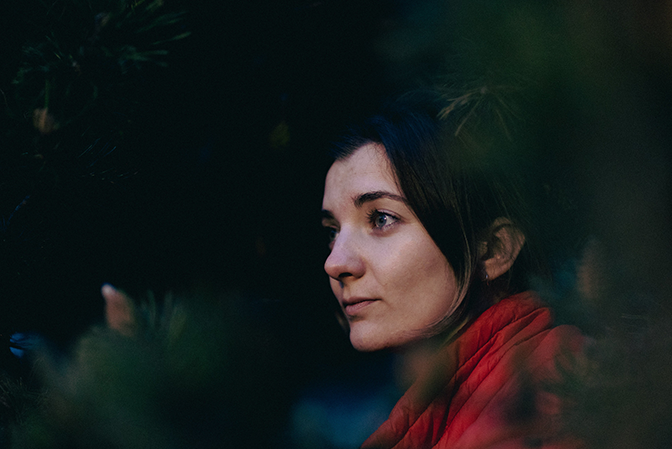
    Hanna Komar on visas, Belarus, and sunsets on Peckham Rye.

    PEN Transmissions is English PEN’s magazine for international and translated voices. PEN’s members are the backbone of our work, helping us to support international literature, campaign for writers at risk, and advocate for the freedom to write and read. If you are able, please consider becoming an English PEN member and joining our community of over 1,000 readers and writers. Join now.

    No one, not even the exile himself, wants to hear a story about painful encounters with bureaucracy, or consider whether Walter Benjamin might have killed himself just because he did not get his papers.

    – Dubravka Ugrešic

    A presidential decree was issued in Belarus on 4 September 2023. It banned Belarusian embassies and consulates from renewing passports or processing other documents for Belarusian citizens living abroad. Sviatlana Tsikhanouskaya – the exiled national leader who independent observers agree won the 2020 presidential election – responded:

    We’re working with host countries to solve the situation & preparing the New Belarus passport. While the state abandons its duty to care for its citizens, we won’t!

    That evening, I meet with a Belarusian friend in London to watch the sunset in Peckham Rye. ‘We aren’t going to discuss the passports,’ he tells me right away. ‘Sure,’ I reply, knowing it’s hopeless. As if it isn’t everything we do – discussing passports, visas, permits, travel documents. 

    The international reaction followed. The UN Human Rights Office tweeted:

    Decree banning issuance or renewal of passports abroad risks violating rights of thousands of Belarusians in exile, including their freedom of movement. No one should feel pressured to return & risk persecution.  We urge review of decree in line with int’l standards.’

    The EU ‘strongly condemned’ Lukashenko’s ban. The US Embassy in Belarus called it ‘the latest in a long line of cynical rejections by the regime of its basic obligations to its people.’ Lithuania promised to issue special passports to Belarusian citizens with the legal right to reside in Lithuania, like Poland had in January.

    I am a Belarusian writer in exile. I am likely to be arrested if I cross the Belarusian border.

    I have a Belarusian passport that expires in June 2028. It has one blank page left for stamps. In it, I have a Schengen visa, valid for as long as the passport is. Every time I leave the UK and return, my passport is stamped. Easy maths: soon, there won’t be enough space for stamps. Someone told me that if a border control officer doesn’t find space for a stamp, I may be refused entry to the country. I spend sleepless nights thinking through the short text I will recite to the officers in every airport I pass through, asking them to put the stamps very close to each other, to be efficient with the precious space.

    What could help me is a UK travel document. This can be issued to a non-British citizen legally residing in the UK who is unable to receive a passport from their authorities. It can be issued, but is it? The main requirement: you must prove that you can’t receive a passport or a travel document from your national government. You must prove they have rejected you. They must send you a rejection in written form. A political activist can’t count on this, of course, but the Home Office doesn’t care.

    Before the September decree, I had applied to the Belarusian Embassy in the UK for a new passport. On 14 October 2022, in their office in London, they accepted my documents and my payment of €100 and told me to wait for a call. Three or four months – that’s how long it usually takes. The passports are made in Belarus and delivered to the UK by a legal representative of the Embassy. There aren’t direct flights to Belarus anymore, and so getting there and back is challenging even for governmental officials. Delivering documents does take time. But not ten months. That’s how long I’d waited before I called them the third time. The officer who picked up the phone said, ‘Anna’ – that’s what they call me in Russian – ‘you support sanctions with such vigour that we won’t be providing you a service. Your new passport is ready and is waiting for you in Belarus. You can go and collect it there, if you have nothing to be afraid of. We haven’t rejected your passport. We just aren’t going to bring it to the UK.’

    I wasn’t the only one in that situation. Other activists in the UK – and in Lithuania, Poland, Germany, Slovenia, and several other countries – were facing the same problem. Some governments are more understanding – more humane – than others.

    The refusal letter for a travel document from the UK Home Office said this: ‘What you have submitted as evidence is not expectable evidence that an application for a national passport was made and you have been formally and unreasonably refused.’ That arrived before this new Belarusian law, which gives me hope that the evidence would be sufficient now. But I don’t feel I can rely on that.

    I watch the sun setting over Peckham Rye and discuss with my friend the applications we are both preparing for Global Talent visas. If we receive the Exceptional Talent version, we’ll be able to apply for indefinite leave to remain after three years; if it’s the Exceptional Promise one, it’ll be five years. My Belarusian passport is expiring in less than five years. Do they issue indefinite leave to remain if your passport has expired?

    When I came to London to do my master’s in September 2021, I was determined to return to Belarus the following year. I was certain that things would improve in that time. Two years later, in September 2023, I’m wondering if, in five years, I’ll have the New Belarus passport that Sviatlana Tsikhanouskaya’s office is working on; whether I’ll have an expired, non-functional Belarusian passport; whether I’ll be stateless (the regime threatens to take away citizenship of particularly active citizens); whether I’ll jump into the Exceptional Talent carriage. Is that a lack of hope? I’d say it’s the knowledge, from the perspective of history and other countries’ examples, of what totalitarian governments are capable of. 

    Dubravka Ugrešic, in her essay The Writer in Exile, writes, ‘A love story ends with marriage, the exile’s when he acquires a passport from another country.’ With this new law, I wouldn’t be able to get married here, either. I would need a certificate from Belarus saying that I’m not already married, and Belarusian embassies are banned from issuing them. I can’t get married. At least you don’t have to be afraid of that.


    Hanna Komar is a Belarusian poet, translator, writer. She has published five poetry collections: Страх вышыні (Fear of Heights), a collection of docu-poetry Мы вернемся (We’ll Return) and Вызвалі або бяжы (Set Me Free or Run) in Belarusian, as well as a bilingual collections Recycled and Ribwort.

    Hanna is a member of PEN Belarus and an honorary member of English PEN, and the 2020 Freedom of Speech Prize laureate of the Norwegian Authors’ Union. She has an MA in Creative Writing: Writing the City from the University of Westminster, and is taking a PhD at the University of Brighton, exploring how poetry can support Belarusian women to share experiences of gender-based violence and patriarchy.

    Photo credit: Dmitri Kotjuh.

  • Shuddhashar at 30: An Interview with Tutul

    Shuddhashar at 30: An Interview with Tutul

    Bangladeshi publisher Tutul – with whom Margaret Atwood shared her 2016 PEN Pinter Prize – discusses exile, free thinking, and thirty years of the magazine and publisher Shuddhashar.

    PEN Transmissions is English PEN’s magazine for international and translated voices. PEN’s members are the backbone of our work, helping us to support international literature, campaign for writers at risk, and advocate for the freedom to write and read. If you are able, please consider becoming an English PEN member and joining our community of over 1,000 readers and writers. Join now.

    Tutul – Shuddhashar, the magazine, has existed for 30 years now. Of course, so much has changed in Bangladesh – and the wider world – in that time. What has been the most profound change in those three decades, for you?

    Change is the rule of the world. We are all always living through constant change. In the past three decades, we have witnessed many significant political, cultural, and scientific shifts – the end of the Cold War, monopoly aggression, organised terrorism, the rise of religious nationalism and militancy, increase in authoritarian rule, a rise of xenophobia and intensified racism, the rapid spread of globalisation, and the dominance of internet-based communication. All these are significant, for me. The recent coronavirus pandemic, of course, has brought additional changes, the real global, local, and personal effects of which we are yet to understand.

    Shuddhashar has many lives – as a writers’ group, a magazine, a press. We often think of writers’ groups as closed, perhaps exclusionary spaces, but Shuddhashar has always struck me as a space of openness. How important has the sense of community it has afforded been to those involved?

    As a moderator, I can confidently say that Shuddhashar is indeed a very open platform. Many of those who started writing blogs in Bangladesh bridged the gap between the blogging world and the mainstream by publishing their first books with Shuddhashar. We published several activist bloggers during the early days.

    Shuddhashar’s writers are free thinkers, but can be distinguished from those who simply wrote critically about religion. Many LGBTQIA+ writers, for instance, were with a part of Shuddhashar. As well as bloggers, we also published nonfiction, fiction, and poetry, and these forms had their own distinct communities – but there was never any  dispute among the groups. At first, perhaps, mainstream writers didn’t like bloggers very much. That was during our magazine and book publishing time. But our door was never closed.

    After the series of fatal assaults on publishers and writers in Dhaka in 2015, including an attack which you survived, you moved to Norway, to the Skien City of Refuge, where you have been based since 2016. You’ve been characterised as a ‘publisher in exile’; how does that exile affect how, what, and why you publish?

    This is a very interesting question. I ask myself this almost every day. But, so far, I have been unable to find a satisfactory answer. I published a special magazine issue about exile for Shuddhashar this November, with exactly this question in mind.

    People have to lose something during any kind of migration. And there’s a lot of shock and trauma that comes with an unprepared migration. You know, I was a successful book publisher in Bangladesh:  I published more than a hundred books a year, and was also involved in editing and publishing Little Magazines. But suddenly I had to move away from that familiar life. Surviving by luck is a great joy. But I have to emphasise that just surviving is not a human life. For that reason, I was looking for ways to stay connected to my work – it was absolutely essential that I kept working, kept building on my skills, and kept trying to maintain good working connections with those left behind in Bangladesh. That’s how I started working on Shuddhashar online again.

    It wasn’t easy. I didn’t receive the support I expected, and many people along the way  discouraged me. But the stubbornness worked inside me anyway. My experiences helped me to start anew. In 2016, I was sick, injured, and traumatised; I had great difficulty imagining a path forward. But English PEN, PEN America, IPA, and in 2018 Norsk PEN, all encouraged me to continue my work by awarding me.

    Since the early days of Shuddhashar as a publishing house, internationalism (and bringing the work of international writers to readers through translation) has been central to the press. With an international chilling of free expression, do you see Shuddhashar having a role in other national and linguistic contexts?

    Yes – Shuddhashar was engaged in lots of translation work. We published the poetry of Hafeez (translated by Syed Shamsul Haq), Pablo Neruda (by Kajal Bandopadhyay), Tomas Transtromer (by Jewel Mazhar), Faiz Ahmed Faiz (by Mahmud Alam), the Marx-Yosar Dialogues (indebted to Rafiq um Munir Chowdhury), Marx in Soho (by Palash Ranjan Sanyal), The Apple of Samia Mukhamalbaf (by Aditi Falguni), Sylvia Plath’s The Bell Jar (by Mustaq Sharif), Arundhati Roy’s The Broken Republic (by Luna Rushdie), interviews by Roy (by Hasan Morshed), and Novum Organum (by Fazlul Karim).

    We have a plan to do more translation. Right now, we are working between English and Bangla and Norsk. We have a plan to publish some print books and ebooks,  which I hope will included translated titles. We want more interaction with different thinking, as well as with different style. 

    What worries you most?

    The culture of political and state bureaucracy in Bangladesh worries me the most. I fear opportunism, corruption, complacency, the use of people’s poverty and illiteracy as political tools. I think many publishers will come forward again to publish thought-provoking, critical, and controversial books if the normal life and safety of people can be ensured.

    What gives you hope?

    My passion, commitment, and dreams. I’m sure many more do the same. These same people are inspiring many more. I am sure there are many people in this world who want to open people’s eyes and sense, want to make people more open minded.  One day these people will surely be able to make a big positive change.

    Without subscribing too much to the idea of ‘duty’, how essential are the writer (and the reader) – and what they do – in our current moment?

    A writers’ duty and responsibility is only in writing. But states and society must be able to give them a safe, fearless environment. If writers can write without the fear of censorship, blasphemy, and authoritarian madness, then they can influence people for the sake of humanity, democracy, and openmindedness. 

    In terms of readership, the state has many responsibilities. It must strongly commit to and make policy for promoting and encouraging reading. This much be a continuous programme. They have to understand it’s not less important than other aspects of infrastructural development. Because reading books is essential to human development – it is incomparable. The spine of any strong and truly effective democratic society is a strong reading culture. 


    Ahmedur Rashid Chowdhury is the publisher and editor of free speech website (magazine and book publisher) Shuddhashar. He survived an assassination attempt against him by Islamist extremists and currently lives in exile. He is the winner of the  Shahid Munir Chowdhury best publisher Award 2013, PEN Pinter International Writer of Courage Award 2016, The Jeri Laber international freedom to publish Award 2016, International Publishers Association (IPA), Freedom to Publish Prize Finalist, 2016, International Publishers Association (IPA), Prix Voltaire Short List 2018 and Ossietzky Prize 2018.

    Interview by Will Forrester, Editor.

    Photo credit: Arne Olav Hageberg

  • Exils

    Exils

    To close our series on exile with the British Museum and Edmund de Waal, Scholastique Mukasonga writes a personal experience of exile as a Rwandan Tutsi

    PEN Transmissions is English PEN’s magazine for international and translated voices. PEN’s members are the backbone of our work, helping us to support international literature, campaign for writers at risk, and advocate for the freedom to write and read. If you are able, please consider becoming an English PEN member and joining our community of over 1,000 readers and writers. Join now.

    Across June, PEN Transmissions, in collaboration with the British Museum and Edmund de Waal, is publishing a series of essays on the theme of exile. This series speaks to Edmund de Waal’s library of exile, currently housed at the Museum. English PEN’s event series for the exhibition has been postponed due to COVID-19, and these essays – from writers in the events programme, or with books in the library – touch on issues that will be discussed at the rescheduled events.

    ~

    Translated by Melanie Mauthner

    I was three years old when I first experienced exile.

    It was 1959. The first pogroms against the Tutsi erupted that year; many massacres later, they would lead to the genocide of the Tutsi in 1994. If I close my eyes, I can see those images again unfurling as if they were fast-forwarding in a film.

    I am in a field. My mother is bending over her hoe and I am scampering behind her. Suddenly, there’s a hum rumbling and rising from the hills. Smoke plumes curl above neat waves of banana groves. My mother grabs me. We climb the hill to the track along the ridge. There’s a crowd in a panic, calling out, jostling and shouting; children crying; cows bellowing. My mother is searching for my brothers and sisters. And, in the distance, those screams that I don’t want to hear…

    Our house should be by the track. I can see a large hut on fire. I don’t want to believe it’s our house burning. I can hear crackling flames and calves lowing in the cowshed. I close my eyes, or maybe it is Maman covering my face with some of her wrapper.

    I won’t be sleeping at home tonight.

    I feel these tears of exile are still rolling down my cheeks, the same cheeks I had as a child.

    The first place I was exiled to was the mission in Mugombwa where the Tutsi found refuge. In my book Inyenzi or Cockroaches, I described that stay as something of a strange holiday.

    Obviously, I had no idea what a holiday might be. But it was very strange: my brothers and sisters weren’t going to school anymore; all the children played together in the square by the mission church; and I was eating something I’d never eaten before – rice. I wasn’t old enough to worry about might happen. I slept next to Maman. I kept the small milk pot that never left me. Maman managed to salvage what was considered our family treasure: a metal cooking pot that Papa had bought from a hawker who apparently came from Zanzibar, which we gave the pompous name of Isafuriya ndende – the marmite with the long neck.

    But it all ends abruptly one evening, at dusk. There are trucks ablaze with shining headlights, soldiers and white people shoving and urging us to climb in: Hurry, quick, get in! I lose Maman, my brothers and my sisters. My little pot slips out of my hands, rolling under the feet of people being pushed into the lorries. I’m crying – completely alone and lost forever. I feel these tears of exile are still rolling down my cheeks, the same cheeks I had as a child.

    Tutsi families were piled into trucks that drove all through the night over rough earthen roads. At dawn, they were set down in Nyamata, that dismal far-flung spot that, from then on, would be their place of banishment.

    For thirty-four years, after they were resettled in villages surrounding Nyamata on the border with Burundi, these ‘internal refugees’ were taunted, persecuted and massacred, again and again. All the people deported there in 1960, and their children, were massacred in 1994.

    Yes, thank you, fear, you who were the Tutsi of Nyamata’s most loyal companion, their shadow, never abandoning them, even in the depths of night.

    The fact that I can conjure up, here, in a few words, all the people who were assassinated is because, in 1994, I was no longer living in Rwanda. I don’t know why, but I was among the few rare Tutsi pupils who managed to get into secondary school. A strict quota limited their number: ten per cent. In 1973, I was at college in Butare, in my second year, training to be a social worker. That was the year that determined my life’s path; I dare not say its destiny.

    In 1973, Grégoire Kayibanda’s government believed they could address the Rwandan people’s general discontent by means of an old scapegoating tactic. They targeted those rare Tutsi who were still employed in teaching and the civil service, and they targeted the ten per cent quota pupils. Girls’ schools were not spared.

    It happened one afternoon – was it during a maths class? A classmate suddenly opened the door: Mukasonga, Mukasonga, hurry, quick! she cried. In the school corridors, I heard a large crash and yelling. I didn’t stop to think. We knew it was the boys from the nearby lycée,who were throwing themselves into hunting Tutsi. Our Hutu classmates acted as guides and encouraged them.

    It’s fear that saved me, fear that let me flee and run down the corridors as fast as I could, leap over the barbed-wire fence without getting scratched, and hide in a eucalyptus copse until night fell. Yes, thank you, fear, you who were the Tutsi of Nyamata’s most loyal companion, their shadow, never abandoning them, even in the depths of night.

    I finally got home by hiding in the boot of a Hutu politician’s car. That’s when my parents took the decision that my brother André and I – we had both been able to study, and discover that another world existed beyond Rwanda – would have to follow the road into exile in neighbouring Burundi.

    Nor can the shore where the exiled will at long last land ever be the promised land.

    Did my parents have a premonition? Some of us, at least, needed to survive, if only to preserve the memory of those who knew they would not be spared from extermination. I would remember them from then on.

    Could humans be defined as banished-beings? Some religious texts would seem to suggest so. And human banishment lies at the heart of the biblical myth: it is God who chases Adam and Eve from the Garden of Eden. And it is that same divinity who orders Abraham thus: Leave your land, your family and your father’s house for the land that I will show you. It is during their exile in Egypt that the Hebrews come together as a people.

    For migrants, refugees, the displaced and the deported, exodus – whether chosen or under duress – certainly does not result from divine will, nor wrath, deciding upon their fate as individuals or peoples; rather, it is the chaotic convulsions of history: war, persecution, famine and economic crises, natural disasters, drought and inexorable climate change. Nor can the shore where the exiled will at long last land ever be the promised land: gnawed by nostalgia, they will remain strangers there for a long while, and even if they do manage to integrate and build a new life, will they like Ulysses, who did return to Ithaca, sigh: What use is the wealthiest dwelling among strangers when you’re far from home?

    A beautiful word once described the welcome given to a stranger who knocks on your door, a word bound to shame those who build walls and put up barbed wire around – chacun chez soi, chacun pour soi, everyone where they belong, everyone for themselves. This word was Hospitality. Is it utopian, an illusion? Once upon a time, in societies we used to call primitive or archaic, the host was a sacred being. No one asked, Where do you come from, where are you going, why are you on the road, and how long do you intend to stay? At last, the stranger could be adopted as a member of the family. Did this tradition of hospitality ever exist? Or is it just a myth? At least, it was an ideal.

    My mother, Stéfania, who, like my whole family, was condemned to a life in exile, always kept two spare mats ready for the unexpected traveller who might seek shelter. May each of us always have a small mat, with which to welcome a stranger.


    Born in Rwanda in 1956, Scholastique Mukasonga experienced from childhood the violence and humiliation of the ethnic conflicts that shook her country. In 1960, her family was displaced to the polluted and under-developed Bugesera district of Rwanda. Mukasonga was later forced to leave the school of social work in Butare and flee to Burundi. She settled in France in 1992, only two years before the brutal genocide of the Tutsi swept through Rwanda. In the aftermath, Mukasonga learned that 27 of her family members had been massacred. Twelve years later, Gallimard published her autobiographical account Inyenzi ou les Cafards, which marked Mukasonga’s entry into literature. This was followed by the publication of La femme aux pieds nus in 2008 and L’Iguifou in 2010, both widely praised. Her first novel, Notre-Dame du Nil, won the Ahmadou Kourouma prize and the Renaudot prize in 2012, as well as the 2013 Océans France Ô prize, and the 2013 French Voices Award, and was shortlisted for the 2016 International Dublin Literary award.

    Melanie Mauthner‘s translation of Scholatique Mukasonga’s novel Our Lady of the Nile was awarded the French Voices Grand Prize 2013. After she received a Hawthornden Fellowship to translate Mukasonga’s short stories, some of these appeared in the New Yorker, the New England Review, the Stinging Fly and the White Review.

    Created as a ‘space to sit and read and be’, library of exile is an installation at the British Museum by British artist and writer, Edmund de Waal, housing more than 2,000 books in translation, written by exiled authors.

  • Remembering Partition

    Remembering Partition

    For our series on exile with the British Museum and Edmund de Waal, Kavita Puri writes on partition, memory and exile.

    PEN Transmissions is English PEN’s magazine for international and translated voices. PEN’s members are the backbone of our work, helping us to support international literature, campaign for writers at risk, and advocate for the freedom to write and read. If you are able, please consider becoming an English PEN member and joining our community of over 1,000 readers and writers. Join now.

    Across June, PEN Transmissions, in collaboration with the British Museum and Edmund de Waal, is publishing a series of essays on the theme of exile. This series speaks to Edmund de Waal’s library of exile, currently housed at the Museum. English PEN’s event series for the exhibition has been postponed due to COVID-19, and these essays – from writers in the events programme, or with books in the library – touch on issues that will be discussed at the rescheduled events.

    ~

    There is a jam jar that sits on a shelf in a study in a suburb of North London. It contains stones. They are the colour of earth; smooth and round. Raj Daswani takes them out and holds them in the palms of his hands. He brings them to his lips and kisses them. ‘I keep these stones’, he says, ‘to feel connected to my soil’.

    Soil, earth, land – Raj means Karachi. He feels a profound connection to it, yet he hasn’t lived there since September 1947.

    Raj, then thirteen, was one of the many millions of people who were part of the largest migration ever to occur outside war and famine: the partition of the Indian subcontinent into Hindu-majority India and Muslim-majority Pakistan in August 1947. Fearing being a minority in a new land, Hindus and Sikhs went to India, and many Muslims to Pakistan. An estimated 12 million people left land that generations of their family had lived on for a new country. It was accompanied by horrific violence as people of the “other” religion turned against one another. All sides were victims and perpetrators.

    Karachi, in Sindh Province, became part of Pakistan. Raj’s family were Hindu. They didn’t want to leave, but felt it was no longer safe for them. Their Muslim neighbours all came out on the day they left, in tears. They begged the Daswanis not to go, saying they would protect them. Raj’s parents felt there was no choice. They left by boat for India. The only items they were allowed to take from that life were a large tin of wheat flour and ghee.

    Raj arrived in Bombay, now Mumbai, never having spoken Hindi. His mother-tongue was Sindhi. He lived in an old British military barracks with many hundreds of other Sindhis, where they slept in a large room with hanging bed sheets as walls to divide families. There was one toilet between five hundred people. Things improved, eventually, in the refugee camp and Raj ended up staying there for twelve years. India never welcomed him he says, and it certainly never felt like home. He then came to Britain, where he has lived for many decades with his wife Geeta. He has four children and grandchildren. He still speaks Sindhi to them.

    Yet, after all these years, it is Karachi that feels like home. ‘This is not my soil, England or Bombay or India’, he says. Raj has been back to visit Pakistan three times. The first time he arrived in Karachi, he took dust from the earth, and put it to his forehead, and said ‘Mother, I have come home’. On his final visit, he wrote a poem. The first verse reads:

    In the end have realised this.

    In exile or forced to leave you

    Imagine the agony suffered by me

    Our flesh and blood, our kith and kin

    Suffering, in the name of religion

    I’ve spoken to many people who lived through the tumultuous events of partition and subsequently came to Britain – who lived through a dual migration. Many had been forced to flee – first as refugees around 1947 – and later chose to migrate to Britain, their former colonial ruler. Yet the deep connection to the land of their birth has remained, despite the decades.

    For the generation who lived through 1947, they do not think of borders, division, partition. Of course they recall the horror and bloodshed when the subcontinent was divided. But they remember another time, too, before that. A time when people of different religions largely got along, and could live side by side, in places like Lahore, Amritsar and Karachi. That is now relegated to the history books. One man, who grew up in West Punjab in a mixed village in British India, told me that, when his Sikh aunt died, her best friend, a Muslim, became a wet-nurse for her baby. What could be more intimate?

    That visceral attachment to the land long-left – where your parents were born, and your grandparents too – largely exists in memories. Unlike Raj, many never went back. Those I spoke to now say they want to return, before they die, to see their family home, or a tree they played in as a child; to find out if the best friend they left in a hurry, without goodbyes, is still alive. And if they cannot go in life, they want the journey made to have their ashes scattered where they were born. Officially, they do not belong in that so-called “enemy” country, but that is not how they see it. Bureaucrats may draw borders and politicians create new national narratives, but they cannot erase that generation’s stories and history. That generation does not forget.

    ~

    Iftakhr Ahmed was seventeen when he travelled from Delhi to Lahore. It was no longer safe for him to be a Muslim in India. ‘India is mine too’, he says emphatically. He can recall the smells of his childhood in the streets of Gangoh, where he played with best friends who were Hindu. His mother is still buried in India’s earth, as are his grandparents. But will future generations feel that way too about the land left behind?

    So many partition memories are shrouded in silence and have not been knowingly passed on. Those that came to post-war Britain were getting on with life in a new country where they faced hostility. Looking back on the past was an indulgence they did not have. There is an institutional silence in Britain, not only to partition, but also empire. It’s not taught widely in schools; there are no museums to it, or memorials to those that died as the British left India; for so long, there wasn’t the public space to talk about those times; and so many partition memories are bound up in dishonour and shame that they are easier not to discuss. The next generations, born here, may not have known much about the Indian subcontinent (or even have any knowledge of partition), and may not have asked.  

    Veena is a retired GP now living in the Scottish Borders. She always believed her family were from India. It wasn’t until she found essays and poems written by her recently deceased mother that she learnt her family were originally from Pakistan. She wants to go back there and stand on the earth that generations of her family are from. Her parents’ escape story was so traumatic that they couldn’t share their family history while alive. But Veena could always feel the trauma – she just did not know what it was.

    Anindya is third generation. His family moved from East to West Bengal. He says that, though partition may not always have been spoken of directly, it was always there. His grandparents had first-hand trauma of having to leave; they had the memories of the house, the place they left. But his parents had an inherited trauma: ‘I don’t think they got over the memory of the suffering that their parents had to go through’. Anindya’s parents had, however, a connection to their desh, the place they were from – even though it was only part of the family’s mythology,. Anindya, too, says that this sense has carried on to him: ‘I am very conscious … of the importance of roots, of the importance of feeling that you belong somewhere that you have a place that you can call your home’. He admits that, over time, if he has children and grandchildren, there may be a diminished attachment to East Bengal – ‘But the longer the attachment survives’, he says, ‘the better’.

    ~

    It is not just an attachment to a place that can persist through the generations, but also the sense that the place you thought of as permanent – your desh, your home – can be taken away. If it happened to family members in living memory, perhaps it could take place again. It’s compounded when your family uproot twice – first as refugees and then in migration to Britain, where your tie to the land is fragile. The imaginary suitcase at the top of the wardrobe is always there, just in case you have to move once more.   

    The consequences of political decisions taken so long ago are threaded through families long after, muddling notions of belonging. Home can be the place you are originally from, but to which you can never return. Can be the place you moved to on the Indian subcontinent. Can be the place to which you chose to migrate.

    As long as people remember the time before 1947 – and tell their stories and pass them on – then they exist too, in all their complexity. Yes, terrible things happened in the name of religion in the fight over land. But so too was there love, friendships, shared culture and language, a history on the very land on which the border was later drawn. Though that generation have now long fled, ties remain deep. So next time you ask someone with South Asian heritage where they are from, and you note a hesitation before they answer, get the long response. It may be an extraordinary story of migration across countries and continents.


    Kavita Puri is author of Partition Voices: Untold British Stories (Bloomsbury). She works in BBC Current Affairs and is an award-winning TV executive producer and radio broadcaster. Her landmark three-part series Partition Voices for BBC Radio 4 won the Royal Historical Society’s Radio and Podcast Award and its overall Public History Prize. Her critically acclaimed Radio 4 series, Three Pounds in My Pocket, charts the social history of British South Asians from the post-war years. She is currently making the third series. She worked for many years at Newsnight and studied Law at Cambridge University.

    Created as a ‘space to sit and read and be’, library of exile is an installation at the British Museum by British artist and writer, Edmund de Waal, housing more than 2,000 books in translation, written by exiled authors.

  • How Do I Reconcile these Irreconcilable Things?

    How Do I Reconcile these Irreconcilable Things?

    For our series on exile with the British Museum and Edmund de Waal, Taqralik Partridge writes on Scotland, Canada, and language loss

    PEN Transmissions is English PEN’s magazine for international and translated voices. PEN’s members are the backbone of our work, helping us to support international literature, campaign for writers at risk, and advocate for the freedom to write and read. If you are able, please consider becoming an English PEN member and joining our community of over 1,000 readers and writers. Join now.

    Across June, PEN Transmissions, in collaboration with the British Museum and Edmund de Waal, is publishing a series of essays on the theme of exile. This series speaks to Edmund de Waal’s library of exile, currently housed at the Museum. English PEN’s event series for the exhibition has been postponed due to COVID-19, and these essays – from writers in the events programme, or with books in the library – touch on issues that will be discussed at the rescheduled events.

    ~

    I had hesitated about the expense for another night at a bed and breakfast. Assuming there would be something nearby, I put off booking; and when my last day in Lochinver arrived, I was disappointed. The closest place with any vacancy was two hours away in Gairloch.

    Not that I mind driving. The North Coast 500 is as beautiful a route to travel as they say it is. And the roads, often single-track and veering precariously around steep slopes, demand a kind of alertness that carries a person through fatigue.

    And I have been tired. This is generally not something to admit to, at least publicly – as a writer and artist always looking for more work, I want to be ready to say ‘yes’ to the next thing, and the next.

    This tired is an accumulation of experiences, big and small, that came into fullness around the time my mother died. Among these is a sense of collective grief, held with some of my fellow Inuit and other Indigenous people about the state of a world that has allowed and still allows so much destruction. There is also anticipatory grief about where this destruction will end. And, of course, there is my personal grief for personal things. Others have written eloquently about these things. I will not list all here.

    Here is one kind of accessory to my personal grief: the loss of Scottish Gaelic. It is an accessory because it feels so foreign that I cannot know its size, but it is a loss that my mother felt so keenly that she spent her life looking for its remedy.

    In 2019, artist-producers Emilie Monnet and Patti Shaughnessy led the co-production of Indigenous Contemporary Scene. This was a summer of programming with various festivals and venues in Edinburgh that brought Indigenous artists from Canada to Scotland. The production commissioned research and works by some of these artists to explore histories and connections between Scotland and Indigenous communities in Canada. This brought me to Assynt, where my mother’s parents came from.

    I went with the promise to myself that I would not be disappointed by whatever happened.

    The Scotland of my childhood was postcard-sized pictures of my mother, in the sheen of her youth, sitting atop a low stone wall. It was memorising the colour-codes of tartans, and her highland dance paraphernalia, and all the trinkets she collected on tour with her Scottish dance Tattoo. It was the drone of bagpipes on her old records and a resolute scorn for all things English – paired with an insistence on British over American spellings. We’re Highland Scots, my mother would say, like that could mean anything to her children.

    My grandparents were Gaelic-speaking. A story my mother liked to repeat was that my grandmother had come to Canada on a boat on which she was so sick that when a concerned woman asked her if she spoke English, her only reply was ‘sometimes’.  I like to repeat this story, too. True or not, it brings out a low laugh every time I think about it.

    Like many settlers, in Canada my grandparents only spoke their language with other newcomers of their generation. And so the story goes that my mother only knew a handful of Gaelic words. And so the story goes that her children, like so many other Canadians, are people with Scottish ancestry and no Scottish language. But reclaiming Gaelic has not been at the top of my list of things to do.

    My mother’s narrative was that her family had endured the loss of place and language directly and indirectly at the hands of the English. Her mother was punished in school for speaking Gaelic, and left one kind of poverty in Assynt for another in Vancouver.

    My own narrative is something more complicated. Canada is full of reference to Scottish heritage: street names, awards, libraries, arenas, universities, towns, counties – a whole province. From an Indigenous perspective, these references are no different from other colonial naming and erasure of Indigenous names for places and things. It is a hard proposition for me to think that I could claim any pride in Canada’s Scottish heritage, when I know that the racism prevalent in all corners of Canada goes hand-in-hand with a history that is very much tied up with Scotland and people of Scottish heritage.

    There is this reality that Scots played a role in colonisation, and this other aspect that Scotland is very much a part of many Inuit communities. In my homeland, Nunavik, the Inuit region of northern Quebec, the ties with Scotland are old and recent, happy and unhappy, intended and coincidental. Family names in my home community ring out like a list of Scottish clans. Inuit know and love Scottish fiddle music (played on the accordion), country dancing, and wool tartans. A symbol of my childhood is a Peterhead boat. And today, there are well-loved Scots who have been part of Inuit communities for decades.

    How do I reconcile these irreconcilable things? For me, as a person from two very different cultures that have experienced language-loss or the threat of it, it is curious to consider that people like my mother – who were affected directly or indirectly by the imposition of English – have also been involved in the imposition of English on Indigenous people; including my father’s people – my people.

    Inuit kinship terminologies and understanding of relations are vast networks that keep one grounded in a sense of belonging to family and community – even if there are family or community members with whom we want no relation; there are always others who claim us. Inuktitut terminology for kinship relations is complex, but logical and specific. This way of relating to other Inuit is linked with oral histories about where our parents and ancestors were born and lived; how we relate to others through birth, customary adoption, marriage and naming; and, importantly, how we relate to the land. To be Inuk is not simply to be of an ethnicity, but to be from or to come from people who come from a specific community or region. Even where Inuit are working to reclaim language from the beginning, people still maintain these family and community ties.

    An Inuit sense of family is one that runs through all the rivulets of possibility to discover connections. An everyday occurrence for young Inuit visiting new communities is to have older people they have never met tell them in great detail how they are related. Some would say this was all so that Inuit of the past could maintain genetic diversity in small groups of people, by ensuring that close relatives did not marry. However, this way of thinking about family is about proximity, not distance.

    I might say that the loss of Gaelic in my mother’s family created an irreparable rift that disintegrated the family structure. This is not to say that there was not love or connection. I have known and love(d) several of my mother’s siblings. But in their lifetimes, some cut relations off with others in ways that read like a typical drama of Anglo-Canadian literature. When these breaks occur in Inuit families, other relations fill in the spaces. But in an English-speaking world of individuals, it is possible to have no relatives whatsoever.

    I wrote a performance piece for Indigenous Contemporary Scene, a part of which reads:

    and if she could not give Gaelic to her children

    she could give her resentment of everything English

    so they despised their own tongues

    and refused to speak to one another

    for days, or years, or forever

    In Assynt, I was surprised to find that there is a sense of loss of language and culture, and historical trauma around people being severed from their ancestral homes. Treatments of this Scottish subject-matter abound in film and other media, but I was taken aback by how it seemed to weigh on some people’s minds as relatively recent family history. This weight of loss felt something like the one I know from people from my own community.

    This experience underscored for me that the project of colonisation is to divide people from their connection to the land and to each other. Indigenous languages that have grown up around specific places roll out in names, descriptions, and modes of communication that reflect ways of living with care and respect for the land and waters. This is not a mystical, ‘native’ connection, but a practical knowing of the earth as a living entity with which we all – as human beings – are in relation.

    I do not have a nuanced understanding of Scottish Gaelic and Scottish history. I do however know what role language loss and reclamation play in the life of a community. If people are deprived of their ability to speak, dream, rant, mourn and rejoice in the language of their ancestors, this can be a wound that runs very deep, through many generations. My mother sought to reclaim her language because she wanted a connection with her relations – past and present.

    Assynt is one breathtaking sight after another. In places, the coast looks much like Inuit Nunangat (Inuit homelands including arctic Canada). In others, it is as other-worldly as Iceland. On my last night in the highlands, I stayed in a hotel in Gairloch, right on the blowing sea. I arrived to a large front atrium full of Americans having a good time and being vocal about it.

    The day after, on the road back to Inverness, I popped a tire and, and as luck would have it, the driver of the tow truck volunteered to drive me the whole seventy miles back to the car rental. This meant more than an hour of conversation about Inuit and Inuit art, and Scotland, and Gaelic, and what kind of fish we catch in northern Canada. When I volunteered that I was visiting for research because some of my family was from a small village near Lochinver, he made a point of stopping so I could take pictures.

    Take a look around, he said. This is your heritage. If he was joking, I couldn’t have guessed.


    Taqralik Partridge is a writer and artist originally from Kuujjuaq, Nunavik (Quebec) and now based in Kautokeino, Sápmi (Norway) and Ottawa, Ontario. She was recently appointed director of the Nordic Lab at SAW Gallery in Ottawa. Some of Taqralik’s work is currently on exhibition as part of NIRIN the Biennale of Sydney.

    Created as a ‘space to sit and read and be’, library of exile is an installation at the British Museum by British artist and writer, Edmund de Waal, housing more than 2,000 books in translation, written by exiled authors.

  • This Library Is Not an Artwork: An Interview with Edmund de Waal

    This Library Is Not an Artwork: An Interview with Edmund de Waal

    To open our series with the British Museum and Edmund de Waal, Edmund speaks to us about his library of exile

    PEN Transmissions is English PEN’s magazine for international and translated voices. PEN’s members are the backbone of our work, helping us to support international literature, campaign for writers at risk, and advocate for the freedom to write and read. If you are able, please consider becoming an English PEN member and joining our community of over 1,000 readers and writers. Join now.

    Over the next five weeks, PEN Transmissions, in collaboration with the British Museum and Edmund de Waal, is publishing a series of essays on the theme of exile. This series speaks to Edmund de Waal’s library of exile, currently housed at the Museum. English PEN’s event series for the exhibition has been postponed due to COVID-19, and these essays – from writers in the events programme, or with books in the library – touch on issues that will be discussed at the rescheduled events. Here, to introduce the series, Edmund de Waal speaks to Hannah Trevarthen (English PEN’s Events and Partnerships Manager) about his library of exile.

    ~

    HANNAH TREVARTHEN: Edmund, your library of exile has moved between three locations. It was in Venice (with its connection to the ghetto, and Jewish experience), then in Dresden (which has its own resonances with porcelain, and also with atrocity and reconciliation), and then in London (in a space connected to the King’s Library). What effects has that movement had?

    EDMUND DE WAAL: Something that matters to me, as an artist, is seeing how a work has different resonances in different places. That’s at the heart of what I do: putting something down in different places, and then looking at what happens as it moves. As you say, this library has had three homes, and it has accreted significance in each.

    In Venice, it came out of thinking about the Ghetto as a place of aggregation – a place where languages and cultures were put under huge pressure, and where there was a huge amount of creativity as a consequence. It has a particular resonance with exile, and a particular connection for the Jewish community. And it’s also absolutely about translation.

    Dresden, as you say, not only has a connection to porcelain, but is a place whose destruction continues to resonate. It’s also a place where the book burnings began in the 1930s – where the fragility of libraries was laid bare.

    And London – well, in London, the library is located in an extraordinary place. It’s in a museum of polyphonic nature, where the objects of the world are talking profoundly about the state of exile. It’s in a museum that was created with a library – a museum and a library which are co-inherent. The original British Library is the centre of exilic literature – not least for Marx, and now as a place which is tidal for people from different communities. The people of London speak more languages than the people of any other city. So to have a library which has 90 countries and 60 languages represented gives it a certain strength, I think.

    It’s very special indeed. I want to pick up on the point about translation, something very much at the core of English PEN’s work. A number of the titles PEN has supported are in the library, and that’s been very profound for us. When you were building the library, did you expect to represent so many languages? How did you go about selecting the titles that were included?

    It’s a sort of non-programmatic library. It began with passion, and very much continues with passion. It began when I scanned my shelves and realised that a vast majority of my books were exilic. It began with the books I had. That turned into conversations with writers, in which I asked them who the voices were and what the books were that mattered to them. Then it involved academics and translators and publishers – growing incrementally and naturally. We weren’t crossing countries off a list.

    Then a very powerful thing that happened. On the first night in Venice, we put up a sign asking people to tell us if they thought a book should be in the library. We said we’d find it and buy it and put it in. The moment of transition – from it being my library to being a library – was when someone came up to me in tears and said, ‘You don’t have this book, this community, this language – how can you not have this literature in your library’, to which the answer was, ‘Well, we will now’. It was that synapse of energy, in which it goes from being a curated space to being something owned by other people, that was most significant.

    How have you found that process – giving over an artwork for people to contribute to it? It strikes me that you do your making in isolation, but that your practice then becomes very collaborative. How do you find balancing those ways of working?

    Well, for me, they are absolutely yin and yang. If I didn’t spend time entirely by myself, with clay, there would be no installation. If I didn’t spend time entirely by myself, with a pen and a blank piece of paper, there would be a no book. But putting something into the world – working with people to animate it – is the completely fabulous part. Collaboration is the expanding landscape of creativity. You get so much back. It isn’t a costive thing – a take it or leave it. It’s much more generative. The handing over of this library is the most positive and creative thing I’ve done in my life.

    It’s been a career highlight for me, too, to work with you and the British Museum on this project. It is a project fundamentally about dialogue; about how to start conversations, and how take them beyond the walls of the library and the Museum. The library of exile is a piece that compels you to respond.

    It’s what books do. They don’t stay still; they converse. Literature is a migrant art in itself. And the power of passing on a book into someone else’s hands is palpable. One of the great things about this project is that I’m endlessly being introduced to new writers. The people in the events series, and in this series on PEN Transmissions, are people I’m desperate to listen to. It’s a beautifully generative project.

    And, of course, the library is going to Mosul.

    Yes – there’s something very straightforward about that, actually. It’s about saying what matters: about standing next to people who have been through something so traumatic, and saying that you have heard them and are in solidarity with them. Recognising a community – and their literature and art and history – seems to me a powerful, political and beautiful action.

    Solidarity is hugely important. It’s a funny state, solidarity: it’s about this moment, but also history and future. The history of destroyed libraries and burned books, which is inscribed on the outside of the library of exile, is very important to me. Memory is a powerful, contingent, fissile thing. You keep remembering: it’s not just about the past; these losses are contemporary, and potential, and we should mark them and have solidarity with those who suffer them. Solidarity is the right word: it goes back, it goes forward, but it’s at once completely of the moment.

    I want to ask you about physicality and touch. A book, by appearance, is a single object, but it is an object that contains multitudes. There’s something very special, in your piece, about being encouraged to pick up a book that means something to us and write our names in it – something we’re not used to doing with library books. Was the conception of the library of exile always that people would be able be in dialogue through touch and inscription?

    A very innate thing about being in a library is a strange relationship with time. Your focus goes. You can explore and be led in all kinds of different directions. It’s a very dynamic space in terms of time. It’s also dynamic physically, because all books have very different feelings in your hands.

    To have the opportunity to touch a book, and then find all the names of people who have held this book before you, from different countries and in different languages, struck me as a way of actualising the way in which texts are inhabited by the people who wrote them, but also the people who read them. Of actualising this extraordinary inhabitation, re-inhabitation, invocation and iterative reading of all those readers who precede you. That felt like a profoundly humane way of marking how the presence of books talks to us as human beings.

    This library is not an artwork. I’m fed up with contemporary artists who make libraries where you can’t touch the books – where it’s all about the ‘idea of the book’. This is about the ‘idea of the book’ but – my god! – the best idea of a book is to pick it up and read it.

    I want to finish by asking about psalms. The vitrines in the library are named for psalms – things that are very much in praise. The library of exile feels like a very personal work – for you, in praising clay and writing, and for a wider public, in praising their relationships to books. How important is it, now, that we sing the praises of libraries?

    Psalms are complicated. They have a lot of agony and despair in them, but they also have extraordinary happiness and exaltation in them. Underneath both is a huge amount of exile. That matters to me. As does the fact that they exist in all three Abrahamic traditions.

    Libraries are threatened – they are so threatened. There is never a bad time to stand up publicly for the significance of libraries as an extraordinary private-social space. There’s something quite profoundly political about that. And making a new library – well, that’s cool.


    Edmund de Waal is an internationally acclaimed artist and writer, best known for his large-scale installations of porcelain vessels, often created in response to collections and archives. His interventions have been made for diverse spaces worldwide, including The British Museum, London; The Frick Collection, New York; Ateneo Veneto, Venice; Schindler House, Los Angeles; Kunsthistorisches Museum, Vienna and V&A Museum, London. De Waal is also renowned for his bestselling family memoir, The Hare with Amber Eyes (2010), and The White Road (2015). He was made an OBE for his services to art in 2011 and awarded the Windham-Campbell Prize for non-fiction by Yale University in 2015. 

    Created as a ‘space to sit and read and be’, library of exile is an installation at the British Museum by British artist and writer, Edmund de Waal, housing more than 2,000 books in translation, written by exiled authors.

    Interview by Hannah Trevarthen, Events and Partnerships Manager.

  • With this Novel, I Return: An Interview with Rafik Schami

    With this Novel, I Return: An Interview with Rafik Schami

    Syrian-German novelist Rafik Schami discusses liberty, storytelling, language and exile.

    PEN Transmissions is English PEN’s magazine for international and translated voices. PEN’s members are the backbone of our work, helping us to support international literature, campaign for writers at risk, and advocate for the freedom to write and read. If you are able, please consider becoming an English PEN member and joining our community of over 1,000 readers and writers. Join now.

    I’ll start with something large: freedom. Sophia, your latest novel, seems to have forms of freedom – personal, national, religious, political – at its centre. How do these forms of liberty interact?

    Sophia is a novel about freedom and its oppression under a dictatorship. It’s less about abstract debate than about the fate of people: freedom shapes people and empowers them to perform higher tasks; their oppression deforms them and reduces their goals to bare survival. But freedom is indivisible. One cannot be politically free if one is religiously or nationally unfree. One can pretend or imagine that one is free in an unfree society because of one’s wealth, but one is, ultimately, a slave of the oppressors. One can lose all rights and wealth, and find oneself, the next day, in prison.

    These interactions are realised through formal, generic ones. Sophia is, at bottom, thrilling, novelistic storytelling: it’s driven by plot, epic forms, and it’s readily readable and consumable. But it’s also deeply ideological (or, perhaps, ideocritical). You write about heavy things via lightness, and I want to ask how the parts of your self – the political thinker and the storyteller – combine in the act of writing?

    With this question, you touch upon a very important decision I have made for my writing. Many literary critics will wake up only in the next century, and understand that it is possible to tell complicated stories with lightness and to avoid boredom and moral preaching, even when the content or subject matter is heavy. My hope is completely fulfilled knowing that my readers love my books. Of course, as a political person, I fight for dignity, freedom, democracy and the preservation of nature, and against racism. And I believe that the more committed you are, the more exciting your writing will be. 

    What good will it do me if my readers throw down the book after three pages? But your question goes even deeper. I have always to put my humanitarian views aside in the development of the characters to ensure they remain credible and believable. This the case in Sophia: Salman is a complicated person, and at times appears as a swindler engaged in fraud. And that’s how he should appear. You can’t write a good novel with all the characters being angels.

    Readers of this conversation are receiving it in English. What’s your relationship to language – to German and Arabic? It strikes me as significant that you write in German, but that you founded Swallow Editions, a press that brings new Arabic voices to anglophone readers.

    I have a strong love affair with language. As a child, I spoke Aramaic with my parents, Arabic on the street and at school, and French in the Lebanese monastery (it was my father’s dream that I become a priest). Later, English was added (unfortunately taught by an unqualified teacher). So German became my fifth language. Arab publishers rejected my novels, so I decided to learn literary German and make it my language. It took me years to master it.

    My aim with Swallow Editions is to introduce the work of young, talented Arab novelists to the English-speaking world. Because the novels published under Swallow Editions are translated into English, they can reach a much wider audience. But I am also happy that all the novels are published in German language, too.

    Translation’s virtue rests in its ability to share contexts and narratives across national and linguistic borders – to foster understanding and exchange. But I want also to discuss the risk that carries. Political and military exchanges and interventions between Western Europe and the Middle East have been accompanied by certain (often problematic) narratives. Does literary exchange carry risks of imperialism and homogenisation? If so, how do we avoid them?

    Translation is a great – but underrecognised – art. The translation must reinvent the story, make it understandable to readers of another culture, without causing any loss of original substance. Unlike military intervention, which always destroys something, translation is an attempt to build a very delicate, sensible bridge. But, as soon as the translation puts the host country’s own national interests above the original language of a work, the bridge collapses. The damage remains small because it concerns only this one translation of the novel. If the original novel is a piece of art with enduring value, it will be discovered and translated correctly.

    For twenty years, I have rejected all offers from Arab publishers to publish my work, because they always want to make changes and censor my work. In my experience, if the translator censors or changes a work, they become a henchman of the dictatorship. However, after a long search, I found my current publisher, Manshourat al-Jamal of Camel Publications, who does not censor a word I write.

    In other interviews with you which I’ve read, the conversation has turned quickly from the literary to the strictly political. I’m aware that’s what I’ve just done, but I want to ask how you find that tendency – to talk to you as a writer, first, but hastily to ask you instead, as a Syrian in Germany, about the situation in Syria?

    Thank you for your very sensitive wording. I sometimes find it frustrating that some journalists come to their own conclusions or statements without having done their homework. Instead of taking their own stand against the dictatorship, they expect it from me. That is the reason why I reject many interviews. And this is also the reason why I only conduct interviews via email, which I can check very carefully. I often send the questions back unanswered. I have written a lot about, and have been very vocal against, dictatorship, but making myself a source of information for journalists who are unwilling to take the time to do proper research is a disposession of my literary work.

    And so, finally, to submit fully to that tendency, I want to ask about exile and return. I think of Salah Al-Hamdani, who also left the Arabic world for political imperatives in the 1970s, settled in Western Europe (France), and wrote about the country of his birth in the language of his adopted home. He frequently discusses his one return to Iraq, to see his family. This is something you’ve not been able yet to do. In 2011, you said that, should the Assad regime fall, you would ‘go back, but as a visitor’. How has this hope for return shifted in the last eight years?

    My answer remains the same: if I returned to the places of my childhood, I would only do so to see them again and share them with my wife and son. But after eight years of tragic war, the hope for a peaceful development has faded away. Sophia describes the impossibility of return. I have sewn all the experiences of my friends in exile, all my feelings, desires and fears, dreams and nightmares into the novel, and sent Salman on the journey that I always wanted and feared.

    With this novel, I return to Damascus. I don’t return physically, but with my longing. That’s what I’ve been doing for forty years.


    Rafik Schami was born in Damascus in 1946, came to Germany in 1971 to study, and stayed on to become a leading German novelist and a pivotal figure in the European migrant literature movement. His novels have been translated into over 40 languages and have received numerous international literary awards, including the Hermann Hesse Prize. His translated works published by Interlink include Damascus Nights, The Calligrapher’s Secret, A Hand Full of Stars, and The Dark Side of Love, which was a 2010 Winner of the Independent Publisher Book Award Gold Medal.

    Interview by Will Forrester, Editor.

    Photo credit: Arne Wesenberg

  • After apocalypse, exile

    After apocalypse, exile

    Haile Bizen was a poet, a writer, a government employee in Eritrea. Then, from one day to the next, he was a political refugee.


    With an incredible pace, my country ran towards apocalypse.

    Struggling for lack of medical care for my eyesight and sailing along in an unknowable environment, I managed to stay in a state of limbo for several years until I was transferred from the ruling party’s office, where I worked at the time, to the Ministry of Information. Since I did not receive any clear instructions regarding my new role in the Ministry – and since I did not make enquiries either – , I did not report regularly to my new work place.

    A few months later, the Ministry of Information gave me a final warning: I had to come to work or face the consequences. I knew that the poetry book I had published around that time (Behind the Doors) did not please some of the top propaganda chiefs. I had to act quickly to avoid the inevitable catastrophe of being abducted from home or the streets.

    I had only one chance – fleeing.

    In just a few weeks, I had to finalize my safe exit in utmost secrecy. I would be leaving my family, my friends, my beloved country and hometown for an unknown period of time. I wasn’t sure whether I would ever return. I was anxious if I would be able to leave the country safely without falling into the hands of national security agents. I did not have the time to request a visa for another country; and anyway, it was hardly possible to be granted an entry visa for European countries or other safe destinations.

    On September 11, 2009, without bidding farewell to my friends, without notifying my confidante who was preparing for his wedding, without having had enough of the city I had spent my whole life in, and without explaining myself to my wife who was six months pregnant with our third child and a mother to our two small children, I left. It was New Year’s Day of our traditional Geez Calendar.

    Now I had to confront a new reality, a new life and new challenges in Uganda, for which I was ill prepared. Over a period of three years, I was able to compose only four poems. One of these poems was written when I was queuing in an open field, along with hundreds of refugees, to be registered as an asylum seeker.

    It was both a shocking and an eye-opening experience. Within a few days, I became a nobody, invisible.

    Of course a bad environment could in theory provide decent material for writing. I, however, felt restless and unsettled; I was blocked, I lacked the concentration to write and read. At the same time, my new voice made me desperate – the voice of nothingness, the voice of agony, the voice of despondency.

    I spent long and unproductive years between Uganda, South Sudan and Kenya, until an opportunity was presented to me by ICORN, the International Cities of Refugee Network. I arrived in Norway as a writer in residence in 2011.

    I now had ample time and resources to continue my work in the arts. However, adjusting to a new environment was not easy. Every time I tried to write about my feelings, whether in prose or poetry, I was faced with crippling writer’s block. Partly this was because of the anguish I felt at the prolonged separation from my family. For obvious reasons, they were not able to leave the country officially. In fact, my wife was under surveillance, and therefore I had to find a way for her and my children to leave without risking imprisonment or falling into the hands of human traffickers. Having paid huge sums of money for their safe exit from Eritrea, my family did in fact fall victim to human traffickers. Their freedom required payment of another huge sum of money. Finally, they joined me in Norway. As a family we are still struggling to cope with the psychological and physical trauma sustained from torture and other forms of harassment by the human traffickers.

    I now felt relatively settled. One big chapter in the ordeal of my family is closed. The next issue was the ongoing struggle against writer’s block. After several unproductive years, I started to open up sometime in 2014. Making use of my Norwegian language classes – a difficult experience at my age – I started to translate some Norwegian children stories into Tigrinya.

    The first poems I wrote after my arrival in Norway are coloured by a deep sense of anger and nostalgia for my home country. Inevitably, my writing revolves around themes of home and displacement.

    In some ways my life in exile has presented me with better material resources and a sense of security. I was able to make connections and create links with many writers from other countries. Some of them have had experiences worse than mine. I have been invited to different literary festivals and readings, which continue to inspire me to produce new work. My fellowship also enabled me to explore the experience of many talented writers from other countries. Yet I still remain tied to my home country. I can’t move on psychologically, no matter how hard I try.

    I continue to be haunted by a persistent feeling of being neither here nor there: a sense of emptiness people can only experience when they feel they are uprooted from their natural environment. In one of my unpublished poems, I tried to describe the feelings:


    Our Recent Family Photo

    If you look straight at my family photo,

    You would count five: Me at the centre

    With a paused gaze, Wife beside with

    A trembling smile, and three kids sat on grass<

    Drawing some nonsense figures.
     

    If you look tilting it to the right angle,

    You would see: Wife with unwary gestures,

    And the Kids’ faces scripted with confusion,  

    Behind a towering Me, drifting like smoke.


    If you look at it from the left angle,

    You would see: Wife knitting, maybe some daydreams,

    And Kids digging, maybe melding a new home, at distant

    Me, gawking at the sky, maybe expecting re-birth.

    If you look at the other side of the photo,

    You would see: on that blank page, the five

    Souls searching, maybe for a piazza or a tunnel,

    Maybe to scream or maybe to laugh loudly.


    haileA poet, journalist, art critic and translator, Haile Bizen has published two books (collection of his poems and short stories); translated two children’s books and co-authored three. Before fleeing Eritrea in 2009, Haile served in different capacities and positions, including as editorial board member of Hiwyet magazine from 1995 to 2001; editor in Hidri Publishers from 1996 to 2007; jury member of Eritrea’s highest literary award, Raimock, and various national literary contests. Haile came to Norway in 2011 as ICORN guest writer. He is president of PEN Eritrea.