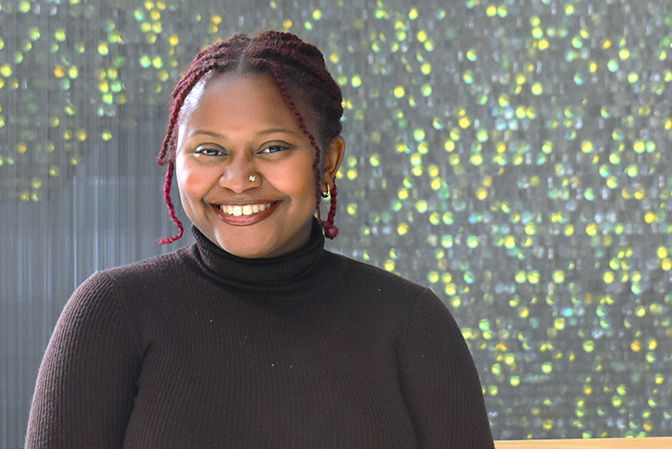
Mariam Jallow on the folklore, fear, and storytelling.
PEN Transmissions is English PEN’s magazine for international and translated voices. PEN’s members are the backbone of our work, helping us to support international literature, campaign for writers at risk, and advocate for the freedom to write and read. If you are able, please consider becoming an English PEN member and joining our community of over 1,000 readers and writers. Join now.
This piece is part of a year-long series, supported by the Norman Trust, showcasing Gen Z writers and writing. Read our editorial on the series here.
~
There is something quite powerful about this intangible thing called storytelling. Wherever we go, our stories go with us. And the things we hold dear – our culture, identity, and history – are never quite lost.
Jumbies, rolling calves, demons, malevolent spirits, ordinary ghosts; there are many stories that have both terrified and inspired me. But none more so than the folklore I grew up with. And fear is an incredibly powerful storytelling tool. The warnings hiding in prose and proverbs shared between generations by word-of-mouth were the first works of horror I became acquainted with while growing up in the Virgin Islands.
Around 7 or 8, I developed this odd fear of plant seeds. Greater than the nervous anticipation of chanting ‘bloody Mary’ in the mirror three times with my childhood friends, I still sharply recall the dread that filled me when someone in my class would jokingly plant so-called ‘jumbie beads’ in the pockets of my uniform. The story as I remember it went: if one of these small half-red half-black beads made its way into your home, once midnight arrived, a jumbie would come out of the seed and harm you. I would come to learn that the seeds, also known as rosary peas, were quite toxic, and could be fatal when ingested. Especially for children.
In that tale is a warning, one that even children can understand. We feared the spirits that would come from the seeds more than the poison living within it, but the result was all the same. I asked a friend what her experiences were with jumbie beads and she told me she knew people who made them into jewellery to ward off the evil eye. The red-black pattern was less something to fear and more something to revere.
I think this experience is where my interest in folk stories began. This particular lore varies across different Caribbean countries and cultures. Every time it’s told – no matter how differently – a little bit of our shared history and beliefs is told as well.
Mami Wata, or Mama Glo, was another recurring character. I remember telling my parents, who are originally from The Gambia, about research I was doing for a project on Caribbean folklore and the legends of Mami Wata – a mermaid-like being who could bring wealth or misfortune, who was a protector of the waters, who had many mythical characterisations. There was glee on my father’s face when he listened to me relay this story, miles and years away from where he’d first heard it as a child in West Africa. Like him, Mami Wata had travelled. And how exciting it was for me to find that our diaspora was linked not just through the trauma and consequences of chattel slavery but also through the stories our ancestors kept alive in the face of such cruelty. Since moving from Tortola to the UK, I’ve become even more invested in the stories we shared in our younger days.
I am not very good at writing happy stories. That became quite a problem for my secondary school English teacher. She’d had enough of marking my macabre short stories and challenged me to give my characters a different ending. Today, I sometimes still hear her voice in the back of my head as I’m re-writing these old wives’ tales in my own way.
A common trope in folkloric tales is the scorned woman wronged in a past-life and reborn as a vengeful entity. There was a piece I wrote some time ago about Cowfoot Woman, more commonly known as La Diablesse. The original story as I’d known it detailed a woman with long hair in a braid wearing a wide-brimmed hat slanted across her face, revealing only her demure smile. She would walk with a limp and wear a traditional skirt with a wide hoop. Her attractive disguise concealed a sinister demeanour. Behind her long flowing skirt was a hoofed left leg, only revealed to her male victims when she led them astray, never to be seen again.
Many of these stories have hidden meanings. Perhaps this one is warning potentially unfaithful men from meeting a dire end. Perhaps La Diablesse is a femme fatale created to vilify feminine wiles and temptation. But the meaning is up to the telling, and the telling changes in every instance. I changed it such that the Cowfoot Woman, who I so feared as a child, became something of a protector, a lover of women and only a danger to others. Still as beautiful, still as deadly. Through traditional storytelling I found my voice in writing. I could write my horror to represent a shared identity, shared culture, shared customs. More importantly, my old English teacher would no longer need to fear coming across another pointlessly tragic tale.
A month later at Tomas’ funeral, the closing of his casket like a clacking hoof on a dirt road, she cried. As the wind carried the wails of his mother’s grief, the biting sorrow echoed Nita’s own, she realised. On that night, before she was scared, she was confused, and before she was confused, she was enamoured. La Diablesse’s smile left her as Tomas left his kin – hollow, lonely, and feeling.
Mariam Jallow is a Gambian and Virgin Islander Biochemistry graduate and avid writer. Her experiences in journalism, poetry, storytelling and communications have coexisted with her love for science and research since she began sharing her writing as a child. Currently residing in the U.K., Mariam’s writing ranges from news-style articles to works of fiction incorporating elements from horror and folklore.
Her previous experiences include working to promote equality and diversity among students and staff in university settings, particularly within STEM, and communicating science for public education, empowerment and entertainment. Mariam’s contributions as the Science Editor of UEA’s student newspaper led to winning the Best Science Publication at the 2022 SPA National Awards. Currently, she continues to split her time between science communications, research, and publishing stories.
Photo credit: