Tag: French

  • My Character, My Pseudonym, and Me

    My Character, My Pseudonym, and Me

    Fatima Daas on names. Translated by Lara Vergnaud.

    PEN Transmissions is English PEN’s magazine for international and translated voices. PEN’s members are the backbone of our work, helping us to support international literature, campaign for writers at risk, and advocate for the freedom to write and read. If you are able, please consider becoming an English PEN member and joining our community of over 1,000 readers and writers. Join now.

    If you look up the word ‘pseudonym’ in the dictionary, you’ll find something like the following: a fictitious name, often used by an author; from French pseudonyme, from Greek pseudōnymos, from pseudēs ‘false’ + onuma ‘name’. Also: pen name, alias, nom de guerre.

    The standard French legal dictionary, Le dictionnaire du droit privé, notes:

    Pseudonyms are used in particular by writers of novels, and other literary works, as well as by various categories of artists. A ‘pseudonym’ is an alias assumed by an individual in the course of performing their profession or art. It is chosen by an individual who does not wish to be known to the public with the family name with which they are listed on official records.

    There are as many reasons to want a pseudonym as there are people, as there are individual personalities. For me, to the question why did I choose a pseudonym to write? my first response would be: why not?

    When you publish a book, you have the possibility –  the opportunity – to choose to assume a name different from the one you were given at birth, the one imposed by your parents, the one that links you to others. The pseudonym allows you to decide: you can choose to break from your birth name, from your father’s name – a way to overthrow the patriarchy and liberate yourself from it.

    A pseudonym also offers a way not to drag your loved ones into your life as a writer; to leave them out of it; to break your links to them.

    There comes a feeling of freedom when you choose a pen name. You decide what the outside world will call you. You can navigate freely between genders. You can reinvent yourself, in essence. A pseudonym allows you to reveal yourself while being someone else, someone completely made up who nonetheless grows inside of you, free to evolve at will. 

    Using a pseudonym allows for a division between a person and their persona. When my first novel was published, I needed to separate my private life from the public sphere of writing.

    In my creative endeavour, there’s Fatima Daas, the main character of my novel: the youngest of three sisters, French of Algerian origin, a rebellious teenager but still a good student, someone from the banlieue, an asthmatic, a lesbian, and a Muslim. I created this character using parts of my own life.

    A character close to me, but still someone else.

    A character with whom I could identify, but who, at moments, seemed distant; a character who would help me project this voice and carry this story, to talk about it with my readers and be present publicly without ever hiding behind “anonymity” in the strict sense of the word. I never wanted to hide behind a pseudonym. It was out of the question that I stay back, that I stay quiet after having written this kind of story.

    It was my responsibility to accompany the novel after writing it; to be present, available, visible.

    Often, the use of a pseudonym is confused with the act of disappearing behind a new name, after which multiple interpretations emerge (the risk being that they’re wrong).

    I detected a growing inability to distance myself, the author, from the character of my novel as I decided to embody that character. So much so that, from the very beginning, I maintained that my novel didn’t fit into any one box or label (autobiography, for example).

    And so, in this creative endeavour, there’s also Fatima Daas, the author. The decision to embody my character came very early on. I felt an incredible urgency to write about this quest for identity, and I chose to switch back and forth between fiction and reality. I used an autobiographical foundation. I wrote memories from childhood, emotions I experienced – shame, guilt, self-hate, love…

    I wasn’t interested in merely writing a diary that I would offer to anyone who wanted it. I wanted to write a story that belonged both to me and to other people; all the events I wrote about were distorted and transformed, with the goal of blurring the lines between autobiography and autofiction; of experimenting, having fun with it, creating, cobbling together, tricking my readers, kindly and respectfully; arousing their curiosity, constantly and increasingly…

    Finally, within this endeavour, there’s the other person: the person I am in everyday life who has a different name; the person outside of the media, outside of my writing; the person I am in private, who’s not exactly the same as my character, not exactly the same as the author, though not entirely different either.

    To me, using a pseudonym means you’re protected by only partial anonymity – without wearing a mask, without dissimulating, without hiding, without staying in the shadows, without masking your global identity, while also protecting your private life, protecting yourself from the literary world, with the ability to enter and exit that universe.

    Following the publication of my first novel, The Last One, I was almost immediately propelled into the limelight. I found myself dealing with several situations and problems as a result.

    I very quickly realised that the interest in my work was influenced by the “themes” within it, namely Islam and homosexuality, which are both hot topics in France. Various questions would pop into my head every time I was invited somewhere. Am I being invited for the right reasons? Am I being invited to fill the woman quota, the young, lesbian, or North African quota? Am I being invited to show that a girl from the banlieue can write if she wants to? Am I being invited to speak out against religion, against Islam? To tell France “Thank you”? Did they really read my book? Understand the story?

    The attention I received was not always solely due to the literary merit of my novel, but often more as if I was a circus freak being asked to justify their existence, to choose between their sexual orientation and their faith, who was being asked to talk about politics, theology, and social issues all while being distanced from my real work: writing and literature.

    Furthermore, I felt like I was being invited to represent young women from immigrant homes, from the banlieue, Muslim women, lesbians. I unwillingly became the spokesperson for a group of people whose individual identities were never considered. I bore a responsibility for visibility and representation that isn’t forced upon other French writers (older, white, cisgender, heterosexual, upper-middle-class writers…).

    At that point, anything I might have said could be turned against me; every clumsily worded stance could prompt a hateful backlash. I needed every minute I had to clarify my thoughts. Media exposure doesn’t always give you the time to express a nuanced, clear, sincere train of thought.

    My novel recounts the life of a young French woman of Algerian descent who comes from an immigrant family and a working-class neighbourhood. A lesbian and a Muslim who simultaneously endures multiple forms of discrimination. Media exposure exacerbated those assaults. I was living out the very things I was writing about, that I was denouncing, in an even more intense way, because I was visible, because I was speaking out. I became dangerous – no doubt because I was talking from the margins and that was disrupting the centre. People tried to put me into a box, to trip me up, to twist my novel, simplify my words, take away my right to write, take away my status as a writer…. It didn’t work!

    The publication of my novel forced me to take personal and professional risks, but my pseudonym is like a shield that’s able to protect me from the outside world and keep me at a distance from the public persona that I became.


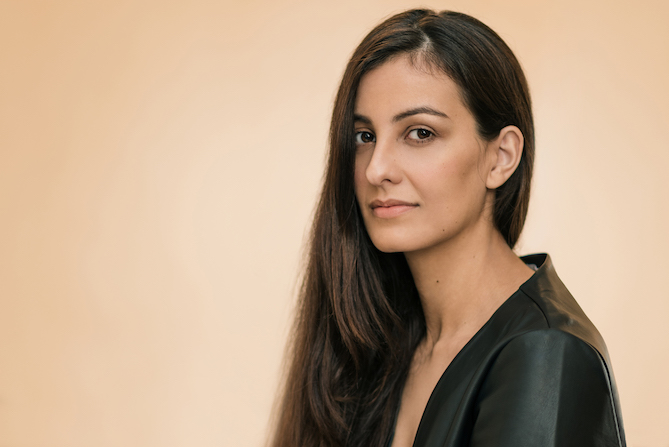
    Fatima Daas (the author’s pseudonym) was born in 1995 and grew up in the Parisian banlieue of Clichy-sous-Bois, where her parents settled after arriving from Algeria. In high school Daas participated in writing workshops led by Tanguy Viel. Well aware of the contradictions, she defines herself as Muslim, feminist and gay. Published in French in 2020, The Last One was the winner of the prestigious Prix Les Inrockuptibles in 2020, and Germany’s International Literature Prize in 2021. 

    Lara Vergnaud is a translator of prose, creative nonfiction, and scholarly works from the French. She has translated books by Zahia Rahmani, Ahmed Bounani, Mohamed Leftah, Samira Sedira, and Joy Sorman, among others. She is the recipient of two PEN/Heim Translation Fund Grants and a French Voices Grand Prize, and has been nominated for the National Translation Award. She lives in Washington, D.C 

    Photo credit: Olivier Roller

  • All My Languages

    All My Languages

    Ariel Saramandi on Mauritius, identity, and the languages in which she writes, thinks and dreams.

    PEN Transmissions is English PEN’s magazine for international and translated voices. PEN’s members are the backbone of our work, helping us to support international literature, campaign for writers at risk, and advocate for the freedom to write and read. If you are able, please consider becoming an English PEN member and joining our community of over 1,000 readers and writers. Join now.

    I used to think that it could have gone either way. If choosing a language to write and think in is primarily a matter of exposure – that, in the end, we pick the tongue in which we’re comfortable, the language by which we’re surrounded – then I would have chosen French. Or, at the very least, I would have also written in French.

    I was brought up in English, French and Kreol. I spoke English with my English father; French and English with my mother; French with my aunt, who took care of me and my sister while my mother worked; French, Kreol and a smattering of Hindi with the women and men who cared for me alongside my aunt; French and Kreol outside of our home.

    All the leading newspapers and media outlets are in French, a postcolonial particularity that stems from the British administration’s decision not to impose English on the island’s (mostly Francophone) residents when they colonised the country in 1810. I’d read the papers after watching cartoons early in the morning on national TV: Babar, Petit Potam, Cat’s Eye and Sailor Moon were all either in French or French dubbed. When I was around seven, our island was introduced to satellite television, and no provider to my knowledge offered a mix of both English and French channels. My father made sure we alternated between English and French satellites every year, to balance out our tongues.  

    I spoke English at my international primary school. Later, when I joined a Catholic secondary school run by the Diocese, our textbook education was in English but everyone spoke French. It was there that I learned the intricate ways in which language is linked to ethnicity in Mauritius.

    The school was in the same town as the private French lycées, whose fees most of my classmates’ families wouldn’t have been able to afford. It was considered to be a better institution than the other public schools in the area. Within the school there was a separate building dedicated to prevocational education. The students attending these classes were often darker skinned with unstraightened hair, and spoke Kreol outside of the classroom. This was untenable to many of the schoolgirls I knew who would only speak French: Kreol was used sparingly, in jest, never spoken earnestly. These girls spent hours polishing their accent by watching French satellite television; lusted over the white boys of the lycée and the light-skinned boys in the school next door; straightened their hair, wore green contact lenses. When I won a place at a prestigious state school, the languages around me changed again: French was rarely heard, English, Kreol and Hindi were dominant. Like the Catholic school, many of the girls were middle and lower-middle class; unlike my previous school, my classmates were now mostly Indo-Mauritian. The obsession with whiteness didn’t change: some of the girls would buy bleaching creams advertised by Bollywood stars.

    But one mustn’t be quick to sketch out an order of things. It’s often believed that light skin and wealth are associated with languages of power; darker skin and lower incomes with the Kreol language. Besides and beyond Kreol, it’s assumed that Indo-Mauritians generally prefer to speak English, whereas Creoles and Franco-Mauritians choose French.

    These linguistic schemata are blasted apart every day. None of them hold. A wealthy Indo-Mauritian child attending one of the lycées would probably speak French at home. And Kreol is spoken by over 90% of us, across all spectrums of wealth and ethnicity.

    A conversation with my friend Marek Ahnee, a researcher at the EHESS, also complicates this idea of linguistic correlative order. Both of us – and our families and friends in our Creole milieu – speak in a mix of French-English-Kreol every day without thinking about it. I’ve just said ‘Allume l’aircon s’il te plait mo pe mor’, for instance.

    I’ve seen our parents and our friends be questioned for their supposed ‘allegiance’ to French, when they speak and write in English and Kreol just as perfectly. Marek tells me that when Creoles speak French it’s often seen as French colonial mimicry. English, incongruously, is seen as a somewhat ‘liberated’ language ­– this whole line of thinking is another example of how colonial empires always exist in relation to other colonial empires. He adds that French, which has been used (and is still used, in certain settings) as a tool of colonial power, is also a refuge for many Mauritian Creoles and marginalised Indo-Mauritian communities; it even serves as an instrument of social mobility to these people.

    ~

    There are rancid ideas that are, hopefully, in the last stages of putrescence before they die out. There are tough, complex systems of caste and white supremacy that will take the efforts of a nation to dismantle.

    There is also money. It chose my tongue. I’ve spent a few months thinking about this essay and it allows for no other conclusion: if it weren’t for my father – his excellent position, his English nationality that I inherited, my private primary school, the English bookshops to which I travelled, the English books I amassed – I would probably be writing in French. And perhaps I’d never be a writer at all.

    Mauritius in the mid 1990s: you could count the number of bookstores on one hand. They sold an excessive number of self-help books, as well as copies of classics in strange fonts, reprinted by local publishers with or without permission.  The municipal libraries were (and still are) pathetically stocked. The British Council’s library perhaps existed back then – it closed in 2016; English officials didn’t think there’d be much interest in keeping it open –  but I don’t remember my parents taking me there. The Institut Francais de Maurice’s gorgeous mediatheque only opened in 2010. I don’t know where their first library was and wasn’t brought there, in any case. As for Kreol – the only book I had in Kreol was a poetry pamphlet. There were no Kreol books for children back then.

    I had books in French: picture books of Disney movies, the Martine series, Hector le Castor and friends. These French books, bought in Mauritius, couldn’t rival the number of books I had in English from abroad. My father travelled several times a year, and there was often a book or magazine packed inside his suitcase for me when he returned. Once a year, we’d all go to England. My parents would leave me alone in one of the bookshops in Canterbury and I’d leave with ten to fifteen books. I would depend on that bookshop well into my teenage years, when it seemed that everyone abroad was able to buy books online except for me: Mauritius didn’t exist in the ‘choose your country’ drop-down menu. There was also a book catalogue that my primary school sent out once or twice a year: I’d circle the ones I wanted most to read, the school would order them, and they’d arrive a few months later. 

    ~

    I was cushioned in English children’s literature, and then PG 13 classics like Little Women.

    When I’d finished rereading my books I searched for others around the house. My father mostly read tomes on the world wars, biographies of athletes. My mother, however, had a proper, literary, adult collection of novels.

    I was nine when I stumbled on the first volume of Henri Troyat’s Les Eygletière. The volumes were furrowed under piles of Cosmopolitans and Anaïs Nin, stored away in a broken cream drawer. They weren’t especially hidden. As I started reading the novel – I didn’t know there were two more books in the trilogy, and in any case I never sought them out – I felt, acutely and for the first time, very young and stupid and scared. The Eygletière family live in Paris in the 1960s. Philippe, the patriarch, has married his second much younger wife, Carole, whom he cheats on. Carole, in turn, begins to have an affair with Philippe’s son Jean Marc. Daniel, the youngest son, sets upon discovering himself in ‘pure’ Africa (of course!)

    I don’t remember finishing the book, but I do remember putting it back in the exact place I found it, never telling my mother. I was cautious around her other books in French, and French literature in general. Given that I didn’t have that many French books anyway, it wasn’t difficult to read exclusively in English.

    As I grew up, I turned to French literature again, but always with a certain apprehension. I prepare myself to be disquieted, thrilled. Some of the greatest reading experiences of my life have been in French: Madame Bovary, L’Étranger, Vipere au poing, Bonjour Tristesse,Proust, Zola, Ernaux, Énard, NDiaye, Colette, Blanchot, Bachelard, Levinas. Sometimes, I wonder whether I hold the language as sacrosanct, the language of the sublime ­– my sublime – that I won’t tamper with, won’t attempt.

    That may change. I think and dream in French. Over the past few years in Mauritius, it has become rare for me to talk in English for more than a few sentences at a time. My son is bilingual but chooses to speak mostly in French. Sometimes he will surprise me by repeating to me a sentence I’ve just said in the other language. Bookshops now are filled with French offerings, and though he knows and loves the classics – the animals of Eric Carle, Margaret Wise Brown’s rabbits – it is the adventures of Timoté that he picks up again and again. He has books in Kreol, too, like the translations of Tintin by Shenaz Patel. I wonder if he’ll end up choosing one language over another, or if he won’t feel like he has to make a choice. Whatever happens, I’ll keep a steady supply of age-appropriate books in all the languages he knows.


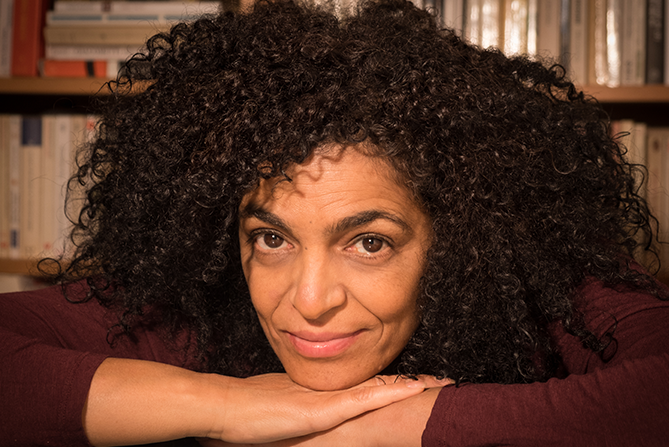
    Ariel Saramandi is an Anglo-Mauritian writer living in Mauritius. Her fiction and essays have been published by GrantaLA Review of Books and Brooklyn Rail, among other places. She is represented by Lisa Baker at Aitken Alexander Associates.

  • In Their Minds: An Interview with Samira Sedira

    In Their Minds: An Interview with Samira Sedira

    Samira Sedira discusses race, class, resentment and crime.

    PEN Transmissions is English PEN’s magazine for international and translated voices. PEN’s members are the backbone of our work, helping us to support international literature, campaign for writers at risk, and advocate for the freedom to write and read. If you are able, please consider becoming an English PEN member and joining our community of over 1,000 readers and writers. Join now.

    Samira – thanks so much for speaking to me. I want to start at the end of your book People Like Them, with your Author’s Note. You talk about the 2003 mass homicide that ‘inspired’ the book, and the lack of media engagement with issues of race. Could you speak a little about that? Was it the story or the message that acted as a touchstone for you when writing this book? Which was the vehicle for which?

    At the time, no journalist had dared to look at the case from this angle. It was, however, a glaring case of racial hatred. I’m not saying that the whole book was based on it – far from it – but choosing to ignore this major element would also raise questions.

    Xavier Flactif is of Chadian origin. One fine day, he arrives with his family in a small village where nobody has ever seen a black person. He’s rich, and he doesn’t hide it –  plays up to it, even. He’s also a bit of a crook. And subconsciously, collectively, the village believes that a black person – even more a rich black person – is a black person who has taken the place of a white person. In France, racism is founded in discourses and representations that have been developed within the framework of the French Colonial Empire. You can’t deny that there is a specific, stronger, and more lasting form of rejection and contempt against immigrants who came and come from colonised countries. It’s become a reflex, almost.

    The actual facts are always incredibly complex, and there are several ways of reading them. That was why it was so important, for me, to restore what the media and the justice system in our country had chosen to cover up; to give this story its full dimensions, and indeed its incredible complexity. The murder of the Flactif family is “also” a hate crime.

    For you, was writing this book an exercise in sympathy or empathy?

    When you’re a novelist, empathy is essential. It’s second nature. Imagine an author who judged her characters. The result would be awful: that’s absolutely not the author’s job. We should leave it to the magistrates. Just as Jim Harrison said, a writer must be ready to put himself in absolutely anyone else’s shoes.

    You must be prepared to become someone else, and, beyond that, you must forbid yourself from judging, from taking a stand, from being too cautious. It is necessary to trample over everything, to not respect anything, in order to get a little closer to the light. To speak about the complexity of the world, you can’t be too vulnerable; you have, in Louis Ferdinand Céline’s words, to ‘put your guts on the table … don’t be afraid of getting your hands dirty in the grease of human nature’.

    People Like Them is a whydunit. After your time with this story, do you know why, in the world you have rendered, Constant did it?

    I have my own thoughts on this, but I’d rather leave the reader to answer this question. The only thing I can say is that Bakary’s arrival in Constant’s life has a devastating effect. The whole organisation of the village is upturned. Bakary’s charisma; Bakary and his great strangeness; Bakary the crook; Bakary, whose mere appearance questions, fascinates, repels: Constant can’t stand this “intrusion” and the mess it creates. The only way to get back on track is to remove the person who caused it. Constant wants to restore order, the order he’s been trying to contain since his accident.

    The book bridges what we might call ‘commercial’ fiction (particularly in terms of its plot and shape) and ‘literary’ fiction (particularly in its style and points of reference). How would you characterise it? Is this something you were conscious of in the act of writing? Are those categories even necessary?

    No, I absolutely wasn’t conscious of it. I never think about literature in these terms, and I never have any idea how the book I’m writing will eventually turn out. I’m progressing the writing through the darkness. All I can say to myself is Write the book you’d like to read.

    A while ago, I received a literary prize, the Eugène Dabit Prize, which defines itself as follows: ‘Writing about common people with style’. It’s a brilliant programme, and that’s exactly what I’d like to tend towards.

    Categorising literature seems obsolete to me. The boundaries between genres are increasingly less clear. We are witnessing the birth of some very interesting hybrid works. It’s a way of reviewing literature, and I’m all in favour of the abolition of borders!

    This is your first book translated into English – by the wonderful Lara Vergnaud. How involved were you with this process? How do you feel the book ‘travels’ across languages and contexts?

    We communicated over email a lot. She asked me lots of questions and got me to clarify things. Lara Vergnaud is a very precise translator; she didn’t leave a single word to chance. She’s brilliant, in fact. I don’t really know how the book will travel across languages and contexts, but one thing is for certain: crime is universal. Every society has its criminals. The dread it sparks in us is common for all of us. That’s the thread that connects us.

    A few weeks ago, we published an interview with the great Françoise Vergès, in which she asked and answered the question Who cleans the world? Your own experience of cleaning, after a career as an actor, comes to bear on People Like Them, and indeed much of your other writing. Could you talk a little about that?

    ‘Who cleans the world?’ What an incredible question.

    Do you know what it immediately made me think of? Public transport in Paris. It’s a good representation of the way society is organised. When you take the metro or a commuter train at different times of the day, you notice that, as the day goes on, the population changes (the complexion gets brighter as the day goes on). Very early in the morning, around 5am, it’s the people who ‘clean the world’ who fill the carriages. It’s mostly women: African women, Arab women, Pakistani women. They travel alone or in groups. They come from the suburbs, sometimes from far out, and they’re on their way to clean offices, banks, hotels, airports. Later in the morning, it’s the employees of these establishments who fill the carriages. It’s interesting that this is the direction in which workers’ journeys are made. From the suburb into Paris. The suburbs are at the service of the capital.

    Personally, I never intended to ‘clean the world’. But, alas, I didn’t have a choice. After twenty years spent on stage, I had to resign myself to housework. France is a country that loves qualifications. Apart from my school leavers’ baccalaureate and my training as an actress, I didn’t have anything else. As a result, I only had access to jobs that required no or very few qualifications. I thought it would just be a temporary solution, but it became a temporary solution that lasted three years. At more than 44 years old, it wasn’t easy … The most difficult thing, I think, was being in the same economic situation as the previous generation who emigrated to France. The immigrants who arrived in the sixties only had access to the types of jobs that nobody wanted. France was swarming with invisible workers. I was joining the working class, even though I was supposed to do better. It was quite a traumatic experience, to rally a generation that had nothing to do with mine. The paradoxical thing about it is that I did suffer from it, but I also felt comfort. I felt like I had found them, and I finally understood what they had gone through for us, their children.

    I’m interested also in the way class and race intersect in your work. Related to my previous question, the fact that we have a read-as-white character cleaning in the Langlois house does something to complicate the social and structural issues involved – othering is complicated; the ‘Them’ of the title complicated; disprivilege, morality and normality are complicated. How do race and class intersect in your work?

    Yes, it is absolute chaos. Everything is inverted. Without a doubt, it’s this unravelling of class which leads to the drama. For the villagers, nothing functions as it should. Bakary and his family don’t match the patterns in which their own fantasies had led them to believe. In their minds, a Black person can be neither rich nor powerful. A Black person cannot employ a white person to do their housework. It is simply not in the order of things. The thread that binds the racial issue and the class issue together is the feeling of humiliation. Humiliation for Bakary of not being recognised for his soul, and humiliation for Constant of not being given due recognition.

    Finally, what hope did you take from writing People Like Them?

    I have unwavering faith in humankind. When you see the misfortunes and abuses the world produces, it can seem delusional to continue to have faith. But that is just how I am. I love humanity, I love everything about it: its weaknesses, its darkness, its light too. I never tire of observing it in all its complexity. And every time I finish reading a book, I hope to learn a little more from it about the human being. But the truth is that I know even less: I’m like Sisyphus, I am climbing and descending the same mountain, tirelessly, again and again.


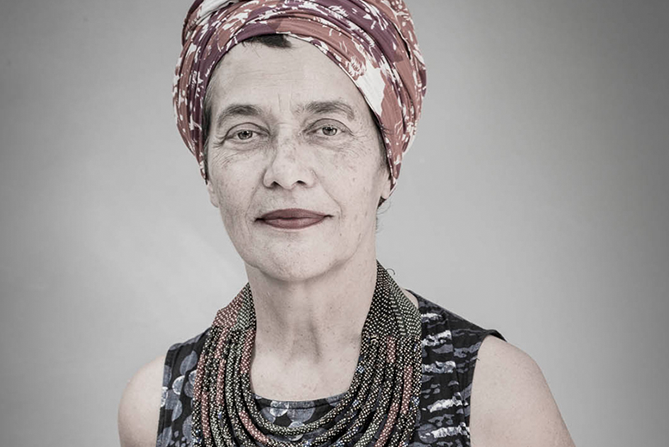
    Samira Sedira is a novelist, playwright and actress who was born in Algeria and moved to France with her family when she was four months old. In 2008, after two decades of acting for film and the stage, she became a cleaning woman, an experience that filtered into the events of this novel. 

    People Like Them by Samira Sedira is published by Raven Books at Bloomsbury, price £12.99

    Interview by Will Forrester, Editor.

    Photo credit: Pascal Martos.

  • Decolonial Feminisms: An Interview with Françoise Vergès

    Decolonial Feminisms: An Interview with Françoise Vergès

    Françoise Vergès discusses decolonial feminism, free expression, Reunion and white feminism.

    PEN Transmissions is English PEN’s magazine for international and translated voices. PEN’s members are the backbone of our work, helping us to support international literature, campaign for writers at risk, and advocate for the freedom to write and read. If you are able, please consider becoming an English PEN member and joining our community of over 1,000 readers and writers. Join now.

    Françoise, thanks for talking to me. I’ll start with the start of your latest book, A Decolonial Feminism, insomuch as asking you about the first word of its title. The use of the indefinite article speaks volumes, I feel, about a central tenet of the book: plurality, and the idea that decolonial feminisms (whilst including non-negotiable positions of anti-racism, anti-capitalism and anti-imperialism) constellate in different ways in different times and spaces. Could you speak a little about the idea of ‘decolonial feminism’, and the importance of that ‘A’?

    Thank you for your question. Quite often, during interviews and debates when the book was published in France, I was asked to describe the decolonial feminism, and I had to remind people that I had written ‘a’. The fact that people were reading ‘the’ when it was easy to read ‘a’ was revelatory. It spoke of a need for an encompassing theory, for a reassuring moment, because we need reassurance, we need to think that we – finally! – have something to hang to, a complete answer to the messy, awful, terrible moment we live in, its fragmented reality, its assault on the senses with its tsunami of news, images, facts. I got that, but though I have myself sometimes dreamt of the answer, it remains a fleeting moment. I know – intimately know – that it’s better to embrace messiness, complexity and even ugliness to have a freer imagination. The idealisation of a people, a group, a doctrine, has never been good for the people, group, community, designed as saviour. I am attracted to complexities and entanglements because they show the lies of naturalisation and normalisation of injustices and inequalities, how the fabrication of lives that do not matter is created and made banal.

     A decolonial feminism is to facilitate a leap in imagination, to be convinced that there are alternatives, and that they are worth fighting for.

    To return to feminisms, it is not just that I wanted to say that decolonial feminism exist in different constellations, but also that I did not want to deny to corporate feminism, femonationalism, femo-imperialism, racist feminism, universal feminism, the feminism of the far-right, or military feminism their right to appropriate the term ‘feminism’. They belong to a long ideological European feminist tradition. They have leaders and history; they have produced texts and images. Even though there are differences between them, they share the definition of who qualify as ‘women’ and as ‘men’; they accept the State, the army and the police as natural institutions; they seek a form of equality that denies class, race, ethnicity; they do not pay attention to the North/South axis, and the long history of Western domination. They are its accomplices. Colonial slavery and colonialism needed the complicity of some women – capitalism and imperialism also. I am aware of the feminist distinction between to cede and to consent. I am talking of consent here, of active consent. I do not believe that European feminism was the only ideology that was not affected by racism. Racial laws were not contained within the borders of the colony. Ideas circulate. European feminisms emerged in a continent with a long history of anti-Semitism, anti-Blackness, anti-Roma. And European feminisms would have been naturally protected from these ideologies? Because white women were dominated by men, it would have assured a natural bond with the oppressed, the enslaved? This transforms anti-racism into a moral position. It is a political act to go on the side of the oppressed, which can be triggered by many things. But one thing is sure: it is a political act because it challenges an entire order founded on exploitation, racism and sexism. Finally, how come what Aimé Césaire had called the ‘shock in return’ – the fact that cultural and political regimes of slavery and colonialism would inevitably come back to Europe, lead to the existence of racial laws targeting European citizens in the 20th century, and insinuate themselves even into progressive and emancipatory ideologies (Discourse on Colonialism, 2000) – would have skirted feminism? This is totally ahistorical. And it marginalises the existence of revolutionary feminists in Europe, who made (and are making) the effort to break with white hegemony, and answered to racism and colonialism from their position, seeking to disrupt the norms of their own society.

    On decolonial feminism, there inevitably exist different practices and objectives, because context matters and because decolonial feminism is what women do when they fight racism, capitalism, imperialism. Decolonial feminism is about making visible the colonial genealogy of entanglements of oppression. It stands alongside revolutionary feminism, decolonial, queer, black, indigenous and Islamic feminisms, but if I write about decolonial feminism it is because I see the process of decolonisation as being vital and necessary. The feminism I defend is not exclusive of other feminisms that are radically anti-racist, anti-capitalist and anti-imperialist, and thus anti-heteropatriarchy. But not only do I come from the colonised world (Reunion Island, still in a direct colonial relation to France), I think that, via Césaire and Fanon, decolonisation seeks to build a world in which war, systemic and structural violence, and racism are not its organising principles. It is a long and difficult process, which is not “anti-European”, but answers to Fanon’s call to leave a Europe ‘which never ceases to speak of man while slaughtering him wherever it meets him, at every corner of its own streets, in every corner of the world’. When Fanon writes, ‘if we want to meet the expectations of Europeans, we must not send them back an image, even an ideal one, of their society and their thinking for which they experience immense nausea’, he indicates how the conversation can be established between Europeans and racialised peoples. For decolonial feminism, it means continuing to imagine and create in the present relationality, alternate archives, spaces of autonomy; to write, to establish routes of solidarity, to fight.

    Finally, if I think of one thing the feminism I defend should be against, it is private property. If you think that private property was fundamental for the transformation of a human being into private property, as object – that the law of private property was essential to the making of white patriarchy; its laws of inheritance; to right of land; rights over wife and children, animals and plants, and again over racialised human beings; to the making of the Master’s House and its world – then you cannot envision a world that would keep private property as its foundation and would be more just. Private property of notions impoverishes the conversation, and we end up fighting over a word rather than its content, the dreams of futurity that we can deploy from that word. A decolonial feminism is to facilitate a leap in imagination, to be convinced that there are alternatives, and that they are worth fighting for.

    You use the term ‘epistemic justice’, and it’s one I like (particularly as a counter to epistemicide, the destruction of knowledge). You argue for the role of knowledge – often traditional knowledge – in the fight for decolonial feminism. How does this relate to language, particularly when epistemicide is so braided with the destruction of language/mothertongue? I’m reading your work in translation into English from French, two colonial languages. Where does language, and translation between languages, sit within decolonial feminism?

    A short biographical note: I grew up speaking Creole and French, and though school was only in French, I never lost Creole. Contrary to other parents, mine never forbade me to speak Creole. So I was bilingual. French was a colonial language but also a language in which I learnt about revolutions, emancipations, struggles. My parents were avid readers of history, philosophy, of journals and manifestos, and, further, my mother was a great reader of literature. They had books from all over the world, so I read a lot of literature in translation, from Russian, Spanish, Chinese, English. I distinguished between French as the language of power and white hegemony, and French as a language through which ideas of emancipation and liberation circulated – and through which I entered the world of literature. When Kateb Yacine said that ‘French was a capture of the war’ (‘le Français est un butin de guerre’ – he was speaking of Algerian resistance), he meant that there was no reason the colonised should not appropriate the language of the oppressor. It no longer belongs to him. Of course, it was the language of oppression and the law, but it could also be a weapon. But the problem is when French occupies a superior place, which is what happens in Reunion. In the early 2000s, when I worked in Reunion on a project, we published texts in Creole and French to show that complex thought could be expressed in Creole.

    Languages and translation between languages are very important within decolonial feminism. Lack of translation impoverishes feminisms, but more importantly, allows white bourgeois feminism to continue to say dishonest and misleading things about Islamic feminism in particular.

    I started to write quite early, in anti-imperialist journals, and in France, in the 1970s, in a feminist weekly. I continued to publish in activist publications when in the USA (1983-1995). When I started to write in English, I felt freer than with the French. I felt that in French, I would have constantly to explain what I meant by ‘race’, ‘white’, ‘colonialism’, or ‘decolonial’. I returned to French in the early 2000s, when I decided to intervene again in the conversation on race, gender, and colonialism. I circulate between these two colonial languages and I write quite differently in one or the other. I think into the three languages. When I arrived in France and went to university, I wanted to study Chinese and Arabic, but I gave up my studies quite quickly and became an activist.

    Languages and translation between languages are very important within decolonial feminism. Lack of translation impoverishes feminisms, but more importantly, allows white bourgeois feminism to continue to say dishonest and misleading things about Islamic feminism in particular. European publishing houses have a responsibility (because they are richer and have access to more resources) to multiply translations not only in hegemonic languages but also in others.

    You write compellingly on capital’s ability to draw the vocabulary of social justice into its orbit, repoint it, and capitalise its meaning – ‘diversity’, ‘inclusion’ and indeed ‘feminist’ being examples. Is there something about decolonial feminism that prevents that? Something in its theory and tenets and practice that prevent capitalism incorporating it?

    Capitalism will not survive without extraction and appropriation. It needs to colonise, to transform everything into a commodity. That one day a big company will sell online tee-shirts with I Am a Decolonial Feminist made in Bangladesh by underpaid and exploited women will not surprise me. Fighting capitalism’s avidity and capacity to transform into a commodity even what criticises it must be done (appropriation of radical iconography, words, slogans, violation of copyrights), but I also think that the tactics and strategies of marooning (escape, detour, opacity, underground) must be developed. We must show how the politics of pacification and neutralization work, how power can finally acknowledge demands for visibility once it has emptied their content of any subversive element, but also how and why certain demands will never be accepted because they will lead to the dismantling of the structures of domination and exploitation.

    I think that decolonial feminism can avoid assimilation and commodification by remaining close to the struggles of the women who are made the most precarious, close to the struggles of all those who fight against imperialist wars, extractivism, police violence and racial injustices, and for social, environmental, reproductive and epistemic justice. There are struggles that cannot be pacified.

    You make a compelling point, to me, about the idea of “white feminism”: that this term is not so much about white people’s mode of feminism as it is about a mode of feminism that upholds a white domination of both regressive and progressive views, actions and existences. This is a subtle distinction, but it demonstrates one of the things I feel this book does: look outward more than inward; to the collective more than the individual. Would you say that this is a fair reading?

    It is a fair reading. Whites who believe that our attack on white supremacy is about the colour of their skin seek to protect themselves from the necessary work of their own decolonisation and anti-racism.

    Censorship, police searches of my house at 6am, death threats, learning to keep secrets, to argue, to answer back, to never answer the cops – I experienced all that. But also, the political meetings, the marches, the protests, the anxiety, expectations and excitation before a big demonstration, the incredible courage of popular classes, peasants and workers, the songs, the chants, the joys, the hopes – all this constituted my environment.

    How much has your relationship with Reunion shaped your theory and practice?

    A lot. I think that if I had not been politically and culturally educated by the anticolonial struggle in Reunion, I would be someone else. It is an education that gave me very much, that shaped my way of approaching the world.

    Already, there was something about living in a “small” island that sometimes did not even appear on maps. This term “small” is very interesting, as if a small island (or country) cannot pretend to have much to say. But it is also fine if one can avoid the narcissism of “big” and confusing big with good. Quite early, I had a sense that the world was greater than the space imposed by France, a world reduced as a corridor between the island and France; that it was vast, complex and rich, and that I was living in the Indian Ocean, a millenary space of exchange between Africa and Asia, where Europe is on the periphery. The island was a space of tastes and smells, of mountains and rivers, with the constant presence of the ocean, with hurricanes and night that fell suddenly, like the pulling of a curtain. All this forever shaped my senses. Anticolonial feminist communism was the social and cultural world of my formative years as a girl and an adolescent. Censorship, police searches of my house at 6am, death threats, learning to keep secrets, to argue, to answer back, to never answer the cops – I experienced all that. But also, the political meetings, the marches, the protests, the anxiety, expectations and excitation before a big demonstration, the incredible courage of popular classes, peasants and workers, the songs, the chants, the joys, the hopes – all this constituted my environment. I experienced communism (my parents were communists) as something from the Global South, in a small island under French domination; it had nothing to do with European debates but with the anti-apartheid struggle, the postcolonial struggles in Madagascar and Mauritius, the struggles for decolonisation, delinking, asking What is development, what is feminism of liberation?

    Reunion and the world of the Indian Ocean remain essential to my understanding of the world though I no longer go the island as much as I wish I could. It has imprinted a sense of a land/sea continuum that is central to my reflection on the climate crisis, the current economy of extraction, on militarisation and privatisation of the seas.

    Something I found remarkable about A Decolonial Feminism was its capaciousness – by which I mean the amount of intersecting ideas, contexts, themes and topics that you bring in to conversation in such a short text. And this breadth doesn’t make for surface readings or cursory examination, rather a deeply connected, subtle argument. Of course, a premise of decolonial feminism is looking at connected forms of resistance to the connected development of oppressions. My question is: how complex is this intersecting argument to put into words, into writing on a page? Is your writing practice one of flow, or is it one of constant rewriting and restructuring and rewording?

    It depends. Writing is sometimes a total pain. I end wondering why – but why on earth – did I accept to write this? What was I thinking of? Then there is writing that requires rewriting,restructuring and rewording, whilst sometimes writing is one of flow. But it is also true that for many years now, I have been making a considerable effort to bring together in a clearer way many facts, ideas, contexts and topics. Racial capitalism has built global interconnections that link an oppression here to another there; I want to bring them to light. These entanglements mean that we can lead global fights and that local fights contribute to the weakening of the chains of extraction/production. How do we block these chains? When the Ever Given ship blocked the Suez Canal, it reminded me of that old tactic of producers: stopping one step in the chain could stop the entire chain. True, this was not this kind of act, but it brought this to memory. The Haitian Revolution also weakened the global structure of slavery. It was a formidable event, and this was why the West did everything to punish Haitians. How do we block the global chain of oppression and its local structures?

    I put much effort in bringing to light in very clear ways the interconnections of capitalism and the ways in which decolonial feminist struggles can interrupt its violence. The long history of anti-racist struggles demonstrate the capacity to build other interconnections than capitalist ones.

    I am learning a lot from young people, from their desire to eschew vertical authority, to build space of horizontality and relationality.

    Writing creates the possibility of entering into a conversation with a lot of people. All through 2019, I was invited by bookstores, associations, and students, in France to discuss A Decolonial Feminism. I met people I would never have met. Mostly young women, many of colour, constituted the public. I learned a lot and their questions and remarks enrich my thinking.

    Writing is also about reading, and I read a lot of novels. I admire the capacity, the talent that some writers have to make us feel deep, deep feelings and emotions, or make us see the green of a field, the hues of a landscape.

    Every time I read your work and hear you speak, I am taken by what I’d subjectively call your ‘good politics’, or, to use a term of the social-media era, your ‘good takes’. You bring together urgent – and often charged – conversations in a way that is nuanced and caring, in a way that takes a “wide view”. Over the years, how much has your work been shaped by new movements in radical discourse? Or were those ‘movements’ always already there?

    As I said, I grew up in an environment of intense debates and conversations with people from all social and cultural backgrounds, in a context of violence and postcolonial hegemony. I learned how to be confrontational, to be silent, or to listen attentively. I was learning all this without being conscious that I was learning what radical discourse was. What I was conscious of was that neutrality does not exist and that either you challenge it, or you refuse to contribute to the hypocrisy of objectivity. I also understood that words can be toxic: racist and sexist attacks by local conservatives or by State representatives against my parents and their comrades were constant, they did not hesitate to disseminate lies and defamations and sow divisions. The vocabulary of racist hatred has a libidinal dimension.

    I was fourteen or fifteen when I spoke in public for the first time. It was during the demonstration of the local anticolonial youth organisation. Later, I learned how to stay focused on what you want to say and not being silenced by adversaries. In France, in leftist circles, men did not intimidate me, I had no hesitation making myself heard, but I also learnt not to listen to them, to let my mind wander when they were talking nonstop. I also learnt to sharpen my interventions when I was talking to men in power, to be very precise, very direct, and to negotiate from a strong position.

    Becoming nuanced has been the result of all these experiences, from a long process of being a listener or a speaker in very different social spheres and in situations where different languages were spoken and I had to wait for translation; of learning about myself from psychoanalysis; of respecting the feelings that express the anger or humiliation for never having been listened to. I am learning a lot from young people, from their desire to eschew vertical authority, to build space of horizontality and relationality.

    You briefly mention the ideas of ‘censorship’ and ‘defamation’, but your work also brings together discourses and rights that, in a reductive understanding of free speech, are often presented in mainstream discourse as at odds with the idea of free speech – Islam, trans rights, and more (I firmly believe they’re not add odds at all, by the way – certainly not provided we’re not investing in a form of free expression co-opted by the libertarian far-right). What does freedom of expression look like for decolonial feminism?

    When in France, insulting anti-Muslim caricatures becomes the embodiment and very symbol of freedom of expression, the icons of ‘republican values’; we understand that it means continuing to be free to express Islamophobia.

    For decolonial feminism, freedom of expression would mean polyvocality, accepting differences and being questioned by them. We also need to clarify what kind of freedom will facilitate the kind of conversation we want to nurture. What is being lost when lived experience becomes the only terrain upon which wider claims are made? We must not be afraid of contentions and disputations within decolonial feminism and anti-racism. I will say that it is more about the rules we set for disputation than freedom of expression.

    Finally, for those who haven’t yet read this book, can I please ask: ‘Who cleans the world?’

    Women of colour, black, brown, indigenous women, everywhere. Women who wake up at dawn and travel for hours on public transport to clean hospitals, universities, commercial malls, airports, railway stations, but also white bourgeois bodies, elderly bodies, children. They perform the daily work of cleaning and caring that keeps society functioning. They are made invisible. Their struggles raise a fundamental question, and this is not about sharing domestic work. It is wider, more radical. They say, If we aspire to a just society, who will clean the world?  


    Françoise Vergès is an activist and public educator. She holds a PhD in Political Science from the University of California, Berkeley, and is the author of many books including Resolutely Black. Conversations with Aime Cesaire (Polity, 2019), The Wombs of Women: Race, Capital, Feminism and Monsters and Revolutionaries: Colonial Family Romance and Metissage (Duke University Press, 2020, 1999).

    Interview by Will Forrester, Editor.

    Photo credit: Victoria Smith.
  • Translating Emergencies

    Translating Emergencies

    Sophie Lewis on translating Noémi Lefebvre.

    PEN Transmissions is English PEN’s magazine for international and translated voices. PEN’s members are the backbone of our work, helping us to support international literature, campaign for writers at risk, and advocate for the freedom to write and read. If you are able, please consider becoming an English PEN member and joining our community of over 1,000 readers and writers. Join now.

    Poetics of Work is a mock treatise –or perhaps a work trying to become a treatise whose protagonist is too effectively distracted to carry these efforts through to serious conclusions.

    As far as it gets, the treatise is about the pushmepullyou, the carthorse-pulling horse-cart we all become when faced with the question of work. Should we, must we do it? Does it make us or destroy us? Or in destroying remake us in the image of something else? What about vocation – what if the work we seem best made for isn’t remunerated or no one wants it or no one knows they need it? Should we do it anyway, or should we occupy ourselves with something else? And that barbed word ‘occupation’ – is this all we are seeking in life: something to busy us until it’s over?

    Other questions flow from these: what about influence and antecedence? What do our parents give us and what do they make of us, with what degree of force? How can we mark out our own choices from theirs? Where do we draw lines between ourselves and all the authorities, parental, municipal and national? When is a national emergency like a writing desk, and can that be ok?

    One set of questions is never asked, or perhaps one frame is never imposed on the questions that spiral out of this verbal firework: that of gender. We don’t know; we don’t ask. It’s hardly there at all. To be precise, Noémi Lefebvre does sketch in two parents, distinguished by their genders as well as by their being alive or dead, their presence or absence, their disparate benevolence with textual resources. But our protagonist has neither name nor gender, and speaks without the encumbrance of either. And my dark confession as the book’s translator is that I didn’t even notice. I didn’t notice when I first read Poétique de l’emploi and I still didn’t clock this when I translated it, despite doing several drafts from start to finish. It took an incidental conversation between another of the French book’s readers and Noémi, relayed back a few months later, for me to do a sickening double-take and at last see the absence I had been blithely missing.  

    Two emergencies then needed tackling on the spot. One was practical: what, in my ignorance, had I translated wrongly that would need retranslating? I pushed other work aside and went back through ‘my’ Poetics with a fine-toothed comb. The other was moral and contextual: had I betrayed the trust put in me as translator of this book? Could it be ok that I had done this, if I were to fix every little glitch caused by my foundational error? Was I a bad reader, the wrong reader – the wrong translator for this job? How could I reconcile myself with this serious oversight?

    The two emergencies turned out to share a solution. On rereading my translation, I discovered no misplaced gender markers, not one, nothing. I checked and rechecked (and on the way rechecked my solutions for other translational tangles of which I had been fully aware) and was surprised but overjoyed to report no required gender changes or related fixes. It turns out that all the work to effect this rare accomplishment of neutrality had been Noémi’s: she had done all the stripping, not of personal pronouns – that is not at issue in French – but principally of titles and of whole types and realms of discourse, where a person’s gender would normally be signalled through all kinds of parts of speech. She had mostly avoided your average third-person descriptive narration, instead using interior monologues and dialogues.

    Discovering the nature of this incredibly subtle achievement cleared me of having accidentally mistranslated Noémi’s book, and partially cleared me of having culpably misread it. Noémi’s occultation of the protagonist’s gender was deliberate and meticulous, but she had not intended to make gender or its lack a talking point – rather, she wanted to take it right out of the equation. Her questions were political and philosophical and urgent – she wanted no distraction, no extraneous writerly decisions or readerly debates. Noémi did the heavy work, the speculative testing of her own language, to see what it could bear within such a powerful constraint, and what more it might then express in the thinner air of her gender-free space. It turns out my work, on this score at least, was the lighter task. In belatedly discovering my misreading, I also discovered that, for once, our two languages could mesh without further corseting in the translation process.

    Noémi has achieved her aims: we have a book about a poet in the world, a poet facing politics and the language of emergency politics, as only a poet could. And she has done more: her subtle removal of the gender context through which we see so much of life casts an even sharper light on the ways in which language works upon us even while remaining our creature and, apparently, in our control.


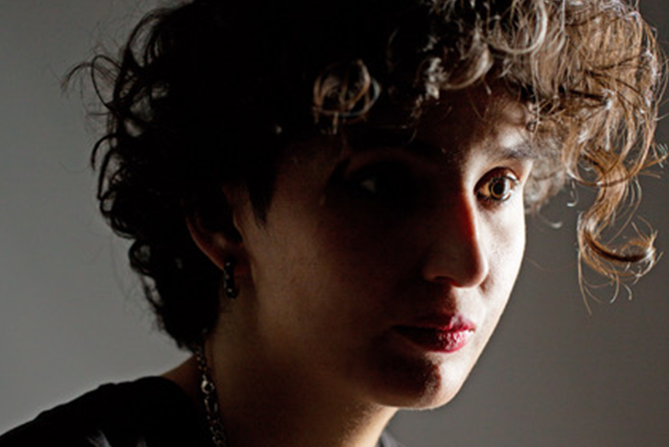
    Sophie Lewis is an editor and a translator working from French and Portuguese into English. In 2016 she co-founded Shadow Heroes, a workshops series for students on critical thinking through translation. Her co-translation of Emmanuelle Pagano’s Faces on the Tip of My Tongue was longlisted for the 2020 International Booker Prize. In 2018 her translation of Noémi Lefebvre’s Blue Self-Portrait was shortlisted for the Scott Moncrieff and Republic of Consciousness prizes. Lefebvre and Lewis also collaborated at the Lancaster LitFest in 2019. Poetics of Work is Lewis’s second book-length translation of Lefebvre’s work.

    Photo credit: Carla MacKinnon.

  • To speak or not to speak, that is the question

    Translated by Frank Wynne

    The laws in Algeria, ever since the country gained Independence in 1962, are all – how can I put it? – a stirring hymn to freedom of expression.

    So much for the written word. The reality is very different.

    Ben Bella, known as B.B. the Bomb, the first president of Algeria, gifted the country with a magnificent constitution, but at a personal level he could not bear criticism nor even the notion that others might think differently from him. He set up a secret militia, rather like Papa Doc Duvalier’s ‘Tonton Macoute’, whom the general public referred to as the Bouchkaras [1] because they operated by night wearing black balaclavas and in short order, they cleansed the country of his critics. They were never seen again. Under Ben Bella’s rule, to speak was the principal reason for disappearances.

    In 1965, Colonel Boumediene, head of the military, known as Boum the Terror, seized power and held on to it until his death in 1978. The man was a cold-blooded dictator, he tortured and killed with no qualms, the way a surgeon might operate in a clinic. He founded the S.M. – the Sécurité Militaire [2] – a sort of sprawling, all-powerful KGB, which the general public referred to as Sports & Music.

    He was succeeded by another colonel, Chadli Bendjedid, popularly known as Jeff Chandler, since he looked just like the actor. He was an easy-going fellow and allowed himself to be persuaded that some limited freedom had to be offered to the populace to lift the country out of the abject misery caused about by the dictatorship. But by now the people were too accustomed to silence to suddenly begin speaking, they feared the return of the authoritarianism. The Islamists, however, took full advantage and the mosques became hives of activity where everything was discussed, especially jihad against the infidels. The decent, upstanding president took fright and switched off the microphones. The apparatchiks of the F.L.N., the only political party, popularly know as the Barbéfélènes [3] because they wore beards in order to exploit the Islamists, and suits  to dupe the laity, sprang into action. They were very efficient; in the blink of an eye, the prisons were full to bursting.

    There followed a civil war (1990-2000), during which there were two presidents, Boudiaf [4] and Zeroual. The former was assassinated six months after being enthroned, the other was ousted before the end of his term. These two were sincere, they believed that freedom was useful. They were shown the error of their ways.

    In 2000, the new president, Monsieur Bouteflika, having been called home by the army and forgetting about democracy about which he had made such stirring speeches in Parisian salons, offered an amnesty to the terrorists.  Since then, the military, the oligarchs, the brothers of the president and the amnestied have been working together and earning large sums of money which they invest in London, Paris and Madrid, their preferred tax havens. Under Bouteflika’s rule, freedom of expression has withered as never before. The man governs like Putin, he does not imprison his critics, he does not torture or kill them, instead he creates a vacuum around them, and allows them to scream their hearts out. It is a painful and traumatic exercise, and the offenders eventually begin to think: better to be silent among people than to talk to oneself in the wilderness. Or they die in exile. Or perhaps they write eloquent novels, but its makes no difference; no-one in this country reads anymore.

    This, in summary, is the entire history of freedom of expression in Algeria.

    [1] bouchkara (from the Arabic meaning “the man with the bag”)  means a police informant or a plain-clothes policeman. They were so called because those abducted and tortured had a bag placed over their heads.

    [2] rampant police surveillance by the powerful Sécurité militaire, or Military Security

    [3] a portmanteau word from the French barbe (beard) and F.L.N.

    [4] Mohamed Boudiaf (1919–1992), one of the founders of the F.L.N.  he was assassinated by one of his bodyguards shortly after becoming president.

    Boualem Sansal is in the UK to launch the English translation of his book Harraga, winner of an English PEN award.

    You can buy Harraga through our bookseller partner Foyles.

    You can find also out more about Harraga.

    Boualem will be appearing at the following events this November:

    Wed 5 November, 18.30-19.30  

    Bristol Festival of Ideas

    Foyles, 6 Quakers Friars, Cabot Circus, Bristol, BS1 3BU

    Sarah LeFanu will interview Boualem, with Frank Wynne interpreting.

    Thursday 6 November, 19.00    

    Kings Place, London

    Boualem will appear with Frank Wynne. This will be chaired by Boyd Tonkin, Senior Writer, The Independent.

  • PEN Atlas Q&A: Joël Dicker, author of The Truth About the Harry Quebert Affair

    Interview with Tasja Dorkofikis, PEN Atlas editor

    You have chosen America as the location of your novel. The sense of landscape and place is very powerful and very different from Switzerland. Why America for a Genevois? And why the small town of Aurora?

    I love the area of Massachusetts, New Hampshire and Maine. I’ve been going there every summer for 25 years.  I know the area like home. I particularly spent lots time in the town of Stonington, Maine. I also like the town of Bar Harbor – in my book, I modelled the town of Somerset on the layout of Bar Harbor.

    My cousins, who live in Washington DC, have a house in Stonington. So I didn’t really choose to go to that town, it just came naturally because of my childhood. How many times I’ve crossed New England, specifically Massachusetts and New Hampshire, to get to Stonington! So I put those places in my book in order to share them with my readers in Europe. To show them which regions and settings live within me.

    Your book is written from the perspective of an American writer.  Is American literature important to you? Who do you admire there?

    I admire John Steinbeck since Of Mice and Men is the first book that bowled me over. I am also a fan of Philip Roth. He is probably the greatest contemporary writer. Reading his work, you retrace the story of America over the last 50 years.

    Are you anxious about how the US audience will receive your novel?

    I hope that my American readers will feel at home, and will grant me the privilege of being accepted as an author who writes about America, without being American myself.

    Your novel is a true and seamless mixture of genres:  crime, roman noir, psychological drama. What did you set out to write?

    I set out to write a story about a small town. What happens to Nola is obviously terrible, but it’s a ‘banal’ crime.  How many children disappear in the world every day? I didn’t want to tell a story about a crime but a story about banality, in its most sordid aspects. Although there is indeed an investigation in the book, I don’t think of it as crime fiction. If you take out the investigation, there is still a story.

    Nothing is the way it seems in your novel, and you are a master plotter. The reader is forever surprised and newly convinced by clever twists and turns of the plot. Did you know all along who committed the crime, or did you surprise yourself?

    I did not have a plan before I started writing the book. The pleasure for me was simply to invent the story as I went along, and to see how the events unfolded.

    Your characters remain morally ambivalent which is fascinating for readers and also makes them want to continue reading until the end of the 700 or more pages.  Would you be able to tell us why you chose this approach to your characters?

    I wanted to write a story that people would read like they watch their favourite TV series: voraciously, always wanting to know what happens next. I was passionate about my characters, and I hope that shows in the book. The writer has to be the first one to be passionate about the story, otherwise how else can he expect readers to be passionate about it?

    Your novel discusses the concept of celebrity, fame and infamy. And it satirises the publishing industry to a certain extent. Do you see modern celebrities as victims or winners?

    It’s not so much that the book talks about the concept of celebrity as about the perception of celebrity by people of my generation. It’s as if achieving celebrity status is a sign of social success, when in fact, achieving celebrity status is social endangerment. I think that’s the main question of my book. He who becomes a celebrity loses a part of himself. Whether he likes it or not, he becomes obligated to share a bit of himself with those who know him and recognise him.

    Your novel has won many literary prizes and has enjoyed great international success. Why do you write? Has this success changed how you see your role?

    For me, the best part of this experience is when I receive messages from my readers, especially young readers, who tell me they weren’t big readers, but that my book has got them started and now they want to read more books. I think it’s very important to encourage young people to read.

    Are there any other young Swiss writers you would like to recommend to British readers and publishers? Or French writers?

    My favourite French writers are Romain Gary and Marguerite Duras.  Gary’s work and his stories touch me more than anyone else’s. Marguerite Duras because I like her style. You get the impression that there’s not one word too many, that her sentences are perfect constructions, as if each word were a brick and if you took one out the whole work would fall apart.

    About the editor

    Tasja Dorkofikis is  editor of PEN Atlas and a freelance editor and publicist. She has previously worked as a publicity director at Random House and Associate Publisher and Commissioning Editor for Portobello Books. Tasja divides her time between London and a small village in Vaud in Switzerland.

  • PEN Atlas Q&A: Joël Dicker, author of The Truth About the Harry Quebert Affair

    Interview with Tasja Dorkofikis, PEN Atlas editor

    You have chosen America as the location of your novel. The sense of landscape and place is very powerful and very different from Switzerland. Why America for a Genevois? And why the small town of Aurora?

    I love the area of Massachusetts, New Hampshire and Maine. I’ve been going there every summer for 25 years.  I know the area like home. I particularly spent lots time in the town of Stonington, Maine. I also like the town of Bar Harbor – in my book, I modelled the town of Somerset on the layout of Bar Harbor.

    My cousins, who live in Washington DC, have a house in Stonington. So I didn’t really choose to go to that town, it just came naturally because of my childhood. How many times I’ve crossed New England, specifically Massachusetts and New Hampshire, to get to Stonington! So I put those places in my book in order to share them with my readers in Europe. To show them which regions and settings live within me.

    Your book is written from the perspective of an American writer.  Is American literature important to you? Who do you admire there?

    I admire John Steinbeck since Of Mice and Men is the first book that bowled me over. I am also a fan of Philip Roth. He is probably the greatest contemporary writer. Reading his work, you retrace the story of America over the last 50 years.

    Are you anxious about how the US audience will receive your novel?

    I hope that my American readers will feel at home, and will grant me the privilege of being accepted as an author who writes about America, without being American myself.

    Your novel is a true and seamless mixture of genres:  crime, roman noir, psychological drama. What did you set out to write?

    I set out to write a story about a small town. What happens to Nola is obviously terrible, but it’s a ‘banal’ crime.  How many children disappear in the world every day? I didn’t want to tell a story about a crime but a story about banality, in its most sordid aspects. Although there is indeed an investigation in the book, I don’t think of it as crime fiction. If you take out the investigation, there is still a story.

    Nothing is the way it seems in your novel, and you are a master plotter. The reader is forever surprised and newly convinced by clever twists and turns of the plot. Did you know all along who committed the crime, or did you surprise yourself?

    I did not have a plan before I started writing the book. The pleasure for me was simply to invent the story as I went along, and to see how the events unfolded.

    Your characters remain morally ambivalent which is fascinating for readers and also makes them want to continue reading until the end of the 700 or more pages.  Would you be able to tell us why you chose this approach to your characters?

    I wanted to write a story that people would read like they watch their favourite TV series: voraciously, always wanting to know what happens next. I was passionate about my characters, and I hope that shows in the book. The writer has to be the first one to be passionate about the story, otherwise how else can he expect readers to be passionate about it?

    Your novel discusses the concept of celebrity, fame and infamy. And it satirises the publishing industry to a certain extent. Do you see modern celebrities as victims or winners?

    It’s not so much that the book talks about the concept of celebrity as about the perception of celebrity by people of my generation. It’s as if achieving celebrity status is a sign of social success, when in fact, achieving celebrity status is social endangerment. I think that’s the main question of my book. He who becomes a celebrity loses a part of himself. Whether he likes it or not, he becomes obligated to share a bit of himself with those who know him and recognise him.

    Your novel has won many literary prizes and has enjoyed great international success. Why do you write? Has this success changed how you see your role?

    For me, the best part of this experience is when I receive messages from my readers, especially young readers, who tell me they weren’t big readers, but that my book has got them started and now they want to read more books. I think it’s very important to encourage young people to read.

    Are there any other young Swiss writers you would like to recommend to British readers and publishers? Or French writers?

    My favourite French writers are Romain Gary and Marguerite Duras.  Gary’s work and his stories touch me more than anyone else’s. Marguerite Duras because I like her style. You get the impression that there’s not one word too many, that her sentences are perfect constructions, as if each word were a brick and if you took one out the whole work would fall apart.

    About the editor

    Tasja Dorkofikis is  editor of PEN Atlas and a freelance editor and publicist. She has previously worked as a publicity director at Random House and Associate Publisher and Commissioning Editor for Portobello Books. Tasja divides her time between London and a small village in Vaud in Switzerland.

  • Stolen Eyes

    In advance of his UK tour this week, acclaimed writer and painter Mahi Binebine treats PEN Atlas readers to a short story about young people in Morocco and the ‘art’ of sleeping. Mahi will visit Oxford and London this week to discuss his new book, Horses of God, winner of an English PEN award.

    Translated from the French by Lulu Norman


    “You want to leave? But why?”

    Morad inspected his babouches and replied:

    “Because I can’t see my city any more.”

    “How come?”

    “The foreigners have stolen my eyes.”

    Then he stared at me as if to show that his gaze really was empty. Without a glimmer of hope. Devoid of all ambition. They were disillusioned, old eyes; any plan or prospect had been washed away.

    The scene took place one night in a café opposite the French Consulate. Morad was waiting for his usual time to go and queue in front of the studded door. This was his job: every evening, he’d arrive at the elegant building and spend the night there; the next day, he’d sell his place in line to people applying for visas. The price varied, depending on the length of the queue and the vagaries of the weather.

    “How did foreigners manage to steal your eyes?”

    “Ever since we’ve had satellite dishes on our roofs, we have eyes only for the other world. The medina looks like a ruin to us now.”

    “What they show you on TV isn’t necessarily the truth. I’ve lived in Paris for twenty years and, you see, I’m back.”

    “So what makes you think you can give me advice? You left, didn’t you? If I were you, I wouldn’t have come back.”

    A smile played over Morad’s regular, slightly African features.

    “Why do you queue for other people?”

    “It’s my livelihood.”

    “Yes, but you could queue for yourself.”

    “I’ve been refused a visa three times. I’ve given up. In any case I’ve found a job. I sell people info on how to get papers sorted and useful contacts for fake IDs… You see, I’ve got used to the satellite dish, and it does me good, living on the edge of a mirage.”

    “That must be so frustrating!”

    “Not at all. During the day, I’m in Europe or America… and at night I continue my travels in my dreams. Do you know, I can sleep standing up?”

    “Standing up?”

    “Yes, or even while I walk. Sleeping is one of this country’s great arts. From the cradle on, a kind of lethargy is instilled in us which, once we’re adults, gives us a phenomenal talent for sleeping.”

    Seeing me frown, Morad went on more calmly:

    “Foreigners think we’re awake but it’s a trick. Most people are numbed by a rare inertia. As if they’re detached from the world.”

    “Hang on,” I said, “I’m no fool. I was born here. I may have spent twenty years away but I’m still Moroccan.”

    “Twenty years! My God! And why did you come back?”

    “To put the pieces back together…”  

    After a pause, he said:

    “The moment you sat down at my table, I could tell you were mad. Whatever you do, don’t repeat what you’ve just told me: you might get lynched.”

    “For what crime?” I exclaimed.

    “The young people you see around you dream of only one thing: storming the Consulate. They couldn’t imagine such a ridiculous waste.”

    Morad stared at me curiously.

    “Now that you’re here – and no one forced you to be – you’re going to have to relearn how to sleep. First, you need a fine pair of babouches so you’re not tempted to walk too fast. And a thick, warm djellaba like mine. Look how snug it is! My mother wove it with her own hands. In this thing, sleep can erupt any time, anywhere! It’s vital to adapt yourself to the pace of the country. The Swiss invented the watch, but we, we have time. And above all, go gently. A man in a hurry is already dead. We’ve managed to appease death. We’ve tamed it, woven its tendrils into the apathy of our lives. We consume it in small doses. You see, this is an immense cemetery, where each man carries his own tomb…we’re proper tortoises.”

    While Morad was speaking (or was it me daydreaming?) I glimpsed something like a light in his eyes. And then nothing.

    I was angry with myself for dozing off in the café. As I opened my eyes, I spotted his purple djellaba in the distance; you could have sworn there was no one inside it. But there was no doubt it was his, leaning against the studded door of the French Consulate. Behind him stretched a long line of petitioners for paradise; or for hell, depending.  

    About the Author

    Mahi Binebine was born in Marrakech in 1959. He studied in Paris and taught mathematics, until he became recognised first as a painter, then as a novelist. Between 1994 – 1999 he lived in New York, when his paintings began to be acquired by the Guggenheim Museum. He now lives in Marrakech with his family.

    About the Translator

    Lulu Norman lives in London. Working from French and Spanish, she has translated Ricardo Arrieta, Tahar Ben Jelloun, Albert Cossery, Mahmoud Darwish, and Serge Gainsbourg, and written for the Guardian, the Independent, and the London Review of Books. Her translation of Mahi Binebine’s Welcome to Paradise was shortlisted for the Independent Foreign Fiction Prize in 2004.
 She also works as a freelance editor and is an editorial assistant at Banipal, the journal of modern Arab literature.

    Additional Information

    You can see Mahi Binebine at an event curated by Oxford Student PEN on Tuesday 23 April, at a film screening and Q&A with Omar Kholeif at the Institut Français on Wednesday 24 April, and in conversation with Ros Schwartz at the Royal African Society on Thursday 25 April.

    You can read more about Mahi and his UK visit on the Arablit blog. You can also find out more about the author and artist on his personal website.