Tag: future

  • Exile, One Step Beyond

    Exile, One Step Beyond

    For our series on exile with the British Museum and Edmund de Waal, Selma Dabbagh writes on Palestine, desire, place and the future.

    PEN Transmissions is English PEN’s magazine for international and translated voices. PEN’s members are the backbone of our work, helping us to support international literature, campaign for writers at risk, and advocate for the freedom to write and read. If you are able, please consider becoming an English PEN member and joining our community of over 1,000 readers and writers. Join now.

    Across June, PEN Transmissions, in collaboration with the British Museum and Edmund de Waal, is publishing a series of essays on the theme of exile. This series speaks to Edmund de Waal’s library of exile, currently housed at the Museum. English PEN’s event series for the exhibition has been postponed due to COVID-19, and these essays – from writers in the events programme, or with books in the library – touch on issues that will be discussed at the rescheduled events.

    ~

    I grew up between places, many of which were non-places – construction sites in deserts, flyovers made from twisted wire and concrete blocks, pot-holed tracks and wide highways strewn with crushed American cars, some erected on plinths as a warning. There were five-star hotels, and malls with gilt fountains, abayas and mink stoles. Freshly made states where interactions between strangers were purely commercial in nature. I wobbled down the aisles of planes as a toddler, lived out of a suitcase for many years, boarded at six form colleges as a teenager, visited grandparents in an English town on the south coast dedicated to retirees. I’ve regularly visited a house bought in 1975 by my parents in a Chiltern valley, where I know no one except them to this day.

    I’ve never believed that exile has much to do with me. Being in a state of exile seemed a noble status reserved for philosophical men who wore hats – Dante banished to Ravenna being the prime example. To my mind, exiles grew up in places where their cousins lived on the same street; where they were on first-name terms with the local stall keepers and petty criminals; savoured the seasonal fruits and vegetables; and were savvy with the vernacular. A rupture then came about when these (predominantly) Easterners fled West to sour bedsits to spend their days yearning for the flaky almond pastries found in the wood-panelled cafés of their capitals, the tang of its morning pollution and the innuendo of a compatriot’s joke.

    My mother studied natural science at Newnham College, Cambridge. She had a scholarship and developed a particular interest in fungi. Her mother also was a scholarship student, at University College London, where she studied French and German. She lived with a Jewish family in Berlin for a time in 1933 My English grandfather was an officer in the Royal Marines, and my mother’s upbringing was one of multiple moves and boarding schools where everything was prohibited – more oppressively than any Arab regime was capable of at the time. The legacy of puritanism and the military prevailed on the English side. My great grandmother believed mirrors were wicked. At my grandparents’ house, lunch was served always at 1 pm, even if it was ready at five to, and a lie-in for teenagers was until 8 am. Baths were shallow and not particularly warm. My memories of staying with my English grandparents remain sacrosanct, despite the listlessness felt at the time. It was a caring environment devoid of vocalised emotions.

    My father is from the Ajami district of Jaffa, a city whose population went down from 100,000 to 4,000 within days in 1948 and became, according to Ibtisam Azem’s narrator in The Book of Disappearance, unrecognisable after ‘that year’. My father is more fitted to the category of the exile than I am, for his is a refugee tale. One May morning, when he was a boy of 10, a grenade was thrown at him and the children with whom he was playing. We knew this story as children, but memory can revive like a lamp bulb swinging more vigorously in a crypt. Details come through with age: the French doctor who sewed the wounds badly with shaking hands; the penicillin injections with a needle as thick as a pencil; the hospital windows rattling with the bombing; the family’s failed attempt to get on a boat with the stretcher; the departure on a truck, his dog chasing them for as long as it could.

    The family went on to Nablus, then Damascus, Kuwait, Jordan. From Kuwait, my father insisted on moving to London to study. There he saw a picture of my mother smiling on the top of Ben Nevis in a mutual friend’s photograph album. My parents have been together for nearly 60 years, and my teenage daughter views their relationship as the happiest one she knows (albeit she does not know as much about it as I do). The notion in my psyche that I must bridge distance and difference to create a harmonious romantic form evidently has its roots here.

    Would my life choices have been the same were it not for the story of the boy, the grenade, the truck, the stretcher, the dog? I worked with human rights organisations, went on demonstrations, signed petitions, agitated. I wrote short stories where there were characters who betrayed the revolution or felt the revolution had betrayed them. This led to a novel, Out of It, where the characters were poised between political engagement and opting out, between being geographically in Palestine and far from it, between being off their heads and stone-cold sober.

    As an adult, I was drawn to cities with older identities: the Quartier Arabe of an Alpine city in France; the colonial districts of Cairo; a domed house on the Nablus road in Jerusalem, since taken over by Israeli settlers. In London, I’ve moved from West, to North, to East. I’m now in the North West, in a flat that a friend remarked combines all aspects of my life: the Palestinian, the English, and the gated community living of the Gulf. My books and diaries have moved with me and, in each place, I grow plants, decorate walls, and buy lamps. I have come to know that objects can vanish – through invasion (Kuwait, 1990), being denied re-entry (Palestine, 1992) and upon marital separation (Bahrain, 2009). I try to be Zen about property ownership, but my attachment to my flat is paranoid, obsessive.

    From time to time, I hanker for the next place, the next life. The destination to come is a cushion I embroider around my daily consciousness that will explode into feathers if it were ever to become a reality, only then to be substituted by another ‘elsewhere’ where an imagined life is.

    Attachment theory, developed by the psychiatrist John Bowlby, divides human relationships into categories: the secure, anxious or avoidant. These are determined by upbringing – primarily the consistency of care by a parent or carer – and are said to influence relationship patterns for life. I wonder if Bowlby’s theories can be transferred onto a connection to place? Does a process of repeated disorientation lead to permanent distrust of being settled? Bowlby’s mid-twentieth century ideas are finding new life in self-help books for romantic relationships. And, on that front, flicking through the piles of diaries starting in the 80s , I see another pattern of desire being connected to distance: boys and men in Czechoslovakia, Sweden and Canada, when I was in Kuwait, France or Egypt, at times when airline flights were as out of my budget as private space flight is now, when email connections weren’t invented (or barely existed), when letters got lost and I’d have to spend an hour teaching English in a penthouse by the Nile to cover the cost of a fifteen minute call to Montreal from a Tahrir Square call box.

    There could, however, be no connection at all between my nomadic upbringing and the association of travel with desire. It could be that I just find cultural difference, romantic obstacles, and travel sexy in and of themselves. Catherine Millet, in The Sexual Life of Catherine M, writes that her ‘sexual experiences were intimately linked with the need to escape’, an impulse that occurs again and again in erotica, often in Orientalist depictions of interactions with the ‘other’ (Anaïs Nin being a case-in-point). The idea of movement to new terrains, freeing up inhibitions and enabling the recreation of self, recurs frequently in erotic writing. An impulse to upturn the status quo and create a new world based on an imagined one has propelled me throughout my life, although my personal background and experiences could not be more different from Millet’s.

    I have often placed myself in personal and physical situations that I have thought would make me braver and stronger. Yet I still view myself as cowardly. It could be a sense of masochism – the hard chairs of my puritanical forebearers – or due to the years spent in British prisons by my Palestinian grandfather for acting in line with his conscience. ‘Whatever our personal weaknesses may be, the nobility of our craft will always be rooted in two commitments, difficult to maintain’, Albert Camus said in his Nobel speech: ‘the refusal to lie about what one knows and the resistance to oppression’. He was more of a writer than I am, more of an exile (he even had the hat), but with time I’ve found it possible to pull the microphone towards myself, a female voice from the middle ground between East and West – the mezzaterra,as Ahdaf Soueif calls it – and describe what I know is possible from my own globalised perspective, where the vernacular is absent.

    Last year, I was asked to write a short story for the first collection of Palestinian science fiction – with the exception of the Old Testament, as a friend pointed out. I couldn’t bring myself to articulate what a historian had once advised me to say when asked about the prospects for Palestine, ‘tell them we have no future, only a past’, for what future can we have if not even artists can imagine one? Yet Camus’s demand not to lie about what one knows made it hard to lift writing from a responsibility towards the unconscionable present: the forced expulsions and house demolitions, the walls, land grabs, the siege, bombings, shootings, child detentions, mass incarceration, torture. The imagined future provided a space where anything could be possible. I had an Israeli scientist fall in love with a Palestinian professor in a secular scientific enclave towering out of Gaza in 2048. It wasn’t all utopian, but it cast a light on some of the absurdities of religious nationalisms, in a way that only fiction can.

    I was struck while editing an anthology of writing on love and lust by Arab women, from the pre-Islamic era to the present day, by the forthright way some of the early poets asserted a desire for sexual satisfaction. It could make 21st century readers blush. I also found an academic article that explained how, despite the numerous words to describe various specific sexualities, there was no medieval Arabic word for bisexuality that was considered the ‘as the unmarked, most common form of sexual practice, for heterosexuality, or even for sexuality’. I believe we can imagine futures by looking into unexpected details of the past and develop to our fullest by escaping into what is not familiar to us at all.


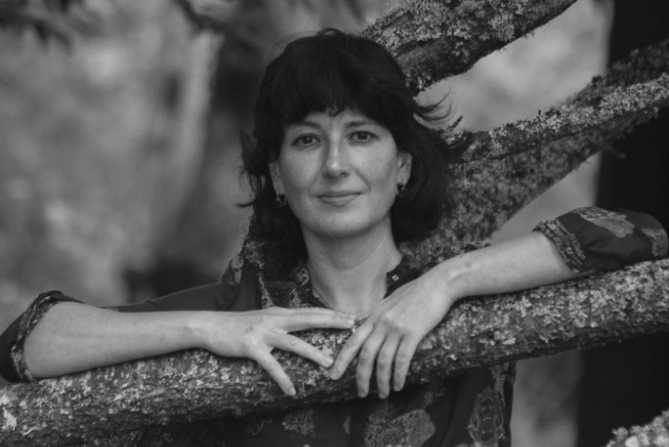
    Selma Dabbagh is a British Palestinian writer of fiction who lives in London. Born in Scotland, she has lived in Saudi Arabia, Kuwait, Bahrain, France, Egypt and the West Bank. Her first novel, Out of It, (Bloomsbury, 2011) set between London, Gaza and the Gulf, was listed as a Guardian Book of the Year and won the Premio Opera prize in Spoleto,  Italy, 2019. Her radio plays have been produced for BBC Radio 4 and WDR in Germany. Her short stories have won or been nominated for various awards and been published by Granta, Comma Press and International PEN. She has also written for film and stage. Her non-fiction has appeared in the Guardian, London Review of Books, GQ and other publications. She is currently editing an anthology ‘We Wrote In Symbols; Love and Lust by Arab Women Writers (Saqi Books, forthcoming, 2021). www.selmadabbagh.com

    Photo credit: Francesca Leonardi

    Created as a ‘space to sit and read and be’, library of exile is an installation at the British Museum by British artist and writer, Edmund de Waal, housing more than 2,000 books in translation, written by exiled authors.
  • Moth Eyes

    Moth Eyes

    Ho Sok Fong imagines the future in a country where houses have warped into funnels, the horizon has tilted, and talking openly about what is happening has become taboo. 


    We all know this is a wounded country. People bear wounds like moth faces on their backs. They see everyone else’s but not their own. My mother tells me not to go on about faces on backs; my paternal grandmother used to say this too. I know why my mother says it: if other people’s backs have those kinds of faces, then so do ours. 

    When we don’t feel like talking, we look at the stars. We can relax a little like that. For a few moments, we can break away from our strange, tilted horizon.

    Many years ago, my grandfather beat my grandmother. For decades after, he ate all his meals seated to her right, because from her right he could not see the hollow his fist had smashed into her left cheek. Seeing that hollow made him uneasy. 

    My grandmother does not remember how she got here. She thinks she might have fallen from a violently rocking house. The house flew past rubber plantations, raging fires, massacres; horrifying scenes like that. During the journey she lost a child. The child had been playing in the house but when the shaking started the child fell out of the window.

    My grandmother, mother and I do not think our house will ever be good again. The house began as a rectangular pigeon loft, but over the years has warped into a funnel. Now, the floor is crooked. Living inside the funnel, we have had to adapt to feeling unbalanced. We have had to learn to stand and sit crooked, whether we are bathing or cooking dinner. Time has passed and our bones have twisted, pulled and folded over, re-organising themselves, and now we feel that living this way is fine. We’re used to it. I have to survive, and so do my mother and grandmother. So does everyone. In order to survive together, we made an agreement: forget the past. But it was when we made the agreement that the house began to change.

    All things will be forgotten and we’ll all be more comfortable for it. In the air as things depart, jasmine is left to soothe us. In July, at seven o’clock every evening, the flowers on my grandmother’s jasmine plants open. The scent fills the kitchen, the living room, the bedroom, piles of folded clothes. Everywhere the faintly tart scent of jasmine.

    It’s not bad, living all together like this, because my grandmother, my mother, and everyone else are all good people. It’s not bad aside from the worry about the crookedness, which grows worse every year. The horizon tilts. Wherever I walk I feel unsteady. But most people claim they feel fine, and what can I say to that? Sometimes, on the bus, or clocking in at work, I have the strong sensation that my body is falling through the nothingness of the air, into a deep chasm. But I cannot confirm it. It’s as though, below the horizon, there’s a monster pulling out the ground and swallowing it up. It’s the kind of monster that only appears in dreams.

    The monster doesn’t come out in daylight. Everyone is fine during the day, so long as everyone keeps their worries to themselves. 

    For example, worries about the strange horizon. ‘Tilted’ has become a taboo word. So have ‘crooked’ and ‘askew’. But you see them often on the backs of toilet doors. Sometimes I notice clocks, photos, paintings that are hung crookedly on other people’s walls. Then I think, Our house is just the same! There is not a single house without a skewed axis.

    There’s no point in leaving. People who have left say that the horizon is strange in other places too, maybe even stranger than here. 

    Inside our house we have to hunch over to move and it keeps getting smaller. The sunken part of the floor dips more sharply, grows more fragile. Our beds stand on the crooked floor. The beds stand firm but for some reason I feel like all the furniture is collapsing and the floor is growing weaker. Sometimes my dreams conjure another conical shape, this one upside down, to balance out our increasingly challenging funnel. Sometimes my dreams conjure nothing at all. We open the door and there is nothing outside.

    In our sharp cone of a house, each year flies by faster than the last. My grandmother no longer knows the names of things. She does not remember the place by the stove for salt, sugar and tea leaves, the smell of fruit, or the way to the local clinic and pasar. She can’t say brush teeth, climb stairs, comb hair. She has forgotten verbs.

    Whenever Grandma tries to recall something and her words clump and stick, I feel unwell. It’s as if a snake is coiled inside my stomach, exhaling its icy, rancid breath to block my breathing.

    I often see people gathered inside their houses, talking heatedly. What they say cannot be heard by the tenants in the house next door. A person can talk as loudly as they like, and not even the other people in the room will hear them. They may as well be speaking into holes in a tree. Or, maybe everyone can hear perfectly well but they don’t dare respond. They do not dare say, I hear you’. They are scared that hearing will be like a needle in their open chests, and it will hurt them. 

    I’m scared too. Each sentence could be wrong and fall like a giant knife, sticking into the ground like a giant wall. No one will be able to cross it. The only way to heal all these wounds is with magic words. But what words are those?

    When my heart aches for no discernible reason, I do what my grandmother and mother do, and look at the stars. My grandmother and mother rarely use calendars; they can tell the day by the moon. 

    My back has a moth face just like yours, says my mother.

    She talks as if she has understood the face on her own back.  

    Right now the face on my back must mask a trembling child. All day long, I have been upset by what’s outside. I have understood that I am maybe just a weed, unworthy of nurture. All day, I leaned out of my tiny window and looked down at the street, where a crowd demonstrated against racial equality. They yelled a sea of slogans and it sounded like someone frantically whirling a sack of nightmares, words falling through the holes and smacking onto the ground like clods of cow shit. But at the back, behind the ranks of marchers, moth faces flickered and flapped, flowing silently beneath the window like a separate tide of panic. Then evening came and the state television channel said, At the end of the day, this is still a fine and harmonious country. We must all work to keep it that way. 

    I am used to feeling disappointed. There’s nothing strange about that. My mother and I lean back and look up and the night sky looks full of pinpricks. A bitter feeling has been collecting beneath my jaw and seeping into my cheeks; now it vanishes. 

    Ma, I say. If you’re tired, go to sleep. 

    But she says, The sky looks like a watermelon.

    Eventually we will find the language to listen to the moth faces. Then the noise and silences will finally reach the monster beneath the horizon.

    Beneath the stars, the moth eyes on my mother’s back gaze back at me, for a long, long time.


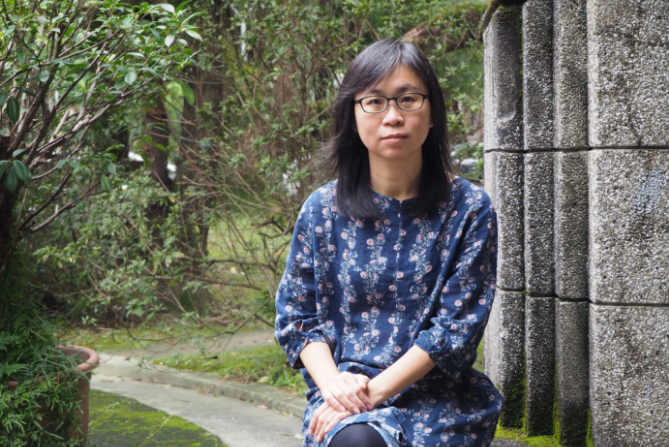
    Ho Sok Fong is the author of two story collections, Maze Carpet and Lake Like a Mirror, a portrait of Malaysian society in nine stories. It won a PEN Presents and a PEN Translates award, and will be published in English by Granta Books in 2019, translated by Natascha Bruce. She is the 2016 recipient of a Taiwan National Culture & Arts Foundation grant, to support the completion of her first novel, The Forest in Full Bloom.

    This text was translated by Natascha Bruce.

  • Faces Afraid of the Mirror

    Faces Afraid of the Mirror

    Zehra Doğan imagines the future: it is 3219 and art is a crime. Mirrors are banned. States who provide welfare to their citizens are brought before the European Court of Human Rights. And a country that imprisons its artists makes more and more money from tourists…


    The footsteps were approaching. Every step shook the ground. It sounded like they were really close. She had to finish her task before they came. 

    A foggy sky, hard to see; an unknown place, an unknown language, an unknown identity. No one understood one another. But everyone was speaking. Everyone way trying to impose their values on one another, even though they didn’t understand each other.

    Some gave up, stopped being themselves and stepped into different bodies. Others rejected what was being imposed. But really, everyone was small, weak, controlled by an unknown force. Occasionally, one person dominated another and celebrated this victory in a bloody way but in reality, they were all just toys. Now and then they forgot that they were toys and dreamt of another life but soon enough those dreams were stopped with a click on the most cruel button of the control panel. Their rage grew each time their dreams were interrupted, and they attacked those weaker than them. So they could forget about reality.

    The year is 3219. In an unknown country, the sun is high in the sky, scorching even in the winter time. Here, it is always very hot in winter, so that it is hard to even breathe. Like every other country, this one is known for its beautiful sights. With its bombed buildings, destroyed museums, imprisoned artists, mass graves and nonstop shelling, it looks particularly heavenly.

    This particular country gets more beautiful every year by killing, and by being killed. Although it attracts many refugees – thanks to its unbearable living conditions –, it still manages to remain unsafe. Even as the smell of corpses on the ground burns people’s throats, the country attracts more tourists. More tourists bring more money. And thus the person who holds the controller becomes more powerful.

    The footsteps don’t stop. Scorpions are hissing in every corner. A timid heart is beating under the rubble. It beats faster as the footsteps approach. She’s covered in sweat –  a result of fear. No one knows how long she’s been hiding there, in this dark well. A scorching sun above, sun on the ground, and scorpions, with their ugly feet, leave their marks on the snow. With every footstep she hears, she works faster: She is desperate to finish what’s in her hand before they arrive. She is a tiny woman; her hair sweeps over her breasts with every move. The fear of being caught is clear in her eyes. Blood is dripping from between her legs. This is how she paints: she rubs her hand against her vagina, drawing what’s born out of her onto paper and thus giving birth. Her life would be over if she was caught. 

    In this unknown world that she lives in, art is the biggest crime. It destroys the order of the world. It is annoying, it scares people, it kills tourism. People are afraid of going to places where there’s art; the ones who go there don’t ever come back. As a result, whenever there’s an art alarm somewhere, countries issue travel warnings for their citizens. The most dangerous country in this regard is a small country with unknown lands and unknown peoples. Although it has a high level of prosperity compared to many others, it just can’t get rid of art actions. It is frequently criticised for its wealth, it has lost many cases in the European Court of Human Rights for providing welfare to its citizens; the politicians who argue that their country is anti-democratic just continue  providing wealth to their citizens, they don’t feel any shame. But, for an unknown reason, the unknown people in this country revolt all the time and stubbornly make art whatever the price. The tiny scared women is one of them. She obtains illegal paints, and despite the home raids and her police record she keeps on painting, using turmeric, tomato paste, coffee, ash, fruits, vegetables and rubbish.

    ‘She fouls the world with every painting, someone must stop her. Look, she’s even using her menstrual blood. She puts her hand between her legs and paints with her fingers, nonstop. This woman tells us that we’re beautiful! Without shame! No, she’s beautiful, she’s doing the worst thing by making the world more beautiful, this must be stopped. Or else the world will become a more beautiful place.‘

    It was an era when art was destroyed because it was dangerous. People didn’t recognise themselves or each other: they led the murky lives of people who don’t know themselves. No one wanted to hold a mirror up to one another. They were afraid of scaring each other. They were so much in the mud that if someone objected, that person would be regarded as criminals. The ones who protested reminded them of their own dirt. Because mirrors were the most dangerous invention of all times. If someone was found to have a mirror at home, they’d be killed on the spot. No one wanted to see themselves in the mirror; they had a dangerous magic, and the ones who looked went mad and started to protest against the system. That was why all the states regarded mirrors as the most dangerous weapons.

    But one day, the tiny woman had found the only mirror in the world. She hid and started drawing what she saw with her blood. She gave birth from her blood and mirrored life. She painted her hope, so that maybe, one day, people would wake up.


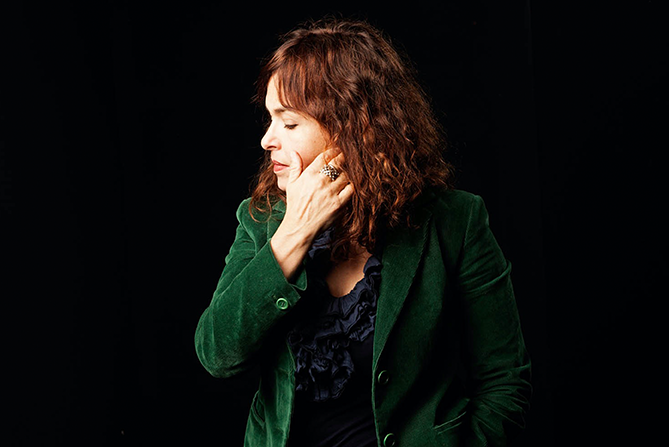
    Zehra Doğan (born 1989) is a Kurdish artist and journalist from Diyarbakir, Turkey. She is a founder and the editor of Jinha, a feminist Kurdish news agency with an all-female staff. In 2017, she was sentenced to 2 years, 9 months and 22 days in prison for ‘terrorist propaganda’ because of her news coverage, social media posts, and sharing a painting of hers on social media. Her imprisonment prompted international outcry, including a 2018 mural by street artist Banksy in New York. She was released from prison in Tarsus on 24 February 2019. She has recently taken part in exhibitions and performances in the Tate Modern, London, and the Pergamon Museum, Berlin. Follow her on Twitter.

    This text was translated by Onur Erem.

  • Living History: a Conversation with Kapka Kassabova

    Living History: a Conversation with Kapka Kassabova

    Kapka Kassabova explores the intersection between past, present and future in her work, and in particular how ancestral legacies and ideologies linger on. We spoke to her about the Balkans, belonging and how to avoid clichés.


    Let me start by asking you about the past. In writing about Bulgaria, Greece and Turkey, but also about Macedonia and Albania, you write about countries with official versions of history and state, nation and language, people and religion. Do you think these versions of history still exercise the same power that they used to? Does the romanticised past still have the same pull as it did before decentralisation, before the internet? Or do you feel that it never held much power anyway?

    Things are always different on the ground. And often surprising. That’s why I am an experiential writer and not an academic one. Encounter – with people and place – is central in my writing. My encounters with the people of the border region showed me just how ideology can be in turns powerless and powerful. The ideology of a single national, religious, ethnic identity tends to be counterbalanced, often, by the reality of people and communities having poly-valent, multi-faceted, messy and interesting pasts and presents. 
    So for instance, many of the Turks of Thrace are descended from Balkan Muslims expelled from Greece, Bulgaria and Bosnia some 100 years ago and some speak remnants of Slavic dialects. My friend and translator in Turkey, the photographer I call Nevzat in the book, is one such person – and it was thanks to his Bulgarian language, passed down by his grandmother, that I was able to access the people of Turkish Thrace at all. Despite the savage and stupid border imposed on this region during the Cold War, it is very much a ‘Thrace without borders’, as a Bulgarian Orthodox priests in Edirne put it. 
    On the other hand, the iron curtain and its legacy is a powerful reminder of how ideology can cast a lasting spell over a region. Part of that legacy is a spirit of paranoia, fear, and a choking sense of the unspeakable – this is some of what I tried to capture in Border. It is also symbolic that the iron curtain was recycled and sold as scrap by locals. The scrap of history: this is the future of all inhumane borders and walls, because they go against the flow of time and understanding. On the whole, I feel that ideology of any kind takes greater hold over the minds of those without much variety of life experience, those with sheltered lives. The more varied your life experience, the more sharply you can see through the facade of an ideology. This is why it’s so vital for all of us to cross various borders and see how things are on the other side. That way, the human principle always wins over dogma.  

    Increasingly it seems to me that separating past, present and future is a futile task, they inform each other so much. I’ve read in another interview that you’re interested in ancestral legacies, and I was wondering if you could expand on that a little bit. (For me, personally, my ancestral legacy is something that drives me to make up for past shortcomings and crimes.)

    Your take on it sounds intriguing! A futile task indeed – because the real task is to truly understand these connections and change the groove of repetition. William Faulker nailed it: ‘The past is not over yet. It’s not even past.’ 
    I’m interested in how small acts of kindness or cruelty can impact generational and collective fate. There are many such cases in Border. For instance the nice man in The Village Where You Lived Forever, locally known as Indiana Jones, whose shepherd-father back in 1984 saw a young East German fugitive trying to cross into Greece, eating some apples in what he thought was Greece but was still Bulgaria, and duly handed him over to the border police who beat him to death. The whole village lives with that memory. If you spend time there and listen to people, it’s as if that young man is still there, eating his last apples.  

    My interest in legacies from the past began during the journeying for Border, and went on to become a new book, To The Lake. I explore how ancestral legacies (emigration, exile, war, tyranny, perfectionism, idealism, nationalism) travel down generational lines to each of us. None of us is spared, we all carry the past, whether conscious of it or not. Through the landscape of the Ohrid-Prespa Lakes in the south-western Balkans, I explore how we each carry psychic, emotional, political, and cultural legacies from our families and nations. Families are microcosms of nations. I start with myself and my maternally inherited fear of loss.

    I wanted to ask you about belonging. In Border, you frequently touch on the idea that you could be at home anywhere, a notion that you question throughout the book. I wonder what you think about belonging now, years after your trips to the border. And in a more general sense, I wonder if you think it’s possible to feel at home everywhere, growing up, as we have, in states that indoctrinate us with the idea of ‘the nation’ as the ultimate indicator of where we belong.

    ‘Home is where they understand you,’ said the German writer Christian Morgenstern. And ‘Home is where they can pronounce your name’, in an Irish proverb. Where do we feel understood, and where do we bring the light of our own understanding? That’s a good indication of where we belong, at least for a time. Ultimately, we all belong in love – love is our true home. Wherever we are engaged with something that we truly love, and whoever we share genuine love with – that is our home. I grasped this through my encounters with the people of the Border – the last shepherds, lighthouse keepers, voluntary workers, gardeners, story-tellers, border people like Marina in Strandja Mountain who live in a plundered humanscape, but who continue to nurture what is left and infuse it with meaning and even magic. 
    Nationally shared markers can be powerful in terms of cultural community (where they can spell your name…). As for me, these days I feel at home wherever there is unspoilt nature. I don’t miss living in Bulgaria, but I do miss speaking Bulgarian. Language is a powerful home and a powerful psychological glue. It is Bulgarian – and by extension other Slavic – languages that has made books like Border and To The Lake possible at all. Even if English is my literary language and therefore also my home. 
    But artists should never be too comfortable anywhere, and good art by its very nature crosses all borders. 

    Tell me about your next book. I’ve read that it’s a psychogeography of two lakes in Albania and Macedonia. I’m assuming that one of these is Lake Ohrid, where your grandmother (is that right?) is from. Like the border you writer about in Border, this is a region of religious syncretism, mixed languages and cultures, but it was also less of a periphery, at least in Yugoslavian times. What has been different about this book project, compared to the previous one? What has been similar?

    Yes, To The Lake is a journey around the Ohrid-Prespa basin – one of the world’s most ancient lake basins. Like Border, the lakes today sit on a triple national border (North Macedonia, Albania, and Greece) and are very much a periphery. But they were shaped by successive civilisations, starting in antiquity with the Illyrians and the Macedons. The more personal journey into family dynamics is my way into the broader exploration of the southern Balkans with their extraordinarily stubborn legacies of trauma and survival. 
    While the border with its masculine militarism was the central metaphor in my previous book, the lake is the central image here –  a feminine, gathering place, but of course the deeper truth turns out to be more ambiguous and uneasy. Because lakes are also places of secrets and death.  

    Writing about South Eastern Europe is very often shaped by a curious mixture of exoticising and negative stereotypes. (Or Balkanism, as Maria Todorova called it.) Border has had great success, and I wonder what that has felt like. Have you felt like an unofficial and perhaps unwanted ambassador?

    Balkanism is a cousin to Orientalism, and both are caused by the fact that often, we the natives of the Balkans or the Middle East, with our extraordinarily polyphonic histories and hurts, are narrated by others – usually others from the dominant colonising cultures. We resent that, of course, but passively. The curious result is that over time, we have become others in our own eyes – a strangely self-obscuring syndrome whereby we struggle to narrate ourselves to the outside world and are then extra resentful that the only times we are ‘noticed’ is when there is a war or some other negative event. This is changing, though. Contemporary Balkan writers are being translated into more languages, and there are also more of us Balkan natives who write through a double or even multiple cultural perspective, thanks to the free movement of people after the Cold War. Thanks to the removal of various walls. 
    I’m a poet and storyteller. The artist’s job and destiny is to be subversive – very different from the role of a spokesperson. My focus is on capturing the essence of place and human experience. That is where my loyalty is: to the truth of the human historio-geographies I explore, because I love them so. If anything, I am an ambassador for the powerless, those who live history instead of writing it safely from behind a desk. So that history is not always written by the victors.   


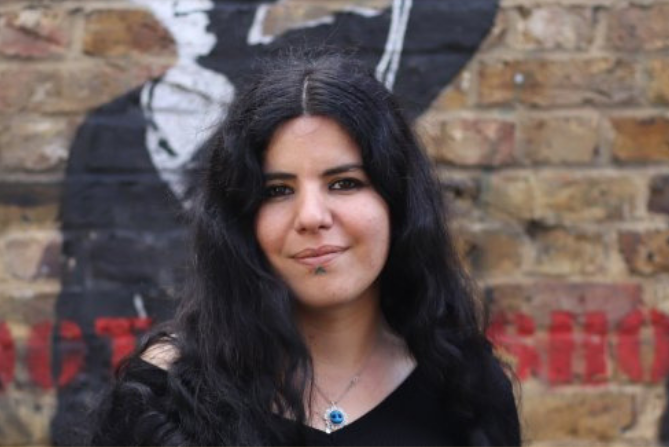
    Kapka Kassabova is a cross-genre writer with a special interest in human geographies and the hidden narratives of places, people, and peripheries. She has published several works of narrative non-fiction, as well as poetry and fiction. Border: a journey to the edge of Europe was shortlisted for, and won, multiple awards, including the British Academy Al-Rodhan Prize for Global Cultural Understanding, the Saltire Scottish Book of the Year, the Edward Stanford-Dolman Travel Book of the Year, and the inaugural Highlands Book Prize. Born in Sofia, Bulgaria, she is now based in the Scottish Highlands. Her forthcoming book is To The Lake: a Balkan journey of war and peace (Granta/ Graywolf 2020).

    Author portrait by TD.

    Interview by Theodora Danek.