Tag: june20

  • Translating Fascisms

    Translating Fascisms

    Alex Valente on translating fascism between Italy, the UK and the US.

    PEN Transmissions is English PEN’s magazine for international and translated voices. PEN’s members are the backbone of our work, helping us to support international literature, campaign for writers at risk, and advocate for the freedom to write and read. If you are able, please consider becoming an English PEN member and joining our community of over 1,000 readers and writers. Join now.

    In the summer of 2019, I translated a short satirical book by Italian author Michela Murgia. The original title – Istruzioni per diventare fascisti, literallyInstructions to become fascist’ – is a little different in the English version. The didascalic application is the same, though: Follow these steps, reader, and you too can contribute to the creation of a totalitarian reactionary country.

    The book was published in Italy in 2018, at the peak of Matteo Salvini’s power as Minister of the Interior and the height of the far right’s hold on the country’s wants – rampant xenophobia, anti-immigration policies, increased and targeted policing. These all built on years of bipartisan populist appeal to the lowest possible common denominator among the electorate: personal success, external threats, no accountability. On publication, many voices on the supposed left vocally denounced the trick played by Murgia: how dare she suggest that, if you share any of the statements in the Fascistometer (a quiz-style list of statements for measuring your own level of commitment to the cause), you might be complicit? How can she absolve herself (she does not, and explicitly so) while initiating a witch-hunt for anyone who doesn’t think like her, who she brands as a fascist? The point was both effectively made and entirely missed.

    The UK version of the book was published in January 2020. Two years after the original publication, we were facing a supposed shift in power and policies in the Italian government, the actual arrival of the Brexit process in the UK, the beginning of the supposed final year of the US Trump administration, and the Western spread of COVID-19.

    I was asked, as part of the translation process, to localise the references and historical contexts that were specifically about Italy – about its precedents with historical, capital-F Fascism, with tyrannical rule, with mass propaganda and media manipulation. Some could easily be swapped with a similar equivalent; some, such as the side of the war the country had been on, and most of the book’s last section, had to undergo a complete overhaul.

    To talk to ‘them’, whilst remembering there was no ‘them’, I had to locate an appropriate ‘them’ for the translation of context. Who are the populist ‘they’ in the anglophone world?

    What the task really meant, I realised, was that I had to inhabit the language of similar individuals, groups and ideologies as those Murgia was targeting in Italy. Years of being Very Online, editing political publications, and working within activist circles was finally coming to fruition: I had a chance to ‘bridge the gap’ – to talk to ‘them’, to talk like ‘them’, to get ‘them’ to listen. All the while, I had to keep in mind the crux of the book: there is no ‘us’ or ‘them’, there is no bridge; there are only slippery slopes and normalisation of language and method-through-baby-steps.

    To talk to ‘them’, whilst remembering there was no ‘them’, I had to locate an appropriate ‘them’ for the translation of context. Who are the populist ‘they’ in the anglophone world? Anti-trans movements, religious extremists, anti-intellectual thinkers, political icons, 4chan, incels, debate-me social-media users, YouTube professors, speakers of the free marketplace of ideas – the fertile grounds of radicalisation and the perpetration of harmful ideologies. After all, the truth is paywalled, but the lies are free. Some slogans and words have almost direct correspondents: ‘stay human’ for restiamo umani, ‘reverse racism’, ‘telling it like it is’, ‘will no one think of the children’. But what would ‘they’ call idiosyncratic concepts such as the ideologia del gender, radical chic, prima gli italiani, buonismo? The buzzwords of these platforms are not hard to find. I might choose, then, something like ‘gay agenda’, ‘armchair activism’ or ‘liberal elite’, ‘Britain/America first’, probably some ‘virtue signalling’, ‘sea-lioning’, and, at different moments in time, maybe even refer to a ‘feminazi’, ‘cuck’, ‘soy-boy’ or ‘simp’.

    It was a little harder to de-Italianify the specifics of fascist nostalgia, though, trying to avoid making it sound like the butt of a joke about Italians and their trains running on time. I looked to the other side of the pond, where there has been talk of ‘fine people on both sides’, and lines like ‘the Republicans were the ones to end slavery’; where ‘they started out as national socialists’ and ‘so much for the tolerant left’ are dark, memefied jokes based on actual statements by real people with political and media power.

    The US version of the book was released in August 2020, to coincide with the GOP primaries and party convention. (That was the plan all along, I was told, with a wink and nudge. I haven’t had the heart, yet, to point out that the Democratic Party is doing pretty well on the Fascistometer too, and has done so for decades.)

    Prior to its release, I asked the editors to let me take a look at any changes they had needed to make to adapt the book for a US readership. Surprisingly (though perhaps it shouldn’t have been a surprise), there were very few.

    My fear, specifically, was that historical references to the British Empire – to Churchill, to UK-localised allusions and semi-citations – would not land in the US. My work in finding the closest kind of statement and target between Southern European and British might not carry any weight at all, unlike the translators into European Spanish and German, whose countries both share similar histories with Italy. The conversation that I had with one of the US editors, however, highlighted two things: first, that their target readers would be at least ‘familiar’ with American imperialism – a different incarnation, on paper, to the literal empire of the British Crown, but a vicious, culturally pervading one nonetheless. And, second, that the kind of US politics targeted by the book’s satire ‘loves to reference Western Civilization, empires, and Great Men of History like Churchill’. Though the references may not have the same impact as with a UK reader, they do in fact still work. In light of recent global developments, the Churchill references perhaps carry even more weight than I initially intended. I should’ve snuck in something about Columbus when I was asked to remove Matteotti and Gramsci, and slid in a ‘strong and stable’, and mentioned all the best words.

    If anything, the US edition drives Murgia’s point even further: the ‘us’ and ‘them’ construct of the past can no longer be applied, if the us is now using the language used by them, while claiming – at the same time – that this is not us and when they go low, we go high. The distinction is made through language and in language: they are deplorable, their words are horrifying, they scare us, we must say and do better, because we are better than them. What we are prone to forget is that their language is our language too, because it is still language.

    Fascist language is othering, monstering, ostracising, oppressing. But all language – all the ones we share across communities of practice, across countries, across histories – has the potential also to do so.

    One early review pointed out that ‘satire requires worthy targets. While some […] deserve [Murgia’s] barbs, others (people who think that “gender studies is ruining families”) lack a comparable moral weight and take throwaway jabs.’ Yet again, the same reaction: only some forms of language and thought are ‘worthy targets’; only the more explicit, more deplorable statements are truly a sign of fascism. Yet again, the point is being missed. Supposed liberals and progressives are regularly aghast at being made aware of the danger and damage of their own words, their statements, their platforms and their followings. Letters are drafted, appeals are forwarded, the news cycle – slowly reporting on the global rise of totalitarian politics – is eclipsed for another week, everything is cancelled, and new book deals are signed.

    As Murgia says in her closing disclaimer, ‘the problem is being able to pinpoint anyone who isn’t even marginally complicit in the legitimisation of fascism as a method’ and its amazing property of ‘contaminating absolutely anything and everything’ by means of gradual or sudden normalisation. Fascist language is othering, monstering, ostracising, oppressing. But all language – all the ones we share across communities of practice, across countries, across histories – has the potential also to do so. The translatorial process just highlighted, for me at least, in screaming red ink, what the book was already eagerly pointing towards.

    I am the product (genetically and educationally) of two very specific cultural backgrounds, one of which historically fought the other to stop the spread of European fascism, and both of which are now happily rising together in populism and authoritarianism as they look to, borrow from, and mimic each other’s linguistic practices and slogans.

    Inhabiting this specific type of language is not something I’d recommend. Learning, however, the language that aids and abets oppression can teach us how to counteract it, how to defuse it, how to avoid falling into its traps all the way to the normalisation of fascism. It becomes a constant exercise in deconstruction, a form of active translation that subverts the usual labels of commentary. Not thought policing, but awareness. Not cancelling, but checking and helping each other learn. Not simplification, but critical engagement. Not defensiveness, but learning opportunities.

    I am the product (genetically and educationally) of two very specific cultural backgrounds, one of which historically fought the other to stop the spread of European fascism, and both of which are now happily rising together in populism and authoritarianism as they look to, borrow from, and mimic each other’s linguistic practices and slogans. If that made my job easier in making this manual accessible to two sides of an anglophone pond, it is not a good thing. At the same time, if it makes even a few readers rethink how they use language, how internalised some totalitarian seeds have become, it might have been worth it.


    Alex Valente (he/him) is a half-Tuscan, half-Yorkshire white European currently living on xʷməθkʷəy̓əm, Sḵwx̱wú7mesh, and sel̓íl̓witulh land. He is an award-winning literary translator from Italian into English, though he also dabbles with French, and regularly struggles with Mandarin Chinese, Japanese, and Dutch. His translation of Michela Murgia’s book is available through Pushkin Press (UK) or Penguin Random House (US),and his work can be found in The Short Story Project, The Massachusetts Review, NYT Magazine.

  • The Words We Choose: A Roundtable with the International Booker Prize Shortlisted Translators

    The Words We Choose: A Roundtable with the International Booker Prize Shortlisted Translators

    The shortlisted translators of the 2020 International Booker Prize in conversation with Georgina Godwin.

    PEN Transmissions is English PEN’s magazine for international and translated voices. PEN’s members are the backbone of our work, helping us to support international literature, campaign for writers at risk, and advocate for the freedom to write and read. If you are able, please consider becoming an English PEN member and joining our community of over 1,000 readers and writers. Join now.

    GEORGINA GODWIN: I’d like to start by discussing collaboration – not just between author and translator, but between translator and translator. Fiona and Iona, you co-translated Gabriela Cabezón Cámara’s The Adventures of China Iron. How did you find that experience?

    IONA MacINTYRE:I certainly have no complaints. We didn’t really take advice; we found a way ourselves. We shared out chunks to translate, and from those created a big, ugly first draft. It was intentionally rubbish, so that we didn’t feel too attached to our own work. And then we worked in very close collaboration, sitting next to each other all the time.

    FIONA MacKINTOSH: It’s a very intense process, but it’s also really reassuring. Normally, as a translator, you’re a bit on your own. If you come up against a problem, you wrestle with it and bounce your ideas with online dictionaries. But if you’ve got someone next to you, you can instead bounce things with them, and they often have the word that you spent so long searching for right at their fingertips. So the back and forth is actually very freeing.

    Sharing the experience of reading a book so intensely with somebody else is also very special – to share in microscopic detail is a real privilege.

    GG: Stephen, Yōko Ogawa’s The Memory Police was originally published in the 90s. Was it translated at that time? Or did you recently complete the English version?

    STEPHEN SNYDER: It’s only just been translated. It’s a little complicated having a writer who, in Japanese, has a backlist of 25 titles, most of which haven’t yet been translated into English. My translations started later than Rose-Marie Makino-Fayolle’s excellent translations into French, and, for various reasons, I’ve been working at a slower pace.

    I meet with Yōko once a year or so. We have dinner in Tokyo and discuss those books of hers that I’ve read but not yet translated. In consultation with her agent and editor, we decide what will be next. The Memory Police is one I’ve wanted to translate for a long time. It’s one of Yōko’s favourite books that she’s written, and so, after working on some of the titles that the publisher was intent on having translated, we settled on this one.

    GG: And you’re in constant collaboration throughout the process?

    SS: Not at all. I work completely independently, and Yōko is generous in allowing me freedom with the translation. The collaboration is all in that process of deciding which book will come next.

    GG: Ross, how does it work with Daniel Kehlmann? You translated Tyll, for which you are both shortlisted.

    ROSS BENJAMIN: Daniel and I spoke throughout the process of translating Tyll – mostly initiated by me. I’d send him questions, ideas, versions of things. He’s, of course, a rich source of insight when it comes to authorial intention. Right now, I’m also translating Kafka’s diaries, for which I have no access to the author. And with diaries, which are intended as private, things can be very cryptic, very opaque. The transparency of the communication with Daniel is so, so refreshing – and I actually gain freedom from it because there’s so much that has to be reinvented anew. That’s especially the case in a book like this: there’s a passage where Shakespeare is talking, and Shakespeare has to sound a certain way to English ears that he doesn’t necessary sounds to German ears. Having an author who endorses latitude takes a burden off – a burden of fear that you’re doing something totally wrong.

    The main thing with Tyll is that it has to be funny. I don’t care if it’s funny in a different way in the English to how it is in the German; if it’s not funny in the English, you have to do something else funny. Daniel agrees, and having the author’s endorsement to take that sort of liberty is very helpful.

    GG: To the anonymous translator of The Enlightenment of the Greengage Tree, how did collaboration work with you and Shokoofeh Azar?

    ANONYMOUS: The closeness of collaboration varied throughout the translation process. Shokoofeh and I corresponded via email, and occasionally through voice notes on WhatsApp. These exchanges mostly came about when I needed clarifications on intention and tone. Like Ross, I had a lot of latitude, for which I was grateful. But there is always the debate of how close to the original text the translation should remain – not just in meaning, but in style as well.

    Take sentence length – which in Persian tends to be long anyway, but which in Shokoofeh’s work was taken almost to an extreme – and word repetition. The effect of the latter is different in each language. The whole process was an exercise in building trust, and I think in that regard it was successful.

    GG: Sophie, this is the second time you’ve been shortlisted for the Prize – last year, it was for Alia Trabucco Zerán’s The Remainder, and this year it’s for Fernanda Melchor’s Hurricane Season. How different were the ways of working with those two authors? 

    SOPHIE HUGHES: I was smiling ear-to-ear listening to Ross, because it’s so similar to how I worked with both Fernanda and Alia. With Alia, as she’s based in London, we were able to meet up and do readings aloud – which was wonderful because, as she often said to me, What matters is how this flows. It’s the music. It’s the music. Whereas, Fernanda and I have never met, and so our albeit very extensive correspondence has been via email.

    Being in close communication with Fernanda was particularly helpful because Hurricane Season is filled with Veracruz dialect, which is very specific to one region of Mexico – so specific that other Mexicans may well not understand it. And so specific that, when it was published in Spanish in Peninsular Spain, many readers there said they could barely understand any of it. Being able to discuss linguistic points with Fernanda was helpful in capturing the dialect. As Ross has said, knowing an author’s intention actually sets you free.

    I always ask an author if they want to correspond and, if they do, I love it. I’ve only worked with one dead author – it was much harder.

    GG: Michele, I know that you’ve worked as an editor as well as a translator, and – as Stephen noted – collaboration involves editors, too. Having been on both sides, could you explore the complexities of that collaboration?

    MICHELE HUTCHISON: With The Discomfort of Evening, I worked closely with the author, Marieke Lucas Rijneveld, and also with both the English and Dutch editors. As an editor, you want to bring out everything you can in a translation whilst making sure you point out if something doesn’t quite work. The editors involved with this book were able to highlight both, and that was wonderful.

    Marieke Lucas didn’t want to read a draft of the translation, but we had lengthy email conversations about my initial questions, and then spoke over the phone to work through the edits from Faber.

    GG: I want to turn to the Black Lives Matter movement, and current conversations around race and racism in literature. Could we talk a little about the different language contexts you all work in, and how those conversations differ in different spaces? What do you do as translators when you are confronted by a problematic portrayal of race? And how representative and diverse is the literary translation community itself?

    RB: Issues of race in German literature have been examined and re-examined extensively by scholars – particularly in reckoning with the Holocaust and portrayals of Jewish characters. More recently, complexities around race and belonging in German literature have focused on migrant contexts and the Middle Eastern diaspora. And there have been conversations – as in many other language contexts – about the prevalence of racial slurs against black people (and there is an N-word in German) in beloved children’s literature from the 50s and 60s.

    I’m in America at the moment, and so I can’t really speak about Germany’s engagement with BLM: I haven’t been reading the German press of late, because there is so much in the American press at the forefront of my consciousness.

    IM: Co-translating The Adventures of China Iron, I sometimes felt as though I was an accessory to racism. I had to remind myself what my role was – had to remind myself that the narrative voice of China Iron is taking stock of her national context, and all its racist, disgusting baggage.

    Ross mentioned the German-language N-word; the English-language N-word was present in the original Spanish version of China Iron as part of a multilingual device Gabriella uses, and we ultimately decided to transpose it into our English translation. We discussed this so much: it threw up so many questions about the ethics of translation, which were luckily made easier as we were working with a deeply ethical author. The language is part of the storyline – it’s part of China Iron’s journey of reckoning with colonialism, and the violence, exploitation and extraction inherent to the British Empire. It’s done amazingly – and bluntly – in the original, and it was a complex privilege to translate that.

    SH: Reading China Iron brought home to me something I’ve always felt: that whilst we talk about reading as a bridge that allows us insight into other cultures, this book, like so many translated works, gives us insight into how we – the Anglophone population at-large – are seen by others. I’d like more literature to do that; to resist being an exoticising, outward-looking anthropological process and to give us new eyes to interrogate ourselves.

    SS: Georgina, I wanted to speak to your question about diversity in the translation community. On this side of the Atlantic, PEN America recently hosted an event focused on revising and reissuing their manifesto for translators. The main discussion was a recognition that the translation community has been a deeply privileged one, and that we can’t diversify meaningfully if we aren’t diversifying who gets to translate texts, as well as who gets to be translated. That comes down to training, and programmes that develop literary translators must place this firmly front-and-centre.

    GG: Thanks Stephen. Michele, do the Spanish and German contexts speak to the Dutch?

    MH: Well, we have the exact same word in Dutch as the German N-word. And it’s even still used in some contemporary novels. So that’s something I have to contend with as part of my practice. When it comes to the diversity of the community, I think a significant issue is that it simply doesn’t pay well. Until the terms get better, you have to be in some way privileged in order to survive as a translator.

    Sophie, could I ask you a question? One of the things I struggled with in The Discomfort of Evening was translating passages of terrible violence. How did you find that with Hurricane Season?

    SH: I feel like lots of us have had to contend with that. Whenever I go to talk about this, someone in my head says Well, imagine writing it. Whatever I felt translating it, it’s not my exercise in imaginative empathy – I just had momentarily to babysit it. But babysitting involves a lot of care. It’s a lot of re-reading very upsetting content. The pernickety nature of translation helps, though, in a way, in putting down a little barrier to the upset.

    That said, when we talk about the difficulty of choosing the words we deploy when we translate, choosing the words to deploy for some of the worst things you could possibly imagine is deeply upsetting. It still upsets me.

    MH: It’s visceral, isn’t it – I’m typing, and these words are coming out of my fingers, my body. I feel so connected to the text, and it can be hard to get distance from the upset.

    GG: I’d like to talk about untranslatability. What do you do when it comes to untranslatability? What do you leave untranslated?

    MH: In Dutch, we have short words that are basically meaningless – they function only to affirm or question what someone is saying. I think German is the same – Ross?

    RB: Yeah. Kafka uses them constantly – they’re something akin to Greek participles. They inflect and emphasise. But it simply doesn’t work when you maintain approximate versions in the English, and so inflection and emphasis have to be realised in a different way. It’s a challenge with someone like Kafka, whose tone is so slippery to begin with, which would be unmanageably so when you add in ‘moreover’, ‘besides’, ‘indeed’, ‘isn’t it’ every few words.

    MH: Everything Ross has said about the German is true for the Dutch – which is fascinating. I think I’ll have to learn German, now.

    RB: Yes – I’ve done translation workshops with Dutch translators from the German, and it seems terribly unfair because everyone else has to reckon with deeply difficult things, whilst the Dutch translators say Oh, yes, we have that too.

    GG: Stephen, what about Japanese?

    SS: With the development, worldwide, of an understanding of Japanese culture, untranslatability becomes less of an issue; people can simply Google concepts. So we have more Japanese remaining in translations than ever before. When I first started translating – and that’s a long time ago – you couldn’t use the word ‘tofu’, because it was neither something with which people were familiar nor something of which they could readily find the meaning. Both those things have changed.

    Of course, sometimes, you simply have to leave things out. The writers I have worked with have all understood that this is in the interest of creating a readable translation – that sometimes you have to leave out the kinds of interjections Michele and Ross have mentioned.

    A: Untranslatability comes up quite often when translating from Farsi to English. But because Shokoofeh wrote the book to be published in English first, rather than Farsi, she had already anticipated that complexity with some helpful footnotes. Like in all translation, I imagine, the complexity with Farsi often lies in the deeply cultural, religious, and historical nature of particular ideas and words.

    I found the poetry included in the text particularly problematic – of course because of the well-known issues of rhythm and rhyme, but also because of the feelings the verse evoked. And, with this, I really don’t know how successful I was. Shokoofeh has a very musical, playful way of writing that really pushes some semantic boundaries. I tried to focus on tone – as Sophie has discussed – and create something roughly equivalent.

    GG: And Sophie, Iona and Fiona – how is that inflected by different dialects in the Spanish? Sophie, you mentioned Veracruz earlier.

    FM: There are huge differences not just between Spain and Latin America, but between Latin American countries – and indeed within them. In our particular case, that involved translating forms of speech distinct to Argentina and other Southern Cone countries, and also Guaraní.

    With Guaraní, I luckily had a friend in Paraguay who didn’t mind my incessant WhatsApp messages when we were translating the final part of the book – where Guaraní words are introduced. But we also had to contend with the fact that, for the vast majority of Spanish-language readers, these words were new. A metropolitan Buenos Aires reader will not have encountered this vocabulary. So, ultimately, we left these words untranslated in the English, too.

    IM: These issues also occur at the sentence-structure level. We faced two main troubles with the translation: sex and syntax. If it wasn’t the former, it was the latter that gave us headaches. I had probably not sufficiently challenged, before working on this book, some rules of thumb about translating Spanish – mainly that sentences that are long in the Spanish can always legitimately be cropped. I had to unwork that for this translation, and contend with that constant battle in terms of ‘how far we go’ when we translate.

    SH: Could I ask how you came to the decision to re-translate the Martín Fierro? Have you had any pushback on that?

    IM: We knew quite a bit about Walter Owen – the original translator of the Fierro – from a research context. The translation is great. But we felt that, in this context of a reimagining of a literary scenario, it was right that we retranslated it.

    I did notice in a review of China Iron that a reader had looked for a quotation of ours in the Walter Owen translation, and subsequently felt aggrieved because they felt ours wasn’t ‘real’ or ‘true’. So I guess we’ve accidentally sent some people on a merry dance.

    FM: I’d add that, as Walter Owen was an early 20th Century Glaswegian, his translation is certainly heavily inflected as Scottish. It was reviewed as sounding like a racy border ballad in translation. And it did feel a little dated.

    As Iona has said, because Gabriela had been free with the original Fierro poem, and pulled it apart and queered it, we felt we could pull apart and queer the translation too. So, in our version, we rhyme ‘construct’, ‘obstruct’ and ‘get fucked’.

    SH: I’d love you guys to translate the whole poem.

    FM: We actually did. I sent a WhatsApp voice note of us reading it to Gabriela – she couldn’t understand all the English, but she wanted to hear how it sounded. She liked the sound, the musicality, and so we knew it was right.

    GG: Ross, could we go back to your point about humour, and how it relates to the idea of translatability? Tyll is a very funny book. How do you preserve that?

    RB: There are different types of humour. There’s the diegetic humour in the book – things Tyll’s doing that are almost outdated; things that might have been humorous to Germans in the original medieval chapbook aren’t that funny to Germans anymore – the incredibly malevolent pranks that he plays, for instance. But there’s also the humour of Daniel’s writing – his wit – which is in part about timing, and beat, and rhythm, and wordplay. I find transporting Daniel’s sensibility and sense of humour into English quite seamless, but there’s of course a challenge when it comes to wordplay and rhyme.

    GG: To the translator of The Enlightenment of the Greengage Tree, could I ask if there’s anything you’d like to discuss about your decision to remain anonymous?

    A: Well, unfortunately, I believe the decision was necessary. That this is the case is tragic for many people who are much, much more affected by the state of Iran than I. And, on a personal level, it hurts my ego just a bit that I can’t enjoy the recognition of being shortlisted a bit more publicly.

    GG: On that, and although that recognition can’t be public, what does being shortlisted for the Prize mean to you?

    A: It’s amazing – naturally, it’s a huge honour. Literary translation is not my profession, though, for years, on-and-off interpretation has been. And so I feel humbled to be among all of these very accomplished translators.

    GG: I’d like to ask the same question to everyone else: how important is being shortlisted for the International Booker Prize?

    SS: It’s enormously valuable – particularly as it elevates the translator as an equal to the writer, which many prizes don’t. The Memory Police was also a finalist for the National Book Award in the US, and together these successes have made me feel personally very seen. The international and translated category for the NBAs was only added two years ago, and it has really changed the landscape for translators over here. These prizes are enormously important to a community of people who have, for so long, felt on some level invisible.

    SH: I’d add that the point of raising our status and making us more visible is not the end – it’s a means to a greater end: gaining trust from readers. If publishers keep insisting that there’s still a hesitation and reticence for readers when it comes to translation, the only way we gain trust is by being seen – by people seeing how deeply careful we are, how skilled we are, how brilliantly we’re trained and nurtured.

    RB: I feel publishers are embracing platforming the translator more and more. There’s a greater appreciation of the act of translation, and the pivotal role it plays in our world right now. The cross-cultural essence of literature – the international essence of literature – is re-emerging in people’s consciousnesses in a way that it wasn’t, say, ten years ago. And that’s so vital.

    The Bible wasn’t written in English. The consciousness of the cross-cultural nature of literature is a consciousness of what literature has always been about, and always been interested in: continuing to foster the richness and the evolution of the world.

    A: This conversation has been wonderful. I relate to so many of the issues that have been discussed. And I wish we were sitting at a real round table, sharing experiences and solutions.


    Georgina Godwin, broadcast journalist, is Books Editor for Monocle 24,  a regular host of current affairs programmes and analyst of Southern African politics for various media outlets.  She chairs literary events worldwide. She was a founder member of Zimbabwe’s first independent radio station, is on the board of English PEN and the charity Developing Artists. She tweets @georginagodwin

    Ross Benjamin is a prizewinning translator and writes literary criticism for The Times Literary Supplement, among other publications. He was a Fulbright Scholar and a Guggenheim Fellow and graduated from Vassar college. He lives in New York.​

    Sophie Hughes is a literary translator from Spanish to English, known for her translations of writers such as Laia Jufresa, Rodrigo Hasbún, and José Revueltas. In 2019 she was shortlisted for the Man Booker International Prize for her translation of Alia Trabucco Zerán’s The Remainder. She has also been longlisted for the Best Translated Book Award (2017; 2018), the ALTA National Translation Award in Prose (2018) and the PEN Translation Prize (2018). In 2017 she received a PEN/Heim Translation Grant and in  2018 she was named one of the Arts Foundation “25” for her contribution to the field of literary translation. Sophie is the co-editor of the anthology Europa28: Visions for the Future in association with Womarts and Hay Festival and published by Comma Press, and she is currently working with the Stephen Spender Trust taking creative translation to UK classrooms to promote language learning in schools. 

    Michele Hutchison was born in the UK and has lived in Amsterdam since 2004. After a stint as an editor, she became a literary translator from Dutch. Her translations include the bestselling An American Princess by Annejet van der Zijl, Mona in Three Acts by Griet op de Beeck and Seaweed by Miek Zwamborn – and most recently, The Discomfort of Evening by Marieke Lucas Riijneveld. She is also co-author of The Happiest Kids in the World.

    Iona Macintyre is a Senior Lecturer in Hispanic Studies at the University of Edinburgh. Iona’s teaching and research has focused on nineteenth-century Spanish American history and culture. Within this area she works primarily on Argentina, history of the book, translation studies, gender studies and transatlantic relations. She has also published on the contemporary fiction of Jorge Accame. 

    Fiona Mackintosh is a Senior Lecturer in Latin American Literature at the University of Edinburgh with research interests in gender studies, comparative literature and literary translation. Fiona specialises in Argentinian fiction and poetry and has published extensively on Alejandra Pizarnik and Silvina Ocampo in particular, as well as on contemporary authors. She has translated Luisa Valenzuela’s ‘The Other Book’ for Bomb magazine and selected poems by Esteban Peicovich for In Other Words. She is currently writing a book on the novels of Claudia Piñeiro.

    Stephen Snyder is a Japanese translator and professor of Japanese Studies at Middlebury College, Vermont. He has translated works by Yoko Ogawa, Kenzaburo Oe, Ryu Murakami, and Miri Yu, among others. His translation of Natsuo Kirino’s Out was a finalist for the Edgar Award for best mystery novel in 2004, and his translation of Yoko Ogawa’s Hotel Iris was short-listed for the Man Asian Literary Prize in 2011.​

    The translator of The Enlightenment of the Greengage Tree wishes to remain Anonymous.


    The International Booker Prize is awarded annually for the best single work of fiction translated into English and published in the UK. It was known as the Man Booker International Prize when sponsored by Man Group. The £50,000 prize is divided equally between the author and the translator. Each shortlisted author and translator receives £1,000. The 2019 winner was Celestial Bodies written by Jokha Alharthi and translated by Marilyn Booth. The 2020 judging panel is chaired by Ted Hodgkinson, Head of Literature and Spoken Word at Southbank Centre, and consists of: comparative literature and translation specialist Lucie Campos; Man Booker International winning translator and writer Jennifer Croft; writer Valeria Luiselli; and Man Booker shortlisted writer and musician Jeet Thayil. The 2020 winner will be announced on 26 August. 

    For the current The Booker Prize longlist and The International Booker Prize shortlist, as well as a full history of the prize including previous winners, shortlisted authors and judges visit the website: www.thebookerprizes.com
  • When I Stop Writing, I Stop Living: An Interview with Maryse Condé

    When I Stop Writing, I Stop Living: An Interview with Maryse Condé

    Guadeloupe’s Maryse Condé, winner of the Alternative Nobel Prize, talks about liberation, satire, and her hopes for the world.

    PEN Transmissions is English PEN’s magazine for international and translated voices. PEN’s members are the backbone of our work, helping us to support international literature, campaign for writers at risk, and advocate for the freedom to write and read. If you are able, please consider becoming an English PEN member and joining our community of over 1,000 readers and writers. Join now.

    Maryse, The Wondrous and Tragic Life of Ivan and Ivana, your latest book translated into English, seems deeply interested in liberation – a term which is often deployed in the context of good (anticolonialism, democratic revolution, independence), but which, in the book, is complicated by its proximity to terrorism and violence. Talk to me about ‘liberation’.

    ‘Liberation’ is a key word in my work and in my life. In 1946, after the law of assimilation was passed in the French Assembly, my island of Guadeloupe was decreed an overseas département of France. We had the same schoolbooks and the same curriculum in the university as in France. Later on, I joined the UPLG, the party which called for political emancipation. We were convinced that, because of its singular past, Guadeloupe had a distinct identity. This political notion of liberation had to be coupled with an individual one. We had to prove to the world that we had a culture based on the specificity of history.

    Individual liberation cannot be separated from feminism, as every woman of my generation who has read Simone de Beauvoir ‘s Le deuxième sexe knows. I was struck by her phrase: ‘You are not born a woman, you become one’. I realised that my liberation as a woman was different from that of my male friends, and that it involved a greater effort.

    This notion of liberation has become increasingly complex since we have had to avoid the trap of terrorism and simplistic radicalisation. In The Wondrous and Tragic Life of Ivan and Ivana, Ivan wants to assert himself. But, because of his lack of education and social deprivation, he cannot understand clearly the world around him. He is a victim, rather than a heroic warrior.

    The false binary (amongst many other false binaries) of victim and perpetrator is challenged in the book – as it has been, in different ways, in many of your works. Could you speak a little about that?

    Ivan dreams of a more harmonious world. But to achieve his goal he is dragged into dangerous and violent acts, and once they are set in motion, he is incapable of changing their disastrous ending. He submits to acts that are out of his control.

    One review of The Wonderous and Tragic Life of Ivan and Ivana says that you ‘spare no one’ in your satire. Should we all be satirised equally? Should we all be free to satirise equally?

    I believe that humor is the main tool of writing. A writer is not a sermoniser. A story should not be presented to the reader too seriously; you need to add jokes to make it more convincing. Since The Wondrous and Tragic Life of Ivan and Ivana is a very sad story, I tried to lighten the tone with amusing cultural references and a sense of humor. For example, Barbara, an intellectual French singer, is the favourite of a small choir of Guadeloupean women, and when a group of enlightened Haitians come to sing on the grave of Ivana, they launch into a song by a popular singer called Sheila about the Three Wise Men. I believe that everybody and everything can be satirised. Life is a combination of joy and sadness, cruelty and tenderness, as well as satire and seriousness.

    The book says a lot of serious things in its humour, but it must have been fun to write. With dozens of books behind you, what drives you to continue writing?

    I don’t know how to do anything else but write. For me, writing is to be alive. When I stop writing, I stop living. I am now writing my last book, which is a modern interpretation of the Gospel entitled The Gospel of the New World.

    When you won the “Alternative Nobel” in 2018 – which emerged from the sort of horrific and sordid institutional mire that I can imagine you writing about – how did you feel? I think it’s quite poignant that you’ll likely be the only person ever to win it.

    I was very proud and happy to be awarded this prize – especially for my family, who for so long have watched me writing in the dark with very little recognition. I was proud and happy, too, for the people of Guadeloupe. As I said in my Stockholm speech, Guadeloupe is totally absent on the international scene: it is only mentioned when there is a hurricane, or when a pop star like the French singer Johnny Halliday is buried on the nearby island of Saint Barthélemy. I was glad that, for once, the voice of Guadeloupe could be heard.

    Twenty years ago, in another interview, you said that race had become a secondary concern for you, with culture becoming the primary. Is that still the case?

    When I said I did not believe in race, it was just after I had met my second husband, Richard Philcox, who is English. To my great surprise I fell in love with a white man. For me, it was a revolution. But now, I am struck by the persistence of racism. I see that the 18th Century scientists who declared that black people are inferior in order to justify slavery delivered a powerful message that is still relevant today. You only have to look at what is going on in the US and France right now. The fight is not over. Black people still have to prove that they are human beings – that Black Lives Matter.

    Of our world today – of its politics; of its cultural, racial, environmental, religious concerns; of its relationships with gender and sexuality – how do you feel? Do you feel hope? Do you see change?

    When I was a child, my parents brought me up with the idea that the world would improve. Although we came from a small and oppressed island, they were convinced that, individually, we the children were gifted enough to achieve miracles. In spite of the state of the world today, I still believe they were right. There is a French song by the group Téléphone that I like very much, which says that ‘One day the earth will be round’. Because of my education, I am a fervent optimist, and believe that one day the world will indeed be tolerant and harmonious.


    Maryse Condé was born in Guadeloupe in 1937 as the youngest of eight siblings. Condé earned her MA and PhD in Comparative Literature at Paris-Sorbonne University and went on to have a distinguished academic career, receiving the title of Professor Emerita of French at Columbia University in New York, where she taught and lived for many years. She has also lived in various West African countries, most notably in Mali, where she gained inspiration for her worldwide bestseller Segu, for which she was awarded the African Literature Prize and several other respected French awards. Condé was awarded the New Academy Prize (the ‘Alternative Nobel’) in Literature in 2018 for her oeuvre. She currently lives in the South of France.

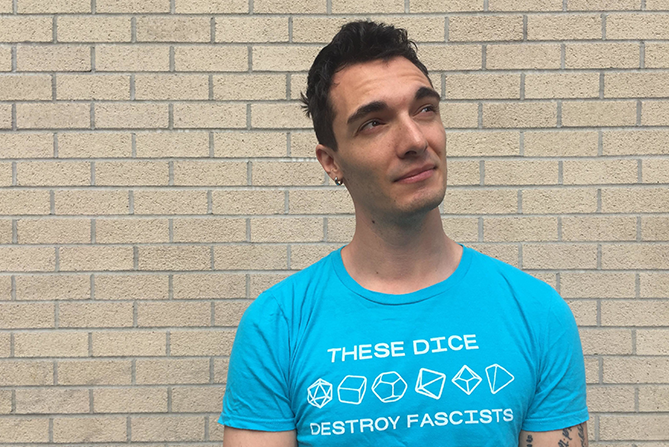
    Photo credit: P. Matsas Leemage-Hollandse Hoogte.

    Interview by Will Forrester, Editor.

  • Black Deaths Matter: About My Father

    Black Deaths Matter: About My Father

    Patrice Lawrence writes about her father, Windrush, and death.

    PEN Transmissions is English PEN’s magazine for international and translated voices. PEN’s members are the backbone of our work, helping us to support international literature, campaign for writers at risk, and advocate for the freedom to write and read. If you are able, please consider becoming an English PEN member and joining our community of over 1,000 readers and writers. Join now.

    I have always loved stories – reading them and writing them. My published books and short stories are mostly for children and young adults. A couple of weeks ago, I was taking part in an online panel for the Young Adult Literature Convention, a big celebration of writing for teenagers that usually takes place in London. The chair asked if there were recurring themes in our books. For me, yes: fathers who are absent; parents who have died.

    This is what I know about my father:

        • One of his given names is Patrick because he was born on St Patrick’s Day in Guyana;
        • He was a psychiatric nurse but also a talented musician;
        • He was imprisoned in HMP Lewes for forging a cheque;
        • He died an alcoholic and homeless when he was younger than I am now.

    This is what I don’t know about my father:

        • The names of his parents;
        • Why he never visited his family in Barbados;
        • Where the council scattered his ashes;
        • If he loved me.

    My father, Patrick Edward Singh, was part of what is now called the Windrush Generation. He arrived in England from Barbados less than 20 years after the iconic ship but, still, he would only have been a toddler when it docked in Tilbury. Those travellers would have been a generation older than my father and his peers.

    Why did he come? I’ve heard that it was a casual decision – he and a friend, barely out of their teens, spotting a callout for nurses in England and booking their passage. He ended up at St Francis Hospital in Haywards Heath, West Sussex. The hospital was originally known as the Sussex County Lunatic Asylum. It is now known as luxury flats. It has the unmistakeable architecture of a Victorian institution. (See also HMP Wandsworth, built three years earlier.)

    The building may have been imposing and not entirely welcoming, but it was surrounded by land. There was a farm, a swimming pool and – most importantly of all – the Norman Hay Hall. This was the heart of staff social-life for decades. In the 1960s, in a town with a predominantly white English population, the hospital brought together Italians, Spanish, Filipinos, Irish, Sri Lankans, Bajans, Trinidadians, Guyanese, Zimbabweans, and many more. Porters, cleaners, maintenance staff, nurses, doctors coming to England to bolster the NHS. 

    My father and his friend were, I believe, the first black male nurses at St Francis. With his hint of Jimi Hendrix hair and striking cheekbones, Patrick Singh was very well received. So how did this intellectual, handsome man end up dead after a fire in a squat aged just 45?

    There are certain narratives about the post-war migration from the Caribbean to the UK that are embedded in our consciousness. Samuel Selvon’s book, Lonely Londoners, fictionalises the familiar story of men from the Caribbean and Africa struggling to find a job and lodgings, and the everyday racism that sometimes spilled into violence. The current story is the Windrush Scandal, the hostile immigration policy that has challenged the citizenship of Caribbean-born people who arrived in the UK as children. These are people who have worked in the UK for all their lives but are now under threat of deportation to countries they do not know. Some have died still waiting for the compensation due to them.

    My father’s death makes me wonder about the other stories – the black men and women outside of the cities, the ones who did not attend church or contribute to support groups or march with activists. The ones that already had a job lined up and the accommodation that went with it. When I was a teenager, my father taught me the word ‘polymath’. Leonardo Di Vinci was one, he told me, and it was my father’s aspiration to be one too. He had studied law and philosophy at degree level. In his basement flat – jammed full of books, from Zen and the Art of Motorcycle Maintenance to Isaac Asimov’s Foundation series, as well as various guitars and amplifiers – he informed me in no uncertain terms that I had to go to university.

    I can only guess at the reasons for his decline. What are now referred to as ‘prescription drugs’ were easily accessible at the hospital, to help you sleep, to lift you up. He was, I know, an insomniac. (At the time of his death, he was taking strong tranquilisers, one of the reasons he was unlikely to wake when the flat started burning.) Were the seeds of addiction sown in those early days or already inside him waiting to flourish in difficult times? He married his long-term girlfriend, who died suddenly a few months later, still in her early thirties, from a sleeping-tablet overdose. Deliberate or not, I don’t know. I do know that he was imprisoned for a month for forging a cheque. Was it possible for an ex-prisoner to be a nurse? Or a black ex-prisoner to have any job at all?

    Event after event dug at his economic and emotional security.

    The last time I saw him was about two years before his death. He reconnected with me after eleven years of silence. He had mental health problems and was bouncing between hostels and squats. He told me he’d been sleeping on Brighton seafront the night that the IRA bomb blew up the Grand Hotel. He must have been living rough for at least three years by then. He’d buy me books and still believed I should go to university. He sent me a card and money for my 22nd birthday, with a note to say that he was moving on and he’d be in touch when he was settled. Perhaps he never did settle.

    Was it possible for a black man in late 20th-Century England to be unscathed by personal and systematic racism? How did that constant heaviness, the threat of dehumanisation, the shrinking of ambition and opportunity impact on a man whose head buzzed with ideas? His peers reached out to him and tried to help him, but he still kept falling.

    I learnt of my father’s death almost by accident, through the unofficial ex-St Francis nurses’ hotline. There’d been a report in a local paper and the news eventually reached my mother. She told me reluctantly; he treated women badly, including her. She didn’t think I needed to know. I confided in a friend at work who called the coroner for me. A letter from me, with my address on it, had been found in my father’s belongings. Apparently, police had been sent to inform me, but they’d been given the wrong house number. I lived on a small cul-de-sac. We were the only black family. I wouldn’t have been hard to find. My father was too disfigured to view, I was informed, though that had never been part of my agenda. He’d fallen asleep smoking and the cigarette had started the fire. Funerals were expensive, the coroner said, so the council would organise it – not burials, we cremate them. Did I want to attend his funeral? Of course! I didn’t, though – they’d ticked the box that said ‘no’.

    My father was an atheist. He wouldn’t have expected to turn up in an afterlife. I hope that, for that last journey, though, there was someone in that room who knew him – the books, the guitars, the opinions, the constants flow of ideas. Someone who knew his infinite cynicism, his loathing of Paul McCartney and Wings, his love of Ernest Hemmingway, his restless energy. I hope there was someone in that room who knew that Patrick Edward Singh was more than a homeless alcoholic being buried at the council’s expense, that his life mattered as much as his death.

    In our society, it seems that black deaths matter more than lives. Our violent murders prick mainstream consciousness. From Victoria Climbié and Stephen Lawrence in England, to George Floyd and Breonna Taylor in the US, the machinery of racism and its contribution to our deaths is unpicked over and over again. There is commitment to change, but still we die. I think of my father and the many traumatic black deaths that are never documented. The people who struggled with mental wellbeing, who died through suicide or addiction, or who did not have the choices that wealth and whiteness can bring. I think about the other Windrush generation, the ones who took a different path, and hope that their stories are remembered too.


    Patrice Lawrence is an award-winning writer for children and young people. Her debut novel, Orangeboy, was shortlisted for the Costa Children’s Award and won the Waterstones Prize for Older Children’s Fiction and the Bookseller YA Prize. Indigo Donut won the Bristol Crimefest YA Prize. Prior to being a full-time writer, Patrice worked in the voluntary sector for more than 20 years, promoting social justice and inclusion in children’s services, the criminal justice sector, and for families with social services involvement. Her fourth book for young adults, Eight Pieces of Silva, is published on 6 August.