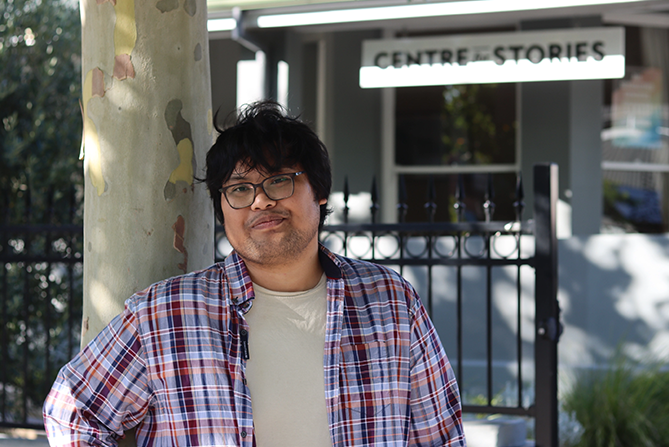
Tim Burrows’ long read on housing, the green belt, urban development and climate activism in Essex.
PEN Transmissions is English PEN’s magazine for international and translated voices. PEN’s members are the backbone of our work, helping us to support international literature, campaign for writers at risk, and advocate for the freedom to write and read. If you are able, please consider becoming an English PEN member and joining our community of over 1,000 readers and writers. Join now.
Tim Burrows is the English PEN x Essex Writers House writer in residence, in partnership with Metal as part of English PEN’s year-long centenary programme Common Currency. Common Currency features events, residencies, campaigns and conversations across the UK and Ireland, and is supported by a National Lottery Project Grant from Arts Council England, British Council, Cockayne Grants for the Arts – a donor advised fund of London Community Foundation – and PEN International. ‘Everywhere in Essex, They Are Building’ was commissioned as part of this residency.
*
Southend United was once the home of a towering south-bank terrace that was legendary with the fans. It stood proudly in the tradition of tall ‘kops’, from the oldest surviving example at Anfield to the newest at the Tottenham Hotspur Stadium. The site of Roots Hall had been used as a quarry before it was converted into a football stadium, gravel and sand excavated to aid the town’s housing boom when Cockney daytrippers decided they might like to try and live there. The quarry gave the arena a natural bowl shape, which was utilised in the building of the South Bank. In the nostalgic but still peerless compendium of football stadia, Football Grounds of England and Wales by Simon Inglis, the writer suggests that the building of Southend’s home ground in the 1950s signified something uniquely self-sufficient: ‘If there is a monument to the British football supporter, it is Roots Hall, for here is a ground built almost entirely through the efforts of a small, but dedicated group of people.’
A trust was set up by a consortium that included the mayor and the chairman of the club, as well as the chairman of the supporters’ club, which provided around £30,000. The building work, overseen by a farm worker named Sidney Broomfield, took five years of graft by a small but determined group, which included the manager and the players, led by the sturdy goalkeeper Harry Threadgold. They were all reportedly paid 3s 6d an hour. It was tough work, not least because, after excavation, the quarry had been used to dump the town’s rubbish; as well as sand, the men had to dig out discarded bike frames and mattresses.
The cherry on the cake was the South Bank, with its 72 steps. It was finished in 1962, seven years after the stadium opened. A giant stand beloved by fans that could hold more than 13,000 people, it reached its zenith when Roots Hall recorded its capacity crowd of 31,033 with the visit of the Kopites of Liverpool as snow fell during a hard-fought nil-nil draw in the third round of the FA Cup. Bloomfield was proud of the achievement. ‘It was hard work’, he later said. ‘But I did enjoy it. The club was friendly – like a family. The supporters deserve great credit for financing it’.
Yet as the years rolled on, the supporters saw little return on their investment. In 1988, Southend United’s chairman, Vic Jobson, sold off most of the South Bank stand to a developer. By the time I started going to see games every week in the late 1990s, instead of a tall stack of supporters cheering on the Shrimpers (who were by now languishing in the old Division Three), I used to look over at two squat tiers of fans. The odd lucky resident of one of the flats in the Priory Court development that lorded over them would sometimes lean out of the window and watch for a little while before heading back in, perhaps to make a cup of tea or see if there was a higher-calibre Premier League game to watch via their satellite television package. It felt apt that, at Southend United – a football club that dropped out of the football league entirely last season after decades of under-investment from the current chairman and club owner, the property developer Ron Martin – the optimum position at Roots Hall is not given to the Shrimpers’ most loyal fans, but to these people who just happened to have taken out mortgages in the properties built on the ground where they once stood each game. The best seats were no longer in the house, but in the flats.
~
Everywhere in Essex, they are building. More than 100,000 new homes are ‘in the pipeline’, according to a new report by the estate agent Savills. There has been a 56% increase in agreed house sales in the county between June 2020 and mid-April 2021 compared to the previous period. Tens of thousands of these homes are in the county town of Chelmsford, dovetailing with the new train station Beaulieu Park North, a bypass, and the proposed widening of the A12. There are also 10,000 new homes being built in the new town of Harlow. The Lower Thames Crossing in Thurrock is being talked up as another infrastructural starter gun for housing in south Essex – despite local fears over the environmental cost of such a development. Then there’s the ever-delayed Crossrail project, which will connect Essex to central London and on to the West at a speed hitherto not experienced by commuters. But these instances of infrastructural development are exceptions: there has been criticism that, for all the new homes planned – an unprecedented increase in a place used to growing with the needs of those in the capital and the wider South-east – there is only one new train station earmarked for the entire county. More road is not what’s being touted by the politicians backing these kinds of projects, but more road is what they will probably get.
As I arrived at the playing field behind Castle Point Borough Council’s offices, where protesters were posting letters in objection to the plans, I saw a man holding a megaphone crowded by smiling protesters. There was a huge round of applause. The man was Tim Copsey, who has become the de facto local leader of movements to oppose the plan to build on green belt. After the protesters had posted their letters, the police, whom Copsey had already let know of the protest, stopped by, but he had already let them know of the protest. He said they asked if it was an Extinction Rebellion event, and that he’d told them it wasn’t – XR members had just come along in support. The police told Copsey they were a bit nervous about XR.
Most of the protests I have encountered across South Essex involve a coalition of your usual concerned residents, green belt evangelists, and XR environmentalists who, if you believe the Home Secretary, Priti Patel, are ‘criminals’ threatening ‘our way of life’. That’s quite a different description to the one I would give Rachel, an XR member and mother of teenage children who told me her concern that, once the thousands of homes are built on green belt land in the Rochford area, with no changes to the road infrastructure, the increase in gridlocked traffic would mean primary school children sitting in their classrooms will be affected by the increase in pollution.
I talked to Johanne Deverrick, one of the organisers who got involved with campaigning against the green belt plan in Castle Point in December 2019. She said it would ‘destroy the borough’. The actual figure, she said, is around 5,300 houses. It might not seem like that big a percentage of a 90,070 strong population, but Castle Point has some of the most densely populated neighbourhoods in Essex. In Daws Heath, where she lives, there are three big green belt plots earmarked for development. Daws Heath currently feels like one of those areas in Essex that is folded away by the happenstance of infrastructure. It is protected from the relentlessness of the A127 by Pound Wood, an ancient woodland. There is an old church, St Michael’s, and a ‘villagey feel’ – at least compared to the rest of the borough. The plan would lead to 700 houses being added to the three plots. Excess traffic would spill on to Daws Heath Road, little more than an old country lane that has been widened through the years. ‘You are looking at 1,500 cars all coming out on to the Daws Heath Road, which in turn come out on to the Rayleigh Road and the Rayleigh Weir. With all the other cars that are going to be coming from the other plots, we’re going to be like a car park’.
Deverrick, like so many in this area of Essex, is originally from London. She lived in Chadwell Heath near Romford before she and her partner decided they wanted to live somewhere with a bit more open space. They planned to move to Leigh-on-Sea, the deceptively quaint and no-longer-sleepy Thameside town a few stops towards London from Southend, but found they could no longer afford to. A house in less-fashionable Daws Heath came up in 2018 and they went to view it. Pleasantly surprised with how green the area was, they put in an offer and bought the house. They couldn’t believe their luck. ‘And then we find out they are going to build everywhere!’
Deverrick used to work as a PA in London. She no longer commuted, but instead volunteered in animal sanctuaries. Wildlife will die as a result of the development, she said. ‘Even though Essex Wildlife Trust say there will be “wildlife corridors”, animals aren’t going to know to go to these buffers. They’re going to go into the road, or into the gardens of people who don’t want them there’. She said she has knocked at a lot of houses, but has found more apathy than support – ‘You can’t fight them, they have been doing this for years’.
It is not new that people around here object to building on the green belt. In the late 1980s, a wannabe terrorist carefully studied the anarchist cookbook before blowing up a new housing development at Barling near Rochford, followed by a series of other sites. The Barling Bomber (as the suspect or suspects became known), remains at large to this day. Perhaps implicit in the hostility of Essex towards any development on the green belt is the fate of that other Saxon county, Middlesex, which ceased to exist when the London Government Act came into force in 1965, 27 years after the Green Belt Act was drawn up. I don’t know if it’s due to the fact I grew up in Essex, but I have always found the concept of the green belt confusing. After all, green was just what you saw on journeys to your auntie’s out in Hockley or on coach trips with the cub scouts. I’d look at green fields out the window and wonder to myself, Is this, this bit – is this the green belt?
In a sense, the green belt made Essex. Without it, there would have been no Basildon, no Harlow, and most probably no Essex stereotype of the Cockney-wide-boy-made-good. ‘I think you probably can’t think about the character of southern Essex without thinking about the fact that it is the old East End having moved out – and the green belt is a key part of that story’, said Jonn Elledge, writer on urbanism for the New Statesman who grew up on the edge of the green belt in Hornchurch near Romford. ‘Obviously there are people who chose to go and live by the seaside or whatever, but also there are people who ended up there because that is where they could afford a house, and that is because there are more houses there because they couldn’t move them closer to London. To an extent, the green belt hasn’t stopped London’s growth, it’s just dispersed it’.
We live in a political moment summed up on Twitter by the writer Owen Hatherley: ‘Everything Is Actually About Housing’. A lot of the energy behind Corbynism was propelled by the lack of options for what for years has been dubbed Generation Rent. More generally, this country’s wider feeling of cultural ennui is about housing; land value is such that nothing aside from property can ever be justified when a pub is in trouble or a community asset empties, more often than not resulting in a conversion into flats or else a demolition followed by luxury apartments. The Esplanade, a famed grand pub venue that overlooked the sea reach of the Thames, which fostered Dr Feelgood and welcomed Nirvana and Radiohead, mysteriously burned down in 2018. In its place arose a luxury complex with sea views, heralded in the top story of the local newspaper, the Evening Echo: ‘Sneak peak inside stunning £25m seafront flats where you could live in luxury’. But not all proposals for housing are going through. Fossett’s For the People is a campaign for 400 social rent homes to be built in Southend on NHS land acquired by Homes England, the public agency working for the Government. It is the type of housing that has been depleted since the introduction in 1980 of Right to Buy, which encouraged the sale of council houses with no benefit to local authorities. The campaign has stalled; Homes England decided that more houses for private sale will be built there instead.
Housing – its scarcity and its varying quality, its power and its impossibility – also fuelled some of the myths that influenced the Leave vote during Brexit. A retired chartered structural engineer who lives in Castle Point told me he voted Leave partly due to the threat to green belt land in his area of Benfleet. I asked him whether he thought immigration was influential in the Brexit vote locally. ‘The government have asked Castle Point Borough Council to make provision for 8,000 new homes’, he said. ‘Of course, that’s all based on population projections, and that’s just because we’ve got 300,000 new people a year coming into the country. It’s not that the population of Castle Point will naturally expand to require 8,000 more homes. It’s people coming in from outside, and we can’t cope. What they are looking for is to make a lot of the green belt land into housing’.
He told me about a section of land on the edge of Castle Point, the last bit of green belt between Benfleet and Basildon. ‘They’ve been wanting for 25 years to build on that, and I’ve been on several committees to try and stop it. We stop it every time. You would get this urban sprawl all the way from Basildon right through to Southend, with no green. They want to put 200 houses on there, and Castle Point can’t cope with that. Infrastructure is a problem. Right through the country it is a problem. There are not enough hospitals, not enough police – I mean, with all these things, there is a huge pressure on the country. So, yeah, immigration was a big problem for everybody, I think’.
Worries surrounding large-scale housebuilding and a lack of infrastructural planning in England fuel discontent from all sides – XR campaigners, leftwing housing campaigners, anti-EU Brexiters, the usually apolitical. They all find different answers to the same problem. I said that in Castle Point immigration is actually quite low, with immigrants accounting for 3% of the population. I told him I found it quite interesting that immigration was the main reason given for people in Castle Point to have voted to leave the European Union, despite there not being many immigrants living there. He sounded a little put aback. ‘No, there aren’t at the moment’, he said, slowly mustering his retort. ‘There’s no room for them to come. Castle Point is full!’
~
The family of my Nan, Doreen Gillman, settled in Thundersley – now a densely populated suburb at the heart of hostilities over the green belt in Castle Point – when her father built their bungalow in a wooded area in the mid-1920s. Charles Gillman was a carpenter from agricultural stock from nearby Hadleigh who took advantage of the boom in sales of plots in this area. These ‘plotland’ properties were usually self-built bungalows. They were not of the city, per se, but remnants of its strained exhalation; architecture that happened while urban planners’ backs were turned.
I took my Dad to see if there were any plotlands left in the old estate in Thundersley. There were. We found a woman scraping weeds out of her paving out the front of one of the bungalows as the grind of building work sounded in the background. I asked her if I could talk to her about the history of the community. Louise Bullock said she knew the Gillmans, and that she was told Charles helped build her bungalow. ‘They were all the same. A door in the middle, and the window there and the window there’.
They say that any road made will increase the amount of traffic. The same goes for dwellings. Though the plotland builders like my great grandfather couldn’t have known, they helped set in motion a chain of events that led to the whirring and the pummelling and the erecting of gates, and the bitterness felt by those not keeping pace with the detached Essex dream. The plotlands set the tone for the carpet of suburbs that followed here in Castle Point. As we talked at Louise’s gate, 4x4s hurtled past continuously, going to and from their big new Essex houses, one of which was built on my great-grandparents’ old plot, and out to the fast A-roads and shopping complexes of Essex. Each time they passed, the cars shot dust up from the dry and still unmade private roads. ‘They don’t care. They just fly down here like there’s no tomorrow. They used to creep along – we never had all this dust. There were horses, more than anything else’. Louise said people often use the road as a rat-run shortcut from the A13 to the A127. ‘It’s progress, I’m afraid. It’s not progress for me’. Her husband had made sleeping policemen, but it doesn’t stop the four-wheel-drives bouncing up and down. ‘They couldn’t care less. They look down on you like you’re a piece of dirt’.
When Louise first moved here in the late 1970s, the area was still all fields and woods. She was under no illusions of the future of her corner of south Essex. ‘It’s all finished’, she said. ‘There used to be a [agricultural] nursery and now they’re building 19 houses. When they were building it, I came just to look, and they shut the gates on me. They didn’t want me to be there.’
Earlier, my Dad and I had walked to a wooded area where the Prittle Brook watercourse rises from the ground and runs all the way to the River Roach in Rochford. We walked over some foundations of a house that had long been erased, but the television and some of the agricultural materials still survived. It was a big plot, as they all were, space given over to living as much as growing produce. Washing line posts were still up, as if waiting to be used by the next tenant, and Dad spotted a cavity dug into the ground he identifies as a ‘soakaway’ – a hole you would dig and fill with rubble, which water would enter and soak away rather than going into a sewer. It felt like a frontierland between speculation and depreciation, between the ad hoc and the prescribed, between unmade roads and the A13.
~
By the middle of the 20th century there were tens of thousands of people living in plotlands in the area now known as Basildon. When the land was acquired by compulsory purchase, a large portion of people didn’t want to leave their plotland homes, but also didn’t have the financial capability to take the council to court to get compensation. There were protests from those who felt their freeholds were sacrosanct. But to no avail. It was an impasse that led some to stay in their bungalows until the bitter end, watching the JCBs come up the road to destroy their homes.
On 6 May 2021, outside Costa Coffee, I marvelled at how Basildon town centre was soalive as a place of congregation. We were in the woozy weeks after the lifting of the winter lockdown, and I felt overjoyed that this civic space was filled with so much chatter. People, no longer cocooned in their homes, were dressed up, had their hair done. After a dry but relatively cold spring, the warmth of summer was threatening. A man whose shopping bags hung from him like plump fruit listened to the Bangles’ ‘Eternal Flame’ on a portable radio. I suddenly noticed the bench I was sitting on was surrounded by dogs. A woman came over and asked one of the owners if she could stroke theirs. ‘Oh look at the beautiful dog – Hello baby!’ The dog licked her face all over, to her squeals of delight.
It was election day, and the vote was the Reds’ to lose. The Labour leader of Basildon Council, Gavin Callaghan, was seeking a mandate for his masterplan to completely change the town centre – from being primarily geared towards shopping, entertainment and civic amenities, to becoming a residential space for thousands of new homes via a series of tower blocks, up to 26 storeys (the highest building in Basildon currently runs to 17), which would be marketed to commuters. He proudly boasted that the plan was ‘the culmination of a year’s worth of work … A complete reimagining of what the town centre is for’. Callaghan pegged the future of Basildon to the project; quite simply, in the language of capitalist realism, there would be no alternative.
Some residents begged to differ. One, 35-year-old Jake Hogg, who lives in Pitsea, decided to try to do something about it and formed a party: the Basildon Community Residents’ Party, with the explicit aim of taking on the Labour council’s vision of a new Basildon. Hogg was born in Basildon hospital in the mid 1980s, when Mark Francois, then a Basildon councillor, and MP David Amess were presiding over a changing of the political guard from leftwing Labour to the savage rightward turn of Thatcherism. His granddad was from near Durham, the first in his generation not to have to go to the coal pit. Instead, he went to secondary school, served in the army, then became an engineer at Shell and was moved to Shell Haven near Canvey, before settling in Basildon. Hogg’s grandma on his dad’s side got a job as a cleaner at the Carreras Tobacco Company cigarette factory. To describe his socialist politics, he talks about his two nans. His dad’s mum died with ‘a lot of money in the bank, a Carerras pension’, whereas his nan on his mum’s side died poor after a life of cleaning at Basildon hospital. ‘She was just as hard a worker, but they ended up with different lives. It isn’t this, You can go to work and become a success, and have these things. It’s luck of the draw, no matter how hard you work’.
It is not as if Hogg was against housebuilding. He has recently gone back to working in the building trade, primarily as a plasterer, after six years working for a homeless charity. He had a bad shoulder injury some years back and had to drop out of the trade, so took a job as a caretaker at a homeless shelter in Thurrock, which just about paid his rent. He was then offered a job in St Mungo’s, helping look around Basildon at night for people without housing. He said he can see new developments like the masterplan contributing to the problem massively. Jake said there are usually around 35 homeless people living in the town centre at any one time. ‘In 2016, they said there were 650,000 empty properties in the country, and yet we’ve got the same amount of homeless people’. Land banking – the act of purchasing land and sitting on it as it appreciates – squeezes people into shop fronts. ‘For years faith groups have wanted to start a homeless shelter in one of these empty shops where they’ve ripped out all the electrics’, he said. ‘But they are told the rates are too much’.
Celebrated mid-century buildings such as recently demolished Freedom House are missed by Basildon. Laura Whiting remembers the balcony there and the colonnade. ‘The light was gorgeous’, she said. ‘A lot of the architects used to go to it and study civic relationships. That’s lost now’. Whiting is an architectural designer who runs the local arts organisation Directions Bas in her spare time. She told me she enjoys the scale of Basildon – how the low-rise shopping blocks still feel accessible and ‘domestic’. The vertiginous towers, on the other hand, do nothing but dominate. ‘The new buildings are a little bit inflated. The new college, too. It’s like it’s been cranked up’. Stone cladding has been swapped for thin metal structure and sheeting. ‘The scale of thinking is bigger, but materiality and quality are lesser. Plasticky and inflated’.
The new towns represented something other to the blind capitalism of private building, but the town’s future as a series of landbanks and other failures of planning was, in a sense, baked in by the way it was built in the first place. In reality, Basildon wasn’t a brave new state-funded rollout of municipal strength, but an ad hoc amalgamation of property-developer efforts in a post-war moment when resources and finances were scant.
Whiting led me up some steps to look over the town towards its market square. She told me that the buildings over there, now emptied out for eventual presumed demolition, were designed by architect Lionel H. Frewster & Partners and developed by Ravenseft Properties Ltd, one of Land Securities’ subsidiary companies. Land Securities and Ravenseft were set up to exploit the fact that land was never going to be as cheap and easy to acquire as it was after the Second World War. Land Securities started its life in 1944 with three properties in Kensington worth £19,321; by 1951, its assets were worth more than £11 million. ‘They just went round the whole country buying up cheap land. They had an umbrella company and then a subsidiary – it was a kind of tax avoidance. They were the biggest builders of the new towns. This idea of speculation, intentional decline, and speculation – that was the first cycle of it, and this is the second. It wasn’t dodgy, it was just speculation. The authorities were crying out, they were on their knees – Come and invest. And when you are on the back foot in terms of negotiation, the developers jump on you.’
The Labour minister Lewis Silkin’s original New Towns Act 1946 stipulated that each new town, when completed, should be handed back to the local authority. The Conservative government of 1959, to Labour’s dismay, decided that the development corporations should stay in place. Then, for Thatcher’s government, the selling off of new town assets was just another spoke in the wheel of ideology of privatisation, asset stripping, and lower taxation.
When it comes to our shared environments, decline does not happen overnight. It comes slowly, by a thousand cuts, policy reversals and blindsides. In Basildon, it is perfectly easy for the politician or journalist visiting for an afternoon to see ‘decline’ and want ‘solution’ without considering what has happened to produce such a situation in the first place. Decline in Basildon was by no means inevitable. In the new towns, it was always assumed that incentives would be put in place to keep shops thriving in the centre of town. After the development corporations that ensured these safeguards existed were wound up in the 1980s, a storm of market forces trundled in like the black clouds that sometimes enter the Essex coast, sly and slow at first, but with bursts of rain that build and build. Before you know it, you are drenched through.
Laura and I looked out at the cinema that’s being put together in the wake of Freedom House. She told me that she had been in discussions with the Twentieth Century Society and a charity about putting together a proposal to make the building an arts space. The town didn’t need a new cinema; it already has one. Laura said she did all the feasibility for it, and it was stacking up. But then the planning got brought forward to do the cinema, and so that was that.
People like Jake and Laura face accusations of Nimbyism, but all they wanted to do was preserve buildings that are well-designed and perfectly functional. Basildon would benefit from a community-focused hub like an arts centre. A development corporation could have at least facilitated this but, in conditions created primarily by the Conservative party but often tolerated by Labour, the only chances for change are unimaginative developer-weighted ideas like the masterplan, knocking down buildings that could have lasted and replacing them with supersized steel-framed sheds that have become the architecture of our times. ‘That’s your set piece for Sainsbury’s, Asda, Tesco’, said Whiting as we looked at the new cinema. ‘We’re getting flattened because everything’s a shed. We’re in an era of sheds’.
The market has resulted in a terminal lack of risk. ‘Empire [cinema] will come along here and say We’ve got all the proof we can manage the risk, take a bet on us, because obviously you’re paying consultants and they’ll tell you what you want to hear. At no point does anyone say Let’s just make it into an arts centre, we don’t need to knock it down. Once it’s in motion, everything feeds in to evidence it. There’s no alternative narrative’. I said I was watching The Sopranos, and it reminded me of how the mafia behaves: the same kind of vibe, the same kind of shutdowns, my way or the highway, the well-fed men. Whiting said she was quite scared for the future and the government’s proposed Police, Crime, Sentencing and Courts Bill. ‘If you think about what housing protestors are – everyday people arguing for more social housing, more affordable housing, and more care for the environment – they are working for honourable things. Any community activism is always a bit messy and complicated, but in general they are always on the right side, and yet they are targeted as being the annoyance. Everything’s got tipped on its head’.
The planning system is stacked in favour of developers, Laura said. She added that Callaghan’s style of ‘one-upmanship’ politics is no way to plan a town. ‘It’s such a serious matter; we’re going to be stuck with this environment for the next 20 years. I’m not going to get too preachy, but I find it infantile to go about such an important strategic project in this sort of bullish way. The attitude is just one of many arrogant political insertions into the future of Basildon’. In the end, the Basildon Community Residents’ Party didn’t win any seats. But it did win votes, enough to change the shape of Basildon council and slow down the masterplan. Gavin Callaghan was no longer able to lead the council, and so it fell to the Conservatives. Unable to steer the masterplan, Callaghan quit the council entirely. While still a Labour councillor, he claimed on his Facebook page that Hogg was a ‘massive Jeremy Corbyn-lover’ and that the Residents’ Party was ‘far left’. It is not the only area of the UK to see leftwing community-conscious residents celebrating the fall of Labour, and it can’t be explained away by mindless factionalism. Up and down the country are stories of Labour backing unpopular development that excludes the poorest. Hogg told me he didn’t even know who Jeremy Corbyn was when he joined the party. He had decided to join after his nan died. ‘I thought I was starting where she left off’. He was born a socialist, he said: ‘I didn’t need to read Marx to know’.
I met the planning and public art expert Alina Congreve in Harlow, Essex’s other new town perched out west on the edge of the county. As we walked through its tree-lined walkways, she reminisced about going on a trip to Rotterdam with Laura Whiting. ‘The shopping area, Lijnbaan, is exactly like the town centre in Harlow. Architecturally it is very similar, but it is in beautiful condition: there are lovely shops in it, lots of people, lots of public art’. Harlow by contrast houses a shopping centre that’s unloved and underused. ‘It shows what it would be like if we were a bit kinder to new towns like Stevenage and Harlow. It’s not an inevitable failure of the architecture. It has shops that people want to buy from. I’d like to take some councillors to Rotterdam and to Stuttgart and say “This is what it could be like: you don’t have to knock down the town centre and rebuild it, you could just make it better. There is nothing inherent about the architecture that’s wrong or malformed”’.
The difference between Harlow and Rotterdam is who owns the land. She talks about trying to facilitate the display of an Antony Gormley artwork on a roof in Stevenage town centre: ‘Every building they tried to put it on was owned by an offshore trust in the Cayman Islands or Panama’. They eventually chose to locate it on the top of a Pizza Express building because it was the only place for which they could possibly locate the owners.
Congreve took me to the Gibberd Gallery, a sculpture garden put together by Harlow’s masterplanner the late Sir Frederick Gibberd and his wife Lady (Patricia) Gibberd. The place was situated slightly outside the new town, allowing the man now considered one of the most successful new-town planners to sit at what some might say is an elitist distance. Now the diggers have arrived, and houses are sprouting up in their thousands, out of the price range of most people in the town. Instead, young people face a future of private rents, sofa surfing, short-term Air BnBs. Today, Essex is just another destination for those who have nowhere to go. The age of permitted development means former office blocks in the once hopeful new towns of Basildon and Harlow become uncomfortable homes – small-scale, sometimes windowless, damp. You know the score.
I travelled to the edge of Harlow to an area I’d never been to before. On the drive there, I had to slow down as I passed a boy riding a pony and trap. Despite being built in the 1980s, it looked a bit more run down than some of the other, more in vogue post-war areas I’ve seen. I was visiting a veteran campaigner called Mick Patrick. Observing Covid rules (this was March 2021), we talked at the doorstep. ‘If they’d replaced the housing and put the money [from Right to Buy] back into it then you’d have places for people’, he said. Patrick’s father was from Holloway. He had worked on the railways and was considered a key worker, so he was offered a house in newly built Harlow. Mick has always lived in council housing. ‘The ideology of council housing was to give people a home. Now, in some areas, we’ve got two out of five with private landlords. The housing waiting list is now called the “housing needs register”, to make housing a last resort rather than a right’. He told me how, in 2001, he helped Harlow retain much of its council housing, which was under threat from a stock transfer by the Tory government. He said Right to Buy led directly to the state we are in as a country, as it meant that buying your house was the only game in town. All other avenues were delegitimised. It urged people to be conservative, even if they never wanted to be affiliated with the party. ‘The people who had that noose around their head weren’t going to get active or go on strike or do anything like that’, said Patrick. ‘There is always that element to it’. He said they knew they were never going to replace the houses, and they haven’t. ‘Our next generations can’t get a deposit, they can’t find a house, and they are paying astronomical money in private rents. Yet the situation is that the benefits paid on private rent outweigh what it would cost to build council housing’.
Patrick said in the mid-70s you could put your name down for a house and get a choice of three in a street. The houses being built these days are unaffordable, and some of the smallest spec in Europe. He told me he had a nephew who lived in Terminus House, the notorious converted office block in the centre of Harlow, for a little while. ‘It’s just a dreadful situation. You can’t make any long-term plans’. He said the residents are a diverse group: some had jobs, some didn’t; many had mental health problems.
The leftward surge of Labour under Corbyn seemed to engage the younger voters in Harlow. Is the socialist side of Harlow still there? ‘It’s about 50–50 really’, Patrick said. ‘People are realising the consequences of the long-term Tory cuts. You ain’t got to speak to many people for too long until they can see the need for council housing’.
He said the only answer was a long-term fight for council housing. He and his fellow campaigners in Harlow have pressured the council to start building council housing again, and they are: 16 in fact. It’s not much, but it’s a start. ‘It just transforms people’s lives’, Patrick said. He had to go now – an Essex Unite meeting on Zoom. I thanked him and said goodbye. I began to feel quite emotional at the amount someone has to do to receive the relatively small gain of 16 council houses. But every gain counts. I turned as I walked away and told him to keep fighting. ‘I will’, he said. ‘And my son after me’.
~
In the woods by the Prittle Brook with Dad, we looked over through the trees to some rough grassland. He pointed out the gorse-like yellow broom plant that was quite common to Essex when he was young, which his grandfather did indeed use to make brooms from. He said he also used to get all his firewood from the woods until one day a bloke came up to him and said: ‘You can’t do that anymore. I’ve bought the woods.’ We asked Louise Bullock if she knew who owned the woods Dad used to play in. Yes, she said. It was the Southend United chairman, Ron Martin.
Tim Burrows is a journalist and author. He writes about society, culture and place for the Guardian, Vice, the Quietus and other publications. He is currently working on a book about Essex for Profile Books and lives in Southend-on-Sea.