Tag: Migration

  • Languages Learnt, Languages Lost

    Languages Learnt, Languages Lost

    Sophie Lau on the complex relationship with her mother tongue.

    PEN Transmissions is English PEN’s magazine for international and translated voices. PEN’s members are the backbone of our work, helping us to support international literature, campaign for writers at risk, and advocate for the freedom to write and read. If you are able, please consider becoming an English PEN member and joining our community of over 1,000 readers and writers. Join now.

    It is October and I am in Andong, South Korea, trying to find the meeting spot for my shuttle bus. I say ‘shuttle bus’ very loosely, here – all the regular ones have been cancelled because it’s the off-season, and the tourist centre had to call a private bus driver for me. I ask an ahjussi who’s passing by and he points me in the right direction – but not before expressing surprise at my travelling alone. ‘It’s dangerous for a young girl like you to travel alone,’ he says. ‘Where are your friends?’ I tell him they’re all in England; I’m met with more surprise. ‘Are you not Korean?’ I smile politely and shake my head, say that I diligently started learning Korean four years ago, and that I’ve put more effort in recently to make my solo trip just that bit easier.

    It isn’t the first time that I’ve passed for either a local or a gyopo on my trip. And with each case of mistaken identity, my feelings become a little more complicated. Of course, I feel a certain pride in being able to communicate in a language I’ve taught myself – I had set a goal to learn the twenty most-spoken languages in the world after reading Gaston Dorren’s Babel – but there’s also a layer of guilt starting to settle in my stomach. Have I really devoted that much time to perfecting languages that aren’t my own?

    My two weeks in South Korea follow three weeks in Hong Kong with my paternal family. There, as I tiptoed around what could and couldn’t be said given the political situation, there was an added sense of discomfort: all the gaps in my linguistic knowledge. I’d wanted to rediscover the island and had deliberately ventured into the small pockets of Hong Kong where barely any English was used. But though I could get by with my limited literacy in restaurants and cafés, when I visited my grandmother in her residential home for the first time, I realised I didn’t know how to write her name in Chinese for the visitor log. I couldn’t read the signs showing the names of each room’s occupants either. With each day, as I listened to my aunts and uncles conversing during yum cha, as I listened to the news playing on the TV in the background, I realised how limited even my spoken vocabulary was. I realised for the first time how much I had neglected Cantonese; how much distance had grown between me and my mother tongue.

    Language loss is an unfortunate reality shared by many diasporic communities. But I cannot help but feel particularly frustrated that I am a professional linguist who isn’t fluent in my heritage languages. Being that I am also a writer, the irony of my being close to illiterate in Traditional Chinese is not lost on me. There are at least six other languages in which I’m more proficient than Cantonese. I often wish that weren’t the case. Sometimes I find myself contemplating how advanced my Cantonese would have become if I’d devoted my attention to it, rather than my other languages.

    As my career progresses, and I receive more requests to work with heritage and community languages, my thoughts increasingly turn to language preservation. Although Cantonese is my mother tongue, I have never felt too worried about its extinction – there are currently over 80 million Cantonese speakers, and enough written records to ensure its legacy. Hakka, on the other hand – the language of my maternal family, an unwritten Chinese dialect – causes me a lot of language anxiety. While all my maternal aunts and uncles speak Hakka, I am the youngest member of my family that still knows it. Of the handful of my older cousins who grew up speaking it, none of them have passed it on to their children.

    My maternal grandmother looked after me a lot when I was a child. She can only speak Hakka, and so I had to learn it too. All the other Hakka speakers in our family know either Cantonese or English as well; when my grandmother passes away, there will be no pressing need to continue speaking it. It will only be a matter of time before all traces of Hakka will vanish from our family, before Hakka culture becomes only a part of our history.

    To live in the diaspora is to simultaneously preserve your heritage and embrace your culture. What I have realised, however, is that these two do not always easily coexist. Although my cultural identity is a blend of British and Chinese, my linguistic identity is far more imbalanced. Far less easy to categorise. My goal was to learn the world’s twenty most-spoken languages. But these days I have a different one, one that’s no less difficult: to find my way back to my heritage languages.


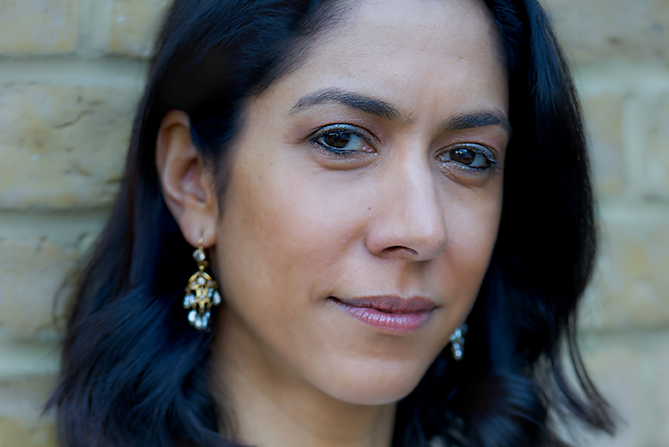
    Sophie Lau is a freelance writer, educator, and generally vibing polyglot who can be found in the UK, Hong Kong, or almost anywhere else in between! Her writing includes multilingual poetry, personal essays, language listicles, and whatever else tickles her fancy, but her current labour of love is a fun-filled YA romcom! She also designs and delivers creative translation and writing workshops. In her free time, she enjoys learning languages (she’s currently battling with her tenth!); hanging out with her dogs, Doughnut and Tiny; and capturing her rather chaotic solo travels on film.

    Photo credit: Sophie Lau
  • Our Tongues Were Forked Along Lines of Migration

    Our Tongues Were Forked Along Lines of Migration

    Janika Oza on language and migration.

    PEN Transmissions is English PEN’s magazine for international and translated voices. PEN’s members are the backbone of our work, helping us to support international literature, campaign for writers at risk, and advocate for the freedom to write and read. If you are able, please consider becoming an English PEN member and joining our community of over 1,000 readers and writers. Join now.

    I was four years old when I first realised that my family spoke more than one language in our house. We were at the kitchen table, my mother ladling rice onto my grandfather’s plate. As my mother doled out the second spoonful, my grandfather raised a hand and said, ‘Bas, bas.’ I remember laughing. ‘Bus?’ I said, ‘School bus?’

    I think I recall my grandfather chuckling, though perhaps he was just humouring me, generous and kind as he was. He had been saying, ‘Enough’. I had known this, but for the first time I had heard the word alongside another word I recognised; for the first time, I understood that my family’s mouths could hold multiple truths at once.

    My grandfather spoke mostly Gujarati, so for the years that he lived with us, so did we. But like many children of immigrants, I came home from school with not only fresh language on my tongue but a preference for these new words. When spoken to in Gujarati, my brother and I began to respond in English. My grandfather passed away and our grip on the language slipped further. My aunts and uncles balked at us, the Canadianised children who could barely get by in their mother tongue, but I couldn’t see why it mattered, to hold on to something as commonplace as words. Eventually, fed up with our pre-teen resistance, my parents hired a young immigrant from Gujarat named Jaydeep to give us lessons, hoping he might get through to us. He would arrive at our house on Sundays at 7am, armed with little squares of lined paper on which he’d carefully penned the Gujarati alphabet. My memories of these sessions are of being sleep-deprived and irritable. I would slump over at the kitchen table as Jaydeep repeated the words I already knew but didn’t want to say, feeling like I was being punished. My brother and I absorbed little, complained much, awaiting the moment when Jaydeep too would tire of our defiance and leave.

    I couldn’t have foreseen that it would be my father who would eventually end these lessons. When he did, it was not out of sympathy for us, but because of a word. My brother and I had been recounting the vocabulary Jaydeep had taught us at my father’s request when he grew confused, agitated. ‘Balle,’ my brother said, meaning ‘you’re welcome’, and my father shook his head, no. The words we were proudly reciting were not the words he knew. The Swahili word for ‘you’re welcome’ is karibu. ‘Abhaar,’ we said, and this too was wrong. He quickly realised that the language of our teacher was not the language of our family. Jaydeep had migrated from Gujarat recently; my family had left four generations ago, in the early 1900s, when my great-grandfather sailed from British-ruled India to British-ruled East Africa to work at a railway station in Kisumu, Kenya. My family stayed for three generations, resettling only from Kenya to Uganda. In that time, our language morphed, adapting to the landscape and adopting new words. The language I was born into is a language borne of this movement. Our tongues were forked along lines of migration, and Jaydeep’s words, however technically correct, were not ours.

    In the late 1800s and early 1900s, thousands of South Asians were brought to East Africa to labour on the East Africa Railway under the British, constructing a railroad that would link the interiors of Uganda and Kenya to the ocean port at Mombasa. Among those who came and survived the abhorrent working conditions – indentured labourers, artisans, engineers, and officers – many chose to remain, settling and working in East Africa once the railway construction was over. This was the root of the South Asian community in East Africa. Thousands more migrants followed, leaving behind the dire circumstances in British-ruled India in pursuit of better economic opportunities. The diaspora grew, composed of manifold religions, regions, and languages that both integrated with and remained separate from the local populations. In Kampala, my father grew up speaking Swahili, Gujarati, and English, though the borders between the three were blurred.

    This is the language of my family, my community. It is a tongue that reflects our specific history of migration, labour, and colonisation, descended from North Indian languages with words borrowed from both the colonisers and the adopted home, with its own cadence and accent. It is an oral language, one that shifted from generation to generation, a hybrid borne of change. In this way, it separates us from other Indian migrant communities, just as it separated us from Jaydeep – a product of uprootedness and resettlement, of remaking homes.

    I wanted this language, and the specific and familiar Ugandan–Indian accent that accompanies it, to be reflected in my novel, which follows four generations of one family from India to Kenya to Uganda to Canada. During the process of creating the audiobook, I compiled a list of all the Swahili words in the book and asked my father to record himself reading them, which I planned to send to the audiobook producers. When my father sent back his recording, he admitted that he had been under the impression that several of the words had actually been Gujarati. I had felt the same uncertainty as I wrote the book. I knew the words my family used for ‘plantain’or ‘children’,but was unable to place them in one language or the other. My father and I laughed over this, comparing notes on which words had befuddled us, musing over the mingling of languages in our household. After, I listened to his recording so many times I memorised its order, a sadness settling in me. It was a pre-emptive grief, the feeling of having captured something fleeting. I thought of Jaydeep, my old teacher, and how I have always known these words, even though their confluence does not exist in any written register. But that fluidity, that in-betweenness, only makes them more ours.

    This essay began with the loss of language through migration, but I cannot write about the language of my people without including the loss embedded in the language itself. The specific Swahili-Gujarati blend that my community speaks is not just a language of adaptation but a language of exile. In 1972, under Idi Amin’s dictatorship, my family, along with roughly 80,000 other South Asians who had lived in Uganda for generations, was expelled from the country. A community that had formed over decades, and solidified through shared alienation and displacement, was ruptured, scattered across the world. If the language was formed through movement and change, now it was removed from the very places that had given it rise. In the aftermath of the expulsion, our language became a dying one – because now it comes from a place to which we cannot return, forged through the particular conditions of a people making home in unfamiliar places, a home that is no longer ours.

    At times, I have experienced this language as one of isolation, a factor that separates us. Every time my family visits the temple on the outskirts of Toronto, it is routine for us to lament our inability to understand the Gujarati spoken by the priests and leaders, musing on the long drive home over how lost we all felt during the ceremonies. ‘Pure Gujarati,’ we call it, which begs the writer in me to interrogate what that makes us: impure, tainted, mixed?

    Once, when my family travelled to Gujarat to visit relatives, a rickshaw driver complimented my father on his Gujarati, telling him he spoke well, like a native speaker. I remember the pride on my father’s face, the sense that he had somehow won approval. Again, I wonder at the inverse: the shame of speaking a language that many would consider improper or broken, the embarrassment of how it sets us apart.

    But if it separates us, it also binds us, as a people who were stripped of the right to remain together. It is not just a language of a community in flux, but of community itself. It is a catalogue of where we’ve been and a testament to our survival – that out of dislocation and upheaval, something new can grow. When my father says ‘matunda,’ it is a reminder of where we come from, connecting us to the history and journeys that brought us here. There is home in these words, even if the physical place is gone. Now I understand my father’s resistance to Jaydeep’s vocabulary lessons, because accepting those words would have meant rewriting our stor; because his children absorbing that language would have meant letting go of something already tenuous and fragile. I still cannot claim fluency in the language of my family. I am still that over-Canadianised child, rebelling against the distressingly early lessons and answering sheepishly in English. But what I understand now is that my learning will come not through classes but conversation, not reading but listening. I close my eyes while the audiobook plays and hear the cadence of my people. I encounter a word in my family lexicon and am unmoved by the need to categorise it into Swahili or Gujarati, knowing that the uncertainty is the truest testament to our story. And I marvel at all that it holds, the history, the kinship, the loss, the survival – a language broken and reformed into something fuller, more whole.


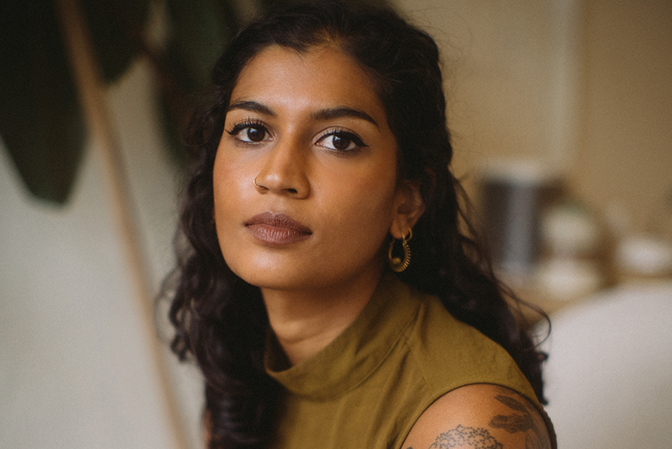
    Janika Oza is the winner of the 2022 O. Henry Prize for Short Fiction, and the 2020 Kenyon Review Short Fiction Award. Her stories and essays have appeared in publications including The Best Small Fictions 2019 Anthology and Catapult, and a chapter of A History of Burning was longlisted for the 2019 CBC Short Story Prize. She is a features reader for the Rumpus and a 2020 Diaspora Dialogues long-form fiction mentee. She lives in Toronto.

    Photo credit: Yi Shi

  • Remembering Partition

    Remembering Partition

    For our series on exile with the British Museum and Edmund de Waal, Kavita Puri writes on partition, memory and exile.

    PEN Transmissions is English PEN’s magazine for international and translated voices. PEN’s members are the backbone of our work, helping us to support international literature, campaign for writers at risk, and advocate for the freedom to write and read. If you are able, please consider becoming an English PEN member and joining our community of over 1,000 readers and writers. Join now.

    Across June, PEN Transmissions, in collaboration with the British Museum and Edmund de Waal, is publishing a series of essays on the theme of exile. This series speaks to Edmund de Waal’s library of exile, currently housed at the Museum. English PEN’s event series for the exhibition has been postponed due to COVID-19, and these essays – from writers in the events programme, or with books in the library – touch on issues that will be discussed at the rescheduled events.

    ~

    There is a jam jar that sits on a shelf in a study in a suburb of North London. It contains stones. They are the colour of earth; smooth and round. Raj Daswani takes them out and holds them in the palms of his hands. He brings them to his lips and kisses them. ‘I keep these stones’, he says, ‘to feel connected to my soil’.

    Soil, earth, land – Raj means Karachi. He feels a profound connection to it, yet he hasn’t lived there since September 1947.

    Raj, then thirteen, was one of the many millions of people who were part of the largest migration ever to occur outside war and famine: the partition of the Indian subcontinent into Hindu-majority India and Muslim-majority Pakistan in August 1947. Fearing being a minority in a new land, Hindus and Sikhs went to India, and many Muslims to Pakistan. An estimated 12 million people left land that generations of their family had lived on for a new country. It was accompanied by horrific violence as people of the “other” religion turned against one another. All sides were victims and perpetrators.

    Karachi, in Sindh Province, became part of Pakistan. Raj’s family were Hindu. They didn’t want to leave, but felt it was no longer safe for them. Their Muslim neighbours all came out on the day they left, in tears. They begged the Daswanis not to go, saying they would protect them. Raj’s parents felt there was no choice. They left by boat for India. The only items they were allowed to take from that life were a large tin of wheat flour and ghee.

    Raj arrived in Bombay, now Mumbai, never having spoken Hindi. His mother-tongue was Sindhi. He lived in an old British military barracks with many hundreds of other Sindhis, where they slept in a large room with hanging bed sheets as walls to divide families. There was one toilet between five hundred people. Things improved, eventually, in the refugee camp and Raj ended up staying there for twelve years. India never welcomed him he says, and it certainly never felt like home. He then came to Britain, where he has lived for many decades with his wife Geeta. He has four children and grandchildren. He still speaks Sindhi to them.

    Yet, after all these years, it is Karachi that feels like home. ‘This is not my soil, England or Bombay or India’, he says. Raj has been back to visit Pakistan three times. The first time he arrived in Karachi, he took dust from the earth, and put it to his forehead, and said ‘Mother, I have come home’. On his final visit, he wrote a poem. The first verse reads:

    In the end have realised this.

    In exile or forced to leave you

    Imagine the agony suffered by me

    Our flesh and blood, our kith and kin

    Suffering, in the name of religion

    I’ve spoken to many people who lived through the tumultuous events of partition and subsequently came to Britain – who lived through a dual migration. Many had been forced to flee – first as refugees around 1947 – and later chose to migrate to Britain, their former colonial ruler. Yet the deep connection to the land of their birth has remained, despite the decades.

    For the generation who lived through 1947, they do not think of borders, division, partition. Of course they recall the horror and bloodshed when the subcontinent was divided. But they remember another time, too, before that. A time when people of different religions largely got along, and could live side by side, in places like Lahore, Amritsar and Karachi. That is now relegated to the history books. One man, who grew up in West Punjab in a mixed village in British India, told me that, when his Sikh aunt died, her best friend, a Muslim, became a wet-nurse for her baby. What could be more intimate?

    That visceral attachment to the land long-left – where your parents were born, and your grandparents too – largely exists in memories. Unlike Raj, many never went back. Those I spoke to now say they want to return, before they die, to see their family home, or a tree they played in as a child; to find out if the best friend they left in a hurry, without goodbyes, is still alive. And if they cannot go in life, they want the journey made to have their ashes scattered where they were born. Officially, they do not belong in that so-called “enemy” country, but that is not how they see it. Bureaucrats may draw borders and politicians create new national narratives, but they cannot erase that generation’s stories and history. That generation does not forget.

    ~

    Iftakhr Ahmed was seventeen when he travelled from Delhi to Lahore. It was no longer safe for him to be a Muslim in India. ‘India is mine too’, he says emphatically. He can recall the smells of his childhood in the streets of Gangoh, where he played with best friends who were Hindu. His mother is still buried in India’s earth, as are his grandparents. But will future generations feel that way too about the land left behind?

    So many partition memories are shrouded in silence and have not been knowingly passed on. Those that came to post-war Britain were getting on with life in a new country where they faced hostility. Looking back on the past was an indulgence they did not have. There is an institutional silence in Britain, not only to partition, but also empire. It’s not taught widely in schools; there are no museums to it, or memorials to those that died as the British left India; for so long, there wasn’t the public space to talk about those times; and so many partition memories are bound up in dishonour and shame that they are easier not to discuss. The next generations, born here, may not have known much about the Indian subcontinent (or even have any knowledge of partition), and may not have asked.  

    Veena is a retired GP now living in the Scottish Borders. She always believed her family were from India. It wasn’t until she found essays and poems written by her recently deceased mother that she learnt her family were originally from Pakistan. She wants to go back there and stand on the earth that generations of her family are from. Her parents’ escape story was so traumatic that they couldn’t share their family history while alive. But Veena could always feel the trauma – she just did not know what it was.

    Anindya is third generation. His family moved from East to West Bengal. He says that, though partition may not always have been spoken of directly, it was always there. His grandparents had first-hand trauma of having to leave; they had the memories of the house, the place they left. But his parents had an inherited trauma: ‘I don’t think they got over the memory of the suffering that their parents had to go through’. Anindya’s parents had, however, a connection to their desh, the place they were from – even though it was only part of the family’s mythology,. Anindya, too, says that this sense has carried on to him: ‘I am very conscious … of the importance of roots, of the importance of feeling that you belong somewhere that you have a place that you can call your home’. He admits that, over time, if he has children and grandchildren, there may be a diminished attachment to East Bengal – ‘But the longer the attachment survives’, he says, ‘the better’.

    ~

    It is not just an attachment to a place that can persist through the generations, but also the sense that the place you thought of as permanent – your desh, your home – can be taken away. If it happened to family members in living memory, perhaps it could take place again. It’s compounded when your family uproot twice – first as refugees and then in migration to Britain, where your tie to the land is fragile. The imaginary suitcase at the top of the wardrobe is always there, just in case you have to move once more.   

    The consequences of political decisions taken so long ago are threaded through families long after, muddling notions of belonging. Home can be the place you are originally from, but to which you can never return. Can be the place you moved to on the Indian subcontinent. Can be the place to which you chose to migrate.

    As long as people remember the time before 1947 – and tell their stories and pass them on – then they exist too, in all their complexity. Yes, terrible things happened in the name of religion in the fight over land. But so too was there love, friendships, shared culture and language, a history on the very land on which the border was later drawn. Though that generation have now long fled, ties remain deep. So next time you ask someone with South Asian heritage where they are from, and you note a hesitation before they answer, get the long response. It may be an extraordinary story of migration across countries and continents.


    Kavita Puri is author of Partition Voices: Untold British Stories (Bloomsbury). She works in BBC Current Affairs and is an award-winning TV executive producer and radio broadcaster. Her landmark three-part series Partition Voices for BBC Radio 4 won the Royal Historical Society’s Radio and Podcast Award and its overall Public History Prize. Her critically acclaimed Radio 4 series, Three Pounds in My Pocket, charts the social history of British South Asians from the post-war years. She is currently making the third series. She worked for many years at Newsnight and studied Law at Cambridge University.

    Created as a ‘space to sit and read and be’, library of exile is an installation at the British Museum by British artist and writer, Edmund de Waal, housing more than 2,000 books in translation, written by exiled authors.

  • Disturbing the Comfortable and Comforting the Disturbed

    Disturbing the Comfortable and Comforting the Disturbed

    Andrzej Tichý writes on music and migrant experience

    PEN Transmissions is English PEN’s magazine for international and translated voices. PEN’s members are the backbone of our work, helping us to support international literature, campaign for writers at risk, and advocate for the freedom to write and read. If you are able, please consider becoming an English PEN member and joining our community of over 1,000 readers and writers. Join now.

    Translated from the Swedish by Nichola Smalley.

    ~

    Come on people now / smile on your brother / everybody get together / try to love one another, right now

    It was probably early spring, 1992. I was hanging out by the skate ramp by school with a few friends. We were smoking, chatting, doing a bit of graffiti, setting light to stuff. We weren’t skating.

    A friend turned up. He’d been to the shopping centre and bought a pirated tape from the Polish guys who sold their things outside, spread out on blankets on the floor.

    Listen to this, he said. It’s totally awesome.

    He handed me his Walkman; I took out the tape and read the label. Nirvana, it said. I put it back again – Side B – rewound it all the way, and pressed play.

    Imagine you’re thirteen. You’ve come to realise that, in the eyes of the world, you’re nothing but a poor immigrant, which means your world is poor too. You’ve felt alone for a long time, but you’ve started to realise that many people share that feeling. You’re angry, but, to be honest, you’re not exactly sure what about. Life hurts, and it’s confusing – you know that, but you also know it can feel good too, even if the rush hasn’t really come into the picture yet. You don’t get it, but that’s normal. That’s natural.  

    The material want. The sublimating violence of society’s class structures. The racism and xenophobia around you. The substance abuse around you. The physical and mental illness. It all seems so ingrained.

    Gotta find a way, find a way, when I’m there / Gotta find a way, a better way, I’d better wait

    Two or three minutes of distilled pain – two, three, four words that hit the target and show you that something else exists, that something else is possible. A smile, the warmth of joy within you.

    The raw, violent music that came flowing out of the headphones spoke to me directly. There were a bunch of us who’d been getting into music, together. Hard rock, metal, commercial hip hop, old punk. But this felt urgent in a different way. It broke all boundaries. It was so acute. It was happening now and it was important. In some people’s eyes, it was nothing but youthful nihilism. Base and destructive. Actually, it was the opposite. 

    Music offered a context, an opportunity to do something, to make use of all your experiences – even the negative and destructive ones. To break the isolation and approach the world.

    A wonderfully concise depiction of this process can be found in Duke Ellington and Don George’s I Ain’t Got Nothing but the Blues, which contains these lines:

    Ain’t got the change of a nickel

    Ain’t got no bounce in my shoes

    Ain’t go no fancy to tickle

    I ain’t got nothing but the blues

    Ain’t got no coffee that’s perking

    Ain’t got no winnings to lose

    Ain’t got a dream that is working

    I ain’t got nothing but the blues

    […]

    Ain’t got no rest in my slumbers

    Ain’t got no feelings to bruise

    Ain’t got no telephone numbers

    I ain’t got nothing but the blues

    Song – the act of singing itself – turns nothing into something. And under the right conditions, that something opens doors to a whole world of human creativity. It’s a slow process, and it wasn’t always obvious, but eventually we discovered that Nirvana’s post-punk on Territorial Pissings was just a node in an enormous, far-reaching network of musical, literary and artistic expression. If you followed the threads, you quickly became overwhelmed. The 90s US alternative rock scene was rooted in punk, which in turn was tied to Situationism, which led to Dada, which led to Symbolism, which, in its critique of Naturalism, expressed an ancient philosophical and aesthetic problem: How should we portray the world around us? And what do we do with these portrayals?

    A few years later, another friend played me Mobb Deep and Wu Tang Clan, and yet another world opened up. Hip hop wasn’t just a voice from below (in a way few other art forms could claim to be); it was also a lesson in creative quotation, paraphrasing and sampling. Granting the powerless a fleeting power of agency, you could perhaps say. Just like the Blues, it sprang from, and was specifically bound to, the US and black people’s lives and struggles there. But it was so powerful, multifaceted and complex, that it also functioned as inspiration for the poor and disenfranchised more or less throughout the world, including the immigrants and the underclass of Sweden’s post-war housing estates. So there was a place in the world for those who had ‘nothing’. Apparently, the world was rich, and the hunger that existed around you said more about the social structures you lived within than it did about you.    

    The kids who spit bars about Glocks and cocaine in pretty much every city in the world can sometimes appear destructive, problematic and uninformed. But those kids are also achieving something important. To disturb the comfortable and comfort the disturbed, as they say. This music is also a part of that far-reaching network that offers up knowledge and agency, a potential door to something great: a welcoming fire of possibility for many people in an ever colder, harder – ever more impossible – world.


    Andrzej Tichý was born in Prague to a Polish mother and a Czech father. He has lived in Sweden since 1981. The author of five novels, two short story collections and a wide range of non-fiction and criticism, Tichý is widely recognised as one of the most important novelists of his generation. Wretchedness (Eländet) was shortlisted for the 2016 August Prize and won the 2018 Eyvind Johnson Prize.

    A translator and lover of Swedish and Norwegian literature, Nichola Smalley is also publicist at And Other Stories and an escaped academic – in 2014 she finished her PhD exploring the use of contemporary urban vernaculars in Swedish and UK rap and literature at UCL. Her translations range from Jogo Bonito by Henrik Brandão Jönsson (Yellow Jersey Press), a Swedish book about Brazilian football, to the latest novel by Norwegian superstar Jostein Gaarder, An Unreliable Man (Weidenfeld & Nicolson).

  • Against labels

    In 1992, during the Yugoslav Wars, my family fled to Finland. Because I was only two years old at the time I don’t have any memories whatsoever from life back in Kosovo, the country I was born in. I learned to read at an early age, and books and stories quickly became my passion. For as long as I can remember, writing stories is what I’ve wanted to do in life. It makes me extremely happy and proud to be able to report that my childhood dream came true. I am a writer today.

    When I was a child I never thought that home was somewhere other than Finland. I never asked my parents whether we would be moving back to Kosovo one day, and I never felt out of place. I never experienced any emotion of dislocation or otherness because the world I lived in was the only world I knew. When I started going to a Finnish school and having conversations with teachers and other students this changed drastically, and I realized that I was different from my peers – a refugee, an immigrant, an asylum seeker. Until that point I had no reason to think of myself as an outsider, to refer to myself as an immigrant, to think about where my home was.

    During my school years I was frequently confronted by questions regarding my background, my ‘real home’, such as: ‘What is it like to live in a foreign country? Under such pressure, between two different languages, two different cultures, between religions?’. Or: ‘How does it feel when there’s a war in your home country?’ Answering these kinds of questions made me exceptionally uncomfortable, I truly feared them, and eventually I got into the habit of avoiding new people as I knew that the questions would start pouring in once I told others my Albanian name. I always felt that because of my background I was seen as less fortunate, that in the eyes of others I was traumatized, ruined for good, that my world was somehow shattered.

    The way I saw it, there was no war in my home, no pressure in my existence, no violence in my past. Switching between Albanian and Finnish and knowing about both Finnish and Albanian traditions felt completely natural. It was painless, effortless, because I knew nothing else. This was my world, I had nothing else to compare my reality to. I quickly realized these questions offended me because they presumed that my life is somehow torn apart, divided in two, burdened with elements that don’t mix.

    When my first novel My Cat Yugoslavia was published in Finland in August 2014, the media started referring to me as an ‘immigrant writer’. Because I have written a novel about an Albanian family living in Finland as an ethnic Albanian living in Finland, many assume that I am my protagonist, that I own a pet snake, that I am or have been in an abusive relationship and that my father is dead, just like in the story I’ve written. It made me laugh at first, and I wasn’t surprised, because as a student of literature I was aware of how debut novels are typically perceived.

    Once I even got a call from a journalist who had interviewed me the day before. He said they weren’t happy with the pictures they had taken during the interview and suggested we take new ones. ‘Since it’s such a warm day, could you come out with your pet boa?’ he asked. I told him with great resentment that I don’t have a snake. I’ve never had a snake. My Cat Yugoslavia is just a book, a work of fiction, and I don’t keep a talking cat as a companion either.

    I gradually became increasingly irritated by the label I was given, and I became more and more offended by the headlines about me and my work: ‘Experience Finland Through the Eyes of an Immigrant’, they’d say, ‘This Is What Being a Foreigner In Finland is Like’, or, ‘To a Migrant Finland is Cold and Racist’.

    Being labeled like this made me extremely sad because what made me pursue a career in fiction was the ability to tell stories – fates free from labels, stereotypes, prejudice and oppression. It proved that I’m still being seen through a filter, that what I feared the most as a child is still happening and present in my life, in my career as a writer of fiction. I’m not seen as a creative individual, I am just a face for an audience, a bridge between ‘us’ and ‘them’, an interpreter of worlds. Even though I had written a novel in Finnish, even though I had lived in Finland my whole life, even though I had graduated from a Finnish university, I was seen as someone from the outside, as someone who speaks from the sidelines, as someone who’s in the margins of Finnish society.

    The implication is this: that this is not my home, this is not my country, this is not my language.

    I’ve been a writer for only a few years, but during this time I’ve been asked countless times about migration, racism, nationality, the situation in the Middle East. ‘What should we do with all the people fleeing the area and coming to Finland?’ Or: ‘Would you care to share your thoughts on how Finland could perform better in assimilating refugees?’ As if I had exceptional insight or an answer to one of the biggest questions of our time because of my background. Needless to say, being an immigrant or a refugee doesn’t make anyone an expert in immigration, nor does writing about an immigrant family.

    Placing a person, a writer, an artist, in a category – whether it’s as ‘woman writer’,  ‘immigrant writer’, ‘refugee’, ‘gay’, ‘Muslim’ – jeopardizes what they can do and create, threatens their freedom to express themselves the way they see fit, and endangers the uniqueness of every single story.

    Nowadays, when someone asks me about my personal story and the world I was raised in I say that it’s simply beautiful, it is whole, and every language I know and every country I’ve lived in has made my life fuller and richer and more wonderful. That’s what I say, maybe annoyingly so, when someone asks me about my home country. When they ask me about the war I say that even though I’ve experienced loss and grief, I am very lucky because I get to do what I love. I’ve had success early on in my career, I am privileged and very fortunate to have people around me who support and understand me and what I do. I tell them this because it is the truth. I am an artist, I get to be my home, my own language, my own culture.

    I am a country.

    My Cat Yugoslavia is available from Pushkin Press.Photo credit: Giuseppe Milo on flickr.

  • A conversation with Mohsin Hamid

    ‘Even if you’re 75 years old and haven’t left the city you’ve grown up in, you have migrated through time. To me, it feels like the theme of being human is being a migrant.’

    Mohsin Hamid talked to PEN Atlas from his home in Lahore about some of the major themes in his new novel Exit West: migration, technology, politically engaged writing, and how we are all migrants.

    Interview by Theodora Danek


    Exit West is a book about migration. What do you think the response to the refugee crisis should be?

    It’s very hard to talk about the issue of refugees without looking at the bigger picture. I think that over the next century we should expect billions of people to move. Many of them will cross national borders. Some of them will be forced to do so by war or by climate change. If we are not prepared to imagine that those people are equal, it’s very difficult for us to sustain democracy and rule of law anywhere. We can see already that a very strong anti-liberal, anti-rule of law impulse tends to accompany the anti-migrant impulse. But it’s worth considering that migrants offer something as well. They offer the potential for a different kind of future.

    If we are going to treat refugees as people we choose to reject, at the very least we should accept that we’re doing so out of power and not out of righteousness, and that the issue of morality and right is on their side. We need to begin to accept that the moral argument is very much on the side of the refugees.

    I wonder what role you think fiction plays in this, especially when tackling the insider-outsider perspectives.

    I don’t think that fiction is like a bill in parliament that has been passed by legislators. It doesn’t have the same function. But novels help change the context in which a problem is considered. One of the things that I’m trying to do in Exit West is to remind us that everyone is a migrant. Even if you’re 75 years old and you haven’t left the city you’ve grown up in you have migrated through time. It feels like the theme of being human is being a migrant. I hope in this novel to make the tragedy of migration, which is basically human life, something that we can all take as a starting point. I think we really are all refugees from our childhood. If we can connect with that, with our refugee and migrant status, perhaps we can see each other a little bit differently in terms of who’s a migrant and what that means.

    You say in Exit West, ‘When we migrate we murder from ourselves those we leave behind.’

    We don’t literally murder the people we leave behind, but we do murder them from our lives. We murder them from the particular emotional context we find ourselves in. I live in Lahore now, having lived in London and the US and so on. My parents live next door, and they are getting older. Should my wife and my kids and I move abroad again? One of the biggest reasons why I don’t move, and haven’t moved, is because of the emotional reality of leaving my parents at this stage in their lives. If you love someone and choose to live your life far away from them, there’s an emotional violence to it that you experience as much as they do.

    It’s interesting that technology doesn’t change that. Technology plays a strong part in Exit West. There’s a sense of unreality in it, it feels like your protagonists are watching events unfold on screens even as they experience them.

    Realism is kind of a myth in any case. The novel is open to playing with that. There are the doors, for example, which are obviously an element of the novel that doesn’t correspond to our understanding of the laws of physics. You could argue that the doors feel very real. When I travel, I literally step through an aircraft door and a few hours later I walk out into Britain. Thirty minutes ago I clicked on an app on my computer, saw someone in London and talked to them. My computer basically became a window. So these doors already exist in a way, and the feeling of living in a world with these doors is already there. When we try to approximate what it feels like to be a human being we needn’t be bound by restrictions of what reality is and is not.

    Do you feel that there’s a difference between how writers in different countries have responded to the refugee crisis?

    Writers in different countries of course respond differently to all sorts of things, including migration and refugees. Writers who say that their writing is not political are simply writers who are attempting to distance themselves from the politics suggested by the fiction that they create. Whatever we do and however we act has political connotations. You either accept those connotations or you don’t. Your choosing not to accept them does not mean that they don’t exist. If you are going to write a novel in which you attempt to avoid political questions, there’s something deeply concerning about that. It’s a novel about the status quo. When we see writing that appears to shy away from these sorts of questions, that suggests that there isn’t much at stake in society.

    But that can change quickly. Look at America for example. What we’ve seen in America is this dominant new form of writing that is a sort of memoir, writers writing about being writers, et cetera. The question must be asked if as a writer that is what you feel most comfortable with in the current political climate. A sense of political crisis can change what writers choose to write about. Certainly in places like Pakistan the sense of political crisis is always there.

    Do you feel like you’re being seen as a spokesperson for an entire country, Pakistan?

    Well, my last few novels haven’t mentioned Pakistan. There are many reasons for that, but one reason was to avoid self-exoticisation. To not say: this is what Lahore is, this is what Pakistan is. But to say: this is what the universal city is. I’m going to pretend that the place around me actually is the archetypal city. It was a gesture to get out of this trap of being representative of a particular subcategory. And to say: I’m not representative at all. If I am representative it’s of being human.

    In the new novel, too, I have not located the city as Lahore, or in Pakistan. I don’t think I’m a particularly good spokesperson for Pakistan, I don’t think I understand Pakistan. But I do speak as somebody who lives there. Where you stand, or sit and write, does shape certain things.

    Mohsin Hamid is the author of four novels, Moth Smoke, The Reluctant Fundamentalist, How to Get Filthy Rich in Rising Asia, and Exit West, and a book of essays, Discontent and Its Civilizations.  Born in Lahore, he has spent about half his life there and much of the rest in London, New York, and California.Theodora Danek  manages English PEN’s Writers in Translation programme, which aims to support the best literature from around the world through publisher grants, public events,  collaborative projects, and the PEN Atlas blog.  Born in Vienna, she previously worked as a museum educator at Austria’s major science museum, a programme manager at the Austrian Cultural Forum London, and editorial consultant for  New Books in German.

    Find out more about Exit West and read  an excerpt  here.Author photograph © Ed Kashi

  • PEN Atlas Q&A: Mohsin Hamid

    ‘Even if you’re 75 years old and haven’t left the city you’ve grown up in, you have migrated through time. To me, it feels like the theme of being human is being a migrant.’

    Mohsin Hamid talked to PEN Atlas from his home in Lahore about some of the major themes in his new novel Exit West: migration, technology, politically engaged writing, and how we are all migrants.

    Interview by Theodora Danek


    Exit West is a book about migration. What do you think the response to the refugee crisis should be?

    It’s very hard to talk about the issue of refugees without looking at the bigger picture. I think that over the next century we should expect billions of people to move. Many of them will cross national borders. Some of them will be forced to do so by war or by climate change. If we are not prepared to imagine that those people are equal, it’s very difficult for us to sustain democracy and rule of law anywhere. We can see already that a very strong anti-liberal, anti-rule of law impulse tends to accompany the anti-migrant impulse. But it’s worth considering that migrants offer something as well. They offer the potential for a different kind of future.

    If we are going to treat refugees as people we choose to reject, at the very least we should accept that we’re doing so out of power and not out of righteousness, and that the issue of morality and right is on their side. We need to begin to accept that the moral argument is very much on the side of the refugees.

    I wonder what role you think fiction plays in this, especially when tackling the insider-outsider perspectives.

    I don’t think that fiction is like a bill in parliament that has been passed by legislators. It doesn’t have the same function. But novels help change the context in which a problem is considered. One of the things that I’m trying to do in Exit West is to remind us that everyone is a migrant. Even if you’re 75 years old and you haven’t left the city you’ve grown up in you have migrated through time. It feels like the theme of being human is being a migrant. I hope in this novel to make the tragedy of migration, which is basically human life, something that we can all take as a starting point. I think we really are all refugees from our childhood. If we can connect with that, with our refugee and migrant status, perhaps we can see each other a little bit differently in terms of who’s a migrant and what that means.

    You say in Exit West, ‘When we migrate we murder from ourselves those we leave behind.’

    We don’t literally murder the people we leave behind, but we do murder them from our lives. We murder them from the particular emotional context we find ourselves in. I live in Lahore now, having lived in London and the US and so on. My parents live next door, and they are getting older. Should my wife and my kids and I move abroad again? One of the biggest reasons why I don’t move, and haven’t moved, is because of the emotional reality of leaving my parents at this stage in their lives. If you love someone and choose to live your life far away from them, there’s an emotional violence to it that you experience as much as they do.

    It’s interesting that technology doesn’t change that. Technology plays a strong part in Exit West. There’s a sense of unreality in it, it feels like your protagonists are watching events unfold on screens even as they experience them.

    Realism is kind of a myth in any case. The novel is open to playing with that. There are the doors, for example, which are obviously an element of the novel that doesn’t correspond to our understanding of the laws of physics. You could argue that the doors feel very real. When I travel, I literally step through an aircraft door and a few hours later I walk out into Britain. Thirty minutes ago I clicked on an app on my computer, saw someone in London and talked to them. My computer basically became a window. So these doors already exist in a way, and the feeling of living in a world with these doors is already there. When we try to approximate what it feels like to be a human being we needn’t be bound by restrictions of what reality is and is not.

    Do you feel that there’s a difference between how writers in different countries have responded to the refugee crisis?

    Writers in different countries of course respond differently to all sorts of things, including migration and refugees. Writers who say that their writing is not political are simply writers who are attempting to distance themselves from the politics suggested by the fiction that they create. Whatever we do and however we act has political connotations. You either accept those connotations or you don’t. Your choosing not to accept them does not mean that they don’t exist. If you are going to write a novel in which you attempt to avoid political questions, there’s something deeply concerning about that. It’s a novel about the status quo. When we see writing that appears to shy away from these sorts of questions, that suggests that there isn’t much at stake in society.

    But that can change quickly. Look at America for example. What we’ve seen in America is this dominant new form of writing that is a sort of memoir, writers writing about being writers, et cetera. The question must be asked if as a writer that is what you feel most comfortable with in the current political climate. A sense of political crisis can change what writers choose to write about. Certainly in places like Pakistan the sense of political crisis is always there.

    Do you feel like you’re being seen as a spokesperson for an entire country, Pakistan?

    Well, my last few novels haven’t mentioned Pakistan. There are many reasons for that, but one reason was to avoid self-exoticisation. To not say: this is what Lahore is, this is what Pakistan is. But to say: this is what the universal city is. I’m going to pretend that the place around me actually is the archetypal city. It was a gesture to get out of this trap of being representative of a particular subcategory. And to say: I’m not representative at all. If I am representative it’s of being human.

    In the new novel, too, I have not located the city as Lahore, or in Pakistan. I don’t think I’m a particularly good spokesperson for Pakistan, I don’t think I understand Pakistan. But I do speak as somebody who lives there. Where you stand, or sit and write, does shape certain things.

    Mohsin Hamid is the author of four novels, Moth Smoke, The Reluctant Fundamentalist, How to Get Filthy Rich in Rising Asia, and Exit West, and a book of essays, Discontent and Its Civilizations.  Born in Lahore, he has spent about half his life there and much of the rest in London, New York, and California.

    Theodora Danek  manages English PEN’s Writers in Translation programme, which aims to support the best literature from around the world through publisher grants, public events,  collaborative projects, and the PEN Atlas blog.  Born in Vienna, she previously worked as a museum educator at Austria’s major science museum, a programme manager at the Austrian Cultural Forum London, and editorial consultant for  New Books in German.

    Find out more about Exit West and read  an excerpt  here.

    Author photograph © Ed Kashi

  • Not another diversity panel

    I realised I had grown tired of diversity panels when I found myself sitting on one, in front of a sell-out crowd, listening to the person next to me reel off, for five actual (not perceived, oh I timed it) minutes, the names of every single person of colour their publisher had ever published in its entire illustrious history. We weren’t here to debate the merits and statistics of that publisher’s track record. We were gathered to discuss the very real barriers that writers of colour experience on the road to getting published. Barriers faced by people of colour on the road to having the commissioning power to publish important books by writers of colour, not books that offer a ‘white gaze’ of the ‘ethnic’ experience, but books with nuance, texture, realism and truth. I walked to the train station from that event feeling tired and upset by what I had sat through, because I realised how little we had moved on from the diversity panel I had sat on five years before. Even then it was a tired debate.

    You just have to read the Writing The Future report produced by Spread The Word to know how hard people of colour find the world of books. There is statistical data and there is anecdotal data. And yet, often, when presented with clear evidence of marginalised communities not being represented in the world of books, the reaction is usually one of three things:

    1) That’s not me. I’m just so very tired of being called racist all the time. I only publish the best books in the world ever. How can I be a racist?

    2) I know it’s a problem. I just don’t know what to do about it.

    3) I love diversity. It’s a great thing. I would love nothing more than to have the world of books represent the world but a) this is a business, and books by writers of colour tend to not sell and b) in order for diversity to be achieved in a meaningful way, I might have to resign my job and step aside for someone with a different unconscious bias to me, and I just will not do that. I have to make rent.

    Here’s my retort to those three things:

    1) It’s not about you. No one called YOU racist. They called the system racist. You can either perpetuate it consciously or unconsciously, but we weren’t talking about you, my friend. Please don’t centre yourself. That’s the last thing we need. It’s not helpful for anyone.

    2) Okay, I can work with this. The will is there. Let’s do this. Meet me in the corner of the staff canteen. Bring hydration, protein and something to write with and on. We can do this.

    3) Okay so a) this is a business, I agree, but if you think books by writers of colour tend not to sell, actually what I’m hearing is, you don’t know how to sell them. To me, this isn’t a case of business, it’s a case of laziness. Maybe find someone who does know how to sell books to those communities. Also, how fucking insulting to be told that my skin colour, my skin colour, is a marketing trend, and not a very lucrative one at that. b) I get you. Rent is important. But the reality is that pushes for diversity often come to a stopping point, and that stopping point tends to be someone with commissioning power. So which is it: step aside or change your ways?

    A bunch of things happened after that diversity panel and each of them led to me deciding to approach Unbound in order to produce The Good Immigrant. I’ve spoken about them before. Check the editor’s note of the book when/if you buy it after reading this :insert winking emoji here: and you can read about the Guardian comment that made me realise I wished to no longer justify my place at the table. Or read about the conversation with contributor Musa Okwonga where he reminded me of Chinua Achebe’s quote, ‘if you don’t like someone’s story, write your own’.

    I put the book together because I wanted to showcase interesting writers of colour, each one deserving their own exciting book deals to do whatever they wanted. There wasn’t a manifesto and certainly not a post-Brexit narrative that influenced the book: that unfolded neatly and nicely post-result. I remember, twenty minutes after the result of the referendum, having someone threaten to set me on fire and another person demanding I be sent back to ‘brown land’. I thought, okay, the book just attained a level of political legitimacy I hadn’t expected before.

    The interesting thing about choosing Unbound was that I got to disprove the myth that books by people of colour don’t sell. Because what better way to do that than to crowdfund for a book where the audience said, before a word of it had even been written, that they needed the book?

    We get so many young people coming up to us after shows saying ‘thank you. I feel represented. It feels amazing.’ And I’m reminded of the Zadie Smith quote from White Teeth: ‘There was England, a gigantic mirror. And there was Irie without reflection.’

    People of colour in England have often felt like Irie. I’m hoping that, with this book, we can hold up a small yet significant mirror to those people who often feel unrepresented and marginalised. Because this is our country too. And because we all know and believe that books can change lives, celebrate them and give them significance, I’m glad this book exists, and that these writers got the opportunity to hold up a tiny mirror to England.

    Without overstating my significance in this (and sorry if I sound big-headed, that’s not the point I’m trying to make but), I did this on my own steam. Thanks to Unbound and all the contributors. But I’m just an unknown writer with a day job in youth work and a young child and his own books to write, and I did this. So imagine what an entire industry could do with all its power if it had the will.

    We all want diversity. Let’s make it happen. Actually. Realistically. In a meaningful, significant way.

    Because none of us wants to sit on another bloody diversity panel again.

    The Good Immigrant: Nikesh Shukla, Eva Hoffman, Vahni Capildeo and Mike Phillips discuss what it means to be an immigrant in the UK today. Chaired by Razia Iqbal. The British Library, Tuesday 22 November 2016, 7pm.

    Read about and buy The Good Immigrant on Unbound here.

    Seeing in colour: a series of essays written by people of colour working in the publishing industry for the Bookseller.

  • The European Mohammed and the Ignorance of the Educated

    Translated from Arabic by Jonathan Wright.

    Most Europeans hide behind a façade of fine education when they have to deal with the question of migrants, especially those coming from war zones, where life is torment and education is in ruins. This great European education, which in many cases is laden with arrogance and egotism, prevents many of them from understanding the reality of what is happening in the world around Europe. Europe today reads only itself, although it is living in what it calls the age of information and knowledge. Europe has created its own iconic array of writers, artists, musicians, theorists and philosophers and has locked itself in its temple to practise its rituals of democracy. When Europe wants to read the world, it reads it through the lenses of stereotype. These lenses were invented and reproduced in Europe throughout a long history of Eurocentrism practised since the days of colonialism up to the colonialism of capitalism today. This introverted European education produces what I call the ‘ignorance of the educated’.

    This European ignorance imposes, among other things, an obligatory identity on migrants from North Africa, the Middle East and some Asian countries: the identity of Islam. When defining themselves in Europe, most migrants do not consider their primary identity to be Muslim. They see themselves as Iraqis, for example, or Moroccans or Iranians, and they are surprised when educated Europeans treat them as a single group. This is a Western tradition with roots going back centuries, and it is useful in this context to refer to studies and books on Orientalism. Educated Europeans ignore the fact that the countries of what is called the Islamic world are diverse and heterogeneous, and that they have vast cultural traditions quite apart from religion. This deliberate oversight is evident in the behaviour of Europeans when they focus only on the religious identity of migrants, just as Western tradition throughout history has ignored the East’s entire legacy of literature, art, music, sciences and civilisation-building, and pinned an Islamic identity on a vast and varied world.

    Educated Europe today ignores the culture of all the European Mohammeds, who are born to immigrant families in free Europe but in a cage with bars put in place by free Europe. These Mohammeds grow up in Europe, and in European schools they learn about its icons and traditions. Nonetheless the distorted label of  ‘Muslim’ is attached to them through the media and the channels of education of European society, and their whole mother culture is stripped of its content, leaving only the image of the evil Muslim who wakes up and goes to bed dreaming of destroying free Europe! So the European Mohammeds are besieged from both sides: by the ignorance of the educated European and by the ignorance of the uneducated, in this case their families, whose lives have been destroyed by wars and dictatorial regimes and who have not received the right education to be able to support the European Mohammeds in the face of the flood of distorted images invented by educated Europeans.

    Mohammed must be given a chance outside the cage. Europe claims, for example, that it has a duty to let immigrants build mosques to pray in, while the European media and extreme right-wing parties continue to propagate a distorted and stereotypical version of Islam. It’s as if we were telling the European Mohammeds, ‘You were born here in Europe, which has all the beauty, knowledge, literature and arts, while you are from a background which has only evil Islam.’ Cultural diversity, as we know, doesn’t just mean letting the Other perform his religious rites. No, the Mohammeds, and educated Europeans too, have to breathe the culture of the East, which is rich in poetry, music, art, literature, myths, and a vast and varied heritage of traditions, so that immigrants don’t feel weak and powerless and therefore angry.

    The European Mohammeds do get angry sometimes. But they don’t get angry on behalf of the historical Mohammed. That’s just a pretext that they hide behind when they are really angry about the way they themselves are portrayed, the way educated Europeans have portrayed them.

    Are European humanitarian values now drowning in Europe’s selfishness, while migrants drown at Europe’s locked gates? Is Europe drowning in a deliberate ignorance that derives its disguises from a world that is materialistic, profit-based and cruel, built on contempt for, indifference towards and misunderstanding of other societies?