Tag: oneworld

  • Lest Writers Become Accountants: An Interview with Mauro Javier Cárdenas

    Lest Writers Become Accountants: An Interview with Mauro Javier Cárdenas

    Ecuadorean Mauro Javier Cárdenas discusses radical grammar, Spanish, and US politics.

    PEN Transmissions is English PEN’s magazine for international and translated voices. PEN’s members are the backbone of our work, helping us to support international literature, campaign for writers at risk, and advocate for the freedom to write and read. If you are able, please consider becoming an English PEN member and joining our community of over 1,000 readers and writers. Join now.

    Mauro – critics and fellow writers have spoken of Aphasia, your latest book, as reimagining what the novel form can be. Is this something you set out to do? Did form precede story, or story precede form?

    Whosoever reads too many novels will despair at the sameness of novels, I’ve often thought – at the excess of conflict / action / resolution, for instance, at the figurative language straining to elicit images of Stirring Novelist, at the tiresome stagecrafting of suffering, at the pantomimes of poetic diction and so on, and so yes, in order to avoid despair – ha! – I’ve tried to empty the novel of everything I hate about novels. How transgressive, some readers have pointed out, we get it, you write outside the rules, blah blah blah, and although most of the time I prefer to join them in their mockery – because it’s more festive that way – sometimes I want to say to them, but I don’t want to die of boredom, or, if I’m in a more transcendental mood – run! – I don’t write these performance-of-an-impulse sentences to be transgressive or experimental or to sour your Mai Tai, no, I write them to attempt a representation of life that doesn’t replicate the recycled murmurs of our lives. How exciting to read outside predramatised forms, those readers never say, thank you, at last we understand.

    There are many writers in Aphasia, some dead, some alive, and some – like László Krasznahorkai – who you have met and interviewed in the real world. I’m interested in the process of rendering in fiction a character’s thoughts on a writer whom you have spoken to at length. Is that an uncanny process?

    When you spend so much time thinking about imaginary situations, the distinction between memories, imaginary memories, dreams, films, and what you imagine while you’re reading becomes irrelevant while you’re writing, so despite my fondness for my memories of László Krasznahorkai’s monologues about monologues in San Francisco – a monologue is someone trying to convince you of something, László Krasznahorkai said, but in my books no one listens – they exist in my mind alongside Korin’s monologues in War & War, Antonio’s monologue in Aphasia about Korin’s monologues in War & War, and everything else directly or indirectly related to them. What I’ve come to find uncanny is remembering: to be in San Francisco and see myself in my bedroom in Guayaquil, for instance, listening to ‘Sweet Child of Mine’ by Guns N’ Roses on the radio for the first time – and me recording the radio on cassettes – thirty-three years ago.

    So much force is derived from your style in Aphasia. I’m thinking particularly of the interesting things you do with speech – using multiple comma splices to mean the reader is unclear who, precisely, is speaking, until after the fact of having read a few clauses (your answers here are good examples too!). Could you talk to me a little about why and how you deploy this grammar in your long (all 1,000-plus-word) sentences?

    If a neuroscientist were to place electrodes on my head, trying to determine what happens to my mind when I read The History of the Siege of Lisbon by Jose Saramago, which contains those long sentences whereas the Proofreader says Yes, this symbol is called deleatur and it reminds me of a snake that changes its minds just as it is about to bite its tail, and someone responds Well observed, sir, for however much we cling to life, even a snake would hesitate before eternity, the neuroscientist might be surprised by the spikes in my neuroelectronic representation of elation, especially if he’s a strict grammarian, and I might try to explain and say But without style it’s just ledgers of life on a page, doctor, and as long the author’s somewhat consistent on whatever rules she chooses for her style, we her readers will follow elatedly, Well observed, sir, for however much we cling to other people’s rules, we shouldn’t ask our writers to do so lest they resign and become accountants.

    In an attempt to make sense of a fragmentary, perhaps traumatic life, Antonio reads and writes a lot. Do you think reading or writing can indeed make sense of our world? Is one better than the other, for that?

    The answers are no and neither, but that isn’t any fun so let’s focus on Antonio’s mind, which is devoid of an active imagination due to his altered state ever since his sister’s altered state occasioned her escape from her trial proceedings, and since Antonio needs his active imagination to read and write fiction, he can’t do either, rereading instead of reading – rereading being a less taxing process of reconstitution – and transcribing audio recordings of his mother and former wife instead of writing fiction. Let’s take a turn toward self-help just to aggravate the ghost of Cioran. In Aphasia, there are three chapters titled after three so-called realist American short stories, which rely on a traditional Aristotelian reversal for their emotional effect – in other words the kind of stories Antonio claims to detest – and which he rereads to reconstitute the fantasy that he possesses the emotional range to care for his sister – those reversals acting as microscopic shocks – and it is perhaps his reconstitution of this fantasy that allows him to care for his sister, and in one sense that is the sense he’s after.  

    Aphasia is, of course, deeply concerned with language, and how language is both produced by and produces identity. There are a few moments in the book where Spanish is left untranslated, and where the choice to speak/write in either Spanish or English is of personal significance. Could you talk to me about whether that’s also significant for you?

    When I was asked about my inclusion of Spanish in The Revolutionaries Try Again, my first novel, I spoke at length about how, in a country like the United States, where some of the non-Latin American natives might flash their guns if you speak Spanish in public, including Spanish in a novel in English has a political dimension, and yet now, upon further reflection, I think those comments of mine could be categorised as Latin American kitsch – that is, emphasising what the non-Latin Americans in USA want to hear, which is that Latin Americans in the USA are the victims of outsized injustices, which allows the non-Latin Americans in the USA to feel superior to the Latin Americans in the USA – other examples of Latin American kitsch include those dreadful essays about the agony of losing mi español or about reclaiming California from Joan Rivers, or those book covers full of Virgens de Guadalupes, or those novels filled with melodramas of tíos and mamis – and so I’ve lost interest in including Spanish in my novels in English beyond a joke or two, like when Antonio is asked why he doesn’t write in Spanish or why he writes sentences that seem to contain more than one story at the same time and in his mind he responds pues ya ve que no he cambiado en nada, profe. None of the above is meant to discount the unconscionable injustices some of my fellow Latin Americans have to endure in the USA. I just think it’s too facile to include an abuelita or two in a novel in English and then make a big stink about it being political just to receive the patronising acclaim of the non-Latin American natives in the USA.

    My final question is about being an Ecuadorean in the US. Obama is mentioned in Aphasia (I won’t ruin things by going into the complexities of that); during your writing of the book, there was another president; and the book was first published in the US on the very day that the US voted for a third. How much of the tumult of the political landscape of the country you have now lived in for years is in this book – in your writing at large?

    My favourite American literary performance of the last four years goes as follows: a wealthy American writer who’s married to a Republican Ivy Leaguer publicly claims to be afraid of the president, which results in wide acclaim instead of wide derision since no one wants to point out – because that would be so mean – that the only impact the lazily nefarious American president has on this writer’s household is less taxes. I share this 2019 American classic because I’ve been trying to clarify for myself what the tumult of American politics means to me outside of these performances of virtue. Most American writers categorised as sophisticated aren’t directly impacted by the tumult of American politics, and the ones that are directly impacted – because they don’t have the right papers, sufficient funds, the right shade of pale – are patronisingly subcategorised as POCs.

    And now – at last – to answer your question: I seem to prefer writing about characters in an altered state of mind, and what can be more mind altering than the American government tailing your family on your way to school and apprehending your dear father simply because he doesn’t have the right papers and you having to record it on your phone so that someone out there will take pity on you and demand that he be returned to you?


    Mauro Javier Cárdenas was born and brought up in Guayaquil, Ecuador and studied Economics at Stanford University. His debut novel, The Revolutionaries Try Again, was published in 2016. He was awarded the 2016 Joseph Henry Jackson Award and in 2017 was included in the Hay Festival anthology Bogotá39, a selection of the best young Latin American novelists working today. 

    Interview by Will Forrester, Editor.

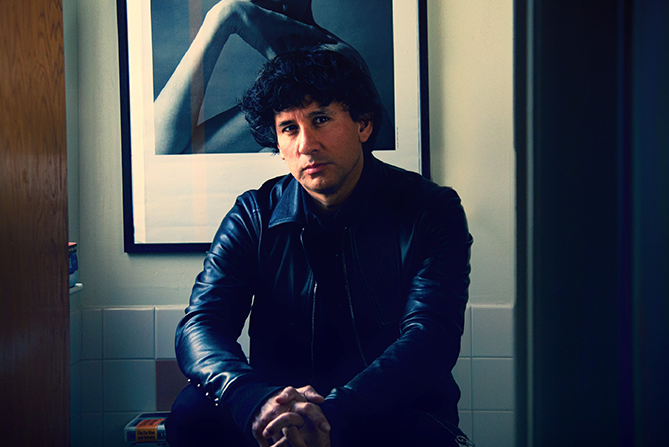
    Photo credit: Victoria Smith.

  • On the beauty of international crime (fiction)

    Launching a literary crime list is always going to be exciting. For although crime writers are often overlooked by the literary prize committees, there are some fantastic crime, thriller and suspense writers who are producing prose of a calibre equal to the very best fiction of today.

    And the beauty of crime writing is that it can be easily understandable to readers from other countries. In essence, crime writing is about human nature, from the very best and to the absolute worst, and we can all relate to other people. Another bonus of crime fiction is that often it offers a fascinating peephole into another sort of world or culture. Sometimes novels from the most far-flung territories seem very like our own homegrown fiction, and sometimes extraordinarily different – and I think a genre novel, which many readers will come to with pre-formed suppositions, is a great way of exploring the world around us.

    There are advantages to launching a crime list with an independent publisher. Oneworld, like several of the other British independent publishers, prides itself on offering on the books we feel deserve to be published, no matter what. This means that although we are eager to be market-aware, we are just as keen to make sure that we remain an editorial-led company.

    After several years learning how to publish fiction we are looking to expand what we do. We have had critical success recently with Man Booker prizewinner A Brief History of Seven Killings by Marlon James, and last year we launched a children’s and YA imprint, Rock the Boat. I’d previously been buying general literary fiction, but have been a long-term crime fan, and so Point Blank was the logical development.

    Although Point Blank will always be a literary list, it gives us a chance to push the boundaries with more commercial novels than we might ordinarily, and to buy writers who will produce novels regularly, all of which is sound business sense, especially at a time when it is vital to prove to booksellers we are able to bring authors to the market with novels that will make readers look for that writer’s next outing.

    Luckily for me crime publishing covers a gamut of writing styles, and I think this is one of the joys of working in this area, as you can be reading something quite commercial or cosy, and just an hour or two later you can be deep inside the mind of a terrifying psychopath.

    I’m very open-minded as a reader, but I’ve had to teach myself to enjoy the leap of faith needed to acquire a crime novel in another language, where often I won’t have been able to read a word. So novels that win prizes and have some sample text translated tend to move up the queue of waiting projects, and I rely heavily on reader reports from crime experts who can read in the original language.

    I think there has been a sea-change in what readers are willing to try, helped by BBC4 being supportive of subtitled crime television series, and breakout books from writers such as Joël Dicker, Stieg Larsson, Jo Nesbø and Paulo Lins.

    Almost half of Point Blank’s acquisitions are in translation. Our first two novels were originally written in Chinese, French Concession by Xiao Bai and A Perfect Crime by A Yi. And this autumn we have The Hermit by Thomas Rydahl, winner of the Harald Mogensen Prize for the best Danish crime novel of the year and the 2015 Glass Key award for best Nordic crime novel of the year. The Rydahl is an interesting novel as it is well in excess of 200,000 words – I won’t say quite how long, but it is an impressive length! – and it is hard to think of many large publishers being bold enough to take on something quite as unashamedly muscular as this. Aside from British, American and Canadian authors, we have books in the pipeline from Israel, Finland and Belgium, and before long I expect to be looking towards Russia as well as South America.

    There is one fly in the ointment, however, which is the difficulty in securing translation funding for books that, no matter how brilliant, are deemed to be ‘genre’ and therefore less worthy of a grant.

    I would completely disagree with this strategy. Readers have in the past been wary of novels in translation, while translation costs are heavy, and although publishers such as Oneworld and Pushkin Press are working hard to give readers the opportunity to discover for themselves how great literature from around the world can be, there is a whole galaxy of new but fantastic fiction waiting out there.

    And we know that readers are waiting too. Last autumn we published the Algerian novel The Meursault Investigation by Kamel Daoud, and have had to reprint several times, while the hardback of A Perfect Crime by A Yi gleaned amazing reviews. Both of these books were awarded PEN grants, which meant we felt we were able to publish these two distinctive and quite challenging titles from more of a level playing field.

    So I would say, how better to educate the wary reader about world fiction than with a good read on a genre list?

    Explore Point Blank’s launch titles.

    Find out more about PEN-supported authors A Yi and Kamel Daoud on the World Bookshelf.

    You can also read our interviews with these books’ translators, Anna Holmwood and John Cullen.

  • On the novel Laurus

    Medievalist Eugene Vodolazkin is the author of Laurus, a new novel set in plague-ridden 15th century Russia. Here, he writes on using the language of the past to construct new meaning for the present, and how both the medieval and the postmodern influence his writing.

    Translated from the Russian by Caz Hattam.

    The novel Laurus plays out in 15th century Russia and at the centre of the narrative is the fate of the healer Arseny (the protagonist’s name changes according to circumstance, and the last of these is his monastic name, Laurus). Arseny’s one true love, Ustina, dies in childbirth after he fails to help her. As a result, he resolves to live on her behalf. From this moment on, his life turns to legend and the narrative is constructed in the style of a canonical saint’s biography, or vita.

    Arseny nurses plague victims back to health, treats the wounded and tirelessly works to heal people. In the Middle Ages, successful treatment was determined not so much by the quality of medicine (which was poor) as by the skill of the doctor. The more Arseny sacrifices himself, the more clearly his gift develops. Mastery of his craft becomes something monumental, as treatment gives way to healing. Travelling far and wide healing people, Arseny tells Ustina of all that happens. Although Ustina does not answer, Arseny regards what passes between them as conversation, convinced that silence does not mean absence. This dialogue stretches throughout the entire novel.

    In the novel Laurus I wanted to write about a man capable of sacrifice. I felt compelled to counter the prevailing cult of success in today’s society with something quite different. Despite this ‘moral’ challenge, my desire was not to preach; that is not the place of literature and besides, nobody has given me the right to do so. I likely asked more questions than I answered. Sometimes it is more important to ask a question correctly than to answer it. In actual fact, in an ideal world it is the readers who answer the questions, each in their own way. It is precisely this that creates the subtext intrinsic to good writing.

    Every era presents voids that need filling in. This is where the author pours his sculptor’s plaster – much like archaeologists did in Pompeii, into the spaces where bodies had been buried under ash – and figures take shape as a result – literary ones, in our case. If the work is well-written, the plaster turns to flesh and blood. And the more the literary figure (such as Laurus) clashes with our contemporary world, the more clearly we need them. You can describe your own era and everything in it. But you can describe what it lacks by escaping into another age. This is exactly what I chose to do.

    In Laurus I was not so much interested in the historical narrative but rather, to use Lermontov’s expression, in ‘the narrative of the soul’. Calling the novel ‘ahistorical’ is a cue for the reader, a suggestion that they should not search the book for something that is not there. The novel contains barely any historical facts in the conventional sense. On top of that, there is very little artistic invention either. My protagonist embodies traits common to a great many people depicted in ancient Russian texts. He is an inquirer, full of doubt. For the most part, his defencelessness is precisely what makes him charming. In order to embrace the protagonist, the reader must identify with him. But how could they identify with a depersonalised ideal? Contrary to popular opinion, there are never any such saints. Read the vita of any saint and you will find him in perpetual inner turmoil. My protagonist lives part of his life as a holy fool[1]. Holy foolery is an exceptionally noble feat as the holy fool makes himself blind not only to the world, but also to his own sense of self. This he loses, denying himself absolutely in order to become one with God.

    Writing a novel like this was a risky business. The challenge of depicting a ‘positively magnificent man’ (Dostoevsky) is extremely problematic; by and large, entirely sympathetic characters are a weak spot in literature. It is almost impossible for the contemporary author to resolve this, and, if it is at all possible, you need to be the author of The Idiot in order to pull it off. I came to the realisation that, if taken from the streets of the present, a protagonist such as Dostoevsky describes would be unconvincing, not to mention downright contrived. And so I turned to an ancient form, to the vita of a saint, which is intended for this kind of narrative. I simply wrote that vita using contemporary literary devices.

    For almost 30 years I have engaged with the world of the Middle Ages – it is very different from the world of today. That other culture has become a part of me and I – strange as it might seem – am a part of it, because I continue to reconstruct it in a time when it has already become history. If you take all that I have read over the course of my lifetime, you find more ancient Russian texts than contemporary ones. This is simply because I spend many an hour each day reading ancient Russian writings. But when somebody dedicates decades to something which appears – to put it mildly – exotic to today’s society, they acquire a special kind of perspective. You could call it a professional deformity. It was this perspective that I resolved to share with the modern day reader.

    I am lucky that my personal experience is in keeping with the current literary trend. I used several ancient Russian techniques that even 40 years ago would have been deemed unacceptable and discounted as unliterary. But now they are in vogue; postmodernism paved the way for them. Literature has wound its way to confronting things that were once the foundations of medieval poetics. I approached these things not via postmodernism, however, but directly from the Middle Ages.

    Laurus is a novel about love in the deepest sense of the word, but it is equally a novel about time. More precisely, it is about the absence of time, the way it dissolves upon touching eternity. Time in the novel shimmers; its flow is constantly disturbed by ripples and surges from other eras. This ‘destruction’ of time is also brought about by the conflation of ancient Russian and contemporary linguistic elements. Language is one of the novel’s main protagonists. I envisioned a text that was to be read not only with the eyes, but also with the soul; a text that would lay bare the beauty of language in its distinct layers (historical, social and so on); a text that would ultimately attest to the absence of time. This leads us to a third way in which we can define the text: it is a novel about language.


    [1] The ‘holy fool’ has particular significance in Russian literary and Orthodox tradition; see Vodolazkin’s exploration of the term.

  • Publishers' highlights in 2014: part 1

    Chase away those stormy blues with a new book for the new year. PEN Atlas asks UK publishers about the translated books they are excited about publishing in 2014 – an exciting list of books to look forward to this year, so clear your shelves! Publishers include Pushkin Press, Peirene, Istros Books and more, with a second installment from other publishers next week


    Eric Lane – Dedalus

    We have begun 2014 with Diego Marani’s first detective novel, God’s Dog, translated by Judith Landry, set in the near future with Italy a theocratic state ruled by the Vatican. Described as ‘energetic and trenchant’ in The Independent.February sees Before and During by Vladimir Sharov, translated by Oliver Ready. This is one of, if not the most, extraordinary novel we have ever published. My view of Stalin will never be the same again.In March there is the first English translation by Alan Yates of  Raimon Casellas’  fin-de-siècle masterpiece Dark Vales. A Catalan classic full of darkness and foreboding. 

    Jane Lawson, Editorial Director – Doubleday 

    The Unbearable Dreamworld of Champa the Driver by Chan Koonchung (May 2014, translated from the Chinese by Nicky Harman).  Humorous and erotic Chinese road novel about the love life of a hapless drifter whose life is upturned when he falls in love with the statue of a young girl from Beijing- the second novel from the author of The Fat Years

    Susan Curtis-Kojakovic, Director – Istros Books

    Hamam Balkania by Vladislav Bajac (Serbia) translated by Randall A Major – An ambitious look into the power structures of the Ottoman Empire, juxtaposed with musings on contemporary concepts of identity and faith. (January 2014)Mission London by Alek Popov (Bulgaria) translated by Daniela and Charles Edward Gill de Mayol de Lupe  – Combining the themes of corruption, confusion and outright incompetence, Popov masterly brings together multiple plot lines in a sumptuous carnival of frenzy and futile vanity, allowing the illusions and delusions of post-communist society to be reflected in their glorious absurdity! (April 2014)Death in the Museum of Modern Art by Alma Lazarevska (Bosnia) translated by Celia Hawkesworth – Avoiding the easy traps of politics and blame, Lazarevska reveals a world full of incidents and worries so similar to our own, and yet always under the shadow of the snipers and the grenades of the Bosnian war. (June 2014)False Apocalypse by Fatos Lubonja (Albania) translated by John Hodgson – 1997, a tragic year in the history of post-communist Albania.  This is one man’s story of how the world’s most isolated country emerged from Stalinist dictatorship and fell victim to a plague of corruption and flawed ‘pyramid’ financial schemes which brought the people to the edge of ruin. (October 2014)The Great War by Aleksandar Gatalica (Serbia) translated by Will Firth – In the centenary year of the start of WWI, we finally have a Serbian author taking on the themes of a war that was started by a Serb assassin’s bullet. Following the destinies of over seventy characters, on all warring sides, Gatalica depicts the destinies of winners and losers, generals and opera singers, soldiers and spies, in the conflict that marked the beginning of the Twentieth Century. (October 2014) 

    Rowan Cope, Senior Editor – Little Brown, Abacus and Virago

    Here are our four highlights for fiction in translation in 2014 from across our lists – we’ve got some fantastic titles coming up.I’m hugely excited about Patrick Deville’s novel Plague and Cholera (Little, Brown hardback, Feb 2014, translated by J.A. Underwood), which is a rich, fascinating and gripping fictional portrait both of the real historical figure of Dr Alexandre Yersin, a game-changing microbiologist and explorer, and of the turbulent early years of the twentieth century. It was a notable bestseller and shortlisted for every major literary award in France.Spanish debut novelist Natalia Sanmartin Fenollera’s The Awakening of Miss Prim (Abacus, June 2014, translated by Sonia Soto) is a charming, quirky tale of love, literature, philosophy and the pleasure to be found in the little things in life – I hope it will appeal to readers who loved novels such as The Elegance of the Hedgehog.Malice by Keigo Higashino (Little, Brown, October 2014, translated by Alexander O. Smith): Malice is the most acclaimed novel in Keigo Higashino’s bestselling series featuring police detective Kyochiro Kaga. Kaga is one of the most popular creations of Japan’s bestselling novelist and appears in a dozen novels, several TV series and a handful of major motion picture adaptations.The Stone Boy by Sophie Loubière (February 2014, translated by Nora Mahoney): The Stone Boy is an award-winning and darkly atmospheric French psychological thriller with an unforgettable elderly heroine – Madame Préau. 

    Juliet Mabey, Publisher – Oneworld

    We have a growing list of fiction in translation, which has been actively expanded over the last year with acquisitions from Korea, China, Israel, and Russia, and have a particularly strong list of translated novels for 2014.The Hen Who Dreamed She Could Fly is one of the highlights of this year’s list. Written by the multi-award winning author Sun-Mi Hwang and translated by Chi-Young Kim, it has been on the Korea bestseller list continuously for more than a decade, selling in excess of two million copies. A modern fable-esque classic with strong philosophical themes, it features a spirited hen’s quest for freedom and self-determination, and has been compared to E. B. White’s Charlotte’s Web and Richard Bach’s Jonathan Livingston Seagull. Illustrated by London-based Japanese artist Nomoco, it will launch in April at the London Book Fair where Hwang is Author of the Day as part of this year’s Korean Focus.The Space Between Us by Iranian bestselling author Zoya Pirzad and translated from the Persian by Amy Motlagh is publishing in February, a follow up to Things We Left Unsaid, which we published in 2012. Dubbed the Anne Tyler of Iran, [Pirzad has written] a poignant, wistful story about belonging and otherness, pride and prejudice, and brilliantly paints the Iranian landscape of complex social conventions and private emotional conflict.Revolution Street by Amir Cheheltan is translated from the Persian by Paul Sprachman and publishes in March. In this critically acclaimed and searing novel – Cheheltan’s first to be translated into English – power and corruption in post-revolutionary Iran are exposed through the actions of two men who scheme to exploit the chaos and confusion for their own benefit. Both torturers in one of Tehran’s most notorious prisons and in love with the same woman, their machinations take them deep into Tehran’s underworld of criminals and provocateurs, in an unusual tragi-comic tale of rivalry and revenge.The Hilltop by Assaf Gavron and translated from the Hebrew by Steven Cohen won the prestigious Bernstein Award in Israel, where it hit the bestseller lists on publication. Publishing here in November, and described by one reviewer as “probably the best political novel to be written in Israel”, it documents a warped and psychotic society in Israel’s Wild West – the establishment of a new settlement in the West Bank. A specialist at showing both sides of the equation, Gavron explores his subject with subtle complexity, humor and great insight into the human condition, portraying a multi-layered reality that encourages readers to make their own judgments. 

    Meike Ziervogel, Publisher – Peirene Press

    In 2014 Peirene will publish its Coming-of-Age series, three stories about our individual struggles to reach maturity in an ever-changing world.The Dead Lake by Hamid Ismailov, translated from the Russian by Andrew Bromfiled: A haunting tale about the environmental legacy of the Cold War. ‘Hamid Ismailov has the capacity of Salman Rushdie at his best to show the grotesque realization of history on the ground.’ Literary Review (February 2014)The Blue Room by Hanne Ortavik, translated from the Norwegian by Deborah Dawkin: A mother-daughter relationship that will send a chill down your spine. ‘A book for all daughters… A book that will get under your skin.’ Elle (June 2014)Under the Tripoli Sky by Kamal Ben Hameda, translated from the French by Adriana Hunter.  A fascinating portrait of a pre-Gaddafi Libyan society on the verge of change. ‘Neo-realistic characters that could have stepped straight out of a Vittorio de Sica film.’ Cultures Sud (September 2014) 

    Laura Barber, Editorial Director – Granta Books & Portobello Books

    This year kicks off in sinister style with reissue of six books by the great Sicilian author, Leonardo Sciascia, whose powerful exploration of Sicily’s gritty criminal underworld shows him to be a master storyteller across a variety of literary genres, from novels and short stories to detective fiction and true crime.On a lighter note, the satirist Dimitri Verhulst imagines the consequences of the second coming in Christ’s Entry into Brussels (translated by David Colmer).In April, we have a new dispatch from the inimitable Jacek Hugo-Bader, whose Kolyma Diaries (translated from Polish by Antonia Lloyd-Jones) record his vodka-fuelled experience of travelling 2000 kilometres through the former Soviet Gulag to meet the inhabitants of this grim land as they eke out an existence or transform themselves into oligarchs.And in May, we have Nightwork, a darkly comic coming-of-age story set during the Russian occupation from the celebrated Czech writer, Jáchym Topol, translated by Marek Tomin.Later in the year, we have A Short Stop on the Road From Auschwitz, a shattering literary memoir by Göran Rosenburg, the son of Holocaust survivors (translated from Swedish by Sarah Death), and Walter Kempowski’s Swansong ’45 (translated from German by Shaun Whiteside), a monumental collection of first-hand accounts that brings to life the last days of World War II.Finally, in December, Jenny Erpenbeck’s The End of Days (translated from German by Susan Bernofsky) which is a story of the 20th century traced through the various possible lives of one woman and was last year’s winner of the Hans Fallada Prize. 

    Adam Freudenheim, Publisher and Managing Director – Pushkin Press

    As a publisher specializing in fiction from around the world it’s always difficult to choose highlights for the year, so focussing on just two writers whose work appears with us in English for the first time this spring and with apologies to other Pushkin writers I’ve not been able to include, here goes.Song for an Approaching Storm by Peter Fröberg Idling is an atmospheric thriller set in one tense month in 1950s Cambodia.  The story is told in three sections, each giving the perspective of one character in a love triangle.  The rub comes in that one of the three is Saloth Sar, who twenty years later would become known to the world as Pol Pot. First published in Swedish in 2012, Song for an Approaching Storm is an original and moving debut novel beautifully translated by Peter Graves. (March 2014)Bonita Avenue by Peter Buwalda was a sensation on publication in Holland in 2010.  It went to number one on the bestseller list, was nominated for every Dutch literary prize going – and won five of them – and is being translated into eight languages.  Buwalda’s book is a family saga in which things go rather terribly wrong for one Dutch family in the 1990s and 2000s.  Set in Holland, Beligium and California, Bonita Avenue is a terrific, page-turning book that – as one critic put it – feels like a cross between the work of Jonathan Franzen and Stieg Larsson!  Jonathan Reeder has translated this larger-than-life debut novel. (April 2014) 

  • Publishers’ highlights in 2014: part 1

    Chase away those stormy blues with a new book for the new year. PEN Atlas asks UK publishers about the translated books they are excited about publishing in 2014 – an exciting list of books to look forward to this year, so clear your shelves! Publishers include Pushkin Press, Peirene, Istros Books and more, with a second installment from other publishers next week


    Eric Lane – Dedalus

    We have begun 2014 with Diego Marani’s first detective novel, God’s Dog, translated by Judith Landry, set in the near future with Italy a theocratic state ruled by the Vatican. Described as ‘energetic and trenchant’ in The Independent.February sees Before and During by Vladimir Sharov, translated by Oliver Ready. This is one of, if not the most, extraordinary novel we have ever published. My view of Stalin will never be the same again.In March there is the first English translation by Alan Yates of  Raimon Casellas’  fin-de-siècle masterpiece Dark Vales. A Catalan classic full of darkness and foreboding. 

    Jane Lawson, Editorial Director – Doubleday 

    The Unbearable Dreamworld of Champa the Driver by Chan Koonchung (May 2014, translated from the Chinese by Nicky Harman).  Humorous and erotic Chinese road novel about the love life of a hapless drifter whose life is upturned when he falls in love with the statue of a young girl from Beijing- the second novel from the author of The Fat Years

    Susan Curtis-Kojakovic, Director – Istros Books

    Hamam Balkania by Vladislav Bajac (Serbia) translated by Randall A Major – An ambitious look into the power structures of the Ottoman Empire, juxtaposed with musings on contemporary concepts of identity and faith. (January 2014)Mission London by Alek Popov (Bulgaria) translated by Daniela and Charles Edward Gill de Mayol de Lupe  – Combining the themes of corruption, confusion and outright incompetence, Popov masterly brings together multiple plot lines in a sumptuous carnival of frenzy and futile vanity, allowing the illusions and delusions of post-communist society to be reflected in their glorious absurdity! (April 2014)Death in the Museum of Modern Art by Alma Lazarevska (Bosnia) translated by Celia Hawkesworth – Avoiding the easy traps of politics and blame, Lazarevska reveals a world full of incidents and worries so similar to our own, and yet always under the shadow of the snipers and the grenades of the Bosnian war. (June 2014)False Apocalypse by Fatos Lubonja (Albania) translated by John Hodgson – 1997, a tragic year in the history of post-communist Albania.  This is one man’s story of how the world’s most isolated country emerged from Stalinist dictatorship and fell victim to a plague of corruption and flawed ‘pyramid’ financial schemes which brought the people to the edge of ruin. (October 2014)The Great War by Aleksandar Gatalica (Serbia) translated by Will Firth – In the centenary year of the start of WWI, we finally have a Serbian author taking on the themes of a war that was started by a Serb assassin’s bullet. Following the destinies of over seventy characters, on all warring sides, Gatalica depicts the destinies of winners and losers, generals and opera singers, soldiers and spies, in the conflict that marked the beginning of the Twentieth Century. (October 2014) 

    Rowan Cope, Senior Editor – Little Brown, Abacus and Virago

    Here are our four highlights for fiction in translation in 2014 from across our lists – we’ve got some fantastic titles coming up.I’m hugely excited about Patrick Deville’s novel Plague and Cholera (Little, Brown hardback, Feb 2014, translated by J.A. Underwood), which is a rich, fascinating and gripping fictional portrait both of the real historical figure of Dr Alexandre Yersin, a game-changing microbiologist and explorer, and of the turbulent early years of the twentieth century. It was a notable bestseller and shortlisted for every major literary award in France.Spanish debut novelist Natalia Sanmartin Fenollera’s The Awakening of Miss Prim (Abacus, June 2014, translated by Sonia Soto) is a charming, quirky tale of love, literature, philosophy and the pleasure to be found in the little things in life – I hope it will appeal to readers who loved novels such as The Elegance of the Hedgehog.Malice by Keigo Higashino (Little, Brown, October 2014, translated by Alexander O. Smith): Malice is the most acclaimed novel in Keigo Higashino’s bestselling series featuring police detective Kyochiro Kaga. Kaga is one of the most popular creations of Japan’s bestselling novelist and appears in a dozen novels, several TV series and a handful of major motion picture adaptations.The Stone Boy by Sophie Loubière (February 2014, translated by Nora Mahoney): The Stone Boy is an award-winning and darkly atmospheric French psychological thriller with an unforgettable elderly heroine – Madame Préau. 

    Juliet Mabey, Publisher – Oneworld

    We have a growing list of fiction in translation, which has been actively expanded over the last year with acquisitions from Korea, China, Israel, and Russia, and have a particularly strong list of translated novels for 2014.The Hen Who Dreamed She Could Fly is one of the highlights of this year’s list. Written by the multi-award winning author Sun-Mi Hwang and translated by Chi-Young Kim, it has been on the Korea bestseller list continuously for more than a decade, selling in excess of two million copies. A modern fable-esque classic with strong philosophical themes, it features a spirited hen’s quest for freedom and self-determination, and has been compared to E. B. White’s Charlotte’s Web and Richard Bach’s Jonathan Livingston Seagull. Illustrated by London-based Japanese artist Nomoco, it will launch in April at the London Book Fair where Hwang is Author of the Day as part of this year’s Korean Focus.The Space Between Us by Iranian bestselling author Zoya Pirzad and translated from the Persian by Amy Motlagh is publishing in February, a follow up to Things We Left Unsaid, which we published in 2012. Dubbed the Anne Tyler of Iran, [Pirzad has written] a poignant, wistful story about belonging and otherness, pride and prejudice, and brilliantly paints the Iranian landscape of complex social conventions and private emotional conflict.Revolution Street by Amir Cheheltan is translated from the Persian by Paul Sprachman and publishes in March. In this critically acclaimed and searing novel – Cheheltan’s first to be translated into English – power and corruption in post-revolutionary Iran are exposed through the actions of two men who scheme to exploit the chaos and confusion for their own benefit. Both torturers in one of Tehran’s most notorious prisons and in love with the same woman, their machinations take them deep into Tehran’s underworld of criminals and provocateurs, in an unusual tragi-comic tale of rivalry and revenge.The Hilltop by Assaf Gavron and translated from the Hebrew by Steven Cohen won the prestigious Bernstein Award in Israel, where it hit the bestseller lists on publication. Publishing here in November, and described by one reviewer as “probably the best political novel to be written in Israel”, it documents a warped and psychotic society in Israel’s Wild West – the establishment of a new settlement in the West Bank. A specialist at showing both sides of the equation, Gavron explores his subject with subtle complexity, humor and great insight into the human condition, portraying a multi-layered reality that encourages readers to make their own judgments. 

    Meike Ziervogel, Publisher – Peirene Press

    In 2014 Peirene will publish its Coming-of-Age series, three stories about our individual struggles to reach maturity in an ever-changing world.The Dead Lake by Hamid Ismailov, translated from the Russian by Andrew Bromfiled: A haunting tale about the environmental legacy of the Cold War. ‘Hamid Ismailov has the capacity of Salman Rushdie at his best to show the grotesque realization of history on the ground.’ Literary Review (February 2014)The Blue Room by Hanne Ortavik, translated from the Norwegian by Deborah Dawkin: A mother-daughter relationship that will send a chill down your spine. ‘A book for all daughters… A book that will get under your skin.’ Elle (June 2014)Under the Tripoli Sky by Kamal Ben Hameda, translated from the French by Adriana Hunter.  A fascinating portrait of a pre-Gaddafi Libyan society on the verge of change. ‘Neo-realistic characters that could have stepped straight out of a Vittorio de Sica film.’ Cultures Sud (September 2014) 

    Laura Barber, Editorial Director – Granta Books & Portobello Books

    This year kicks off in sinister style with reissue of six books by the great Sicilian author, Leonardo Sciascia, whose powerful exploration of Sicily’s gritty criminal underworld shows him to be a master storyteller across a variety of literary genres, from novels and short stories to detective fiction and true crime.On a lighter note, the satirist Dimitri Verhulst imagines the consequences of the second coming in Christ’s Entry into Brussels (translated by David Colmer).In April, we have a new dispatch from the inimitable Jacek Hugo-Bader, whose Kolyma Diaries (translated from Polish by Antonia Lloyd-Jones) record his vodka-fuelled experience of travelling 2000 kilometres through the former Soviet Gulag to meet the inhabitants of this grim land as they eke out an existence or transform themselves into oligarchs.And in May, we have Nightwork, a darkly comic coming-of-age story set during the Russian occupation from the celebrated Czech writer, Jáchym Topol, translated by Marek Tomin.Later in the year, we have A Short Stop on the Road From Auschwitz, a shattering literary memoir by Göran Rosenburg, the son of Holocaust survivors (translated from Swedish by Sarah Death), and Walter Kempowski’s Swansong ’45 (translated from German by Shaun Whiteside), a monumental collection of first-hand accounts that brings to life the last days of World War II.Finally, in December, Jenny Erpenbeck’s The End of Days (translated from German by Susan Bernofsky) which is a story of the 20th century traced through the various possible lives of one woman and was last year’s winner of the Hans Fallada Prize. 

    Adam Freudenheim, Publisher and Managing Director – Pushkin Press

    As a publisher specializing in fiction from around the world it’s always difficult to choose highlights for the year, so focussing on just two writers whose work appears with us in English for the first time this spring and with apologies to other Pushkin writers I’ve not been able to include, here goes.Song for an Approaching Storm by Peter Fröberg Idling is an atmospheric thriller set in one tense month in 1950s Cambodia.  The story is told in three sections, each giving the perspective of one character in a love triangle.  The rub comes in that one of the three is Saloth Sar, who twenty years later would become known to the world as Pol Pot. First published in Swedish in 2012, Song for an Approaching Storm is an original and moving debut novel beautifully translated by Peter Graves. (March 2014)Bonita Avenue by Peter Buwalda was a sensation on publication in Holland in 2010.  It went to number one on the bestseller list, was nominated for every Dutch literary prize going – and won five of them – and is being translated into eight languages.  Buwalda’s book is a family saga in which things go rather terribly wrong for one Dutch family in the 1990s and 2000s.  Set in Holland, Beligium and California, Bonita Avenue is a terrific, page-turning book that – as one critic put it – feels like a cross between the work of Jonathan Franzen and Stieg Larsson!  Jonathan Reeder has translated this larger-than-life debut novel. (April 2014)