Tag: Pluto Press

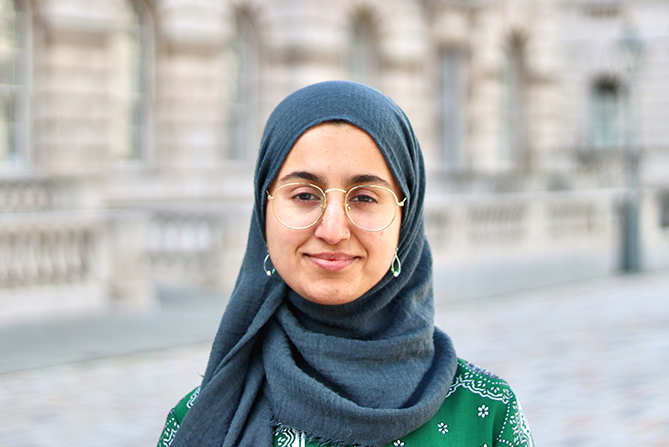
  • Something Different Altogether: A Conversation with Suhaiymah Manzoor-Khan

    Something Different Altogether: A Conversation with Suhaiymah Manzoor-Khan

    Suhaiymah Manzoor-Khan on Islamophobia, storytelling, and the politics of existing.

    PEN Transmissions is English PEN’s magazine for international and translated voices. PEN’s members are the backbone of our work, helping us to support international literature, campaign for writers at risk, and advocate for the freedom to write and read. If you are able, please consider becoming an English PEN member and joining our community of over 1,000 readers and writers. Join now.

    Suhaiymah ­– thank you for speaking to me. Your latest book, Tangled in Terror: Uprooting Islamophobia, is written with such clarity. It’s really validating, as a Muslim woman, to have someone say exactly what you’re thinking. My first question is simple but not: how would you describe Tangled in Terror, and in what way does it differ from your previous work?

    Firstly, thank you. That means a lot to hear. My previous work has tended quite explicitly to use poetry and creative methods to express and articulate grievances – particularly political grievances – and expose injustices. This book is very different, because it is not so much a creative piece; it is prose, and I suppose more of an “analysis”. What I’m trying to provide is not just an expression, or a feeling, but the actual analysis that helps us to make sense of why it is that Islamophobia feels so violent. So, the way I see this book is that Insha’Allah it is an accessible tool.

    I don’t think there has been a non-academic book about Islamophobia that you can pick up and read and feel like you are being empowered – with a rigorous analysis that gets to the root causes, that isn’t just about superficial fixes. I hope it gives a full, broad, and deep picture of what Islamophobia is; I hope it’s a tool to help us to build broader solidarity and organise movements against all racism, of which Islamophobia is a manifestation.

    I think it’s very much a call to action for all sorts of prejudice. The book doesn’t say that Islamophobia needs to be highlighted above anything else, but it’s a part of one big movement against the injustices that move against all of us.

    Yeah, exactly.

    The scope of this book is huge. Something I thought really underpinned a lot of what you were saying was that colonialism persists within the systemic prejudice that we are facing. How far can we say that modern Britain is postcolonial?

    We are in the colonial world system right now. There’s no ‘post’ to it. I know your question is about Britain, but Britain is inseparable from the world in terms of its economy and border regime that – and I touch on this in the book – are repeated over the world: the UK Government is working in collaboration with other governments to stop people coming to this island. I think a part of this book looks to show that Islamophobia is just an extension of colonialism, its current manifestation.

    I suppose that, when people talk about postcolonialism, they’re talking about the end of the often-physical occupation by British troops, or the UK government’s apparatus running other countries. To an extent, we can say that it’s less visible, but what does it mean when we can trace direct history (which many historians have) between counter-terror policing today and anti-insurgency and colonial policing from only 100, 200 years ago? You start to wonder whether there is that much change or difference. When you think about the ways in which arms and surveillance technologies are sold in the name of securitising the world against a threat that is essentially global, it’s a discourse with similarities to what we saw even 300 years ago. So I don’t feel that we are out of a colonial moment at all, and I think the only way to understand this movement right now is to have a much fuller and very open, honest conversation about what colonialism was.

    You touched on something else I was thinking about whilst reading the book: the colonial tactic of trying to dehumanise certain communities. It reminds me of one of your pieces from the Roundhouse poetry slam where you say, ‘If you need me to prove my humanity, I’m not the one that’s not human’. What struck me about Tangled in Terror is your use of human experiences throughout – for example the story of Ruqayah and her family, which not a lot of people know about. How far does Tangled in Terror articulate that statement from that piece of poetry?

    To be honest, I think the ethos of that poem has underlined a lot of my work since. For me, the use of human stories is not about humanising the experience of Muslims, but about making the book more accessible. Talking about counter-terror laws in this country can be really dry and boring; it’s just lists of so many pieces of legislation, which, frankly, even as the writer of this book, is tedious to read. Storytelling is part of why I write poetry. We remember better when we hear stories of people’s experiences, and we understand better the impacts of things like tedious-sounding laws and legislative language.

    I have tried to veer away from making the case of Look, we are so good, we’re so normal. We’re just like you. We’re good citizens, therefore we don’t deserve to face Islamophobia. I’ve tried to show that it’s more complicated than that. Muslims are everyone and anything. We can be flawed, we can be – whatever. And that’s irrelevant to the fact that Islamophobia is oppressive and unjust. I think that, so often in the conditions that Islamophobia has created, Muslims are in a position where we’re having to prove that we’re not a terrorist and, therefore, we deserve our civil rights – I am not a threat to national security so please don’t stop me on the train or report me to Prevent. So I refuse to play the politics of proving anything about my humanity, my goodness, my worthiness, or that of any Muslims.

    You mentioned storytelling and poetry being a great way to understand, and that brings me on to another question I had for you. As a poet of colour, do you feel that you need to make your poetry political?

    I think that my poetry is inherently political because of the world that I live in. I don’t think any poet can detach their identity from their poetry. Poets of colour don’t receive whiteness as an identity, yet we live in a world in which that’s the normative voice. Even if I wrote love poems, they would be political, because the context in which I’m loving is inherently political. I would say, actually, that lots of my poems are love poems, because they stem from love. I think there’s a perception that writers of colour go out of their way to think or write about topics like racism. In reality, we write from feeling, and I think oftentimes love is one of the strongest feelings we write from, whether that’s a love for other people, a love for the community, even a love of ourselves, or hope that we could love ourselves. And I think all those loves are bound up with other political questions; you’re already being quite subversive in a world system that thinks you don’t hold value.

    I want to talk about the process of writing this book. You’ve contributed to anthologies before, and you’ve had solo outings with your poetry. But I want to know what the process was like this time, with a book that’s solely your work.

    Good question. On a practical level, it was a much bigger project. Something I found quite difficult was, as you referred to earlier, the scope of the book. I was keen to centre the intersectional nature of racism, and the way that Islamophobia intercuts with all violence: with gendered violence, with imperialism and capitalism. I didn’t want to section off separate chapters; I didn’t want to just tokenise topics and link them to Islamophobia.

    I kept asking myself what the key question was that I was asking. And I think what cements the whole book together is in its title: we are enmeshed and entangled in a system of violence that ostensibly exists for our security. We live within countless counterterrorism laws, countless border and immigration bills, nationality bills, wars, imperialist wars abroad, policing and counter-extremism policing – layers and layers of things that apparently make us safer. The question I have is, Well, who has been made safer? And the evidence is clear.

    I also think there’s a difference between writing a book like this as an academic and writing it and as Muslim whose life is directly affected by its themes. I know it will have a lot of Muslim readers, and I didn’t want them just to feel really depressed. But, at the same time, I don’t have all the answers, and I didn’t want to pretend that I did. That’s why I wanted to present alternative questions like How do we really make the world safer? which maybe empower people in believing that we are deserving of an alternative.

    One thing I found interesting was how you unpack secularism, and show how it’s trying to shape the parameters of how we understand Islam. We both grew up post-9/11, and our outlooks and understandings of Islam are different to those who grew up in the years before. I was thinking about the conflicting messaging we see in the community because of this. Often, you’re too Muslim, and sometimes you’re not Muslim enough. Do you think that, as a community, we’ve lost sight of who we are?

    That’s an interesting question because there are so many questions within it. I really enjoyed writing the secularism elements of the book, and it was an important one. The people who are willing to talk about Islamophobia often address the idea of Muslims as racialised subjects as constructed through white supremacy, orientalism, and imperialism. But, when we only do that, we miss the fact that Muslims are also people who believe a whole host of things, primarily that there is a God, which is often seen as positioning them as at odds with modernity. Because of the War on Terror, we’ve been asked to prove that Islam is compatible with so-called “liberal values”, but at the same time there’s the underlying contradiction that those liberal values have never been applied to Muslims. We’re being told to show that Islam can be democratic, that it can be liberal and abide by rule of law, but the governments that are asking us to do are not working in democratic ways. They are violating human rights and the rule of law, across the world and at home.

    I don’t want to say that we have lost who we are, because it would imply that there was an essentialised Muslim somewhere. I don’t want to do that, because I don’t believe that there is one real way to be Muslim, and all other ways are just misguided. But I think that we have to some degree lost the space to articulate what being Muslim means on our own terms. Even in Muslim spaces like mosques, the conversations we’re having are oftentimes dictated by the parameters of the outside racist world. We’re having to debate questions like Do Muslim women have rights in Islam? when it’s a known truth that women do. These are questions that come from premises of the state, and Western discourses that say we are patriarchal and violent. We’ve been diverting so much time to proving that we are not what they say we are. Where’s the space to say ‘I just believe in God, and I just want to worship God without having to constantly justify it’?

    In the book, I talk about how I grew up always hearing the phrase ‘Islam means peace’. It does not “mean” peace (in terms of the meaning of the Arabic word), and the fact that we felt the need to declare that it does says so much about the ways in which the conversations we’re having about Islam are dictated by the War on Terror. I feel I was robbed of having a deep relationship with Islam from a young age because I was never able to ask the questions I wanted to of, or from, Islam.

    A lot of political change can start from messages shared within the arts and through writing. How do you think Muslims can adopt that space and feel heard again?

    I think Muslims are already doing that. The context is that there’s so little space for Muslims to speak freely. Take, for example, the Prevent duty, which essentially criminalises Muslims for saying anything that might be perceived as being ‘against British values.’ Speaking against Prevent itself is cited as something that could be a sign of radicalisation, or a sign that someone is “extreme”, as can speaking in support of countries currently facing occupation and imperialist wars by the West. Many legitimate protest movements and groups are being framed as extremist and potentially criminalised. And in that context, it’s difficult to find many spaces in which to express yourself.

    I think that anywhere in the world where we’ve seen police states, we find that it’s poets, writers, artists, songwriters and creatives, who often lead the resistance, because art is mistakenly perceived as apolitical. Sometimes, it becomes the last space to articulate truthfully the violence of the world that we’re in. I see a lot of young poets writing amazing pieces in my workshops, and I hope that’s because they are spaces where people feel empowered to express themselves. But I would add the caveat that through counter-extremism policing in the UK, these spaces are getting smaller and smaller, because you now have youth groups and art clubs funded in incongruous ways by the Home Office, with the people leading those spaces being told that they have to look out for signs of radicalisation.

    This reminds me of a quote from Elif Shafak at one of our Library of Exile events in 2020, in which she said ‘the novel is the last democratic place’ that writers have. Will we ever see you venture into fiction?

    I have a lot of anxiety about fiction – I feel like I have no imagination! I will say that I’m writing some plays at the moment, and that comes back to the point about storytelling sometimes being the most powerful way to get across messages. The histories that have stuck with us the most, and through which we have most understood the depth of structural violence, are often known through the most intimate and interpersonal stories.

    Finally, what is the main thing, if anything, you want people to take from Tangled in Terror?

    There are two things (I’m going to defy the question – sorry!). I want people to come away from it and think that, even by its own standard, the current world system is not working. That, though it says all these measures are in place to make us safer, even by that standard, it fails, because we see every day that we’re not safer. More people are more exposed to violence because of border policing, counter-terror policing, internal policing, surveillance, the arms trade, wars and persecution.

    And, secondly, that, as people who believe in justice, this world system cannot be enough. That what we can wish and hope for shouldn’t be limited simply to reforming it. I think we sometimes fall into that trap of thinking that if there were more of us at the table taking part in the conversation about how to end terrorism that would be better. But my provocation is, Don’t we deserve a broader horizon? Isn’t it the case that we could come up with something different altogether?

    I wanted to trace the history of how we got to this moment in order to say that this moment was made; that it is not inevitable, it is not natural, it is not the only way that history could have led us. We need to say that security on these terms does not keep us safe; that we want security on our own terms, and we know what it looks like. I use examples throughout the book of ways in which people do already look after each other. Someone who really inspired this book is Imam Shakeel, an Imam at a mosque in Lewisham, who does what I would call transformative justice work. He doesn’t immediately bring police to intervene in the lives of young people who may be involved in crime or gangs, and instead understands that these people need to be approached with love and care. I think we sometimes believe that another world system is too difficult to imagine. I’d like us to think it’s not. In fact, as difficult as it may be, that’s the only option we have, otherwise we’re heading towards more misery and persecution and, quite simply, we deserve more than that.


    Suhaiymah Manzoor-Khan is a writer, poet, educator and activist, disrupting ideas of history, race, knowledge and violence. Her poetry performances based on her book Postcolonial Banter have millions of views online and she was the National Roundhouse Poetry Slam runner-up in 2017. Suhaiymah has written for the Guardian and gal-dem and her work has featured across radio and TV stations. She has been commissioned to write plays by theatres including the Royal Court.

    Interview by Nadia Saeed, Co-editor.

    Photo credit: Suhaiymah Manzoor-Khan.
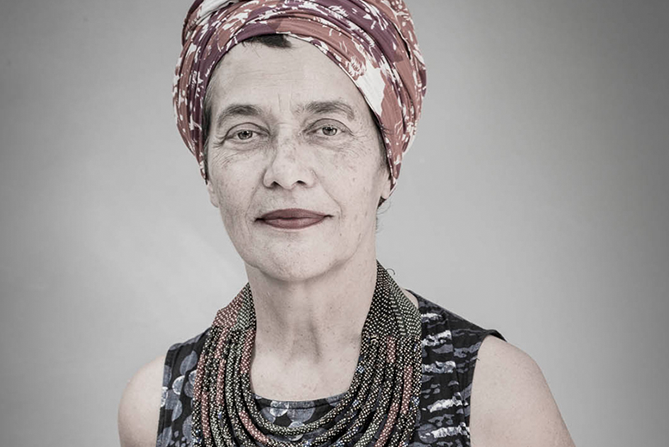
  • Decolonial Feminisms: An Interview with Françoise Vergès

    Decolonial Feminisms: An Interview with Françoise Vergès

    Françoise Vergès discusses decolonial feminism, free expression, Reunion and white feminism.

    PEN Transmissions is English PEN’s magazine for international and translated voices. PEN’s members are the backbone of our work, helping us to support international literature, campaign for writers at risk, and advocate for the freedom to write and read. If you are able, please consider becoming an English PEN member and joining our community of over 1,000 readers and writers. Join now.

    Françoise, thanks for talking to me. I’ll start with the start of your latest book, A Decolonial Feminism, insomuch as asking you about the first word of its title. The use of the indefinite article speaks volumes, I feel, about a central tenet of the book: plurality, and the idea that decolonial feminisms (whilst including non-negotiable positions of anti-racism, anti-capitalism and anti-imperialism) constellate in different ways in different times and spaces. Could you speak a little about the idea of ‘decolonial feminism’, and the importance of that ‘A’?

    Thank you for your question. Quite often, during interviews and debates when the book was published in France, I was asked to describe the decolonial feminism, and I had to remind people that I had written ‘a’. The fact that people were reading ‘the’ when it was easy to read ‘a’ was revelatory. It spoke of a need for an encompassing theory, for a reassuring moment, because we need reassurance, we need to think that we – finally! – have something to hang to, a complete answer to the messy, awful, terrible moment we live in, its fragmented reality, its assault on the senses with its tsunami of news, images, facts. I got that, but though I have myself sometimes dreamt of the answer, it remains a fleeting moment. I know – intimately know – that it’s better to embrace messiness, complexity and even ugliness to have a freer imagination. The idealisation of a people, a group, a doctrine, has never been good for the people, group, community, designed as saviour. I am attracted to complexities and entanglements because they show the lies of naturalisation and normalisation of injustices and inequalities, how the fabrication of lives that do not matter is created and made banal.

     A decolonial feminism is to facilitate a leap in imagination, to be convinced that there are alternatives, and that they are worth fighting for.

    To return to feminisms, it is not just that I wanted to say that decolonial feminism exist in different constellations, but also that I did not want to deny to corporate feminism, femonationalism, femo-imperialism, racist feminism, universal feminism, the feminism of the far-right, or military feminism their right to appropriate the term ‘feminism’. They belong to a long ideological European feminist tradition. They have leaders and history; they have produced texts and images. Even though there are differences between them, they share the definition of who qualify as ‘women’ and as ‘men’; they accept the State, the army and the police as natural institutions; they seek a form of equality that denies class, race, ethnicity; they do not pay attention to the North/South axis, and the long history of Western domination. They are its accomplices. Colonial slavery and colonialism needed the complicity of some women – capitalism and imperialism also. I am aware of the feminist distinction between to cede and to consent. I am talking of consent here, of active consent. I do not believe that European feminism was the only ideology that was not affected by racism. Racial laws were not contained within the borders of the colony. Ideas circulate. European feminisms emerged in a continent with a long history of anti-Semitism, anti-Blackness, anti-Roma. And European feminisms would have been naturally protected from these ideologies? Because white women were dominated by men, it would have assured a natural bond with the oppressed, the enslaved? This transforms anti-racism into a moral position. It is a political act to go on the side of the oppressed, which can be triggered by many things. But one thing is sure: it is a political act because it challenges an entire order founded on exploitation, racism and sexism. Finally, how come what Aimé Césaire had called the ‘shock in return’ – the fact that cultural and political regimes of slavery and colonialism would inevitably come back to Europe, lead to the existence of racial laws targeting European citizens in the 20th century, and insinuate themselves even into progressive and emancipatory ideologies (Discourse on Colonialism, 2000) – would have skirted feminism? This is totally ahistorical. And it marginalises the existence of revolutionary feminists in Europe, who made (and are making) the effort to break with white hegemony, and answered to racism and colonialism from their position, seeking to disrupt the norms of their own society.

    On decolonial feminism, there inevitably exist different practices and objectives, because context matters and because decolonial feminism is what women do when they fight racism, capitalism, imperialism. Decolonial feminism is about making visible the colonial genealogy of entanglements of oppression. It stands alongside revolutionary feminism, decolonial, queer, black, indigenous and Islamic feminisms, but if I write about decolonial feminism it is because I see the process of decolonisation as being vital and necessary. The feminism I defend is not exclusive of other feminisms that are radically anti-racist, anti-capitalist and anti-imperialist, and thus anti-heteropatriarchy. But not only do I come from the colonised world (Reunion Island, still in a direct colonial relation to France), I think that, via Césaire and Fanon, decolonisation seeks to build a world in which war, systemic and structural violence, and racism are not its organising principles. It is a long and difficult process, which is not “anti-European”, but answers to Fanon’s call to leave a Europe ‘which never ceases to speak of man while slaughtering him wherever it meets him, at every corner of its own streets, in every corner of the world’. When Fanon writes, ‘if we want to meet the expectations of Europeans, we must not send them back an image, even an ideal one, of their society and their thinking for which they experience immense nausea’, he indicates how the conversation can be established between Europeans and racialised peoples. For decolonial feminism, it means continuing to imagine and create in the present relationality, alternate archives, spaces of autonomy; to write, to establish routes of solidarity, to fight.

    Finally, if I think of one thing the feminism I defend should be against, it is private property. If you think that private property was fundamental for the transformation of a human being into private property, as object – that the law of private property was essential to the making of white patriarchy; its laws of inheritance; to right of land; rights over wife and children, animals and plants, and again over racialised human beings; to the making of the Master’s House and its world – then you cannot envision a world that would keep private property as its foundation and would be more just. Private property of notions impoverishes the conversation, and we end up fighting over a word rather than its content, the dreams of futurity that we can deploy from that word. A decolonial feminism is to facilitate a leap in imagination, to be convinced that there are alternatives, and that they are worth fighting for.

    You use the term ‘epistemic justice’, and it’s one I like (particularly as a counter to epistemicide, the destruction of knowledge). You argue for the role of knowledge – often traditional knowledge – in the fight for decolonial feminism. How does this relate to language, particularly when epistemicide is so braided with the destruction of language/mothertongue? I’m reading your work in translation into English from French, two colonial languages. Where does language, and translation between languages, sit within decolonial feminism?

    A short biographical note: I grew up speaking Creole and French, and though school was only in French, I never lost Creole. Contrary to other parents, mine never forbade me to speak Creole. So I was bilingual. French was a colonial language but also a language in which I learnt about revolutions, emancipations, struggles. My parents were avid readers of history, philosophy, of journals and manifestos, and, further, my mother was a great reader of literature. They had books from all over the world, so I read a lot of literature in translation, from Russian, Spanish, Chinese, English. I distinguished between French as the language of power and white hegemony, and French as a language through which ideas of emancipation and liberation circulated – and through which I entered the world of literature. When Kateb Yacine said that ‘French was a capture of the war’ (‘le Français est un butin de guerre’ – he was speaking of Algerian resistance), he meant that there was no reason the colonised should not appropriate the language of the oppressor. It no longer belongs to him. Of course, it was the language of oppression and the law, but it could also be a weapon. But the problem is when French occupies a superior place, which is what happens in Reunion. In the early 2000s, when I worked in Reunion on a project, we published texts in Creole and French to show that complex thought could be expressed in Creole.

    Languages and translation between languages are very important within decolonial feminism. Lack of translation impoverishes feminisms, but more importantly, allows white bourgeois feminism to continue to say dishonest and misleading things about Islamic feminism in particular.

    I started to write quite early, in anti-imperialist journals, and in France, in the 1970s, in a feminist weekly. I continued to publish in activist publications when in the USA (1983-1995). When I started to write in English, I felt freer than with the French. I felt that in French, I would have constantly to explain what I meant by ‘race’, ‘white’, ‘colonialism’, or ‘decolonial’. I returned to French in the early 2000s, when I decided to intervene again in the conversation on race, gender, and colonialism. I circulate between these two colonial languages and I write quite differently in one or the other. I think into the three languages. When I arrived in France and went to university, I wanted to study Chinese and Arabic, but I gave up my studies quite quickly and became an activist.

    Languages and translation between languages are very important within decolonial feminism. Lack of translation impoverishes feminisms, but more importantly, allows white bourgeois feminism to continue to say dishonest and misleading things about Islamic feminism in particular. European publishing houses have a responsibility (because they are richer and have access to more resources) to multiply translations not only in hegemonic languages but also in others.

    You write compellingly on capital’s ability to draw the vocabulary of social justice into its orbit, repoint it, and capitalise its meaning – ‘diversity’, ‘inclusion’ and indeed ‘feminist’ being examples. Is there something about decolonial feminism that prevents that? Something in its theory and tenets and practice that prevent capitalism incorporating it?

    Capitalism will not survive without extraction and appropriation. It needs to colonise, to transform everything into a commodity. That one day a big company will sell online tee-shirts with I Am a Decolonial Feminist made in Bangladesh by underpaid and exploited women will not surprise me. Fighting capitalism’s avidity and capacity to transform into a commodity even what criticises it must be done (appropriation of radical iconography, words, slogans, violation of copyrights), but I also think that the tactics and strategies of marooning (escape, detour, opacity, underground) must be developed. We must show how the politics of pacification and neutralization work, how power can finally acknowledge demands for visibility once it has emptied their content of any subversive element, but also how and why certain demands will never be accepted because they will lead to the dismantling of the structures of domination and exploitation.

    I think that decolonial feminism can avoid assimilation and commodification by remaining close to the struggles of the women who are made the most precarious, close to the struggles of all those who fight against imperialist wars, extractivism, police violence and racial injustices, and for social, environmental, reproductive and epistemic justice. There are struggles that cannot be pacified.

    You make a compelling point, to me, about the idea of “white feminism”: that this term is not so much about white people’s mode of feminism as it is about a mode of feminism that upholds a white domination of both regressive and progressive views, actions and existences. This is a subtle distinction, but it demonstrates one of the things I feel this book does: look outward more than inward; to the collective more than the individual. Would you say that this is a fair reading?

    It is a fair reading. Whites who believe that our attack on white supremacy is about the colour of their skin seek to protect themselves from the necessary work of their own decolonisation and anti-racism.

    Censorship, police searches of my house at 6am, death threats, learning to keep secrets, to argue, to answer back, to never answer the cops – I experienced all that. But also, the political meetings, the marches, the protests, the anxiety, expectations and excitation before a big demonstration, the incredible courage of popular classes, peasants and workers, the songs, the chants, the joys, the hopes – all this constituted my environment.

    How much has your relationship with Reunion shaped your theory and practice?

    A lot. I think that if I had not been politically and culturally educated by the anticolonial struggle in Reunion, I would be someone else. It is an education that gave me very much, that shaped my way of approaching the world.

    Already, there was something about living in a “small” island that sometimes did not even appear on maps. This term “small” is very interesting, as if a small island (or country) cannot pretend to have much to say. But it is also fine if one can avoid the narcissism of “big” and confusing big with good. Quite early, I had a sense that the world was greater than the space imposed by France, a world reduced as a corridor between the island and France; that it was vast, complex and rich, and that I was living in the Indian Ocean, a millenary space of exchange between Africa and Asia, where Europe is on the periphery. The island was a space of tastes and smells, of mountains and rivers, with the constant presence of the ocean, with hurricanes and night that fell suddenly, like the pulling of a curtain. All this forever shaped my senses. Anticolonial feminist communism was the social and cultural world of my formative years as a girl and an adolescent. Censorship, police searches of my house at 6am, death threats, learning to keep secrets, to argue, to answer back, to never answer the cops – I experienced all that. But also, the political meetings, the marches, the protests, the anxiety, expectations and excitation before a big demonstration, the incredible courage of popular classes, peasants and workers, the songs, the chants, the joys, the hopes – all this constituted my environment. I experienced communism (my parents were communists) as something from the Global South, in a small island under French domination; it had nothing to do with European debates but with the anti-apartheid struggle, the postcolonial struggles in Madagascar and Mauritius, the struggles for decolonisation, delinking, asking What is development, what is feminism of liberation?

    Reunion and the world of the Indian Ocean remain essential to my understanding of the world though I no longer go the island as much as I wish I could. It has imprinted a sense of a land/sea continuum that is central to my reflection on the climate crisis, the current economy of extraction, on militarisation and privatisation of the seas.

    Something I found remarkable about A Decolonial Feminism was its capaciousness – by which I mean the amount of intersecting ideas, contexts, themes and topics that you bring in to conversation in such a short text. And this breadth doesn’t make for surface readings or cursory examination, rather a deeply connected, subtle argument. Of course, a premise of decolonial feminism is looking at connected forms of resistance to the connected development of oppressions. My question is: how complex is this intersecting argument to put into words, into writing on a page? Is your writing practice one of flow, or is it one of constant rewriting and restructuring and rewording?

    It depends. Writing is sometimes a total pain. I end wondering why – but why on earth – did I accept to write this? What was I thinking of? Then there is writing that requires rewriting,restructuring and rewording, whilst sometimes writing is one of flow. But it is also true that for many years now, I have been making a considerable effort to bring together in a clearer way many facts, ideas, contexts and topics. Racial capitalism has built global interconnections that link an oppression here to another there; I want to bring them to light. These entanglements mean that we can lead global fights and that local fights contribute to the weakening of the chains of extraction/production. How do we block these chains? When the Ever Given ship blocked the Suez Canal, it reminded me of that old tactic of producers: stopping one step in the chain could stop the entire chain. True, this was not this kind of act, but it brought this to memory. The Haitian Revolution also weakened the global structure of slavery. It was a formidable event, and this was why the West did everything to punish Haitians. How do we block the global chain of oppression and its local structures?

    I put much effort in bringing to light in very clear ways the interconnections of capitalism and the ways in which decolonial feminist struggles can interrupt its violence. The long history of anti-racist struggles demonstrate the capacity to build other interconnections than capitalist ones.

    I am learning a lot from young people, from their desire to eschew vertical authority, to build space of horizontality and relationality.

    Writing creates the possibility of entering into a conversation with a lot of people. All through 2019, I was invited by bookstores, associations, and students, in France to discuss A Decolonial Feminism. I met people I would never have met. Mostly young women, many of colour, constituted the public. I learned a lot and their questions and remarks enrich my thinking.

    Writing is also about reading, and I read a lot of novels. I admire the capacity, the talent that some writers have to make us feel deep, deep feelings and emotions, or make us see the green of a field, the hues of a landscape.

    Every time I read your work and hear you speak, I am taken by what I’d subjectively call your ‘good politics’, or, to use a term of the social-media era, your ‘good takes’. You bring together urgent – and often charged – conversations in a way that is nuanced and caring, in a way that takes a “wide view”. Over the years, how much has your work been shaped by new movements in radical discourse? Or were those ‘movements’ always already there?

    As I said, I grew up in an environment of intense debates and conversations with people from all social and cultural backgrounds, in a context of violence and postcolonial hegemony. I learned how to be confrontational, to be silent, or to listen attentively. I was learning all this without being conscious that I was learning what radical discourse was. What I was conscious of was that neutrality does not exist and that either you challenge it, or you refuse to contribute to the hypocrisy of objectivity. I also understood that words can be toxic: racist and sexist attacks by local conservatives or by State representatives against my parents and their comrades were constant, they did not hesitate to disseminate lies and defamations and sow divisions. The vocabulary of racist hatred has a libidinal dimension.

    I was fourteen or fifteen when I spoke in public for the first time. It was during the demonstration of the local anticolonial youth organisation. Later, I learned how to stay focused on what you want to say and not being silenced by adversaries. In France, in leftist circles, men did not intimidate me, I had no hesitation making myself heard, but I also learnt not to listen to them, to let my mind wander when they were talking nonstop. I also learnt to sharpen my interventions when I was talking to men in power, to be very precise, very direct, and to negotiate from a strong position.

    Becoming nuanced has been the result of all these experiences, from a long process of being a listener or a speaker in very different social spheres and in situations where different languages were spoken and I had to wait for translation; of learning about myself from psychoanalysis; of respecting the feelings that express the anger or humiliation for never having been listened to. I am learning a lot from young people, from their desire to eschew vertical authority, to build space of horizontality and relationality.

    You briefly mention the ideas of ‘censorship’ and ‘defamation’, but your work also brings together discourses and rights that, in a reductive understanding of free speech, are often presented in mainstream discourse as at odds with the idea of free speech – Islam, trans rights, and more (I firmly believe they’re not add odds at all, by the way – certainly not provided we’re not investing in a form of free expression co-opted by the libertarian far-right). What does freedom of expression look like for decolonial feminism?

    When in France, insulting anti-Muslim caricatures becomes the embodiment and very symbol of freedom of expression, the icons of ‘republican values’; we understand that it means continuing to be free to express Islamophobia.

    For decolonial feminism, freedom of expression would mean polyvocality, accepting differences and being questioned by them. We also need to clarify what kind of freedom will facilitate the kind of conversation we want to nurture. What is being lost when lived experience becomes the only terrain upon which wider claims are made? We must not be afraid of contentions and disputations within decolonial feminism and anti-racism. I will say that it is more about the rules we set for disputation than freedom of expression.

    Finally, for those who haven’t yet read this book, can I please ask: ‘Who cleans the world?’

    Women of colour, black, brown, indigenous women, everywhere. Women who wake up at dawn and travel for hours on public transport to clean hospitals, universities, commercial malls, airports, railway stations, but also white bourgeois bodies, elderly bodies, children. They perform the daily work of cleaning and caring that keeps society functioning. They are made invisible. Their struggles raise a fundamental question, and this is not about sharing domestic work. It is wider, more radical. They say, If we aspire to a just society, who will clean the world?  


    Françoise Vergès is an activist and public educator. She holds a PhD in Political Science from the University of California, Berkeley, and is the author of many books including Resolutely Black. Conversations with Aime Cesaire (Polity, 2019), The Wombs of Women: Race, Capital, Feminism and Monsters and Revolutionaries: Colonial Family Romance and Metissage (Duke University Press, 2020, 1999).

    Interview by Will Forrester, Editor.

    Photo credit: Victoria Smith.