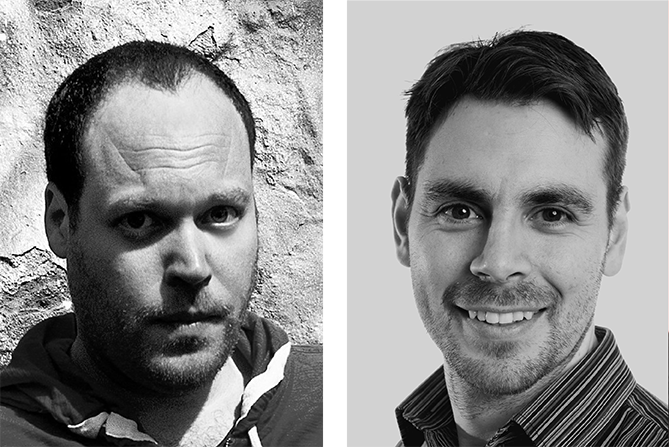
As part of our Digital Literary Salon, Lavie Tidhar speaks to Robert Sharp about speculative fiction, cultural appropriation, and what we can – and should – write.
PEN Transmissions is English PEN’s magazine for international and translated voices. PEN’s members are the backbone of our work, helping us to support international literature, campaign for writers at risk, and advocate for the freedom to write and read. If you are able, please consider becoming an English PEN member and joining our community of over 1,000 readers and writers. Join now.
ROBERT SHARP: By Force Alone is a retelling of the Arthurian Legend – less about chivalry, more about power. Can you describe the genesis of the book for us?
LAVIE TIDHAR: It really comes from studying it for the first time, and realising two things that never occurred to me. One is that it’s not only entirely made up, but made up by many different (European!) writers over a long period of time. And these stories they made up are still hugely important to our modern collective unconscious. If you take the Holy Grail, for example: it’s not in the original, and it actually evolves over three different versions – first a saucer of blood, then a fallen star stone, and finally the Holy Grail as we know it. And without that we wouldn’t have Indiana Jones and the Last Crusade, or The Da Vinci Code. So I thought that was interesting, and I couldn’t resist, in the end, writing all three versions into the book.
The other thing that got me is that the story itself isn’t at all about chivalry. No one’s good, really (apart maybe from Galahad, and I apologise in advance for what I did to him). I realised it’s the classic gangster narrative, the rise-and-fall. It’s The Godfather, it’s Goodfellas. And so I couldn’t understand why it’s always presented as a ‘good’ story. It’s an awful story. Uther rapes Igraine to birth Arthur. Arthur rises to power through nothing more than killing off everyone else who wants to be king. Then someone younger and hungrier, Mordred, rises and kills him. But no one was writing it like that, and I couldn’t understand why. So I sat down to write it myself. I was using new translations of the originals, of course, but I was also drawing on a Victorian children’s book – a children’s book!
By Force Alone feels prima facie different in direction to the rest of your output so far. Do you see it that way, or does it seem a natural next step?
It does feel different. There was only so much alternate-history-political-noir fiction (‘Tidharian’ fiction, as I’ve seen it called) I could do. The change actually starts with a book called The Escapement, which is coming out next year. It’s the only non-political book I’ve ever written. It’s about a father searching for a cure for his son’s illness across this very weird, surrealist world. And one of the things I realised is that I can use my strength, which is that I’m not really a novelist but a short story writer; I could write the books episodically. I stupidly pitched By Force Alone to my publishers with the vague notion it could be a quartet of books, and they were surprisingly keen, so I’m writing the second one right now. But after that I’ll probably go and do a big 20th Century crime novel.
A fun aspect of By Force Alone is the way you appropriate liberally from the canon of English literature and modern pop-culture. I spotted snippets of William Shakespeare, the King James Bible, Charles Dickens and Walt Whitman, and there are probably dozens of others a wider-read person would recognise. These tributes are blended with brazen allusions to The Terminator, The Wire and The Song of Ice and Fire (Game of Thrones) series. Can you talk about how this pilfering / remixing / borrowing / deployment arose, and how it serves the story?
The critic John Clute calls it ‘equipoise’ fiction, and he argues it’s a condition of being a 21st Century writer. I will use what I can – whether it’s elements of crime fiction, or historical fiction, or slice-of-life, or science fiction. I’ll mix them up. Genres don’t matter to me, but they do fascinate me as sets of rules or formulas or expectations, and what you can do with that. What I also realised is that the people I feel closest to are not writers but comics, going to any length for the sake of a joke. So, for me, putting in these little references is funny. Without the humour you can’t see the darkness; the humour is the light. Even if, or especially if, I write about the Holocaust, as in A Man Lies Dreaming. Or about Israel and Palestine, like in Unholy Land, and throw in a detail where in this alternate reality there’s a porn magazine called Zaftig (curvy, or plump, in Yiddish). Or, indeed, what I do to the poor Green Knight in By Force Alone, which I’ve already seen some readers really hated.
But references are also, I suppose, a remnant of Modernism. If you look at The Waste Land, it’s all quotes. It’s all references, and it’s a great poem. Postmodernism is a big influence as well – the mixing and matching, the metafiction. And if I’m going to go on like this, I have to say I’m inordinately influenced by the work of the Russian Formalists and their ideas about defamiliarisation. They’ve been out of fashion for decades, though.
Many reviewers have seized on the fact that this is a post-Brexit novel with allusions to populism and xenophobia, and their hypocrisies. But the wider theme of power is crucial right now: we see it in the way Donald Trump and other authoritarian political leaders are sustained, and we see it examined in popular culture, too. The phrase ‘By Force Alone’ is a mantra, repeated by more than one character throughout the book. So can you talk about this aspect of the book? Was this through-line always at the core of your story?
That seems fairly obvious, but it’s hardly very original, or interesting, in itself. What I actually found much more interesting is how pointless the whole thing is. They’re fighting over England? Who cares! I’m naturalised now and all, but I’m not fundamentally from here, and to me that was the funny bit, that it’s all so silly. You see it in the book repeatedly: you get glimpses of the wider world, and you see people like Merlin yearning to leave and get out, and being shackled to Story, as it were. I got to have a lot of fun with Lancelot coming in from the outside and having much the same point of view. That’s more interesting to me than, you know, whether Henry VIII is going to divorce his wife or not.
The new book I’m working on is set after the Norman conquest. Christianity’s taken over, and that in itself is fascinating. The crusades, and the power plays between Henry II and Becket – I go into that for a bit. But, again, it’s more to highlight the absurdity of the whole thing. I take a great delight in, for example, all the ‘genuine’ Holy Foreskins that were floating around Christendom at that time. You know, I try never to make anything up because reality is always weirder.
Can you talk about what ‘cultural appropriation’ means to you? Are there limits on what authors can write about? Should some writers ‘stay in their lane’?
This is such an exasperating topic. Because the only people who ever complain about how they can’t write about stuff anymore are over-privileged writers – your sort of white generics, suddenly being called up on their crap. No one is telling you what to write, but this really is about power and privilege. Can you write about a culture you don’t know and understand? Sure. Can you pull it off? Well, probably not. And the most important question really is, should you? Because why? Why do you feel the need to tell the story of marginalised people? Why do you co-opt someone else’s story?
The problem isn’t really with writers; it’s with the whole publishing industry, which would prefer a white writer’s narrative to a black writer’s. We’ve all had rejections or heard the rejection that says we don’t publish stories about (for example) Nigeria. Or we don’t publish stories set in Mexico. And yet those same publishers will reject a good Mexican novel in favour of a white American writer writing – badly – about Mexico. You keep hearing the line it doesn’t sell. Well, nothing sells if you don’t sell it. So, you know, can you write anything you want? Sure. Should you? No, and if you do, then take the criticism and don’t whine about it. Really what we need is a more diverse publishing ecosystem, and we need to recognise the bias that publishers and writers hold.
For me, I absolutely can write whatever I want, because frankly no one thinks my books sell anything anyway. I’m a writer – not a Jewish writer, or an Israeli writer, or a genre writer, or whatever other niche you want to stick someone into. But I ask myself, repeatedly: Do I have the right to do this book? I’m perfectly happy to write these British books because, frankly, the British are fair game, and making fun of them is fair game. But if I wanted to write, say, about South-east Asia, where I did live for a time – well, sure I can do it, but I’ll only ever be a tourist there. Why don’t I instead help promote genuine writers from South-east Asia, who have their own stories to tell? This is part of what I’ve been trying to do with the World SF anthologies and related projects (World SF Blog, travel fund, and book bundles) over the past twelve years. Let other people’s voices be heard.
I am sick to death of this privileged nonsense about how everything is censorship and now white people can’t just take what they want when they want to and get paid a lot to do it badly. Isn’t it telling that they usually complain about it when they headline some international literary festival? Of course, I have to recognise my own privilege: that I’m male; that I’m white (or, you know, being Jewish, white enough); that I write in English, albeit as a second language; that, frankly, I’m sort of establishment at this point. But the nice thing is, I’m pretty obscure, so at least if I say something stupid it’s not a headline in the Guardian and seven opinion pieces. I just wish some writers tried harder not to say something stupid.
There are some aspects of your work that might very well cause offence: Adolf Hitler as a London detective; Osama Bin Laden’s atrocities reimagined as entertainment; and, in Unholy Land, you seem to assert – please correct me if I’m wrong – that establishing a Jewish homeland necessitates abuse of pre-established peoples. I wonder whether you’ve experienced any concerted pushback? Has anyone ever said of your work, ‘This should not have been written’?
It’s a source of grave disappointment to me that no one is ever really offended much by my work. One guy wrote a long piece for a literary magazine about how terrible I was, which was very flattering. But other than that, not really. I hope that’s because I don’t reduce ideas to caricatures – that they have some depth to them. Osama is really a book about loss, I guess, but the point it’s making about terrorist attacks is that they are performative: made to be seen, to be news.
Adolf Hitler as a private eye, on the idea level, is terrible. I’d be mortally offended if someone else did that. The trick is to make it work, somehow. Partly, it allows me to talk about the Holocaust using the tools I have, and it also allows me, even if as a sideshow, to critique the genre that Chandler made. It has sexism and racism built in by Chandler in the same way Lovecraft baked them into cosmic horror. So, I’m talking to Chandler, but I’m also talking to Primo Levi, I’m talking to Ka-Tsetnik and Celan, I’m talking to my grandparents who survived, to my mother who was born in a refugee camp. These books come from anger, a lot of anger, I think. And then I put in some cheap jokes.
With Unholy Land, incidentally, I don’t think a Jewish homeland necessitates abuse, as you put it. But I don’t write about some fairytale make-believe world (well, I do, but); I’m writing about Israel and Palestine. I just put a sort of distorting funhouse mirror before it. You know, one thing I would have loved to see is more than one Jewish state in the world. That would have been very interesting. Just like there are a lot of Christian or Buddhist or Muslim states, I would have loved to see a few more Jewish ones. It abounds with alternate-history possibilities too.
I’m writing about the real world, just using fantastical elements to generate a sense of defamiliarisation – which I hope would have made that old Formalist Viktor Shklovsky happy, at least. He argued that defamiliarisation is at the root of good art. And like most writers who used genre tools, you can get away with a lot more, because as soon as you slap ‘genre’ on it as a label, nobody takes it very seriously anyway.
Lavie Tidhar’s most recent novels are By Force Alone (Head of Zeus) and The Escapement (Tachyon), both out in 2020. He is the author of the World Fantasy Award winning Osama (2011), the Jerwood Fiction Uncovered Prize winning A Man Lies Dreaming (2014), the Campbell and Neukom awards winning Central Station (2016), and many others. His first children’s book, Fantastic Book Award nominee Candy, appeared in 2018, and first comic, Adler, a 5-issue mini-series, is published in 2020. As editor, he published the ground-breaking Apex Book of World SF series of international speculative fiction, and he is currently a book columnist for The Washington Post.
Robert Sharp is an author and free speech activist, and was the Head of Campaigns at English PEN for 10 years. His novella The Good Shabti was nominated for the Shirley Jackson Award. He is currently reading and blogging about The Arabian Nights at A Thousand And One Recaps.
This series features voices from the 2020 programme of the English PEN Literary Salon at the London Book Fair (LBF). LBF is the global marketplace for rights negotiation and the sale and distribution of content across print, audio, TV, film and digital channels. Taking place every spring in the world’s premier publishing and cultural capital, it is a unique opportunity to explore, understand and capitalise on the innovations shaping the publishing world of the future. LBF brings you direct access to customers, content and emerging markets. LBF 2021, the 50th Fair, will take place from 9-11 March 2021, Olympia London. LBF’s London Book and Screen Week will run for the fourth year, with the book fair as the pivotal three-day event within a seven-day programme. For further information, please visit: www.londonbookfair.co.uk
 Anjan Sundaram is an award-winning journalist who has reported from Africa for the New York Times and the Associated Press. His writing on various countries in the continent has also appeared in Granta, the Observer, Foreign Policy, Politico, Fortune and the Washington Post. He graduated from Yale and received a Reuters journalism award in 2006 for his reporting on Pygmy tribes in Congo’s rain forest. His first book, Stringer: A Reporter’s Journey in the Congo, was published to great critical acclaim in 2014. In 2015 he won a Frontline Club Award for print journalism for his piece ‘A Place on Earth: Scenes from a War’.