Tag: short story

  • Ghana and the Literary Industry

    Ghana and the Literary Industry

    Elizabeth Johnson on the literary scene in Ghana, who’s building it, and the value of publishing on the continent.

    PEN Transmissions is English PEN’s magazine for international and translated voices. PEN’s members are the backbone of our work, helping us to support international literature, campaign for writers at risk, and advocate for the freedom to write and read. If you are able, please consider becoming an English PEN member and joining our community of over 1,000 readers and writers. Join now.

    Across Africa, the literary space is seeing an increase in the number of magazines, journals and organisations putting out outstanding work from across the continent. For many of these new spaces – often set up by writers and poets themselves – the priority remains the writer on the continent. The sudden rise in interest in African Literature (a term which, in itself, continues to raise several debates) has revealed the need for more writers on the continent to have platforms for their work, and the opportunity to develop their literary journeys and careers. True, more publishing and media houses are now looking at African Literature – not just to publish, but for their book clubs, film projects and general engagement. But the kind of African literature getting more interaction is predominantly written by Africans who aren’t on the continent, and who are not published by African – or, more specifically, African-based – publishing houses.

    In Ghana, the story is no different. Often referred to as the Literary Community (perhaps in the fear that the space is still too small to be referred to as an industry), events, platforms, opportunities, journals and prizes are cropping up and giving more spotlight to writers in Ghana. In recent times, platforms like Tampered Press, Church of Poetry, Contemporary Ghananaian Writers Series and Nadeli Creative Company are working hard towards these objectives. There are also several non-profit organisations such as the Writers Project of Ghana, with its weekly radio show and annual literary festival, and Pa Gya! A Literary Festival in Accra whose most recent journal publishes works by Ghanaian writers. And there’s The Library of Africa and the African Diaspora and its residencies, Readers Truss, Poetry Association of Ghana, and Ehalakasa. They’re all using their platforms to create space and visibility. So if all this seems to be happening, and if Ghana is witnessing its most vibrant and fast-growing literary scene to date, what seems to be the problem?

    As an individual, I find my relationship with the literary space a complex one. As a writer and literary producer  (and, by extension, a cultural producer), I am often on both sides of the coin, looking for opportunities for my writing – be it fiction, poetry or non-fiction – while also working with organisations to create space and opportunities for writers to showcase their work. With my work as a producer continuously expanding, I have to admit that my writing has seen a decline. But the position does put me in a sweet spot, able to see things at a much larger scale, often weighing stuff as creator (writer), creator (literary producer), and consumer (avid reader).

    So, what seems to be the problem? There’s the universal problem of funding, of course. But while funding in the creative space is a challenge all over the world, Ghana faces a unique problem in not having a system where organisations, individuals and events are funded locally – of a local sector and government institutions with little interest in supporting the space.

    The scene relies heavily on external funding. Organisations and individuals look to foreign cultural bodies to support their work, events and programmes, and this also goes beyond the monetary. Events are held at these foreign agencies, and while this is vital in supporting the local scene, and by all means should be appreciated, I do often wonder what it would mean to have more local investors interested in supporting the scene – what that would mean to the writer based in Ghana, on the continent. 

    Earlier in this piece, I raised the delicate issue of Ghana possibly not having a local literary “industry”. Due to the limited resources and opportunities available, focus is often placed on the writer or, in general, the individual who is creating work for consumption, to build the platforms and open up the opportunities – organising the festivals, readings, performance events, and the likes. These, again, are all well and good, but the question is, how much can these really do? At literary events, conversations on ‘next steps’, ‘possibilities’, ‘the way forward’ always find a way of coming up. If the industry does not live to move things beyond discussions, won’t we find ourselves in the same dilemma ten or twenty years from now, where talent keeps on increasing, but an industry to support them barely exists?

    What we are unable to build – or, better put, struggling to build – is an industry that enables the chain of departments needed to grow the space and help expand its reach. Ghana lacks a healthy number of literary agents, editors, translators and publishers who are interested in literary work rather than just textbooks for schools. The scarcity of agents and editors means that the number of writers emerging and trying to develop a career isn’t being met with literary professionals who are able to refine their work and sell it to a publishing house. In turn, the scarcity of publishing houses means that access to books stays low – not just in the country, but on the continent more broadly. Writers and consumers in neighbouring countries – Ghana and Togo, for example – are unable to engage with each other properly, not only due to language barriers and a paucity of literary translators, but also because of book distribution complexities. Dare I forget to mention that the little publishing happening locally also can’t be met by the capacity of local printers, who often having to outsource internationally, meaning books are shipped back into the country, increasing prices and decreasing accessibility even more.

    The complexity of the challenges cannot be overlooked. But there is a need to see how local institutional and governmental interest can go a long way in supporting the promising scene. It would also help the spread of literature within Ghana; the majority of platforms, organisations and events are based in Accra, alienating literary enthusiasts and activists outside the capital.

    I often wonder about the potential of a Ghanaian writer being published in Ghana and selling a million books (or, if that’s still a reach, a couple of hundred thousand copies) – not impossible in a country with a population of over 30m. What are the possibilities if this same writer is then being marketed across the continent, to a population of over a billion? Would writers, agents and editors need to look outside the continent to be able to be successful? Of course, achieving global acclaim cannot be compared to success within country or even a continent. But starting from a home-grown audience and winning your success from them always means better. I am looking forward to the day that a writer from, and living in, Ghana gains worldwide acknowledgement because their work gained local success first. I’m also looking forward to a time when publishing firms in Africa sell writing to international houses, rather than buying rights to African’s stories for African readers from rightsholders outside the continent. Growth in local investment does go a long way in ensuring that opportunities aren’t seasonal, or dependent on foreign interest. It also means that more people can have careers in the literary industry – as editors, producers, agents, publishers, translators. It means that we can have more writers dedicating their time to being writers, and not having to moonlight as editors and publishers. To cut a long story short: intentional growth of a proper industry, no matter how small, will go a long way for the individual and community of the literary space.

    This year, I was selected as a participant for the 2022 AKO Caine Prize Writing Workshops, an opportunity which, in turn, created the opportunity for this essay. The two-week workshop helped produce a good short story, ‘A Mind to Silence’, and enabled the enlightening experience of working closely with editors from the continent. I witnessed what it means when the local industry is supported. I was camped with equally amazing writers from Ghana, Nigeria, Sierra Leone, and other parts of Africa, many of whom I hadn’t heard about until the workshop. Because the programme took place outside Accra, it also created the opportunity to engage with young writers in schools outside the capital. The workshop also created several local engagements on radio, TV and podcasts, and ended with a number of literary events. This year, the AKO Caine Prize Anthology, A Mind to Silence and Other Stories, has been published by Cassava Republic Press. The book being published by a press on the continent is an important step. It will be exciting to see what it means for the accessibility of the books and the visibility of the writers, across national borders.


    The AKO Caine Prize for African Writing is a registered charity whose aim is to bring African writing to a wider audience using our annual literary award. In addition to administering the Prize, we work to connect readers with African writers through a series of public events, as well as helping emerging writers in Africa to enter the world of mainstream publishing through the annual Caine Prize writers’ workshop which takes place in a different African country each year.

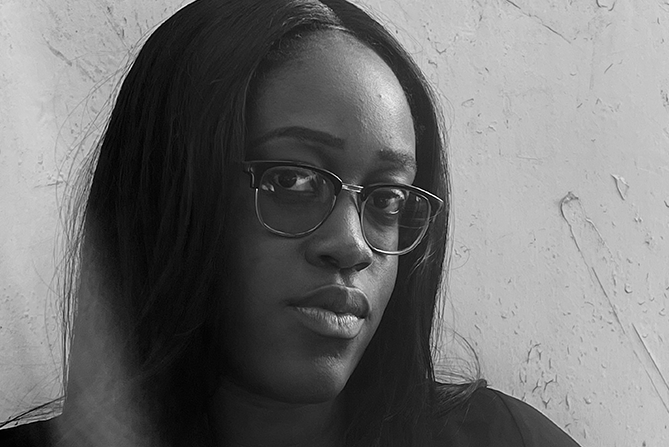
    Elizabeth Johnson is a writer, researcher and cultural producer. She works with the Writers Project of Ghana (WPG) as a media and programs coordinator as well as the Manager for the annual literary festival, Pa Gya! A Literary Festival in Accra. She has also produced the LOATAD Symposium and WOMENFEST, a woman focused festival for the The Library of Africa and the African Diaspora (LOATAD).  She is the co-founder of Arts and Thoughts Conversation and a regular moderator of cultural and literary events.

    As a writer, her stories, poetry and articles have featured in a number of publications and platforms. Elizabeth is currently a resident with Oroko Radio where she produces and hosts the MnR Show, a show dedicated to Highlife Music and Creatives. She is a 2022 participant of the AKO Caine Prize writing workshops. She is also a 2021 alumni of Critlab. Her full time job is as a Teaching Assistant at Ashesi University.
  • An Irresistible Contradiction: An Interview with Idza Luhumyo

    An Irresistible Contradiction: An Interview with Idza Luhumyo

    Idza Luhumyo, winner of the 2022 AKO Caine Prize for African Writing, discusses short stories, agency, and power.

    PEN Transmissions is English PEN’s magazine for international and translated voices. PEN’s members are the backbone of our work, helping us to support international literature, campaign for writers at risk, and advocate for the freedom to write and read. If you are able, please consider becoming an English PEN member and joining our community of over 1,000 readers and writers. Join now.

    Idza – thanks so much for talking to me. ‘Five Years Next Sunday’ is such a beautifully paced story – and it also has something that compelling short stories rarely have: a big canvas. A large amount of time elapses across a very few pages, and this allows us to see how characters, relationships and imperatives change. Was this big canvas something you intended to work with, or was it rather that the story you wanted to tell demanded it?

    It’s something that the story demanded. Once I had the main character – knew what she wanted, and knew exactly where she was located – then the story opened up and had to speak to bigger questions, even as it remained welded and attached to these few characters.

    Perhaps relatedly: you can usually sense of from what a piece of short fiction has developed (a single image, a single setting, a single character, a single quirk), but I couldn’t guess the seed from which this story had grown – maybe the rich and complex ideas of hair and water, if you made me guess!. Where did it all start?

    It started with the hair. I had been thinking about the practice of witch hunts along the Kenyan coast for a little while. People – usually elderly folk – whose hair starts to grey are said to be practicing witchcraft, and are banished to these remote outposts and, technically, left to die. With Pili, I wanted to create a character who has the ability to make rain but is shunned by her community for that very ability. It was an irresistible contradiction I simply had to pursue.

    What is it that draws you most to the short story form?

    It’s the form I started out with – that is, without counting the awful poetry that I did in high school. I think the short story form is good practice for a writer just starting out. But even more than that: I think there’s something poetic about the form; it demands you to distil what you want to say/question/explore to the bare fundamentals; it’s a form that doesn’t reward lingering, and so you have to work hard to make it tight.

    The relationship between Pili and Honey puts into conversation several intersecting issues – race, gender, sexuality – in such a short space of time, in a way that complicates them, with these intersecting lines often being where the story takes sudden, sharp turns. Could you talk about that a little?

    I wanted to think a little differently about how race works, especially when we’re talking about a place such as the Kenyan coast, where there has long been a white presence because of tourism. Even though we have two women with diminished power – but who are in no way powerless – we find that the expectations are flipped: because of her hair, Pili is actually the one who has more power. I thought it’d be interesting to see how their relationship played out with this reversal as a framework.

    Agency – who has it, the ways in which it is circumscribed and the ways in which it can be exercised, how duty and expectation and community affect it – feels like something else in which the story is deeply interested. Is that something you were particularly keen to explore?

    I was – and, truthfully, I want to keep exploring it in my future work. What does agency mean when you have to coexist with others? And what’s the best way to move through the world with agency while also being aware of, and attendant to, other people’s needs and expectations? I don’t think these are easy – or even answerable – questions, but I believe they still need to be posed so that we can sit with them.

    You’re currently doing an MFA in Texas, and I always like to ask this question: do you think MFAs are worth it?

    I think it depends on what you want to get out of them. Writing has no roadmap and MFAs certainly won’t work for everyone, but they offer an unrivalled opportunity to centre writing in your life, at least for a couple of years. What’s more: if you’re lucky, you leave with a couple of lifelong readers.

    You’ve been recognised by a number of awards championing African literature – the Margaret Busby New Daughters of Africa Award, the Short Story Day Africa Prize, and now the Caine Prize. What do those recognitions mean to and for you?

    They motivate me to keep the faith, to keep pursuing the ideas that interest me and, more importantly, to get my work out there.

    I once heard Hisham Matar describe the process of writing fiction as being like having an oscillating ball of water above your head, trying to shape it into the shape you want without its surface-tension breaking and the water coming pouring down over your head. As I read ‘Five Years Next Sunday’, this image came back to me – not just because of the reference to water, but because the story holds together so many threads and drivers and themes (characters, plots, gender, mysticism, scarcity, race, relationships, water, family, duty, hair, isolation, sexuality, capital, identity, value…). So my question is: how did you hold all these threads together without them unravelling?

    A simple (and maybe a tad unromantic) answer: rewriting and rewriting. But there’s also the fact that the stories that I like reading tend also to be layered and I guess that was my model as I worked on this story. The other thing is that that’s just how life is. Things are almost never about one thing, and I guess achieving the sort of verisimilitude that works requires bringing that life-like quality to storytelling.

    And finally, having said that ‘Five Years Next Sunday’ is about so many connected things, if you had to boil it down to just one, what would you say this story is about?

    I would say it’s about power. Everyone has it, and some have more of it than others for sure, but everyone’s always using however much of it they have or can access to various ends.


    The AKO Caine Prize for African Writing is a registered charity whose aim is to bring African writing to a wider audience using our annual literary award. In addition to administering the Prize, we work to connect readers with African writers through a series of public events, as well as helping emerging writers in Africa to enter the world of mainstream publishing through the annual Caine Prize writers’ workshop which takes place in a different African country each year.

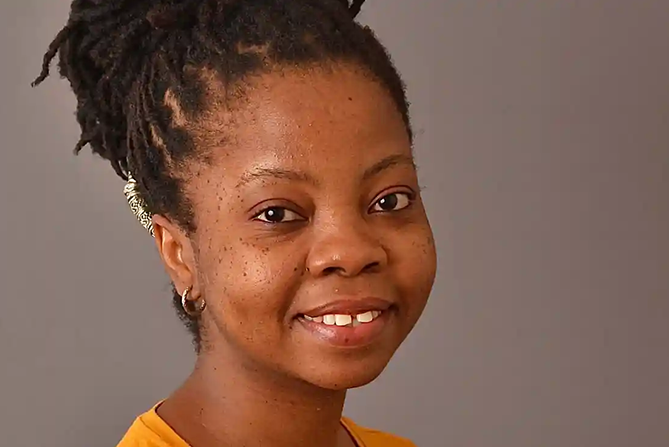
    Idza Luhumyo is a Kenyan writer. Her work has been published by Popula, Jalada Africa, The Writivism Anthology, Baphash Literary & Arts Quarterly, MaThoko’s Books, Gordon Square Review, Amsterdam’s ZAM Magazine, Short Story Day Africa, the New Internationalist, The Dark, and African Arguments. Her work has been shortlisted for the Short Story Day Africa Prize, the Miles Morland Writing Scholarship, and the Gerald Kraak Award. She is the inaugural winner of the Margaret Busby New Daughters of Africa Award (2020) and winner of the Short Story Day Africa Prize (2021).

    Interview by Will Forrester, Editor.

  • My Literary Form(s)

    In the run-up to London Book Fair 2014, where Korea is the market focus, Han Kang writes about women that turn into plants, the intuitive process in choosing between prose and poetry, and what the future holds for her writing

    Translated from the Korean by Deborah Smith

    In Spring 1997, I published a short story called “The Fruit of my Woman”. It was about a woman who starts to notice green blotches on her body, signalling that she is gradually becoming a plant, and about the man who lives with her, who ends up planting her in a pot on their balcony and watering her. She withers as winter sets in, disgorging a handful of tiny fruit. The story ends with the man clutching the fruit as he stares vacantly out from their balcony.

    Immediately after writing the story, I thought that I might like to return to this idea in the future. Rather than fleshing out a backstory, I wanted to write a longer work which would allow for variations on the theme, as in a piece of music. It wasn’t until I’d published two full-length novels, which I’d already been planning, that I was able to get started on what eventually became my third novel, The Vegetarian, published in 2007.

    The Vegetarian is made up of three parts, originally published in Korea as separate novellas; the first part is the one which shares a similar form to “The Fruit of My Woman”, in that it’s narrated from the husband’s point of view, with the voice of the protagonist, Yeong-hye, haunting the narrative in a series of monologues. But the tone and atmosphere are completely different. Unlike in “The Fruit of my Woman”, there are no paranormal events. The husband’s narration is chillingly matter-of-fact, and the nightmares which Yeong-hye’s monologues recount are particularly gruesome. Her hazardous attempt to ‘become vegetable – a pure being’ in order to vomit out ‘the violence of flesh/the human’ is constantly misunderstood as it progresses towards destruction. By the third part, “Flaming Trees”, Yeong-hye is refusing all food other than meat, believing that she is turning into a plant. The trees appear to blaze up like fireworks as the ambulance rushes her to the general hospital, in an agonising variation of the conclusion to “The Fruit of my Woman” – the withering of the tree-woman as winter approaches.

    The novel took me three slow years to write. In the final year, when I wrote “Flaming Trees”, I also wrote a lot of poetry. In-hye, who watches over her younger sister Yeong-hye in “Flaming Trees”, is having trouble sleeping, disturbed by a recurring dream. In this dream she is standing in front of the mirror. Blood runs from the reflection of her eye. She raises her hand to wipe the blood away, but her reflected self remains stock-still, and the eye carries on bleeding. That year, thinking of those suffering sisters, I wrote a seven-poem cycle called “Bleeding Eye”. I also wrote several poems featuring plant imagery.

    In this way, for me, poetry, short stories and novels are all closely intertwined.  So far, I’ve published three short story collections and five novels. Last year, my first poetry collection came out. Out of the hundred-plus poems I’d written, I chose sixty, and arranged them into five sections; I was able discern a similar feeling uniting those poems written while I was also writing a particular novel. Of course, these poems are independent from prose fiction, but they had undoubtedly been influenced by the questions and emotions that I’d lived with, the images that had absorbed me, while I was writing my novels.

    I’m sometimes asked about the difference between writing poetry, short stories, and novels. I’ll usually also be asked what makes me choose a given form. This process is extremely personal and intuitive, and so it isn’t easy to clarify – the only thing I can say with any certainty is that the most obvious difference is that of time. You need at least a week when writing a short story, twenty days at most, whereas if you want to write a novel you’ll need over a year (my fourth novel took me four and a half years to complete). Poetry, by contrast, can be written in a very short amount of time. Of course, some poems end up nagging away at you for quite some time, but this can’t be compared with the labour-intensive work of producing a novel, which involves a strict routine of writing a fixed amount every day.

    Selecting which form to use is a slightly more complex issue. When I write a novel I focus on internal questions. Questions are what motivates me to write; if I want take those questions as far as they can go, to see them through to the end, I need the novel’s tenacity. On the other hand, the idea for a short story will come to me as a single scene. I start to write and when I arrive at that scene, the one that gave me the idea in the first place, I know the story has come to its natural conclusion. A poem’s deepest connection is to language. It will come to me as a single line, which usually forms the beginning of the poem, but sometimes ends up in the middle or at the end. These intuitive flashes find their way to me whenever I’m unwell, or have to move house, when the flow of my life is interrupted by the trivial or significant. The year when I wrote the most poetry was the year when I felt most insecure. I wasn’t sleeping properly, didn’t have the concentration necessary for prose, and lines of poetry kept running around in my head. These eventually morphed into a play, so one afternoon I picked up my pen and turned it into a verse drama. The play would take an hour to read or perform, but took five hours to set down because I was limited by the speed of physical writing. Once I’d managed to drag that slow parade of images out of my head and onto paper I was utterly exhausted, but I also felt that I’d finally turned a corner.

    I first published poetry and short stories when I was twenty three. Now that twenty years have flown by, I’m moving forwards slowly but surely, trying to maintain a precarious balance between everyday life and writing. Now, while putting the final touches to my sixth novel, to be published in June, I’m also taking notes of ideas for short stories so I can get started on them in the summer, and of the next novel, which I’ll begin in autumn. Sometimes poetry demands to be written, and brings other work to a halt to create a breathing space for itself.

    Now and then I feel that I have nothing to fear, since, whatever the circumstances, I still somehow manage to write. Even when I find myself struggling, the agony of being unable to write will cleave open a fissure in life which I can then infiltrate. A new form, a new language, will be waiting there for me to grasp. And I do know now that this is neither optimism, or pride.

    About the translator

    Deborah Smith (@londonkoreanist) is an early-career translator of Korean literature, with The Vegetarian by Han Kang forthcoming from Portobello Books. She has received translation grants from the International Communication Foundation, and LTI Korea (forTheEssayist’s Desk by Bae Suah). English PEN funded her sample translation of Hwang Sok-Yong’s Princess Bari. She is currently studying for a PhD in contemporary Korean literature at SOAS.

  • In their leaves

    To celebrate World Book Day, we’re publishing a short story by Carole Martinez, translated by Howard Curtis. So whether you’re on the move with an e-reader or curled up on the sofa, take a few minutes to read this heartwarming story about a young boy and his grandmother. Happy World Book Day to all PEN Atlas readers!

    Once upon a time there was a boy named Kader, a little boy as sweet as honey, who dearly loved his grandmother Djamila. Often, before going to sleep, he would let his little fingers play over the old woman’s face and hands, following the crazy arabesques that time had drawn on them, stroking that skin as cracked and grey as bark, squeezing with all his might those dry, gnarled hands that were sometimes brown with henna. Djamila was a smiling old tree, an old tree with gold teeth, an old tree in winter that remembers the spring and calmly waits and waits, bending in the wind.In the shade of that tree, Kader grew. The son of her youngest daughter, the wild daughter who wouldn’t stay put, the one she’d had to let go. He was the only boy in the family, handed over to her by the most rebellious of her daughters, entrusted to her. “I’ll come back for him when the fine weather returns.” And ever since, it had been winter. Three years spent waiting for the fine weather to return, three years spent lighting the boy’s life with her golden smile.Kader had learnt to walk in a world marked out with metal bars and big grey buildings, a world without trees, a world of concrete edges, where the only things that grew were a few weeds on a patch of waste ground on the other side of a fence. Between the car park of the housing estate where he lived and that abandoned ground overgrown with weeds huddled a half-empty sandpit and two slides, their colours faded, which he had explored so much with the palm of his hand that he knew every rivet.More and more often, Kader asked Djamila to show him colours. ‘Show me some red!’ he would say. ‘A little bit of green! Something purple!’ And his grandmother would search desperately in the surrounding greyness for something to satisfy the boy. Eventually she would indicate a car and rub the dusty bodywork to reveal its colour.One winter morning, Djamila left Kader with her neighbour Anita. She was going to the tiny market which was held once a week in an open space a few blocks from their home, and didn’t want the boy to catch cold.Accompanied by the sinister creaking of her trolley, she hurried on in the freezing pre-Christmas air, wrapping herself more closely in her large dark shawl, but in spite of the melted snow and the flurries of wind, she stopped in front of a new stall, run by an itinerant bookseller, and her gaze came to rest on one of the books. On its cover, a magnificent tree, its foliage spreading into the sky, a tangle of branches, roots and leaves. The tree bore strange fruit: letters in many colours, glittering like Christmas baubles, as well as beans – beans the same size as the little boy in the picture, who was trying to find his way through this luxuriant vegetation. For a few minutes, Djamila stood staring at the book, daydreaming, long enough for the water to get into her shoes. She had no idea what the letters meant. She recognised them, had often seen them, but their shapes danced in front of her eyes without conveying any meaning. To her, the letters were mute – only their colours had drawn her attention. She haggled with the seller over the price of the book, the tree, the letters, then stuffed them all inside her old woolen overcoat and returned home, impatient to pick up Kader and give him his gift. To make up for the expense, she would cut down on something else.Hearing the creaking of the trolley, her grandson rushed to the front door and threw himself in her arms. In doing so, he shoved her, and the book fell from her coat like a ripe fruit. Kader immediately seized it and wouldn’t let go of it for the rest of the day. That night, before going to bed, he asked his grandmother to look through it with him. Together, they lay the big colourful book on the white sheets. Djamila’s hand trembled slightly as she opened it, and although she couldn’t read she launched into a fabulous story based on some of the pictures. A giant tree grew in their heads, and every night there were more and more leaves on it. For several months, that book with its many stories was their treasure, the medium for Djamila’s infinite imagination. How the old woman and the child loved those letters they couldn’t understand! How they loved the moment when, like accomplices, they would extract the book from beneath Kader’s pillow and savour the colours together! The book swept away their fear of the dark, the boy’s nightmares, the old woman’s insomnia. Its gardener hero sowed seeds everywhere in their minds, drawing them with him into new and unheard-of adventures.One day, Kader’s cousin, who knew many things, came to lunch. He talked about the death of trees, about all the trees that were being cut down around the world. The great forests were disappearing, he said, they were being burnt to make way for fields and towns. He also said that the air they breathed came from trees, that books came from trees, he said that without trees everyone would choke, and that they ought to be replanted, and when night came Kader and Djamila dreamt about trees and forests.The following day, the boy hid his precious book beneath his anorak. It was so cold outside that the slides were frozen. He took advantage of a moment when his grandmother wasn’t looking, and slipped under the fence that separated the tiny play area from the waste ground. There, with his little blue plastic spade, he dug into the icy earth and buried the book, the letters, the big tree with the beans, as if planting a seed. He did it quickly because Djamila was already calling his name and the high walls of the housing estate were echoing to her panic-stricken voice. He went back to his place on the slide, which was where Djamila found him, tears in her eyes. He was smiling, thinking that all he had to do now was wait for his tree to grow.That night, Djamila looked in vain for the book. She asked him what he had done with it. He smiled but didn’t answer her. He seemed so secretive that she decided not to insist.The next day, nothing had sprouted and Kader was very sad. Trees didn’t grow so quickly, he told himself, they needed more time to take root. And every day, he sneaked out to water his dream with his little blue bucket. In spite of that, nothing emerged from the ground. Soon, a few flowers appeared on the waste ground, paltry things marking the arrival of a feeble spring. But then came the disaster. The waste ground was overrun with bulldozers, which turned over the earth, opening up a huge hole where the child had planted his seed. Kader wept for his sacrificed book, his massacred dream. He abandoned his not very blue bucket and spade and his lovely smile beneath one of the slides, stopped looking at the fence, and didn’t ask any questions about what the men were doing behind it. Djamila tried to console him, even though she didn’t understand the reason for his sorrow, she was as sweet to him as she could be, but nothing worked: he had stopped smiling.One fine morning, the fence was taken away and Kader could not resist the temptation to take a look at what that metal curtain had hidden for so long. What he saw astonished him: out of all that commotion, an incredible house had grown, a beautiful wooden building, full of windows and coloured blinds, surrounded by beds of red flowers. And on the front of it were letters in gleaming colours, letters like Christmas baubles, letters that made the word LIBRARY, letters that reminded him of the ones in his book.The door was open. He dragged Djamila to it. At first, she was reluctant to go in. Then they crossed the threshold and the child could not believe his eyes: his book, the source of all his dreams, had multiplied, the big house swarmed with its little brothers, its walls were lined with coloured albums, and in the middle of the thousands of books, his own book sat enthroned on a table, right there within his reach. He approached it, saw the tree and the little boy climbing over it, caressed this book that he had buried in the ground behind the fence one day, and felt astonished at what he had made grow thanks to his dreams. He felt like its secret garden
    er, and told himself that he would learn all about the world thanks to this new kind of tree, that he would enjoy himself among the leaves of the library. He turned to old Djamila, and was happy to see her smile like the sun and her dark eyes glitter with stars.

    Of course books couldn’t replace trees,but how nice it was to dream in their foliage!

    About the authorA former actress, assistant director, and photographer, Carole Martinez currently teaches French in a middle school in Issy-les-Molineaux.  She began writing during her maternity leave in 2005. The Castle of Whispers is her second novel, after The Threads of the Heart. The Castle of Whispers has just been published by Europa Editions in the UK and US.  She won the Prix Goncourt des Lyceens for The Castle of Whispers and the Renaudot des Lycéens for The Threads of the Heart, and both titles were bestsellers in France.About the translatorHoward Curtis has translated more than seventy books from French, Italian and Spanish, including two novels by Carole MartinezAdditional informationWorld Book Day is a celebration of authors, illustrators, books and (most importantly), a celebration of reading. In fact, it’s the biggest celebration of its kind, designated by UNESCO as a worldwide celebration of books and reading, and marked in over 100 countries all over the world. 

  • Two stories by Sławomir Mrożek

    A special dispatch from PEN Atlas this week features two stories by Sławomir Mrożek, the Polish author and cartoonist who died last month, and who will be fondly remembered for his surreal and subversive work

    Translated from the Polish by Garry Malloy


    THE HOLE IN THE BRIDGE

    There once was a river with a small town on each of its banks. The two towns were connected by a road which ran across the bridge.

    One day a hole appeared in the bridge. The hole needed to be patched up, and this was the general consensus of the residents of both towns. A dispute arose, however, about who should do it. The inhabitants of one town considered themselves to be more important than those of the other, and vice versa. The people on the right bank were of the opinion that the road led, above all, to their town and therefore the town on the left bank should repair it, because they rely on it more. The town on the left bank considered itself to be the goal of every journey and thus the repair of the bridge lay in the interests of those on the right bank.

    The dispute lasted, as did the hole in the bridge. And the longer the hole remained, the more the mutual dislike between the little towns grew.

    One time an old bloke fell into the hole and broke his leg. The residents of both towns urgently began questioning him to ascertain if he was coming from the right bank to the left or indeed from the left to the right, in order to see which town should accept responsibility for the accident. He did not remember, however, as he was drunk on the evening in question.

    Some time after that, a traveller’s carriage was travelling across the bridge when it fell into the hole and broke an axle. Because the traveller was passing through both towns, that is to say travelling neither from one town to the other, nor vice versa, the inhabitants of both towns treated the accident with indifference. The enraged traveller got out of the carriage and asked why the hole hadn’t been patched up and, having found out, declared:

    ‘I wish to buy this hole. Who owns it?’

    Both towns simultaneously declared their ownership of the hole.

    ‘Either you lot or you lot. The side which owns the hole must prove it.’

    ‘How do we prove it?’ chorused the representatives of both communities.

    ‘It’s simple. Only the owner of the hole has the right to patch it up. I’ll buy it from whoever repairs it.’

    The townsfolk from both sides got to work, while the traveller smoked a cigar and his coachman changed the axle. In a flash they repaired the bridge, after which time they came to collect their payment for the hole.

    ‘What hole?’ asked the astonished traveller, ‘I can’t see any hole here. For a long time now I’ve been looking around for a hole to buy, I’m prepared to pay a handsome sum for one; however, you don’t have a hole for sale. Do you take me for a fool?’

    And with that he got into his carriage and rode off. Both towns were meanwhile reconciled. Now the residents of the towns agree to keep watch on the bridge, and whenever a traveller approaches they are sure to stop him and beat him up.


    THE HORSE

    ‘I’ll take that one,’ said the buyer in English, pointing to a stallion.

    ‘He says he’ll take that one,’ I told the stable manager, in accordance with my role as interpreter.

    ‘Impossible. That one has already been sold.’

    ‘I most certainly have not,’ said the horse in our mother tongue.

    ‘What did he say?’ asked the buyer.

    ‘Doesn’t matter,” said the manager. ‘He talks nonsense sometimes.’

    ‘That one or none at all,’ insisted the American. ‘He’s a fine horse and, what’s more, he can talk.’

    The stable manager took me aside.

    ‘I can’t sell that particular one, because it isn’t a horse.’

    ‘Well what is it then?’

    ‘Two intelligence service agents disguised as a horse. From before the revolution. Whenever our Generalissimo wanted to go for a ride on horseback, he would hop up on them, or rather, on it.  His personal bodyguards.’

    ‘Well what are they still doing here?’

    ‘They’re hiding. You understand that now, since the revolution ended, former intelligence service agents don’t have an easy life.’

    Meanwhile, this pantomime horse had drawn up to us.

    ‘Quit fooling around,’ it said to the manager, ‘this is our only chance of getting into America.’

    ‘Does that horse speak Romanian?’ asked the American, approaching our group.

    ‘No, only Polish. Why do you ask?’

    ‘I represent an organization which provides financial help to Eastern European countries. We’d send him to Romania for breeding purposes, to improve the stock there.’

    ‘Erm…I don’t think so,’ said the horse and trotted off.

    ‘What did he say?’ the American asked me.

    ‘That he’ll be back in a minute,’ I lied. Ultimately, these matters are for us Poles to decide.


    These stories were published 1996 in Opowiadania 1990–1993 (Stories 1990–1993) by Noir sur Blanc, Warsaw. By arrangement with Diogenes Verlag. Translation © 2012 by Garry Malloy. All rights reserved. 


    About the author

    Photo_Slawomir MrozekSławomir Mrożek (29 June 1930 – 15 August 2013) was a leading Polish dramatist, writer and cartoonist.  In 1963 Mrożek emigrated to Italy and France and then to Mexico.  In 1996 he returned to Poland and settled in Kraków.  In 2008 he moved back to France.

    Sławomir Mrożek reigned as the preeminent playwright and satirist of Eastern Europe for the past half century.  He debuted in 1958 with a play Policja (The Police). Mrożek’s plays, now considered  classics, were welcomed immediately by both stage directors and the public.  He gained world fame in 1964 with the play Tango.

    Mrożek was a sharp critic of all oppressive systems during the Cold War. Bordering on the absurd with its combination of humour, wit, and the grotesque, his work transgressed political and economic systems, revealing both their universality and their nonsensical aspects.

    About the translator

    Garry_pic4Garry Malloy studied Polish philology under Dr Elwira Grossman at the University of Glasgow, and graduated in 2003. In 2011-12, he was mentored by award-winning translator Antonia Lloyd-Jones as part of the first full mentoring programme run by the British Centre for Literary Translation and the Translators Association. Garry’s translation of Tadeusz Pankiewicz’s haunting Holocaust memoir “The Krakow Ghetto Pharmacy” was published in May 2013 by Wydawnictwo Literackie. He has also translated a number of texts for the Polish Book Institute and the Miłosz Festival in Krakow. He currently lives and works in Warsaw.

    Additional information

    The-Elephant-

    For information on an exhibition about Sławomir Mrożek, please see this link.

    “I picked on Mrozek because, to be honest, I’d never read him and felt I should. I’m very glad I did: for the 42 stories here, some of them less than a page long, offer varied experiences which you won’t find anywhere else. They are absurdist parables, by turns hilarious, unsettling and enigmatic.” Short story collection The Elephant by Sławomir Mrożek, reviewed in the Guardian. For more, please see this link.

    You can purchase the book The Elephant via this link.

    http://rcm-eu.amazon-adsystem.com/e/cm?lt1=_blank&bc1=000000&IS2=1&bg1=FFFFFF&fc1=000000&lc1=0000FF&t=enpe-21&o=2&p=8&l=as4&m=amazon&f=ifr&ref=ss_til&asins=0141193042

  • Stolen Eyes

    In advance of his UK tour this week, acclaimed writer and painter Mahi Binebine treats PEN Atlas readers to a short story about young people in Morocco and the ‘art’ of sleeping. Mahi will visit Oxford and London this week to discuss his new book, Horses of God, winner of an English PEN award.

    Translated from the French by Lulu Norman


    “You want to leave? But why?”

    Morad inspected his babouches and replied:

    “Because I can’t see my city any more.”

    “How come?”

    “The foreigners have stolen my eyes.”

    Then he stared at me as if to show that his gaze really was empty. Without a glimmer of hope. Devoid of all ambition. They were disillusioned, old eyes; any plan or prospect had been washed away.

    The scene took place one night in a café opposite the French Consulate. Morad was waiting for his usual time to go and queue in front of the studded door. This was his job: every evening, he’d arrive at the elegant building and spend the night there; the next day, he’d sell his place in line to people applying for visas. The price varied, depending on the length of the queue and the vagaries of the weather.

    “How did foreigners manage to steal your eyes?”

    “Ever since we’ve had satellite dishes on our roofs, we have eyes only for the other world. The medina looks like a ruin to us now.”

    “What they show you on TV isn’t necessarily the truth. I’ve lived in Paris for twenty years and, you see, I’m back.”

    “So what makes you think you can give me advice? You left, didn’t you? If I were you, I wouldn’t have come back.”

    A smile played over Morad’s regular, slightly African features.

    “Why do you queue for other people?”

    “It’s my livelihood.”

    “Yes, but you could queue for yourself.”

    “I’ve been refused a visa three times. I’ve given up. In any case I’ve found a job. I sell people info on how to get papers sorted and useful contacts for fake IDs… You see, I’ve got used to the satellite dish, and it does me good, living on the edge of a mirage.”

    “That must be so frustrating!”

    “Not at all. During the day, I’m in Europe or America… and at night I continue my travels in my dreams. Do you know, I can sleep standing up?”

    “Standing up?”

    “Yes, or even while I walk. Sleeping is one of this country’s great arts. From the cradle on, a kind of lethargy is instilled in us which, once we’re adults, gives us a phenomenal talent for sleeping.”

    Seeing me frown, Morad went on more calmly:

    “Foreigners think we’re awake but it’s a trick. Most people are numbed by a rare inertia. As if they’re detached from the world.”

    “Hang on,” I said, “I’m no fool. I was born here. I may have spent twenty years away but I’m still Moroccan.”

    “Twenty years! My God! And why did you come back?”

    “To put the pieces back together…”  

    After a pause, he said:

    “The moment you sat down at my table, I could tell you were mad. Whatever you do, don’t repeat what you’ve just told me: you might get lynched.”

    “For what crime?” I exclaimed.

    “The young people you see around you dream of only one thing: storming the Consulate. They couldn’t imagine such a ridiculous waste.”

    Morad stared at me curiously.

    “Now that you’re here – and no one forced you to be – you’re going to have to relearn how to sleep. First, you need a fine pair of babouches so you’re not tempted to walk too fast. And a thick, warm djellaba like mine. Look how snug it is! My mother wove it with her own hands. In this thing, sleep can erupt any time, anywhere! It’s vital to adapt yourself to the pace of the country. The Swiss invented the watch, but we, we have time. And above all, go gently. A man in a hurry is already dead. We’ve managed to appease death. We’ve tamed it, woven its tendrils into the apathy of our lives. We consume it in small doses. You see, this is an immense cemetery, where each man carries his own tomb…we’re proper tortoises.”

    While Morad was speaking (or was it me daydreaming?) I glimpsed something like a light in his eyes. And then nothing.

    I was angry with myself for dozing off in the café. As I opened my eyes, I spotted his purple djellaba in the distance; you could have sworn there was no one inside it. But there was no doubt it was his, leaning against the studded door of the French Consulate. Behind him stretched a long line of petitioners for paradise; or for hell, depending.  

    About the Author

    Mahi Binebine was born in Marrakech in 1959. He studied in Paris and taught mathematics, until he became recognised first as a painter, then as a novelist. Between 1994 – 1999 he lived in New York, when his paintings began to be acquired by the Guggenheim Museum. He now lives in Marrakech with his family.

    About the Translator

    Lulu Norman lives in London. Working from French and Spanish, she has translated Ricardo Arrieta, Tahar Ben Jelloun, Albert Cossery, Mahmoud Darwish, and Serge Gainsbourg, and written for the Guardian, the Independent, and the London Review of Books. Her translation of Mahi Binebine’s Welcome to Paradise was shortlisted for the Independent Foreign Fiction Prize in 2004.
 She also works as a freelance editor and is an editorial assistant at Banipal, the journal of modern Arab literature.

    Additional Information

    You can see Mahi Binebine at an event curated by Oxford Student PEN on Tuesday 23 April, at a film screening and Q&A with Omar Kholeif at the Institut Français on Wednesday 24 April, and in conversation with Ros Schwartz at the Royal African Society on Thursday 25 April.

    You can read more about Mahi and his UK visit on the Arablit blog. You can also find out more about the author and artist on his personal website.