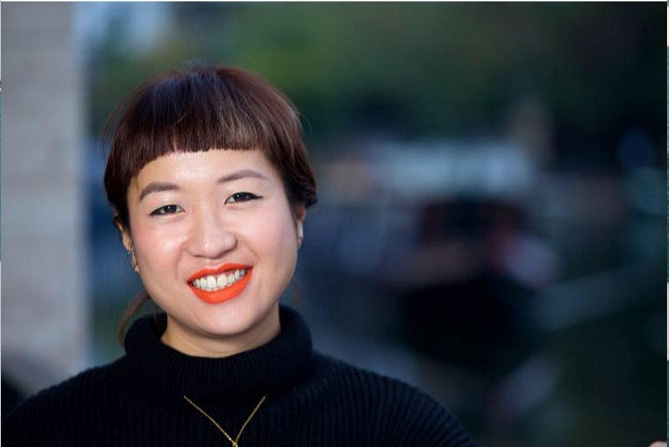
Jeremy Tiang on how nature – from gardens to sexuality, from supertrees to freedom of speech – is kept in check in Singapore.
I should say at the outset that being a product of my surroundings, I am not particularly in tune with the natural world. I have always lived in extremely built-up cities where I can get everywhere on foot or by public transport, and I’m never more than ten minutes from someone who will sell me coffee. I grew up in Singapore, which is probably currently most familiar to non-Singaporeans as the backdrop for the Trump-Kim summit and the glitzily aspirational Crazy Rich Asians, as well as in images featuring the infinity pool at the top of Marina Bay Sands, the annual Grand Prix, and the science-fictiony supertrees rising luridly against the sky.
If you don’t already know what the supertrees look like, I’m not sure I can do them justice, but basically they’re concrete-and-steel vaguely tree-shaped structures with skeletal branches, up to fifty metres tall and often dramatically lit in photographs. These are part of Gardens by the Bay, a seven-year-old park that, according to its website, ‘presents the plant kingdom in a whole new way.’ The term ‘park’ may be misleading, because while there are some green spaces, the most eye-catching elements, apart from the supertrees (which look like they were designed by someone who found triffids insufficiently sinister), are two vast, domed conservatories, both filled with flora not native to Singapore. They literally took all the trees, and put them in a tree museum, and charged the people… well, a good deal more than a dollar and a half just to see ’em. Even the land the Gardens are built on is artificial, reclaimed from the sea with soil from neighbouring countries. (An Indonesian friend likes to joke, ‘My country used to have 13,400 islands, but now we only have 13,000 because Singapore bought the rest.’)
This instinct to enclose and label the environment was formalised in 1963, when then-Prime Minister Lee Kuan Yew planted a mempat tree with his own hands . (It lasted a decade before having to make way for roadworks.) The “Garden City” initiative was launched in 1967, and updated to “City in a Garden” in 1998 , umbrella titles for a plethora of programmes, including an annual tree-planting day (the first Sunday in November), and orchid-breeding—hybrids are named after VIPs on state visits, though regular folk can also buy naming rights for upward of $3,000, and have their very own flower alongside the likes of the Dendrobium Margaret Thatcher.
When a new space opens up, the immediate impulse is enclosure.
In 2016, when a 15-mile stretch of railway track from downtown Singapore to Malaysia was decommissioned, the Urban Renewal Authority announced plans to turn it into a ‘Green Corridor’, with features including ‘rock-climbing caves and urban farms’. Writer Yu-Mei Balasingamchow set out to walk the length of the tracks before the land was transformed, and found it delightful just as it is. Yet in a Singaporean context, this felt like a radical idea—that a space could be sufficient in itself, without needing to be processed and commodified; that so much of government planning, which ‘caters to the idea of an urban population that needs to be entertained and coddled’, stultifies the imagination and prevents us from appreciating our surroundings as they are.
I don’t want to make Singapore sound like an urban hellscape—much of it is perfectly pleasant, and of course difficult decisions need to be made when land is scarce. Nor do I want to suggest that nature is completely disregarded—National Parks does some sterling work here, with programmes such as its biodiversity database. Besides, while the lived environment is generally manicured to within an inch of its lives, the island as a whole has a tendency to wildness—plants grow fast in a tropical climate. But, as Joshua Comaroff and Ong Ker-Shing point out in Paramilitary Gardening, ‘[t]he landscapers are in charge, here. And in a very muscular way. This city-state has quite literally been hacked from voracious equatorial forest; its geo-body has been “reclaimed” from the sea.’
In any case, this corralling of nature didn’t start with Independence. The British left a number of elegant green spaces, including the Botanic Gardens, which was run by Kew-trained botanists who meticulously turned it into a site ‘where the colonial authorities attempted to assert their power over nature itself,’ in the words of Joanne Leow.
These authorities took much the same approach to their human subjects, imposing a legal code based on English common law.
One item, a law prohibiting ‘carnal intercourse against the order of nature’, is similar to the ones they left India, Jamaica, Myanmar, Bangladesh and other countries, down to the Section number: 377. Even after Section 377 was altered in Singapore, the specific prohibition against homosexuality, 377A, was retained. Gay sex is still technically illegal in Singapore, and while practitioners are no longer prosecuted, the law sanctions discrimination against them in a myriad of ways. This feels like part of the same impulse that drives much of Singapore’s urban planning: Nature is presented as sacrosanct (you will only couple as nature intended), but simultaneously as something to be rigorously managed (the state granting itself the ability to dictate whether your desires are ‘natural’ or otherwise).
Human nature is, in general, kept strictly in check here.
Protest is strictly policed, with public demonstrations only permitted in one location (a park, of course—and even then, only with a permit). Our Public Order Act defines ‘assembly’ to include ‘a demonstration by a person alone’, and ‘procession’ to include ‘a march by a person alone’, so even individuals are not free to express dissent in public except within narrow state-sanctioned parameters. Like our plant life, human beings must be strictly cultivated and kept within bounds, rather than allowed to flourish at will .
There are obviously plenty of people happy with this state of affairs—the ruling party has won every election since Independence, and at the last one increased its vote share to a whisker short of 70%. And the trade-off is, perhaps, fair enough—rigid boundaries in return for growth and stability, the stifling but safe enclosure of a hothouse instead of the exuberance of wilderness. Still, I wish there were a little more breathing space. Many of the borders that contain us are somewhat nebulous, such as the so-called OB Markers (for ‘out-of-bounds’ – a golfing term) that prohibit certain topics from public discourse, the trouble being that these are not laid out clearly anywhere, and seem to frequently shift, so people are often left censoring themselves to be on the safe side. And this feels like the most sinister aspect of all this—that this control has become self-imposed.
For the last ten years, an annual rally called Pink Dot has taken place at Hong Lim Park—the aforementioned sole designated site of protest—in support of LGBTQ rights. The theme this year was ‘We are ready’, a reference to the frequent declarations by government ministers that Singapore is ‘not ready’ for changes such as the abolition of 377A. Increasingly, it feels like there are cracks appearing in the surrounding walls, and we could let in a little wildness without losing ourselves.
Jeremy Tiang is the author of State of Emergency (2017, finalist for the 2016 Epigram Books Fiction Prize, winner of the Singapore Literature Prize 2018) and It Never Rains on National Day (2015, shortlisted for the 2016 Singapore Literature Prize). He won the Golden Point Award for Fiction in 2009 for his story “Trondheim”. He also writes and translates plays, including A Dream of Red Pavilions, The Last Days of Limehouse, A Son Soon by Xu Nuo, and Floating Bones by Quah Sy Ren and Han Lao Da. Tiang has translated more than ten books from the Chinese—including novels by Chan Ho-Kei, Zhang Yueran, Yeng Pway Ngon and Su Wei-chen—and has received an NEA Literary Translation Fellowship, a PEN/Heim Translation Grant, and a People’s Literature Award Mao-Tai Cup. He currently lives in Brooklyn.
Photo credit: Oliver Rockwell